
Image: Proper Hop Storage Setup with Vacuum Sealer and Freezer Bags
Published: October 29, 2026 at 8:06:39 PM UTC
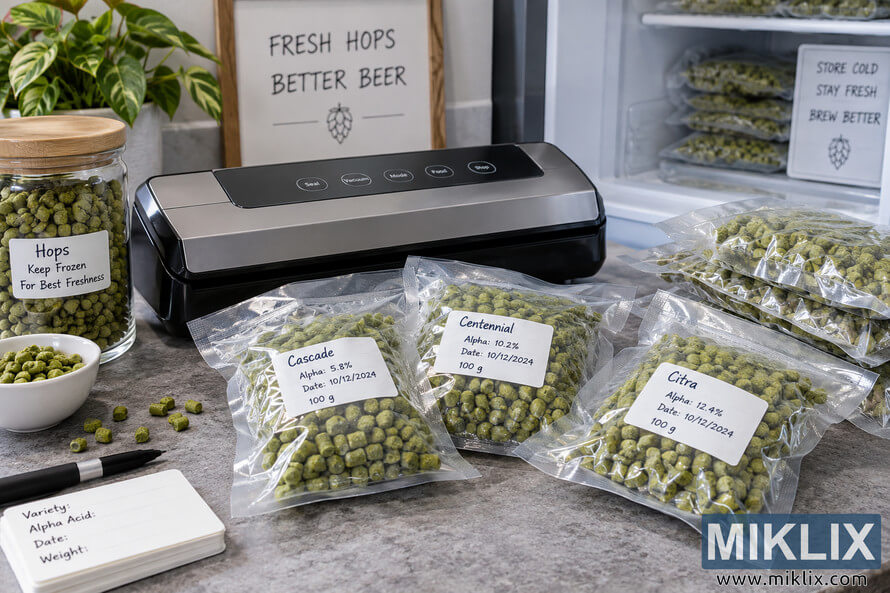
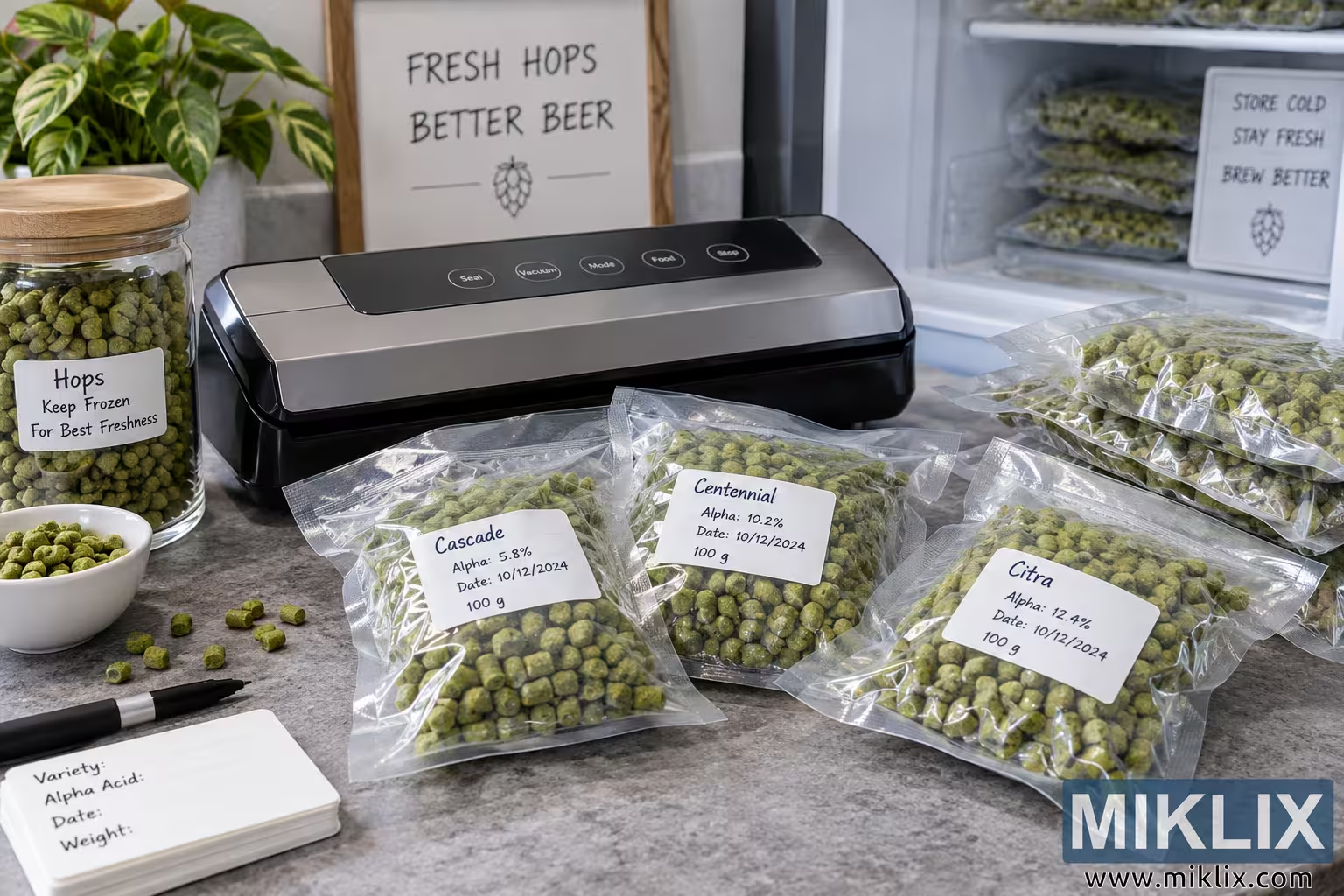
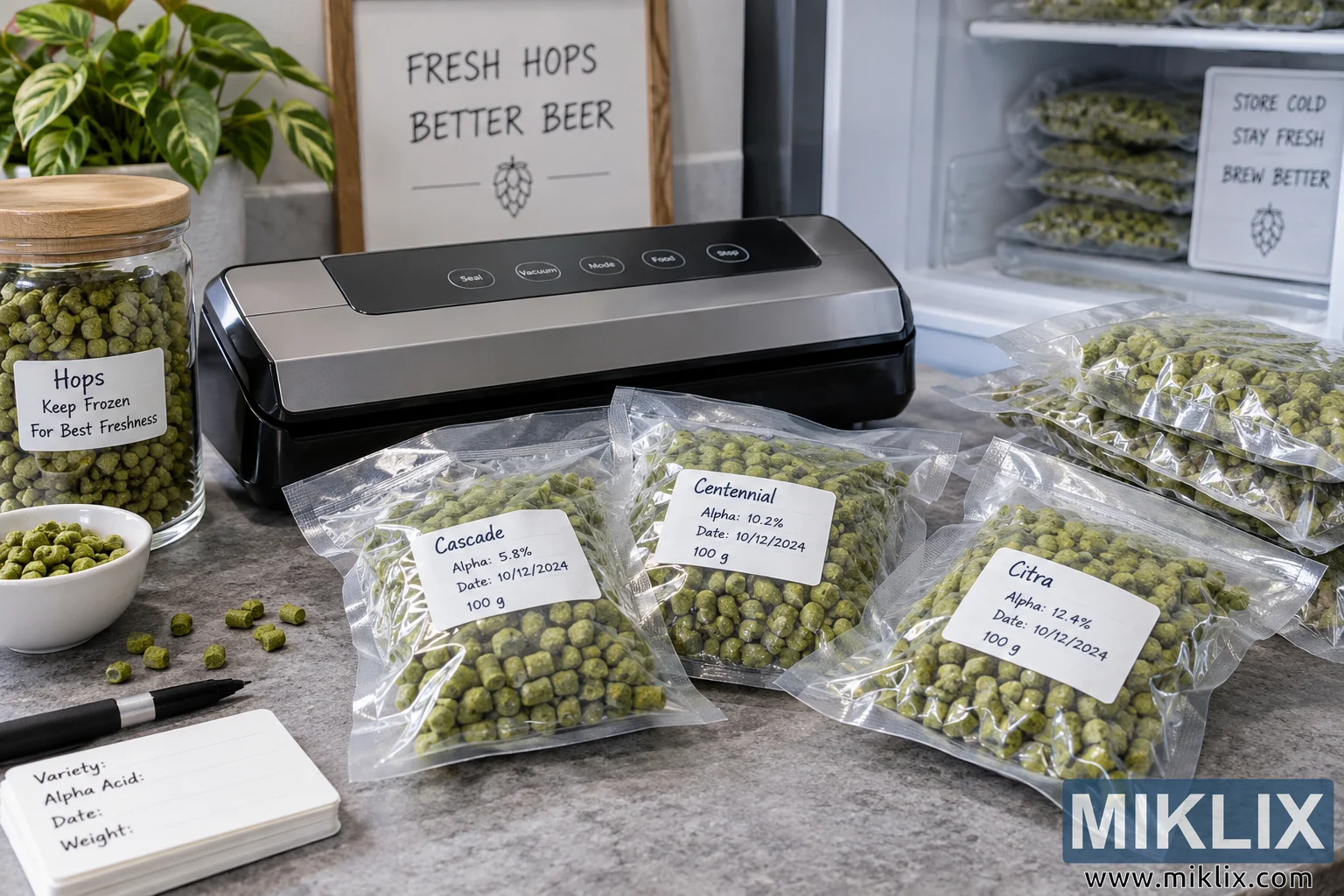
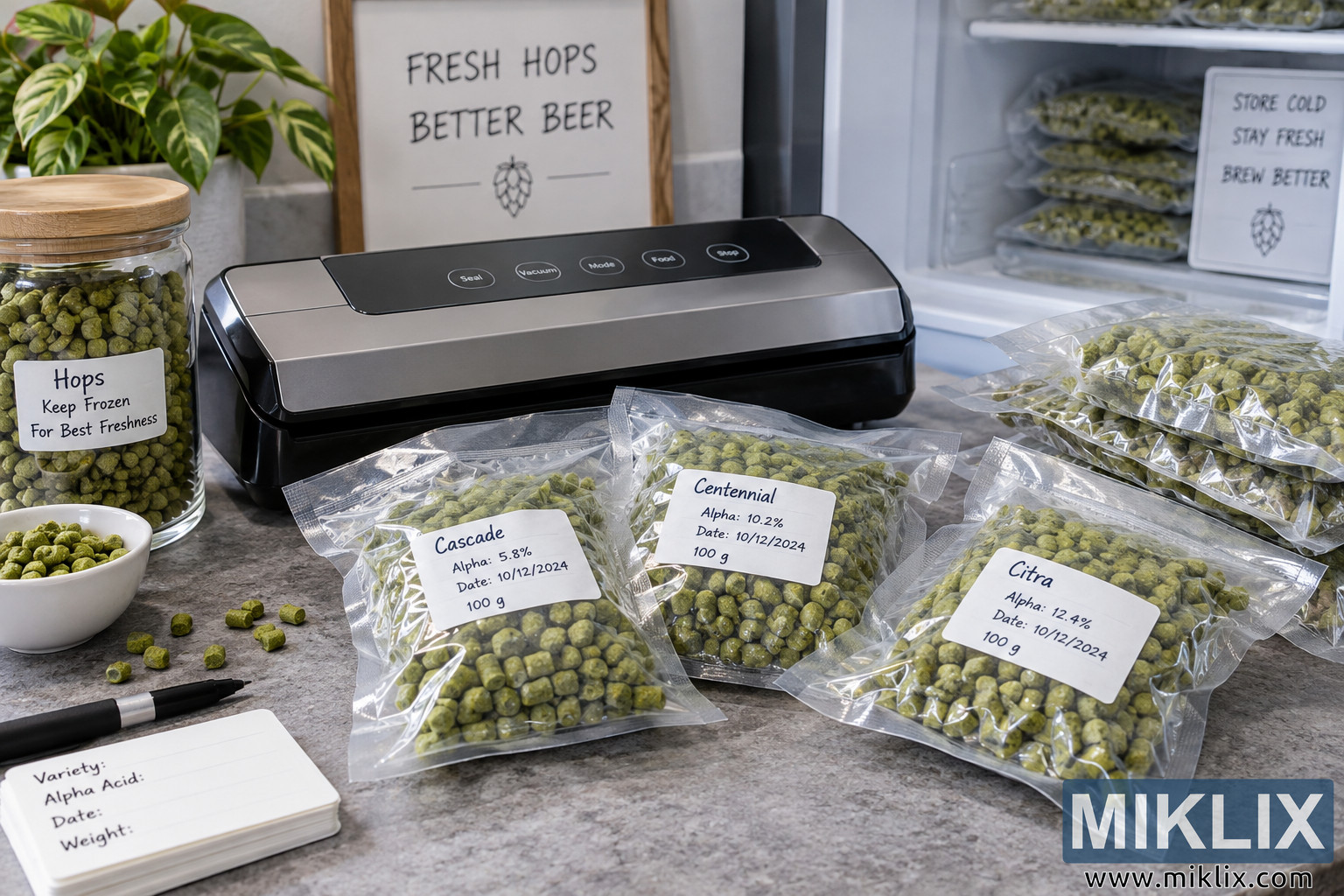
A realistic homebrewing hop storage setup featuring vacuum-sealed and labeled freezer bags of hop pellets, a vacuum sealer, labeling supplies, and cold freezer storage.
Available versions of this image
The image files available for download below are less compressed and higher resolution - and as a result of that, higher quality - than the images embedded in articles and pages on this website, which are more optimized for file size in order to reduce bandwidth consumption.
Regular size (1,536 x 1,024)
Large size (3,072 x 2,048)
Very large size (4,608 x 3,072)
Extra large size (6,144 x 4,096)
Comically large size (1,048,576 x 699,051)
- Still uploading... ;-)
Image description
A high-resolution, landscape-oriented photograph presents a carefully organized homebrewing hop-storage setup on a clean gray stone kitchen countertop. The composition centers on a modern vacuum-sealing machine positioned toward the back of the work surface. The appliance has a sleek rectangular form with a metallic silver upper housing, glossy black lower section, and a dark control panel containing several simple round buttons. No visible commercial branding or manufacturer logo appears on the machine, keeping the equipment generic. In front of the vacuum sealer, several transparent vacuum-sealed freezer bags filled with green hop pellets are arranged across the countertop. The bags have been tightly sealed so that the plastic conforms closely around the pellets, visually demonstrating a practical method for reducing air exposure during long-term storage.
Three prominent vacuum-sealed packages occupy the foreground and middle of the scene. Each has a white handwritten identification label attached to its front. The left package is labeled Cascade and includes an alpha-acid percentage, date, and weight. The center package is labeled Centennial with similar storage information, while the package on the right is labeled Citra and likewise records its alpha-acid content, packaging date, and weight. These handwritten labels communicate an organized approach to keeping track of different hop varieties and important brewing information after opening larger packages. The pellets themselves are small, compressed, cylindrical pieces in natural shades of olive and bright green. Their slightly irregular shapes and textured surfaces remain clearly visible through the transparent plastic.
Additional sealed bags of hop pellets are stacked toward the right side of the countertop and inside an open freezer in the background. This reinforces the intended storage process: portion the hops, remove excess air with a vacuum sealer, clearly label each package, and keep the sealed portions cold or frozen until they are needed. The freezer occupies the upper-right portion of the image. Its white interior is brightly illuminated, and multiple flat packages of hops can be seen neatly stacked on the shelves. A small generic informational card inside the freezer contains a simple message encouraging cold storage and freshness, accompanied by a minimal hop-cone illustration. There are no actual commercial logos, branded packages, or identifiable manufacturer marks anywhere in the scene.
On the far left of the countertop stands a clear cylindrical glass storage jar with a natural wooden lid. The jar is filled almost to the top with additional green hop pellets. A white handwritten label attached to the glass identifies the contents as hops and notes that they should be kept frozen for best freshness. In front of the jar sits a small white ceramic bowl containing a modest quantity of loose hop pellets. Several individual pellets are scattered naturally across the countertop beside the bowl, adding a realistic working-kitchen quality to the otherwise orderly arrangement.
Near the lower-left edge of the frame, a black marker lies horizontally on the counter beside a small stack of blank white labeling cards. The uppermost card contains handwritten fields for variety, alpha acid, date, and weight. These supplies visually explain how the labeled freezer bags were prepared and emphasize the value of recording essential information before putting hops into storage. The combination of marker, cards, vacuum bags, vacuum sealer, and freezer creates a complete visual workflow rather than merely showing the final stored product.
The background includes understated decorative elements that make the scene feel like a real home kitchen or dedicated homebrewing workspace. Behind the glass jar is a healthy leafy green houseplant in a simple light-colored pot. Its broad leaves provide a natural visual connection to the green hops and soften the technical appearance of the storage equipment. Behind the vacuum sealer is a framed white sign with dark handwritten-style lettering reading Fresh Hops and Better Beer, together with a simple line drawing of a hop cone. The frame has a warm natural-wood appearance that coordinates with the wooden lid of the storage jar and adds warmth to the otherwise cool gray, black, silver, and white palette.
Lighting is bright, clean, and naturalistic, resembling soft daylight combined with even indoor kitchen illumination. The foreground is sharply detailed, allowing the texture of the hop pellets, wrinkles and reflections in the vacuum bags, handwritten labels, countertop surface, and equipment controls to be clearly distinguished. The transparent plastic bags catch small highlights from the surrounding light, emphasizing that they have been tightly vacuum sealed without obscuring their contents. Depth of field keeps the principal storage equipment and labeled hop packages in strong focus while maintaining enough clarity in the freezer and background decorations to explain the setting.
The overall visual message is practical organization and freshness preservation for homebrewing ingredients. Rather than depicting hops in decorative cones or growing on vines, the image focuses specifically on processed hop pellets and the equipment used to store them correctly after purchase or opening. The vacuum sealer is visually central because limiting exposure to air is a key part of the setup being demonstrated, while the open freezer provides an immediately understandable destination for the finished packages. Portioning the pellets into separate bags can also reduce the need to repeatedly expose an entire supply to air when only a smaller quantity is required for a brew.
The scene has a tidy instructional character without looking sterile. A few loose pellets, the handwritten labels, the marker, and the partially prepared labeling cards suggest that someone has recently been working at the counter, although no person or hands are visible. The horizontal composition gives sufficient space to show each stage and component of the storage system at once: loose hops and labeling materials on the left, the vacuum-sealing machine at the center, finished sealed portions across the foreground, additional stored packages on the right, and the freezer in the background. The resulting image clearly communicates a proper hop-storage setup based on portioning, vacuum sealing, labeling, and cold storage, presented in a realistic homebrewing environment without the use of actual brands.
The image is related to: Hops in Beer Brewing: Star