
Hops in Beer Brewing: Sticklebract
Published: August 3, 2026 at 10:07:45 PM UTC
This guide focuses on Sticklebract hops for brewers in the United States. It covers brewing with Sticklebract on various scales, from homebrew to commercial. It offers technical advice on aroma, alpha acids, and recipe choices for both homebrewers and commercial brewers.
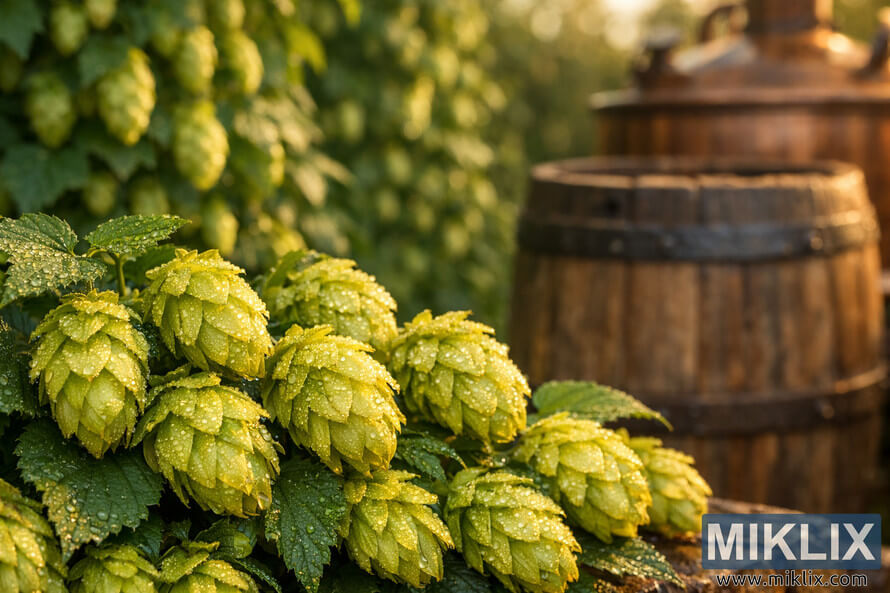
Click or tap the image for more information and higher resolutions.
Key Takeaways
- Sticklebract hops bring a unique Sticklebract aroma useful for hop-forward beers.
- This guide covers brewing with Sticklebract from homebrew to commercial batches.
- Expect practical sections on chemistry, recipe formulation, and dry-hopping.
- Advice includes storage, hop form choices, and where to buy Sticklebract hops USA.
- Coverage balances sensory notes, technical metrics, and marketing considerations.
Introduction to brewing with Sticklebract hops
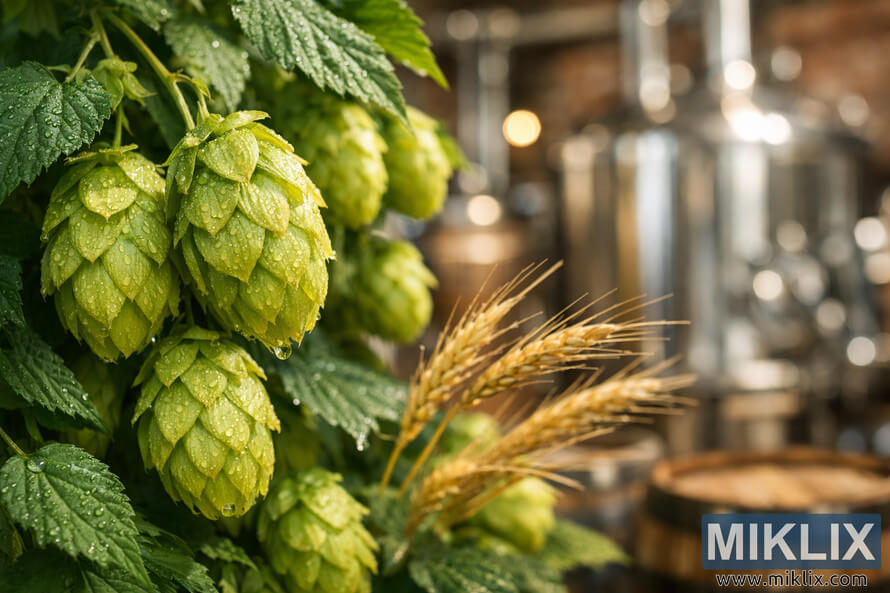
Click or tap the image for more information and higher resolutions.
Brewers seeking new hop varieties often desire a blend of sensory appeal and practical agronomy. Sticklebract offers a unique set of aromas alongside traits crucial for both field and brewhouse success. This introduction highlights the variety's utility, its origins, and its growing popularity among craft brewers.
What makes Sticklebract hops unique
The aroma of Sticklebract hops is immediately noticeable. It features bright citrus notes, floral undertones, and a hint of spice that evolves with terroir and harvest timing. The essential oils, rich in myrcene and linalool, contribute to its lively aroma and quick perception in late additions and dry-hop treatments.
Its agronomic strengths further enhance its appeal. Growers praise its good disease tolerance and solid yields, ensuring a consistent supply for brewers. This reliability is crucial for those crafting single-hop or flagship beers.
Brief history and breeding background
Sticklebract was developed through a formal breeding program focused on novel aroma profiles and field resilience. For detailed information on its parentage and release timeline, refer to technical sheets from reputable suppliers like Yakima Chief Hops or John I. Haas.
The transition from trial plots to commercial production involved collaboration between breeders and growers. Independent U.S. growers and plant nurseries propagate the variety once it proves viable and appealing to brewers.
Why brewers are interested in this variety
Brewers are intrigued by Sticklebract's unique aroma layers, which distinguish it in hop-forward styles. Its ability to deliver distinct flavors makes it a valuable addition for single-hop showcases and limited releases.
- Hop innovation: new aroma building blocks that refresh recipe libraries.
- Practical use: works well as a late-boil, whirlpool, or dry-hop addition for intense aroma.
- Commercial fit: consistent yields and disease tolerance ease sourcing concerns.
For the latest agronomic data and oil composition, consult hop contracts and supplier datasheets from trusted sources like Hops Direct or major U.S. buyers. These resources provide essential information for recipe planning and scaling up.
Flavor and aroma profile of Sticklebract hops
Sticklebract hops bring a bright, inviting character to beer, making them a popular choice for brewers. This section delves into the hop's aroma and taste, exploring how these evolve during fermentation and conditioning. It's crucial to conduct bench trials to monitor the year-to-year shifts in aroma and flavor.
Primary aroma characteristics
- Bright citrus: grapefruit and tangerine topnotes that cut through malt sweetness.
- Floral highlights: light blossoms that give a delicate perfume without overwhelming the beer.
- Subtle pine or resinous backnotes that add structure and a gentle herbal edge.
- Occasional spicy nuances depending on crop year and terroir.
Taste notes in finished beer
The Sticklebract flavor notes manifest as citrus zest and juicy fruit flavors on the palate. A clean bitterness complements the fruit, avoiding sharpness. The finish is lightly drying, which enhances the beer's juiciness.
Mouthfeel becomes slightly fuller when hops are added late or as a dry-hop. This fullness aids in carrying hop-derived flavors while maintaining balance between malt and bitterness.
How aromas evolve during fermentation and aging
Fermentation vigorously can strip away some volatile aromatics, reducing bright citrus topnotes. Yeast esters may either enhance or mask these topnotes, depending on the strain and temperature.
Cold conditioning and extended aging soften sharp notes and allow oils to blend. Over time, from one to six months, the hop character evolves from sharp to rounded, revealing secondary floral and resinous traits.
Practical tip: run small bench batches across different storage ages and fermentation profiles. Chart hop aroma evolution at 1, 3, and 6+ months to see how Sticklebract aroma profile and Sticklebract flavor notes change in your house recipes.
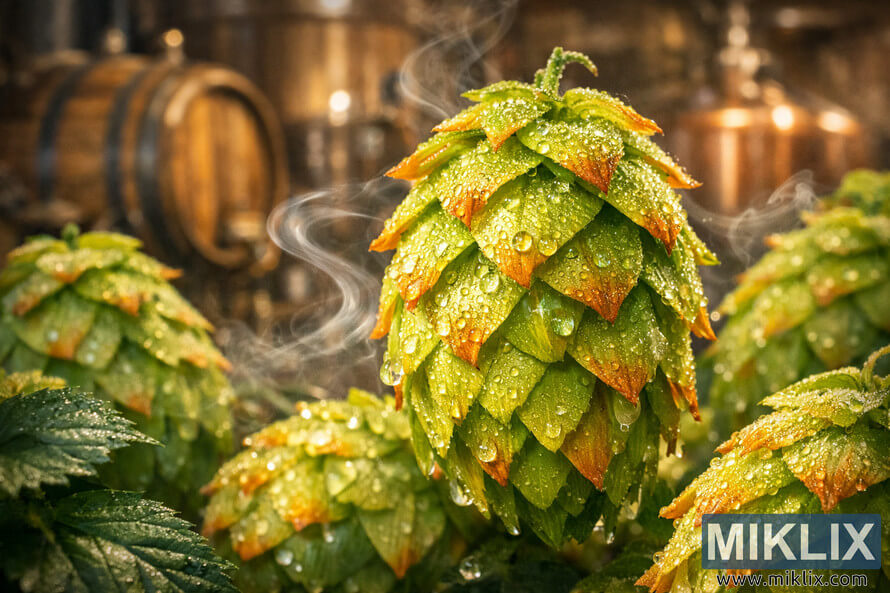
Click or tap the image for more information and higher resolutions.
Alpha acids, beta acids, and essential oil composition
Understanding alpha acids, beta acids, and hop oil composition is crucial for brewers using Sticklebract. This section explains typical ranges, aging effects, and essential oils' impact on aroma. Always check the COA before finalizing your recipe.
Typical supplier datasheets show Sticklebract alpha acids in a moderate range, roughly 6–10%. This range allows for predictable IBUs in bittering hops. It also accommodates using the variety for late or aroma additions when lower IBUs are preferred.
When calculating IBUs, use the listed Sticklebract alpha acids for utilization estimates. For high-utilization early additions, the 6–10% band behaves like other moderate alpha varieties. For late additions, expect less contribution to bitterness but more impact on aroma.
Beta acids contribute less to bitterness but are crucial for aging and stability. Higher beta-acid levels increase the chance of oxidation products over time. Poor storage can lead to beta acid degradation, resulting in stale-hop notes in finished beer.
Essential oils in Sticklebract carry the aroma signature. Myrcene often leads with green, citrus, and resinous notes. Humulene brings woody and herbal facets. Caryophyllene adds a peppery spice. Smaller amounts of geraniol, linalool, and farnesene can supply floral and fruity highlights.
The hop oil composition determines where Sticklebract shines in the schedule. High myrcene content volatilizes during a boil, so late additions and dry hopping preserve those bright citrus-green notes. A stronger humulene and caryophyllene fraction supports whirlpool and late-boil use without losing structure.
- Use Sticklebract alpha acids data for bittering math and IBU targets.
- Prefer late additions or dry hopping to capture volatile monoterpenes like myrcene.
- Rely on higher humulene/caryophyllene for mid-to-late additions that need aroma stability.
- Monitor beta acids and storage to avoid oxidation-driven off-flavors.
For precise formulation, request the current batch COA from the supplier. This document lists exact Sticklebract alpha acids, beta acids, and a breakdown of hop oil composition. This information allows you to tune hop charges to your intended hop bittering profile and aroma goals.
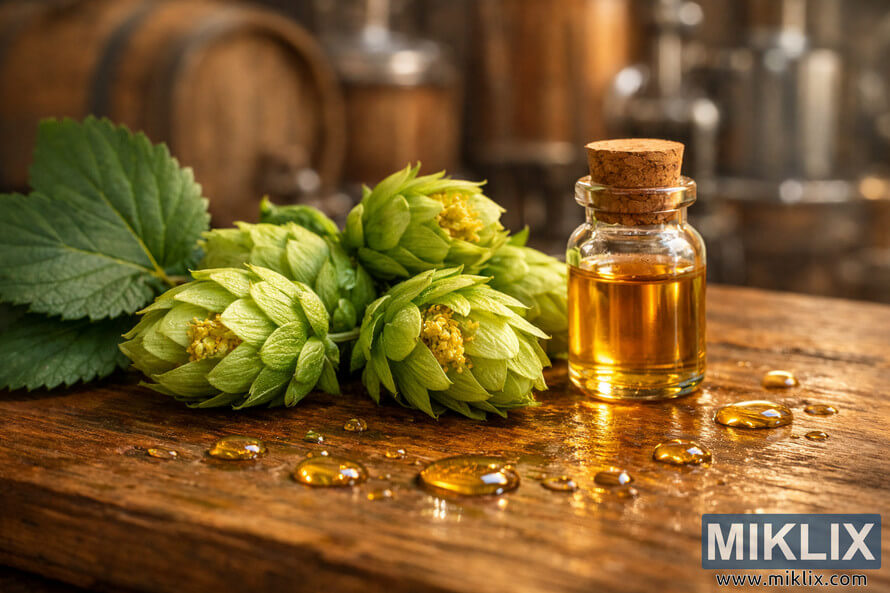
Click or tap the image for more information and higher resolutions.
Best beer styles to showcase Sticklebract hops
Sticklebract shines in beers that emphasize bright, floral, and citrus notes. A neutral malt base and focused hopping are key. This allows the hop profile to take center stage. Below are practical templates for brewers to explore this variety.
Hop-forward ales are ideal for showcasing aroma and flavor. Use simple malt and emphasize late additions and dry-hop for a clear expression.
- Single-hop pale ale: 60–70% pale malt, small caramel malt, late kettle and heavy dry-hop with the variety to reveal floral and stone-fruit tones.
- NEIPA template: use a soft water profile, oats for body, and large whirlpool plus dry-hop doses to bring out the softer juiciness of Sticklebract in IPAs.
- West Coast/APA: limit late hops slightly to emphasize crisp citrus bite and clean bitterness.
Seasonal and farmhouse beers benefit from restraint. Sticklebract saison additions can marry well with peppery, fruity yeast esters without overwhelming yeast character.
- Dry-hopped saison: ferment with Saison yeasts at warm temps, use light hopping during late boil, then add a modest dry-hop to avoid masking yeast complexity.
- Saison-inspired ale: blend subtle Sticklebract saison aroma with orange peel or coriander for layered spice and floral notes.
Experimental and hybrid styles offer space to push boundaries. Consider acid, fruit, and mixed-ferm beers where hop aroma plays off other components.
- Kettle-soured fruited ales: sour base brightens citrus and stone-fruit elements of Sticklebract.
- Mixed-fermentation blends: age with Brettanomyces to add funk that interacts with floral hop esters.
- Blended-hop releases: pair Sticklebract with Citra or Mosaic in small test batches to find signature combos.
Practical test brews to try: a single-hop pale ale for clarity, a dry-hopped saison to study yeast-hop interplay, and a fruited NEIPA to see how fruit and haze change perception. These templates help assess how Sticklebract performs across various styles. They guide brewers in dialing it in for future releases.
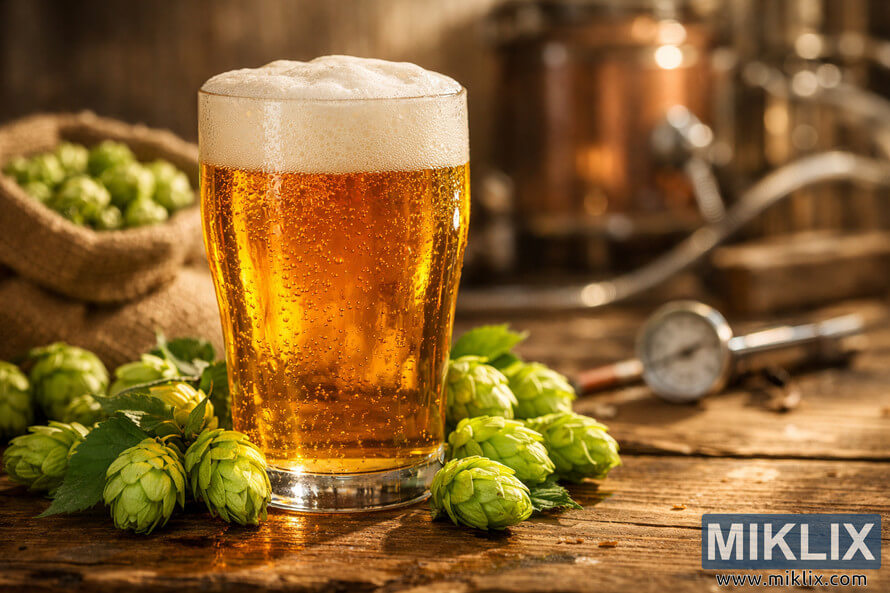
Click or tap the image for more information and higher resolutions.
Hop substitution and pairing with other varieties
Choosing the right bittering and aroma partners is key to Sticklebract's success in beer. Use clean, high-alpha bittering hops early in the boil. This allows Sticklebract to shine later as an aromatic addition. When Sticklebract is scarce, sensible substitutes and small-scale trials reduce risk before a full batch.
Complementary bittering hops form a stable backbone. Magnum, Warrior, and Columbus provide firm, neutral bitterness. This lets delicate Sticklebract notes show up in late additions and dry-hop blends without competing for bitterness.
For aroma, pick hops that echo or accent Sticklebract’s citrus, fruit, and floral side. Citra and Amarillo push citrus and orange peel. Mosaic and El Dorado add layered tropical fruit and stone-fruit tones. Centennial and Idaho 7 bring classic citrus and pine that blend well with Sticklebract’s profile.
Herbal and resinous options can add complexity when used sparingly. Simcoe and Chinook give pine, resin, and light earth that contrast bright citrus. Use them to anchor an otherwise bright aroma blend, especially in west-coast style ales.
- When you need a substitute for Sticklebract, consider Citra or Amarillo if the variety leans citrus and floral. Taste a small sample to confirm the match.
- For hops that pair with Sticklebract in a citrus-focused beer, try Citra, Mosaic, and Centennial together in a low-percentage blend.
Dry-hop blending works best when Sticklebract makes up part of the bill. Aim for Sticklebract at 25–60% of the dry-hop weight, with the remainder split among complementary aromatics. This creates depth without overwhelming the nose.
Sequence dry-hop additions to protect fragile volatiles. Add more delicate varieties like Sticklebract later in conditioning. Hold resinous hops for an earlier dry-hop or a short whirlpool contact to avoid masking bright esters.
- Run a 1-gallon (3.8 L) mini-mash trial to dial ratios and confirm a substitute for Sticklebract before scaling up.
- Record aroma, intensity, and perceived balance for each micro-batch.
- Adjust the Sticklebract percentage in the dry-hop bill based on trial results.
Practical trials and careful pairing let brewers exploit Sticklebract hop pairings while managing availability. Thoughtful bittering hops, chosen aroma partners, and staged dry-hop plans yield cohesive, layered hop character in finished beer.
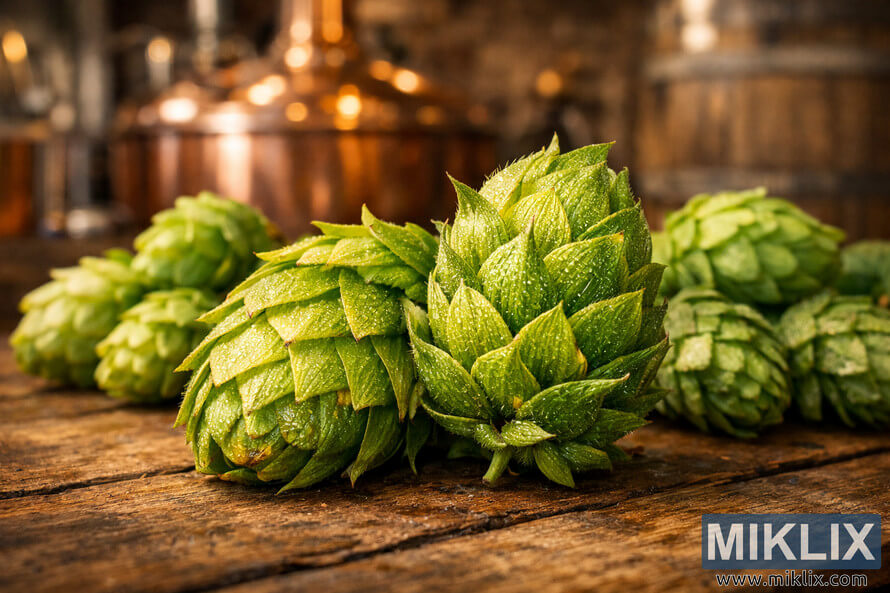
Click or tap the image for more information and higher resolutions.
Recipe formulation guidelines for Sticklebract hops
Begin crafting your Sticklebract recipe with data from the supplier. Use the alpha acid from the certificate of analysis in your IBU calculator. Adjust for boil gravity and kettle efficiency to align with real-world utilization and sensory goals.
To calculate IBUs, follow these steps. Use a Tinseth, Rager, or Garetz calculator with the alpha% from the COA. Input wort gravity and boil time, then compare utilization numbers to your system's efficiency. For a quick estimate, multiply alpha% by hop weight and utilization factor based on minutes boiled to approximate IBUs before fine-tuning in software.
Choose malts that complement Sticklebract. Opt for pale base malts like American 2-row or Maris Otter for a clean base. Add small amounts of light crystal 5–10L for balance. For New England–style beers, include flaked oats and wheat to boost mouthfeel and haze without masking hop aromatics.
Select yeast to showcase hop character cleanly. Neutral American ale strains like Wyeast 1056, White Labs WLP001, or Safale US-05 are ideal. They keep esters low, allowing citrus and herbal notes to shine. For saisons, consider Wyeast 3724 or Brett strains to add peppery or funky esters that complement Sticklebract.
- West Coast Pale Ale: Assume 11–15% alpha for bittering additions at 60 minutes to hit target IBUs. Use late additions at 10, 5, and 0 minutes. Plan a dry-hop of 3–5 g/L to reinforce top notes.
- NEIPA: Minimize early bittering. Use a heavy whirlpool or stand-off at about 180°F (82°C) for 20–30 minutes to extract oils with low isomerization. Apply large dry-hop charges of 6–10 g/L split across multiple additions.
- Saison: Target 20–30 IBUs with modest bittering. Make a late addition at 5–10 minutes for flavor. Optional light dry-hop of 1–3 g/L can add nuance without overpowering yeast-driven character.
Adjust each schedule to the measured Sticklebract alpha acids and your sensory goals. Small changes in boil time, whirlpool temperature, or dry-hop grams per liter can shift perceived bitterness and aroma substantially. Treat every recipe as a draft that benefits from lot-specific tuning.
Boil additions and timing strategies
Timing hops in the kettle significantly impacts a beer's bitterness, flavor, and aroma. For Sticklebract, a well-planned boil schedule is crucial. It ensures the variety is reserved for steps focused on aroma. Early additions contribute to bitterness, while late additions and a careful whirlpool preserve citrus and floral notes.
Bittering additions early in the boil
Place bittering hops at 60 minutes to convert alpha acids into IBUs. These hops contribute little to aroma. If Sticklebract's alpha acids are modest or you aim to protect its delicate oils, use high-alpha hops like Magnum or Warrior. This strategy preserves Sticklebract for later use.
Flavor and aroma additions late in the boil
Use 10-, 5-, and 0-minute additions to capture more volatile oils. Late hop additions boost mid-boil flavor and fresh aroma in the finished beer. Adding at flameout or knockout preserves the most aromatic compounds. However, some volatiles still escape with heat. For an effective Sticklebract boil schedule, favor these late placements.
Whirlpool/stand-off techniques for preserving oils
Whirlpool at 160–180°F (71–82°C) and hold for 20–40 minutes to extract oils without excess isomerization. This temperature window yields aromatic transfer while limiting bitterness. Rapid chilling after the stand-off traps volatiles and reduces oxidation risk.
Use hop bags or a hopback when loading large volumes of leaf or pellets. These tools simplify lautering and help avoid clogged equipment. For best aromatic results, prioritize late kettle and Sticklebract whirlpool additions over heavy early use.
When planning additions, remember late hop additions Sticklebract deliver the signature citrus and floral lift. Balance contact time and temperature to showcase those elements without creating harsh bitterness.
Dry hopping techniques for maximum aroma
Dry hopping brings out the top notes of Sticklebract, enhancing beer's fresh, vibrant aroma. The right timing, temperature, and dry hopping schedule are crucial. Clean, sanitized tools and minimal oxygen exposure are essential to protect the aroma and extend shelf life.
Timing and temperature control are key. Hops should be added once primary fermentation slows, usually 3–7 days post-fermentation. Aim for conditioning temperatures between 50–68°F (10–20°C). This cooler range helps preserve hop oils and supports Sticklebract aroma preservation.
Amounts and contact time are critical for optimal extraction and to avoid vegetal notes. Homebrewers typically use 1–5 g/L, while commercial batches range from 2–8 g/L. For best results, aim for 3–7 days of contact at cool temperatures. Avoid warm beer exposure for more than 10–14 days to prevent unwanted grassy or vegetal flavors.
- Homebrew: 1–5 g/L for balanced aroma
- Commercial: 2–8 g/L for pronounced character
- Contact time: 3–7 days at 50–68°F
Multiple additions and sequencing allow for layered aroma and extended freshness. Split additions, such as 50/50 or 60/40, provide an initial burst followed by sustained top notes. A final cold-crash or sterile filtration shortly after the last hop addition helps preserve the bouquet and supports Sticklebract aroma preservation.
Form and handling significantly impact results. Pellets and cryo products offer concentrated aroma with less vegetal matter than whole cones. Cryo hops, in particular, provide more oil per gram, potentially reducing the amount needed in your dry hopping schedule. Always handle hops gently to avoid splashing and oxygen entrainment.
- Plan a split schedule: early addition for biotransformation, late addition for pure aroma.
- Keep temperatures cool to protect volatiles.
- Use cryo or T90 pellets for higher aroma per weight and less vegetal extraction.
Sanitation and minimal oxygen exposure are crucial precautions. Sanitize any equipment that comes into contact with the beer. Use CO2 to purge headspace when possible and transfer beer carefully after dry hopping. These steps help preserve the fresh, complex profile expected from a well-executed Sticklebract dry hop.
Harvest, storage, and hop form considerations
Handling hops after harvest is crucial for their aroma and performance in brewing. The choice between fresh cone Sticklebract and processed forms impacts their behavior in wort, during fermentation, and at packaging. Proper storage of Sticklebract preserves the volatile oils that define its character for dry hopping and late additions.
Fresh cone versus processed hop forms
Fresh cone Sticklebract captures the harvest's aromas most accurately. Brewers experience the full spectrum of aromas directly from the bine. However, expect more vegetal matter, a shorter shelf life, and bulkier handling.
Sticklebract pellets, on the other hand, offer convenience and consistency. Pelletizing breaks cell walls, which can alter the aromatic balance. Yet, it improves packing density and reduces headspace. Many brewers prefer pellets for their measured dosing and reduced variability.
Best practices for preserving aromatics
Protect hops from oxygen, heat, and light to slow the loss of alpha acids and oils. Use vacuum-sealed, oxygen-barrier packaging for Sticklebract storage. Frozen conditions at 0°F (-18°C) or colder are ideal for long-term retention.
Rotate stock on a first-in, first-out basis and check supplier certificates of analysis for harvest date and oil profile. Small trial purchases help evaluate aroma before committing to a large lot.
Cryo pellets, T90 pellets, and practical differences
Cryo Sticklebract concentrates lupulin, offering intense aroma with less vegetal matter per weight. Expect higher perceived aroma from lower addition rates compared with standard pellets.
Sticklebract pellets in T90 format remain the balanced choice for most applications. T90 pellets provide reliable handling, typical utilization, and easier inventory control for brewers scaling recipes.
- Check COA for alpha% and oil breakdown before purchase.
- Store all hop forms frozen and sealed to maximize shelf life.
- Use small test batches for experimental or limited-release lots.
Water chemistry and fermentation variables
Adjusting water and fermentation settings significantly impacts the taste of Sticklebract hops. Even slight changes in ions and yeast selection can alter bitterness, mouthfeel, and aroma clarity. This guide helps align water profiles with yeast behavior and temperature control.
- Consider the sulfate-to-chloride ratio as a flavor control. Higher sulfate levels enhance bitterness and crispness, ideal for dry, West Coast styles.
- Increasing chloride adds roundness and fullness, perfect for hazy, soft beers. Aim for sulfate 150–250 ppm for dryness, and chloride 50–150 ppm for a richer mouthfeel.
- Make mineral adjustments gradually. Add gypsum (calcium sulfate) to boost sulfate, or calcium chloride to increase chloride. Use a calculator to fine-tune based on your water's initial composition.
- Recommended tools include brewing calculators like Bru’n Water or EZ Water. They help model ion additions and pH effects before brewing.
Yeast strains that interact well with Sticklebract
- Choose neutral, clean fermenters to showcase Sticklebract's aroma without yeast interference. Wyeast 1056, White Labs WLP001, or Safale US-05 are good choices for clarity.
- For added complexity, use American or British yeast strains that produce esters. These can complement floral hop notes, adding fruit and spice.
- Saison strains introduce peppery and citrus esters that complement Sticklebract in saison-inspired ales.
- Match Sticklebract yeast pairing with your desired beer profile. A drier, bitter beer benefits from clean yeast and higher sulfate. A fuller, fruit-forward beer is better with ester-prone yeast and elevated chloride.
Fermentation temperature and conditioning effects
- Temperature control affects esters. Lower temperatures result in a cleaner hop presentation. Higher temperatures increase esters, enhancing hop fruitiness.
- Adjust fermentation temperature based on yeast selection. For clean strains, stick to the lower end of the manufacturer's range. For ester-forward results, slightly raise temperatures while avoiding fusel alcohols.
- Conditioning stabilizes aroma. Cold conditioning or extended lagering reduces harsh volatiles, tightens body, and preserves delicate Sticklebract aromatics.
- Monitor and record outcomes. Small shifts in fermentation temperature and ion balance lead to notable sensory changes on release day.
Scale-up considerations for homebrewers and craft brewers
Scaling up a Sticklebract recipe from 5 gallons to a larger scale impacts hop performance. Consider how kettle shape, boil vigor, and vessel heat retention affect extraction and aroma. Approach scaling with a measured strategy, treating initial large batches as experiments.
Begin with a pilot batch that's large enough to show trends but small enough to manage. Aim for 10–20% of the target volume to observe hop utilization differences and flavor impact. This helps identify when to adjust addition timing or weights before a full production run.
- Use scaling calculators for initial weight conversion. Remember, alpha acid percentages stay the same, but utilization changes with scale.
- Choose a pilot batch size that mirrors the commercial kettle's boil profile, not just volume, to capture realistic hop behavior.
Scaling hop quantities from homebrew to pilot batch
Scaling hop additions is not purely linear. Early bittering hops scale more predictably. Late additions and dry hops show nonlinear shifts due to differences in surface area, wort turbulence, and temperature paths. Adjust late additions upward or test extended contact times to match aroma intensity.
When calculating IBUs, factor in reduced hop utilization for larger kettles. Run small trials with the same hop lot to establish a conversion factor. Keep detailed notes for future scaling Sticklebract recipes.
Equipment impacts on hop utilization
Kettle shape, whirlpool volume, and heat transfer drive hop extraction. A tall narrow kettle produces different hop contact than a broad shallow vessel. Hop-backs and plate heat exchangers also change aroma retention. Expect lower hop utilization for late additions in commercial brewhouses due to retained heat and larger thermal mass.
Test the actual system. Add the same hop schedule used at homebrew scale and sample during whirlpool and fermentation. Adjust timings, weights, or hop-stand temperatures to match sensory goals.
Quality control when increasing batch size
Quality control prevents surprises. Check the Certificate of Analysis for every lot of Sticklebract hops. Track alpha acids, moisture, and storage dates. Keep hops cold and vacuum-sealed to preserve volatile oils that define aroma.
- Replicate process variables: timing, whirlpool temperature, and contact times across scales.
- Maintain sensory bench-marks by tasting pilot and production batches side-by-side.
- Record standard operating notes for hop weights, addition times, and contact durations to ensure reproducible results.
Implement simple SOPs for hop handling, addition schedules, and log entries. Consistent records make it easier to refine hop utilization scale-up and improve outcomes in Sticklebract pilot brewing over successive batches.
Tasting notes and sensory evaluation
Implement a detailed tasting protocol to capture the essence of Sticklebract. Focus on aroma, flavor, bitterness, mouthfeel, aftertaste, clarity, and overall balance. A structured tasting form is crucial for brewers and panels to record consistent observations. It aids in tracking changes between lots and seasons.
Create a Sticklebract tasting sheet with sections for each aspect and intensity scales from 0 to 10. Include specific aroma descriptors like citrus, floral, herbal, resinous, and spicy. Add checkboxes for appearance notes and a line for numeric IBU and gravity to link perception with measured parameters.
- Aroma: list citrus, floral, herbal, resinous, spicy; rate 0–10.
- Flavor: note hop-forward vs. malt support; rate 0–10.
- Bitterness: perceived harshness and balance; rate 0–10.
- Mouthfeel: body, carbonation, and astringency; rate 0–10.
- Aftertaste: length and character; rate 0–10.
- Clarity/haze: visual impact on perception; rate 0–10.
- Overall balance: holistic score and free-text comments.
Document common Sticklebract off-notes and their causes to make tasting actionable. Grassy or vegetal impressions often come from warm, prolonged dry-hopping. Harsh astringency can arise from excessive hop contact or late-boil overload. Cardboard or stale aromas point to oxidation from poor storage.
Avoidance strategies reduce these problems. Minimize oxygen exposure during transfer and packaging. Store hops cold and vacuum-sealed or under nitrogen. Control dry-hop contact time and temperature to limit vegetal extraction. Balance late additions with malt sweetness and proper water chemistry to prevent overbearing resinous bitterness.
Design comparative tastings to isolate varietal differences. Use blind, side-by-side pours of single-hop versions or identical base recipes. Compare Sticklebract against Citra, Amarillo, and Mosaic to highlight unique citrus, floral, or resinous traits.
- Prepare identical base wort for each trial beer.
- Use the same yeast and fermentation schedule.
- Serve standardized pours at matched temperature.
- Provide water and plain crackers as palate cleansers between samples.
Assemble a small trained panel or brew club for hop sensory evaluation and repeat tests across multiple lots. Have panelists complete the Sticklebract tasting sheet for each sample to build consensus descriptors and measure rating consistency. Track notes over time to spot lot-to-lot shifts and to refine recipe choices.
Common brewing problems and troubleshooting
Even the most meticulous brewers encounter issues with new hops like Sticklebract. This guide aims to identify causes, suggest fixes, and test adjustments. Follow these steps to preserve aroma, manage bitterness, and ensure clarity while maintaining style integrity.
Bitterness imbalances can stem from various factors. Incorrect IBUs, excessive boil utilization, or an overabundance of late additions can skew bitterness perception. Additionally, low wort gravity or a thin malt body can accentuate harshness.
- Reduce hop additions in the next batch; shift some late hops to whirlpool or dry-hop for aroma instead of bittering.
- Blend a hop-forward batch with a maltier tank to soften bitterness balance Sticklebract.
- Apply fining agents like polyclar or use light filtration to smooth sharp bitterness before packaging.
Hop aroma loss can detract from Sticklebract's unique appeal. Common causes include oxidation, heat exposure, yeast consumption of volatiles, and delays before packaging.
- Dry-hop late and for a short contact time to preserve fragile oils.
- Consider small doses of hop oils or cryo products to recover top notes; use sparingly to avoid artificial tones.
- Minimize oxygen pickup during transfer and package quickly after cold-conditioning to lock in aromatics.
Clarity and haze are a trade-off in hop-forward beers. Haze can enhance the mouthfeel and juiciness of NEIPAs. However, clear beer is preferred for many other styles and consumer expectations.
- For clearer beer, use gelatin or Kieselsol fining, filtration, or centrifugation to remove suspended solids.
- To keep an intentional haze, stabilize with flaked oats or wheat and choose yeast strains that support biotransformation.
- Record protein and polyphenol sources in your grist so you can adjust mash schedules and adjunct levels across brews.
Employ a systematic troubleshooting approach to identify root causes. Maintain detailed brew logs, tasting at various stages, and conduct controlled trials when adjusting a single variable.
- Note all hop amounts, times, and forms to narrow down issues for future batches.
- Compare a control batch against the modified brew to confirm fixes for bitterness balance Sticklebract or hop aroma loss.
- Track storage conditions and lot numbers for hops to spot supply-side problems during Sticklebract troubleshooting.
Through small, systematic tests and meticulous record-keeping, you can recover aroma and fine-tune bitterness without compromising quality or consistency.
Cost, availability, and sourcing in the United States
When planning to brew with Sticklebract, sourcing and pricing are as crucial as flavor. Craft and commercial brewers should plan purchases well before the brewing season. This helps manage supply risk and Sticklebract cost.
Where to buy domestically
Begin with established hop suppliers and brokers like Yakima Chief Hops, Brewers Supply Group, John I. Haas, and Hops Direct for pallet or bulk orders. Regional growers listed through USA hop grower associations offer smaller lots. Specialty retailers and niche suppliers carry small packs for pilot batches. Always verify lot COAs and the harvest year before purchase.
Seasonality and contract growing
Hop harvest in the Northern Hemisphere occurs in late summer to early fall. Demand for experimental varieties like Sticklebract can quickly outpace supply. Consider forward-buy contracts with growers to secure volume and price. Early commitments ensure Sticklebract availability for the next season.
Cost-saving strategies for small brewers
Small brewers can reduce Sticklebract cost by buying in groups, storing hops cold, or joining co-ops for bulk discounts. Using cryo or concentrated pellet forms stretches aroma per ounce and lowers per-batch spend. Blending Sticklebract with more economical varieties preserves character while cutting cost.
- Sample small lots before large buys to confirm fit and quality.
- Track market prices during harvest windows to time purchases.
- Rotate limited single-hop runs to manage inventory and reduce waste.
Regulatory, labeling, and marketing tips for beers featuring Sticklebract
Ensuring regulatory compliance and proper labeling is crucial for the success of innovative beers. In the United States, following TTB guidelines for ingredient, claim, and brand name listings is essential. It's important to maintain honesty in consumer-facing communications, avoid making unsubstantiated health claims, and be prepared to submit labels for approval when necessary.
- Display prominent ingredients on cans and taproom boards to inform drinkers about the flavors they are experiencing. This transparency aids retail partners and taprooms in showcasing single-hop pours effectively.
- Employ precise descriptors such as "single-hop Sticklebract" or "dry-hopped with Sticklebract" instead of vague terms. This approach supports both regulatory compliance and consumer understanding.
- Make technical data like alpha acid ranges or IBU targets available for trade sheets and your website. This adds transparency without overwhelming package copy.
Marketing angles to highlight unique hop characteristics
- Emphasize the sensory experience: highlight bright citrus, floral top notes, or resinous depth in tasting notes. Sensory descriptions help shoppers make informed choices among hop-forward releases.
- Highlight brewing techniques. Mention single-hop runs, kettle-sour experiments, and layered dry-hop schedules to attract craft-minded drinkers.
- Utilize high-quality photography and clear tasting notes across labels, social feeds, and point-of-sale materials. Visuals and concise tasting cues encourage trial in competitive markets.
Collaborations and limited releases featuring Sticklebract
- Collaborate with hop growers and specialty retailers for co-branded cans or taproom events. Credits to growers enhance authenticity and supply chain narratives.
- Launch small-batch, numbered releases to create a sense of urgency and gather sensory feedback before scaling. Limited runs are perfect for testing marketing strategies for Sticklebract beer.
- Organize guided tastings and brewery tours to educate consumers. Behind-the-scenes content on social channels can convert curious browsers into loyal customers.
Practical promotional tactics
- Plan taproom events that pair Sticklebract beers with food, beer flights, or grower presentations.
- Share short brewing notes and behind-the-scenes videos to explain the choice of Sticklebract and its impact on flavor.
- Monitor responses and sales data from limited releases to refine marketing strategies for Sticklebract beer at scale.
Conclusion
Sticklebract hops summary: This variety offers bright, complex aromas. They shine best with late-boil additions, whirlpool rests, and dry-hopping. Brewers will discover citrus, floral, and spice notes that evolve with fermentation. Malt and yeast choices should be clean to highlight these aromas.
brewing with Sticklebract key takeaways: Pair Sticklebract with neutral bittering hops or complementary aromatics like Mosaic or Galaxy for layered complexity. Store cones or T90 pellets cold and vacuum-sealed to retain oils. Always check supplier Certificates of Analysis for alpha-acid and oil profiles before formulating recipes.
Actionable next steps include running single-hop test batches at home or in a pilot system. Record exact schedules and sensory notes. Conduct blind comparative tastings across lots. As hop character shifts by lot and growing season, iterative trials and careful record-keeping will give the clearest view of how Sticklebract performs in your specific brewery.
FAQ
What is Sticklebract hops and why use it in brewing?
Sticklebract is a hop variety known for its bright citrus and floral aromas. It has subtle resinous or spicy notes. Brewers use it to add unique grapefruit/tangerine, floral, and herbal flavors to IPAs, pale ales, saisons, and experimental beers. Its essential oils are best preserved through late-kettle additions, whirlpool, and dry hopping.
What alpha acid range should I expect and how does that affect recipe decisions?
Sticklebract's alpha acids are typically in a modest range. This means it's best used for late additions and dry hopping. High-alpha hops like Magnum or Warrior are better for primary bitterness. Always use the supplier's alpha% in your IBU calculator and adjust for boil gravity and utilization.
How does Sticklebract’s essential oil composition influence hop usage?
Sticklebract's oils include myrcene, humulene, caryophyllene, and smaller amounts of linalool/geraniol. Myrcene is volatile and lost in the boil. Favor late-kettle, whirlpool, and dry-hop additions to capture citrus and floral notes. Higher humulene and caryophyllene support whirlpool use and add complexity.
Which beer styles show Sticklebract off best?
Hop-forward ales like West Coast IPAs and American pale ales are ideal. NEIPAs and fruited sours also benefit from its bright citrus and floral notes. Saisons or farmhouse-style beers can use Sticklebract more sparingly to complement yeast esters. It's excellent for experimental beers and limited single-hop releases.
How much Sticklebract should I use for dry hopping in homebrew and commercial batches?
Typical dry-hop ranges are 1–5 g/L for homebrew and 2–8 g/L for commercial batches. For NEIPAs, you may use 6–10 g/L in split additions. Contact times of 3–7 days at cooler temps are common. Avoid long warm contact to reduce grassy off-notes. Consider cryo pellets at lower rates for concentrated aroma.
When should I add Sticklebract during the boil and whirlpool?
Use Sticklebract sparingly at 60 minutes if needed for some bitterness. Prioritize late additions (10/5/0 minutes) and whirlpool/stand-off at ~160–180°F for 20–40 minutes. Rapid chill after whirlpool helps trap volatiles. If alpha is low, save Sticklebract for aroma and use a high-alpha hop earlier in the boil.
How should I store Sticklebract to preserve aroma?
Store hops vacuum-sealed in oxygen-barrier packaging and keep frozen at 0°F or colder. Minimize exposure to heat, oxygen, and light. Rotate stock FIFO, check harvest date and COA from suppliers like Yakima Chief Hops or Hops Direct, and buy small test lots for new or variable crops.
Can I substitute Sticklebract with other hops if unavailable?
If Sticklebract leans citrus/floral, consider substitutes like Citra, Amarillo, or El Dorado for similar fruit-forward character. Mosaic or Idaho 7 can provide complementary tropical or resinous notes. Exact replacements depend on the season and lot; perform small bench trials to refine blend ratios before full-scale use.
What hop forms (cone, T90 pellet, cryo) work best for Sticklebract?
T90 pellets are standard for consistency and shelf life. Cryo (lupulin-concentrate) yields intense aroma with less vegetal matter and often requires lower inclusion rates. Whole-cone hops can offer maximum freshness but are bulkier and perish faster. Choose form based on desired aroma intensity, processing convenience, and storage capability.
How do water chemistry and yeast choice affect Sticklebract perception?
Water sulfate-to-chloride balance strongly influences hop perception—higher sulfate emphasizes bitterness and crispness (good for West Coast styles), higher chloride enhances mouthfeel and perceived juiciness (helpful in NEIPAs). Yeast selection matters: neutral American strains (Wyeast 1056, WLP001, Safale US-05) present hop character cleanly, while ester-forward or saison strains can complement floral or spicy notes. Control fermentation temp to manage ester formation.
How should I scale Sticklebract usage from small homebrew to pilot or production batches?
Scale carefully—alpha% stays constant but utilization shifts with kettle geometry, boil vigor, and whirlpool dynamics. Run pilot batches (10–20% scale) or use scaling calculators and adjust for utilization. Keep consistent process documentation (timing, temps, contact times) and test every lot’s COA during scale-up. Expect non-linear changes and plan sensory checks at each scale.
What common off-notes arise with Sticklebract and how do I avoid them?
Common off-notes include grassy or vegetal flavors from extended warm dry-hop contact, cardboard/stale notes from oxidized hops, and harsh resinous bitterness from excessive late-boil additions. Avoid these by controlling dry-hop contact time and temperature, maintaining proper cold storage, minimizing oxygen pickup during transfers and packaging, and balancing late additions with adequate cold conditioning.
Where can U.S. brewers source Sticklebract hops and what purchasing tips help secure supply?
Check established U.S. suppliers and brokers such as Yakima Chief Hops, Hops Direct, John I. Haas/Brewers Supply Group, regional growers, and specialty retailers for small packs. Verify lot-specific COAs, harvest year, and storage history. For limited varieties, consider contract growing or forward-buying at harvest, and purchase small test lots before committing to bulk buys.
Are there marketing or labeling considerations for beers featuring Sticklebract?
Be transparent—list hops on taproom boards and packaging tasting notes when appropriate, and avoid unverified health claims. Use sensory-focused marketing: highlight “bright citrus and floral notes,” single-hop releases, or limited collaborations with growers. Verify label compliance with TTB rules when required and leverage taproom events and educational content to build consumer recognition.
Any quick recipe examples or hop schedules to start experimenting?
Example templates: West Coast Pale Ale—clean 2-row base, moderate crystal (5–10L), bittering hop (Magnum/Warrior) at 60 min to reach target IBUs, Sticklebract at 10/5/0 minutes and a 3–5 g/L dry-hop. NEIPA—oats/wheat for mouthfeel, minimal bittering, large whirlpool charge of Sticklebract at 82°C for 20–30 minutes, split dry-hop additions totaling 6–10 g/L. Saison—20–30 IBU, restrained late Sticklebract addition, light dry-hop 1–3 g/L. Adjust weights using lot alpha% and sensory goals.
Further Reading
If you enjoyed this post, you may also like these suggestions:
- Hops in Beer Brewing: Challenger
- Hops in Homebrewed Beer: Introduction for Beginners
- Hops in Beer Brewing: Citra