
Image: Summer Hop Cone with Golden Lupulin Glands
Published: November 2, 2026 at 5:50:58 PM UTC
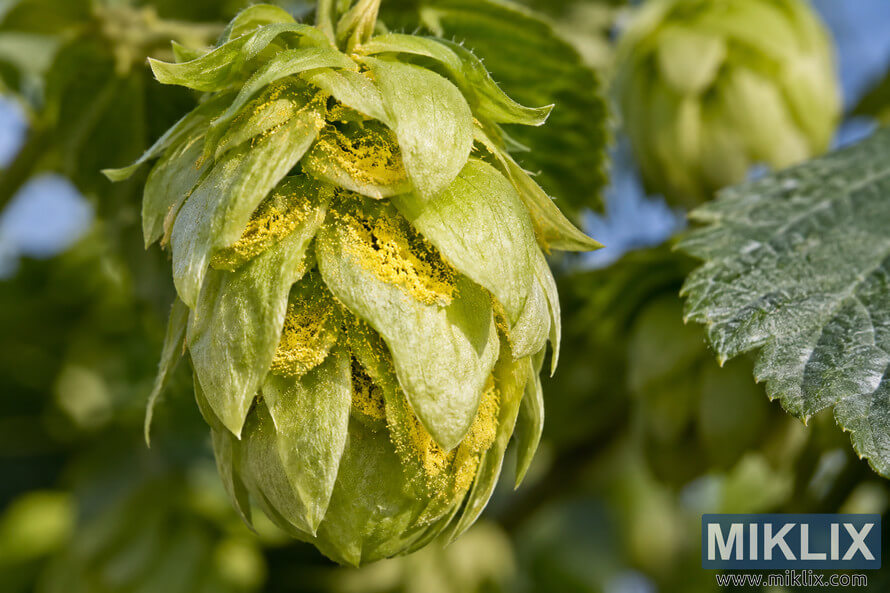
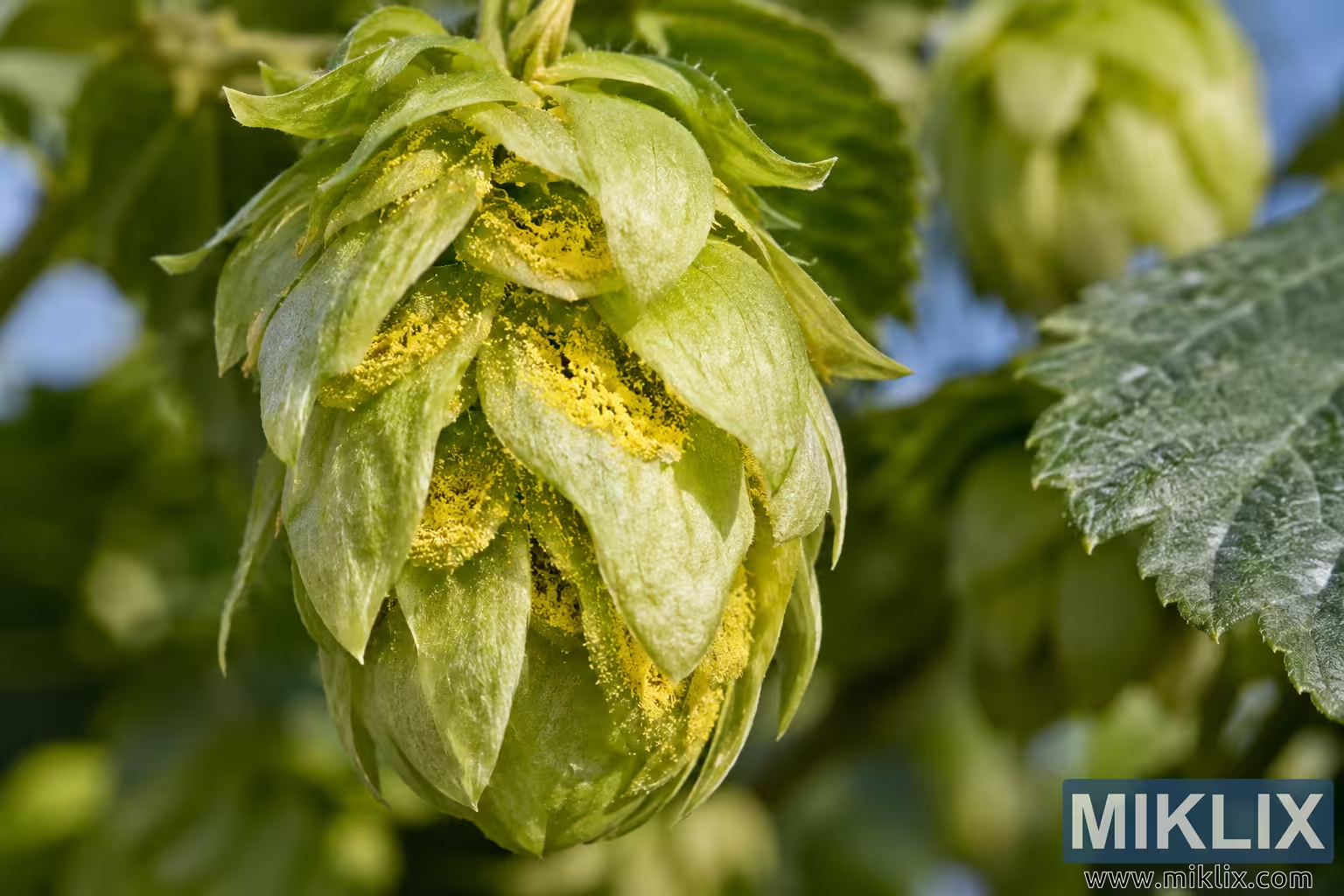
Close-up macro photograph of a fresh summer hop cone showing layered green bracts and golden lupulin glands in warm natural sunlight.
Available versions of this image
The image files available for download below are less compressed and higher resolution - and as a result of that, higher quality - than the images embedded in articles and pages on this website, which are more optimized for file size in order to reduce bandwidth consumption.
Regular size (1,536 x 1,024)
Large size (3,072 x 2,048)
Very large size (4,608 x 3,072)
Extra large size (6,144 x 4,096)
Comically large size (1,048,576 x 699,051)
- Still uploading... ;-)
Image description
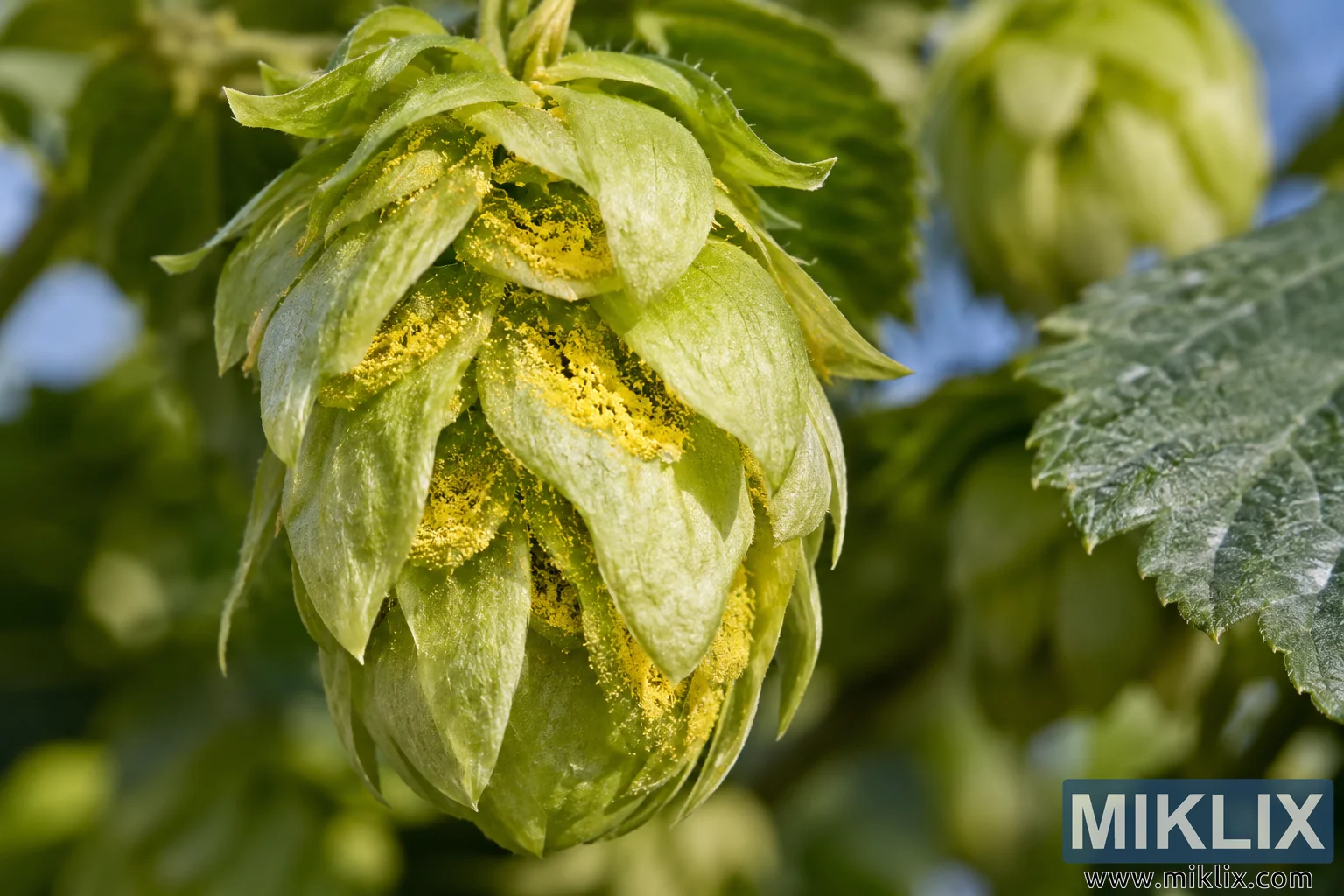
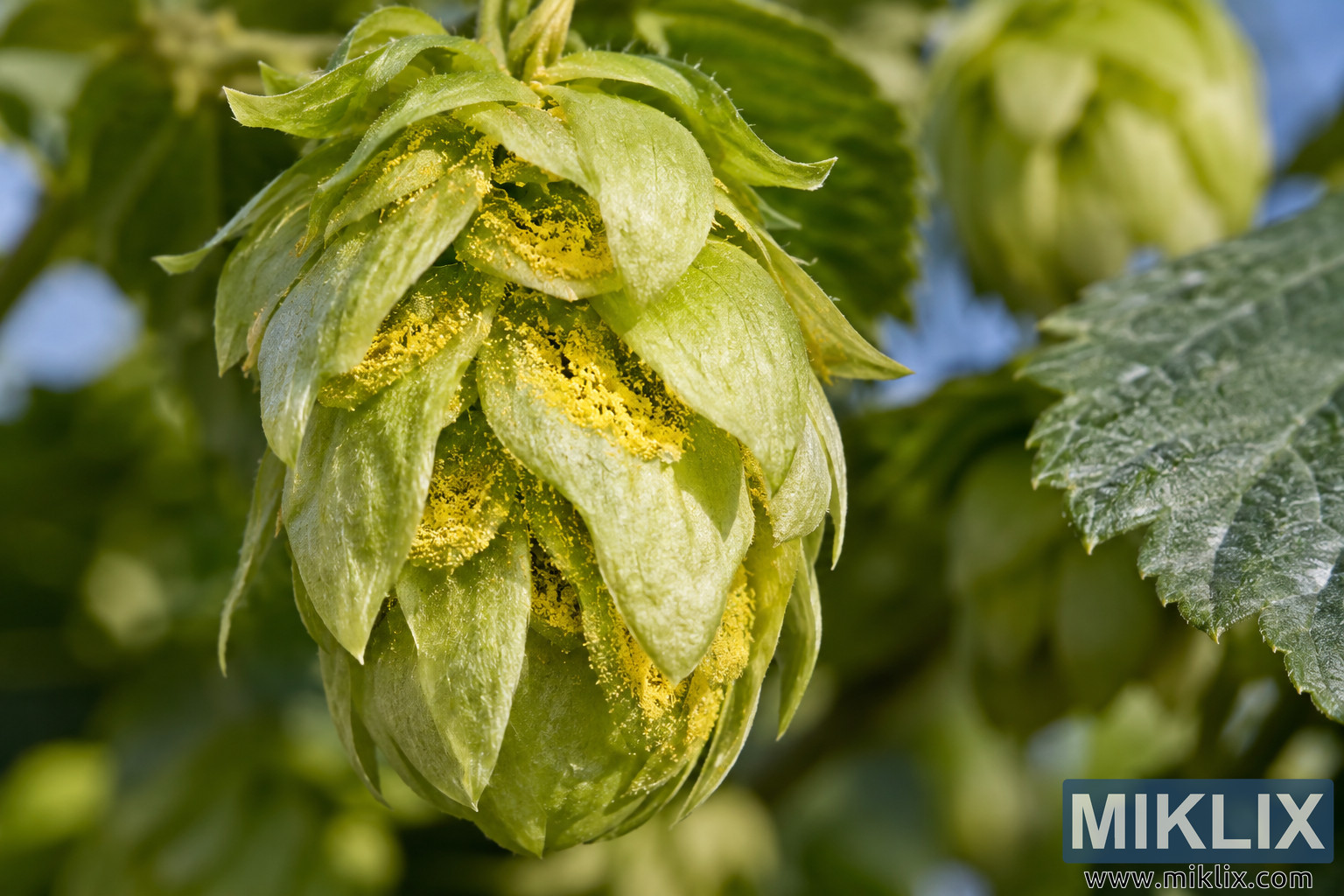
A high-resolution landscape-oriented macro photograph presents a close-up view of a fresh summer hop cone growing outdoors, with particular emphasis on the cone’s layered structure and the yellow lupulin glands visible between its overlapping bracts. The main hop cone occupies much of the left and central portion of the frame and hangs naturally downward from the plant. Its overall form is compact and roughly oval to conical, tapering slightly toward the bottom. Numerous pale green, leaf-like bracts overlap one another in successive layers, creating the characteristic shingled structure of a mature hop cone. Individual bracts curve outward at their tips, allowing glimpses into the interior of the cone and making its three-dimensional construction especially clear.
The surface of each bract contains fine botanical detail. Subtle veins extend through the thin green tissue, while the edges and surfaces show delicate variations in texture. Some portions appear slightly translucent where they catch the strong summer light, producing luminous yellow-green highlights. Other areas remain shaded beneath neighboring bracts, creating deeper olive and forest-green tones. The contrast between illuminated and shaded sections gives the hop cone considerable depth and makes the overlapping arrangement of the bracts easy to distinguish. Tiny hairs and irregular natural textures along the plant tissue further reinforce the appearance of a real, living hop flower photographed at very close range.
The most visually distinctive feature is the abundance of bright golden-yellow lupulin visible inside the hop cone. The lupulin appears as fine granular material and clusters of tiny resinous glands concentrated near the bases and inner surfaces of the bracts. These yellow deposits form narrow bands, scattered speckles, and denser patches throughout the exposed interior. Their saturated golden color contrasts strongly with the surrounding green plant tissue. In several places, the bracts have separated enough to reveal substantial concentrations of the yellow glands, making the image particularly useful as a visual representation of the internal structure of a hop cone and the location of lupulin. The glands appear almost powder-like at this magnification, although their distribution follows the natural folds and protected inner surfaces of the cone.
Warm natural sunlight enters the scene strongly and produces crisp highlights across the foreground hop. The lighting emphasizes the thinness of some bracts and reveals fine surface details, including veins, wrinkles, slight variations in pigmentation, and minute plant hairs. The brightest areas approach a fresh lime-green color, while recessed areas between the bracts become substantially darker. The golden lupulin catches the same light and appears especially vivid, giving the interior of the cone a warm yellow glow. The illumination has the character of direct summer daylight rather than artificial studio lighting, supporting the impression that the photograph was taken directly on a living hop plant in a garden, field, or hop-growing environment.
The depth of field is shallow, as expected in macro photography. The principal hop cone is rendered with strong detail, while the surrounding vegetation quickly becomes soft and out of focus. Behind the cone is a dense background of green leaves and stems rendered as smooth, organic shapes. Small patches of blue sky can be seen through gaps in the foliage, adding cool color accents that contrast with the dominant greens and yellows. In the upper-right background, a second hop cone is visible but heavily blurred. Its recognizable pale green shape provides botanical context without competing with the sharply focused foreground subject.
A large hop leaf extends into the right side of the composition. Although it is less prominent than the main cone, portions of the leaf retain visible texture, including a pronounced network of veins and a serrated outer edge. The leaf is darker and somewhat cooler in color than the illuminated hop cone, helping frame the primary subject. Additional indistinct leaves, stems, and hop forms fill the remainder of the background. Because these elements are softened by the shallow focus, they create a natural green backdrop rather than visual clutter.
Compositionally, the photograph places the main hop cone slightly left of center, allowing the cone to dominate the image while leaving enough environmental context around it to establish that it is growing naturally on the plant. The downward orientation of the cone creates a clear vertical axis within the wider landscape frame. The overlapping bracts guide the eye from the top attachment point down through the exposed yellow lupulin and toward the rounded lower end of the cone. The blurred second cone in the upper right and the textured leaf along the right edge balance the large foreground subject without distracting from it.
Overall, the image combines botanical documentation with an attractive natural macro-photography aesthetic. Its central subject is unmistakably a summer hop cone, and the close perspective makes both its layered bract structure and its golden lupulin glands readily visible. The vivid green plant tissue, yellow resinous material, warm sunlight, shallow depth of field, and softly blurred foliage convey freshness and active summer growth. There are no people, buildings, labels, logos, packaging, text, or recognizable commercial brands anywhere in the scene. The photograph focuses entirely on the natural anatomy, texture, color, and structure of the hop cone and surrounding hop foliage.
The image is related to: Hops in Beer Brewing: Summer