
Hops in Beer Brewing: Summer
Published: November 2, 2026 at 5:50:58 PM UTC
Summer is an Australian aroma hop known for its delicate stone-fruit character, with notes of apricot and melon alongside subtle citrus and floral tones—an easygoing choice for pale ales, wheat beers, lagers, and other refreshing homebrews.
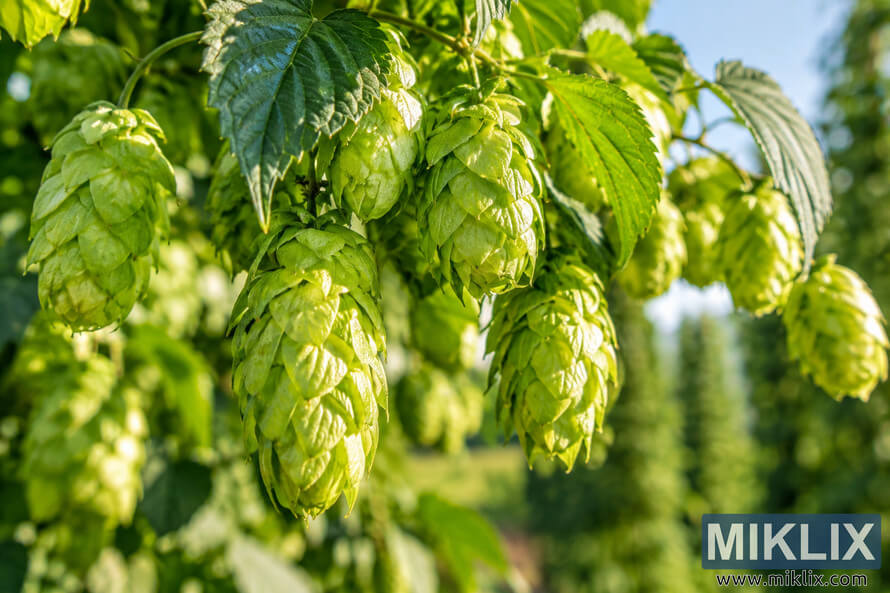
Click or tap the image for more information and higher resolutions.
Summer hops bring a distinctive character to beer that captures the essence of bright, fruity flavors. This Australian-bred variety transforms ordinary brews into refreshing experiences with notes of apricot melon and stone fruit.
Many homebrewers struggle to find the perfect hop that balances citrus brightness with subtle herbal undertones. Summer hops solve this challenge beautifully.
This comprehensive guide walks you through everything needed to master brewing with summer hops. You'll discover their unique characteristics, learn practical techniques, and gain confidence in creating exceptional beers at home.
Understanding Summer Hops: Origins and Characteristics
The Story Behind Summer Hops
The Summer hop variety emerged from Australian breeding programs focused on creating distinctive aroma profiles. Yakima Chief Hops recognized its potential and introduced it to craft brewers worldwide.
This variety shares genetic similarities with czech saaz hops but develops its own unique personality. The harvest typically occurs during the Southern Hemisphere summer, giving this hop its fitting name.
Brewers appreciate Summer for its versatility across multiple beer styles. The hop adapts well to different hopping schedules and fermentation temperatures.
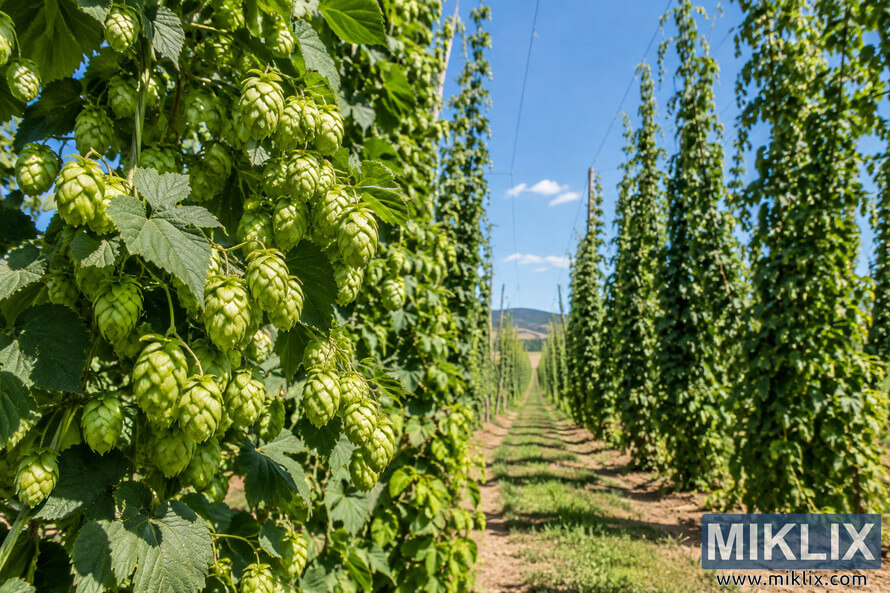
Click or tap the image for more information and higher resolutions.
Key Physical Characteristics
Pro Tip: Look for bright green cones with visible yellow lupulin glands when purchasing Summer hops. These indicate fresh, high-quality hops with maximum aroma potential.
| Characteristic | Specification | Brewing Impact |
| Cone Size | Medium to Large | Easy to work with in whole cone form |
| Lupulin Content | Moderate to High | Strong aroma contribution |
| Storage Stability | Good (65% alpha retention after 6 months) | Reliable for homebrewers |
| Typical Harvest | February-March (Southern Hemisphere) | Peak freshness March-September |
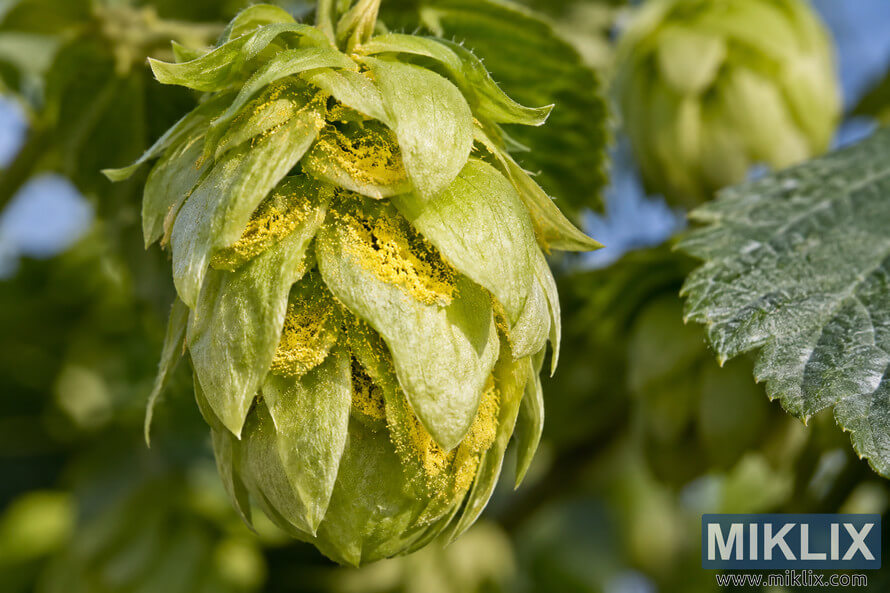
Click or tap the image for more information and higher resolutions.
Summer Hops Brewing Properties and Flavor Profile
Alpha Acids and Beta Acids Profile
Understanding the acid composition helps brewers predict how Summer hops will perform. The alpha acid content ranges between 5-7%, making this variety suitable for both aroma and light bittering applications.
Beta acids in Summer hops contribute to long-term stability. These compounds provide subtle background bitterness that develops over time.
Alpha Acid Characteristics
The moderate alpha acids level (typically 6%) delivers clean bitterness without harsh astringency. This makes Summer ideal for session beers where balanced hop character matters.
- Range: 5.0-7.0% alpha acids
- Average: 6.0% in most commercial batches
- Bittering efficiency: 25-30 IBU per ounce in 5-gallon batch
- Best used: Late boil or whirlpool additions
Beta Acid Benefits
Beta acids in Summer hops provide oxidative stability. These compounds help preserve hop character during storage and conditioning.
- Range: 4.5-6.0% beta acids
- Cohumulone: 23-26% of alpha acids
- Contributes to smooth bitterness perception
- Enhances aroma longevity in finished beer

Click or tap the image for more information and higher resolutions.
Aroma Profile and Flavor Notes
The aroma profile of Summer hops stands out among hop varieties. Brewers detect prominent apricot melon character accompanied by subtle citrus undertones.
Stone fruit notes dominate the sensory experience. These flavors appear most intensely in dry hop applications where volatile oils remain intact.
Primary Aromas
- Apricot (dominant)
- Melon (cantaloupe)
- Peach
- Nectarine
Secondary Notes
- Citrus (light orange)
- Herbal (subtle)
- Floral undertones
- Light tropical hints
Finish Characteristics
- Clean, crisp ending
- Minimal lingering bitterness
- Slight sweetness perception
- Refreshing aftertaste
Essential Oil Composition
The oil profile determines how Summer hops express themselves in beer. Total oil content typically measures between 1.0-1.5 mL per 100g.
Oil Chemistry: Myrcene contributes the fruity character, while farnesene adds subtle herbal complexity. The unique ratio of these compounds creates Summer's distinctive profile.
| Oil Component | Percentage Range | Flavor Contribution | Stability |
| Myrcene | 45-55% | Fruity, apricot character | Moderate volatility |
| Humulene | 10-15% | Herbal, subtle spice | Good stability |
| Caryophyllene | 5-8% | Woody, spicy notes | Excellent stability |
| Farnesene | 8-12% | Floral, green apple | Low stability |
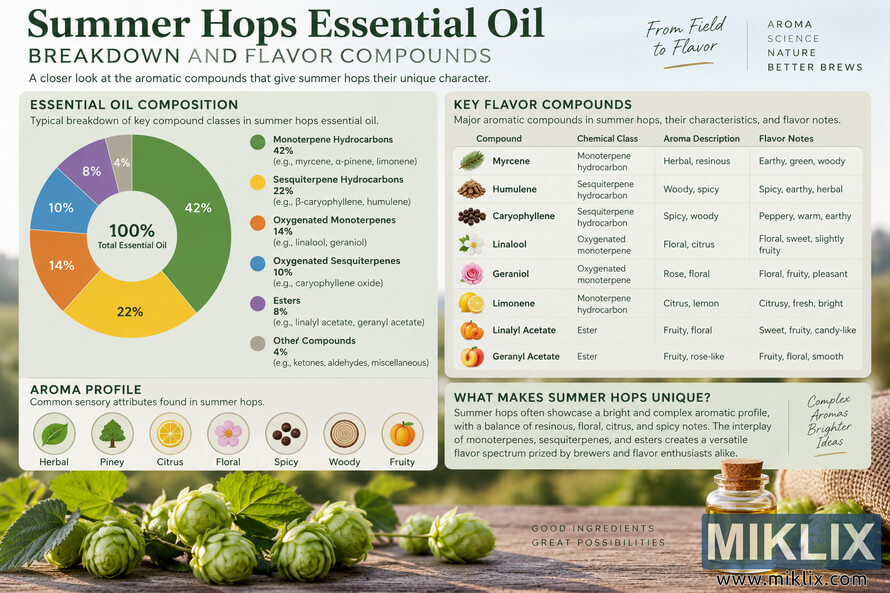
Click or tap the image for more information and higher resolutions.
Practical Usage Guide: How to Use Summer Hops
Optimal Hopping Schedule
The timing of hop additions dramatically affects the final result. Summer hops shine brightest in late boil and post-boil applications where delicate aromatics survive.
Early boil additions work for bittering but sacrifice the signature aroma profile. Most experienced brewers reserve Summer hops for flavor and aroma contributions.
Bittering Addition (60 minutes)
Use Summer hops for bittering when you want clean, neutral IBU contribution without competing hop character.
- Dosage: 0.5-1.0 oz per 5 gallons
- Target IBU: 15-25 for balanced bitterness
- Best applications: Session beers, wheat beers
- Cost efficiency: Moderate compared to high-alpha varieties
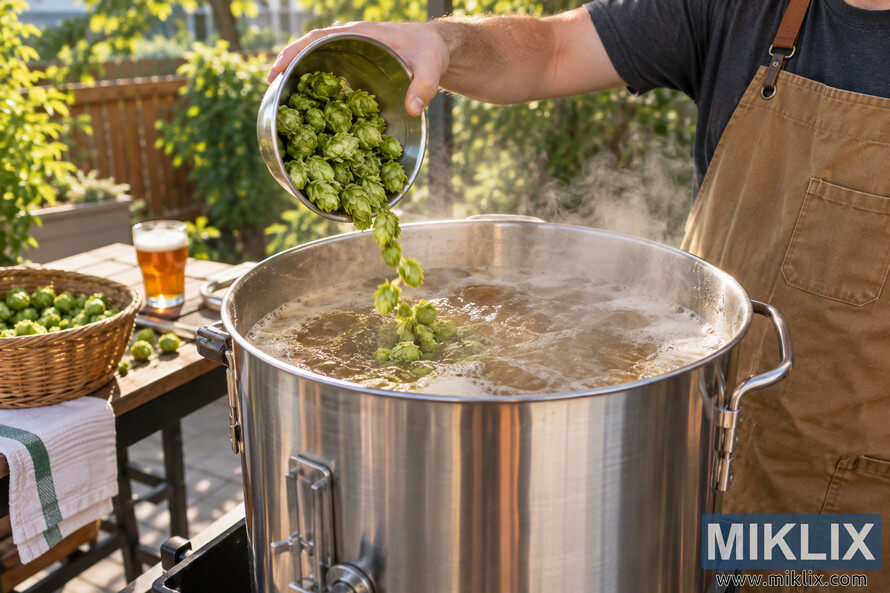
Click or tap the image for more information and higher resolutions.
Flavor Addition (15-20 minutes)
Mid-range additions capture more hop flavor while preserving some aromatic compounds through the remaining boil.
- Dosage: 0.5-1.5 oz per 5 gallons
- Flavor intensity: Medium to strong
- Ideal for: Pale ales, blonde ales
- Oil retention: Approximately 40-50%
Aroma Addition (5 minutes or flame-out)
Late boil additions maximize aroma retention. The brief exposure to heat releases oils without excessive volatilization.
- Dosage: 1.0-2.0 oz per 5 gallons
- Peak aroma expression window
- Best for: APAs, IPAs, fruit-forward styles
- Oil retention: Approximately 60-70%
Whirlpool/Hopstand Addition
Steeping hops below boiling temperature (160-180°F) extracts maximum aroma with minimal bitterness extraction.
- Dosage: 1.0-3.0 oz per 5 gallons
- Steep time: 20-30 minutes
- Temperature: 170-180°F optimal
- Result: Intense fruit-forward character
Dry Hopping Techniques with Summer Hops
Dry hopping brings out the best characteristics of Summer hops. This technique involves adding hops during or after fermentation when no heat affects the delicate oils.
The apricot melon notes become most pronounced through proper dry hop technique. Timing and temperature significantly influence the extraction efficiency.
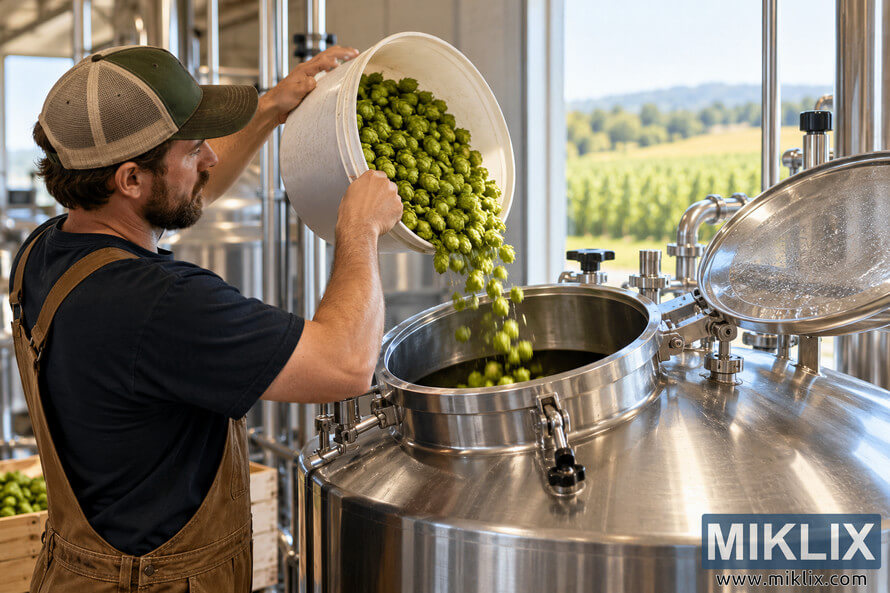
Click or tap the image for more information and higher resolutions.
Traditional Dry Hop Method
Add Summer hops after primary fermentation completes. This classic approach delivers consistent results with predictable aroma extraction.
- Timing: After gravity stabilizes (day 7-10)
- Duration: 3-5 days at fermentation temperature
- Dosage: 1-2 oz per 5 gallons
- Form: Pellets or whole cones in mesh bag
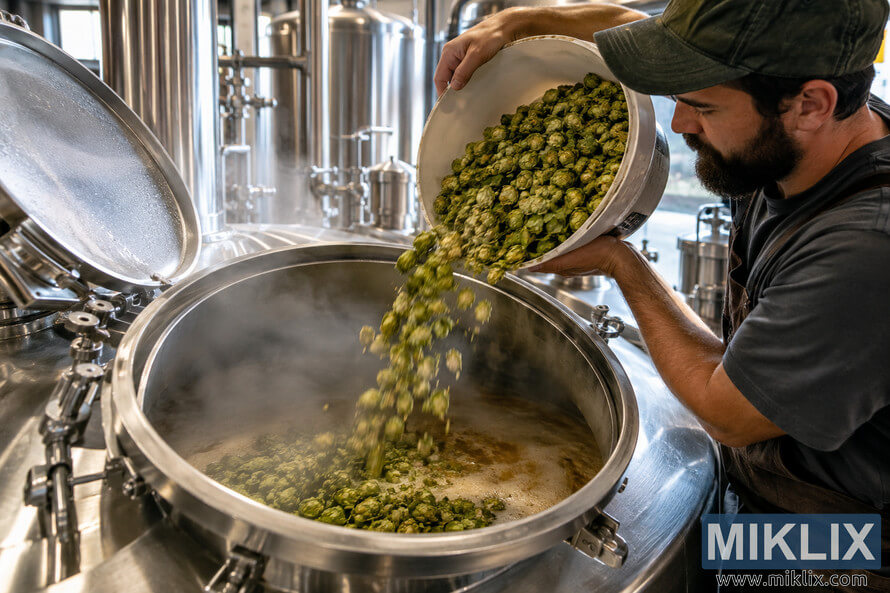
Click or tap the image for more information and higher resolutions.
Biotransformation Technique
Add hops during active fermentation (days 2-3) when yeast actively processes hop compounds. This creates unique flavor transformations.
- Timing: Peak fermentation activity
- Duration: 2-3 days then remove or add second charge
- Dosage: 0.5-1.0 oz per 5 gallons
- Result: Enhanced fruit complexity, tropical notes
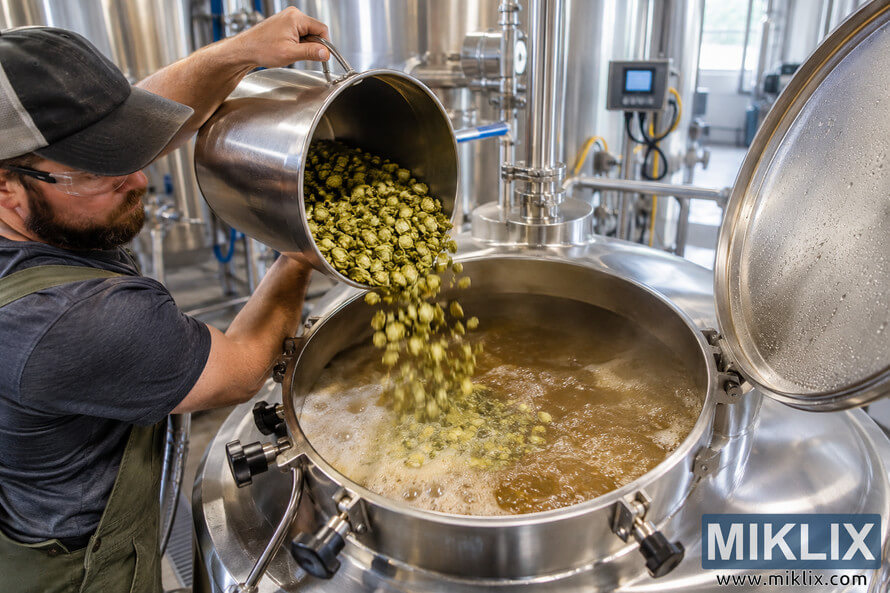
Click or tap the image for more information and higher resolutions.
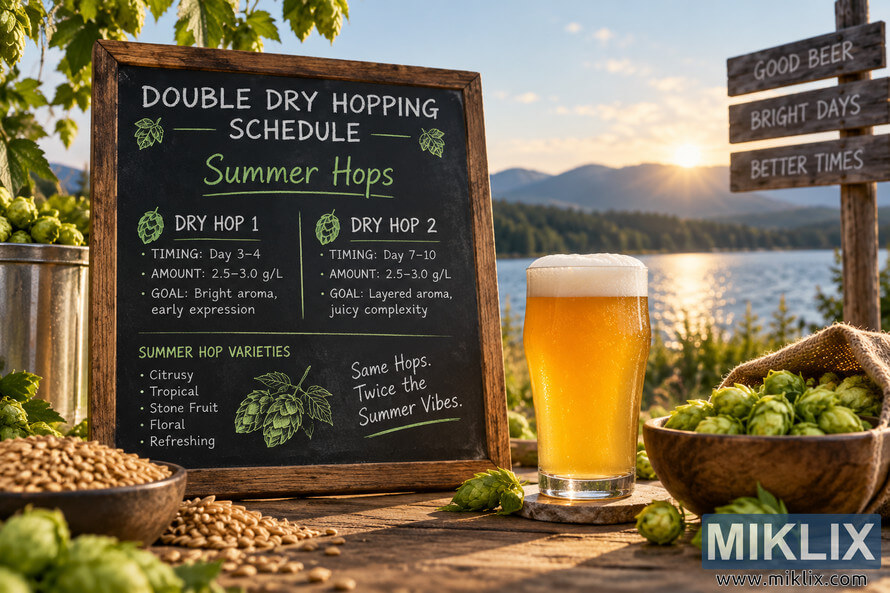
Double Dry Hop Approach
Split dry hop additions into two charges for layered aroma complexity. This technique maximizes hop expression without excessive vegetal character.
- First charge: Days 3-4 during fermentation (0.5-1 oz)
- Second charge: Day 10-12 post-fermentation (1-1.5 oz)
- Total dosage: 1.5-2.5 oz per 5 gallons
- Benefit: Multi-dimensional aroma profile
Click or tap the image for more information and higher resolutions.
Dosage Recommendations by Beer Style
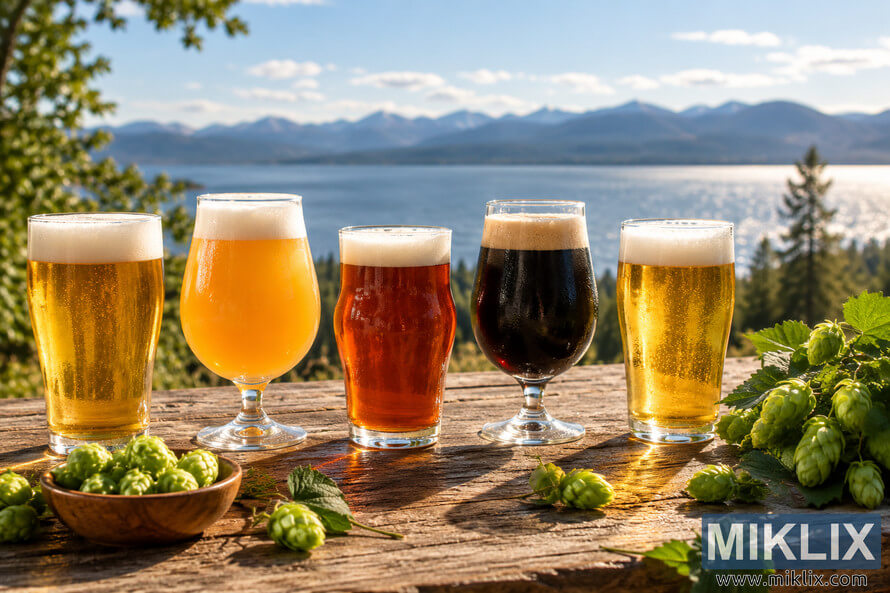
Different beer styles require different hopping rates. Summer hops adapt well across various styles but shine especially in certain applications.
| Beer Style | Bittering (oz/5gal) | Flavor (oz/5gal) | Aroma/Dry Hop (oz/5gal) | Total Hop Bill |
| American Wheat | 0.5 | 0.5 | 1.0 | 2.0 oz |
| Blonde Ale | 0.75 | 0.75 | 1.5 | 3.0 oz |
| Pale Ale | 1.0 | 1.0 | 2.0 | 4.0 oz |
| Session IPA | 0.5 | 1.5 | 3.0 | 5.0 oz |
| Saison | 0.75 | 0.5 | 1.0 | 2.25 oz |
| Fruit Beer | 0.5 | 0 | 1.5 | 2.0 oz |
Important Note: These dosage recommendations serve as starting points. Adjust based on your specific recipe, desired intensity, and personal preference. Start conservative and increase in subsequent batches.
Click or tap the image for more information and higher resolutions.
Homebrewer Tips and Techniques for Summer Hops
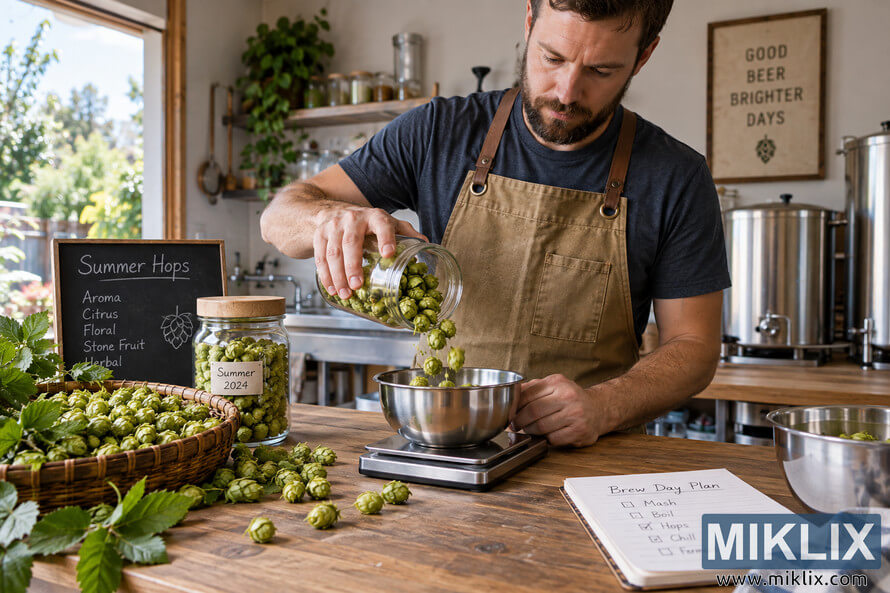
Brew Day Preparation
Successful brewing with Summer hops starts before brew day. Proper preparation ensures you capture the full potential of this variety.
Temperature management becomes especially critical with aroma-focused hops. Plan your cooling strategy to reach whirlpool temperatures quickly.
Pre-Brew Day Checklist
- Verify hop freshness (check packaging date)
- Store hops in freezer until brew day
- Calculate exact dosage amounts
- Prepare hop bags or filters if needed
- Plan cooling timeline for whirlpool additions
- Test pH and adjust water chemistry
- Organize additions in chronological order
Click or tap the image for more information and higher resolutions.
During Brewing
- Keep hops cold until moment of addition
- Set timers for each hop addition
- Monitor temperature during whirlpool
- Gentle stirring prevents hop burn
- Record actual amounts and times used
- Cool wort rapidly after final addition
- Transfer carefully to avoid excess oxygen
Common Mistakes to Avoid
- Adding hops at rolling boil temperature (flame-out)
- Using oxidized or old hop stock
- Over-extraction from excessive dry hop time
- Mixing hop forms without adjusting dosage
- Skipping temperature control during dry hopping
- Insufficient wort aeration before pitching yeast
- Rushing fermentation timeline
Water Chemistry Optimization
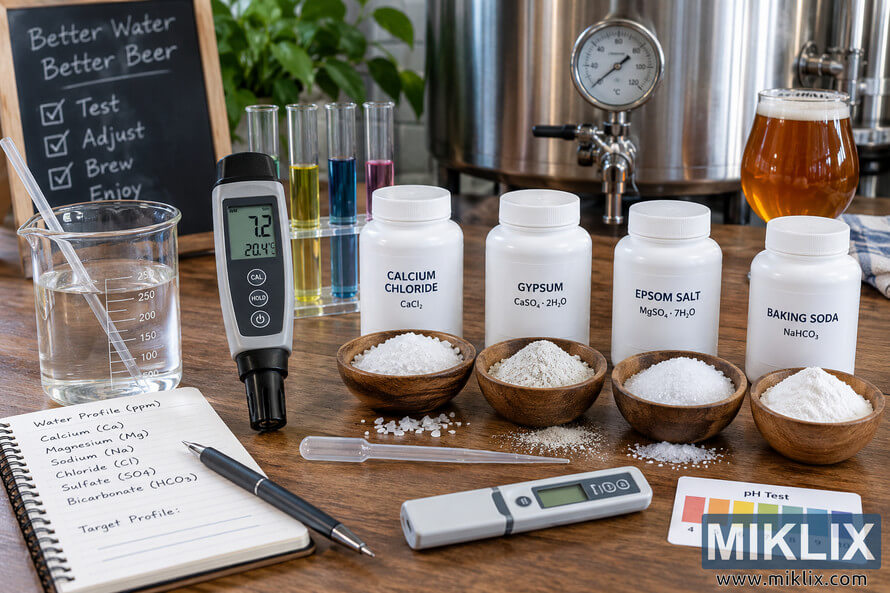
Water chemistry significantly affects how hop character expresses itself. Summer hops benefit from water profiles that enhance fruit-forward qualities.
Ideal Water Profile for Summer Hops
A sulfate-forward water profile accentuates the fruit characteristics of Summer hops. The chloride-to-sulfate ratio should favor sulfate for crisp hop expression.
| Ion | Target (ppm) | Effect on Beer |
| Calcium | 75-150 | Enzyme function, yeast health |
| Sulfate | 150-250 | Enhances hop bitterness, crispness |
| Chloride | 50-100 | Rounds malt sweetness |
| Magnesium | 10-20 | Yeast nutrient |
Maintain mash pH between 5.2-5.4 for optimal hop extraction. Lower pH values can result in harsh bitterness perception.
Quick Tip: A 2:1 sulfate-to-chloride ratio works excellently with Summer hops, highlighting the bright fruit notes while maintaining pleasant drinkability.
Click or tap the image for more information and higher resolutions.
Fermentation Temperature Control
Temperature control during fermentation preserves hop character. Excessive heat during fermentation drives off volatile hop compounds.
Most ale yeasts perform well at 65-68°F, which also preserves Summer hop aromatics. Higher temperatures may emphasize yeast esters over hop character.
Benefits of Temperature Control
- Preserves delicate hop aromatics throughout fermentation
- Prevents formation of unwanted esters that mask hop character
- Maintains consistency across multiple batches
- Allows predictable dry hop extraction rates
- Reduces risk of stressed yeast producing off-flavors
- Enables biotransformation techniques to work effectively
Challenges Without Control
- Volatile hop oils dissipate in warm conditions
- Yeast character can overwhelm subtle hop notes
- Inconsistent results between batches
- Risk of harsh, vegetal hop character
- Accelerated hop compound degradation
- Difficult to achieve clean, fruit-forward profile
Equipment Considerations for Hop-Forward Beers
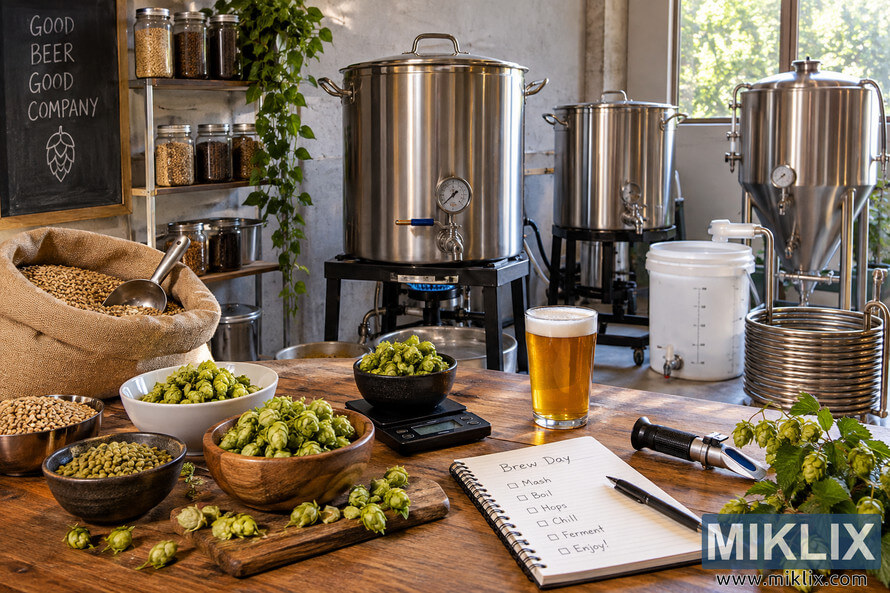
Certain equipment upgrades improve results when working with aroma varieties like Summer hops. These investments pay dividends across many brews.
Essential Equipment
- Accurate thermometer (±1°F)
- Hop bags or spider strainer
- Fermentation temperature control
- Oxygen-barrier transfer tubing
- Clean, sanitized fermenters
Recommended Upgrades
- Counterflow or plate chiller
- Keg-based dry hopping system
- Oxygen scavenging caps
- Floating dip tube
- Closed transfer capability
Advanced Options
- Hop rocket or Randall
- Pressure fermentation setup
- Inline carbonation system
- Hop extraction chamber
- Temperature-controlled serving
Click or tap the image for more information and higher resolutions.
Troubleshooting Common Issues
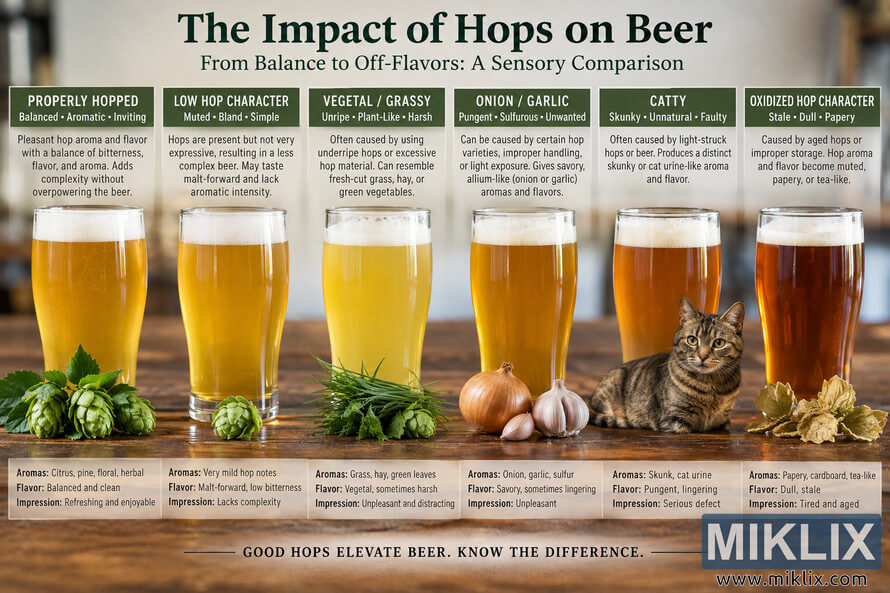
Even experienced brewers encounter challenges when working with Summer hops. Understanding solutions prevents batch disappointment.
Why does my beer taste grassy or vegetal instead of fruity?
Grassy flavors typically result from over-extraction during dry hopping. Limit dry hop contact time to 3-5 days maximum. Excessive hop material relative to beer volume also causes this issue. Reduce dry hop dosage or remove hops after planned contact time.
The apricot character seems muted in my finished beer
Muted fruit character often indicates old or oxidized hops. Always purchase from reputable suppliers and verify harvest year. Store hops frozen in vacuum-sealed packages. Additionally, ensure adequate dry hop dosage (minimum 1 oz per 5 gallons for noticeable aroma).
My hop aroma fades quickly after packaging
Rapid aroma fade points to oxygen exposure during or after fermentation. Minimize headspace in fermenters and kegs. Use purged containers and closed transfer methods when possible. Package cold and serve fresh for best results with hop-forward styles.
The bitterness seems harsh rather than smooth
Harsh bitterness can stem from excessive boil times or high-temperature hop additions. Shift hop schedule toward late boil and whirlpool additions. Check water chemistry - excessive sulfate (over 300 ppm) can accentuate perceived harshness. Maintain proper mash pH for smooth bitterness extraction.
Click or tap the image for more information and higher resolutions.
Best Beer Styles for Summer Hops
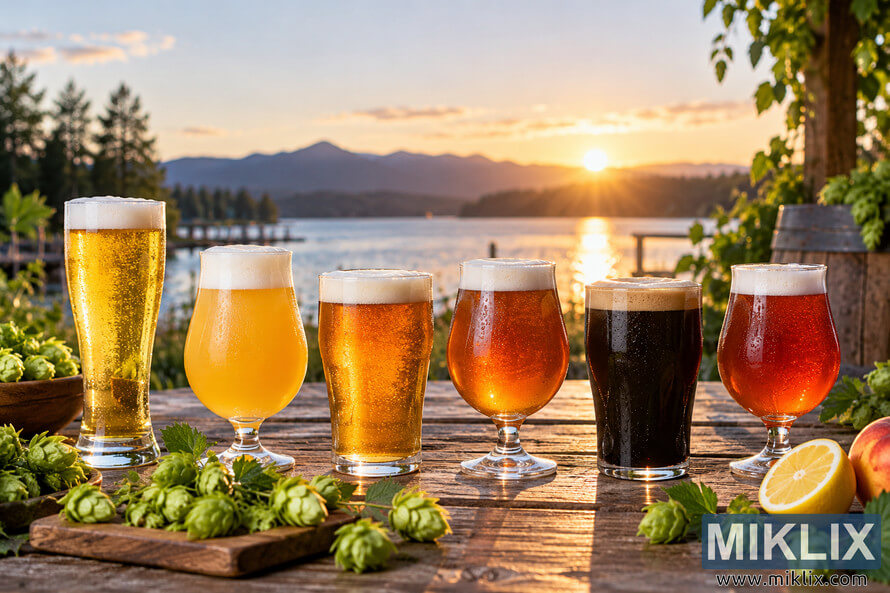
Summer hops complement certain beer styles exceptionally well. The variety's unique profile enhances these styles while maintaining their traditional character.
Understanding which styles work best helps brewers achieve outstanding results. The hop variety adapts across multiple categories but shines brightest in specific applications.
Click or tap the image for more information and higher resolutions.
American Wheat Beer
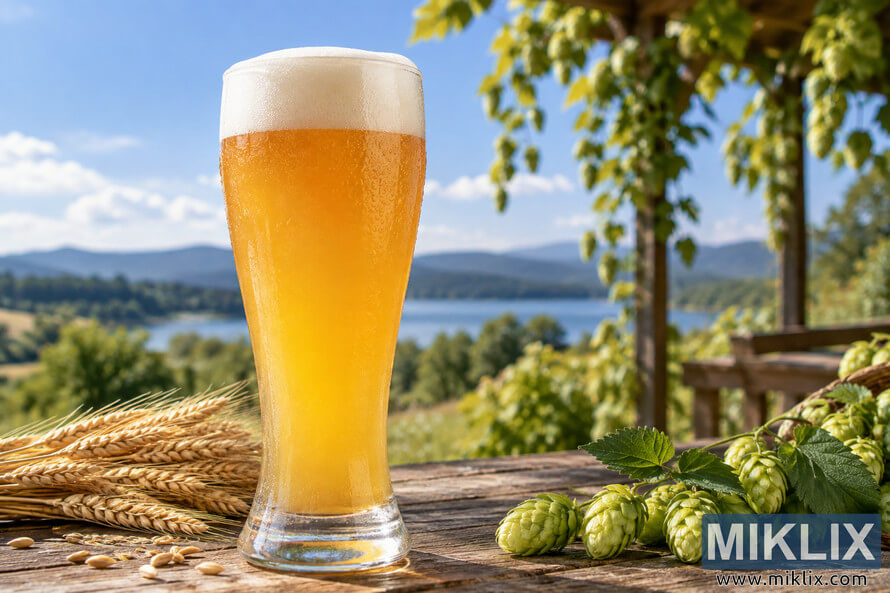
American wheat beers provide the perfect canvas for Summer hop expression. The light malt backbone allows fruit notes to shine prominently.
The subtle grain character from wheat complements rather than competes with hop aromatics. Many brewers consider this the ideal introduction to Summer hops.
Recipe Framework
- Grain bill: 50% wheat malt, 50% pale malt
- Original gravity: 1.045-1.050
- Target IBU: 15-25 (all from Summer hops)
- Hopping schedule: Minimal bittering, heavy late additions
- Dry hop: 1.5 oz Summer for 3 days
- Fermentation: Clean American ale yeast at 66°F
Click or tap the image for more information and higher resolutions.
Blonde Ale and Golden Ale
Blonde ales showcase Summer hops with restrained malt presence. These approachable styles work excellently for introducing friends to craft beer.
The result combines refreshing drinkability with interesting hop character. Blonde ales ferment quickly and package easily for homebrewers.
Classic Blonde Ale
A straightforward approach emphasizing Summer hop character over malt complexity. Perfect for warm weather drinking.
- OG: 1.048-1.052, FG: 1.010-1.012
- IBU: 20-28
- Color: 3-6 SRM (light gold)
- ABV: 4.5-5.2%
- Summer hop timing: 60 min (0.5 oz), 5 min (1 oz), dry hop (1.5 oz)
Hoppy Blonde
Increased hop presence for those who enjoy more assertive character while maintaining the style's approachability.
- OG: 1.050-1.055, FG: 1.010-1.013
- IBU: 30-38
- Color: 4-7 SRM
- ABV: 5.0-5.8%
- Summer hop timing: 60 min (0.75 oz), whirlpool (2 oz), dry hop (2 oz)
Belgian-Style Blonde
Belgian yeast esters complement Summer hop fruit character, creating complex yet balanced flavor profiles.
- OG: 1.055-1.065, FG: 1.008-1.012
- IBU: 20-30
- Color: 4-7 SRM
- ABV: 6.0-7.5%
- Summer hop timing: Minimal bittering, 5 min (1.5 oz), dry hop (1 oz)
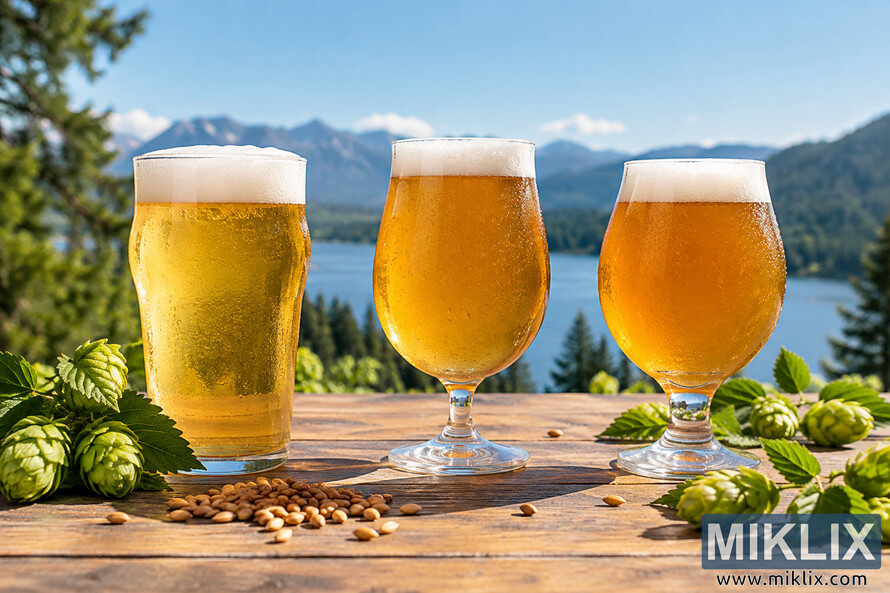
Click or tap the image for more information and higher resolutions.
American Pale Ale
Pale ales balance malt presence with hop character beautifully. Summer hops add a modern twist to this classic American style.
The moderate alcohol content and balanced bitterness make pale ales versatile for various occasions. These beers satisfy both hop enthusiasts and casual drinkers.
Style Tip: Keep pale ales in the 35-45 IBU range with Summer hops. This allows the apricot melon notes to complement rather than overwhelm the malt backbone.
- Select base malt that provides light caramel character (2-row plus 5-10% crystal 40L)
- Plan hop schedule with 25% of IBU from 60-minute addition
- Add 50% of total hops at whirlpool for maximum flavor
- Dry hop with 2-2.5 oz Summer for 4 days post-fermentation
- Ferment with neutral American ale yeast (US-05 or similar)
- Carbonate to 2.4-2.6 volumes CO2 for proper mouthfeel
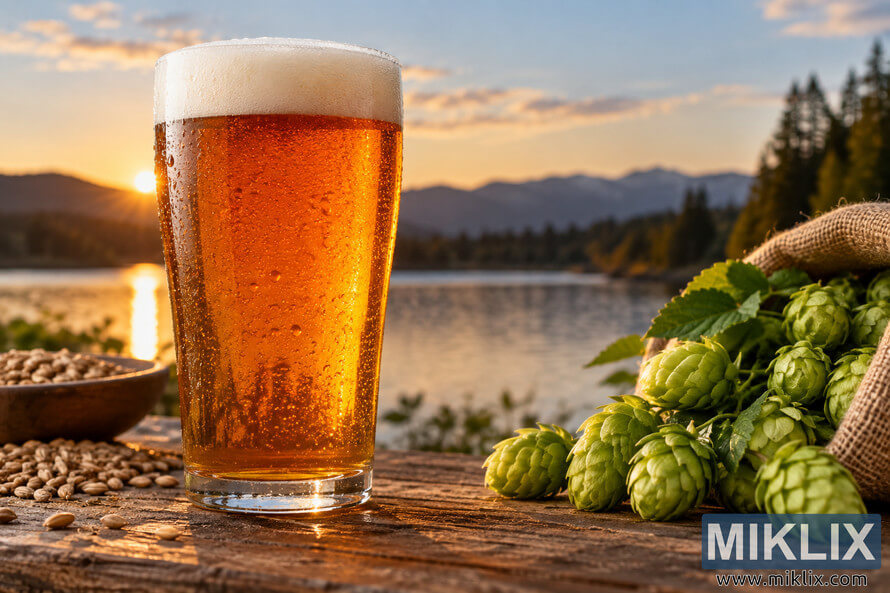
Click or tap the image for more information and higher resolutions.
Session IPA
Session IPAs demand maximum hop impact with minimal alcohol. Summer hops deliver the necessary aroma intensity without requiring excessive alcohol content.
The challenge lies in achieving bold hop character while maintaining drinkability. Careful hopping technique makes the difference between success and disappointing results.
Session IPA Strategy
Keep the grain bill simple and highly fermentable. Target 1.045-1.050 original gravity with final gravity below 1.010 for perceived dryness.
Focus hop additions entirely on flavor and aroma. Use minimal or no bittering hops, relying instead on late boil and dry hop for all IBU contribution.
- Bittering: None or minimal (target 15 IBU maximum)
- Whirlpool at 170°F: 2-3 oz Summer for 30 minutes
- First dry hop: 2 oz at day 3 of fermentation
- Second dry hop: 2 oz at day 10 (post-fermentation)
- Total Summer hop usage: 6-7 oz per 5 gallons
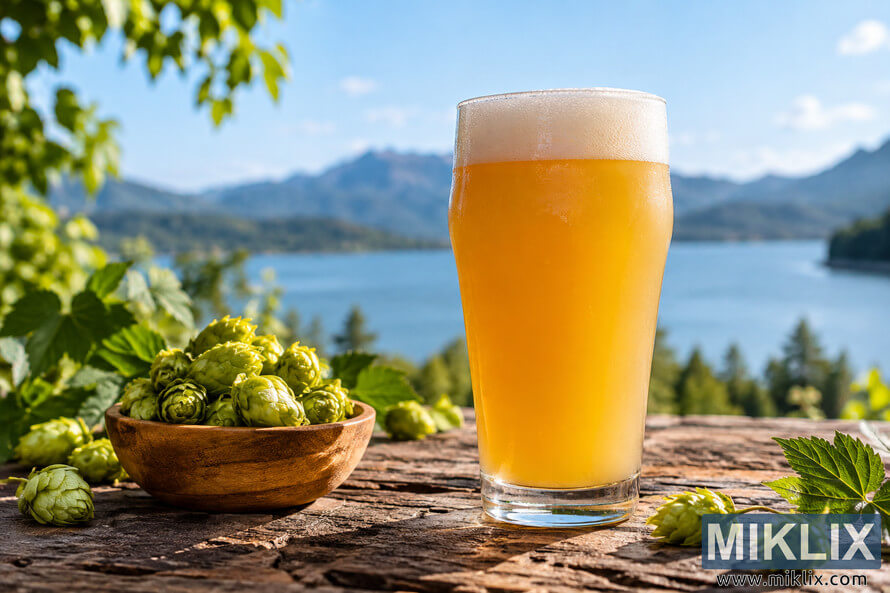
Click or tap the image for more information and higher resolutions.
Saison and Farmhouse Ales
Farmhouse styles benefit from Summer hop's compatibility with spicy yeast character. The hop's fruit notes harmonize with classic saison esters.
These styles traditionally feature restrained hopping that supports rather than dominates. Summer hops fit perfectly within this framework.
Brewing Note: Saison yeasts operate best at warmer temperatures (75-85°F) which normally threatens hop character. Add Summer hops after primary fermentation completes to preserve aromatics.
| Saison Style | OG Range | Summer Hop Dosage | Key Characteristics |
| Table Saison | 1.035-1.045 | 1.5-2 oz total | Light, refreshing, high drinkability |
| Standard Saison | 1.050-1.065 | 2-3 oz total | Balanced yeast and hop character |
| Hoppy Saison | 1.055-1.070 | 3-4 oz total | Hop-forward with saison backbone |
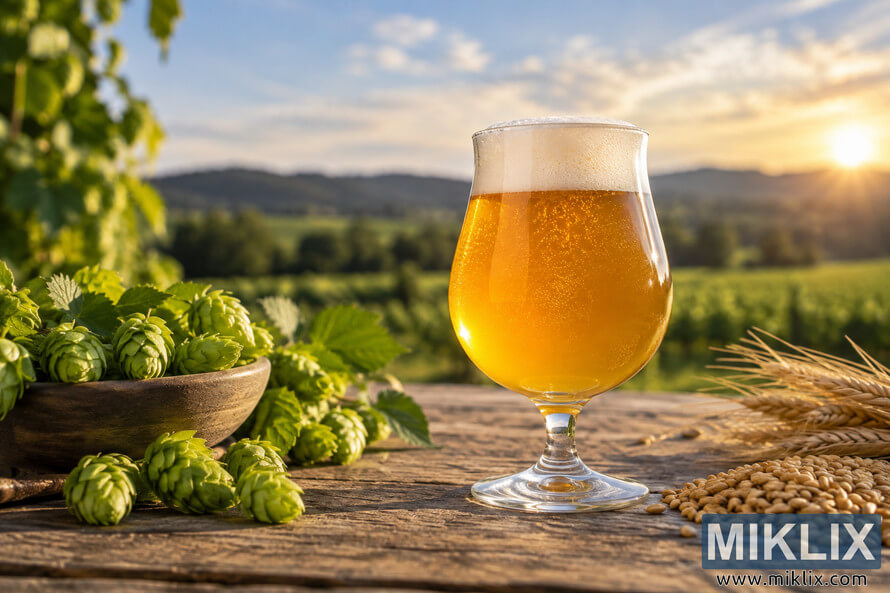
Click or tap the image for more information and higher resolutions.
Fruit Beer Combinations
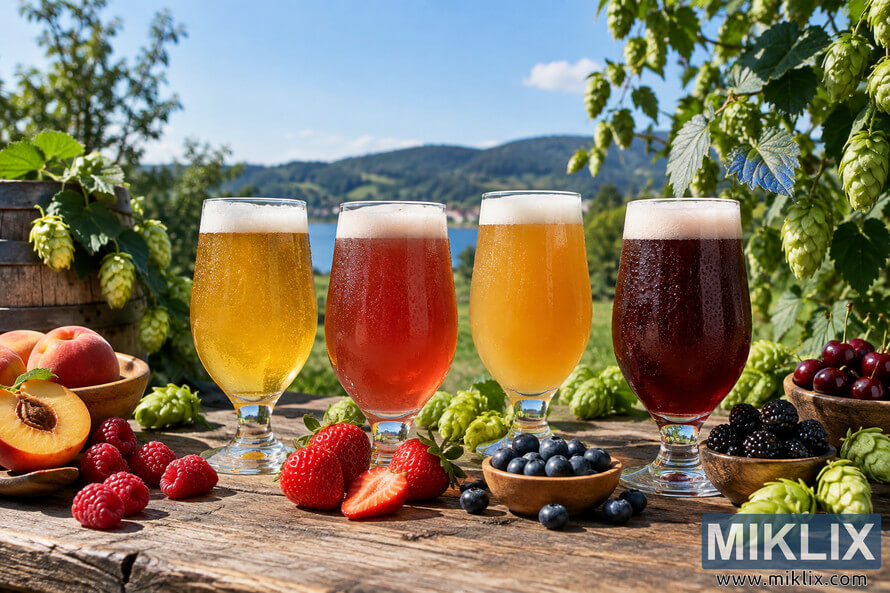
Summer hops naturally complement fruit additions in beer. The hop's stone fruit character enhances actual fruit additions rather than competing.
Pairing Summer hops with complementary fruits creates synergistic flavor combinations. This approach works especially well with wheat beer or blonde ale bases.
Apricot Wheat
The apricot notes in Summer hops amplify actual apricot fruit additions.
- Base: American wheat beer
- Fruit: 2-3 lbs apricot puree
- Summer hops: 1 oz whirlpool, 1 oz dry hop
- Result: Intense stone fruit character
Melon Blonde
Cantaloupe and honeydew melon marry perfectly with Summer's melon notes.
- Base: Blonde ale
- Fruit: 3 lbs fresh melon puree
- Summer hops: 0.5 oz bittering, 1.5 oz dry hop
- Result: Refreshing summer sipper
Citrus Saison
Orange and tangerine complement Summer's subtle citrus undertones.
- Base: Table saison
- Fruit: Zest of 4-5 oranges
- Summer hops: 1 oz whirlpool, 0.5 oz dry hop
- Result: Complex fruit-forward farmhouse
Click or tap the image for more information and higher resolutions.
Storage and Handling Best Practices
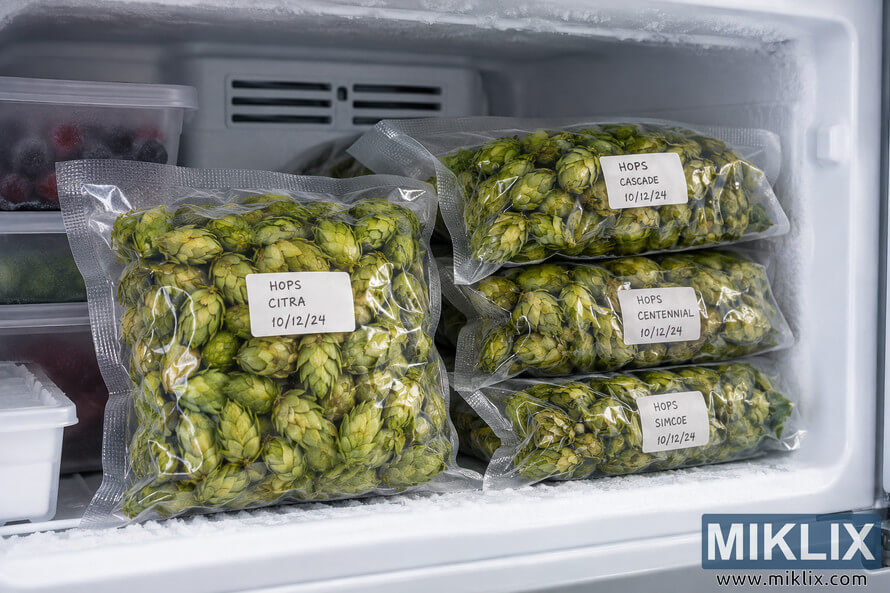
Proper storage preserves hop quality from purchase through brew day. Summer hops maintain their distinctive character when handled correctly.
Many homebrewers unknowingly degrade hop quality through improper storage. Understanding preservation techniques protects your investment and ensures consistent brewing results.
Click or tap the image for more information and higher resolutions.
Optimal Storage Conditions
Temperature control represents the most critical factor in hop preservation. Cold storage dramatically slows the degradation of alpha acids and essential oils.
Oxygen exposure accelerates hop deterioration more than any other factor. Barrier packaging and minimal air contact preserve hop freshness.
Ideal Storage Parameters
- Temperature: Below 32°F (freezer storage)
- Oxygen exposure: Minimize through barrier packaging
- Light exposure: Complete darkness prevents photo-oxidation
- Humidity: Low moisture environment (under 10%)
- Package integrity: Vacuum-sealed or nitrogen-flushed
- Storage duration: Use within 6-12 months for peak freshness
Storage Container Options
- Original packaging: Keep sealed until brew day
- Vacuum bags: Re-seal opened packages with vacuum sealer
- Mason jars: Purge with CO2, store in freezer
- Mylar bags: Oxygen-barrier bags with proper sealing
- Nitrogen flushing: Displace oxygen in storage containers
- Avoid: Plastic zip bags, containers with air exposure
Evaluating Hop Freshness
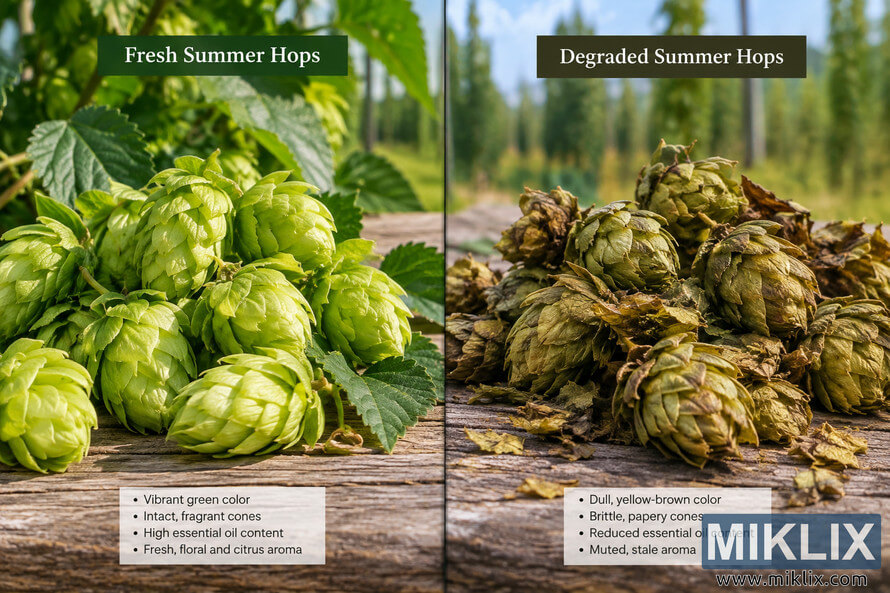
Learning to assess hop condition helps brewers make informed purchasing decisions. Fresh Summer hops exhibit distinct visual and aromatic characteristics.
Signs of Fresh Hops
- Bright green color (pellets or whole cones)
- Strong, pleasant aroma when package opens
- Sticky lupulin glands visible on whole cones
- Packaging date within 6 months
- Vacuum-sealed or nitrogen-flushed packaging intact
- Apricot and melon aromas immediately noticeable
Signs of Degraded Hops
- Brown, faded, or yellowish color
- Weak aroma or cheesy/sweaty smell
- Dry, brittle texture in whole cones
- Packaging date over 12 months old
- Compromised package with air infiltration
- Musty or hay-like aromas instead of fruit
Click or tap the image for more information and higher resolutions.
Handling During Brewing
The time between removing hops from storage and adding to wort affects final beer quality. Minimize this exposure period whenever possible.
Temperature fluctuations cause condensation inside packaging. Allow frozen hops to reach room temperature before opening packages.
Critical Warning: Never open hop packages while still frozen. Condensation forms immediately on cold hops when exposed to warm air, introducing moisture that degrades quality rapidly.
- Remove exact quantity needed from freezer 30 minutes before brew day
- Keep remaining hops sealed and frozen
- Allow hops to reach room temperature before opening package
- Measure required amounts quickly once package opens
- Re-seal opened packages immediately with vacuum sealer if possible
- Return unused hops to freezer within 10 minutes
- Record opening date on package for future reference
Pellet vs Whole Cone Considerations
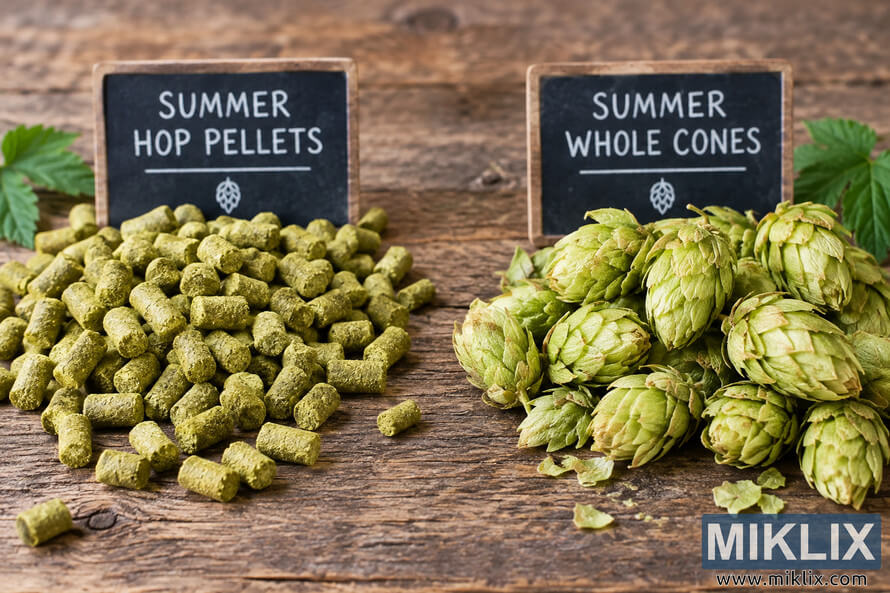
Both hop forms work well for homebrewing with Summer hops. Each format offers distinct advantages depending on brewing equipment and techniques.
| Factor | Pellet Hops | Whole Cone Hops |
| Storage Stability | Excellent - processed to reduce oxygen | Good - larger surface area exposed |
| Utilization Rate | 10-15% higher extraction efficiency | Standard baseline measurement |
| Ease of Use | Very easy - break apart readily | Requires hop bag or filter |
| Wort Separation | Can clog equipment when excessive | Easier to filter and remove |
| Freshness Assessment | Harder to visually evaluate | Easy to inspect color and structure |
| Price Point | Generally more economical | Premium pricing for specialty varieties |
| Best Application | All-purpose, especially dry hopping | Late additions, traditional brewing |
Click or tap the image for more information and higher resolutions.
Long-Term Storage Strategy
- Planning hop purchases around brewing schedules prevents waste. Buy quantities you'll use within several months rather than bulk purchasing everything at harvest time.
- Most homebrewers benefit from buying 1-pound packages of frequently used varieties. Smaller packages reduce exposure when opening and using portions.
- Money-Saving Tip: Purchase Summer hops in 1-pound quantities during harvest season (March-April) when prices drop. Vacuum seal into 2-4 oz portions immediately for long-term freezer storage.
Short-Term Strategy (1-3 Months)
For immediate brewing plans with regular hop usage throughout the season.
- Purchase 4-8 oz quantities as needed
- Store in original packaging in freezer
- Use within 90 days of opening
- Ideal for testing new varieties
Medium-Term Strategy (3-6 Months)
Balanced approach for regular homebrewers with established recipes.
- Purchase 1-pound quantities of favorites
- Vacuum seal into 4 oz portions
- Label with variety and date
- Maintain hop inventory spreadsheet
Long-Term Strategy (6-12 Months)
For committed brewers wanting maximum value and consistent supply.
- Buy during harvest for best prices
- Vacuum seal immediately into brew-day portions
- Nitrogen flush if equipment available
- Deep freezer storage below 0°F
Purchasing Recommendations
Buying from reputable suppliers ensures proper storage throughout the supply chain. Yakima Chief Hops and established homebrew retailers maintain cold chain integrity.
Avoid purchasing hops from suppliers who cannot provide harvest year information. This transparency indicates proper inventory management and quality control.
Advanced Brewing Techniques with Summer Hops
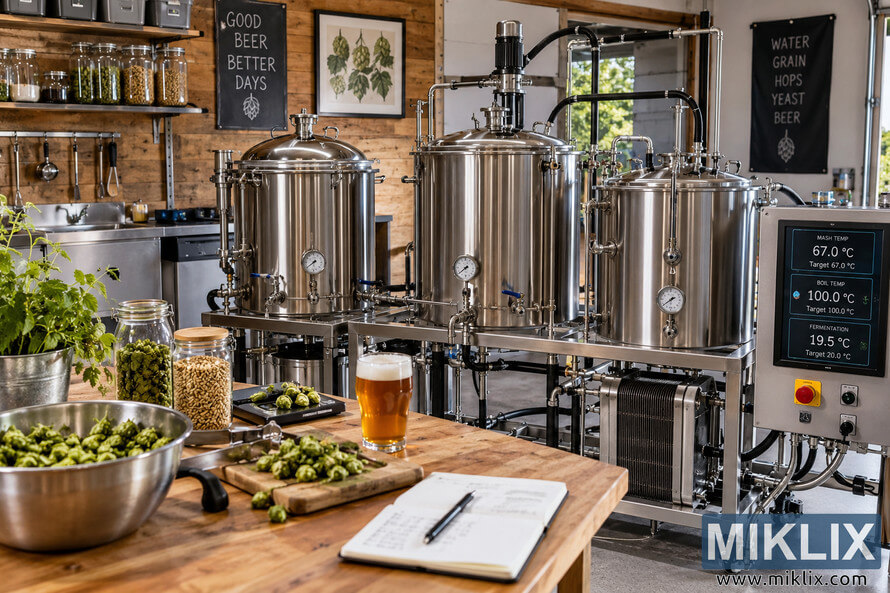
Experienced brewers can push Summer hop expression further through specialized techniques. These advanced methods require careful execution but deliver exceptional results.
Click or tap the image for more information and higher resolutions.
Hop Creep Management
Heavy dry hopping can restart fermentation through enzymes in hop matter. This phenomenon, called hop creep, affects final gravity and carbonation levels.
Understanding and managing hop creep prevents over-carbonation and bottle bombs. The enzymes in hops break down residual dextrins into fermentable sugars.
Technical Note: Hop creep occurs most commonly with dosage rates exceeding 2 oz per gallon. Summer hops contain moderate enzyme levels compared to some modern American varieties.
Beneficial Aspects of Hop Creep
- Increases attenuation for drier finish
- Can enhance hop biotransformation
- Creates fuller mouthfeel in some applications
- May improve clarity through additional yeast activity
Challenges to Manage
- Unpredictable final gravity changes
- Risk of over-carbonation in packaged beer
- Requires extended conditioning time
- Can create diacetyl if yeast stressed
Biotransformation Optimization
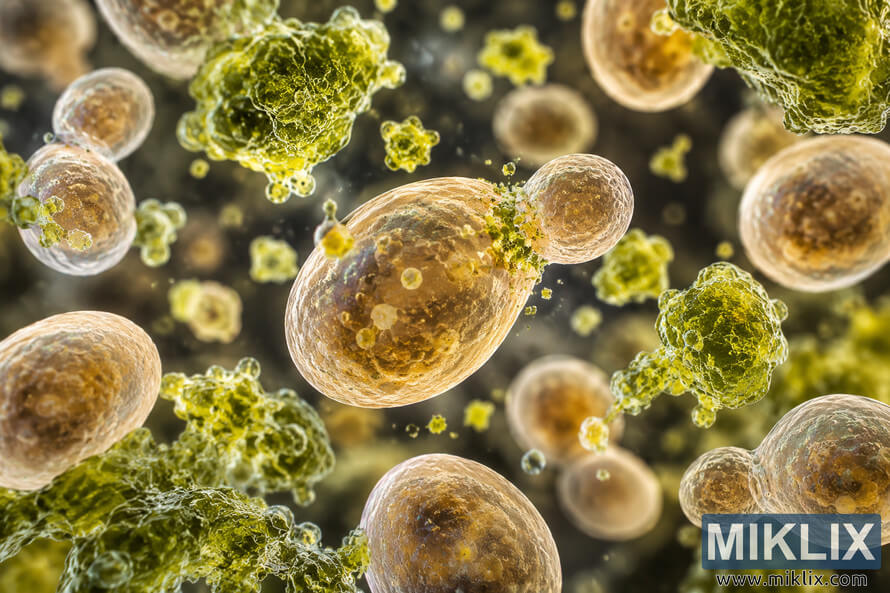
Certain hop compounds transform through yeast metabolism during active fermentation. Strategic dry hopping during fermentation unlocks unique flavor compounds.
Summer hops respond particularly well to biotransformation techniques. The result often emphasizes tropical fruit notes alongside the variety's natural stone fruit character.
- Pitch healthy yeast at proper rates (1.5 million cells per mL per degree Plato)
- Allow fermentation to reach high krausen (typically day 2-3)
- Add first dry hop charge at peak activity (0.5-1 oz per 5 gallons)
- Maintain fermentation temperature throughout hop contact
- Remove hops after 48-72 hours or leave for full fermentation
- Add second dry hop charge post-fermentation (1-2 oz per 5 gallons)
- Package after 3-5 days of secondary dry hop contact
Click or tap the image for more information and higher resolutions.
Cryo Hops and Hop Extracts
Processed hop products concentrate lupulin while removing vegetative matter. These products enable higher dosage rates without excessive plant material.
Summer hops availability in cryo form varies by year and supplier. When available, cryo hops deliver intense aroma with reduced grassy character risk.
| Product Type | Concentration Factor | Usage Rate vs Pellets | Best Application |
| Standard Pellets | 1x (baseline) | Standard dosage | All brewing applications |
| Cryo Hops | 2x lupulin content | 50% reduction | Dry hopping, whirlpool |
| Hop Extract (CO2) | Variable (high) | Consult specifications | Bittering, aroma blending |
| Hop Oil | Extremely concentrated | Drops per batch | Aroma adjustment, experimental |
Closed Transfer and Oxygen Management
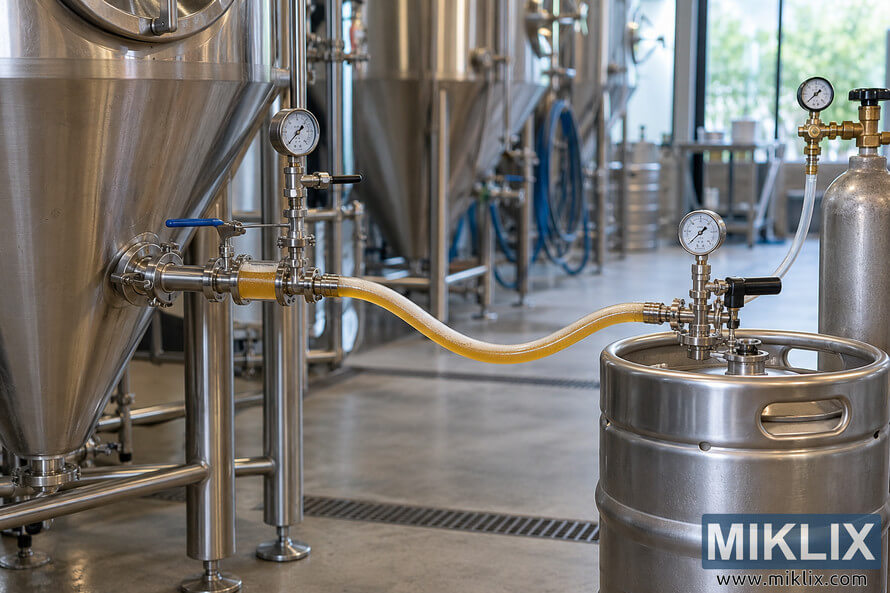
Preventing oxygen exposure preserves hop character through packaging. Closed transfer systems eliminate oxygen pickup during transfers.
Hoppy beers deteriorate rapidly with oxygen contact. Investment in closed transfer equipment pays dividends for hop-forward styles.
Closed Transfer Benefits
- Preserves volatile hop aromatics
- Extends shelf life significantly
- Maintains vibrant hop color
- Prevents staling reactions
- Enables hoppy styles to age gracefully
Implementation Methods
- Pressure transfer from fermenter to keg
- CO2 purging of receiving vessels
- Counter-pressure filling for bottles
- Minimizing headspace in all containers
- Quick consumption of packaged beer
Click or tap the image for more information and higher resolutions.
Hop Blending Strategies
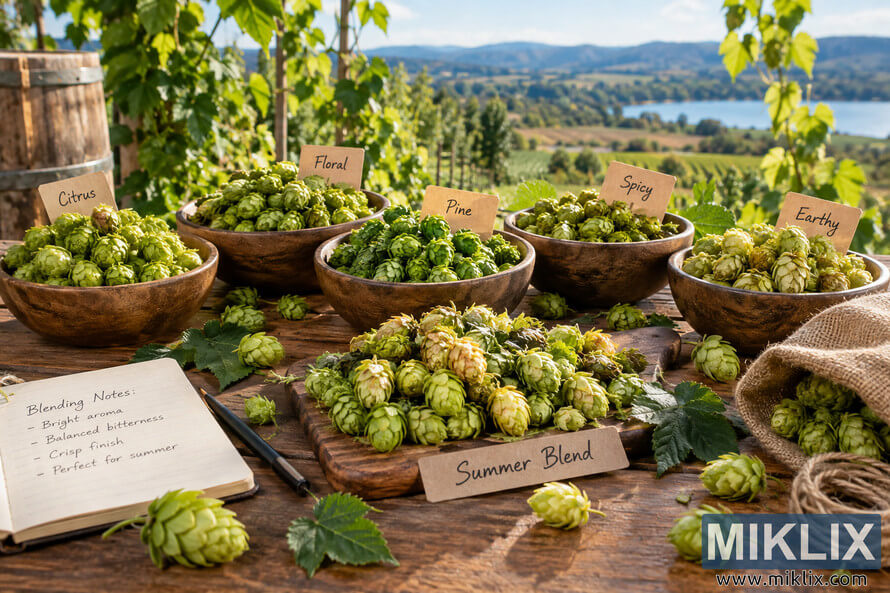
Combining Summer hops with complementary varieties creates complex flavor profiles. Strategic blending builds upon Summer's foundation while adding dimension.
Czech Saaz pairs naturally with Summer given their similar noble character. Galaxy or Mosaic can intensify the tropical and stone fruit notes.
Classic Noble Blend
70% Summer + 30% Czech Saaz
- Enhances herbal complexity
- Adds earthy undertones
- Perfect for Belgian styles
- Emphasizes refined character
New World Blend
60% Summer + 40% Galaxy or Mosaic
- Intensifies tropical fruit
- Adds mango and passion fruit
- Ideal for IPAs
- Creates bold flavor profiles
Citrus Forward Blend
65% Summer + 35% Citra or Amarillo
- Boosts citrus notes
- Adds grapefruit character
- Works well in pale ales
- Balances stone and citrus fruit
Click or tap the image for more information and higher resolutions.
Conclusion
Summer hops offer homebrewers a versatile variety that delivers consistent results across multiple beer styles. The distinctive apricot melon character sets this hop apart while remaining accessible to brewers at all skill levels.
Success with Summer hops comes down to three key factors: using fresh, properly stored hops; applying appropriate hopping techniques for your target style; and managing fermentation conditions that preserve delicate aromatics. Master these fundamentals and you'll create exceptional beers that showcase this variety beautifully.
Remember that brewing remains both art and science. Use the guidelines in this guide as starting points, then adjust based on your equipment, water chemistry, and personal preferences. Keep detailed notes on each batch to refine your approach over time.
The craft beer community continues discovering new applications for Summer hops. Experiment with different beer styles, hopping schedules, and blending combinations. Share your results with fellow brewers and contribute to the collective knowledge.
Start your next brew with confidence. Summer hops reward careful technique with remarkable flavor that keeps people coming back for another pint. Your best beer with this variety might be just one batch away.

Click or tap the image for more information and higher resolutions.
Further Reading
If you enjoyed this post, you may also like these suggestions:
- Hops in Beer Brewing: Cashmere
- Hops in Beer Brewing: Southern Star
- Hops in Beer Brewing: Canadian Redvine