
Image: Brewing Water Chemistry Testing Equipment and Mineral Additions
Published: November 2, 2026 at 5:50:58 PM UTC
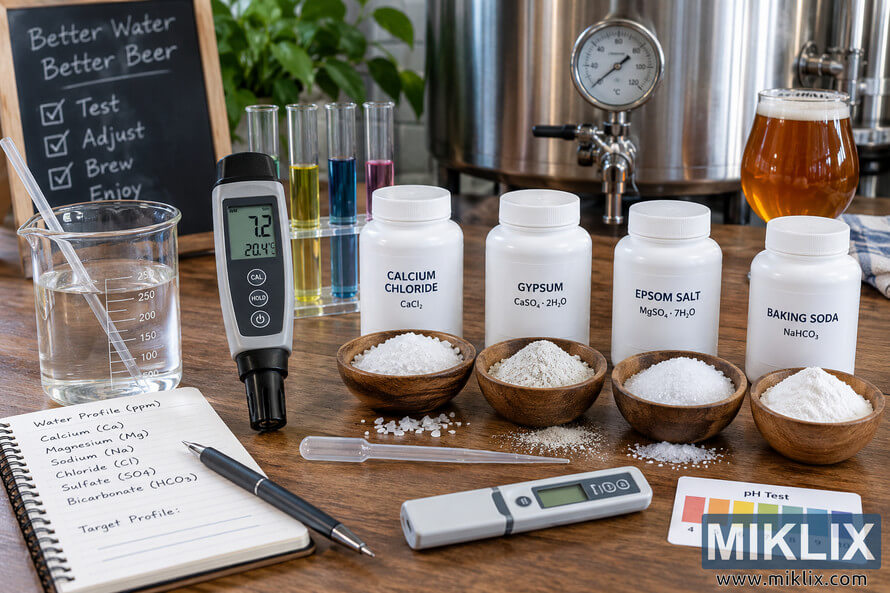
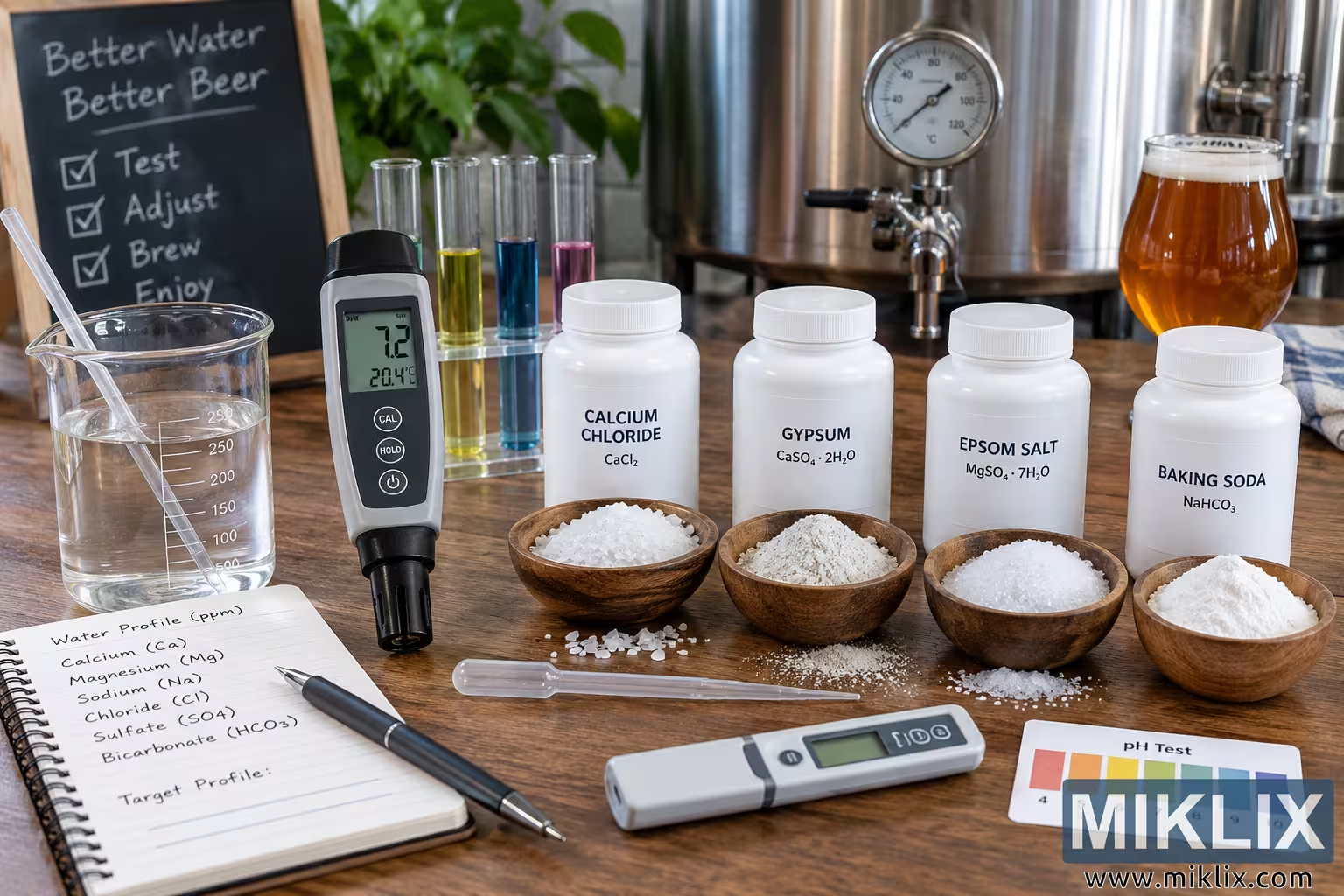
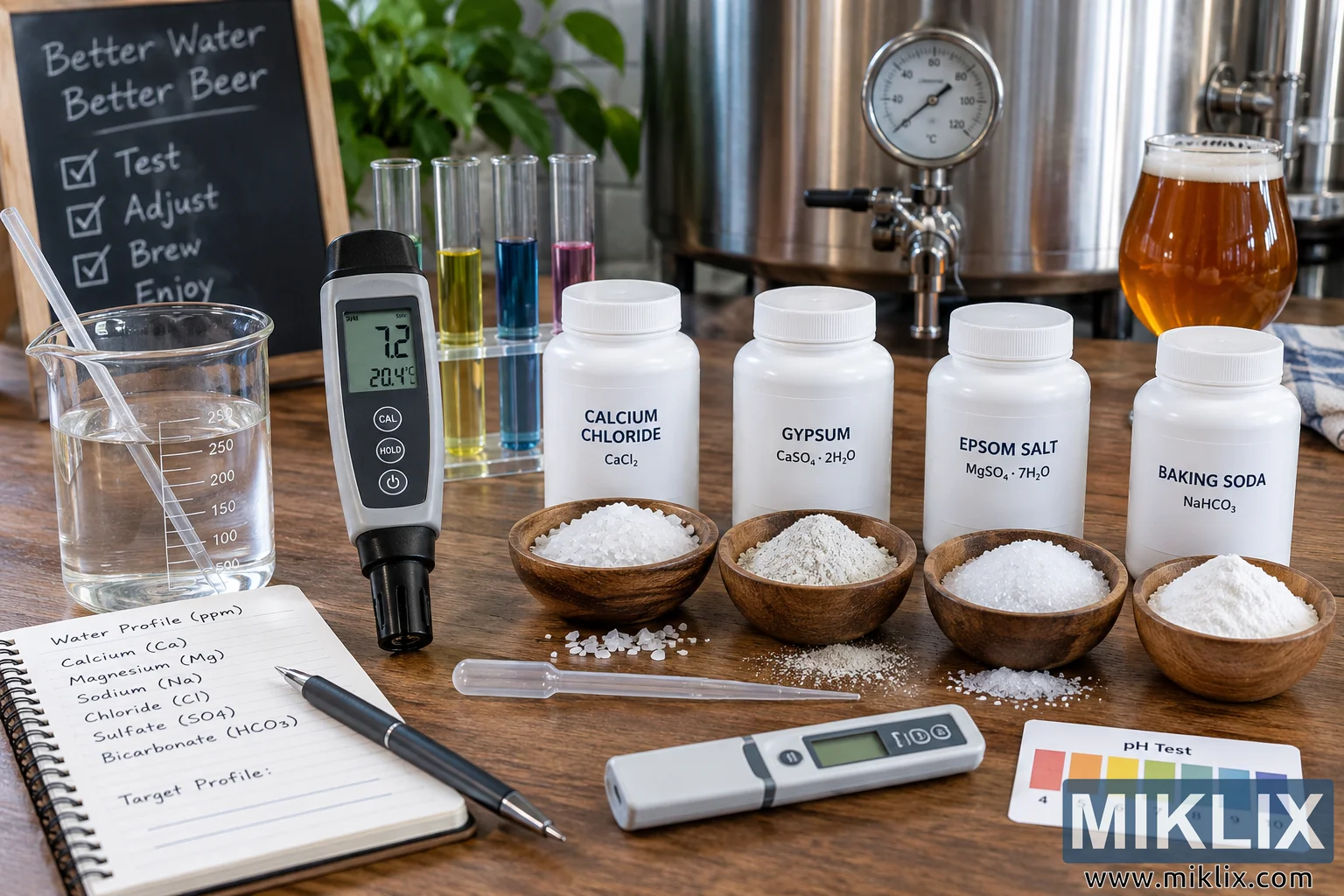
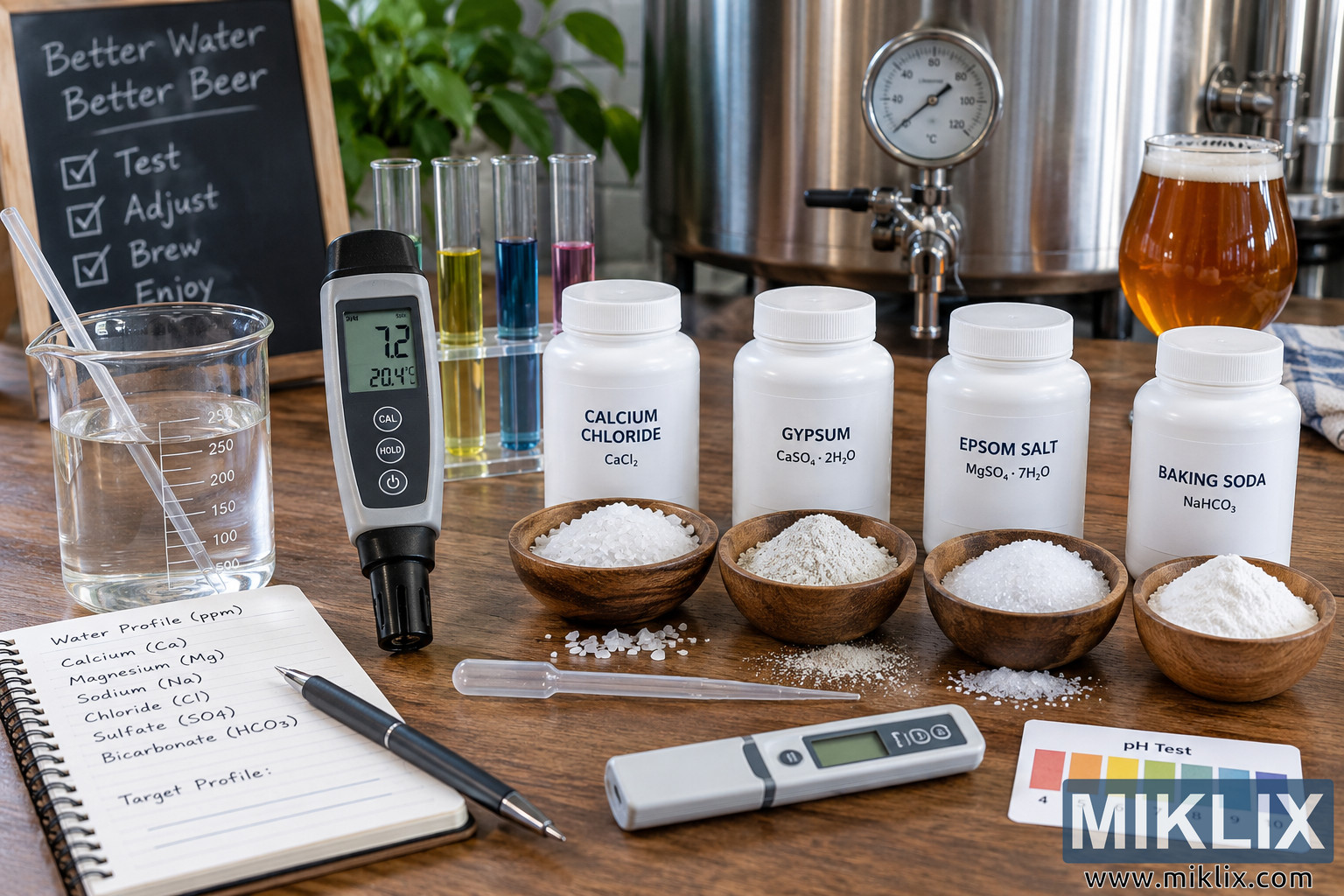
Brewing water chemistry setup with testing meters, glassware, pH samples, calcium chloride, gypsum, Epsom salt and baking soda for adjusting a brewing water profile.
Available versions of this image
The image files available for download below are less compressed and higher resolution - and as a result of that, higher quality - than the images embedded in articles and pages on this website, which are more optimized for file size in order to reduce bandwidth consumption.
Regular size (1,536 x 1,024)
Large size (3,072 x 2,048)
Very large size (4,608 x 3,072)
Extra large size (6,144 x 4,096)
Comically large size (1,048,576 x 699,051)
- Still uploading... ;-)
Image description
A crisp, well-lit landscape photograph presents a carefully arranged collection of water chemistry testing equipment and mineral additives used for adjusting brewing water. The scene is set on a warm, rustic wooden work surface in what appears to be a homebrewing or small-scale brewing environment. The composition combines practical laboratory-style equipment with brewing supplies, creating an educational and approachable visual representation of the process of measuring and modifying water chemistry before brewing beer.
Across the foreground and center of the image are several pieces of water-testing equipment. On the left sits a transparent glass beaker filled with clear water. White measurement markings are printed along the side of the beaker, and a long transparent pipette or stirring tool rests diagonally inside it. Beside the beaker stands a handheld digital meter with a gray and black casing. Its illuminated display shows a numerical reading along with a temperature value, suggesting that it is being used to measure a property such as pH, conductivity, or dissolved solids. A second compact digital testing instrument lies horizontally near the bottom center of the frame. Nearby, a clear plastic transfer pipette is positioned across the wooden surface, reinforcing the laboratory-like character of the setup.
Behind the handheld meter is a transparent rack containing four slender glass test tubes. Each tube holds a differently colored liquid, including yellow, greenish yellow, deep blue, and pink-purple solutions. These colorful samples provide a visual indication of chemical testing and make the scientific aspect of brewing water analysis immediately recognizable. In the lower right corner is a rectangular pH reference card displaying a progression of colored blocks corresponding to pH values. The scale ranges through warm orange and yellow tones into green, pale blue, and deeper blue-purple shades.
The central focus of the photograph is a row of four plain white plastic containers holding common brewing-water mineral additions. The containers have simple black text labels rather than commercial branding. From left to right, they identify calcium chloride, gypsum, Epsom salt, and baking soda, with chemical formulas printed beneath the names. In front of each container is a small round wooden bowl containing a representative white mineral material. The calcium chloride appears as coarse translucent or white crystals, while the gypsum is presented as a fine off-white powder. The Epsom salt has a crystalline granular appearance, and the baking soda is shown as a soft, fine white powder. Small amounts of the materials have been scattered naturally on the tabletop around the bowls, giving the arrangement the appearance of an active working station rather than a perfectly untouched display.
At the lower left is an open spiral-bound notebook titled with a handwritten reference to a water profile measured in parts per million. The page lists important brewing-water ions and minerals, including calcium, magnesium, sodium, chloride, sulfate, and bicarbonate. Beneath the list is space for recording a target profile. A dark pen lies diagonally across the notebook, suggesting that measurements and mineral adjustments are being calculated or documented during the testing process.
In the background on the left, a small framed chalkboard provides additional brewing context. Written in white chalk is the phrase “Better Water Better Beer,” followed by a simple checklist containing the steps “Test,” “Adjust,” “Brew,” and “Enjoy.” The casual handwritten lettering contrasts with the precise laboratory instruments in the foreground and emphasizes the practical purpose of the chemistry equipment: understanding and adjusting water to influence brewing results.
The background on the right is dominated by a large stainless-steel brewing vessel. Its polished metallic surface reflects the ambient light, and a round analog temperature gauge is mounted prominently on the front. Below the gauge is a stainless-steel valve and fitting, recognizable features of brewing equipment. A folded striped cloth is partially visible near the vessel. Beside it stands a clear stemmed glass containing amber-colored beer with a pale foamy head. The finished beer provides a visual connection between the water-testing process in the foreground and the final brewed beverage.
A leafy green plant appears softly out of focus behind the chalkboard and equipment, adding a natural element to the otherwise technical scene. The background has a shallow depth of field, keeping attention on the testing tools, mineral containers, bowls, notebook, and chemical samples while still allowing the brewing environment to remain recognizable. The lighting is bright and natural-looking, with gentle highlights on the glassware, crystalline minerals, water, stainless steel, and polished wooden surface. Warm brown tones from the tabletop and amber beer balance the cool metallic equipment and white containers, while the colorful test solutions introduce small accents of yellow, blue, green, and purple.
Overall, the image depicts the complete concept of brewing-water chemistry in a single organized scene: clear water is available for testing, digital meters and test solutions represent measurement, individual mineral additions represent adjustment, handwritten notes suggest calculation and recipe planning, and the brewing vessel and finished glass of beer communicate the ultimate purpose of the process. The photograph has an informative, practical, and professional character while retaining the inviting atmosphere of a hands-on homebrewing workspace. No commercial logos or recognizable product brands are visible, allowing the equipment and ingredients to function as generic representations of water chemistry tools and brewing minerals.
The image is related to: Hops in Beer Brewing: Summer