
Image: The Impact of Hops on Beer: Proper Hop Character Versus Common Hop Defects
Published: November 2, 2026 at 5:50:58 PM UTC
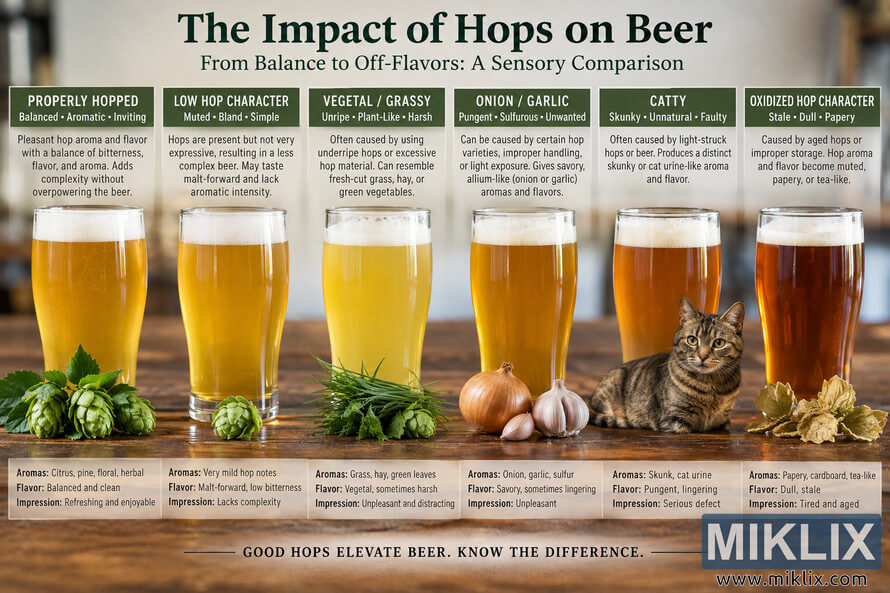
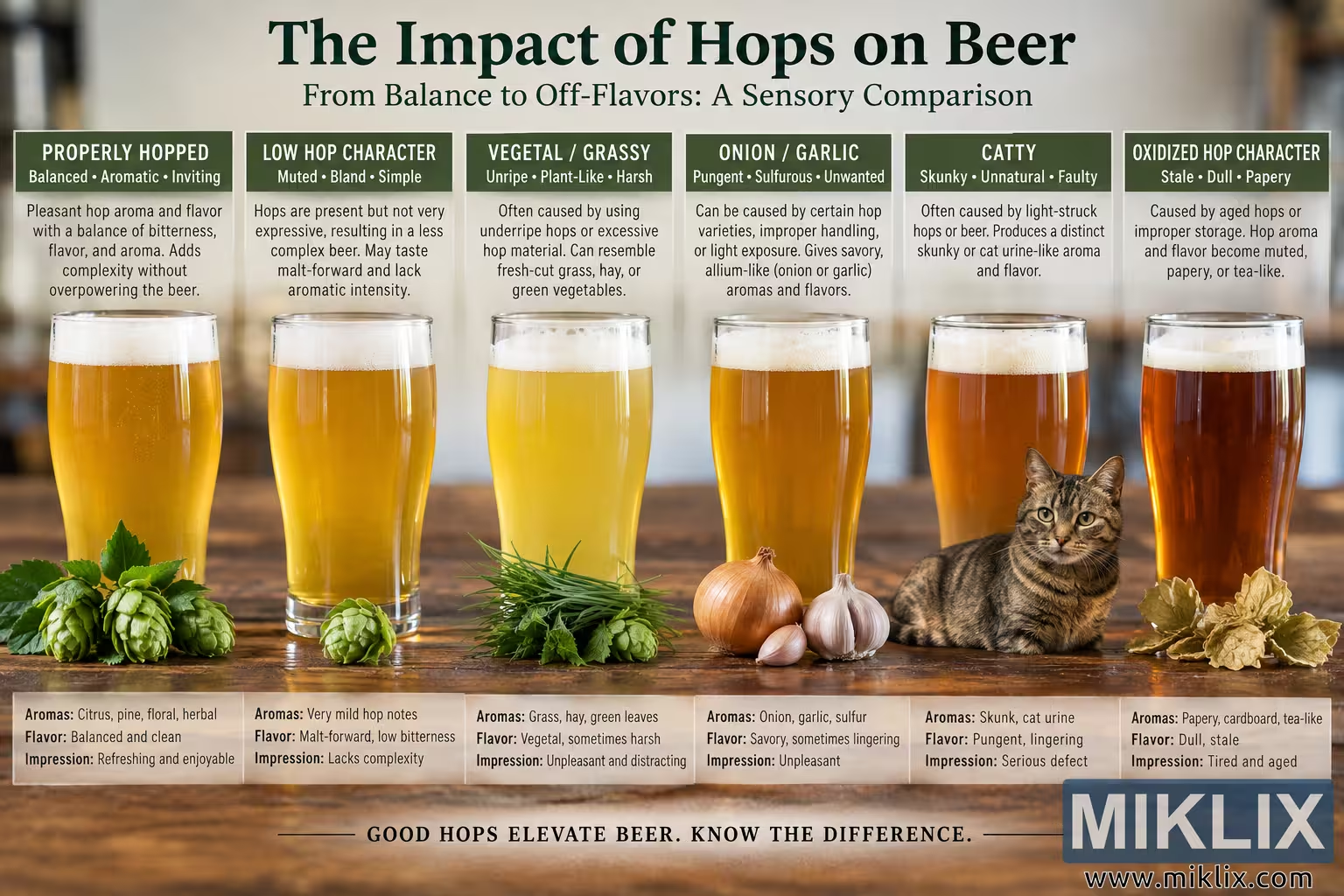
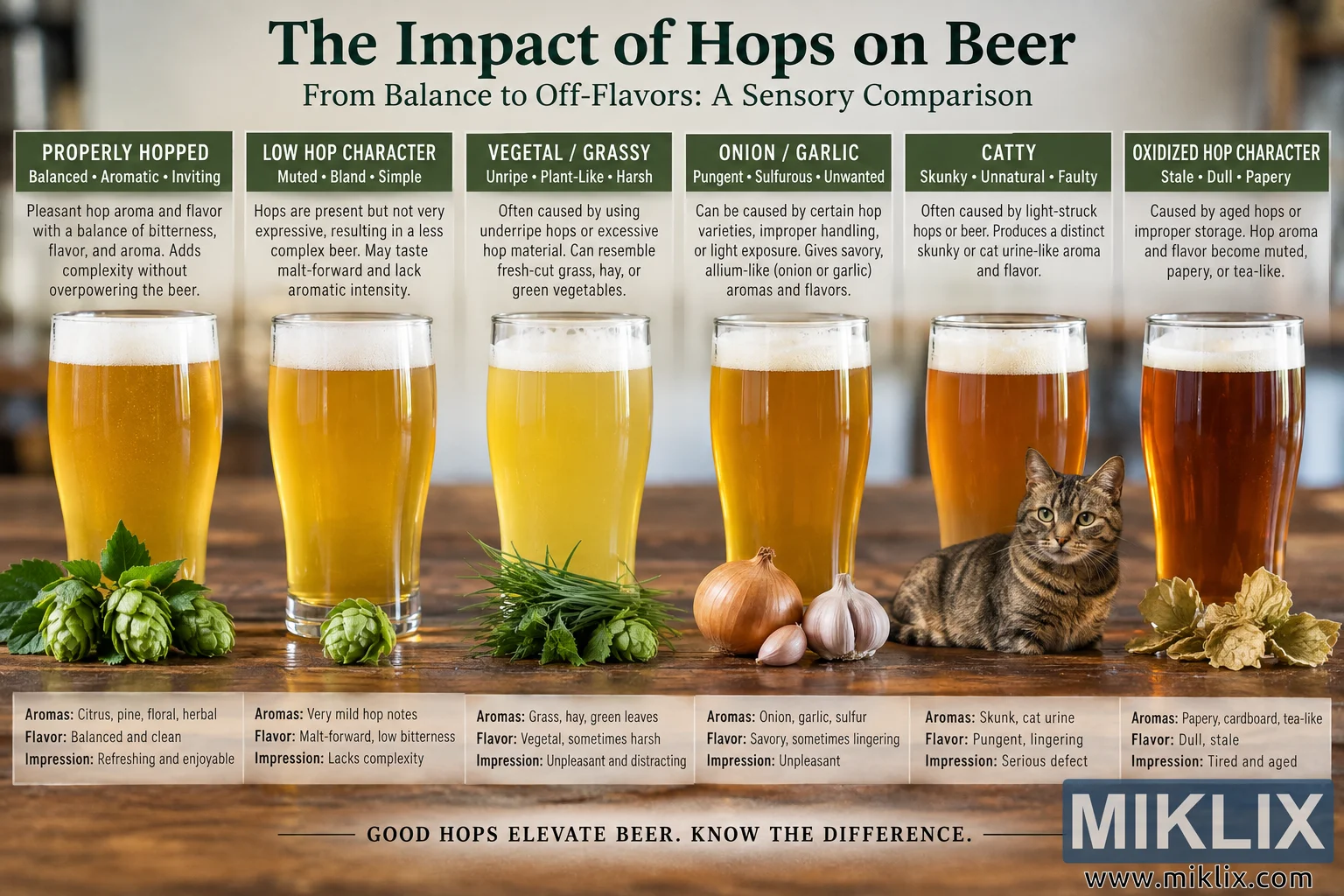
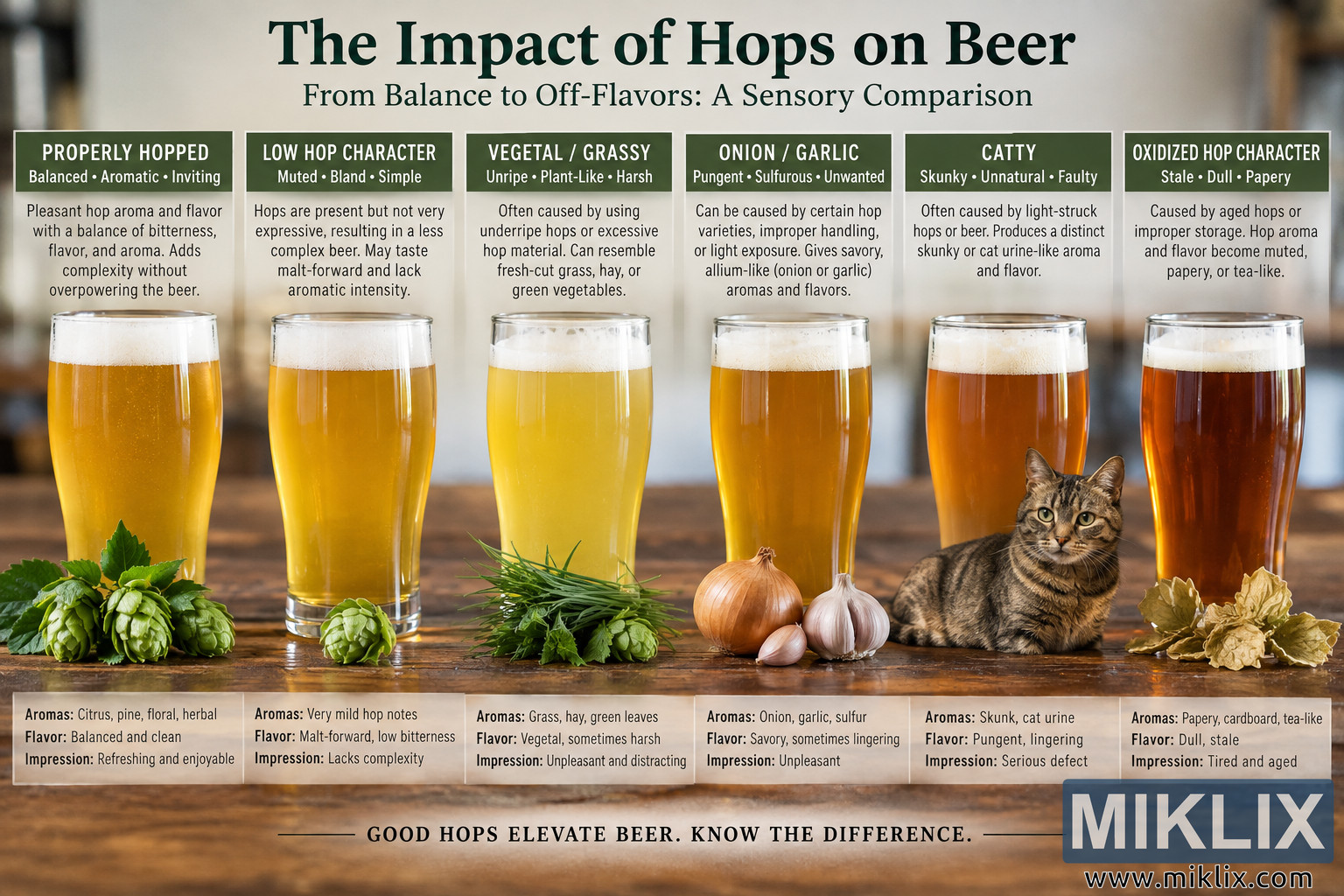
Educational landscape image comparing properly hopped beer with low hop character, grassy or vegetal notes, onion and garlic notes, catty character, and oxidized hops through six beers, sensory descriptions, and visual cues.
Available versions of this image
The image files available for download below are less compressed and higher resolution - and as a result of that, higher quality - than the images embedded in articles and pages on this website, which are more optimized for file size in order to reduce bandwidth consumption.
Regular size (1,536 x 1,024)
Large size (3,072 x 2,048)
Very large size (4,608 x 3,072)
Extra large size (6,144 x 4,096)
Comically large size (1,048,576 x 699,051)
- Still uploading... ;-)
Image description
A wide, landscape-format educational image presents a side-by-side sensory comparison of properly hopped beer and several common problems associated with hop character. The composition resembles a polished brewery or beer-education infographic photographed on a rustic wooden bar. Six tall, clear beer glasses are arranged in a straight row across the foreground and middle of the scene, each corresponding to a different sensory condition. Behind them is a softly blurred, warm-toned brewery or taproom environment that keeps attention on the beer and explanatory material. Across the top, a large headline reads “The Impact of Hops on Beer,” followed by the subtitle “From Balance to Off-Flavors: A Sensory Comparison.” The first section, labeled “Properly Hopped,” represents the desired result. Its beer is bright golden and clear, capped with a clean white foam head. Fresh green hop cones and leaves sit at the base of the glass, reinforcing freshness and aromatic hop character. The accompanying text describes pleasant hop aroma and flavor with an appropriate balance of bitterness, flavor, and aroma, adding complexity without overwhelming the beer. Its sensory notes identify citrus, pine, floral, and herbal aromas, balanced and clean flavor, and an overall refreshing, enjoyable impression. The second section is labeled “Low Hop Character.” Its beer is also pale gold but visually suggests a more restrained hop presence. A small cluster of hop cones appears near the glass. The text explains that hops are present but insufficiently expressive, producing a less complex beer that may seem malt-forward and lack aromatic intensity. Its sensory summary describes very mild hop notes, malt-forward flavor with low bitterness, and an impression that lacks complexity. The third section, “Vegetal / Grassy,” depicts a pale yellow-gold beer alongside a conspicuous bundle of fresh grass, leafy herbs, and green plant material. This visual metaphor supports the description of an undesirable fresh-cut grass, hay, or green-vegetable character. The explanatory panel associates this quality with under-ripe hops or excessive hop material. Sensory notes describe aromas of grass, hay, and green leaves, with vegetal and sometimes harsh flavors, creating an unpleasant and distracting impression. The fourth section, labeled “Onion / Garlic,” contains a deeper amber-gold beer. A whole brown onion, a bulb of garlic, and separated garlic cloves are positioned prominently in front of the glass. The panel explains that certain hop varieties or handling conditions can contribute pungent savory qualities reminiscent of onion or garlic. Its sensory notes identify onion, garlic, and sulfur aromas, with savory flavors that can linger, resulting in an unpleasant impression. The fifth section is labeled “Catty.” Its beer is darker amber, and a realistic tabby cat sits directly in front of the glass, serving as a literal visual cue for the sensory descriptor. The explanatory material describes a pungent, unnatural character associated with skunky or cat-urine-like aromas and flavors. The lower sensory panel identifies skunk and cat-urine aromas, a pungent and lingering flavor profile, and characterizes the result as a serious defect. The sixth and final section, “Oxidized Hop Character,” shows the darkest beer in the comparison, with a deep amber-to-brown appearance. Dry, faded, beige-brown hop material lies at the foot of the glass, contrasting strongly with the vibrant green hops beside the properly hopped beer. The text associates this condition with aged hops or improper storage and explains that hop aroma and flavor can become muted, papery, or tea-like. Its sensory notes mention papery, cardboard, and tea-like aromas, dull and stale flavors, and an overall tired, aged impression. The visual progression from fresh green hops and bright golden beer on the left toward dried hops and darker, less inviting beer on the right reinforces the educational contrast between desirable freshness and various unwanted sensory characteristics. Each category is organized with a dark green heading panel, a short descriptive phrase, explanatory copy, a corresponding glass of beer, and a lower sensory summary divided into aroma, flavor, and overall impression. The use of onions, garlic, grass, a cat, fresh hops, and dried hops turns abstract brewing and tasting terminology into immediately recognizable visual associations. Warm natural lighting, realistic glass reflections, foam textures, and the wooden bar surface give the infographic a photographic quality rather than the appearance of a purely illustrated chart. The layout is symmetrical and information-dense while remaining easy to scan horizontally. No commercial beer labels, brewery logos, packaging, or recognizable brand identities appear anywhere in the scene. A concluding statement centered along the bottom reads “Good Hops Elevate Beer. Know the Difference.” Overall, the image functions as a visual guide for beer drinkers, brewers, students, or tasting participants who want to distinguish balanced hop expression from muted, grassy, savory, catty, or oxidized hop-related characteristics.
The image is related to: Hops in Beer Brewing: Summer