
Image: Summer Hop Pellets and Whole Hop Cones Side by Side
Published: November 2, 2026 at 5:50:58 PM UTC
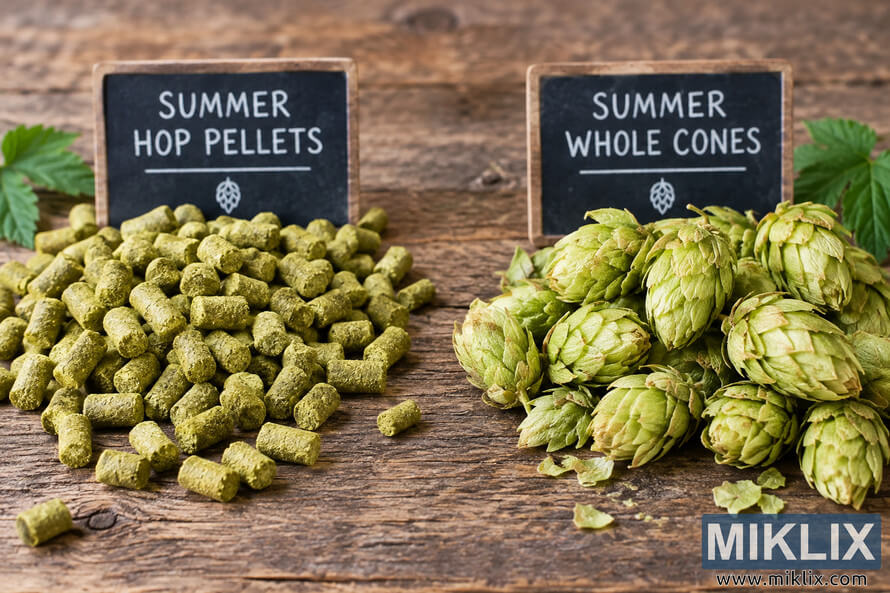
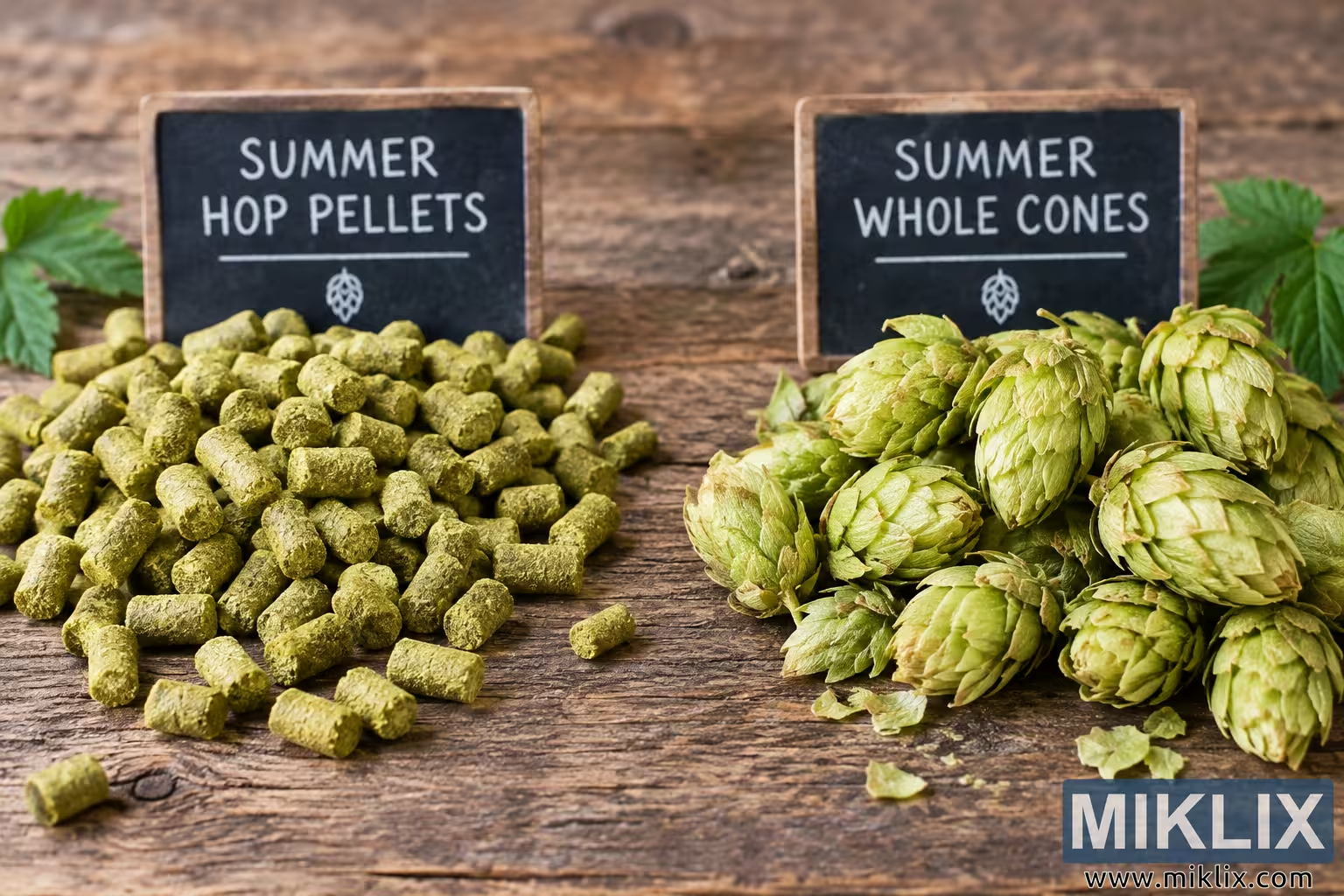
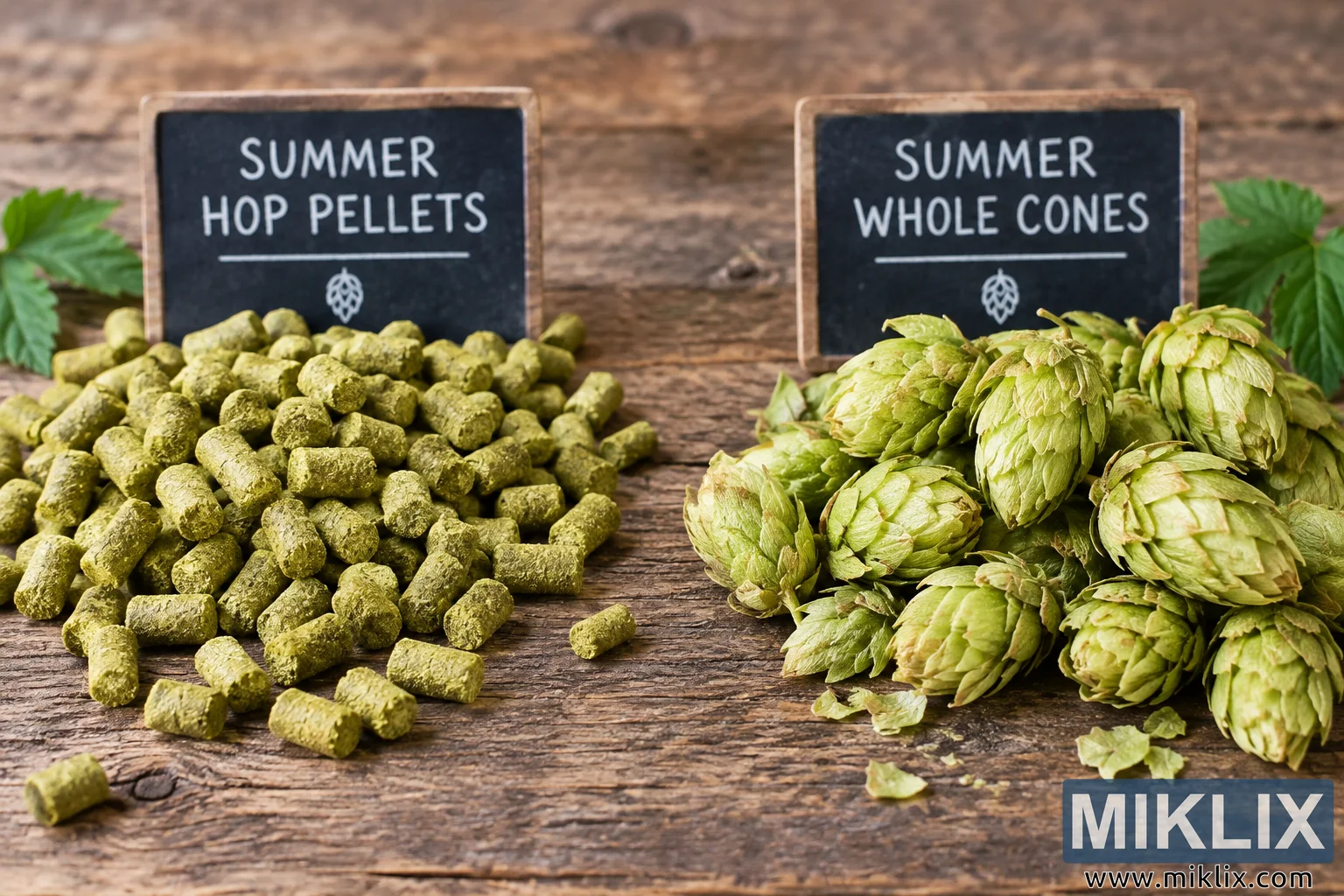
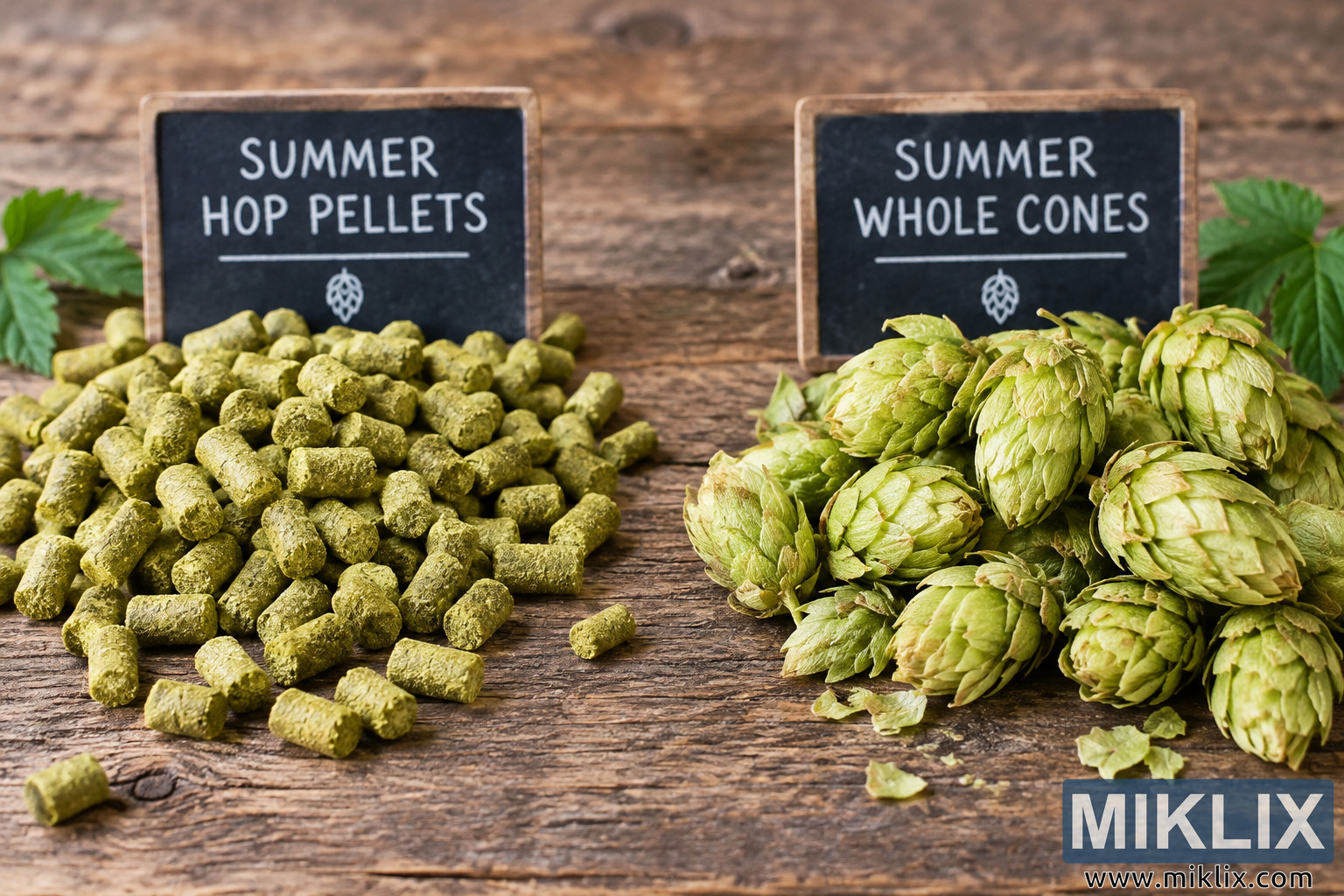
A detailed side-by-side comparison of summer hop pellets and whole hop cones displayed on a rustic wooden surface, highlighting their distinct shapes, textures, colors, and natural appearance.
Available versions of this image
The image files available for download below are less compressed and higher resolution - and as a result of that, higher quality - than the images embedded in articles and pages on this website, which are more optimized for file size in order to reduce bandwidth consumption.
Regular size (1,536 x 1,024)
Large size (3,072 x 2,048)
Very large size (4,608 x 3,072)
Extra large size (6,144 x 4,096)
Comically large size (1,048,576 x 699,051)
- Still uploading... ;-)
Image description
A high-resolution landscape photograph presents a clear side-by-side comparison between two common physical forms of hops: compressed hop pellets on the left and whole hop cones on the right. The composition is arranged across a rustic wooden tabletop whose warm brown tones, visible grain, knots, scratches, and naturally weathered texture create an earthy agricultural setting. The photograph is carefully balanced so that each hop form occupies approximately one half of the frame, making the visual differences between the processed pellets and intact cones immediately apparent. On the left side, a generous pile of hop pellets spreads across the wooden surface. The pellets are small, compact, cylindrical pieces with slightly irregular ends and subtly varied dimensions. Their surfaces appear dry, finely textured, and somewhat powdery, reflecting the compressed plant material from which they are made. The pellets range from muted olive green to yellow-green and deeper mossy green, with small variations in color that give the pile a natural, organic appearance. Some pellets lie horizontally while others rest at different angles, producing a loose, informal mound rather than a perfectly arranged display. Several individual pellets have rolled away from the main pile and sit closer to the foreground and center of the photograph. These scattered pieces help emphasize the pellets' compact size and cylindrical shape. Behind the pile on the left stands a small rectangular chalkboard-style sign framed with light-colored wood. In clean white lettering, the sign reads "SUMMER HOP PELLETS." A thin horizontal white line appears beneath the wording, followed by a simple decorative outline resembling a hop cone. The dark charcoal surface of the sign contrasts strongly with the pale lettering and the green pellets below it, making the label easy to identify. On the right side of the photograph is a substantial collection of whole hop cones. In contrast to the dense, uniform pellet shapes, these hops retain their recognizable natural flower structure. Each cone is composed of overlapping, leaf-like bracts that taper toward the tip, creating rounded or elongated forms reminiscent of small green pinecones. The bracts display delicate veins, curled edges, folds, and subtle shadows, giving the whole cones a visibly layered and lightweight texture. Their coloring ranges from pale yellow-green and fresh lime green to slightly darker leafy shades. Some edges have faint tan or brown accents, reinforcing the impression of harvested botanical material rather than artificial objects. The whole cones overlap one another in a loose pile, with several specimens positioned prominently toward the front. Their larger scale and intricate surfaces provide a strong visual contrast with the much smaller, denser pellets on the opposite side. A few detached hop bracts and fragments are scattered across the tabletop near the whole cones, particularly along the lower center and lower right portions of the frame. Behind the whole hops is a second matching chalkboard-style sign with a light wooden frame. Its white lettering reads "SUMMER WHOLE CONES," with the same horizontal dividing line and small hop illustration beneath the text. The matching signs establish a straightforward educational comparison and visually organize the photograph into two distinct categories. Additional green hop leaves appear near the outer edges and background of the scene. A leafy element is visible toward the upper left behind the pellets, while larger green leaves frame the whole-cone side toward the upper right. These leaves introduce another botanical texture and reinforce the agricultural origin of both hop products without distracting from the main comparison. The lighting is warm, soft, and directional, producing gentle highlights across the pellets, hop bracts, wooden surface, and sign frames. The whole cones receive particularly attractive highlights along their overlapping leaves, revealing their dimensional structure, while subtle shadows between the pellets make their individual forms easy to distinguish. The shallow depth of field keeps the principal ingredients and their labels sharply defined while allowing the wooden background farther from the camera to become progressively softer. This creates a polished photographic appearance while maintaining a natural, handcrafted atmosphere. The central division between the two groups remains visually open enough that viewers can immediately recognize the comparison. The pellets communicate processing, compression, consistency, and compactness, whereas the whole cones communicate the original botanical structure, volume, and delicate leafy character of harvested hops. Despite these differences, the similar green color palette clearly connects both materials to the same plant ingredient. The photograph contains no people, packaging, commercial logos, trademarks, or recognizable product branding. Instead, it uses generic descriptive labels and natural materials to focus entirely on the physical differences between the two hop formats. Overall, the image has the character of an educational brewing or ingredient reference photograph: clean and informative while still warm and visually appealing. Its rustic wooden setting, natural green palette, clearly labeled categories, balanced landscape composition, and detailed rendering of the ingredients make it suitable for illustrating an article, guide, presentation, or informational page explaining the difference between hop pellets and whole hop cones.
The image is related to: Hops in Beer Brewing: Summer