
Image: Advanced Temperature-Controlled Homebrewing Setup with Hop Equipment
Published: November 2, 2026 at 5:50:58 PM UTC
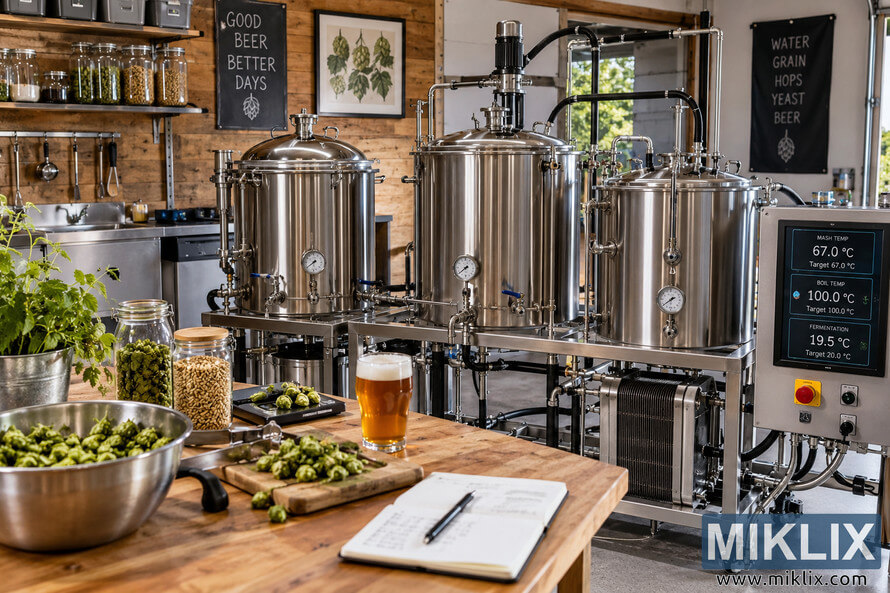
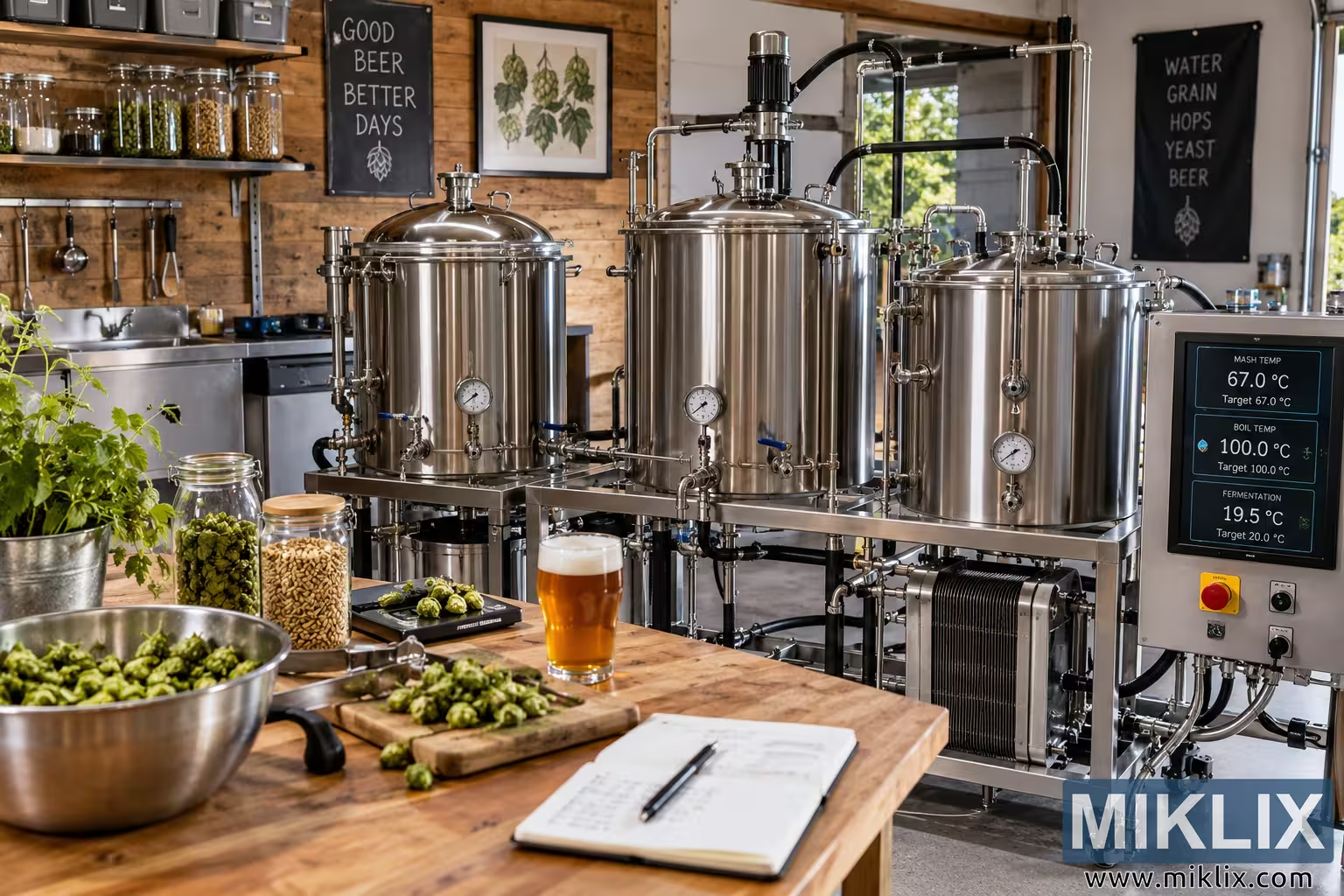
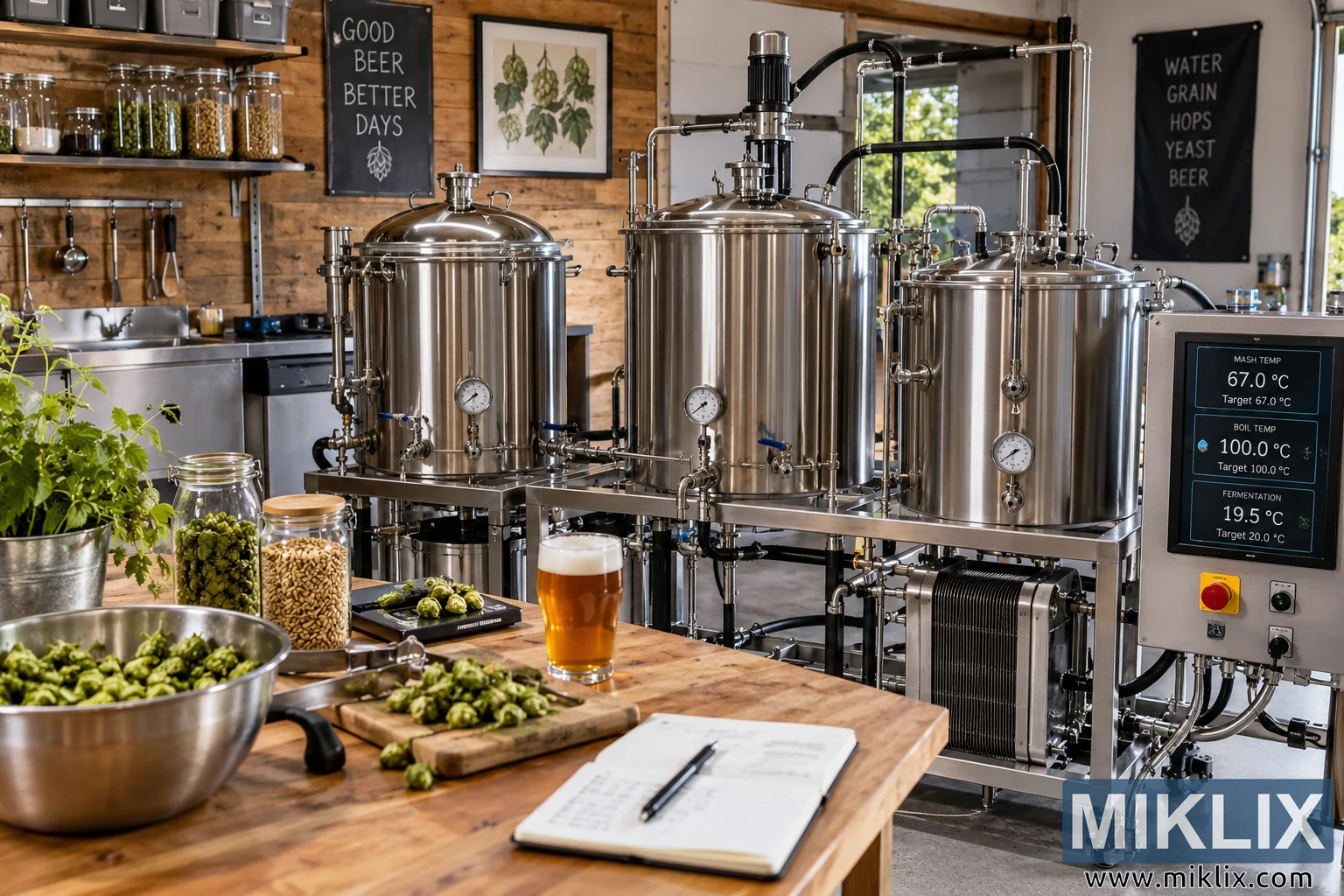
Advanced brand-neutral homebrewing setup featuring stainless-steel brewing vessels, precise temperature controls, cooling equipment, fresh hops, grains, brewing tools, and a finished amber beer.
Available versions of this image
The image files available for download below are less compressed and higher resolution - and as a result of that, higher quality - than the images embedded in articles and pages on this website, which are more optimized for file size in order to reduce bandwidth consumption.
Regular size (1,536 x 1,024)

Large size (3,072 x 2,048)
Very large size (4,608 x 3,072)
Extra large size (6,144 x 4,096)
Comically large size (1,048,576 x 699,051)
- Still uploading... ;-)
Image description
A wide, high-resolution landscape photograph depicts an advanced homebrewing workspace arranged in a clean, thoughtfully designed garage or dedicated brewing room. The central focus is a sophisticated stainless-steel brewing system composed of three large cylindrical vessels mounted on a sturdy metal frame. Each vessel has a polished reflective surface, a fitted lid, valves, connections, and analog temperature gauges. A network of stainless-steel pipes, flexible black hoses, fittings, pumps, and sanitary connections links the vessels together, giving the setup the appearance of a compact professional brewhouse adapted for serious home use. Above the central vessel, a vertical motorized or pumping component connects to additional pipework, emphasizing the technical and automated character of the system. The brewing equipment is exceptionally tidy, with valves and plumbing positioned for controlled transfers of liquid between the different stages of the brewing process. On the right side of the system stands a large electronic control cabinet with a dark digital display. The screen presents clearly organized temperature information for several brewing stages, including mash, boil, and fermentation temperatures. This control system visually communicates the precision-temperature capabilities of the installation and reinforces the advanced nature of the homebrewing environment. Physical switches, an emergency-style button, electrical connections, and cables are integrated into the lower portion of the control cabinet. Directly beneath and beside the brewing vessels is a rectangular plate-style heat exchanger or chilling unit with closely spaced dark fins, connected into the surrounding plumbing. This component suggests rapid cooling of hot wort after boiling and contributes another layer of technical detail to the scene. In the foreground, a substantial wooden workbench introduces a warmer, handcrafted contrast to the polished industrial brewing equipment. The tabletop is actively prepared for a brewing session and contains several hop-related ingredients and tools. A large stainless-steel mixing bowl on the left is filled with fresh-looking green hop cones. Additional hop cones are scattered across a wooden cutting board near the center of the table, with some appearing whole and others loosely separated. A clear glass jar filled with hop cones stands nearby, while a second jar contains pale tan grain or malt kernels. Together, these ingredients visually establish the connection between raw brewing materials and the technical equipment behind them. A small dark digital scale or compact brewing tool is positioned close to the ingredients, suggesting careful measurement of hop additions. Near the center foreground is a clear pint glass filled with amber-colored beer and topped by a thick, creamy white foam head. The finished beer catches the ambient light and provides a visual link between the raw ingredients, brewing machinery, and final product. An open notebook lies toward the front-right portion of the wooden table with a dark pen resting diagonally across its pages. The visible handwritten-style markings and layout imply recipe notes, temperature records, timing information, or brewing calculations, reinforcing the experimental and methodical character of advanced homebrewing. Along the left side of the room, a galvanized metal pot holds a lush green hop plant or similar climbing brewing-related greenery. Behind it, a stainless-steel sink and preparation counter provide a practical cleaning and sanitation area. Above the counter, dark-handled brewing utensils such as ladles, spoons, and other long tools hang neatly from a horizontal rack against a rustic wooden wall. Two wooden shelves run across the upper-left background. The lower shelf supports a row of transparent glass storage jars containing different brewing ingredients, including green hops and several varieties of grain or malt in shades ranging from pale beige to golden brown. The upper shelf contains a series of dark storage bins with small labels, suggesting organized storage for additional ingredients, tools, or brewing supplies. The room combines rustic and modern design elements. Warm horizontal wooden wall boards form much of the backdrop, while exposed structural beams and stainless-steel work surfaces give the space a practical workshop character. A framed botanical illustration of hop plants hangs above the brewing equipment, adding a decorative reference to one of beer's key ingredients. Nearby, a dark chalkboard-style wall sign carries a simple beer-themed message and a small hop illustration. Another tall dark banner on the right lists fundamental brewing ingredients in a minimal typographic arrangement. These decorations help create the atmosphere of a dedicated enthusiast's brewing space without displaying commercial branding. Natural daylight enters through a window or open glazed area behind the brewing system, where softly focused green foliage can be seen outside. This daylight combines with warm interior illumination to create a bright, inviting environment while producing crisp highlights and reflections across the stainless-steel tanks. The image is photographed from a slightly elevated eye-level perspective with a wide field of view, allowing the foreground ingredients, finished beer, brewing notes, vessels, temperature-control system, cooling hardware, shelving, and workshop details to appear together in a coherent composition. Depth of field remains broad enough for most of the important equipment to be clearly visible, while subtle background softness keeps attention on the brewing station. The overall visual impression is that of an exceptionally well-equipped and organized home brewery designed for an experienced enthusiast who values temperature precision, repeatability, ingredient control, hop-focused brewing, cleanliness, and careful process documentation. The polished tanks and digital controls communicate technical sophistication, while the wood surfaces, glass ingredient jars, green hop cones, handwritten notebook, and freshly poured beer preserve the approachable, hands-on character of craft homebrewing. No recognizable commercial brands or branded products are featured, allowing the scene to represent advanced homebrewing equipment and practices in a generic, brand-neutral way.
The image is related to: Hops in Beer Brewing: Summer