
Image: Closed Transfer of Hoppy Beer from Fermenter to Keg
Published: November 2, 2026 at 5:50:58 PM UTC
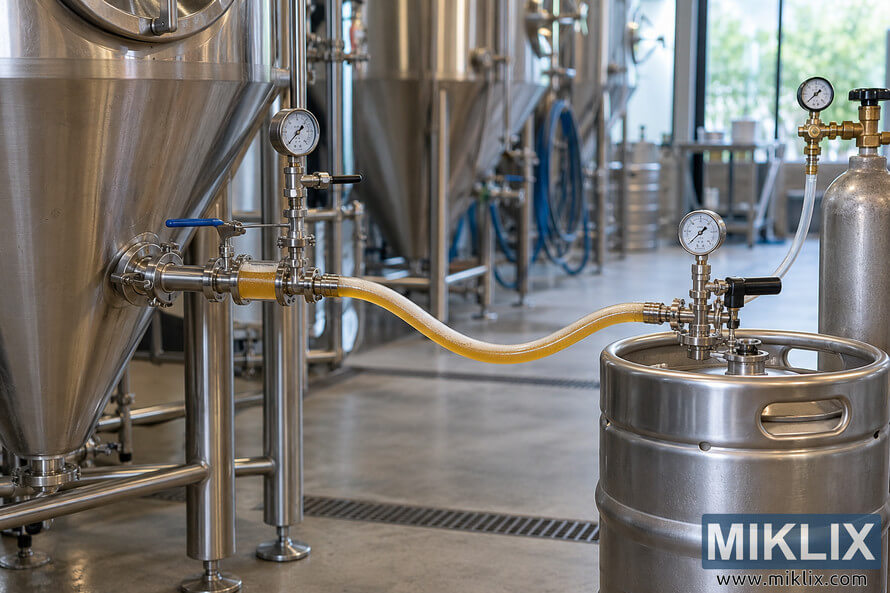
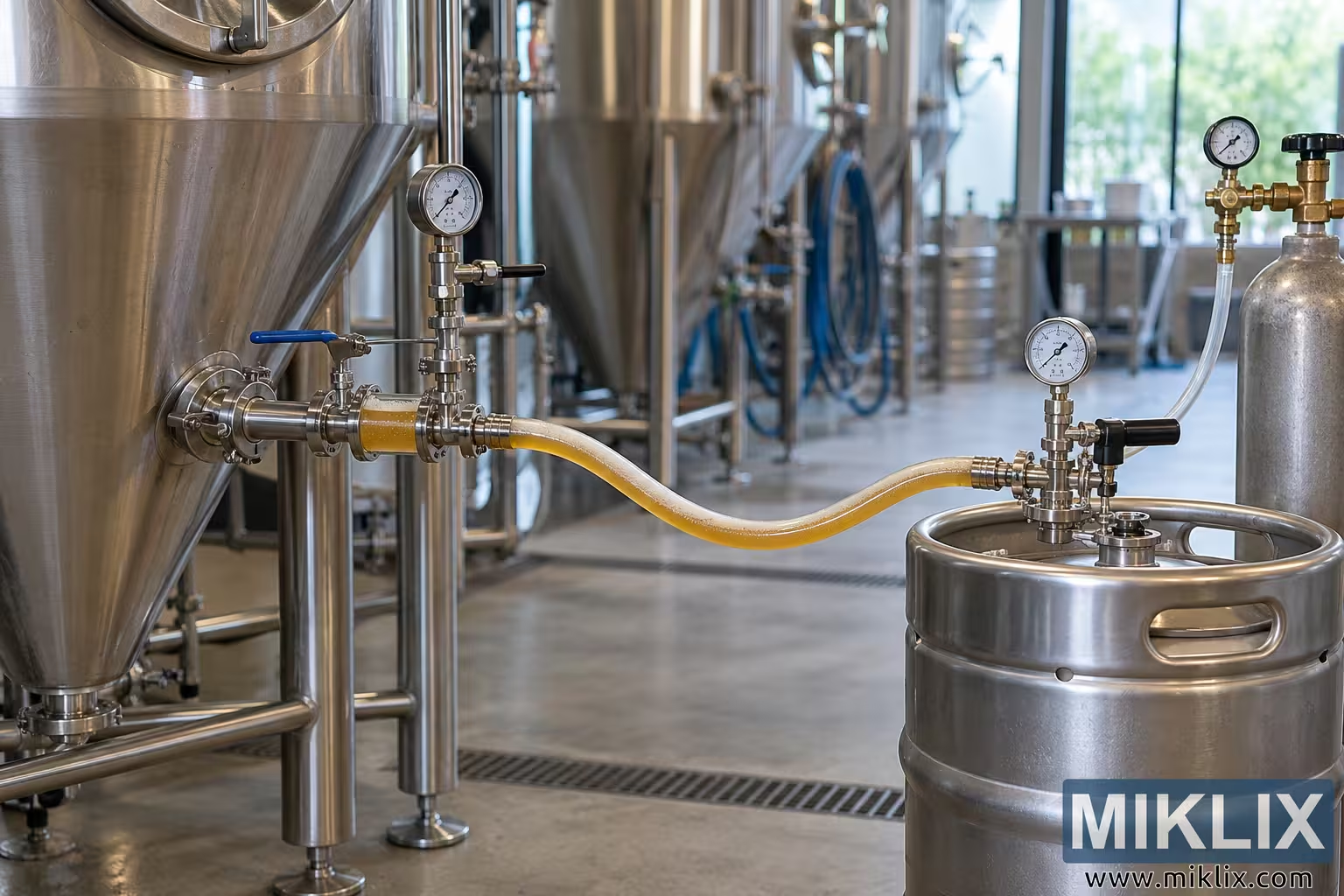
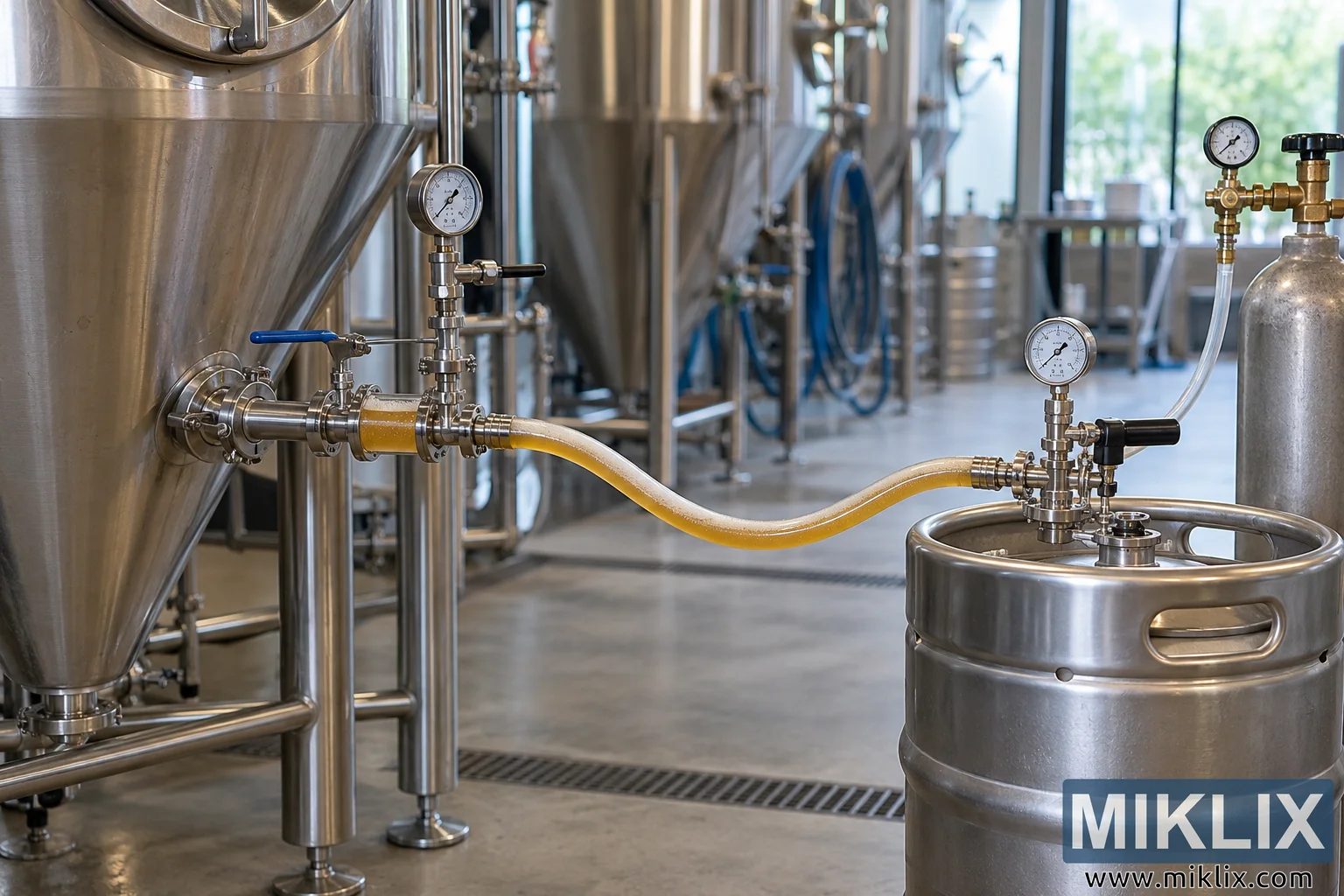
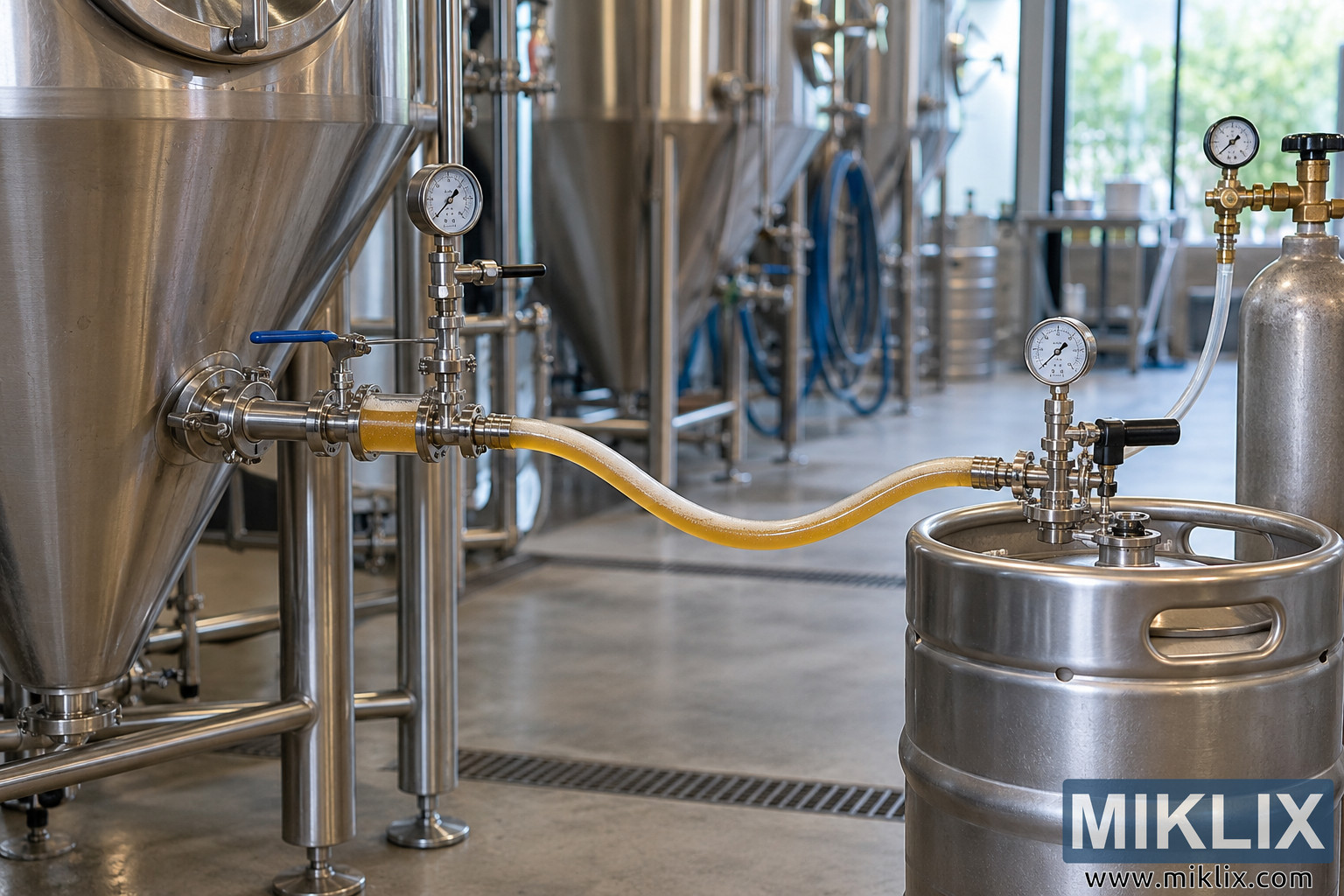
Detailed brewery image showing a closed transfer of golden hoppy beer from a stainless-steel fermenter to a keg using sealed tubing, sanitary fittings, valves, pressure gauges, and gas-control equipment.
Available versions of this image
The image files available for download below are less compressed and higher resolution - and as a result of that, higher quality - than the images embedded in articles and pages on this website, which are more optimized for file size in order to reduce bandwidth consumption.
Regular size (1,536 x 1,024)
Large size (3,072 x 2,048)
Very large size (4,608 x 3,072)
Extra large size (6,144 x 4,096)
Comically large size (1,048,576 x 699,051)
- Still uploading... ;-)
Image description
A wide, landscape-oriented photograph depicts a clean, modern brewery during a closed transfer of hoppy beer from a stainless-steel fermenter into a stainless-steel keg. The composition focuses on the transfer equipment and the physical connection between the two vessels, presenting the process as a controlled, enclosed operation rather than an open transfer exposed to the surrounding air. On the left side of the image, a large cylindrical and conical stainless-steel fermenter dominates the foreground. Its brushed metal surface catches soft reflections from the brewery interior, emphasizing the substantial industrial construction of the vessel. The lower portion narrows into a cone, while polished pipework, supports, fittings, and sanitary connections surround the tank. A circular port and heavy-duty stainless fitting project horizontally from the fermenter toward the center of the scene. Attached to this outlet is a compact assembly of sanitary clamps, valves, tubing, and instrumentation. A blue-handled valve is visible near the fermenter outlet, while another dark-handled valve and a round analog pressure gauge are positioned higher on the assembly. The gauge has a pale face with dark markings and a needle, reinforcing the impression of a carefully monitored transfer system. Between the fittings is a short transparent sight-glass section containing golden-yellow beer. The liquid appears slightly hazy, consistent with the visual character often associated with hop-forward beer styles, and a thin layer of bubbles or foam is visible around the liquid inside the transparent section. From this sanitary outlet assembly, a clear flexible beverage hose curves gracefully across the middle of the photograph. The hose remains completely connected at both ends, visually communicating the closed nature of the transfer. Golden beer can be seen inside the transparent line, with small bubbles and a lightly foamy appearance along portions of the tubing. Rather than running in a straight line, the hose forms a broad downward curve before rising toward the receiving keg on the right, making the transfer path immediately understandable. In the right foreground stands a polished stainless-steel keg with the familiar cylindrical body, reinforced upper rim, and integrated carrying openings. The keg is unbranded and contains no logos, trademarks, product names, or other commercial markings. Its upper connection has been fitted with additional stainless hardware forming the receiving side of the closed transfer system. The clear beer hose terminates at this sealed assembly instead of simply entering an open keg. A second round pressure gauge rises above the keg connection, and a black-handled fitting is mounted nearby. These details suggest that pressure is being controlled on the receiving side as beer moves from the fermenter into the keg. The top of the keg includes multiple metal fittings and sanitary connections, all presented as firmly attached components of the enclosed setup. Behind the keg, at the far right of the frame, stands a plain metallic gas cylinder. A brass-colored regulator assembly with another pressure gauge is attached to its top, and a narrow transparent gas line descends from the regulator toward the transfer equipment. The cylinder is also completely generic and unbranded. Its presence provides additional visual context for a pressure-assisted closed transfer, in which gas pressure and controlled venting can help move beer while limiting exposure to ambient air. The brewery environment continues into the background with several additional tall stainless-steel fermentation vessels arranged in a row. Their cylindrical bodies and conical bottoms create repeating vertical forms that recede into the distance. Blue hoses hang in loose loops from some of the background equipment, while stainless pipes, valves, structural legs, and fittings contribute to the technical character of the room. The background is moderately out of focus, keeping attention on the foreground transfer system while still making the larger production setting recognizable. The floor is smooth and light gray, with long linear drainage channels running through the room. These drains and the uncluttered floor reinforce the impression of a sanitary production environment designed for regular cleaning. Natural daylight enters through large windows along the right and rear portions of the brewery. Through the windows, soft green foliage can be seen outside, providing a subtle contrast to the predominantly silver, gray, and metallic interior. The daylight creates bright highlights on the polished equipment without overwhelming the image, while softer shadows help define the cylindrical tanks, hoses, gauges, and keg. The overall palette is dominated by stainless steel and neutral industrial tones, punctuated by the warm golden color of the beer, the blue valve handle and background hoses, the black valve handles, and the greenery outside. The photographic viewpoint is approximately at the height of the transfer connections, allowing the viewer to follow the process horizontally from fermenter to keg. The fermenter occupies much of the left third of the frame, the transparent beer hose provides a strong visual connection across the center, and the receiving keg anchors the lower-right area. The gas cylinder and regulator provide additional technical context at the right edge without competing with the primary subject. No people appear in the scene, so the equipment and transfer process remain the sole focus. There are no visible brand names, company logos, labels, advertising elements, or identifiable commercial products. Overall, the image presents a detailed and realistic visual representation of a closed beer-transfer setup in a professional brewery: hoppy, golden beer leaves a stainless fermenter through sanitary valves and a sight glass, travels through a sealed transparent hose, and enters a pressurized stainless keg through a closed connection. Gauges, valves, sanitary clamps, and gas-control equipment emphasize process control, while the bright, orderly brewery setting conveys cleanliness and modern production practices.
The image is related to: Hops in Beer Brewing: Summer