
Image: East Coast Ale Yeast Under the Microscope
Published: March 5, 2026 at 9:46:34 PM UTC
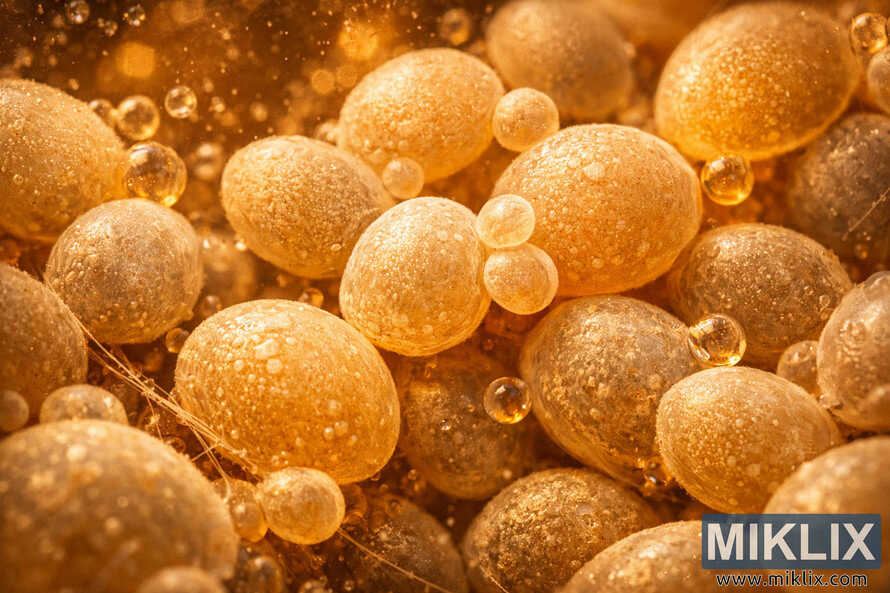
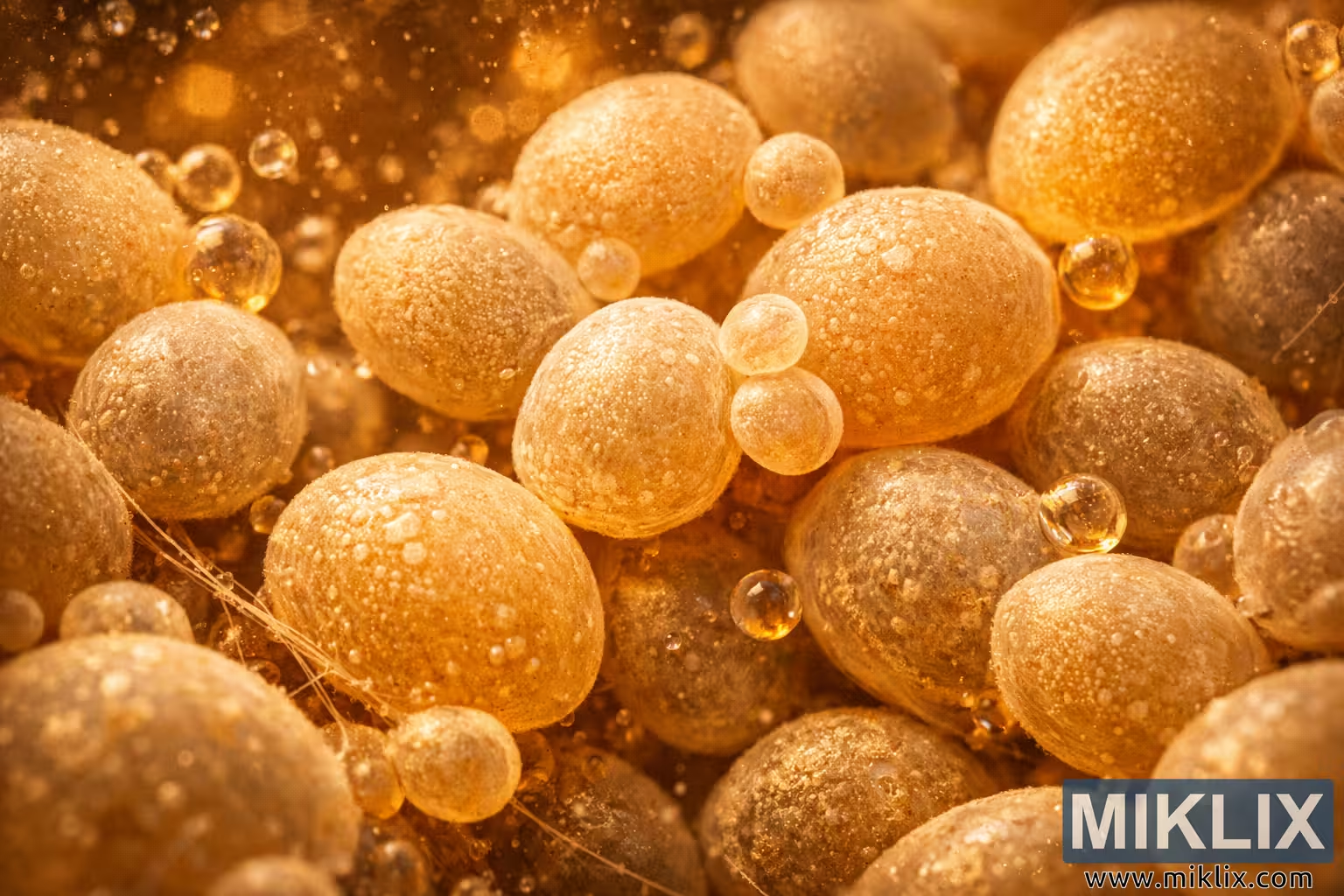
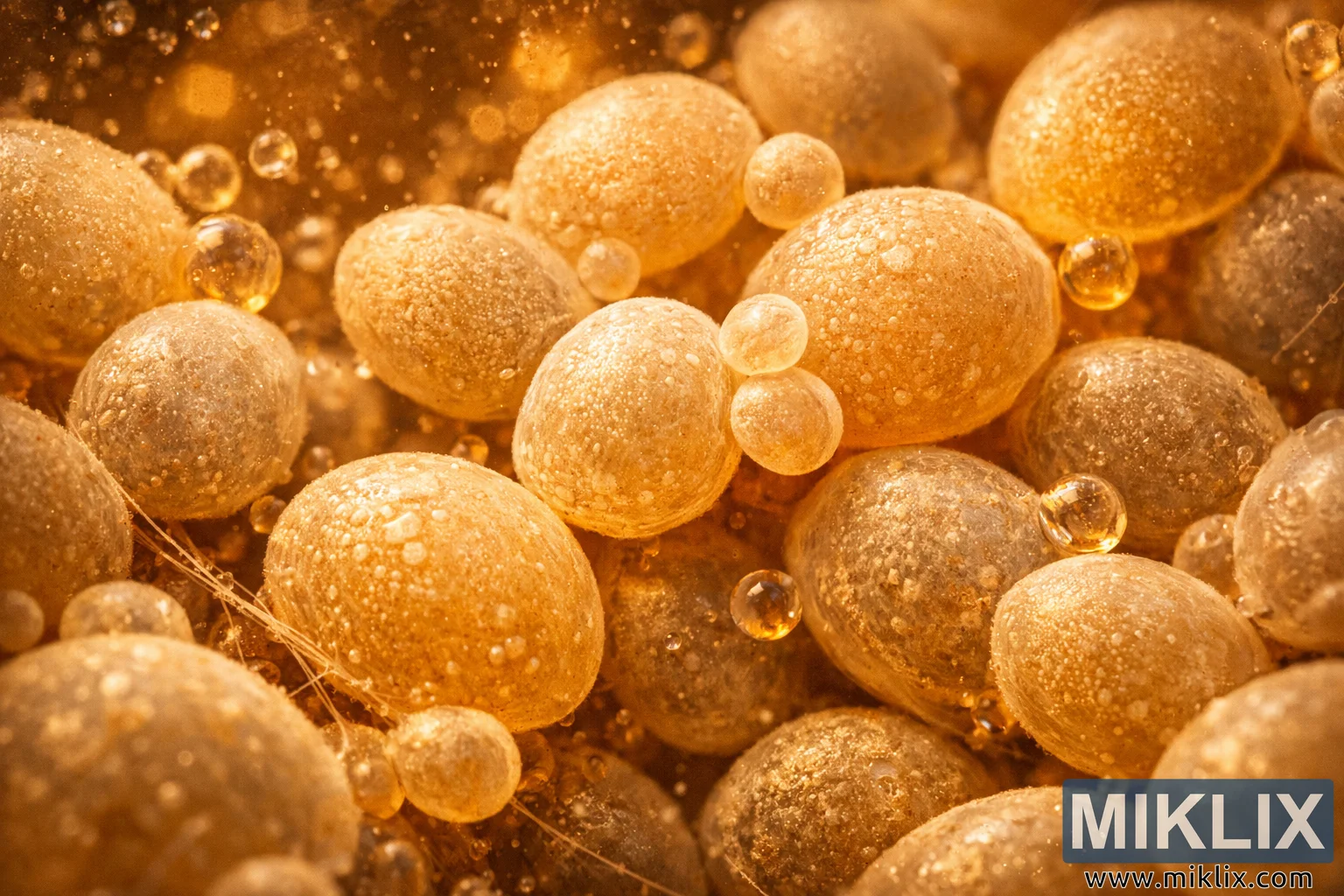
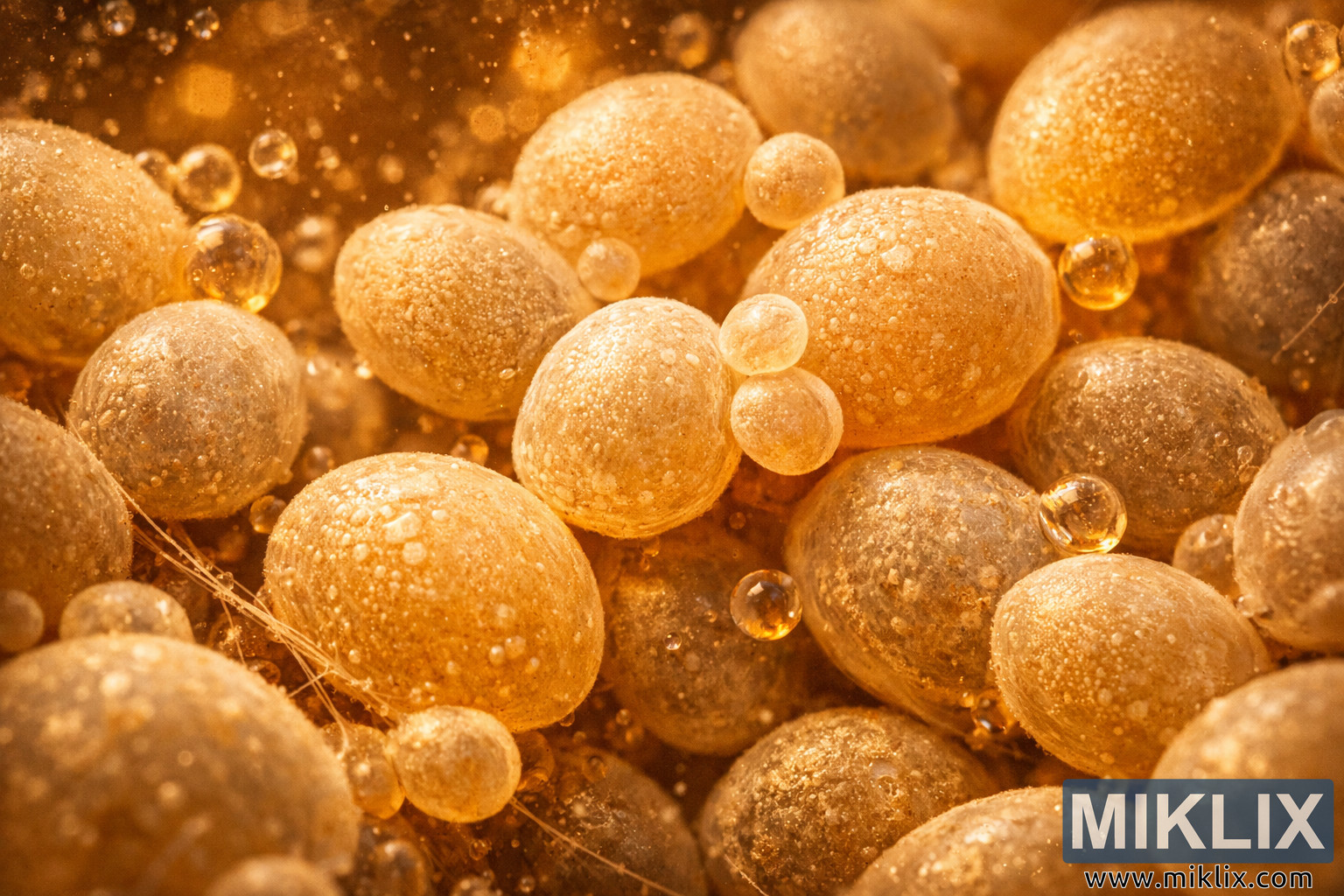
A high-resolution macro photograph of East Coast Ale yeast under a microscope, showcasing detailed cell structures, budding activity, and warm golden tones that reflect the artistry of craft brewing.
Available versions of this image
The image files available for download below are less compressed and higher resolution - and as a result of that, higher quality - than the images embedded in articles and pages on this website, which are more optimized for file size in order to reduce bandwidth consumption.
Regular size (1,536 x 1,024)
Large size (3,072 x 2,048)
Very large size (4,608 x 3,072)
Extra large size (6,144 x 4,096)
Comically large size (1,048,576 x 699,051)
- Still uploading... ;-)
Image description
This high-resolution, landscape-oriented macro photograph presents an intimate view of an East Coast Ale yeast culture as seen through a microscope, transforming a microscopic biological process into a visually rich and almost tactile experience. The frame is filled with plump, oval yeast cells suspended in a translucent liquid medium, each one rendered in remarkable detail. Their softly rounded forms appear almost sculptural, with delicate surface textures that catch and diffuse the warm light. Tiny droplets cling to their membranes, creating a speckled pattern that enhances the sense of depth and dimensionality.
Several cells display active budding, where smaller daughter cells emerge from the surface of larger parent cells. These budding formations are clearly visible, illustrating the living, dynamic nature of the culture. The connections between mother and daughter cells subtly communicate growth, reproduction, and the quiet vitality that underpins the fermentation process. The image captures this moment of biological transformation with clarity and precision, emphasizing both the scientific importance and the organic beauty of yeast activity.
The color palette is dominated by warm golden ambers, honeyed oranges, and soft caramel hues. This inviting spectrum evokes the tones of freshly brewed ale, visually linking the microscopic subject to its macroscopic result. The background glows with a gentle, diffused radiance, suggesting light passing through liquid and cellular structures. Tiny bubbles and suspended particles shimmer throughout the scene, reinforcing the impression of an active fermentation environment.
The shallow depth of field enhances the macro effect, bringing select cells into crisp focus while others recede into a creamy blur. This selective focus creates a sense of immersion, as though the viewer has entered a hidden world beneath the surface of brewing. The interplay of sharp detail and soft background gradients conveys both technical precision and artistic craftsmanship.
Overall, the image balances scientific discovery with artisanal character. It celebrates the often-unseen microorganisms responsible for the flavor, aroma, and character of East Coast Ale. By magnifying the yeast cells to monumental scale, the photograph honors the craftsmanship of brewing and the intricate biological processes that make it possible, blending laboratory clarity with the warmth and richness associated with handcrafted beer.
The image is related to: Fermenting Beer with White Labs WLP008 East Coast Ale Yeast