
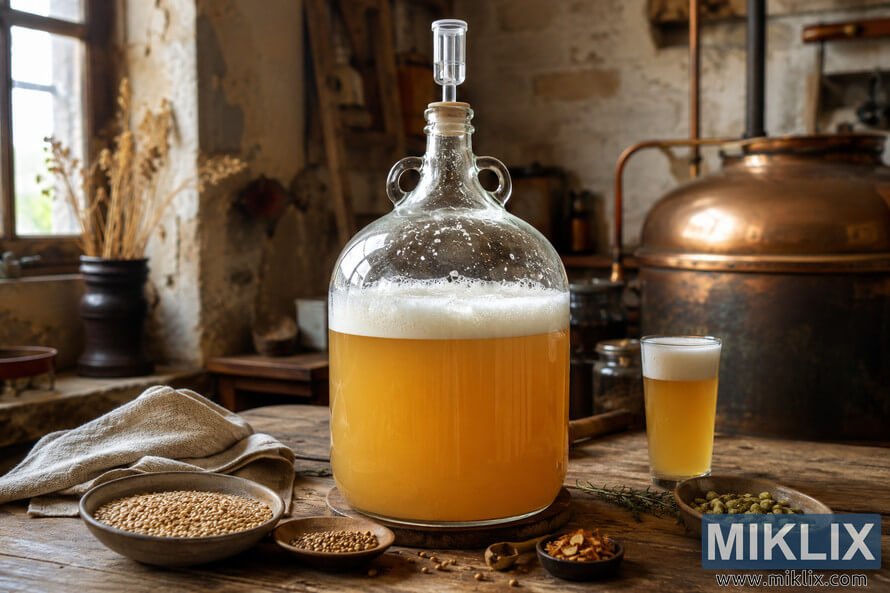
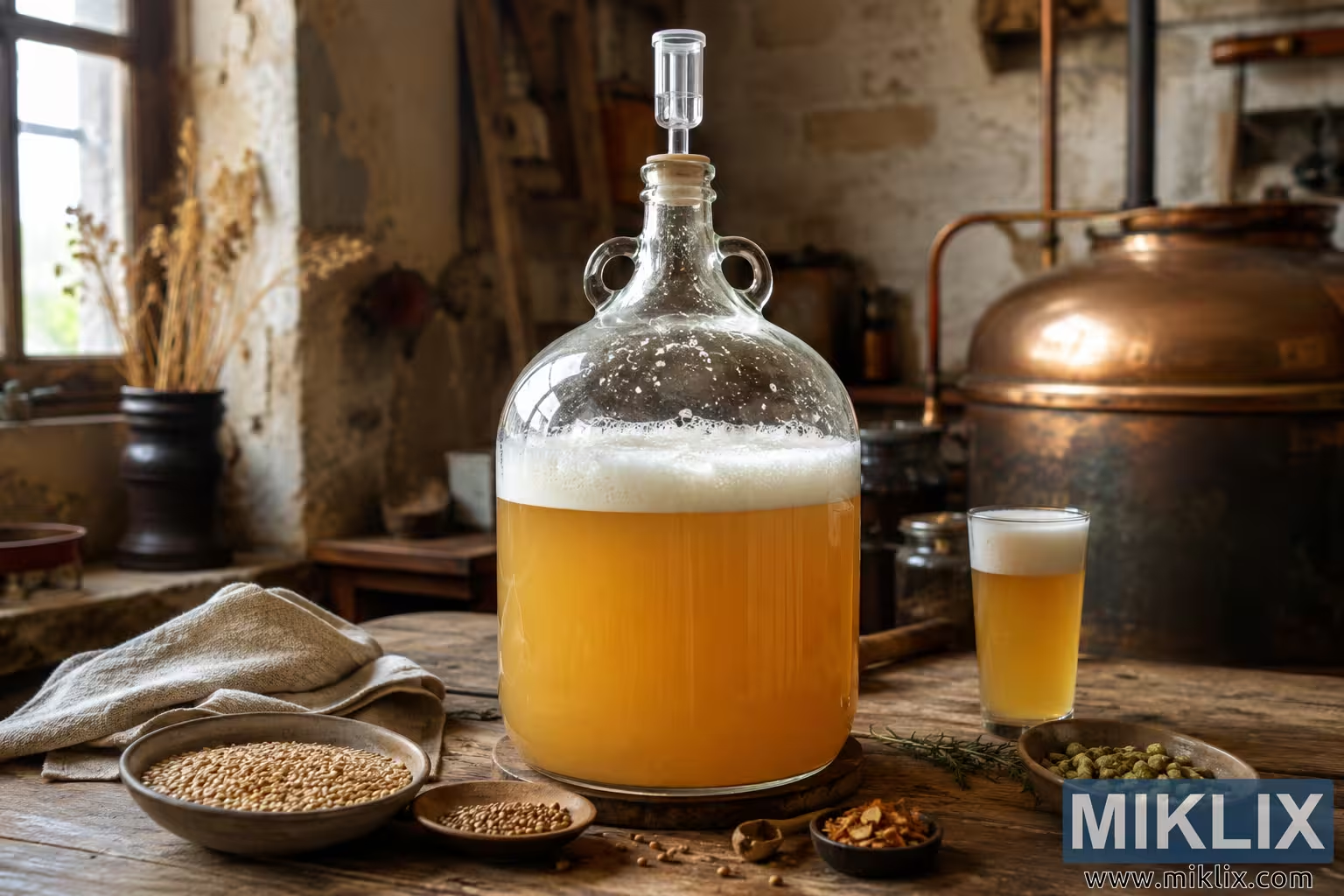
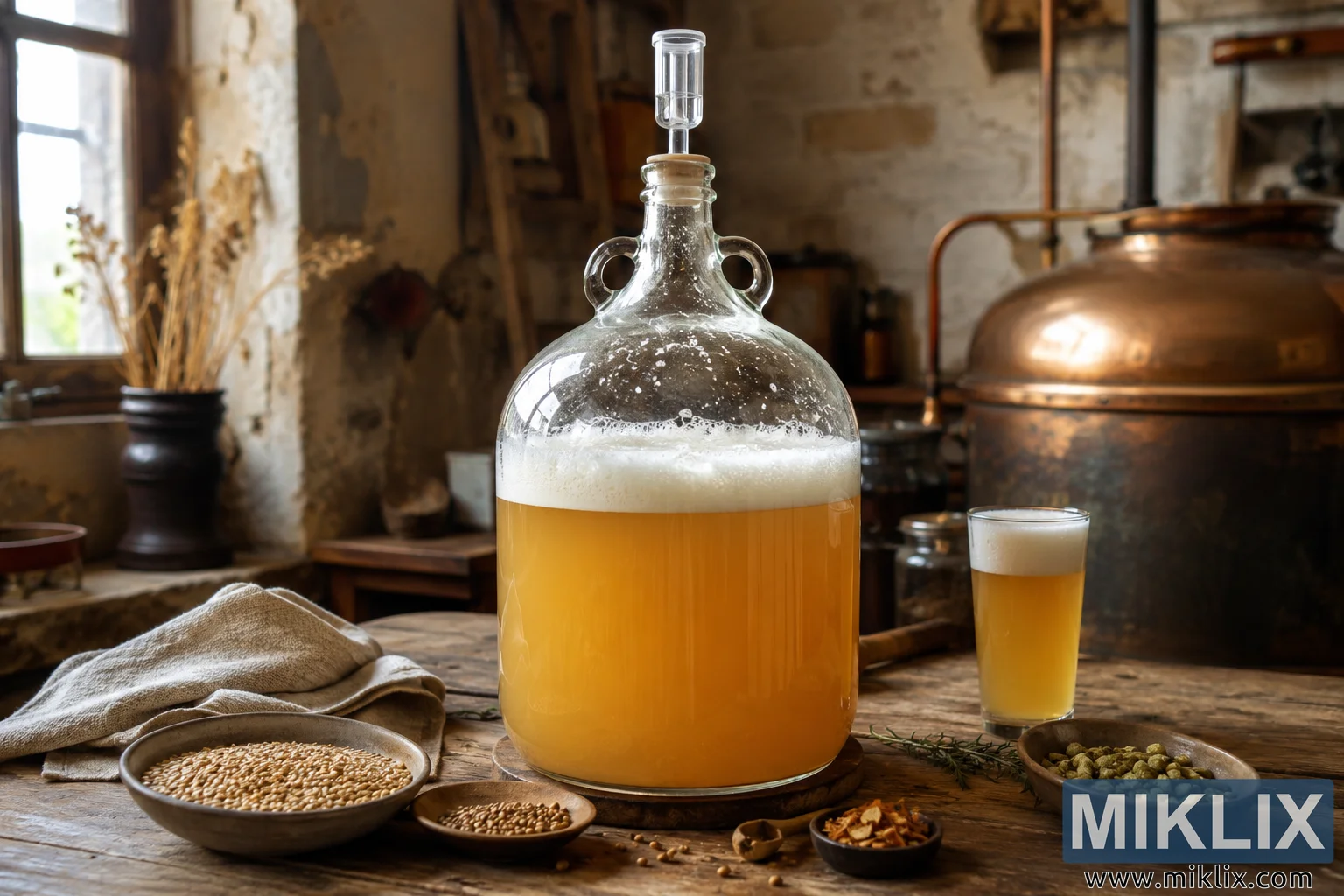
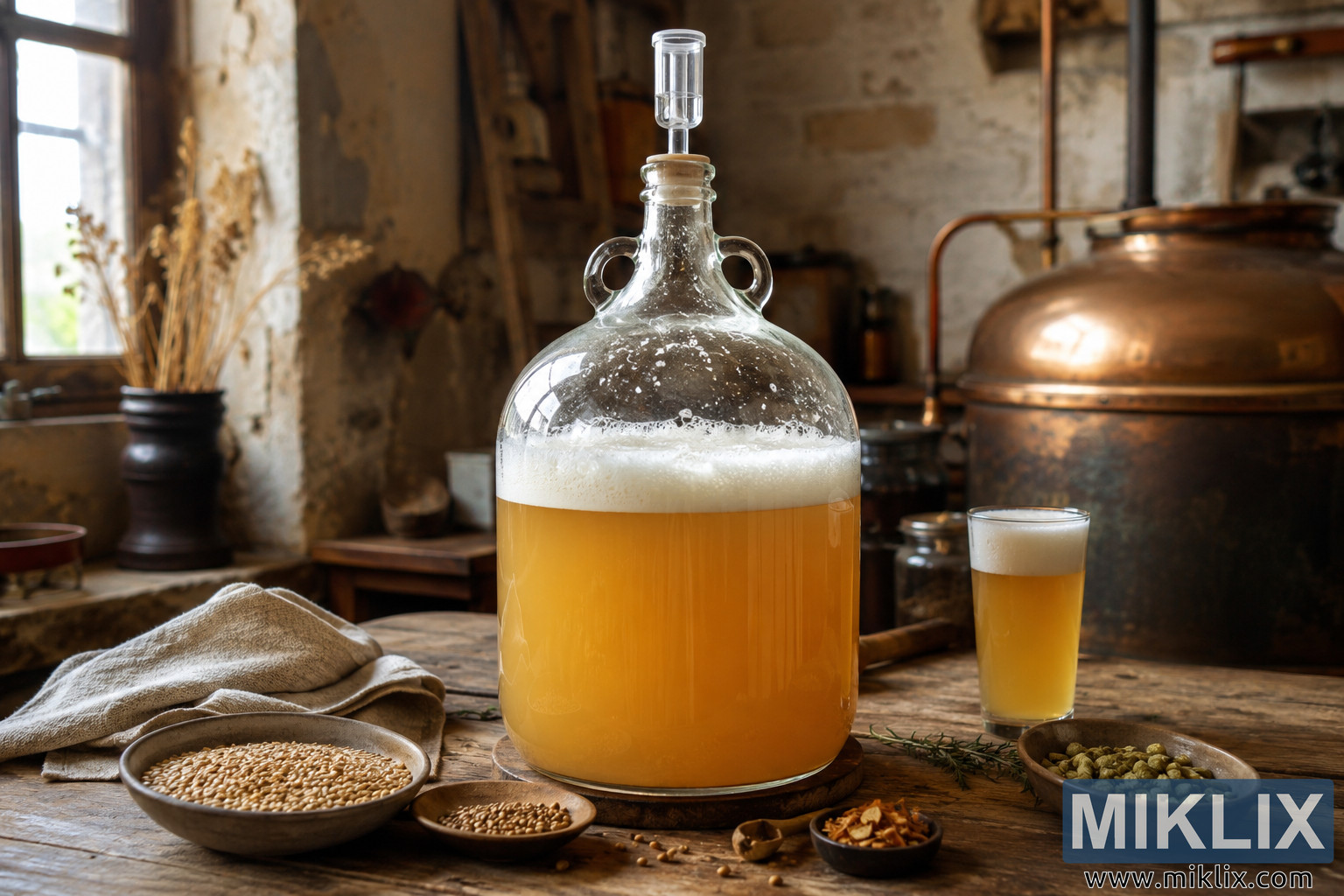
Image: Belgian Witbier Fermenting in a Glass Carboy on a Rustic Wooden Table
Published: July 13, 2026 at 7:42:14 PM UTC
A rustic homebrewing scene featuring Belgian-style witbier fermenting in a glass carboy on a weathered wooden table, surrounded by traditional brewing ingredients and copper equipment in a warm artisanal setting.
Available versions of this image
The image files available for download below are less compressed and higher resolution - and as a result of that, higher quality - than the images embedded in articles and pages on this website, which are more optimized for file size in order to reduce bandwidth consumption.
Regular size (1,536 x 1,024)
Large size (3,072 x 2,048)
Very large size (4,608 x 3,072)
Extra large size (6,144 x 4,096)
Comically large size (1,048,576 x 699,051)
- Still uploading... ;-)
Image description
A warmly illuminated rustic homebrewing scene centers on a large transparent glass carboy filled with actively fermenting Belgian-style witbier. The vessel sits prominently on a weathered wooden table whose rich grain, knots, scratches, and worn edges communicate years of careful use. The beer inside the carboy displays a naturally hazy golden-yellow appearance characteristic of an unfiltered wheat beer during fermentation. Near the top of the liquid, a thick layer of creamy white foam forms a dense cap, while countless tiny bubbles suspended throughout the beer hint at vigorous yeast activity. Condensation and subtle reflections on the smooth glass surface enhance the realism of the vessel and emphasize its clean, polished appearance. At the neck of the carboy sits a stopper supporting a transparent fermentation airlock, an essential brewing component that allows carbon dioxide to escape while preventing outside contaminants from entering. The airlock stands upright and becomes a visual focal point extending above the rounded shoulder of the glass container.
The composition is balanced and inviting, with the fermenter occupying the center of the frame while a variety of brewing ingredients and accessories are arranged naturally around it. In the foreground, shallow wooden bowls contain pale brewing grains and green hop pellets. Smaller dishes display additional brewing ingredients, including light-colored seeds and dried orange-colored botanical pieces that evoke traditional witbier flavor additions such as citrus peel and spice without drawing attention away from the fermenting beer itself. A folded natural linen cloth rests casually beside the ingredients, contributing texture and reinforcing the handcrafted atmosphere. Small scattered grains and botanical fragments across the tabletop create the impression of an authentic brewing workspace that has recently been used rather than an overly staged display.
To the right of the fermenter stands a simple clear drinking glass containing a cloudy golden beer crowned by a modest white foam head. The serving glass complements the fermenting batch while subtly illustrating the appearance of the finished style. Behind it, a large copper brewing kettle occupies part of the softly blurred background. Its rounded body displays warm metallic highlights and gentle patina that suggest years of brewing experience. Copper pipes extend upward and across portions of the background, adding visual structure while reinforcing the traditional brewing environment.
The setting resembles a cozy European farmhouse or traditional Belgian-inspired brewing room. The walls are textured with aged plaster showing natural imperfections, discoloration, and weathered character accumulated over time. Wooden shelving, rustic tools, and indistinct containers fade softly into the background through a shallow depth of field, allowing the fermenting carboy to remain the unmistakable subject. On the left side of the composition, a window admits warm natural daylight that gently washes across the table and glass surfaces. The incoming light creates soft shadows and realistic reflections while highlighting the translucent quality of the beer. The lighting remains warm and diffused, producing an inviting atmosphere associated with artisanal craftsmanship rather than industrial production.
Muted earth tones dominate the palette, including warm browns from aged timber, amber reflections from copper equipment, soft creams from linen fabric, and gentle golden hues from the fermenting witbier. These colors contrast beautifully with the subtle green tones of the hop pellets and the pale beige grains arranged throughout the foreground. The overall mood conveys patience, tradition, craftsmanship, and quiet satisfaction associated with small-scale brewing. Every object appears intentionally placed yet naturally integrated into the environment, avoiding the appearance of commercial advertising or product staging.
The perspective is approximately eye level with a slight emphasis toward the tabletop, creating a sense that the viewer is standing directly in front of the brewing station. Focus is crisp on the fermenter, foam, airlock, and nearby ingredients, while the background gradually softens into an attractive blur that provides environmental context without distracting from the primary subject. The image contains no visible logos, commercial labels, trademarks, or recognizable branding, allowing attention to remain entirely on the brewing process and the timeless character of traditional homebrewing. The overall composition successfully celebrates the beauty of fermentation, the elegance of handcrafted brewing equipment, and the warm atmosphere of a rustic brewing space where careful technique and patience transform simple ingredients into a classic Belgian-inspired wheat beer.
The image is related to: Fermenting Beer with White Labs WLP410 Belgian Wit II Ale Yeast