
Fermenting Beer with White Labs WLP545 Belgian Strong Ale Yeast
Published: December 25, 2025 at 11:03:33 AM UTC
WLP545 originates from the Ardennes, showcasing its unique Ardennes yeast background. It is known for its balanced ester and phenolic character, making it a classic Belgian strong ale yeast. Tasting notes often include dried sage and black cracked pepper, alongside ripe fruit esters.
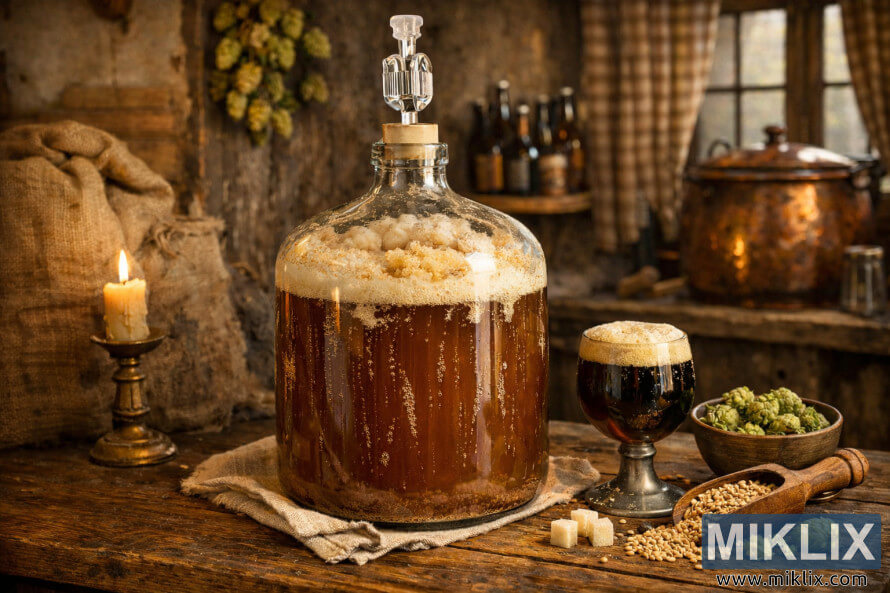
Click or tap the image for more information and higher resolutions.
This introduction delves into the practical aspects of using White Labs WLP545 Belgian Strong Ale Yeast for homebrewers. It focuses on brewing high-ABV Belgian styles. White Labs identifies WLP545 as originating from the Ardennes region of Belgium. It recommends this yeast for brewing Belgian Dark Strong Ale, Tripel, Dubbel, Pale Ale, and Saison.
Community notes suggest a connection to the Val-Dieu tradition. This places WLP545 within the broader WLP5xx family, which is commonly used for abbey-style beers.
The article will present a detailed WLP545 review based on lab data and real-world experiences. It will explore fermenting WLP545 in high-gravity systems. It will also evaluate PurePitch Next Generation options, which provide 7.5 million cells/mL pouches. This packaging allows for no-starter pitching in many commercial batches.
Practical topics include attenuation behavior, ester, and phenolic contributions. Recipe suggestions for Belgian Dark Strong Ale and Tripel will also be discussed.
Readers will receive clear guidance on pitching rates, starter strategies, temperature control, and storage. The aim is to equip brewers with evidence-based recommendations. This will enable them to produce clean, complex, and reliable high-gravity Belgian beers using this yeast.
Key Takeaways
- White Labs WLP545 Belgian Strong Ale Yeast is suited for Belgian Dark Strong Ale, Tripel, Dubbel, and Saison.
- A WLP545 review should weigh lab attenuation, STA1 QC results, and community history for Val-Dieu origins.
- PurePitch Next Generation pouches offer 7.5 million cells/mL and can reduce the need for starters.
- Fermenting WLP545 in high-gravity Belgian yeast recipes needs controlled temperature and adequate pitching.
- The article will provide actionable tips on handling, recipe design, and troubleshooting for high-ABV beers.
Overview of White Labs WLP545 Belgian Strong Ale Yeast
WLP545 originates from the Ardennes, showcasing its unique Ardennes yeast background. It is known for its balanced ester and phenolic character, making it a classic Belgian strong ale yeast. Tasting notes often include dried sage and black cracked pepper, alongside ripe fruit esters.
The WLP545 overview reveals high attenuation and medium flocculation. Attenuation ranges from 78% to 85%, resulting in a dry finish suitable for high-gravity beers. Alcohol tolerance is noted as High (10–15%) by some, and Very High (15%+) by White Labs.
White Labs categorizes this yeast as part of the WLP5xx family, linked to traditional Abbey and monastic brewing. Discussions and reports connect WLP545 to Abbey-style lineages like Val-Dieu, noting strain divergence over decades. It's ideal for Belgian dark strong ales, tripels, and other Abbey-style beers.
When planning recipes, consider moderate ester production, noticeable phenolics, and full sugar fermentation in high-ABV worts. The WLP545 overview, combined with its Ardennes yeast background, makes it a top choice for brewers aiming for a dry, complex Belgian profile.
Why Choose White Labs WLP545 Belgian Strong Ale Yeast for High-Gravity Beers
WLP545 is highly valued by brewers aiming to create high ABV Belgian yeast beers. It exhibits high attenuation, typically between 78–85%. This characteristic allows it to ferment large amounts of malt sugar, resulting in a clean, dry beer.
This yeast can handle very high alcohol levels, often exceeding 15%. It's perfect for Belgian dark strong ales, tripels, and holiday beers where high ABV is key. Its ability to ferment through concentrated worts without stalling is unmatched.
PurePitch Next Generation formats offer a commercially recommended pitch rate. A 7.5 million cells/mL pouch can simplify production, reducing the need for a starter. This makes WLP545 ideal for high-gravity batches.
The WLP5xx family is renowned for traditional abbey and monastic profiles. Its provenance and widespread use in the brewing community instill confidence. Brewers can rely on it to craft classic Belgian styles that balance strength with drinkability.
- Robust alcohol tolerance supports very strong worts and high ABV Belgian yeast fermentations.
- High attenuation produces the sought-after dry finish strong ales require for balance.
- Moderate ester and phenolic character adds complexity without overwhelming delicate malt and spice notes.
For high-alcohol, well-attenuated beers, WLP545 is a reliable choice. It promises a drier final gravity, controlled phenolics, and the structural backbone needed for aging or spicing. This makes it a top pick for dry finish strong ales.
Key Fermentation Specs and Laboratory Data
White Labs lab sheets detail essential WLP545 specs for brewers. Attenuation falls between 78% and 85%, with medium flocculation. The strain is STA1 positive. Fermentation temperatures typically range from 66° to 72°F (19°–22°C).
Retail product notes confirm the attenuation range of 78%–85% and medium flocculation. Alcohol tolerance shows slight variation. White Labs marketing suggests very high tolerance (15%+), while some retailers mention high tolerance at 10–15%.
- Attenuation WLP545: 78%–85%
- Flocculation WLP545: Medium
- Fermentation parameters: 66°–72°F (19°–22°C)
- STA1: Positive
When planning starters, formats and part numbers are crucial. WLP545 is available in Vault and organic formats. PurePitch Next Generation pouches provide a higher cell count, ideal for large or high-gravity batches.
Alcohol tolerance data differences necessitate cautious planning. For beers over 12%–14% ABV, closely monitor gravity and yeast health. Adjust fermentation parameters and consider stepped feeding or oxygenation for optimal results.
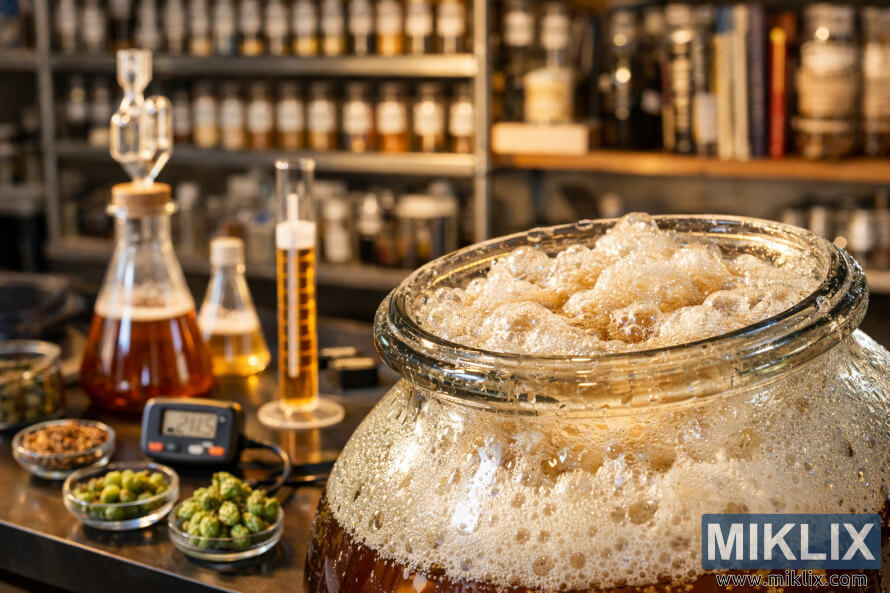
Click or tap the image for more information and higher resolutions.
Optimal Fermentation Temperature and Control
For WLP545 fermentation, aim for a temperature range of 66–72°F (19–22°C). This range ensures a balance between fruity esters and mild phenolics. It also supports strong attenuation in high-gravity beers.
Temperature control for Belgian yeast is crucial. Rapid temperature changes can disrupt the balance of esters and phenols. This can stress the yeast. Use a temperature-controlled fermentation vessel or a dedicated controller to maintain a steady temperature.
When brewing high-gravity beers, careful fermenter management is essential. Consider a gentle temperature ramp or a diacetyl rest near the upper end of the range. This can help the yeast complete the final gravity points.
Community experience highlights the impact of temperature on WLP5xx strains. Warmer fermentations increase fruitiness and speed up activity. Cooler fermentations slow the process and tighten ester expression. Adjusting the temperature by a degree or two can fine-tune the final profile.
The tail end of fermentation takes longer than the initial drop. The final few points of attenuation can be slow. Plan accordingly and avoid racking too soon to prevent stalled attenuation.
- Hold 66–72°F for expected Belgian strong ale character.
- Use active cooling or a heater for stable temperature control Belgian yeast needs.
- Apply step ramps or rests for high-gravity beers as part of fermenter management WLP545.
Pitching Rates, Starters, and PurePitch Next Generation
Before brewing, select a pitching plan. White Labs' Pitch Rate Calculator helps estimate cells needed based on original gravity and batch size. For mid-strength ales, it suggests a WLP545 pitching rate. This rate minimizes lag and ensures steady fermentation.
PurePitch Next Generation comes ready to use, with about 7.5 million cells per milliliter. This high cell count often doubles the usual pitch, eliminating the need for a starter in many small to medium batches. Brewers who prefer premade packs find convenience and consistency with PurePitch Next Generation.
High-gravity beers require special care. For OGs above 1.090 or target ABVs over 12%, verify the actual pitched cells against the desired count. Many professionals follow WLP545 starter recommendations for such cases. A stepped starter or a larger PurePitch pack can reduce lag and help the yeast manage osmotic and alcohol stress.
Consider strain behavior in your planning. White Labs' Vault and organic options include QA data like STA1 status. The STA1 positive marker affects sugar utilization and can alter nutrient needs. Adjust your pitching and nutrition choices based on this lab information to support full attenuation.
- When in doubt, size up: select a larger PurePitch Next Generation pack or build a stepped starter.
- Oxygenate wort well before pitching to support high cell counts and fast takeoff.
- Add appropriate yeast nutrients for strong worts to reduce stress and off-flavor risk.
Tracking cell counts is beneficial. Calculating pitched cells per milliliter for your batch reinforces good practice and aligns with the WLP545 pitching rate guidance. Clear planning and proper oxygenation reduce the chance of stuck or sluggish fermentations.
Follow WLP545 starter recommendations for very heavy worts. Consider hydration or rehydration protocols if using dry adjuncts. Solid preparation keeps fermentation predictable and preserves the signature flavor profile of this Belgian strong ale yeast.
Yeast Handling, Storage, and Shipping Recommendations
When ordering WLP545, consider expedited shipping and a cold pack to ensure viability. Liquid yeast thrives in cold conditions, making this crucial for maintaining quality. Sellers often recommend cold packs to safeguard against temperature fluctuations.
White Labs provides WLP545 in both Vault and PurePitch formats. The Vault format ensures controlled production and higher standards of handling. PurePitch pouches, however, require specific pitching instructions to avoid temperature shock.
For optimal storage, keep liquid yeast refrigerated until use. Freezing live cultures is not recommended. Use the yeast within the manufacturer's shelf life to preserve its health and performance.
When handling White Labs yeast, warm it gradually to the pitching temperature. Avoid sudden temperature changes, which can stress the cells. Gently swirl the vial or pouch to resuspend the yeast before pitching.
Transit delays can lead to viability loss. For high-gravity beers or delayed shipments, consider a starter. A starter increases cell count, ensuring a clean fermentation despite reduced viability.
Practical tips:
- Choose sellers offering cold pack options and shorter transit windows.
- Refrigerate on arrival and use within the labeled shelf life.
- Prepare a starter when in doubt about viability, especially for strong ales.
- Follow PurePitch handling instructions if using pouches for direct pitch.
Keep records of order dates and arrival condition. Tracking transit times helps decide when to make a starter and informs future orders. Proper WLP545 shipping cold pack choices and careful storing liquid yeast habits improve outcomes and reduce fermentation risk when handling White Labs yeast.
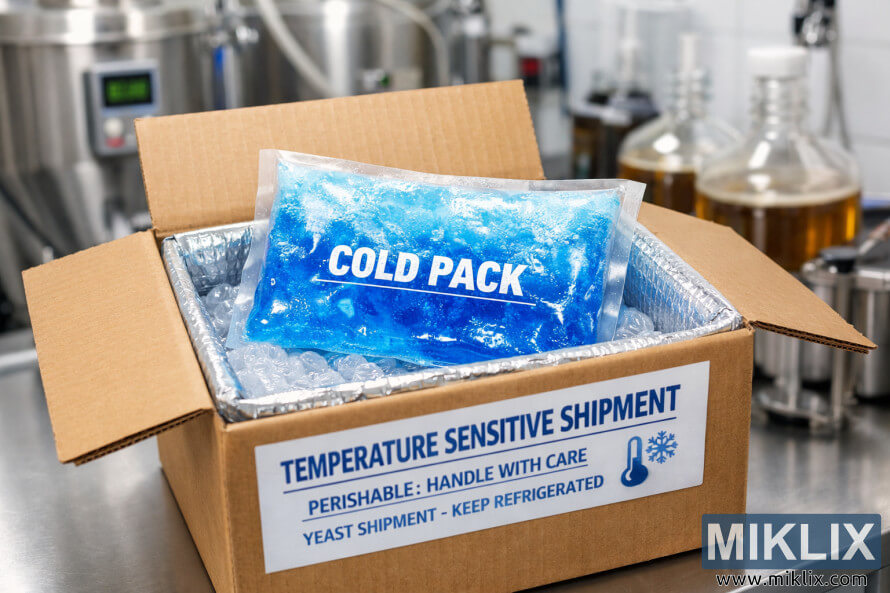
Click or tap the image for more information and higher resolutions.
Flavor Contributions: Esters and Phenolics from WLP545
The WLP545 flavor profile is characterized by a moderate expression of esters and phenolics. It offers a dry finish with spicy top notes, complemented by a firm malt backbone.
Belgian ester phenol WLP545 often presents dried herbal qualities, with distinct sage and cracked pepper notes. These elements are particularly well-suited for Belgian dark strong ales and tripels, especially when balanced with candy sugar or dark malts.
The balance between fruity esters and spicy phenolics is influenced by fermentation temperature and regime. Cooler fermentations tend to reduce ester intensity and temper phenolic heat.
Conversely, warmer fermentations enhance esters, making the Belgian ester phenol WLP545 profile fruitier and more pronounced. Brewers should adjust the pitch and temperature to achieve the desired spice-fruit balance.
- Expectation: a dry finish with lingering phenolic spice.
- Pairings: dark malts or Belgian candi sugar stabilize sweetness and body.
- Hop choices: noble or Styrian hops complement sage and cracked pepper notes without masking them.
Community experience reveals that WLP5xx strains can vary across batches and breweries. Small variations in oxygenation, pitching rate, or temperature can significantly alter the flavor profile from fruity to peppery.
To achieve a restrained spice level, ferment within the lower end of the yeast’s recommended range. Avoid late high-temperature raises. This approach yields a controlled WLP545 flavor profile, ideal for classic Belgian styles.
Recipe Design Tips for Belgian Dark Strong Ale and Tripel
Begin by setting a target gravity and body for each style. For a Belgian dark strong, opt for a rich malt bill. Use Maris Otter or Belgian pale as the base. Add crystal, aromatic, and small amounts of chocolate or black malt for color and toasted notes.
Consider 5–15% candi sugar or invert sugar to boost ABV while keeping the body lighter. This addition helps in achieving the desired alcohol content without compromising the beer's texture.
When crafting a WLP545 tripel recipe, aim for a lighter grain bill. Pilsner or pale Belgian malts should form the backbone. Include 10–20% simple sugar to promote a dry finish. Ensure the original gravity allows WLP545 to attenuate well, avoiding excessive alcohol stress.
Consider yeast attenuation when planning fermentables. WLP545 typically attenuates in the 78–85% range. Use this range to estimate the expected final gravity. Balance malt and sugar percentages to achieve the desired mouthfeel and ABV.
Match the mash profile to the final texture. For dark strong ales, use a slightly higher mash temperature to retain more dextrins for a fuller body. In tripels, a lower mash temperature favors fermentable sugars and a drier finish.
- Optimize fermentables: reserve specialty malts under 15% for clarity and balance in tripel.
- Adjust sugar: dark strong ales benefit from a modest sugar addition; tripels take more for dryness.
- Calculate attenuation: plan recipes with formulating for WLP545 in mind to predict FG.
Oxygenation and nutrition are crucial in high gravity worts. Ensure adequate oxygen at pitch and add yeast nutrient for very high OG beers. Healthy yeast reduces stalled fermentation and off-flavors, supporting WLP545’s high attenuation.
Control fermentation temperature to steer esters and phenolics. Slightly warmer fermentations can amplify complex fruit and spice in Belgian dark strong recipe versions. For a WLP545 tripel recipe, maintain stable temperatures to preserve a clean, dry character.
Scale starter size and pitching rate to gravity. Large starters or multiple packs are essential when brewing above normal strengths. Adequate cell counts shorten lag time and improve attenuation in both tripels and dark strong ales.
Water Profile and Mash Techniques for Best Results
Belgian ales truly come alive when the water complements the malt and yeast. Strive for a water profile with a chloride-to-sulfate ratio that leans towards chloride. This enhances the beer's mouthfeel and esters. High sulfate water, on the other hand, can accentuate hop bitterness and astringency, which is undesirable in delicate Belgian styles.
When brewing with dark malts, it's crucial to adjust the bicarbonate levels to avoid harshness. To control mineral content, blend distilled or RO water with your brewing water. Aim for a mash pH between 5.2 and 5.4. This range is ideal for enzyme activity and yeast health during fermentation.
For brewing Belgian strong beers, a single infusion mash is recommended for its simplicity and consistency. For a dry Tripel, lower the mash temperatures in the WLP545 mash schedule range to 148–152°F (64–67°C). This will help produce more fermentable sugars, allowing WLP545 to finish clean and dry.
Dark strong ales, however, require slightly higher mash temperatures to preserve their body. Set the mash temperatures around 152–156°F (67–69°C) to retain dextrins and enhance mouthfeel. Remember, WLP545's attenuation will still reduce residual sweetness. Therefore, plan your mash temperatures to achieve the desired final texture.
For fine-tuning flavor, make small adjustments to the salt levels. Adding calcium and chloride can enhance malt perception. If dark malts increase the mash pH, reduce bicarbonate or add acid to keep enzymes active and avoid harsh phenolics.
- Check the water profile Belgian ales require before brewing.
- Follow a WLP545 mash schedule suited to the beer style.
- Select mash techniques Belgian strong styles demand: lower temps for dry Tripel, higher temps for dark strong ales.
Even small changes in water and mash technique can significantly impact yeast expression and final balance. Keep detailed records of your water chemistry and mash steps. This way, you can replicate your successes with WLP545 in future batches.
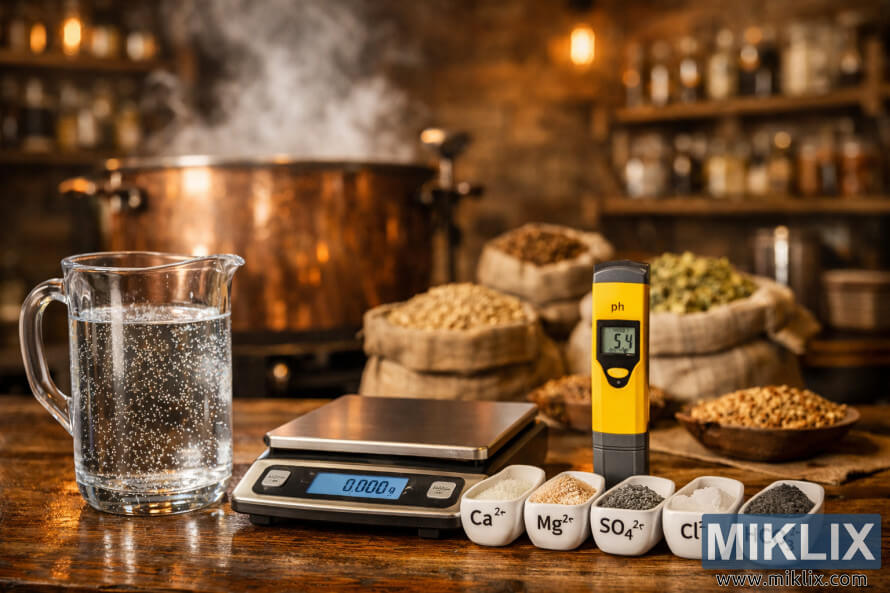
Click or tap the image for more information and higher resolutions.
Fermentation Timeline and Expectation Management
Understanding the WLP545 fermentation timeline is crucial for managing high-gravity beers. Active fermentation typically starts within 24–72 hours, provided the pitch rate and wort oxygenation are optimal. A fermentation temperature between the mid-60s to low-70s Fahrenheit promotes strong attenuation and a dry finish.
The bulk of gravity drop occurs early in fermentation. However, the final 10% of attenuation can take as long as the first 90%. This variability in fermentation duration for Belgian yeast strains necessitates patience. It ensures strong ales are finished without unwanted flavors.
For beers with very high original gravities, extended primary fermentation is advisable. A practical approach includes active primary fermentation for one to three weeks, followed by several weeks of conditioning. This extended period aids in flavor integration, alcohol smoothing, and CO2 stabilization before packaging.
Regularly check gravity readings over several days to confirm fermentation stability. Incomplete attenuation at bottling can lead to overcarbonation in bottles. It's essential to verify the same final gravity over at least three days before bottling or priming. This step reduces the risk of overcarbonation when finishing strong ales.
Adjust your expectations based on the pitch size and yeast health. Larger starters or PurePitch preparations can shorten the most active phase. However, they do not eliminate the slow tail common to many Belgian strains. Properly managing timelines is key to achieving a clean, well-attenuated result with WLP545 fermentation timeline planning.
Attenuation Troubleshooting and Achieving Target Gravity
WLP545 is expected to attenuate between 78–85% when brewing Belgian strong ales. It's crucial to plan your recipe accordingly, ensuring the final gravity falls within the desired range for flavor and alcohol. If the measured gravity remains high, it's time to start a systematic check.
Common issues with WLP545 attenuation include a low pitching rate, poor yeast viability due to long transit or warm storage, insufficient oxygen at wort chill, and low nutrient levels. For liquid yeast that arrived warm or past its shelf life, creating a starter can help restore cell count and vitality.
Use this troubleshooting stuck fermentation checklist.
- Confirm original gravity and recheck hydrometer or refractometer readings after correction for alcohol.
- Verify pitching rate and whether the yeast was fresh or stressed during shipping or storage.
- Assess oxygenation and nutrients given at pitch; add a measured dose of yeast nutrient if none was used.
- Review the fermentation temperature profile and history for cold spots or large swings.
If fermentation is sluggish, gently raise the temperature to 66–72°F for a warm attenuation rest. This usually speeds up attenuation without causing hot ester or phenolic spikes. If yeast viability is suspect, re-pitch a healthy, actively fermenting pack or a vigorous starter rather than dry pitched, dormant cells.
For more aggressive recovery, add oxygen early, before vigorous activity resumes, and dose nutrient per manufacturer guidance. Avoid repeated oxygenation late in fermentation to prevent oxidation of your beer.
Community experience shows patience often resolves slow finishes; final points can take days to weeks in high-gravity beers. Use measured interventions during troubleshooting stuck fermentation and aim to achieve FG WLP545 with gentle temperature and nutrient support rather than abrupt, flavor-risking actions.
Alcohol Management and Safety for Very High-ABV Beers
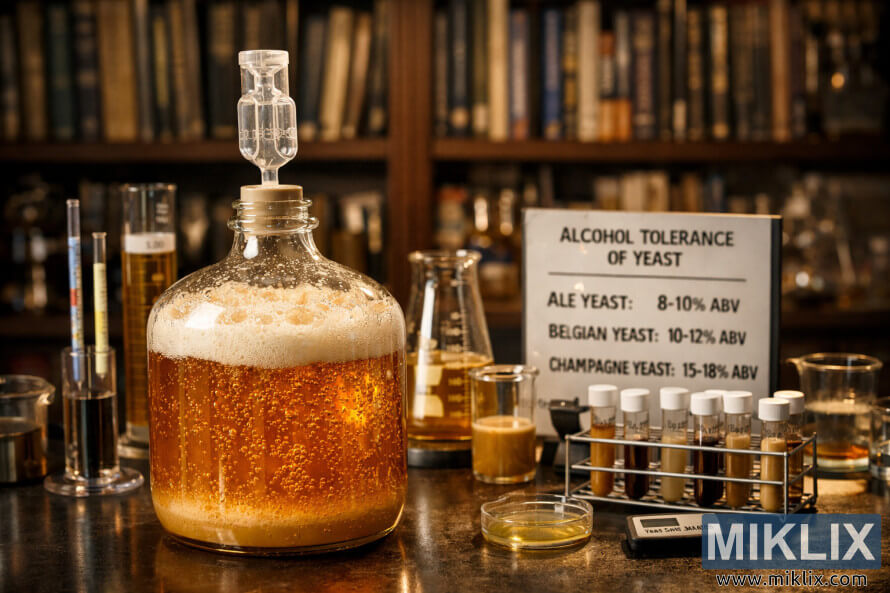
White Labs rates WLP545 alcohol tolerance as Very High (15%+), enabling seasoned brewers to craft strong ales. Retailers sometimes rate it as High (10–15%), so it's wise to be cautious when aiming for extreme gravities.
Yeast faces significant stress when brewing beers near or above 10–15% ABV. Begin with thorough oxygenation at the start, add yeast nutrients, and use generous pitching rates. Consider using PurePitch vials or larger starters to enhance yeast health before tackling brews over 15% ABV.
To keep fermentation active, control temperature and stagger nutrient additions. Watch the gravity and krausen closely; fermentation can stall as ethanol levels rise. Be ready to increase oxygenation and introduce fresh, healthy yeast if fermentation shows signs of distress.
- Pitching: aim for higher cell counts than standard ales when targeting high ABV.
- Nutrients: use complex nitrogen sources and micronutrients in multi-dose schedules.
- Oxygenation: provide enough dissolved oxygen at the start to support early biomass build.
High ABV safety extends beyond yeast health. Extended conditioning can soften harsh ethanol and sulfur flavors, enhancing drinkability. Clearly label strong beers and store them in cool, stable conditions to prevent oxidation and pressure issues.
Local laws on producing and selling high-ABV beverages differ widely. Always check local regulations before commercial distribution and ensure responsible handling and clear labeling for brews over 15% ABV.
For homebrewers, discussing plans with your club or an experienced mentor is crucial when experimenting with extreme recipes. Taking practical steps and monitoring closely can minimize risks while fully leveraging WLP545's alcohol tolerance for crafting robust Belgian-style ales.
Click or tap the image for more information and higher resolutions.
Comparisons with Other Belgian Yeast Strains and Practical Notes
Brewers often compare WLP545 to cousins in the Belgian yeast family WLP5xx when fine-tuning high-ABV recipes. Community posts list likely brewery origins: WLP500 linked to Chimay, WLP510 to Orval, WLP530 to Westmalle, WLP540 to Rochefort, WLP545 to Val-Dieu, and WLP550 to Achouffe. Decades of house-brew use have caused these strains to diverge in character and performance.
Practical WLP545 comparisons show that WLP545 leans toward higher attenuation with moderate esters and peppery phenolics. This profile makes WLP545 a strong choice for very dry Belgian strong ales and tripels. It helps balance malt and alcohol with a lean finish. Brewers report cleaner fermentation and more complete attenuation versus some other 5xx strains.
Forum discussion often praises WLP530 as a versatile yeast for classic Belgian profiles. It offers a rounder ester palette and reliable phenolic spice. Reports about WLP540 note slower, longer fermentations in some batches, which can affect timing and conditioning plans. WLP550 tends to bring fuller fruitiness in examples from community trials.
When deciding between WLP545 vs WLP530, consider desired dryness and how much phenolic bite you want. Choose WLP545 for drier finishes and noticeable but moderate sage or pepper phenolics. Pick WLP530 if you prefer a broader, fruitier Belgian character that still shows traditional spice.
- Run split batches to compare attenuation and ester/phenol balance on the same wort.
- Monitor fermentation length closely with WLP540; plan extra conditioning time if needed.
- Record pitch rate, temperature, and gravity to isolate yeast-driven differences.
Testing alternatives from the Belgian yeast family WLP5xx in small trials yields the clearest practical notes for a given recipe. Carrying out side-by-side comparisons helps you choose the strain that matches your vision for aroma, finish, and attenuation behavior.
Tips from Brewers and Community Findings
Homebrewers and commercial brewers share practical tips for managing slow fermentations with WLP545. They note a long fermentation tail, so plan for extended time in primary. For high-gravity ales, leave them on the yeast for three weeks or more if gravity decline stalls.
Community findings highlight variability in the WLP5xx family. Forum contributors recommend resources like Brew Like a Monk and the KYBelgianYeastExperiment PDF for side-by-side data. Use these comparisons before committing to a full batch of one strain.
WLP545 user experiences emphasize the importance of careful priming. If final gravity is not stable, priming too early can lead to overcarbonation. Confirm FG over multiple days, then bottle or keg. Many brewers condition sealed samples to gauge stability before packaging.
- Measure cell counts for consistent performance and pitch rates.
- Run split-batch tests to dial ester and phenolic balance for your water and process.
- Use PurePitch Next Generation or matched commercial packs when you need predictable cell counts at scale.
Shipping and storage advice from the community favors cold-pack shipping and expedited delivery to preserve liquid yeast viability. Refrigerate immediately on arrival and make a starter when in doubt about cell health. This improves attenuation odds and flavor predictability.
For monastic-style ales, many brewers stick with WLP5xx strains for their classic profile. They tweak fermentation temperature and pitching rate. Track your WLP545 user experiences in a brew log. Note pitching rate, starter size, temperature profile, and water treatments to reproduce strong results.
Click or tap the image for more information and higher resolutions.
Conclusion
WLP545 conclusion: White Labs WLP545 is a reliable choice for brewers aiming for high-attenuation beers. It offers a medium flocculation and very high alcohol tolerance. This yeast is perfect for Belgian Dark Strong Ale, Tripel, Dubbel, and saison-style beers.
It produces a dry finish with moderate esters and phenolics. These flavors are often described as dried sage and black cracked pepper. This gives beers a classic Belgian backbone, allowing malt and hops to shine through.
When choosing WLP545, it's important to ferment between 66–72°F (19–22°C). Plan for extended fermentation and conditioning. Use sufficient cell counts via PurePitch Next Generation or well-sized starters for high-gravity worts.
Cold-pack shipping and proper refrigerated storage help preserve viability. Nutrient management and steady temperatures are key. They help the yeast reach stable final gravity without off-flavors.
This review White Labs Belgian yeast highlights WLP545’s strengths. It offers dependable attenuation, strong alcohol tolerance, and balanced flavor contributions. For brewers aiming for traditional Belgian strong-ale character in very high-ABV beers, WLP545 is a practical and versatile choice. It requires correct pitching rates, oxygenation, and conditioning time.
Further Reading
If you enjoyed this post, you may also like these suggestions:
- Fermenting Beer with CellarScience Cali Yeast
- Fermenting Beer with Bulldog B49 Bavarian Wheat Yeast
- Fermenting Beer with Wyeast 3209-PC Oud Bruin Ale Yeast Blend