
Fermenting Beer with Wyeast 1450 Denny's Favorite 50 Yeast
Published: February 18, 2026 at 6:12:14 PM UTC
Wyeast 1450 Denny's Favorite 50 Yeast is the commercial version of Denny's Favorite, a strain beloved by many homebrewers. It was introduced to Wyeast's lineup in 2007. Since then, it has become known for its classic U.S. small-brewery flavor.
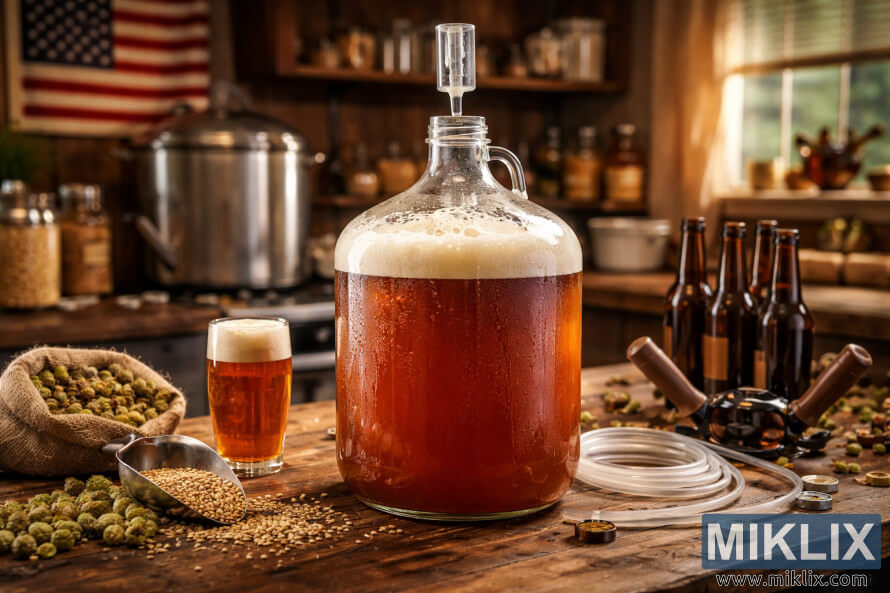
Click or tap the image for more information and higher resolutions.
Fermenting with WY1450 brings out enhanced malt, caramel, and subtle fruit esters. It also offers medium-high attenuation, around 74–76%. Brewers often note a big, soft mouthfeel and a rounded finish that avoids unwanted sweetness.
This review is designed for hobbyists looking for practical advice. We'll delve into the strain's origins, fermentation behavior, flavor impact, and more. We'll also share pitching and temperature tips, along with recipe ideas to help you achieve consistent results with WY1450.
Key Takeaways
- WY1450 is the Wyeast commercial release of Denny's Favorite yeast, added to the catalog in 2007.
- The strain emphasizes malt and caramel character while producing medium-high attenuation (74–76%).
- Expect a full, soft mouthfeel and a rounded finish without excessive residual sweetness.
- WY1450 is widely available through U.S. homebrew suppliers in Wyeast packaging.
- This review provides practical, evidence-based tips for fermenting with WY1450 in ales and malty styles.
Introduction to Wyeast 1450 Denny's Favorite 50 Yeast
Wyeast 1450 Denny's Favorite 50 is a blend of farmhouse and classic American ale profiles. It's cherished by homebrewers for its ability to create beers with a robust malt backbone and a clean finish. This introduction highlights its significance as a notable ale yeast and a preferred choice for homebrewers.
What makes this strain notable in homebrewing
- Reliable medium-high attenuation that leaves beer balanced, not cloying.
- Flavor focus on malt, caramel, and gentle fruit esters that suit many ale styles.
- Versatility: users report success from pale ales to robust stouts.
Brief history and origin story involving Denny Conn and club cultures
- The tale traces back to homebrew club stewardship where Denny Conn helped preserve the culture after a small supplier closed.
- Members kept the strain active and shared work on propagation and maintenance.
- That grassroots path gives the strain authenticity and a clear Denny Conn yeast origin valued by hobbyists.
Why this review matters for U.S. homebrewers
- American brewers seeking a reliable, malt-forward profile will want specific notes on performance and handling.
- Commercial availability has made WY1450 a practical homebrew yeast choice WY1450 for many batches.
- Understanding why choose Denny's Favorite helps brewers decide if it aligns with recipe goals and desired mouthfeel.
Backstory and Provenance of the Strain
The origin of this yeast is a tale of camaraderie, evolving from homebrew circles to commercial availability. It was shared among brewers, used consistently, and tested in various batches. This history underscores its reliability and consistency.
Denny Conn and Nate Sampson started the yeast's legend within a tight-knit club. They cultivated a robust culture, sharing it with local brewers. This method ensured the preservation of essential traits for everyday brewing.
The strain's roots are linked to the CL-50 lineage by BrewTek, known as California Pub Brewery Ale. BrewTek distributed CL-50, likely using strains from North Coast Brewing. This connection traces back to Mark Ruedrich and yeast from the UC Davis lab, used for beers like Old Rasputin.
When BrewTek closed in 2004, the community kept the culture alive. Denny and Nate were crucial in protecting the strain. Their efforts bridged the gap between club use and lab propagation.
Wyeast later acquired the culture, cataloging it as Wyeast Private Collection 2450. This ensured quality control and propagation under professional standards. Wyeast made it commercially available as WY1450 Denny’s Favorite in 2007.
The strain's journey from club fermenters to Wyeast highlights its enduring nature. It shows how practical brewing experience and institutional support preserved a reliable ale yeast.
Typical Fermentation Characteristics
Wyeast 1450 exhibits consistent behavior in both home and small commercial brewing setups. Its predictable nature around attenuation, flocculation, and temperature is highly valued. This consistency helps brewers achieve their desired gravities and flavor profiles in their recipes.
Attenuation range and what to expect
WY1450 offers medium to high attenuation, typically ranging from 74-76%. This means it efficiently converts a significant amount of fermentable sugars. As a result, the beer's finish can range from fairly dry to moderately dry, depending on the malt bill and mash profile.
Flocculation behavior and impact on clarity
The flocculation of WY1450 is generally low to normal. This characteristic allows the yeast to remain suspended for longer periods. Consequently, the beer will likely be clearer after sufficient cold conditioning and secondary or bright tank aging.
Optimal temperature range for primary fermentation
The ideal temperature for primary fermentation with WY1450 is between 60-70°F. This range optimizes ester production, attenuation, and mouthfeel. Cooler temperatures tend to result in cleaner flavors, while warmer temperatures can introduce subtle fruit notes.
- Practical tip: allow a full week at temperature before cold-crashing to improve clarity with low flocculation WY1450.
- Starter advice: use a healthy starter for high-gravity beers to ensure attenuation 74-76% is reached.
- Temperature control: maintain steady fermentation temp 60-70°F to avoid stressed yeast and off-flavors.
Flavor and Mouthfeel Profile
WY1450 focuses on malt complexity, offering a clear profile. Brewers highlight its caramel, toffee, and light fruit esters. This makes it ideal for beers where malt character is paramount.
The yeast enhances toasted and caramelized malts, keeping esters in check. It ensures pronounced malt notes without cloying sweetness. This balance is perfect for recipes that emphasize malt over sugar.
Mouthfeel WY1450 is described as full, soft, and rounded. It produces a thick, pillowy body, ideal for creamy stouts and rich brown ales. This mouthfeel enriches the beer without over-relying on dextrin malts.
Homebrewers often compare WY1450 to London Ale III. Both strains highlight malt, but differ in attenuation and sweetness. London Ale III leaves a sweeter backbone due to its lower attenuation.
- WY1450 flavor profile: malt-forward with restrained esters.
- malt and caramel yeast behavior: highlights caramel and toffee notes without excess sweetness.
- mouthfeel WY1450: provides a soft, rounded body that enhances malty styles.
- compare to London Ale III: similar malt emphasis, but WY1450 attenuates higher and finishes drier.
For brewers aiming for malt complexity, WY1450 is a top choice. It offers a full mouthfeel and less residual sweetness. Its profile is perfect for American reds, brown ales, and malty pale ales that require body and clear malt flavors.
Best Beer Styles for Wyeast 1450 Denny's Favorite 50 Yeast
Wyeast 1450 excels in beers where malt character is paramount, yet balanced attenuation is key. It accentuates caramel, toffee, and subtle fruit esters, ensuring a dry finish. This allows hops and roast to take center stage. Homebrewers praise its versatility, suitable for both malt-forward and hop-focused ales.
American Red and Brown Ales
In American Red and Brown Ales, Wyeast 1450 strikes a perfect balance. It enhances caramel and toffee flavors without cloying the finish. This makes it an ideal choice for recipes rich in crystal malts, providing a sturdy malt backbone. The medium-high attenuation ensures a clean sip and a rounded mouthfeel.
Pale Ales and IPAs
Pale Ales and IPAs benefit from a yeast that complements hops rather than overpowering them. Wyeast 1450 for IPAs preserves the malt backbone, keeping sweetness in check. This allows bitterness and hop aroma to take center stage. It's perfect for a balanced, drinkable IPA with clear hop presence and steady attenuation.
Stouts, Cream Ales, and Other Malty Styles
In stouts and cream ales, Wyeast 1450 amplifies roast and malt flavors, adding perceived body. It's the go-to yeast for brewers seeking a smooth, full mouthfeel. This yeast enhances malt complexity without overshadowing roast notes, ideal for stouts that desire depth and softness over sharp dryness.
Pitching Rates, Starter Advice, and Handling
Ensuring WY1450 is pitched at the correct cell count is crucial for a clean fermentation. For ales with an original gravity up to ~1.060, follow standard ale pitching practices. For stronger beers or larger batches, a starter is necessary to increase cell numbers and prevent slow starts.
Deciding when to make a starter is straightforward. If your beer's target gravity is over 1.060, if you're brewing more than five gallons, or if the Wyeast pack is several weeks old, create a yeast starter WY1450. A starter ensures the culture reaches its optimal attenuation range and shortens lag time.
Recommended WY1450 pitching rates depend on batch size and gravity. For a typical 5-gallon ale at standard strength, aim for 0.75–1.0 million cells per milliliter per °Plato. Stronger ales or high-gravity recipes require higher counts. Use a calculator or reference chart and increase the starter volume as needed.
- If using a single Wyeast smack pack for a 5-gallon standard ale, activate it and monitor signs of growth before pitching.
- For high-gravity ales, build a multi-step starter or use a larger starter flask to reach the needed cell mass.
- Adjust pitching rates when using dry or repitched cultures; follow vendor guidance for those formats.
Proper Wyeast pack handling is essential for yeast health. Store packs chilled and use them within the vendor-recommended timeframe. Check production dates and prefer suppliers with reliable shipping to protect yeast viability storage.
When assessing yeast viability storage, note that refrigeration slows activity but does not prevent gradual decline. If a Wyeast pack has sat for several weeks, favor a starter to reactivate the cells. For long-term needs, consider frozen yeast strains from reputable labs that provide clear cell counts.
Practical handling tips:
- Activate Wyeast packs per the manufacturer's instructions and use them promptly after the smear or swirl shows activity.
- Use clean, oxygenated wort in starters to encourage robust growth for yeast starter WY1450.
- When switching formats, change pitching rates to reflect the difference in live cell counts between liquid Wyeast and dry yeast products.
Prioritize freshness at purchase. Good Wyeast pack handling and attention to yeast viability storage give WY1450 the best chance to deliver its characteristic attenuation and flavor profile in your beer.
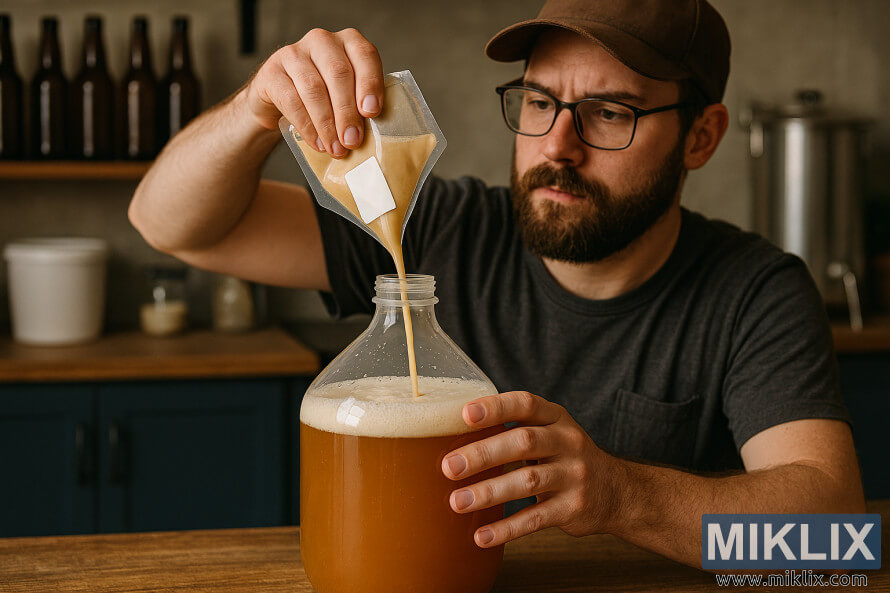
Click or tap the image for more information and higher resolutions.
Fermentation Management and Temperature Control
Temperature management during fermentation is crucial for shaping the beer's character. Brewers must set a primary temperature range, monitor activity, and adjust it to suit the desired style. Stable temperatures ensure predictable attenuation, allowing malt and caramel notes to shine without ester interference.
Choosing the right temperature window is key. For a clean pale ale, aim for 60–64°F to keep ester effects subtle. For malt-forward red or brown ales, target 66–70°F to enhance fruit and malt notes. Consistent temperature during primary fermentation is essential for flavor development.
Temperature fluctuations can significantly alter the beer's character. Brief temperature increases can boost ester production and body, while prolonged highs may introduce off-flavors. Wide temperature swings can also lower attenuation below the typical 74–76% range. It's important to make slow, intentional temperature adjustments to avoid unexpected changes in mouthfeel and gravity.
Effective temperature control is achievable in homebrewing, even for small batches. Utilize a swamp cooler with a fan and an insulated bucket to lower temperatures. For cooler garages, consider a heat belt. External controllers like Inkbird can provide precise temperature control when electric options are available. Insulated tubs and stable ambient rooms serve as alternatives when electric options are not feasible.
- Monitor yeast activity daily and record temperatures.
- Adjust plans if the beer needs cleaner ester profile or more fruit character.
- Consider a one- to two-degree step up late in fermentation to finish attenuation if gravity stalls.
Consistent temperature control during WY1450 fermentation allows the strain to express its malt and caramel characteristics without unwanted off-flavors. Tailor your temperature control strategies to the recipe, and you'll achieve consistent results that align with your style goals.
Attenuation and Dryness Expectations
WY1450 attenuation 74-76 FG expectations guide how dry the beer will finish and how much body remains. This strain ferments a large share of fermentable sugars, so final gravity tends to sit lower than with low-attenuating yeasts. Brewers should plan recipes knowing WY1450 favors a dryer finish while keeping malt character.
What medium-high attenuation (74–76%) means for final gravity
Medium-high attenuation means WY1450 converts roughly three quarters of the fermentable sugars. For the same original gravity, expect a lower FG than with gentler strains such as London Ale III. This results in crisper drinkability and less residual sweetness in the glass.
Balancing malt bill to match yeast attenuation for desired sweetness
Balancing malt bill is key when using WY1450. To preserve sweetness, raise mash temperature or add dextrin malts like Carapils and CaraMunich. For a drier profile, lower mash temperature and favor base malts that create more fermentable wort. Adjust specialty malts sparingly so the yeast can still express malt-forward character without cloying sugar.
Practical examples: expected FG for common recipes
- If OG = 1.050, WY1450 attenuation 74-76 FG expectations suggest an FG around 1.012–1.013.
- If OG = 1.060, expected final gravity WY1450 projects roughly 1.014–1.016.
- These figures are estimates. Wort fermentability, mash profile, and fermentation temperature all affect the actual FG.
Keep fermentation conditions steady and pitch adequate cell counts to hit the predicted range. Track gravity during the week and use these expected values to judge when conditioning or packaging is appropriate.
Click or tap the image for more information and higher resolutions.
Comparisons and Substitute Strains
Brewers seeking alternatives to Wyeast 1450 look for yeasts that balance attenuation, malt clarity, and predictability. This section explores close matches, practical trade-offs, and the best choices based on attenuation and flavor goals.
The debate between WY1450 and CL-50 is common among hobbyists. Both strains have an attenuation range of 74–76% and offer a malty, clean flavor profile. BrewTek’s CL-50 is often linked to North Coast and UC Davis lineages, thanks to makers like Mark Ruedrich. This connection makes many brewers view CL-50 and WY1450 as nearly identical in practice.
While both strains have similar attenuation, there are small differences in flocculation and temperature preference. CL-50 exhibits normal flocculation and prefers temperatures between 62–70°F. In contrast, Wyeast 1450 has lower flocculation and a 60–70°F temperature range. These differences impact clarity time and conditioning but not the overall flavor direction.
Comparing WY1450 to London Ale III reveals how two malt-forward strains can differ. London Ale III tends to attenuate slightly less, resulting in more residual sweetness. Wyeast 1450, on the other hand, offers a comparable malt accent but finishes drier. This makes it suitable for recipes needing a firmer backbone without extra sweetness.
- Common commercial substitutes and when to use them:
- American ale strains with 72–76% attenuation for similar dryness and profile.
- Strains with moderate flocculation to approximate clearing time and mouthfeel.
- London Ale III when a slightly sweeter, maltier finish is acceptable.
When substituting for WY1450, match the expected attenuation and ester output. Choose alternative ale yeasts with similar attenuation and a neutral-to-malty ester profile. Expect minor shifts in mouthfeel and caramel perception when swapping strains.
- Check attenuation ratings (target 72–76%).
- Compare flocculation to predict conditioning time.
- Adjust mash profile or hopping if the substitute trends sweeter or drier.
For those seeking substitutes for Denny's Favorite, aim for strains with medium-high attenuation and restrained esters. Small recipe tweaks can compensate for residual-sugar differences, preserving the intent of American reds, browns, and other malt-focused ales.
Troubleshooting Common Fermentation Issues
When a batch with Wyeast 1450 doesn't behave as expected, quick, calm action saves beer. Use the checks below to diagnose problems like slow finish, odd flavors, or persistent haze. Practical WY1450 troubleshooting steps focus on yeast health, temperature, and basic sanitation.
Signs of under-attenuation often show as a higher-than-expected final gravity or a sweet, cloying finish. Start with simple fixes. Confirm you pitched enough yeast; make a starter for future batches if needed. Verify fermentation stayed within the 60–70°F window. If gravity stalls, gently raise temperature a few degrees and swirl or rouse the fermenter to resuspend yeast.
- Check gravity over several days to rule out false readings.
- If yeast seems exhausted or unhealthy, consider repitching a fresh, vigorous ale strain.
- Record pitch rate and wort oxygenation so you can avoid under-attenuation next time.
Yeast off-flavors can come from temperature abuse, stressed yeast, or contamination. Solventy or solvent-like notes point to high fermentation temperatures and fusel alcohols. Sour or vinegar-like flavors suggest bacterial or acetobacter activity. Prevent these problems with good sanitation, stable temps, and adequate oxygen and nutrients at pitching.
- Lower or stabilize fermentation temperature to eliminate new fusel production.
- Maintain strict cleaning and sanitation of all equipment that contacts cooled wort.
- Use yeast nutrient and proper aeration when making higher-gravity batches.
Hazy beer WY1450 is a common concern because this strain has low-to-normal flocculation. Cold conditioning for a week or more helps yeast drop. Use finings such as Irish moss in the boil or gelatin during cold crash to speed clearing. Extended time in a secondary or bright tank gives yeast and haze particles a chance to settle.
- Cold crash to near-freezing for 24–72 hours before packaging.
- Add finings at packaging time if clarity is crucial.
- Accept that some styles benefit from slight haze and adjust expectations accordingly.
For many homebrewers, these WY1450 troubleshooting approaches restore normal fermentation. Keep notes on each batch so patterns become clear. Small adjustments to pitching, temperature control, and conditioning typically resolve under-attenuation fixes, reduce yeast off-flavors, and clear hazy beer WY1450.
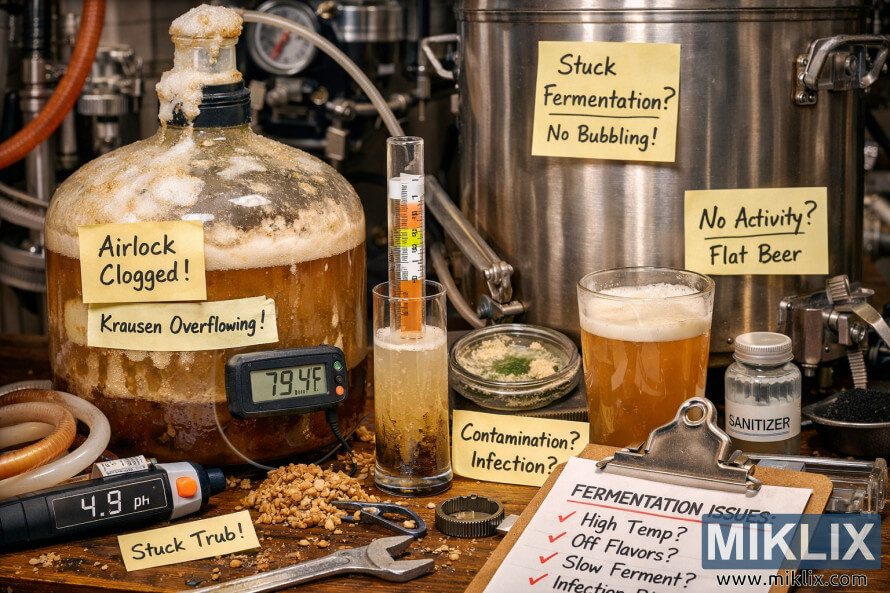
Click or tap the image for more information and higher resolutions.
Recipe Examples and Pairings to Showcase WY1450
WY1450 is versatile, fitting well in both malt-forward and balanced hop beers. Below, we present three recipe approaches with detailed mash and ingredient guidance. Each example demonstrates how WY1450 can influence flavor, body, and finish.
- Grain bill suggestion: 85% Maris Otter or 2-row, 10% Caramel/Crystal 40–60L, 5% Munich for depth.
- Mash guide: 152–154°F for slightly more residual sweetness; drop to 148–152°F for a drier finish.
- Hops: Moderate bitterness to balance caramel, with a clean American aroma hop late in boil.
- Fermentation: Aim 62–66°F to showcase malt and gentle esters from WY1450.
- Pairing tips: Works with grilled pork, sharp cheddar, and caramelized onion dishes.
Stout recipe WY1450 — maximizing mouthfeel and roast balance
- Grain bill suggestion: Pale base (2-row), 8–12% flaked oats or wheat, 6–8% roasted barley and 4–6% mid-roast malts for chocolate tone.
- Mash guide: 150–154°F to build body while avoiding harsh roast extraction.
- Fermentation: 64–68°F to let WY1450 deliver a full, smooth mouthfeel without accenting harsh roast flavors.
- Target OG: Keep moderate (1.050–1.060) so the stout feels rich but not overly boozy.
- Pairing tips: Matches salted desserts, smoked meats, and blue cheese.
IPA yeast WY1450 — hop-forward malt support
- Grain bill suggestion: Pils or pale malt base with 3–6% light crystal or dextrin malt for balance.
- Mash guide: 148–152°F for a leaner finish that lets hops shine.
- Hops: Build a clean bitter backbone, then focus additions for late-boil aroma and dry-hop intensity.
- Fermentation: Keep at the lower end, 60–64°F, for cleaner esters and crisp hop definition.
- Pairing tips: Complements spicy Asian dishes, grilled seafood, and sharp cheeses.
Practical pairing notes for all recipes
- Adjust specialty malts to match WY1450’s medium-high attenuation so sweetness stays controlled.
- Use mash temperature as a primary tool to tune residual sugar and body for each style.
- When formulating WY1450 recipes, balance grain and hop choices to leverage the yeast’s natural malt presence and soft mouthfeel.

Click or tap the image for more information and higher resolutions.
Where to Buy and Product Formats
Wyeast 1450 Denny's Favorite transitioned from a club legend to a widely available strain in 2007. It was added to Wyeast's Private Collection as PC2450 and made available year-round as WY1450. U.S. homebrewers can find Wyeast 1450 through local shops and national online retailers that carry liquid ale cultures.
Retail pages for WY1450 list pack format, production dates, and customer comments. It's crucial to check these details before making a purchase. Many vendors provide shipping notes on WY1450 reviews, which help assess the yeast's viability during warm-weather transit.
- Formats: Wyeast commonly sells liquid smack packs. Some retailers offer refrigerated handling or cold-ship options. Verify the format to plan a starter or adjust pitching rate.
- Freshness tips: Look for on-pack production dates and vendor storage practices. Cold packs or expedited shipping reduce heat exposure and protect viability.
- Vendor selection: Purchase from reputable homebrew stores with clear return policies and customer service. Satisfaction guarantees and clear shipping thresholds are a plus.
Community feedback often highlights WY1450’s consistent malt accent and round mouthfeel. Browse WY1450 reviews shipping sections on product pages to see recent experiences with specific sellers and batches. These comments offer practical insights into strain performance and delivery care.
For collectors and brewers curious about lineage, search listings that reference Wyeast Private Collection 2450. This confirms the strain’s history and original packaging. Use this label when asking shops about backstock or special-order options to improve your chances of finding fresh packs.
When deciding where to buy WY1450, consider price, shipping method, and vendor reputation. A slightly higher shipping fee for cold packs often yields better viability than a lower-cost shipment that exposes yeast to heat. Checking Wyeast 1450 availability across a few reputable vendors helps secure the best arrival condition for your brew day.
Conclusion
Wyeast 1450 Denny's Favorite 50 stands out as a reliable yeast for ale brewing. It enhances malt flavors without making the beer overly sweet. This yeast is perfect for American Red and Brown Ales, stouts, and even some pale ales and IPAs. It adds body to support the hop flavors.
Denny's Favorite yeast has earned its place in the brewing community. It was preserved by Denny Conn and Nate Sampson and later made available by Wyeast. This yeast carries traits from various breweries and a lineage tied to BrewTek CL-50 and North Coast/UC Davis. Its history and positive feedback from U.S. homebrewers make it a top choice for many.
For those aiming to brew malty ales, WY1450 is a great option. However, it requires careful attention to pitching rates and temperature control. Purchasing from trusted vendors and using a proper starter for high-gravity beers is crucial. Following these steps ensures clean attenuation and a rich malt character in your brews.
FAQ
What is Wyeast 1450 “Denny’s Favorite” and why is it popular with homebrewers?
Wyeast 1450, known as Denny’s Favorite, is a liquid ale yeast. It offers a classic U.S. small-brewery flavor. This yeast enhances malt and caramel flavors while keeping fruitiness in check. Homebrewers love it for its ability to improve mouthfeel and malt perception without being too sweet.
What’s the origin story behind WY1450?
Denny Conn and Nate Sampson preserved the strain after BrewTek folded. It circulated privately before Wyeast released it as WY1450 in 2007. The strain is believed to be related to BrewTek CL-50 and North Coast/UC Davis lines, making it credible among U.S. brewers.
What attenuation and flocculation should I expect from WY1450?
Expect medium-high attenuation of 74–76%. This results in a dry to moderately dry finish. Flocculation is low to normal, leading to a hazy beer. Cold conditioning or finings can help clear it up.
What fermentation temperature should I use with WY1450?
Ferment at 60–70°F for primary fermentation. Lower temperatures (60–64°F) yield cleaner esters and crisp hops. Higher temperatures (66–70°F) enhance malt and fruit notes, adding fullness. Stable temperatures prevent off-flavors and unpredictable attenuation.
Which beer styles suit WY1450 best?
WY1450 is great for American Red and Brown Ales, Pale Ales, IPAs, Stouts, and Cream Ales. It brings out caramel and toffee in reds and browns. It supports hop character in pale ales and improves body in stouts and cream ales.
How should I pitch and handle WY1450 for reliable fermentation?
For standard-strength ales, use standard pitching rates. For higher-gravity beers, make a starter. Store Wyeast packs refrigerated and check production dates. Use reputable retailers with proper shipping. Follow manufacturer’s pitching-rate guidance for dried or third-party formats.
How does WY1450 compare to London Ale III and BrewTek CL-50?
WY1450 emphasizes malt character more than London Ale III but attenuates higher, reducing sweetness. BrewTek CL-50 is linked in lineage and performs similarly. Choose strains with similar attenuation and moderate flocculation for similar results.
What final gravity can I expect from WY1450 for common OGs?
Expect FG around 1.012–1.013 for OG 1.050 and 1.014–1.016 for OG 1.060. Actual FG varies with wort fermentability and conditions. Use these as guides, not exact targets.
My fermentation stalled or finished sweet—what should I do?
Check pitching rate and yeast health. Make a starter for high OG worts. Verify fermentation temperature is within 60–70°F. Gently raise it if activity is slow. Rouse the yeast to re-suspend cells. If viability is compromised, repitch a robust ale yeast.
How can I manage haze and slow clearing with WY1450?
Low-to-normal flocculation can leave yeast in suspension. Improve clarity with cold conditioning, finings, or filtration. Proper time and temperature control usually clear haze issues.
What recipe or mash adjustments should I use to match WY1450’s attenuation?
For more sweetness, raise mash temperature (152–154°F) or include dextrin-rich malts. For drier results, mash lower (148–152°F) and use more fermentable base malts. Design the malt bill to account for WY1450’s 74–76% attenuation.
Any practical tips for using WY1450 in IPAs without losing hop clarity?
Ferment on the cooler side (60–64°F) for cleaner esters. Use a malt bill that supports hop character without excess caramel. Pitch adequate yeast, maintain stable temps, and dry-hop after primary fermentation for fresher hop aromatics.
Where can I buy WY1450 and what should I look for when ordering?
WY1450 is available through U.S. homebrew retailers and online shops. Check production or pack dates, vendor reputation, and shipping practices. Read recent customer reviews for batch freshness and viability. Opt for suppliers who handle live yeast carefully.
Are there common off-flavors associated with WY1450 and how do I avoid them?
Off-flavors come from temperature abuse, nutrient or oxygen deficiency, or contamination. Control fermentation temperature, aerate wort adequately, use healthy cell counts, and practice good sanitation to avoid these issues.
Can WY1450 be reused or repitched from a harvested yeast cake?
Like many ale strains, WY1450 can be repitched but viability declines with generations. For consistent performance, create a fresh starter or repitch only a few generations and monitor fermentation vigor closely.
Does WY1450 produce strong ester profiles that could overpower delicate styles?
WY1450 is not known for aggressive esters when fermented in its recommended range. At the low end, it produces clean character suitable for hop-forward beers. Higher temperatures introduce more fruitiness; control temperature to match style goals.
What pitching-rate calculator or starter size should I use for high-gravity batches with WY1450?
Use standard yeast calculators to estimate required cells based on OG and batch size. For worts above ~1.060, plan a starter to reach recommended cell counts for healthy fermentation and WY1450’s typical 74–76% attenuation.
Are there specific commercial beers known to have used the ancestor strains related to WY1450?
The lineage is tied to North Coast Brewing cultures, developed by Mark Ruedrich with UC Davis strains. These were used in beers like Old Rasputin. BrewTek later propagated CL-50, historically linked to those lines; WY1450’s provenance traces through club culture to Wyeast’s Private Collection.
What are good starter recipes to showcase WY1450?
For an American Red Ale, highlight caramel malts (Caramel/Crystal 40–60L) and mash around 152°F for moderate sweetness. For stouts, use flaked oats and mid-roast malts to build body. For IPAs, use a pale malt base with minimal specialty malts and ferment at cooler temps to keep hops prominent.
Further Reading
If you enjoyed this post, you may also like these suggestions:
- Fermenting Beer with White Labs WLP500 Monastery Ale Yeast
- Fermenting Beer with White Labs WLP007 Crisp English Ale Yeast
- Fermenting Beer with Bulldog B23 Steam Lager Yeast