
Fermenting Beer with Wyeast 2247-PC European Lager Yeast
Published: April 8, 2026 at 8:20:16 PM UTC
This strain exhibits low flocculation and high attenuation, typically reaching 73–77%. Its alcohol tolerance is near 10%. These characteristics are crucial for achieving the crisp finish desired in pilsners, Munich Helles, and other European lagers.
Click or tap the image for more information and higher resolutions.
Before diving into fermenting beer, homebrewers should understand Wyeast 2247-PC European Lager Yeast. This yeast is identified as Saccharomyces pastorianus. It's celebrated for its clean, dry profile, ideal for Czech and German lagers.
When using this yeast, it's important to maintain a temperature range of 8–13°C. Additionally, careful shipping and handling are necessary, especially when purchasing from suppliers like Get Er Brewed. This review aims to merge technical information with practical advice. It will help you plan yeast starters, cooling, and lagering schedules effectively.
Key Takeaways
- Wyeast 2247-PC European Lager Yeast is Saccharomyces pastorianus and favors clean, dry finishes.
- Expect apparent attenuation around 73–77% and alcohol tolerance up to about 10% ABV.
- Keep fermentation between 8–13°C for best results in traditional European lagers.
- Low flocculation means attention to clarification and cold conditioning is important.
- Plan for proper shipping, storage, and starter preparation when ordering from distributors.
Overview of Wyeast 2247-PC European Lager Yeast
Wyeast 2247-PC is a top pick for brewers aiming at clean, traditional European lagers. It's a Saccharomyces pastorianus strain, perfect for pilsners, Helles, and export lagers. Its cold-fermentation profile ensures malt clarity and hop detail, while keeping yeast aromas minimal.
Strain identification and species
The manufacturer labels 2247-PC as Saccharomyces pastorianus, ideal for classic European lagers. Brewers use this strain to align yeast character with their recipe goals. Its low flocculation means yeast stays suspended longer, impacting clarity and conditioning plans.
Flavor and aroma profile
This yeast produces a clean, dry lager flavor, ideal for aggressive hopping. Aromatics are mild, with slight sulfur notes typical of pilsners. These subtle sulfur traits enhance the authenticity of Czech Premium Pale Lager and German Pilsner.
Typical attenuation and alcohol tolerance
Wyeast 2247-PC has an apparent attenuation of 73–77%, leading to a crisp finish. Its apparent ABV tolerance is near 10% ABV, allowing for stronger lagers within traditional style boundaries. Use this attenuation to set original and final gravity targets for a balanced beer.
Click or tap the image for more information and higher resolutions.
Why Choose Wyeast 2247-PC European Lager Yeast for Homebrewing
Wyeast 2247-PC is a top choice for brewers aiming for clean, crisp lagers. It offers a very dry finish, perfect for pilsners and Helles. This yeast excels at enhancing malt and hop clarity, without adding fruity esters.
Its flavor profile is restrained, with slight sulfur notes that mirror classic pilsner character. It drives beers towards a lean final gravity, ideal for recipes needing a crisp finish. It's great for aggressively hopped lagers and malt-forward styles where yeast should be subtle.
Consistent performance is key, with predictable attenuation and tolerance levels. With apparent attenuation around 73–77% and alcohol tolerance to about 10%, brewers can plan recipes with confidence. Pitch healthy, active yeast and maintain fermentation in recommended ranges for the best results.
- Low flocculation keeps the culture active longer, aiding in complete attenuation.
- Clean ester profile preserves hop nuance in pilsners and modern European lagers.
- Works well with good temperature control and proper pitching rates.
In conclusion, choose this strain for a traditional European lager yeast that offers consistent performance. Its strengths for lagers and reliable results make it a top choice for homebrewers aiming for classic, clear, and crisp lager styles.
Click or tap the image for more information and higher resolutions.
Fermentation Temperature Range and Control
Keeping the fermentation temperature 2247-PC within the right range is essential for achieving a clean lager character. A cool and steady environment allows the yeast to express subtle sulfur and ester notes. This enhances the malt and hop profile without overpowering them.
Recommended temperature window
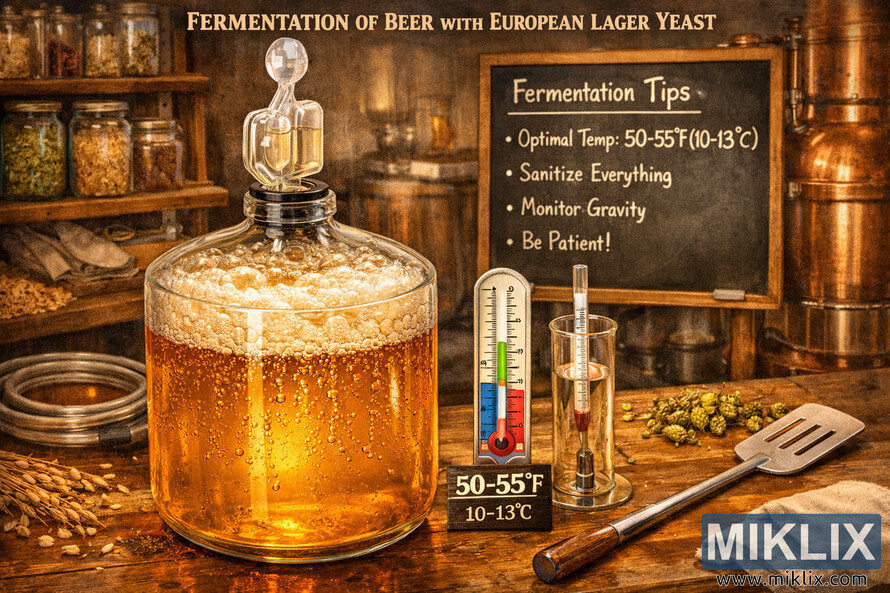
Wyeast recommends a target temperature of 8–13°C (46–55°F) for optimal results. This range supports a dry, crisp finish and minimizes fruity esters that can occur at warmer temperatures. Starting near the lower end of this range can shorten lag time and promote a controlled, cold fermentation.
Cooling and temperature management techniques
For effective lager temperature control, consider using a temperature-controlled fermentation fridge or a chest freezer with a Johnson or Inkbird controller. These tools offer precise adjustments and help prevent temperature swings that can stress yeast.
- Budget option: place a fermenter in a cool basement and use a wet towel or swamp cooler with a fan for modest cooling.
- Mid-level: fermentation jackets or wrap-around heaters with a controller help stabilize colder setups when ambient temps rise.
- Pro setup: glycol chillers give tight control for multiple vessels and stepped rests.
Focus on maintaining a steady cold fermentation rather than aggressive cooling. Large temperature swings can lead to off-flavors and stalled activity. Use a reliable thermometer and log daily readings to ensure consistent temperature management.
When planning a diacetyl rest, slightly increase the temperature towards the end of primary fermentation. This step promotes yeast clean-up. After the rest, return to the cold range to complete conditioning and enhance clarity.
Click or tap the image for more information and higher resolutions.
Pitching Rates and Yeast Management
Accurate cell counts are crucial for a successful lager fermentation. Lagers require higher cell counts due to lower temperatures and longer fermentation times. Utilize yeast calculators like Mr. Malty or Brewer's Friend for precise calculations based on batch size and original gravity.
Here are practical steps for planning your pitch and starter work.
- Target 0.75–1.0 million cells per mL per °P for standard lagers. For higher gravity or lower fermentation temperatures, aim for 1.0–1.5M cells/mL/°P.
- Adjust cell counts based on batch volume and gravity using yeast pitch calculation tools. Input OG, volume, and strain to determine required cell count.
- Consider viability for older yeast packs. Fresh Wyeast slurries generally yield better results than aged ones.
Creating a starter is highly recommended for Wyeast 2247-PC pitch to ensure healthy fermentation. Start the starter at warmer ale temperatures to speed up growth. Then, cool it to the pitching temperature before adding it to the chilled wort.
- Calculate the required cells and size the starter accordingly. Scale starter volume for high-gravity beers and large batches.
- Use a 1.030–1.040 gravity wort for the starter to maximize cell growth without stressing the yeast.
- Aerate or oxygenate the wort at the end of the boil or during cool down. This allows the yeast to build sterols and reproduce efficiently.
When making a yeast starter, focus on sanitation and timing. Transfer the starter to the fermenter shortly after it has cooled to the correct pitch temperature. For lager starter practice, let the starter finish active growth at 18–20°C. Then, allow it to settle and chill before decanting most of the liquid and pitching the concentrated yeast.
Keep track of cell counts and maintain records of starter volumes, wort gravity, and fermentation outcomes. Consistent yeast management enhances attenuation, reduces lag, and preserves the delicate profile of traditional lagers brewed with Wyeast 2247-PC pitch.
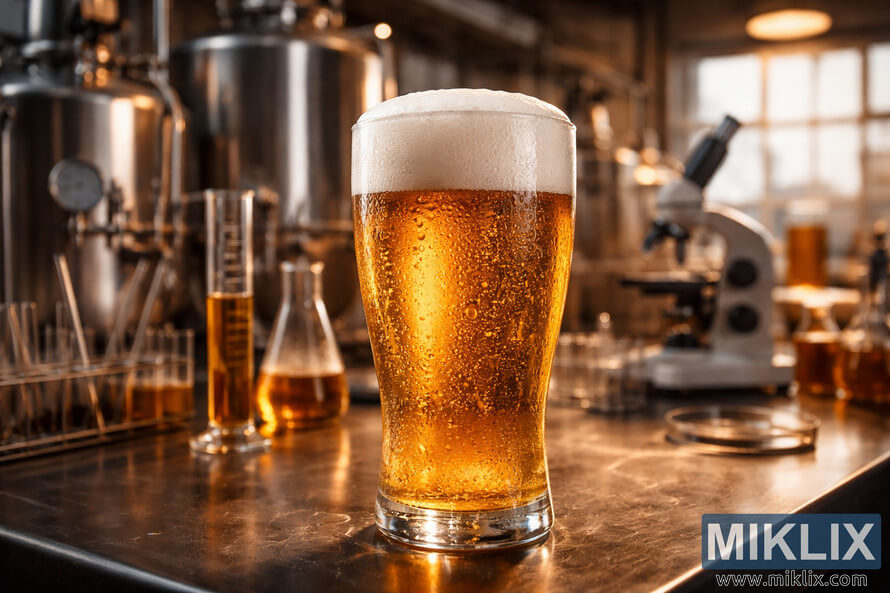
Click or tap the image for more information and higher resolutions.
Oxygenation, Nutrients, and Fermentation Health
Clean lager fermentation starts before yeast meets wort. Proper oxygenation, balanced yeast nutrients, and good pitch rates are crucial. These steps ensure a brisk, predictable ferment. They protect fermentation health and reduce off-flavors.
Oxygen requirements for clean lager fermentation
Lagers need sufficient oxygen for sterol and membrane synthesis at low temperatures. Aim for dissolved oxygen near 8–10 ppm for a 5–6% ABV batch with air. For pure oxygen, follow the manufacturer's targets for your wort volume and gravity. This ensures clean attenuation and shortens lag time for Wyeast 2247-PC.
Nutrient additions and timing
Use yeast nutrients for high-gravity worts or adjuncts like rice and corn. Add a measured nutrient at wort chill or within the first few hours of fermentation. Follow the product instructions. Timely nutrient additions prevent stuck fermentations and reduce off-flavors.
- Match oxygenation requirements lager with correct pitching rates for best results.
- Combine yeast nutrients with a fresh, healthy starter for predictable performance.
- Monitor early gravity drop to confirm fermentation health and make adjustments if needed.
For Wyeast 2247-PC, balancing oxygen, yeast nutrients, and a solid pitch is key. This combination gives brewers the crisp, lager-like character they seek. Keep records of oxygen levels, nutrient timing, and fermentation progress to repeat successful brews.
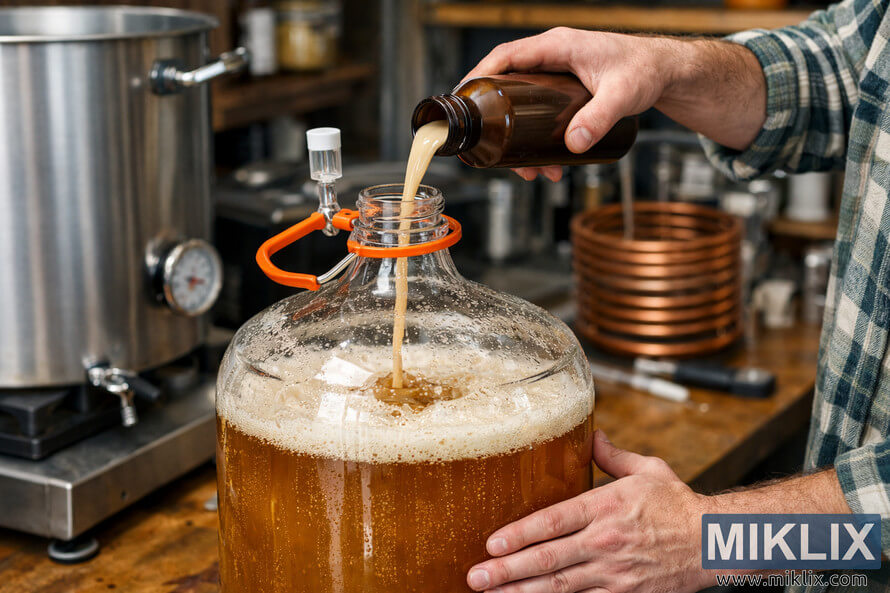
Click or tap the image for more information and higher resolutions.
Lag Phase, Primary Fermentation, and Diacetyl Management
Early stages of lager fermentation require careful planning and attention. Wyeast 2247-PC behaves uniquely at cool temperatures compared to ale strains. Brewers must anticipate a longer lag period and plan for oxygenation, pitching, and temperature adjustments for a clean finish.
Lager temperatures extend the lag time beyond ale fermentation. At 8–13°C, expect a lag time of 24 to 72 hours for Wyeast 2247-PC. A healthy dose of oxygen and proper pitching rates can shorten this period. Using a strong starter and pitching at the higher end of the recommended range helps avoid risks while preserving lager character.
Once the lag phase ends, primary fermentation in lagers follows a predictable pattern. The fermentation rate increases, gravity drops, and esters and minor vicinal diketones are produced. Daily monitoring of gravity and observing signs like krausen and CO2 output is crucial. Maintaining consistent temperatures ensures a clean and controlled flavor profile.
Diacetyl production is common in lagers during primary fermentation. Yeast create precursors early that convert later or get reabsorbed. A diacetyl rest toward the end of primary fermentation helps the culture clean up these compounds.
For a practical diacetyl rest strategy, raise the tank a few degrees for 24–48 hours once the beer is within 1–2 points of final gravity. A target around 14–16°C is ideal for Wyeast 2247-PC to efficiently reabsorb diacetyl. After the rest, lower the temperature for cold conditioning to clarify and stabilize the beer.
- Ensure adequate oxygenation and a viable starter before pitching to minimize the lager lag phase.
- Track gravity and sensory cues to time the diacetyl rest rather than relying on fixed days.
- Hold the rest long enough to remove buttery notes, then proceed to cold conditioning for lager polish.
Flocculation Characteristics and Clarification
Wyeast 2247-PC exhibits low flocculation, meaning yeast cells remain suspended even after fermentation concludes. This characteristic aids in achieving full attenuation and clean fermentation profiles. However, it can prolong the natural clearing process in bottles and bright tanks.
The practical outcome of using low flocculation yeast is straightforward: achieving a bright beer may require additional time or active intervention. Prepare for longer rest periods and be prepared to employ mechanical or chemical methods for clarity, especially in Pilsners or Helles.
Cold conditioning and settling
Cold conditioning is an effective method to encourage yeast to settle. By moving the beer to near-freezing temperatures for one to four weeks post-primary fermentation, haze reduction occurs naturally. This approach is ideal for clarifying lagers without the need for aggressive handling.
Fining options and faster clearing
- Boil additions: Incorporating Irish moss or Whirlfloc during the boil aids in the formation of protein precipitates early on.
- Post-fermentation finings: Gelatin and isinglass are effective in clearing active chill haze quickly when applied during cold conditioning.
- Synthetic finings: Polyclar or kieselsol/chitosan blends are suitable for those preferring modern agents for quicker results.
- Mechanical choices: Filtration or centrifugation offer reliable clarity, ideal for commercial or advanced home setups.
Combining techniques often yields the best results. For instance, combining extended cold conditioning with a gentle application of gelatin can expedite stable clarity in bottles or kegs. It's crucial to handle the beer gently to avoid re-suspending yeast.
Recipe Design Tips for Using This Strain
When brewing with Wyeast 2247-PC, focus on clean malt bases and precise fermentation control. This approach allows the yeast to showcase its crisp lager character. It makes recipe design for pilsner, helles, and export styles straightforward.
Choose malt options that align with the target style. For Czech Premium Pale Lager and classic Pilsner, start with Pilsner malt or a light pale malt. For Helles or Exportbier, add Munich or Vienna malt. This adds depth without masking the yeast's clarity.
- Light-colored base malts for clean flavor and bright finish.
- Small additions (5–10%) of Munich or Vienna to add depth for fuller styles.
- Caramel malts kept minimal to avoid sweetness that fights the yeast’s clean profile.
Plan your hopping for lagers to support, not overpower, the yeast. Use noble varieties like Saaz, Spalt, or Hallertau for noble bitterness and subtle aroma. For a more assertive hop character, healthy late additions or a controlled aggressive boil hop schedule work well.
- Traditional noble hops for aroma and smooth bitterness.
- Use late additions or a small flame-out charge to preserve delicate hop notes.
- For stronger hop presence, emphasize kettle additions while keeping fermentation clean.
Set OG targets to match the chosen style. Typical ranges work well with this yeast, providing predictable attenuation. Aim for pilsner and helles in the mid 1.044–1.056 range. Adjust upwards for export or stronger lagers, keeping fermentability in mind.
- Pilsner/Helles: OG targets around 1.044–1.056.
- Exportbier: push OG slightly higher, but plan for a drier finish.
- Monitor gravity and adjust mash to hit planned OG targets consistently.
Choose a mash profile that encourages the desired finish. Single infusion mashes in the 148–152°F (64–67°C) band give balanced fermentability. Lower mash temps favor a drier, crisper beer and complement the strain’s clean attenuation.
- Single infusion at 148–150°F (64–65°C) for drier results.
- 150–152°F (66–67°C) for more body while maintaining clean fermentation.
- Rest times and conversion checks ensure you reach target fermentability for consistent outcomes.
Combine these elements—malt choices, hopping for lagers, clear OG targets, and an appropriate mash profile—to create recipes that let Wyeast 2247-PC perform at its best. Careful balance yields crisp lagers with true stylistic character.
Step-by-Step Fermentation Timeline with Wyeast 2247-PC
To achieve consistent lager results, follow a detailed fermentation timeline 2247-PC. This guide covers pre-pitch steps, primary fermentation, and the lagering phase. Start with small batches to master this strain.
Pre-pitch preparation is crucial for a healthy fermentation. Prepare a starter that matches your batch size and gravity. Warm the starter to promote yeast growth, then cool it before adding it to the wort. Ensure proper oxygenation of the wort, as lagers require it. Chill the wort to the 8–13°C range for pitching. Sanitize all equipment thoroughly. Follow the manufacturer's instructions for rehydrating Wyeast liquid culture.
Primary fermentation starts when the starter meets the chilled wort. Expect a lag phase lasting 24–72 hours or more, depending on yeast health and pitch rate. Keep the fermentation temperature between 8–13°C until the gravity stabilizes for several days. Regularly check gravity readings to confirm the end of active fermentation.
Implement a diacetyl rest if necessary to remove off-flavors. Raise the temperature slightly for 24–48 hours towards the end of primary fermentation. After the rest, slowly cool the beer and enter the lagering phase.
The lagering phase involves cold-conditioning near freezing for weeks to months. This step enhances clarity and softens harsh flavors. Monitor the beer's clarity and stability before packaging. Only package when the beer reaches the desired clarity and gravity has been stable for several days.
- Pre-pitch steps: make and warm a starter, oxygenate wort, chill to 8–13°C, sanitize equipment.
- Initial lag: allow 24–72+ hours for yeast to adapt depending on pitch rate.
- Primary: ferment at 8–13°C until gravity stabilizes for several days.
- Diacetyl rest: raise temperature a few degrees for 24–48 hours if needed.
- Lagering timeline: cold-condition near freezing for weeks to months for clarity and smoothing.
Keep detailed records of temperatures, gravity readings, and timing for each batch. These records will help you refine your process with Wyeast 2247-PC, making future batches more predictable.
Troubleshooting Common Issues with European Lager Yeast
When a batch lags or develops off-notes, quick, measured steps restore balance and protect beer quality. This guide covers common causes and practical fixes for homebrewers working with Wyeast 2247-PC. Keep practices simple and repeatable to reduce risk of stuck fermentation and unwanted flavors.
Slow fermentation and stuck batches
Slow fermentation 2247-PC often stems from underpitching, low oxygen at pitch, cold wort, or weak yeast vitality. Check original gravity and compare expected fermentation speed. Small delays can be normal with lager temperatures, yet prolonged inactivity signals intervention.
Steps to revive a sluggish batch:
- Prepare a larger starter using a stir plate or stepped starters to build healthy cell counts before repitching.
- Gently raise temperature 3–5°F to stimulate yeast activity without stressing the strain.
- Provide oxygen early in fermentation for future batches; for an active stuck fermentation, avoid aeration late unless repitching.
- Add yeast nutrient to correct deficiencies that stall metabolism.
- If needed, harvest active yeast from another fermenter or use a fresh, vigorous pitch to restart fermentation.
Off-flavors: sulfur, phenolics, and esters
Wyeast 2247-PC can show mild sulfur notes typical of many pilsner-style lagers. Sulfur off-flavors that persist usually point to fermentation stress or slow yeast activity. Short-term sulfur often dissipates during lagering, so allow time before drastic fixes.
Phenolics and elevated esters arise from temperature swings, wild yeast, or infection. Phenolics present as clove-like or medicinal tones. Esters give fruitier aromas that obscure lager clarity. Address these issues through stable fermentation and strict sanitation.
Control measures:
- Maintain steady temperatures within the recommended lager range to limit ester and phenolic production.
- Use proper pitching rates and healthy starters to reduce stress-related sulfur and off-flavor formation.
- Sanitize thoroughly to prevent contamination that produces phenolics and harsh esters.
- Allow extended diacetyl rest and cold conditioning; many sulfur and diacetyl notes decline with time.
Regular record-keeping helps spot patterns that cause stuck fermentation or recurring sulfur off-flavors. Treat each batch as a set of variables to tune: oxygen, pitch, temperature, and nutrients. That approach keeps troubleshooting lager yeast manageable and improves results over time.
Packaging, Carbonation, and Serving Considerations
Deciding on lager packaging and carbonation methods impacts flavor, clarity, and timing. Homebrewers must balance predictability with tradition in choosing between bottle conditioning and kegging. Proper handling after cold conditioning is crucial to maintain the crispness lager enthusiasts seek.
Bottle versus keg options
Bottle conditioning lagers naturally carbonate and can introduce subtle complexities. However, low yeast activity post-cold lagering makes this method slow and less consistent. To ensure reliable carbonation, warm conditioned bottles slightly for a few days to reactivate yeast.
Kegging lagers offers tight control over carbonation and accelerates the process. Many brewers use CO2 to force carbonate in a Cornelius or commercial keg for consistent results. Kegging minimizes variation and simplifies serving at events or tap systems.
Practical tips for successful conditioning
- When bottle conditioning lagers, add a modest priming dose to avoid overcarbonation after extended cold storage.
- If yeast viability is low, make a fresh starter and add it to the batch before bottling to ensure full carbonation.
- For kegging lagers, set pressure to achieve desired carbonation levels quickly, then rest cold to let CO2 integrate into the beer.
Serving temperature and presentation
Serve lagers cold to emphasize crispness and balance. Aim for 38–45°F (3–7°C) depending on style, with lighter lagers toward the lower end. Clean glassware enhances head retention and showcases clarity after proper cold conditioning.
Choose glass shape to style when possible. Tall pilsner glasses highlight color and carbonation, while a standard nonic or tulip maintains a lasting head on fuller lagers. Adjust carbonation levels to style: lively for Pilsner, restrained for Munich Helles.
Comparisons to Other Lager Strains
Brewers often compare lager strains to find the best fit for a recipe. Wyeast 2247-PC stands out for its clean, dry finish and mild aromatics. It also has a faint sulfur note, perfect for classic European pilsners. Use this guide to compare lager strains and decide if 2247-PC fits your goals.
- Attenuation: 2247-PC typically ferments to about 73–77% attenuation, producing a crisp, dry beer. This is compared to some strains that finish sweeter or fuller.
- Flocculation: This strain shows low flocculation, so beers may remain hazy without extended cold conditioning or finings. Other Wyeast or White Labs strains often have higher flocculation for quicker clearing.
- Temperature tolerance: 2247-PC performs best in lower lager ranges. Some commercial strains handle slightly warmer lager temperatures or broader ranges, which can speed fermentation.
- Flavor profile: Expect classic pilsner sulfur and subtle noble-hop friendliness. Other strains can yield fewer sulfur notes, more esters, or distinct phenolic character depending on lineage and manufacturer.
When to pick 2247-PC versus alternative strains
- Choose 2247-PC when you want an authentic European pilsner or Helles character with crisp dryness and mild sulfur. Plan for longer lagering and possible fining to manage clarity.
- Consider other strains if you need faster flocculation for clearer beer, a sweeter finish, or a different ester profile that complements specific malt or hop selections.
- Compare lager strains from Wyeast vs White Labs by matching desired attenuation, flocculation, and flavor impact to your recipe and conditioning timeline.
- When you must choose lager strain for a schedule-sensitive brew, prefer higher flocculation or broader temperature tolerance to reduce lager time and risk.
Evaluating 2247-PC vs other lager yeast comes down to style goals and process. Match strain traits to your recipe and brewing timeline to get the result you want.
Sourcing, Storage, and Handling of Wyeast 2247-PC
Acquiring Wyeast 2247-PC involves a few straightforward actions. First, select a trusted homebrew retailer known for its stock and shipping options. Be mindful of courier choices, cold-chain requirements, and any weight limits for large orders. Opting for fast transit is crucial to minimize stress on the culture and enhance outcomes.
Where to buy and shipping considerations
- Procure Wyeast 2247-PC from authorized dealers or the manufacturer. Homebrew shops with a strong reputation offer tracking and dispatch updates for each order.
- Opt for expedited shipping, especially during warmer months. Using couriers like DPD, DHL, or similar ensures better temperature control and quicker delivery.
- For large orders, verify any pallet or weight restrictions with the retailer. Inquire about cold-chain handling and whether shipments include coolants.
- Keep the tracking reference handy. Prompt pickup or quick transfer to refrigeration minimizes thermal stress during transit.
Storing and reviving packaged yeast
Store refrigerated until you are ready to use the culture. Proper storing Wyeast in a steady 34–40°F (1–4°C) range preserves viability for the specified shelf period.
For liquid packs, plan to revive packaged yeast with a starter to boost cell count and acclimate the strain. Starters clarify viability and reduce lag time in the fermenter.
- If a dry form is available, follow manufacturer rehydration steps. Warm water and a gradual tempering process cut osmotic shock.
- If activity looks slow, test the culture in a small starter. A gradual warm-up before pitching helps yeast handling and prevents temperature shock.
- Record lot numbers and use-by dates when you receive shipments. Good records aid troubleshooting and ensure you use viable yeast for lagers that demand clean fermentation.
Safety, Legal, and Labeling Notes for Homebrewers in the United States
Homebrewing is a delicate balance between a hobby and a regulated activity. At the federal level, brewing for personal use is allowed. However, state and local laws can differ significantly. It's crucial to understand these basics before expanding your brewing operations or distributing your creations.
While there are no federal limits on alcohol content for personal consumption, states may have their own rules. If you plan to distribute or sell your beer, be aware that taxes, permits, and strict regulations apply. It's essential to familiarize yourself with local laws and follow the guidelines set by the Alcohol and Tobacco Tax and Trade Bureau for labeling homebrew intended for sale.
For commercial sales, labeling must adhere to TTB standards and state regulations. You must clearly state the alcohol content and ingredients, if required, and ensure truthful branding. Additionally, keep detailed records of your batches and any lab results from alcohol by volume tests before packaging.
Sanitation is key during the long lager conditioning phase. Use detergents like PBW for cleaning and follow with an approved sanitizer, such as Star San, for final contact. Only rinse when necessary and follow the manufacturer's instructions for contact time.
Effective contamination prevention begins with a well-organized workflow. Use dedicated fermenters, sanitize transfer lines, and opt for closed transfers whenever possible. Limit open sampling, work in a clean environment, and wear gloves when handling yeast to minimize contamination risks.
- Check local laws on homebrewing legality US before starting any commercial activity.
- Record alcohol limits homebrew and test ABV if you plan to label homebrew for sale.
- Adopt sanitation homebrewing routines: cleaning, sanitizing, and controlled transfers.
- Prioritize contamination prevention with sealed racking, fresh seals, and visual inspection of yeast and beer.
If you're unsure, consult the TTB or your state's alcohol control board. Following recognized cleaning protocols will safeguard your beer, your customers, and your right to brew at home.
Conclusion
Wyeast 2247-PC is a Saccharomyces pastorianus strain, known for its clean, dry flavor and mild aromatics. It also has slight sulfur notes, perfect for classic pilsners. With an attenuation of 73–77%, it can tolerate up to 10% ABV. It has low flocculation and thrives in a temperature range of 8–13°C.
This yeast requires careful process control to achieve its best results. A Wyeast 2247-PC review highlights the importance of precise pitching rates, oxygenation, and temperature management. These factors significantly impact its performance.
For those brewing Czech Premium Pale Lager, German Pils, or Munich Helles, 2247-PC is a top choice. It produces crisp, authentic results when combined with traditional malt and hopping. To avoid long lag times, use higher pitching rates and a healthy starter.
Proper diacetyl rest and extended cold conditioning enhance clarity and reduce off-flavors. These steps make 2247-PC a standout for homebrewers aiming for classic European styles.
When purchasing, ensure to buy from reputable retailers and maintain cold-chain handling to preserve viability. Adhere to standard sanitation, nutrient, and oxygen practices. Also, follow a measured fermentation schedule to ensure consistency. In summary, Wyeast 2247-PC is a dependable option for brewers seeking clean fermentation and authentic lager character.
FAQ
What is Wyeast 2247-PC and which species does it belong to?
Wyeast 2247-PC is a European lager yeast strain from Wyeast Labs, classified as Saccharomyces pastorianus. It's designed for classic European lagers like Czech Premium Pale Lager, German Pils, Munich Helles, and Helles Exportbier.
What flavor and aroma profile should I expect from this strain?
Expect a very clean, dry fermentation that highlights hop bitterness and malt clarity. The strain produces mild aromatics and slight sulfur notes typical of pilsner-style beers.
What are the typical attenuation and alcohol tolerance numbers?
Apparent attenuation is about 73–77%, resulting in a crisp finish. Alcohol tolerance is around 10% ABV, making it suitable for most traditional lager strengths.
Why choose 2247-PC for a European lager?
Its clean, dry profile and reliable attenuation make it ideal for traditional lagers. Slight sulfur character adds authentic pilsner nuance when managed correctly.
How consistent are the fermentation results with this yeast?
When properly pitched, oxygenated, and fermented at 8–13°C, brewers can expect dependable attenuation and a crisp final gravity. Low flocculation ensures full attenuation.
What temperature range should I ferment Wyeast 2247-PC at?
Ferment at 8–13°C (46–55°F) for clean, dry fermentation. This range keeps ester production low and controls slight sulfur character.
What are practical ways to maintain stable lager temperatures?
Use a temperature-controlled fermentation fridge or chest freezer with a controller like Inkbird or Johnson. For advanced setups, glycol chillers work well. Budget options include a cool basement with a swamp cooler and close monitoring. Stability is more important than exact setpoint.
How do I calculate the proper pitching rate for lagers with 2247-PC?
Lagers need higher cell counts than ales. Aim for 0.75–1.0 million cells per mL per °P. Use a yeast calculator like Mr. Malty or Brewer’s Friend to size starters based on batch volume and original gravity.
Should I make a starter for this yeast?
Yes. A starter is strongly recommended. Grow the starter at ale temperatures (around 18–20°C) for faster cell propagation, then chill to pitching temperature before pitching into wort. Scale starter size up for large or high-gravity lagers.
How much oxygen does the wort need before pitching 2247-PC?
Adequate oxygenation is critical. Aim for dissolved oxygen around 8–10 ppm for typical 5–6% ABV lagers. Use pure oxygen and a stone at recommended doses. Proper oxygen reduces lag time and supports complete attenuation.
Should I add yeast nutrients when using this strain?
Consider nutrients, especially for high-gravity recipes or adjunct-heavy worts. Add nutrients at wort chill or early in fermentation per product guidance to support yeast health and reduce risk of stuck fermentation.
How long is the lag phase at lager temperatures?
At 8–13°C expect a longer lag phase than with ales—often 24–72 hours or more depending on pitch rate and cell health. A well-sized starter and adequate oxygenation shorten the lag.
Does 2247-PC produce diacetyl and how do I manage it?
Like many lager strains, it can produce diacetyl. Plan a diacetyl rest by raising temperature a few degrees (for example to ~14–16°C) for 24–48 hours near the end of primary fermentation to allow reabsorption, then return to cold conditioning.
What does low flocculation mean for my beer?
Low flocculation means yeast stays in suspension longer, which encourages full attenuation but slows natural clearing. Expect longer time to bright beer and plan for lagering or fining to speed clarification.
What clarification methods work best after fermenting with 2247-PC?
Extended cold conditioning (lagering) at near-freezing temperatures promotes settling. Use finings such as Irish moss at the boil, gelatin or isinglass post-fermentation, or filtration/centrifugation in advanced setups to accelerate clarity.
Which malts and hops complement this yeast?
Pair with clean pilsner or pale malts for Czech or German lagers. Munich or Vienna malts suit Helles or Exportbier. Use noble hops like Saaz, Hallertauer, Perle, or Spalt to highlight traditional bitterness and aroma; the yeast’s clean profile lets hop character stand out.
What OG targets and mash temps suit a crisp lager with this strain?
Target OGs typical to style—Pils/Helles around 1.044–1.056 depending on the recipe. For a drier finish, mash slightly lower (148–152°F / 64–67°C) to favor fermentable sugars and align with the yeast’s high attenuation.
What should I do before pitching Wyeast 2247-PC?
Prepare an appropriately sized starter, oxygenate the wort, chill wort into the 8–13°C window, and sanitize equipment. For liquid cultures, follow manufacturer handling and grow the starter at warmer temps before cooling to pitching temperature.
What is the typical primary fermentation and lagering timeline?
After pitching, expect a lag period, primary fermentation at 8–13°C until stable gravity, then a diacetyl rest for 24–48 hours if needed. Transfer to cold conditioning near 0–2°C for several weeks to months depending on clarity and style before packaging.
What causes slow or stuck fermentations and how do I fix them?
Common causes are underpitching, insufficient oxygenation, low nutrients, pitching wort that’s too cold, or weak yeast vitality. Fixes include making a larger starter, adding oxygen, raising temperature to stimulate activity, adding nutrients, or repitching healthy yeast.
What off-flavors should I watch for and how are they controlled?
Expect slight sulfur as a normal pilsner trait. Excessive sulfur, phenolics, or esters result from fermentation stress, temperature swings, or contamination. Control these by stabilizing temperature, ensuring adequate pitch and oxygen, and maintaining sanitation.
Should I bottle condition or keg beers fermented with 2247-PC?
Kegging with force carbonation is more predictable and faster. Bottle conditioning works but can be slower due to lower yeast activity after cold lagering—warm bottles slightly to encourage carbonation and ensure yeast viability if you choose bottle conditioning.
What serving temperature and presentation highlight beers fermented with this yeast?
Serve cold to showcase crispness—typically 38–45°F (3–7°C). Use clean pilsner glasses for Pilsner-style beers and proper carbonation to display clarity and head retention achieved through lagering and fining.
How does 2247-PC compare to other lager strains from Wyeast or White Labs?
2247-PC is notable for very clean, dry fermentation, mild aromatics, slight pilsner-typical sulfur, low flocculation, and 73–77% attenuation. Other strains may have different sulfur profiles, flocculation levels, or temperature ranges, so pick strains by desired clarity, ester/sulfur character, and settling behavior.
When should I choose 2247-PC over other lager strains?
Choose 2247-PC when you want an authentic European pilsner or Helles with a crisp, dry finish and are prepared to manage low flocculation with extended lagering or finings. Select alternatives if you need faster clearing, different ester profiles, or a wider temperature tolerance.
Where can I buy Wyeast 2247-PC and what shipping should I expect?
Purchase from reputable homebrew retailers and distributors such as Get Er Brewed or local homebrew shops that carry Wyeast products. Expect courier delivery with dispatch notifications and reference numbers; for perishable yeast choose expedited shipping and confirm cold-chain handling. Large orders may have pallet or weight limits and different shipping options.
How should I store and revive packaged Wyeast 2247-PC?
Refrigerate until use. For liquid cultures, grow a starter to revive and build cell count before pitching. If yeast appears sluggish, test viability in a starter and warm gently to activate before pitching. Follow manufacturer handling for best results.
Are there legal or labeling issues U.S. homebrewers should know?
Homebrewing for personal use is legal federally in the United States; check state and local laws for specific limits or registration. Selling beer requires commercial licensing and compliance with TTB and state labeling and tax rules.
What sanitation practices are critical when working with lager fermentations?
Maintain strict sanitation with cleaners like PBW and sanitizers such as Star San. Sanitize transfer lines, racking equipment, and packaging gear. Long cold lagering raises the risk window for infection, so keep practices rigorous during sampling, transfers, and packaging.
Further Reading
If you enjoyed this post, you may also like these suggestions:
- Fermenting Beer with Wyeast 1187 Ringwood Ale Yeast
- Fermenting Beer with CellarScience English Yeast
- Fermenting Beer with Wyeast 1010 American Wheat Yeast