
Fermenting Beer with Wyeast 2352-PC Munich Lager II Yeast
Published: July 21, 2026 at 5:51:16 PM UTC
The Wyeast 2352-PC Munich Lager II strain offers a traditional Bavarian lager character for modern brewing. It's chosen for its full, malt-centered profile and clean fermentation traits. This yeast is known for replicating the warm, rounded notes of classic southern German beers. It also remains predictable in controlled lagering schedules.
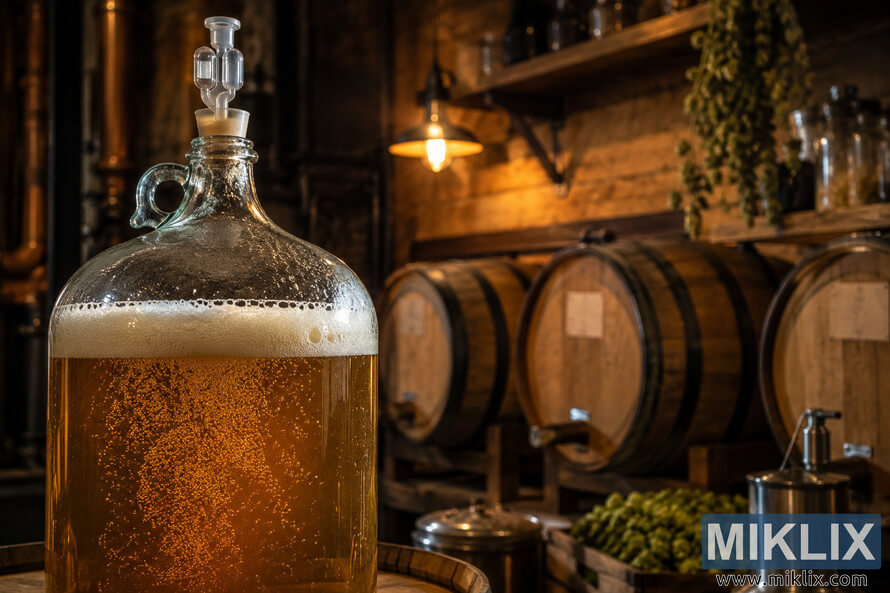
Click or tap the image for more information and higher resolutions.
Key Takeaways
- Wyeast 2352-PC Munich Lager II Yeast emphasizes malt richness and clean attenuation.
- The guide gives starter and pitching steps specific to lager schedules.
- Temperature control and oxygenation pointers help minimize off-flavors.
- Includes sourcing notes and pack-format guidance for U.S. brewers.
- Practical troubleshooting and recipe prompts for Munich-style lagers.
Overview of Wyeast 2352-PC Munich Lager II Yeast
Strain background and origin
Wyeast 2352's origin is rooted in German lager strains from Munich and other Bavarian breweries. Wyeast Laboratories packages it in the Pacific Ale (PC) line. This makes it a ready-to-use option for homebrewers, mirroring old-world Munich strains. Its lineage is closely tied to yeast varieties used for Märzen, Helles, and Dunkel in southern Germany.
Typical flavor and aroma profile
The Munich Lager II flavor profile is characterized by bready and toasty malt tones with a soft biscuity edge. It also has subtle caramel or Munich-malt sweetness when handled properly. At correct lager temperatures, esters are low, producing a clean aroma. However, higher temps can introduce fruitiness. Sulfur and phenolic notes are minimal with proper fermentation and rest. Yet, diacetyl can appear without an adequate diacetyl rest.
Common beer styles suited to this strain
- Märzen, Helles, Dunkel, and Vienna lager, where malt character takes center stage.
- Malt-forward continental lagers and amber lagers that benefit from a rounded yeast backbone.
- Specialty lagers and hybrid lager-ales, such as Kellerbier or dunkel hybrids, that rely on a yeast for Munich lager to highlight rich malt flavors.
Brewers aiming for a true Bavarian lager yeast will find Wyeast 2352-PC Munich Lager II a reliable choice. It's perfect for recipes that prioritize malt presence.
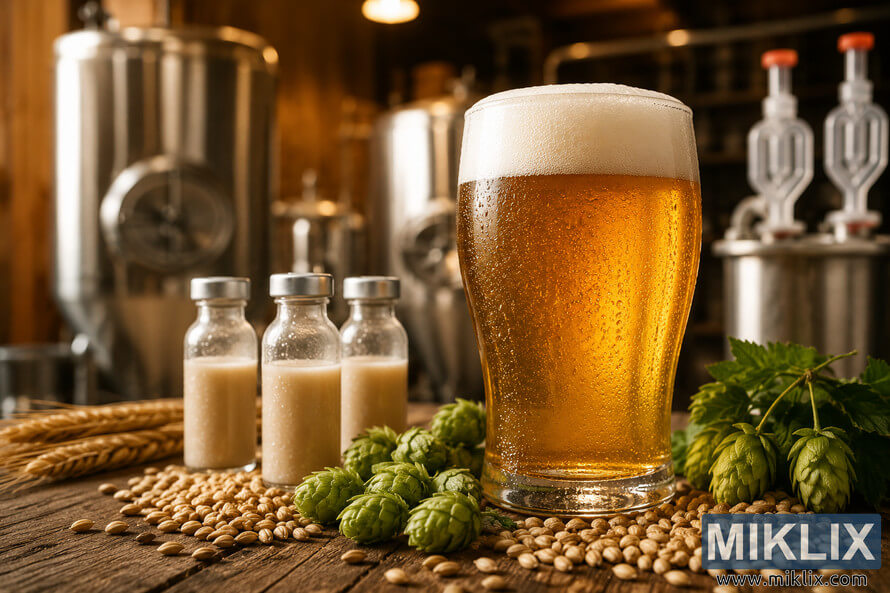
Click or tap the image for more information and higher resolutions.
Why Choose Wyeast 2352-PC Munich Lager II Yeast for Your Brew
Wyeast 2352-PC Munich Lager II is a standout choice for brewers seeking a balance between malt presence and clean lager character. It offers reliable attenuation while preserving bready and toasty notes. This makes it perfect for malt-forward recipes.
In small test batches, its strengths over neutral lager strains are evident. Compared to Wyeast 2124 Bohemian Lager or 2308 Munich Lager, it provides more malt emphasis and slightly higher residual sweetness. The yeast ferments steadily at cool temperatures and flocculates well, aiding in clarification during lagering.
As a malt enhancement yeast, it supports Munich and Vienna malts without overpowering subtle hop choices. It enhances the mouthfeel and introduces modest esters that complement caramel, biscuit, and toasty notes. Brewers aiming for the best yeast for Munich-style lagers will appreciate how it amplifies grain character while keeping off-flavors at bay.
- Traditional Bavarian lagers: ideal for Märzen, dunkels, and Helles with pronounced grain.
- Drinkable malt-centric beers: works well where a touch of sweetness improves balance.
- Beers served slightly warmer than ice-cold: showcases aroma and malt depth.
Choose Munich Lager II for a reliable lager strain that enhances malt without complicating fermentation. Its profile is ideal for both homebrewers and professionals aiming for grain-driven Munich-style lagers.
Click or tap the image for more information and higher resolutions.
Yeast Handling and Propagation Best Practices
Proper yeast handling is crucial for clean, consistent lagers. Lagers require higher cell counts and vigorous yeast for cool fermentation and aging. A well-planned lager yeast starter shortens lag time, improves attenuation, and reduces off-flavors like diacetyl.
Importance of a healthy starter
A healthy starter builds viable cells and vitality before pitching. Underpitching a lager can lead to sluggish fermentation, stuck batches, and unwanted flavors. Using a Wyeast 2352 starter ensures the Munich Lager II strain is active and ready to ferment.
Step-by-step starter creation for lagers
- Sanitize all equipment. Clean Erlenmeyer flasks or sanitized fermenters limit contamination.
- Calculate starter volume. Use tools like Mr. Malty or Brewer’s Friend to match OG and batch size to your target cell count.
- Make starter wort at 1.030–1.040 SG. Boil, cool, then aerate or oxygenate before pitching.
- Activate or rehydrate the pack per manufacturer instructions, then pitch the Wyeast 2352 starter into the cooled wort.
- Hold the starter at ale-like temps (65–72°F / 18–22°C) to grow biomass, then chill and settle before decanting.
- Use lager starter steps to determine whether to pitch the whole slurry or just the yeast cake based on your cell-count needs.
Signs of a healthy propagation
Healthy propagation shows rapid activity within 12–48 hours at the proper temperature. Expect visible krausen and a creamy, dense yeast cake after settling.
Check aroma and appearance. A fresh, yeasty smell without sour, solvent, or putrid notes signals good health. Measure gravity to confirm consistent reduction or use viability tests like methylene blue staining or a cell counter when precision is needed.
Follow yeast propagation best practices to protect your batch. Clean technique, correct starter gravity, and proper temperature control combine to produce reliable yeast performance and cleaner lager finishes.
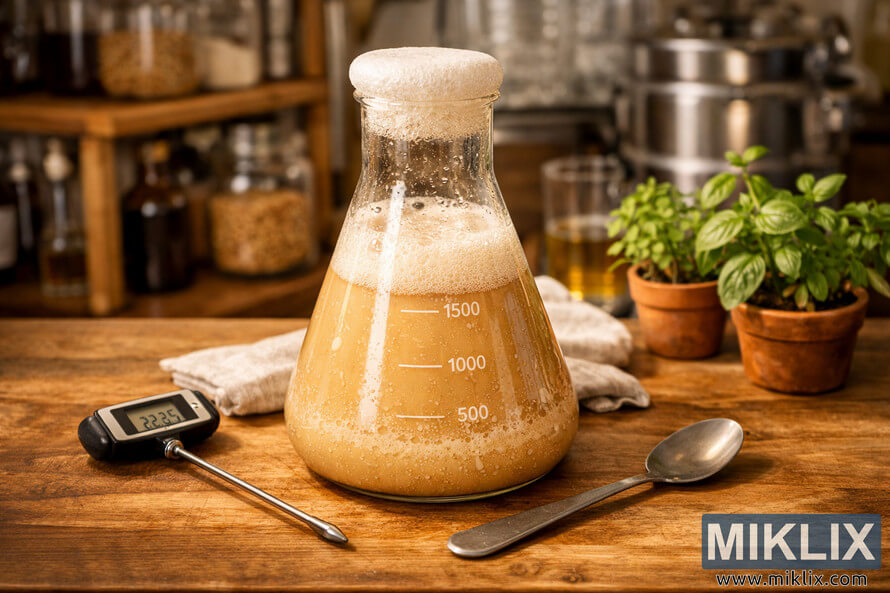
Click or tap the image for more information and higher resolutions.
Optimal Fermentation Temperatures for Munich Lager II
Mastering the Munich Lager II fermentation temperature is crucial. It influences yeast activity and the beer's flavor profile. Wyeast 2352 yeast thrives in cooler temperatures, so set your target before pitching. Ensure consistent conditions during fermentation.
Recommended primary fermentation range
- Target 50–52°F (10–11°C) for a rounded malt character with restrained esters.
- Use 48°F (9°C) when you want the cleanest profile and minimal fruity notes.
- Move toward 54–56°F (12–13°C) when a touch more ester and fuller body are acceptable.
Temperature control methods for homebrewers
- Use a mini-fridge or chest freezer with an external controller such as an Inkbird or Johnson Controls to lock in a set point.
- Wine coolers and dedicated fermentation fridges work well for small batches and occupy little space.
- For low-cost options, try a swamp cooler with ice packs and frequent checks, or a fermentation wrap paired with a digital thermostat.
- Place fermenters in the coolest stable spot in your home when active cooling is not available; water baths help buffer sudden swings.
Effects of fermentation temperature on flavor
- Cooler fermentations suppress esters and sulfur, producing a clean, malt-forward beer.
- Warmer points inside the Wyeast 2352 fermentation range increase fruity esters and can round out malt flavors.
- Temperature swings stress yeast, which may create off-flavors or extend the lag phase.
- Raise temperature slightly for a short diacetyl rest near the end of fermentation to help yeast reabsorb diacetyl.
Practical tip: monitor and log temps each day to refine your lager temp control across batches. Dial in the exact Munich Lager II fermentation temperature that fits your recipe and palate.
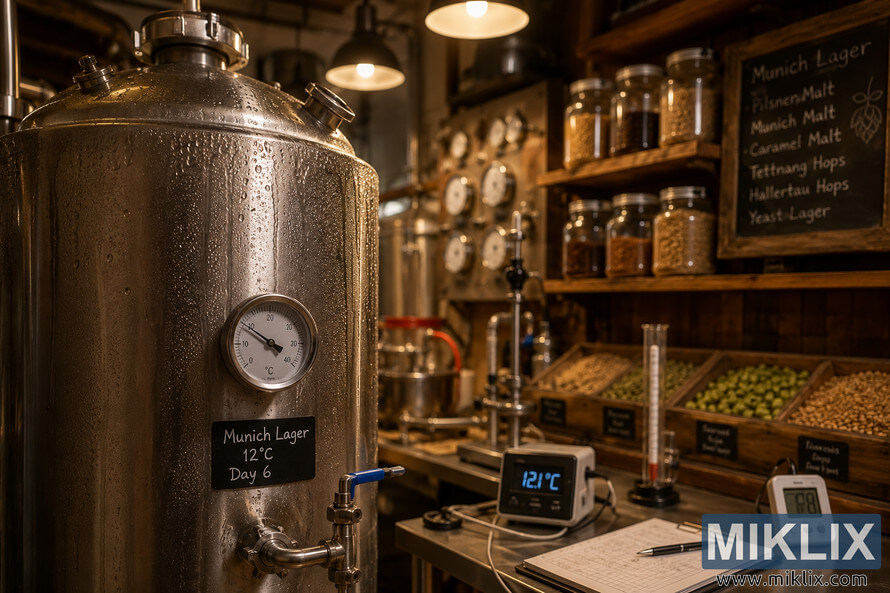
Click or tap the image for more information and higher resolutions.
Pitching Rates and Oxygenation Tips
Ensuring the correct lager pitching rate and proper oxygenation is crucial. It can transform a sluggish ferment into a clean, efficient lager. Here, we outline steps for calculating cell counts, oxygen delivery, and adjustments for high gravity lagers.
Calculating proper cell counts for lagers
- Target 1.0–1.5 million cells per mL per degree Plato. For a 5-gallon (19 L) 1.050 OG lager, aim for 200–300 billion viable cells for a pure pitch.
- Use calculators like Mr. Malty or Brewer’s Friend to refine numbers based on batch size and gravity.
- Consider pack viability and age. If viability is low, increase starter size or perform step-up starters to reach the Wyeast 2352 pitch rate needed.
Oxygenation methods and timing
- Introduce oxygen before or at the moment of pitching. Cooler lager fermentations need oxygen for sterol and membrane synthesis.
- Preferred method: pure oxygen with a diffusion stone to reach about 8–10+ ppm DO reliably.
- Alternative methods: vigorous shaking or sanitized aquarium pumps with sterile filters. These are less consistent but workable for smaller batches.
- Avoid oxygen ingress after active fermentation begins to prevent oxidation and stale flavors.
Adjustments for high-gravity beers
- For worts above 1.060 OG, scale starter size up substantially. Treat high gravity lager pitching as a growth problem first, then a fermentation matter.
- Consider two-stage oxygenation: initial aeration at pitching, then a cautious secondary oxygenation early in active growth if the strain tolerates it.
- Add yeast nutrient and zinc to support sterol synthesis and stress resistance. Staggered nutrient additions work well for very high OGs.
- When in doubt, build larger starters, consider re-pitching robust lager starters, and follow the recommended Wyeast 2352 pitch rate guidelines for best results.
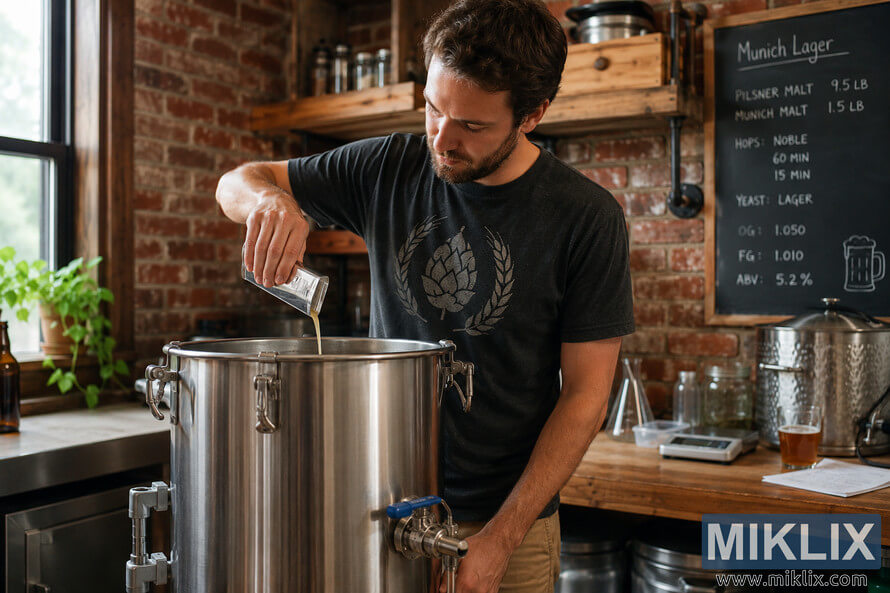
Click or tap the image for more information and higher resolutions.
Fermentation Timeline and Activity Monitoring
Understanding the Munich Lager II fermentation timeline is crucial for brewers. It helps set expectations and catch problems early. A healthy starter and good oxygenation lead to a typical lager lag phase of 12–48 hours. However, cooler pitching temperatures or underpitching can extend this lag to several days.
To monitor your brew, track both numbers and visuals. Use a sanitized hydrometer or refractometer to check fermentation gravity daily in the first week. Focus on trends in specific gravity rather than single readings. This helps see the steady decline toward final gravity.
Visual cues are also important. Look for krausen, yeast rings, foam, and airlock bubbling. Lagers fermented at low temperatures often show subtler activity than ales. Therefore, gravity checks are particularly useful. Log SG progression to measure attenuation and spot slowdowns early.
- Check temperature first when activity stalls. Raise the fermenter a few degrees within the yeast’s safe range to encourage movement. Consider a short diacetyl rest.
- If yeast numbers seem low, prepare a fresh aerated starter. Warm-pitch active cells to revive fermentation.
- Assess oxygen and nutrient status; add yeast nutrient if you suspect deficiency. But avoid excessive handling to reduce contamination risk.
When more severe issues appear, assess aromas and taste. Sour, phenolic, or solvent smells can signal contamination. In such cases, take a small sample, sanitize gear, and decide if re-pitching a fresh, sterile lager strain is required. Use stalled fermentation fixes that prioritize yeast health, gentle temperature increases, and proper sanitation.
Diacetyl, Esters, and Phenolic Considerations
Working with Munich Lager II requires attention to off-flavor risks and flavor balance. Small adjustments in pitch, temperature, and timing control diacetyl, ester expression, and any stray phenolic notes. The guidance below helps brewers dial in clean, malt-forward lagers or nudge fruitiness when desired.
Diacetyl production and management focus on limiting precursor buildup and giving yeast time to reabsorb the compound. Wyeast 2352 diacetyl precursors can form during active fermentation. A short diacetyl rest—raising the temperature 2–4°F (1–2°C) near the end of primary for 24–72 hours—lets cells reduce diacetyl before lagering.
Proper pitching rate and a healthy starter cut initial diacetyl formation. Monitor gravity and taste to decide when to perform the rest. Extended cold lagering after the rest further reduces residual diacetyl and polishes the beer.
Managing ester levels through temperature and pitch is straightforward. Esters rise with warmer fermentations and lower pitching rates. To manage esters in lager, keep fermentation in the recommended 50–52°F (10–11°C) range and use adequate cell counts for a clean profile.
For more fruity character, ferment toward the higher end of the range and accept slightly elevated ester presence. For a cleaner Munich-style lager, stay on the cool side and ensure the yeast is vigorous at pitch.
How this strain handles phenolic compounds is good news for brewers aiming for a non-spicy lager. Wyeast 2352 is not typically Pof+ and usually produces minimal clove-like phenolics. When phenolic flavors Munich Lager II are present, the cause is often contamination or phenolic ingredients such as certain roasted malts or rye.
To avoid unwanted phenolics, emphasize sanitation, fresh yeast handling, and avoidance of wild yeast exposure. If using phenolic-prone grains, plan recipes and mash schedules to limit extraction of spicy notes.
Lagering and Conditioning with Munich Lager II
Lagering transforms a green beer into a clean, balanced lager. For brewers using Munich Lager II, controlled cold storage, gentle clarification, and careful carbonation produce the crisp malt character this strain highlights. Plan time and steps before bottling or kegging to protect aroma and mouthfeel.
Recommended lagering temperatures and durations
- Target temps: 32–38°F (0–3°C). Gradually reduce temperature after the diacetyl rest over several days to avoid stressing yeast.
- Lighter styles such as Helles: 4–6 weeks at lagering temps for polishing and chill haze drop-out.
- Darker or richer lagers like Märzen and Dunkel: 6–12 weeks or longer to smooth residual sugars and deepen malt complexity.
Clarification and cold-crash strategies
- For faster clearing, cold crash for 24–72 hours near 32–34°F to help yeast and haze settle. Extended lagering at full cold temperatures will continue clarification naturally.
- Consider fining agents—gelatin, isinglass, or silica gel—if you need quicker brilliance. Test on small volumes and follow manufacturer directions closely.
- Racking off trub and spent yeast before long-term storage reduces risk of autolysis and off-flavors during lager conditioning times.
Carbonation approaches after conditioning
- Force-carbonation in kegs gives precise control. Many lagers suit 2.2–2.8 volumes of CO2; for Helles aim near 2.5, Märzen around 2.4.
- Bottle-conditioning works but needs accurate priming sugar calculations and rigorous sanitation. Allow additional cold storage after bottle conditioning so carbonation after lagering integrates and flavors mature.
- Avoid overcarbonation. Excess CO2 can sharpen perception of yeast-derived flavors and mask delicate malt notes.
Recipe Design Ideas Featuring Wyeast 2352-PC Munich Lager II Yeast
This section provides practical recipes and tweaks for brewers using Wyeast 2352-PC Munich Lager II yeast. It guides you in crafting a malt-forward lager recipe, exploring hybrid lager recipes, and setting a hop schedule for Munich lager. This ensures malt depth without overpowering it.
Malt-forward Munich-style lager recipe (example templates):
- Base malt: 75% Munich (10–20L), 20% Pilsner, 5% Vienna. Target OG 1.045 for a Helles or 1.056 for a Märzen.
- Specialty: 4% CaraMunich or 2% Melanoidin for color and caramel notes. For Dunkel, raise specialty malts to 8–12% and add 1% light roasted malt.
- Mash: single infusion at 150–156°F (65–69°C) for a full-bodied profile that pairs well with Munich Lager II yeast.
- Fermentation: pitch healthy cells and hold in the strain’s recommended range to preserve malt complexity.
Kellerbier and minimalist amber variants work well if you want gentle haze and yeast character. For a Kellerbier, replace 5–10% of grist with wheat malt and limit filtration.
Hybrid and specialty lager variations
- Kellerbier: Munich base, small wheat portion, open conditioning to retain body and subtle yeast esters. This fits many Munich Lager II recipes.
- Dunkel/Amber Lager: Increase CaraMunich and add roasted Munich II or Vienna for deeper color and toasty notes. Keep OG in the 1.050–1.060 range.
- Modern hybrid: Use Munich base with restrained noble hopping and a cool, controlled fermentation to balance malt richness and clean finish.
Guidelines for a hop schedule for Munich lager
- Hop choice: Hallertau, Tettnang, or Saaz—or American counterparts with low-resin profiles—to complement malt character.
- Bittering: primary 60-minute addition for backbone. Keep IBUs moderate so the malt remains central.
- Late additions: minimal. A small 10–5 minute addition can add delicate aroma without stealing focus.
- Dry hopping: generally avoided for classic styles. Use sparingly in hybrid lager recipes if a subtle floral note is desired.
When adapting any of these Munich Lager II recipes, keep targets for OG, mash temp, and hop bitterness in mind. Small shifts in specialty malts or hop timing change the beer’s balance more than you might expect.
Water Profile and Mash Guidelines for Best Results
Accurate water composition is crucial for authentic Munich-style lagers. Begin with a clean water profile and then adjust minerals to enhance maltiness. It's wise to make small changes and test them in batches.
The ideal mineral balance should favor chloride over sulfate to emphasize malt richness. Aim for a chloride-to-sulfate ratio between 1:1 and 2:1. Use calcium chloride to increase chloride levels when necessary. Gypsum can be added sparingly to enhance hop brightness.
When brewing with darker malts, monitor carbonate and bicarbonate levels. Moderate bicarbonate is suitable for amber beers. For beers with roastier grains, adjust alkalinity to avoid a harsh pH. Utilize brewing water calculators to match local profiles like Munich or Pilsen, guiding the addition of gypsum, calcium chloride, baking soda, or lactic acid.
Choose mash temperatures based on desired body and fermentability. For a fuller malt character, aim for temperatures between 150–156°F (65–69°C). Lower temperatures near 150°F result in a drier finish. Higher temperatures near 156°F enhance mouthfeel and dextrin content.
Target a mash pH of 5.2–5.6 during the mash and pre-boil. This range supports enzyme activity and clear wort. Use iodine tests early if verifying conversion is necessary. Consistent lautering and mash technique often outweighs the need for minute adjustments.
Dark specialty grains increase mash acidity. To adjust for dark malts, add baking soda or use calcium carbonate cautiously to raise pH. Small percentages of roasted Munich or Vienna work well in Dunkel when pH is corrected.
- Start with city water data and a brewing calculator.
- Adjust chloride with calcium chloride to enhance maltiness.
- Keep mash temp for maltiness in the 150–156°F window depending on desired body.
- When using darker malts, adjust water for dark malts to maintain mash pH in the 5.2–5.6 range.
Consider step mashes for complex grain bills. A short protein rest aids unmalted grains, followed by saccharification at your chosen mash temp. Record results and refine water and temperature choices across batches to achieve consistent lager water chemistry that complements Munich Lager II yeast.
Fermentation Equipment and Temperature Control Solutions
Effective temperature control for lagers begins with the right equipment. Investing in a reliable controller and an insulated space significantly enhances flavor and attenuation. Below, we explore practical options for homebrewers at various budgets and setups.
Homebrewers often use a dedicated chest freezer or mini-fridge with a digital controller like Inkbird or Johnson Controls. Adding an internal fan and an insulated cabinet ensures even air circulation. For larger batches, commercial chambers and fermentation jackets are ideal. Glycol chillers manage multiple vessels in professional settings.
When budgets are limited, affordable cooling methods and DIY solutions are viable. A swamp cooler with frozen jugs in an insulated tub offers short-term control. Evaporative cooling with fans and wet towels can also lower temperatures in dry climates. Retrofitting a household refrigerator with an external thermostat creates a consistent fermentation environment without the need for a new unit.
- Utilize an aquarium chiller or window AC unit for small-scale projects, accepting noise and power draw.
- Employ a cooler system with rotating ice packs for predictable temperature drops during active fermentation.
- Insulate fermentation vessels to minimize temperature fluctuations and reduce cooling method load.
Monitoring tools are essential for consistent results. Wireless sensors like Tilt hydrometers or an iSpindel paired with a temperature probe enable remote tracking. Infrared thermometers offer quick temperature checks. USB or Bluetooth dataloggers maintain long-term records for troubleshooting and optimization.
- Log pitch date, yeast lot, starter size, setpoint, and gravity readings for each batch.
- Verify sensor placement to ensure readings reflect beer temperature, not ambient air.
- Regularly calibrate probes and keep spare sensors ready to avoid data gaps.
For DIY lager cooling, consider cost, control precision, and reliability. Simple setups can yield excellent lagering results with careful monitoring and consistent practices. Proper use of fermentation monitoring tools transforms a basic setup into a reliable system for clean lagers.
Troubleshooting Common Issues with This Yeast Strain
Unexpected batch behavior requires swift diagnosis to save time and ingredients. Employ targeted Wyeast 2352 troubleshooting steps to pinpoint causes, isolate issues, and apply fixes. Below, find practical advice for addressing off-flavors, slow attenuation, and contamination signs.
- Diacetyl (buttery): Often appears when underpitching or using weak starters. Cold-crashing too early before a diacetyl rest can lock the compound in the beer. Remedy by warming to the upper fermentation range for 48–72 hours to allow yeast to reabsorb diacetyl, then resume lagering.
- Solvent/ester (solventy or fruity): High fermentation temperatures or stressed yeast produce solvent-like esters. Keep fermentation within the strain’s recommended range and use proper pitch rates to minimize stress.
- Sulfur (rotten egg): Common early in lager fermentations. This aroma usually fades during extended lagering. Ensure good ventilation and give the beer time before judging.
Slow attenuation and remedies
- Causes: Underpitching, too-cool fermentation, insufficient oxygen at pitching, and nutrient deficiencies can all stall or slow attenuation.
- Fix slow attenuation by raising temperature into the higher end of the strain’s range to boost yeast activity. Pitch a fresh starter or repitch healthy, active yeast if available.
- Aerate properly before pitching; oxygen after active fermentation risks oxidation. Consider a measured dose of yeast nutrient when marching through stubborn finishes.
Contamination signs and prevention steps
- Look for unexpected sourness, off-phenolic aromas outside the expected profile, floating pellicles, or unusual turbidity during fermentation or conditioning. These signs often mean microbial intrusion.
- To detect contamination early, sample aroma and taste at key stages. Rapid changes in clarity or flavor are red flags.
- Prevention: Maintain strict sanitation with reliable sanitizers like Star San or iodophor. Minimize air exposure during transfers and use closed systems when possible.
- If contamination occurs, isolate the batch. Evaluate by smell and small taste tests. Decide whether to repitch salvaged wort with healthy yeast or discard based on severity.
Keeping detailed records of pitch rates, temperatures, and timings simplifies Wyeast 2352 troubleshooting for future brews. Small adjustments can prevent lager off-flavors and address slow attenuation early. Regular checks help detect contamination early, protecting subsequent batches.
Conclusion
This strain offers a clear, malt-forward Munich character and consistent lager performance with proper management. For fermenting Munich Lager II, a healthy starter and correct pitching rates are key. Holding primary fermentation near 50–52°F enhances rich malt aromas and controls ester levels.
Best practices for Munich lager yeast include oxygenating wort before pitching and monitoring gravity. A diacetyl rest near 60–64°F may be necessary. After primary fermentation, lagering at near-freezing temperatures clarifies and rounds flavors. Attention to cell counts and temperature control significantly impacts attenuation and mouthfeel.
U.S. brewers should source cultures from reputable retailers, check expiration dates, and refrigerate them upon arrival. Expedited shipping is recommended for live packs. Keeping notes on OG/FG, cell counts, and tasting impressions is crucial. Side-by-side trials with other lager strains help refine your recipe and document preferences.
Follow these guidelines and the recipes in this article to evaluate Wyeast 2352-PC Munich Lager II in your next batch. Track your results, adjust mash and water profiles, and repeat trials to achieve the desired profile for fermenting Munich Lager II.
FAQ
What flavor and aroma can I expect from Wyeast 2352-PC Munich Lager II?
Wyeast 2352 produces a pronounced, malt-forward profile. Expect bready, toasty, and biscuity notes with subtle caramel or Munich-malt sweetness. At proper lager temperatures, it yields a clean aroma with low fruity esters and minimal sulfur or phenolic character. If fermented toward the warmer end of its range, expect slightly more ester rounding of the malt.
What fermentation temperature should I use for best results?
Aim for 48–56°F (9–13°C), with many brewers preferring ~50–52°F (10–11°C). This balance between clean attenuation and gentle ester development is key. Lower temps create a cleaner profile; higher temps within the range yield more rounded malt notes. Maintain stable temps and perform a diacetyl rest near the end of primary.
Do I need to make a starter for this strain?
Yes. Lagers need higher viable cell counts. A healthy starter reduces lag, lowers diacetyl risk, and improves attenuation. For a 5-gallon (19 L) lager at ~1.050 OG, plan substantial starter volume or step-up starters based on calculator targets like Mr. Malty or Brewer’s Friend.
How much oxygen should I add and when?
Oxygenate wort just before pitching. For repeatable results, use pure oxygen with a diffusion stone to reach about 8–10+ ppm DO. If using splash aeration, be vigorous but recognize it’s less consistent. Avoid oxygen exposure after fermentation begins to prevent oxidation.
What pitching rates are recommended for lagers with this strain?
Target roughly 1.0–1.5 million cells per mL per degree Plato. For a typical 5-gallon 1.050 OG lager, that equates to ~200–300 billion viable cells for a pure pitch. Adjust for pack age and viability by increasing starter size as needed. Use calculators to determine exact starter volumes.
How do I manage diacetyl and esters in my batch?
Prevent diacetyl by pitching an adequate healthy yeast population, oxygenating properly, and allowing yeast to finish fermentation. Perform a diacetyl rest—raise temps 2–4°F (1–2°C) for 24–72 hours near the end of primary to let yeast reabsorb diacetyl. Control esters by fermenting in the recommended temperature window and maintaining proper pitching rates.
What lagering schedule should I follow after primary fermentation?
After primary fermentation and a diacetyl rest, cool the beer gradually to lagering temperatures (32–38°F / 0–3°C). Lighter styles like Helles typically lager 4–6 weeks; Märzen, Dunkel, and richer lagers often benefit from 6–12 weeks or longer for clarity and flavor integration.
Are there special mash or water recommendations for Munich-style lagers with this yeast?
Use a mash temp around 150–156°F (65–69°C) for fuller body and maltiness. Target a chloride-to-sulfate ratio favoring chloride (1:1 to 2:1 Cl:SO4) to accentuate malt character. Keep mash pH near 5.2–5.6 and adjust water with calcium chloride or gypsum as needed.
How should I store and source Wyeast 2352 in the United States?
Buy from reputable U.S. retailers such as Northern Brewer, MoreBeer, Adventures in Homebrewing, or local homebrew shops. Wyeast PC packs are perishable—check lot codes and "best by" dates, refrigerate at 36–40°F (2–4°C), and minimize temperature swings during transport. Prefer expedited shipping when ordering online.
What troubleshooting steps help if fermentation stalls or is sluggish?
First check temperature and raise it a few degrees within the strain’s range. Confirm adequate yeast population—consider making a fresh starter and warm-pitch repitch. Verify oxygenation and nutrient levels; add yeast nutrient if appropriate. Minimize handling to reduce contamination risk and monitor gravity to track progress.
How does 2352 compare to other Munich or German lager strains?
Compared with neutral lager strains like Wyeast 2124 or very attenuative strains, 2352 leans more malt-forward with slightly lower attenuation and a fuller mouthfeel. It accentuates Munich and Vienna malts and tends to flocculate well, clearing reliably during lagering. Choose it when malt character is the priority.
Is Wyeast 2352 likely to produce phenolic or spicy notes?
No—2352 is not typically phenolic (POF+). It generally produces minimal spicy/clove phenolics when managed correctly. Unexpected phenolic flavors usually result from contamination, wild yeasts, or certain grain treatments rather than the strain itself.
What hop choices work best with this yeast in malt-forward recipes?
Use noble or subtle hop varieties—Hallertau, Tettnang, or Saaz—to provide balance without overpowering malt. Rely on bittering additions at 60 minutes and keep late hops minimal. Dry hopping is normally avoided in classic Munich styles but may be used sparingly in hybrid recipes.
Can I bottle-condition beers fermented with Wyeast 2352?
Yes. Bottle-conditioning is possible but requires accurate priming calculations, thorough sanitation, and patience—extended lagering after bottle conditioning improves clarity and flavor. For faster, controlled results, many brewers prefer force-carbonation in kegs.
What signs indicate a healthy propagation or starter?
In a successful starter you’ll see visible fermentation within 12–48 hours, a creamy dense yeast cake, and no sour or solvent odors. Gravity should drop consistently. Microscopic viability checks (methylene blue) or cell counting give the best confirmation of health.
How should I adjust procedure for high-gravity lagers?
For worts above ~1.060, build larger or multi-step starters, consider staggered oxygenation, and add yeast nutrients and zinc. Expect to pitch more viable cells and monitor fermentation closely. Consider re-pitching active yeast if fermentation is sluggish.
What clarification methods are effective with this strain?
Cold-crashing at near-freezing for 24–72 hours helps drop haze. Extended lagering naturally clarifies lager beers. Use finings like gelatin, isinglass, or silica gels for faster clearing, and rack off trub before long-term lagering to reduce autolysis risk.
Are there real-world examples or awards for beers brewed with similar Munich strains?
While commercial brewers may not publicize exact strains, Munich-type strains closely related to 2352 are commonly credited in award-winning Märzen and Dunkel entries at homebrew competitions. Homebrewers report award-level results when following strong pitching, oxygenation, and temperature control practices.
What monitoring tools help ensure consistent fermentation with Wyeast 2352?
Use digital thermometers, external temperature controllers (Inkbird, Johnson Controls), and devices like the Tilt Hydrometer or iSpindel to track temperature and SG remotely. Keep a fermentation log recording pitch date, starter size, OG/FG, temps, and corrective actions for reproducible results.
Further Reading
If you enjoyed this post, you may also like these suggestions:
- Fermenting Beer with Wyeast 3191-PC Berliner Weisse Blend
- Fermenting Beer with Lallemand LalBrew Belle Saison Yeast
- Fermenting Beer with Fermentis SafAle T-58 Yeast