
Fermenting Beer with Wyeast 3209-PC Oud Bruin Ale Yeast Blend
Published: February 24, 2026 at 9:29:24 PM UTC
The Wyeast 3209-PC Oud Bruin Ale Yeast Blend is perfect for brewers aiming for a balance of lactic acidity and malt depth. It's designed to create a rounded complexity, ideal for Oud Bruin and Flanders-style beers. Here, the malt character is as important as the sourness.
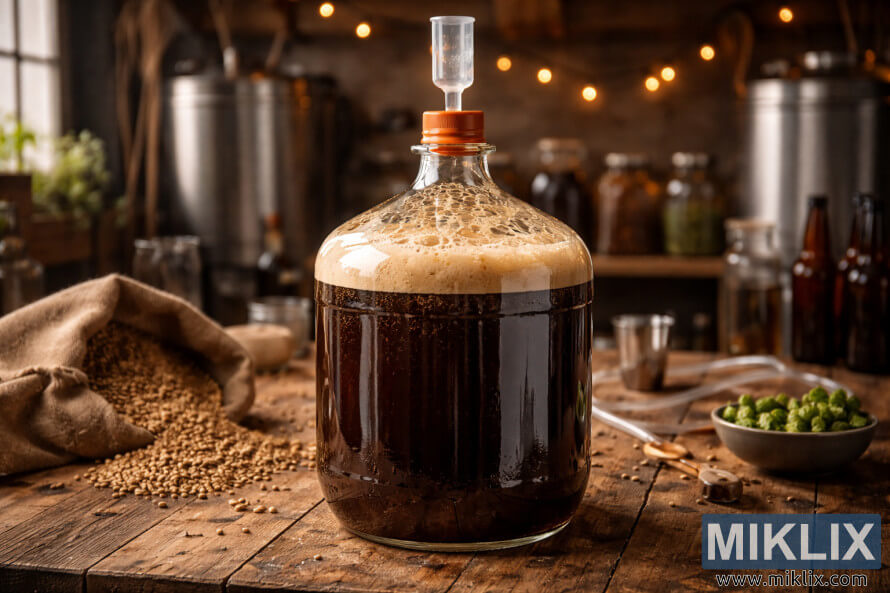
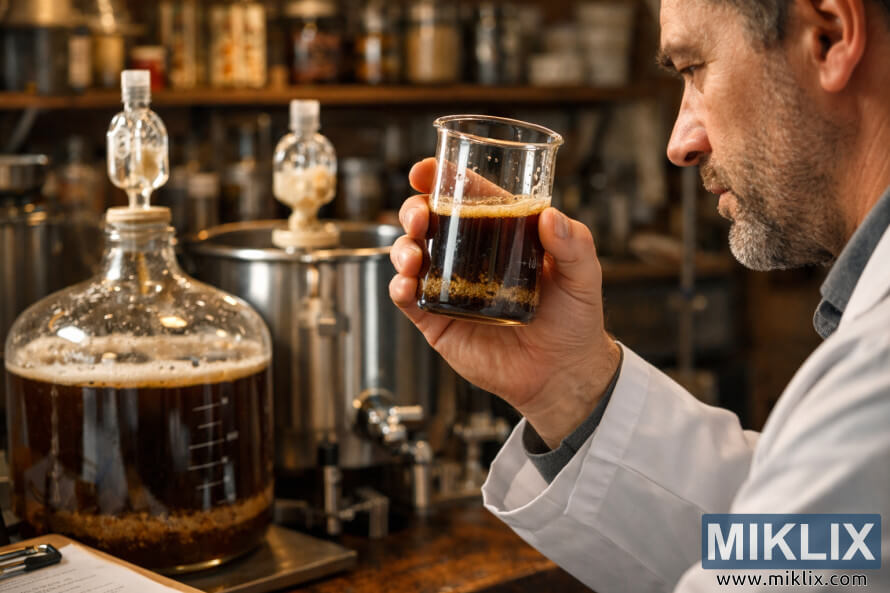
Click or tap the image for more information and higher resolutions.
Key Takeaways
- Wyeast 3209-PC Oud Bruin Ale Yeast Blend is formulated for malt-forward sour beers.
- The blend produces sharp acidity while preserving malt character.
- Optimum fermentation range is 64–84 °F; 70 °F is a common example.
- Low flocculation and specific pitch-rate guidance affect starter planning.
- Manufacturer suggests no initial aeration with possible later O2 dosing.
- This Oud Bruin yeast review combines lab specs and brewer feedback for practical use.
Why choose Wyeast 3209-PC Oud Bruin Ale Yeast Blend for sour and malt-forward beers
Blend profile and intended style fit
Wyeast positions 3209-PC as a mixed culture for dark, malt-forward sours. It combines organisms for lactic tang, restrained funk, and a stable malt backbone. This blend is chosen for recipes seeking a softer, malt-forward finish, avoiding sharp or barrel-like profiles.
Expected flavor contributions: sharp acidity with preserved malt character
This blend promises a clear lactic sourness upfront, with malt sweetness lingering. Lactobacillus-driven acidity sharpens the taste, while Saccharomyces and Brettanomyces add body and complex phenolics. The result is a malt-accented sour yeast performance: present acidity, preserved mouthfeel, and nuanced funk with age.
How it compares to other Wyeast sour blends like De Bom and traditional 3763 Roselaere
Homebrewer feedback often pits this blend against De Bom and 3763 Roselaere. De Bom is known for fast souring but may risk acetic notes with poor oxygen handling. Roselaere, on the other hand, is celebrated for its sharp acidity and unique attenuation.
Practical takeaways from community experience
- Many brewers report moderate acidity at six weeks with minimal pellicle development when using this blend.
- Oud Bruin appeals to those avoiding aggressive acetic or overly barnyard profiles while keeping complexity.
- Careful oxygen management and patience tilt results toward balanced malt-accented sour yeast character rather than vinegar-like faults.
Understanding the microbiology and behavior of the blend
Wyeast 3209-PC is a mixed culture designed for balanced fermentation and maturation. It combines rapid sugar conversion, lactic souring, and slow funk development. This blend keeps malt character central while acidity and complexity evolve over time.
Saccharomyces, Brettanomyces, Lactobacillus roles in fermentation
Saccharomyces is the primary force behind alcoholic fermentation, achieving most of the attenuation. Lactobacillus introduces lactic acid early, establishing the beer's sour profile. Brettanomyces, meanwhile, contributes esters, phenolics, and funk that evolve with time. This synergy ensures complexity without diminishing malt presence.
Flocculation, attenuation notes and what they mean for your final gravity
Wyeast notes that this blend has low flocculation, meaning cells remain suspended and active. The sample recipe shows an OG of 1.056 and FG of 1.013, indicating 78% attenuation. This low flocculation supports ongoing Brett and Lactobacillus activity, potentially lowering gravity further. Final gravity can vary based on pitch size, starter health, and fermentation duration.
Oxygen management and the controversial O2-dosing guidance from the manufacturer
The manufacturer suggests limited initial aeration and possible later oxygen dosing to enhance ethyl acetate production. Oxygen can stimulate Brett activity and, with Acetobacter present, increase acetic acid formation. However, many brewers are cautious about oxygen dosing due to the risk of vinegar and solvent-like esters.
Effective management includes minimizing headspace, avoiding splashing once acid-producing microbes are active, and using minimal, measured oxygen if dosing. Timing is crucial: early, controlled oxygen supports yeast health, while late, repeated oxygen can increase volatile acidity. Managing oxygen exposure is key to achieving the desired complexity from mixed culture microbiology.
Target recipes and styles well-suited to the Oud Bruin blend
The Oud Bruin blend shines when aiming for malt depth and controlled acidity. It excels in recipes that maintain a rounded malt backbone while introducing a bright lactic bite. It's best suited for beers that appreciate complexity over hop brightness.
Oud Bruin and Flanders-style beers: malt-forward sour profiles
Oud Bruin and Flanders red styles require a preserved malt character with measured tartness. Incorporate Munich, CaraMunich, and a touch of de-bittered black or dark Munich for a toasted, biscuity base. The blend's mixed culture retains residual sweetness, developing a pleasant lactic sharpness that complements malty esters.
Dark-malty sours and fruit-forward sour stouts
Dark-malty sours benefit from the blend's ability to balance roast with acidity. Pairing Wyeast 3209 with darker malts and fruit additions yields excellent results. A sour stout with blackberries benefits from the blend's preserved body and subtle tang. Fruit adds brightness without diminishing malt depth. Both extract and all-grain variants succeed with careful fermentation and fruit timing.
When to avoid using the blend (delicate hop-forward styles)
Avoid using the blend for hoppy beers where hop aroma and bitterness must dominate. IPAs and pale ales lose clarity when mixed cultures and Brettanomyces interact with hop volatiles. Opt for a clean Saccharomyces strain in hop-forward recipes to safeguard volatile hop compounds and preserve sharp hop character.
All-grain recipe example optimized for Wyeast 3209-PC Oud Bruin Ale Yeast Blend
This Oud Bruin all-grain recipe focuses on malt complexity and restrained hopping. It's designed to showcase the Wyeast 3209-PC Oud Bruin Ale Yeast Blend. The grain bill, hop plan, and mash targets aim for balanced sour development. They also preserve body and color.
Suggested grain bill for a 6-gallon batch:
- 9.00 lb Pilsner (67.9%)
- 2.00 lb CaraMunich (15.1%)
- 1.00 lb Munich Dark 20L (7.5%)
- 0.50 lb Flaked Corn (3.8%)
- 0.50 lb Wheat (3.8%)
- 0.25 lb De-Bittered Black (1.9%)
Hop selection and bitterness strategy:
- 1.75 oz Hallertau Hersbrucker pellets at 60 minutes. Low AA preserves malt and sour focus while contributing ~23.24 IBU (Tinseth).
- Whirlfloc and Wyeast Beer Nutrient at 10 minutes to aid clarity and yeast health.
Mash schedule and water handling:
- Single infusion mash at 152 °F for 60 minutes. Start grain temp near 77 °F for predictable conversion.
- Target mash pH 5.35. Add 1.5 oz gypsum in the mash to help hit the mash pH 5.35 target and sharpen malt definition.
- Strike water ~3.5 gallons for a mash thickness near 1.75 qt/lb. Sparge at 170 °F to reach pre-boil ~7.5 gallons and post-boil ~6 gallons into fermentor.
Batch stats and expected performance:
- OG 1.056, FG 1.013, ABV ~5.6%.
- SRM ~20.7 and IBU ~23.24 for a malt-accented sour profile.
Notes on variations and the Pilsner CaraMunich recipe influence:
- Reducing CaraMunich shifts color and sweetness toward a drier finish. This formulation follows a Pilsner CaraMunich recipe approach to keep malt clarity and biscuit notes.
- Using Hallertau Hersbrucker as the sole bittering hop keeps hop aroma minimal and lets yeast-driven acidity and malt character stand out.
Extract and partial-extract options when using Oud Bruin blend
Extract brewing shortens brew day, allowing for complex, malt-forward sour beers. It's a balance many homebrewers find appealing. This method ensures body and malt nuances are preserved, even with extract.
Benefits and trade-offs of using LME/DME for sour beers
Liquid and dry malt extracts simplify grain handling and reduce mash equipment needs. An LME DME sour stout can quickly achieve a pleasing malt character. This makes it easier to focus on fermentation and fruit additions. However, it offers less direct control over fermentability and fewer options to tune mash-derived sugars.
Extract can amplify off-flavors if the boil, sanitation, or fermentation steps are sloppy.
Steeping specialty malts vs. full all-grain conversion
Steeping specialty malts at 165 °F for 20–30 minutes preserves dextrins and unfermentables. This gives body to dark sours. Steeping specialty malts is simpler and avoids the need for a mash tun.
Use CaraMunich II, chocolate rye, roasted barley, and similar malts. They retain sweetness and roast without over-extracting harsh phenolics.
Recipe adjustments to protect malt balance and body with extract
When building an extract Oud Bruin recipe, add protein-rich adjuncts like wheat or rye. This improves mouthfeel. Monitor extract concentration during the boil and run a vigorous, full boil to reduce dimethyl sulfide precursors.
Adjust hop rates very low for malt-accented sours. Light hopping helps the fruit and lactic acidity shine without masking malt balance.
- Example proportions used by many brewers: combine Briess CBW Rye LME and Munton's Wheat DME with steeped specialty grains for a rich LME DME sour stout.
- Steep at 165 °F for 30 minutes, then add extract in the last half of the boil to limit darkening and caramelization.
- Consider fruit additions and oak after primary souring; an extract sour beer with 3.75 lb blackberries and calvados-soaked oak showed FG ~1.012 and pH ~3.67 in a community trial.
Practical tips: rehydrate Wyeast properly, maintain strict sanitation, and choose a boil schedule that prevents extract scorch. These steps reduce risk of “homebrew” off-flavors. They help the blend deliver the lactic complexity expected from Oud Bruin fermentations.
Water profile and mineral additions for malt-accented sours
Creating a water profile for a light, malty Oud Bruin requires a focus on chloride to enhance mouthfeel. Sulfates should be kept moderate to prevent harsh dryness. Begin with a mineral map: Ca 60 ppm, Mg 5 ppm, Na 10 ppm, Cl 95 ppm, SO4 55 ppm, HCO3 0. This balance supports malt fullness and gentle acidity, preserving delicate dark malt notes.
Gypsum addition is key, providing calcium and sulfate that affect enzyme activity and mash pH. For the sample all-grain recipe, about 1.5 oz of gypsum is added to the mash. This supplies necessary calcium and increases sulfate to the target level. If your water lacks chloride, a small amount of calcium chloride or food-grade CaCl2 can enhance the chloride to sulfate ratio, rounding the palate.
For a 6-gallon batch, the process is straightforward. The total brewing water is approximately 9.41 gallons, including strike and sparge. Aim for a strike water volume to achieve about 1.75 qt/lb mash thickness, which is roughly 5.8 gallons for the grain bill. The mash volume with grain is about 6.86 gallons, with grain absorption near 1.66 gallons. This leaves roughly 3.61 gallons for sparge, resulting in a pre-boil volume of about 7.5 gallons. Boil-off is set to leave 6 gallons in the fermentor.
- Measure baseline minerals in your tap or RO water first.
- Add 1.5 oz gypsum directly to the mash before dough-in for consistent distribution.
- Add small amounts of calcium chloride if chloride sits below 95 ppm to fine-tune the chloride to sulfate ratio.
Mash pH control aims for about 5.35 at mash temperature. Mineral additions and mash temperature can influence pH, so measure with a calibrated meter after dough-in. If pH is high, use food-grade lactic or phosphoric acid in 0.5 mL increments and recheck. If pH trends too low, a pinch of brewing slaked lime or baking soda can be used cautiously.
In a community-style extract batch where chloride was low, brewers added about 2 g of CaCl to reach desired chloride without upsetting calcium levels. Track total ion additions and recalculate if needed. A consistent water profile for Oud Bruin across batches ensures expected malt character and predictable mash pH control for repeatable results.
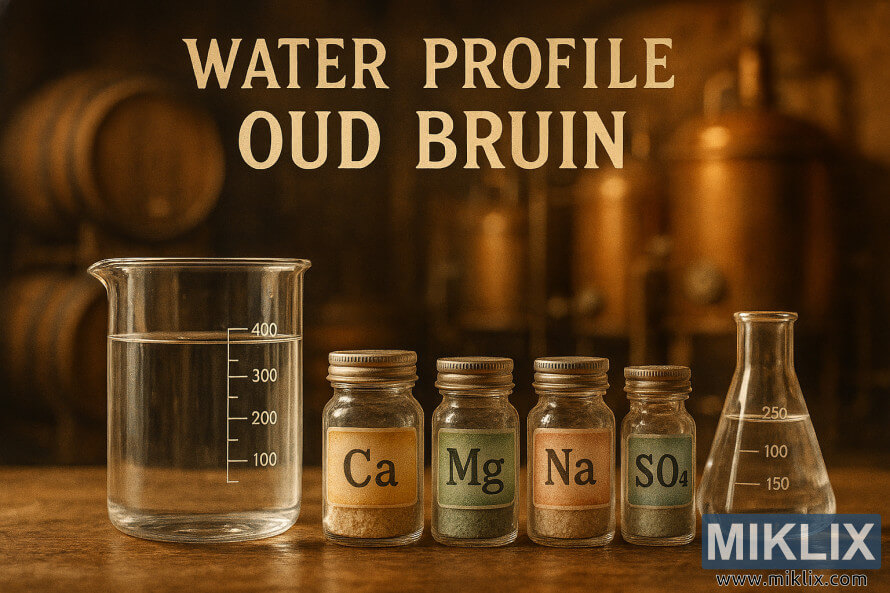
Click or tap the image for more information and higher resolutions.
Yeast handling: pitching, starters, and ideal fermentation temperatures
Proper yeast handling is crucial for a clean, controlled Oud Bruin. Follow simple steps for pack prep, pitch rates, and temperature control. This ensures Saccharomyces is controlled early, allowing Brettanomyces and Lactobacillus to add complexity later.
Wyeast 3209 recommends a pitch rate of about 0.35 (M cells/ml/°P). For a typical beer, around 110 billion cells are suggested. Use this as a baseline for a 6-gallon batch or higher gravity wort. Pack handling is straightforward: hydrate as instructed by Wyeast and avoid temperature shock when adding to cooled wort.
When to make an Oud Bruin starter:
- Make a starter for worts above ~1.055 OG, for older packs, or when you want a brisk, predictable Saccharomyces fermentation.
- A starter helps Saccharomyces establish dominance, which shortens primary fermentation and reduces the window for unwanted microbes.
- If the pack is fresh and gravity is moderate, the Wyeast note “Starter: No” is acceptable for many homebrewers who accept a slower ramp.
Starter size tips:
- For a 6-gallon, 1.056 OG batch, target a starter that brings viable cell count close to the pack recommendation rather than relying on a single smack pack.
- Use a 1–2 L starter for modest boosts; scale up if pitching into stronger worts or if the pack is several months old.
Fermentation temperature 64-84 F is the declared range for this blend. Many brewers prefer a narrower window of 65–72 °F. This balances Saccharomyces attenuation and measured development of Brett and Lactobacillus. Running the ferment around 70 °F often yields clean malt character with steady acid evolution.
Temperature handling notes:
- Lower in the range slows ester and acid formation while preserving malt tone.
- Higher in the range speeds acid and ester production but raises the risk of solventy notes.
- Maintain stable temps through a controlled chamber or wrap; avoid wide swings that stress yeast.
Practical checklist before pitching:
- Confirm wort temperature matches yeast’s temp tolerance.
- Decide on an Oud Bruin starter based on gravity and pack age.
- Aim for the recommended pitch rate Wyeast 3209 to reduce lag time and improve attenuation.
Monitor the first 48 hours closely. A healthy, active fermentation at the chosen fermentation temperature 64-84 F shortens time to souring and keeps the beer on the intended flavor path.
Oxygen strategy, aeration decisions, and safe practices
Managing oxygen in mixed fermentations shifts the balance between lactic souring and oxidative risks. Brewers often debate between no initial aeration and later oxygen dosing to shape ester and acid profiles. Clear guidelines and small steps help limit acetic acid while preserving nuanced complexity.
No-initial-aeration rationale
Some brewers choose to skip oxygen at pitch to favor Lactobacillus activity and slow Saccharomyces dominance. This approach can accelerate lactic souring in a controlled manner. It produces a more malt-forward, rounded acid profile.
Risks and measured benefits of later oxygen
Introducing oxygen later can push ester formation and contribute to ethyl acetate control. This affects fruity and solvent-like notes. Small, controlled oxygen pulses may tweak esters without wrecking a beer. However, they carry the risk of encouraging Acetobacter and excess volatile acidity.
- Use micro-oxygenation only if you can monitor pH and aroma regularly.
- Limit total oxygen added and apply in short bursts rather than a single large dose.
- Consider sealed systems or oxygen-permeable barrels for gradual, predictable uptake.
Practical steps to limit acetic acid while allowing complexity
Preventing vinegar-like faults means reducing unintended air exposure and controlling microbial vectors. Sanitation, tight seals, and prompt transfer practices help limit acetic acid formation during and after active fermentation.
- Keep vessels closed once primary fermentation begins to prevent airborne Acetobacter inoculation.
- If attempting oxygen dosing, record amounts, timing, and sensory changes to refine your method.
- Use sterile fittings and avoid open transfers; racking into barrels raises risk unless barrels are well maintained.
- Monitor pH and aroma; rising volatile acidity or sharp vinegar notes signal an immediate stop to oxygen additions.
Balancing oxygen dosing in sour beers with a conservative, documented protocol allows brewers to influence ester and acidity outcomes. Ethyl acetate control starts with tiny, deliberate moves and stringent hygiene to protect the batch.
Click or tap the image for more information and higher resolutions.
Monitoring fermentation: gravity, pH, and sensory checkpoints
Monitoring your Oud Bruin's fermentation is crucial for success. Keep track of gravity and pH regularly. Also, note any visual and aroma changes during both primary fermentation and aging. These observations help you compare your beer's progress against expected benchmarks. They guide your decisions on when to add fruit or transfer to barrels.
Gravity numbers provide a useful benchmark. For many all-grain Oud Bruin recipes, the OG FG 1.056 1.013 pair is typical, resulting in about 5.6% ABV. An extract sour stout example had an OG of 1.055 and FG of 1.012, close to 5.7% ABV. Monitor gravity twice a week early on, then once a week as fermentation slows.
Regular pH measurements are essential to track biochemical changes. Wort pH usually starts around 5.2–5.6. As lactic acid builds up during souring, the pH should decrease. Aim for a final pH between 3.4 and 3.8 for the desired sharpness. Test pH before adding fruit and again at kegging or bottling.
Sensory checks are just as important as instrumental readings. Look for pellicle formation, which indicates Brettanomyces or Pediococcus activity. Some batches may not show pellicle for weeks, while others form it in a month. Smell for strong nail-polish notes from ethyl acetate or clear vinegar from acetic acid. These off-aromas suggest oxidation or unwanted Acetobacter presence.
Use a simple checklist each visit:
- Record temperature and gravity reading.
- Log pH and note any sudden drops or stalls.
- Inspect surface for pellicle formation and note texture.
- Sniff for solvent, vinegar, or off-smells before tasting.
Tasting is a controlled practice. Take small samples at two months to assess accelerated souring claims. Early tastings reveal sharp acidity and esters. Long-term aging usually softens edges and integrates malt, fruit, and Brett character. Keep records to refine future batches.
Fruit additions and oak aging with Oud Bruin blend
Introducing fruit and oak into an Oud Bruin fermentation transforms the beer's texture, aroma, and acidity. Brewers must carefully consider timing, sanitation, and the desired flavor profile. Small-scale trials are essential to achieve a balanced, malt-forward sour beer that maintains complexity without becoming too sharp.
The timing of fruit addition is crucial. Adding fruit in primary fermentation can lead to yeast and bacteria consuming fresh sugars, altering fermentation and creating unpredictable esters. Transferring to a secondary vessel allows for better control over fruit extraction and minimizes yeast interaction. Successful examples include allowing the beer to sit for a month before transferring, then adding a large amount of blackberries.
- Primary addition: fast extraction, higher attenuation, less control over microflora.
- Secondary addition: cleaner fruit character, easier sanitation, measured extraction.
- Cold soak after transfer: slows fermentation on fruit and preserves aroma.
Blackberries, cherries, and plums are popular choices for fruit additions. Blackberries complement Oud Bruin with their winey, dark-fruit notes, enhancing malt flavors. Cherries add a bright, acidic touch that can increase the perception of sourness. Plums contribute a round, stone-fruit depth that pairs well with apple-brandy notes from oak calvados soak treatments.
Oak aging introduces tannins, vanillin, and barrel-like textures. Many brewers opt for medium-toast cubes or spirals. Soaking oak in calvados before adding it infuses apple brandy flavors and the fruit-forward warmth of Normandy-style spirit. A measured oak calvados soak—such as six cubes and a splash of steeping liquid—adds structure and reduces sharpness perception.
Integrate fruit and oak thoughtfully. Oak tannins can anchor bright fruit and protect malt balance while mellowing sharp edges. Fruit adds fermentable sugars and natural acids, influencing sourness perception or roundness based on timing. Monitor pH and taste biweekly during aging to decide when to remove fruit or oak.
- Sanitize fruit handling: frozen, vacuum-sealed fruit reduces microbes. Thaw in a sanitized vessel and transfer quickly.
- Start with conservative fruit loads; add additional fruit in stages if flavor is muted. The community extract example used 3.75 lb frozen blackberries, then 1 lb beach plums four days later.
- Check gravity and pH before and after additions. Track changes and record time on fruit and oak for repeatable results.
Keep tasting notes focused and objective. A well-timed fruit addition and a restrained oak calvados soak can elevate complexity, add warmth, and preserve the malt-accented sour profile homebrewers seek with Wyeast 3209-PC Oud Bruin Ale Yeast Blend. Decide on when to add fruit based on desired brightness, fermentation activity, and sanitation comfort level.
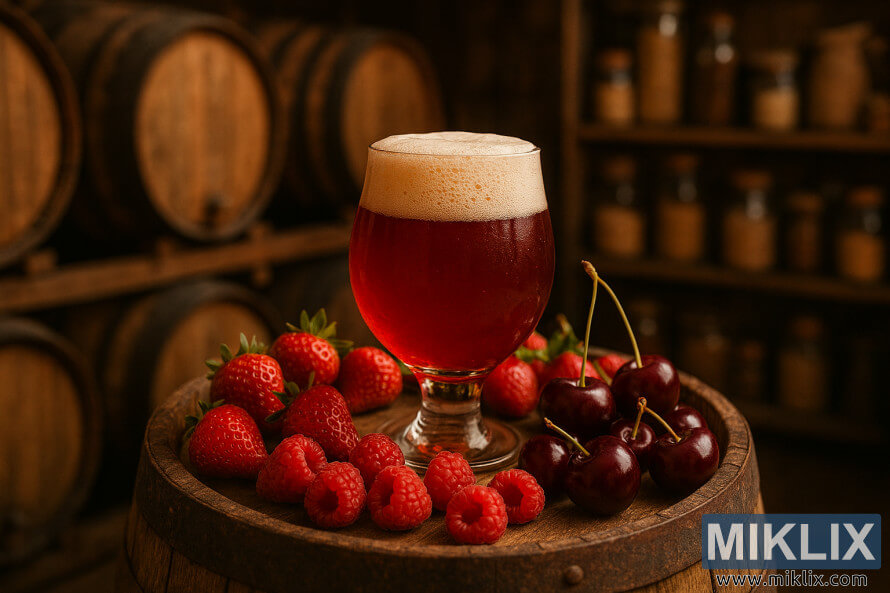
Click or tap the image for more information and higher resolutions.
Conditioning, priming, and carbonation for Oud Bruin-style beers
Proper conditioning is key to achieving balance in malt-forward sour beers. Aim for gentle carbonation that complements the beer's acidity without overpowering the malt backbone. Below, we'll discuss priming, the choice between bottle and keg, and serving tips for that classic Oud Bruin mouthfeel.
For a six-gallon all-grain batch, use 6.3 ounces of dextrose for priming. This amount targets carbonation at 2.5 volumes of CO2. Such carbonation results in a softer, shorter head, enhancing the beer's round and malt-accented taste.
Bottling sour beer with mixed cultures leads to slow, steady carbonation. Bottle conditioning allows for continued microfermentation and flavor development. Regularly check a sample bottle to avoid over-pressurizing bottles when wild yeasts are active.
Kegging sour beer offers precise control over carbonation and reduces bottle-to-bottle variation. Many brewers bulk-age mixed-culture beers before switching to kegging and force-carbonating when the flavor profile is optimal. Use a spunding valve or soft-carbonation schedule for a more natural finish without full force-carb.
- Priming tip: dissolve dextrose in boiling water, chill before adding to the beer to reduce infection risk.
- Bottle note: store at cellar temps for months; mixed cultures often need time to stabilize carbonation and flavor.
- Kegging note: cold crash before transfer to drop yeast and trub; set regulator for desired carbonation 2.5 volumes and allow 24–72 hours to equilibrate at serving pressure.
Serve Oud Bruin-style beers slightly chilled, around 50–55 °F, to enhance malt and complex sour notes. Use glassware that captures aroma and shows moderate carbonation. Target carbonation at 2.5 volumes to keep the head restrained and the palate focused on balance rather than effervescence.
Common pitfalls and troubleshooting when using the Oud Bruin blend
Working with mixed cultures offers both rewards and challenges. This guide aims to address common issues brewers face when brewing malty, tart Oud Bruin-style beers. It provides practical solutions to keep your batches on track.
Managing volatile acids and solvent notes
Acetic vinegary notes and sharp ethyl acetate can disrupt balance. Common causes include oxygen exposure, contamination by Acetobacter, and late oxygen dosing to stimulate Brett. To mitigate these risks, minimize headspace during transfers and avoid using unwashed or unpasteurized fruit unless you plan to inoculate. If acetic acid sour beer develops, blending with a non-acetic base can help dilute the vinegar. Adding strong fruit like blackberries or cherries can mask solvent notes while preserving fruit flavor.
Addressing stalled or slow fermentations
Stalled fermentation in mixed cultures often stems from underpitching, tired yeast, low fermentables in extract batches, or high acidity stressing Saccharomyces. First, check the gravity and temperature. If attenuation is low after a reasonable time, consider repitching a healthy Saccharomyces strain or making a robust starter from Wyeast or White Labs. Raising fermentation temperature slightly can aid yeast recovery. For all-grain recipes aiming for OG 1.056 and FG 1.013, ensure a strong pitch and be patient; Brett and Lactobacillus will continue slow attenuation over weeks to months.
Sanitation and contamination control
Sanitation with Lactobacillus Brett requires strict separation from clean-ale equipment to prevent contamination. Cross-contamination can harm future batches of non-sour beer. If possible, dedicate fermenters, hoses, spoons, and bottling gear. Use standard sanitizers like Star San and adhere to the recommended contact times. After primary fermentation, limit oxygen exposure to prevent Acetobacter growth. Cold crashing and sealing vessels reduce volatilization and help preserve desired acidity without creating acetic acid sour beer.
Practical troubleshooting checklist
- If vinegar appears: stop transfers, reduce headspace, consider blending.
- If solvent esters or ethyl acetate show: review sanitation and wort aeration timing.
- If fermentation stalls: measure gravity, repitch active Saccharomyces, or build a starter.
- To protect clean beers: isolate sour work and label gear clearly to avoid stalled fermentation mixed cultures spreading.
Careful process control, timely intervention, and respect for mixed-culture dynamics make Oud Bruin troubleshooting manageable. Small adjustments to pitching, oxygen handling, and sanitation with Lactobacillus Brett can prevent major off-flavors. This allows the blend to develop its characteristic malt-forward sour complexity.
Click or tap the image for more information and higher resolutions.
Comparative tasting and timeline: what to expect at 2 months vs. long aging
Early tasting notes provide a snapshot for planning. Brewers often debate whether accelerated souring Wyeast 3209 yields a ready beer at two months or if longer aging is needed. The answer lies in tasting benchmarks and a clear aging plan.
At two months, use a checklist to judge readiness. Assess lactic intensity, residual sweetness, and any sharp solvent or acetic notes. Also, evaluate how fruit or oak elements integrate with the malt backbone.
- Tasting benchmarks 2 months vs long aging: evaluate acidity, mouthfeel, and Brett presence.
- Measure pH and compare to sensory impressions before deciding to package.
- Look for balance: bright lactic bite may be fine, but harsh edges suggest more time.
Community experience indicates that accelerated souring Wyeast 3209 can produce a drinkable base in about eight weeks. This outcome depends on pitching rate, temperature, and oxygen management. Expect an assertive lactic note and early Brett hints at this point.
Longer aging reshapes the profile. Over several months to a year, lactic acidity tends to round, Brettanomyces develops complexity, and oak and fruit components blend with malt. Harsh esters often soften, leaving layered flavors and a smoother finish.
- At ~2 months: sharp lactic acid, some residual sweetness, nascent Brett character.
- 3–6 months: integration of fruit and oak, acidity mellows, mouthfeel improves.
- 6–12+ months: rounded complexity, fuller Brett-driven phenolics, stable balance.
When tasting to decide whether to bottle, keg, or age longer, use consistent benchmarks. If the lactic level matches your target and no dominant off-aromas remain, packaging is reasonable. If the beer tastes thin, overly sour, or one-dimensional, return it to the cellar.
Keep notes for each sampling point. Track the Oud Bruin aging timeline alongside sensory milestones. Repeated tastings build a reliable sense of how your process and ingredients influence development over time.
Practical recipe walk-through using the provided Oud Bruin recipe data
This guide offers a detailed Oud Bruin recipe for a 6-gallon batch. It includes clear targets for water and mash. Follow the steps in order for consistent results. The recipe aims for a 70% efficiency, with OG 1.056 and FG 1.013.
Batch specs and efficiency
- Fermentor volume: 6.0 gallons.
- Brew house efficiency: 70%.
- Target gravity: OG 1.056; expected FG 1.013.
- Total system water required: water volumes 9.41 gal for this setup.
Mash and strike calculations
- Mash thickness set to 1.75 qt/lb. Strike water needed is about 5.8 gallons.
- Use a mash schedule 152 F for a 60-minute saccharification rest with starting grain temp ~77 °F.
- Add gypsum (1.5 oz) into the mash to adjust mineral balance.
Sparge, pre-boil, and boil timeline
- After mash, mash-out and sparge with roughly 3.61 gallons of 170 °F water to reach a pre-boil volume near 7.5 gallons.
- Boil for 60 minutes. Add 1.75 oz Hallertau Hersbrucker at 60 minutes for subtle bitterness and aroma.
- With 10 minutes left, add Whirlfloc and a measured beer nutrient as specified for complex sour ferments.
Losses and post-boil expectations
- Mash volume with grain in place measures about 6.86 gallons.
- Allow for grain absorption losses of ~1.66 gallons, lauter tun deadspace ~0.25 gallons, hops absorption ~0.07 gallons, and boil-off near 1.5 gallons.
- After the boil and chill you should collect about 6.0 gallons into the fermentor as planned.
Chilling and pitching
- Chill wort to a target fermentation temperature near 70 °F for this example.
- Pitch Wyeast 3209 following your chosen aeration approach. The recipe notes that some brewers omit initial aeration while many do aerate normally; choose based on your tolerance for risk and desired acid/ester profile.
Fermentation and optional additions
- Monitor gravity and pH regularly during active fermentation to track attenuation toward FG 1.013.
- Consider fruit or oak additions at transfer to secondary if you plan layered complexity; add after primary fermentation slows.
Quick reference water table for this brew
- Strike water: ~5.8 gal.
- Sparge water: ~3.61 gal.
- Total water volumes 9.41 gal for the system to hit pre-boil and post-boil goals.
Safety, legal, and equipment considerations for sour fermentations
Mixed cultures in brewing offer both benefits and risks. Ensure your workspace is organized, label all vessels clearly, and establish consistent routines. This approach helps safeguard clean ales and minimizes sour beer safety concerns. A small oversight can lead to microbial contamination through hoses, faucets, or shared storage. Therefore, treat sour fermentation as a distinct process.
Workspace and cross-contamination risks
Allocate specific fermenters, tubing, and bottling equipment for sour beer projects when feasible. If sharing is necessary, thoroughly disassemble and sanitize the equipment. Allow several weeks for the gear to be free of contaminants before returning it to clean brewing use. Use vibrant labels on sour vessels and isolate them from mash and boiling areas. This strategy helps prevent accidental contamination and reduces the risk of Brett Lactobacillus issues.
Temperature control, sanitation, and oxygen handling
Consistent temperatures are crucial for managing microbial growth and avoiding acetic flavors. Employ a reliable temperature controller and maintain an insulated environment to prevent temperature fluctuations. Ensure all surfaces in contact with wort, beer, or fruit are thoroughly cleaned and sanitized.
Be cautious when handling oxygen and micro-oxygenation equipment. Use certified regulators and secure cylinders to prevent leaks. Adhere to best practices for oxygen use: dose gradually if necessary, inspect fittings regularly, and avoid untested methods that could lead to over-oxygenation or safety risks. Always work in a well-ventilated area when using potent sanitizers or volatile spirits for oak treatments.
Labeling, cellar management, and aging space advice
Keep a detailed log for each sour batch, documenting date, cultures used, additions, and tasting notes. Accurate records are essential for avoiding errors and effectively managing limited space. Separate sour and clean beers by rack, shelf, or room to safeguard both programs and maintain sour beer safety.
- Store bottles and barrels in a cellar with consistent temperatures, ideally around 50 °F, for slow aging. Warmer environments can accelerate fermentation if desired.
- Monitor new barrels for excessive acetification and quarantine if necessary. Regular tasting sessions will help determine when to blend, bottle, or continue aging.
- Label barrels clearly with culture identity and date to avoid confusion and prevent cross-contamination with non-sour stock.
Comply with local laws regarding alcohol, pressurized cylinders, and chemical sanitizer disposal. Choosing safe equipment, maintaining clear labels, and adhering to disciplined cellar practices are key to protecting your brewery, home, and the quality of future brews.
Conclusion
Wyeast 3209-PC Oud Bruin Ale Yeast Blend is a specialized tool for brewers aiming at malt-forward sour beers. This review concludes that it excels in creating sharp lactic acidity while maintaining malt depth. It's perfect for Oud Bruin and Flanders-style beers, as well as dark-malty sours and fruit-aged variants.
To use it effectively, start with the all-grain recipe or extract adaptations. Adjust your water to a chloride-forward profile. Also, manage pitch rate and starter decisions for consistent results. This yeast blend is best for recipes that require sour complexity without losing caramel and roasted malts.
The risk-reward balance is evident: you can achieve compelling acidity in just two months. However, longer aging is recommended for a more rounded complexity. Be cautious with oxygen dosing, especially if you're new to managing volatile acidity. Protect your cellar from cross-contamination to ensure consistent, flavorful results with this blend.
FAQ
What is Wyeast 3209-PC Oud Bruin Ale Yeast Blend and what styles is it best for?
Wyeast 3209-PC Oud Bruin is a mixed culture blend, marketed as a VSS seasonal product around 2014. It combines Saccharomyces, Lactobacillus, and Brettanomyces strains. This blend produces sharp lactic acidity while preserving malt character. It's ideal for Oud Bruin, Flanders-style beers, and dark malt-accented sours. It's also great for fruit-aged dark sours where you want residual sweetness and malt complexity.
How does 3209 compare to other Wyeast sour blends like De Bom (3203) and 3763 Roselaere?
Compared to De Bom (3203) and 3763 Roselaere, 3209 retains more malt body while producing a bright lactic bite. De Bom is known for faster souring and can be more aggressive, sometimes producing acetic tendencies. 3763 Roselaere is a benchmark for sharp acidity but can attenuate differently. Brewers choose 3209 when they want sourness without stripping malt character.
What are the expected flavor contributions from each microbial group in the blend?
Saccharomyces performs primary alcoholic fermentation and most attenuation. Lactobacillus produces lactic acid for sharp, clean sourness. Brettanomyces contributes longer-term complexity—funk, esters, and slow attenuation—and may form pellicles. Combined, the blend aims for balanced acidity and complexity while preserving malt sweetness and body.
What fermentation temperatures and pitching guidance should I follow?
Wyeast lists an optimum fermentation range of 64–84 °F and gives 70 °F as an example. Many brewers ferment in the 65–72 °F range for balanced Saccharomyces activity and gradual Brett/Lacto development. Wyeast’s pitch-rate guidance shows 0.35 (M cells/ml/°P) with 110 B cells required; the packet notes “Starter: No,” but making a starter is recommended for higher-gravity worts, older packs, or to ensure predictable attenuation.
Should I aerate the wort before pitching or follow Wyeast’s no-initial-aeration guidance?
Wyeast’s VSS guidance suggests no initial aeration to favor Lactobacillus and speed souring. Many brewers, however, aerate normally to support Saccharomyces. Deciding depends on your tolerance for risk: no-initial-aeration can accelerate lactic development, while standard aeration helps Saccharomyces secure the fermentation. If following the no-aeration SOP, be deliberate and monitor pH and gravity closely.
What about later oxygen dosing—should I add oxygen during aging?
Wyeast suggests later oxygen dosing to influence ethyl acetate and complexity, but the practice is controversial. Small, controlled oxygen pulses can alter ester profiles, yet they can also stimulate Brett and Acetobacter to produce acetic acid (vinegar) and solventy ethyl acetate. If you try micro-oxygenation, do so sparingly, monitor sensory changes, and accept the risk of volatile acidity.
How do I limit the risk of acetic acid and ethyl acetate when using 3209?
Minimize oxygen exposure after primary fermentation begins, use sealed vessels, sanitize fruit or accept it as intentional inoculum, and avoid unnecessary headspace. If you’re uncomfortable with VA risk, skip late oxygen dosing and use careful sanitation and limited fruit exposure. Controlled barrel aging or small, monitored micro-oxygenation are options for experienced brewers.
What are typical OG, FG, ABV, and pH outcomes with this blend?
Practical examples show OG ~1.056 and FG ~1.012–1.013, yielding about 5.6–5.7% ABV with apparent attenuation near 75–78%. Final pH commonly falls in the 3.4–3.8 range for balanced Oud Bruin beers; fruit-aged variants may finish around pH 3.6–3.7. Individual results depend on pitch rate, fermentation schedule, and fruit or oak additions.
What grain bill, mash schedule, and mash pH are recommended for a 6-gallon Oud Bruin?
A tested all-grain bill: 9 lb Pilsner, 2 lb CaraMunich, 1 lb Munich Dark 20L, 0.5 lb flaked corn, 0.5 lb wheat, 0.25 lb de-bittered black (total 13.25 lb). Mash single infusion at 152 °F for 60 minutes with a target mash pH around 5.35. Strike water and mineral additions (example: 1.5 oz gypsum in mash) help achieve that pH and a chloride-forward profile to support maltiness.
What hop regimen should I use to preserve malt and sour focus?
Use a low-AA, early bittering addition. The example uses Hallertau Hersbrucker pellets (1.75 oz at 60 minutes, ~4% AA) to reach ~23 IBU (Tinseth). Keep late hops and hop aroma low to avoid masking malt and sour character.
How should I adjust water chemistry for malt-accented Oud Bruin?
A recommended target for a light, malty Oud Bruin: Ca2+ ~60 ppm, Mg2+ ~5 ppm, Na ~10 ppm, Cl ~95 ppm, SO4 ~55 ppm, HCO3 ~0 ppm. Emphasize chloride for mouthfeel and add gypsum in mash to control pH and add calcium. Consider small CaCl2 additions if source water is low in chloride.
Can I brew with extract or partial mash and still get good results with 3209?
Yes. Extract simplifies the process and can yield excellent results when done carefully. Use Briess or quality LME/DME, steep specialty malts at ~165 °F to preserve body, and add protein sources like wheat or rye for mouthfeel. Watch extract concentration during the boil and maintain vigorous boiling and good sanitation to avoid off-flavors.
When should I add fruit, and which fruits work well?
Fruit is often added during secondary or at transfer to a fruit vessel to control extraction and sanitation. Common choices: blackberries, cherries, plums—blackberries integrate well without dominating, cherries lend tartness, plums add stone-fruit depth. Community examples added frozen blackberries at ~one month and additional plums a few days later with good results. Measure pH and taste while aging to decide on time on fruit.
How long until the beer is drinkable, and how does flavor evolve over time?
Some VSS blends may yield drinkable sour beers in roughly two months, and 3209 can show reasonable acidity and balance at 6–8 weeks. Expect continued evolution over months: lactic acidity integrates, Brett develops funk and complexity, and fruit/oak meld. Many brewers age for several months to a year for the best-rounded profile.
What sanitation and equipment precautions should I take when working with mixed cultures?
Mixed cultures increase cross-contamination risk. Use dedicated fermenters and tools if possible, or rigorously sanitize and separate sour work from clean ale production in time and space. Clearly label sour vessels and track additions. Isolate equipment to avoid infecting hop-forward or clean beers.
What steps can I take if fermentation stalls or attenuation is low?
Stalling can come from underpitching, old yeast, extract-heavy worts, or high acidity inhibiting Saccharomyces. Remedies: make and pitch a healthy Saccharomyces starter, repitch an active ale strain, gently raise fermentation temperature, or allow extended time for Brett and Lacto to finish attenuation. Confirm sanitation and gravity readings before intervening.
What carbonation and priming approach works best for Oud Bruin-style beers?
Aim for softer carbonation. For a 6-gallon batch, dextrose ~6.3 oz yields about 2.5 volumes CO2, fitting the style. Bottle conditioning allows continued evolution; kegging with force carbonation gives precise control and avoids bottle-to-bottle variation. Serve slightly chilled (50–55 °F) to show malt and sour balance.
How do oak and spirit-soaked cubes affect the beer?
Oak adds tannin and texture, helping balance fruit and accentuating perceived body. Spirit-soaked oak (example: calvados-soaked cubes) adds complementary barrel-like warmth and fruit notes. Use measured amounts and taste frequently; oak and spirits can soften sharpness and add complexity but will also shift the beer’s profile over time.
What sensory signs indicate a problem like high volatile acidity or ethyl acetate?
Watch for strong vinegar (acetic acid) aromas indicating Acetobacter activity and nail-polish or solvent-like notes indicating excessive ethyl acetate. These often result from oxygen exposure, contamination, or uncontrolled late oxygen dosing. If detected early, stop oxygen exposure, consider blending, or isolate the batch and evaluate for salvage options.
Are pellicles common with 3209 and how should I interpret them?
Pellicle formation varies; some brewers report minimal pellicles after 1.5 months with 3209, others see pellicles depending on Brett strains and conditions. A pellicle indicates aerobic microbial activity (often Brett/Pedio). Its presence alone isn’t bad—monitor flavor and pH—while excessive film or acetic notes warrant closer inspection for Acetobacter contamination or oxygen exposure.
Should I make a starter for every batch using 3209?
A starter is recommended when pitching into higher-gravity worts, when the pack is old, or when you want predictable, vigorous fermentation and consistent attenuation. For a standard 6-gallon OG 1.056 batch, many brewers create a starter to ensure Saccharomyces secures fermentation quickly and reduces the window for unwanted organisms to gain a foothold.
How do I manage water volumes and mash thickness for the provided 6-gallon recipe?
For 6 gallons: target mash thickness ~1.75 qt/lb with ~5.8 gallons strike water (mash volume ~6.86 gal), grain absorption ~1.66 gal, and ~3.61 gal sparge water to reach ~7.5 gal pre-boil. Expect ~1.5 gal boil-off to land ~6 gal in the fermentor. Adjust to your system’s losses and measure gravities to hit OG ~1.056.
What are safe practices for oxygen handling and micro-oxygenation equipment?
Use proper regulators and micro-oxygenation equipment designed for brewing. Avoid improvised oxygen delivery. Work in a ventilated area, follow manufacturer safety guidelines, and dose in small, controlled pulses if using oxygen later in aging. Always weigh the benefits against the risk of increasing acetic production.
If I detect high VA, can the beer be saved?
Salvage options are limited. Small VA issues may mellow with blending into a larger non-acetic batch or with time if acetic notes are mild. Strong vinegar usually requires blending or using the beer for cooking. Prevention—minimizing oxygen, isolating sour vessels, and strict sanitation—is the best strategy.
What are realistic expectations for timeline and final character using 3209?
Expect noticeable lactic acidity and drinkable character in 6–8 weeks in many cases, but plan for several months to a year for fuller integration and Brett development. Final beers should show sharp lactic bite with preserved malt sweetness and body, moderate Brett complexity over time, and pleasant fruit/oak interplay if used.
Further Reading
If you enjoyed this post, you may also like these suggestions:
- Fermenting Beer with Mangrove Jack's M10 Workhorse Yeast
- Fermenting Beer with CellarScience Prime Yeast
- Fermenting Beer with Wyeast 3711 French Saison Yeast