
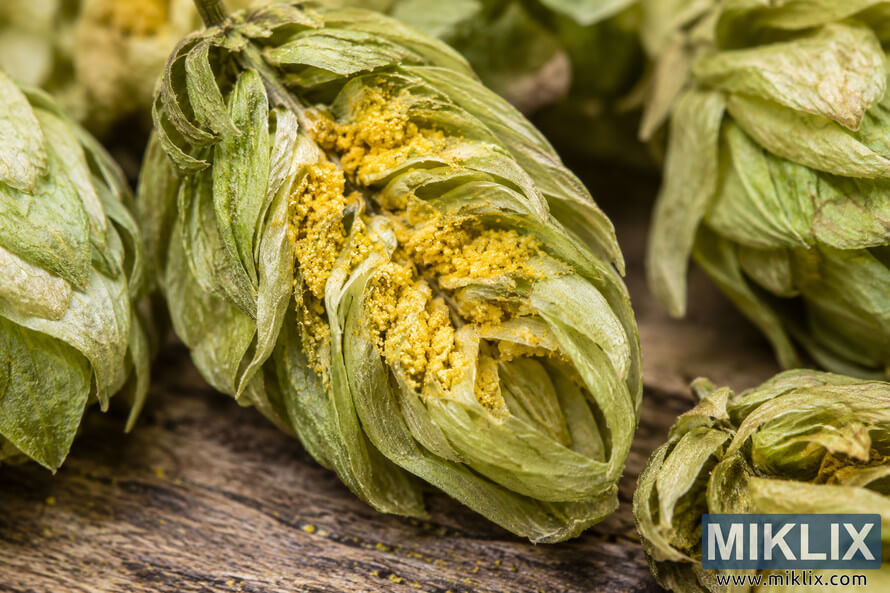
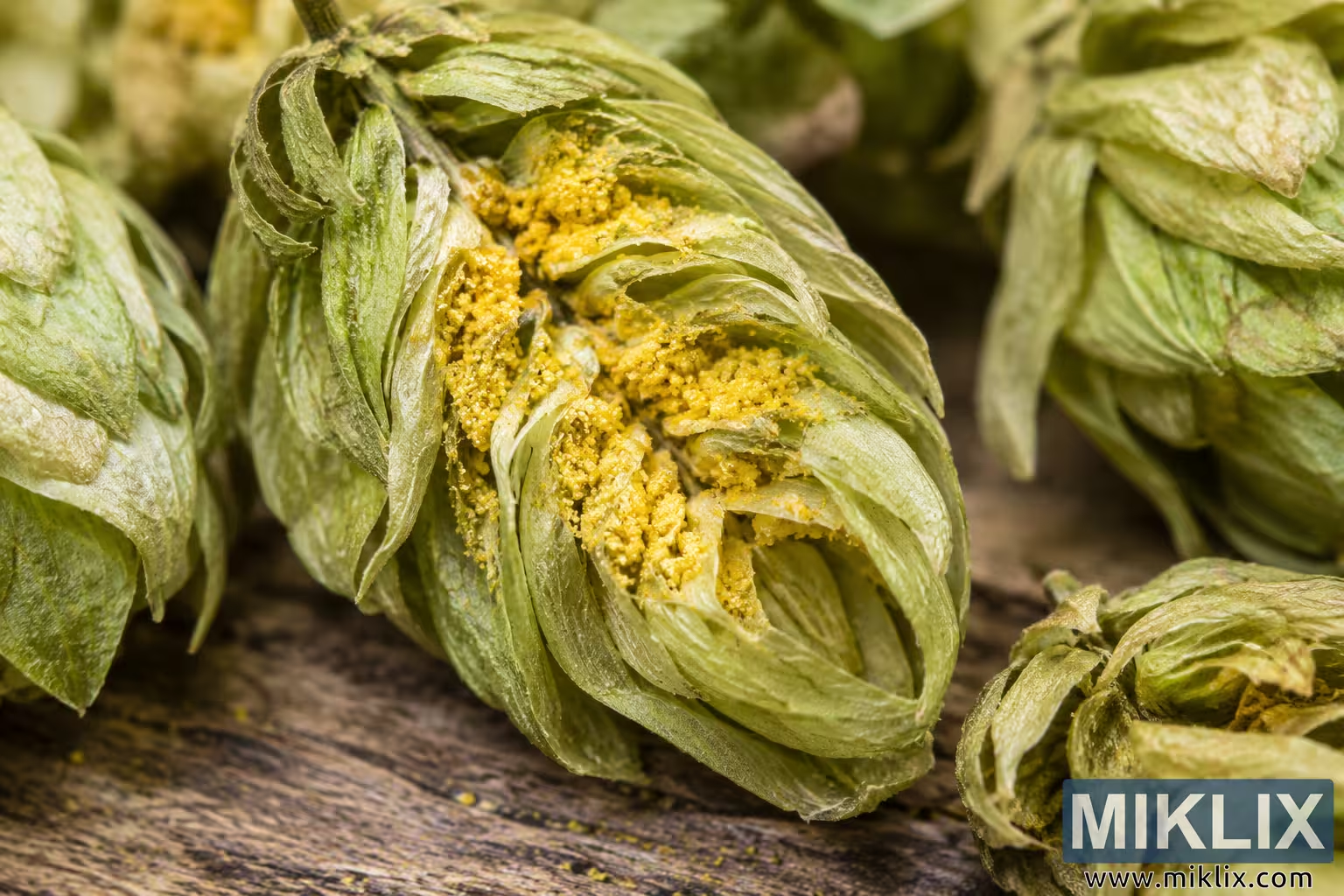
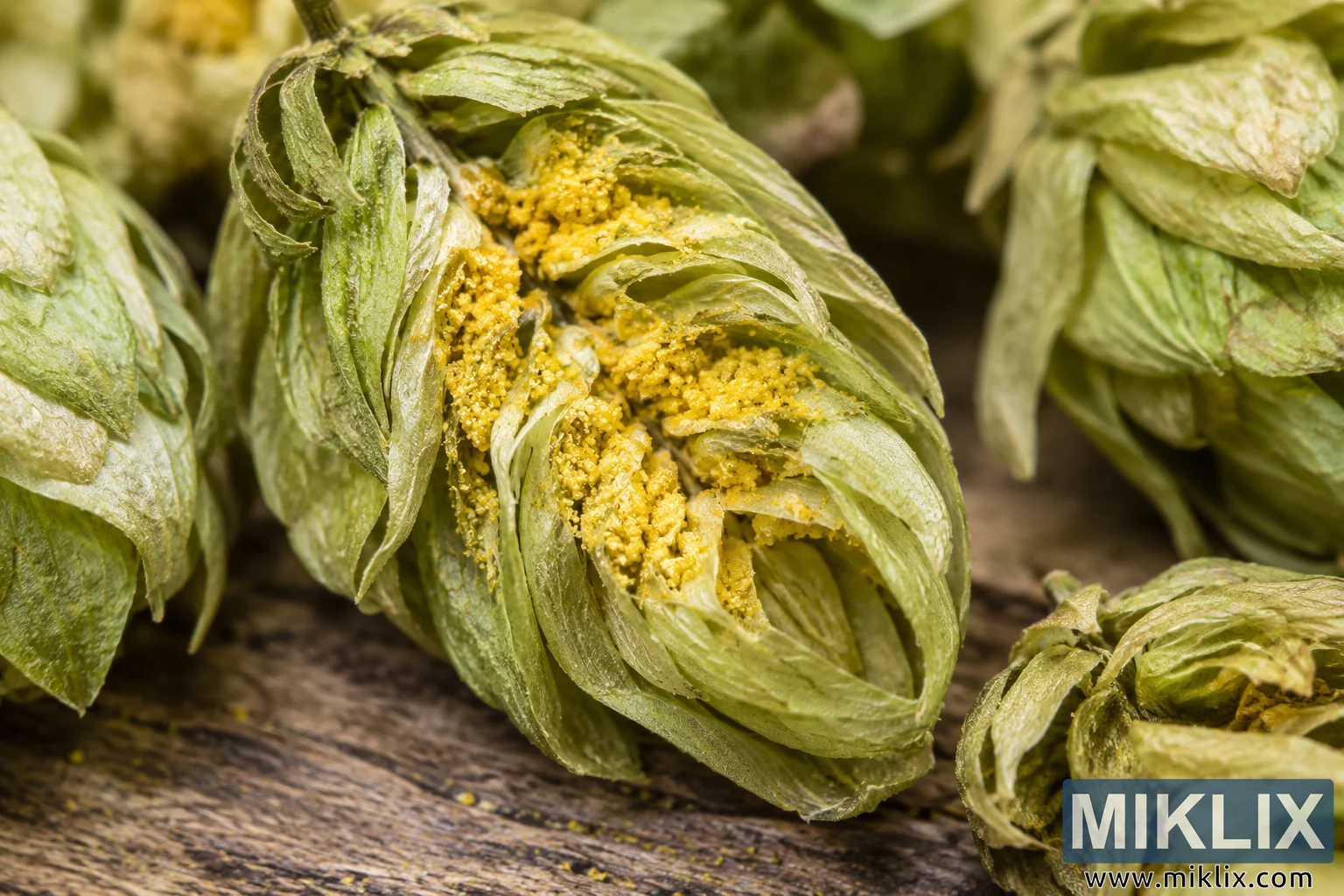
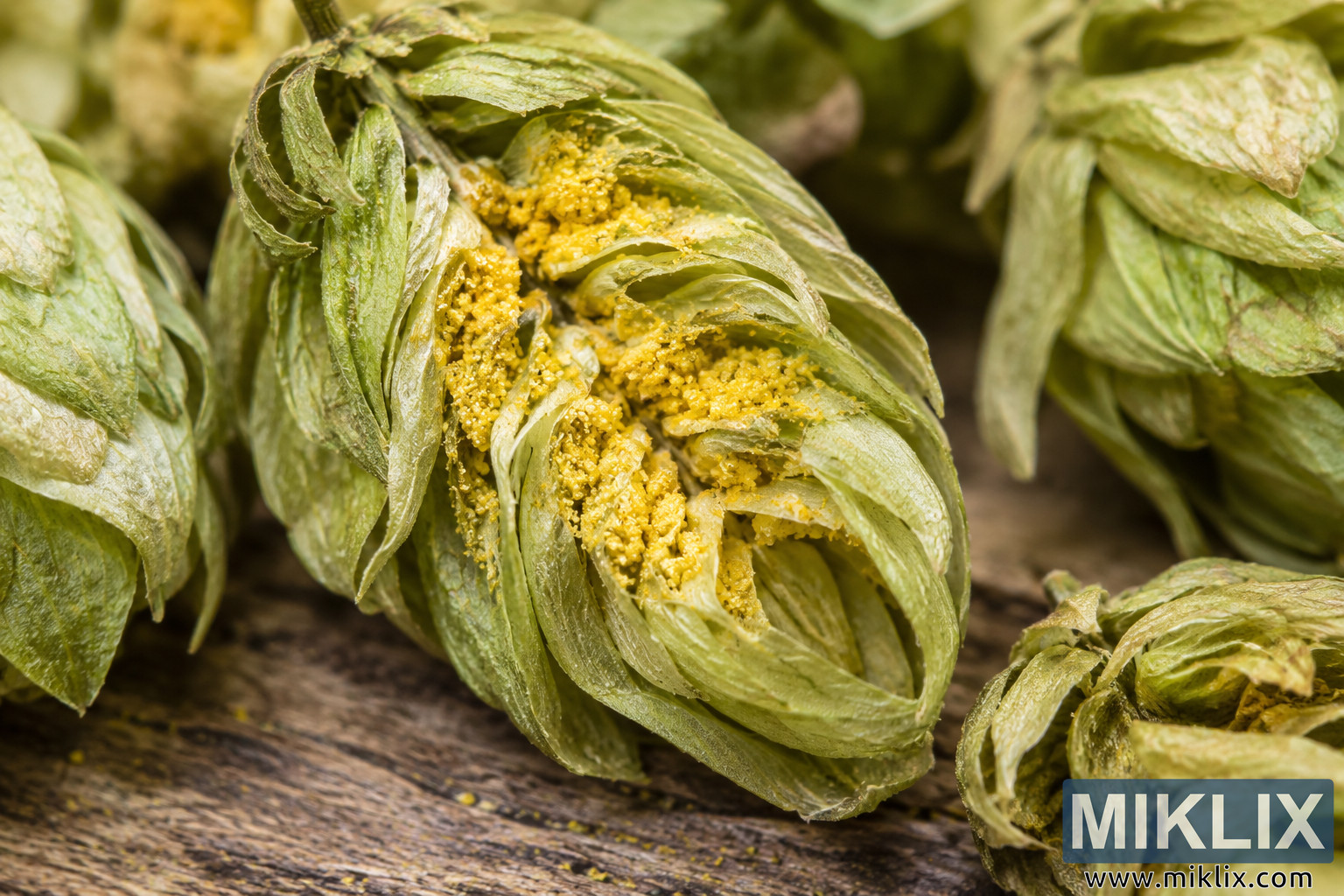
Billede: Macro Close-Up of Dried Hop Cones and Golden Lupulin Glands
Udgivet:
Sidst opdateret: 14. september 2026 kl. 20.35.15 UTC
Detailed macro image of dried hop cones with golden-yellow lupulin glands exposed between green papery bracts on a rustic wooden surface.
Macro Close-Up of Dried Hop Cones and Golden Lupulin Glands
Tilgængelige versioner af dette billede
De billedfiler, der kan downloades nedenfor, er mindre komprimerede og har højere opløsning - og dermed højere kvalitet - end de billeder, der er indlejret i artikler og sider på dette websted, som er mere optimerede med hensyn til filstørrelse for at reducere båndbreddeforbruget.
Almindelig størrelse (1,536 x 1,024)
Stor størrelse (3,072 x 2,048)
Meget stor størrelse (4,608 x 3,072)
Ekstra stor størrelse (6,144 x 4,096)
Komisk stor størrelse (1,048,576 x 699,051)
- Uploader stadig... ;-)
Billedbeskrivelse
A highly detailed landscape-oriented macro photograph shows several dried hop cones arranged naturally on a rustic, weathered wooden surface. The composition is dominated by a large hop cone positioned slightly left of center. This central cone has opened enough to expose the interior of the flower, making the yellow lupulin glands clearly visible between its overlapping bracts. The photograph is framed extremely close to the subject, allowing the intricate structure, texture, and coloration of the dried plant material to become the primary visual focus. The central hop cone extends diagonally through the frame, with its short stem emerging near the upper edge and its tapered end pointing toward the lower-right portion of the image. Its layered bracts curl outward irregularly, producing a complex pattern of overlapping botanical forms. The bracts range in color from muted olive green and pale yellow-green to warmer straw and beige tones. Their surfaces appear thin, dry, papery, and slightly translucent in places. Fine veins and subtle wrinkles run through many of the individual bracts, emphasizing the delicate texture associated with dried hops. Some edges are gently curled or folded, while others appear slightly brittle and uneven, reinforcing the impression of a naturally dried agricultural ingredient rather than a fresh flower. The most prominent feature is the dense concentration of golden-yellow lupulin visible inside the opened central cone. The lupulin appears as numerous tiny granular particles and resinous glands clustered around the inner surfaces and bases of the bracts. Its saturated mustard-yellow and golden coloration contrasts strongly with the softer green tones surrounding it. The granular material has a slightly powdery, textured appearance, with individual specks and small clusters catching the light. These yellow deposits occupy much of the exposed interior and visually communicate the resin-rich character of the hop cone. Small traces of similarly colored material can also be seen scattered on nearby plant surfaces and on the wood beneath the hops. Several additional dried hop cones surround the central specimen and provide context without competing with it. Along the left edge, part of another cone enters the frame, showing overlapping pale-green bracts but remaining less sharply defined than the main subject. In the upper-right area, a second large hop cone is visible, its layered structure recognizable but softened by the shallow depth of field. Near the lower-right corner, another partially opened cone lies close to the wooden surface. Its curled bracts form an irregular circular arrangement and reveal darker yellow-green material within. Additional indistinct hop shapes fill portions of the background, creating the impression of a small collection of dried cones rather than an isolated specimen. The image uses a very shallow depth of field characteristic of macro photography. The exposed interior of the main hop cone, particularly the yellow lupulin glands and nearby bract surfaces, receives the strongest focus. Details gradually soften toward the foreground edges and background. This selective focus directs attention immediately to the lupulin while allowing surrounding cones to provide visual depth. The background dissolves into subdued green, brown, and olive shapes, producing a natural botanical bokeh rather than a distracting environment. The supporting surface is rough, dark brown wood with visible grain, grooves, scratches, and variations in tone. Its coarse texture provides a contrasting backdrop for the thin, delicate hop bracts. Tiny yellow-green particles are scattered across the wood, suggesting loose lupulin or fragments from the dried cones. The combination of aged timber and dried botanical material gives the scene an earthy, agricultural character associated with harvested brewing ingredients and raw plant products. Lighting is warm, soft, and directional, illuminating the hops from above and slightly from the front. Highlights reveal the fine ridges, folds, and translucent qualities of the bracts without creating harsh reflections. Shadows collect naturally between the overlapping layers, helping define the three-dimensional structure of the cones. The golden lupulin receives particularly strong visual emphasis because its warm yellow color catches the light and stands out against the subdued greens and browns. Overall contrast remains moderate and natural, preserving fine details in both highlighted and shadowed areas. The color palette is predominantly organic and earthy: olive green, sage green, pale yellow-green, straw, golden yellow, muted brown, and deep brown. The brightest color in the photograph comes from the exposed lupulin glands, which form the visual focal point. No labels, packaging, logos, text, trademarks, or other brand identifiers are visible anywhere in the scene. The photograph functions as a close botanical study of dried hop cones and their internal lupulin glands, emphasizing physical texture, natural structure, and ingredient detail. Its realistic macro treatment makes the image suitable for illustrating hops, brewing ingredients, hop anatomy, agricultural products, or discussions of the aromatic and resinous components found within hop cones.
Billedet er relateret til: Hops in Beer Brewing: Alliance