
Billede: Tangerine Tree Infested with Scale Insects
Udgivet:
Sidst opdateret: 25. marts 2026 kl. 19.05.18 UTC
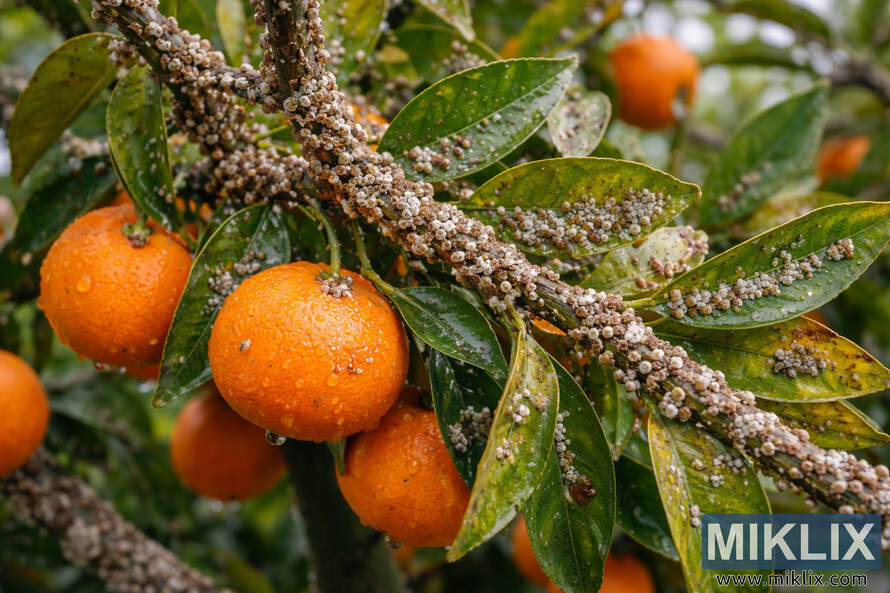
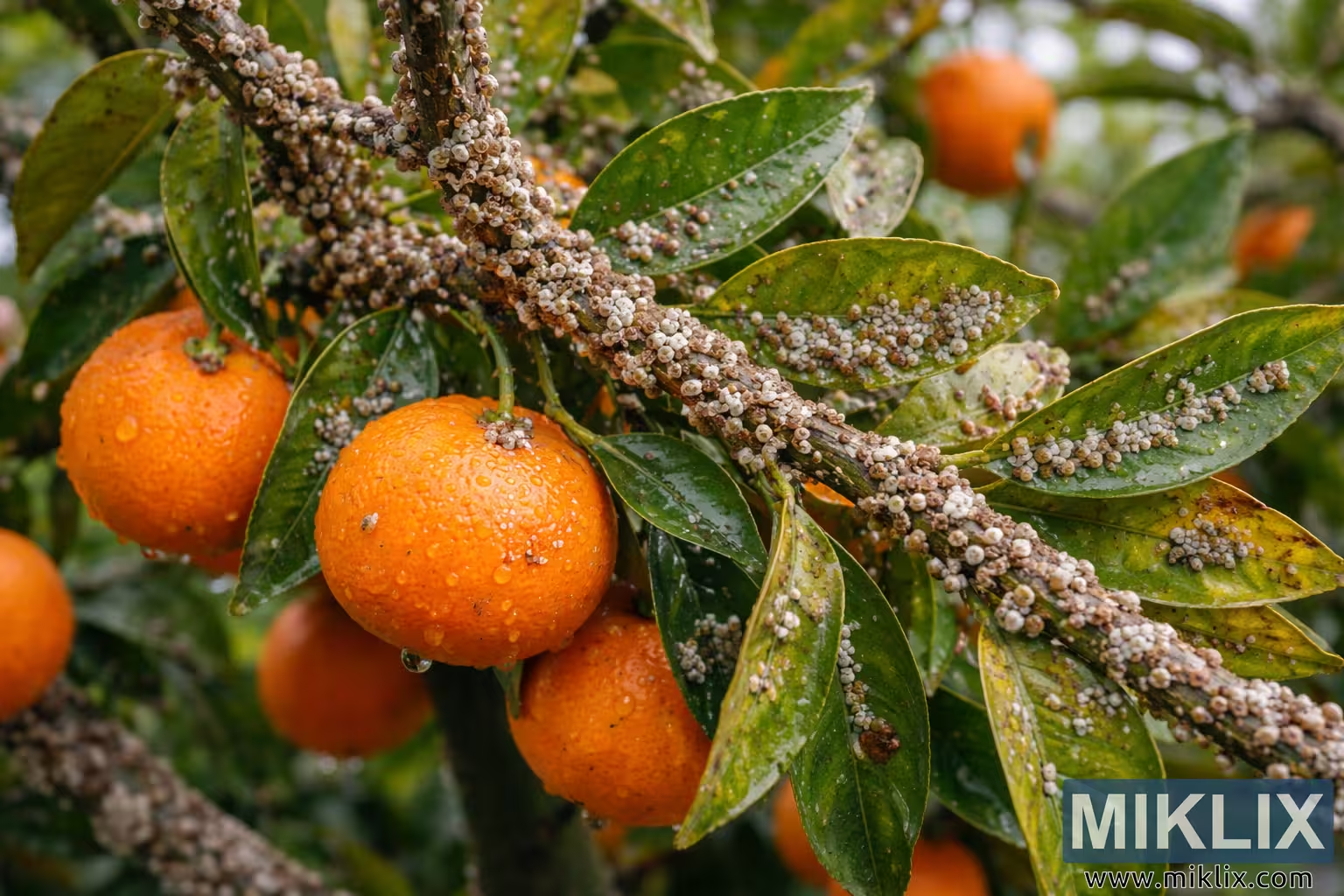
High-resolution close-up photograph of a tangerine tree branch heavily infested with scale insects, showing clusters of pests on bark and leaves beside ripe citrus fruits.
Tangerine Tree Infested with Scale Insects
Tilgængelige versioner af dette billede
De billedfiler, der kan downloades nedenfor, er mindre komprimerede og har højere opløsning - og dermed højere kvalitet - end de billeder, der er indlejret i artikler og sider på dette websted, som er mere optimerede med hensyn til filstørrelse for at reducere båndbreddeforbruget.
Almindelig størrelse (1,536 x 1,024)
Stor størrelse (3,072 x 2,048)
Meget stor størrelse (4,608 x 3,072)
Ekstra stor størrelse (6,144 x 4,096)
Komisk stor størrelse (1,048,576 x 699,051)
- Uploader stadig... ;-)
Billedbeskrivelse
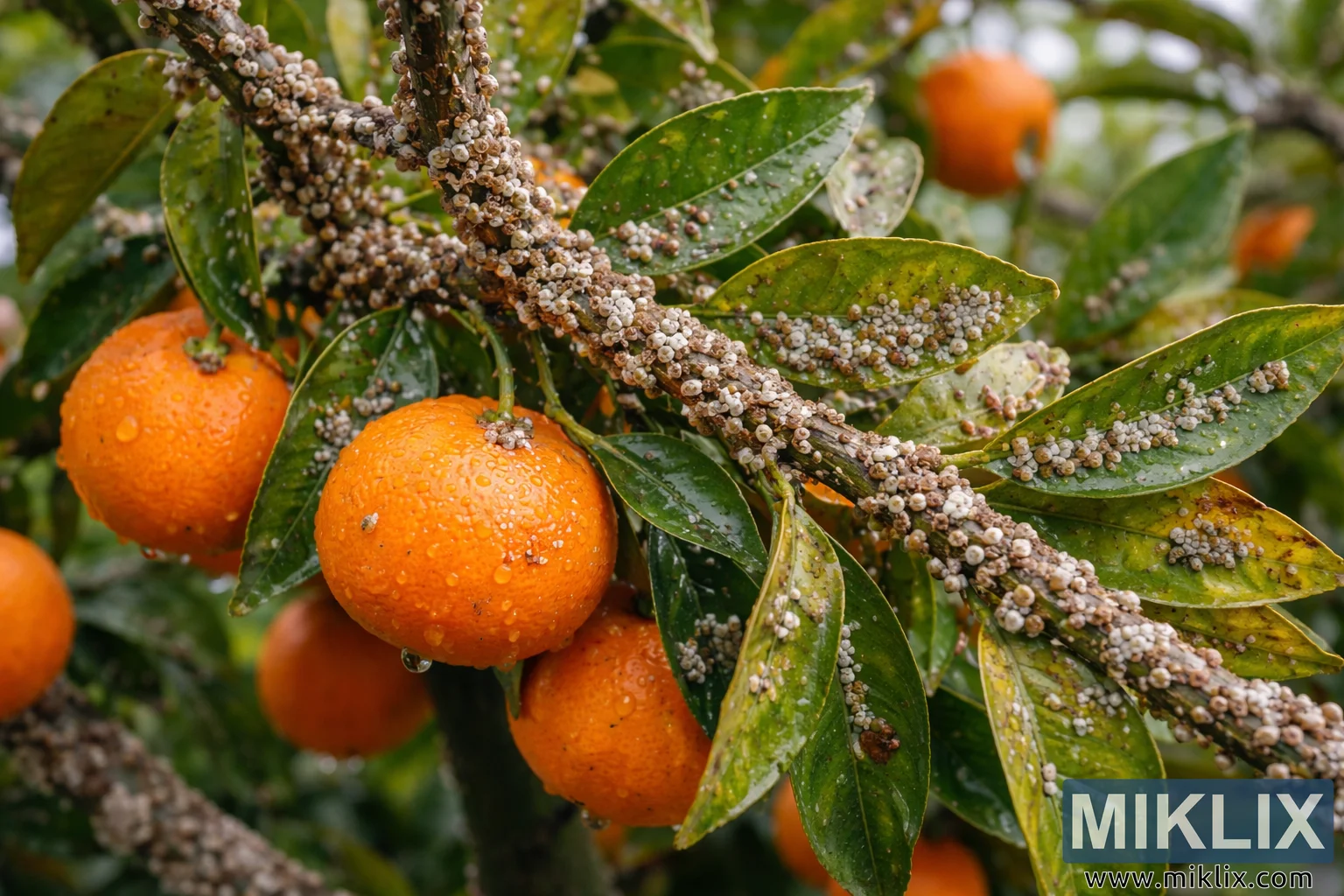
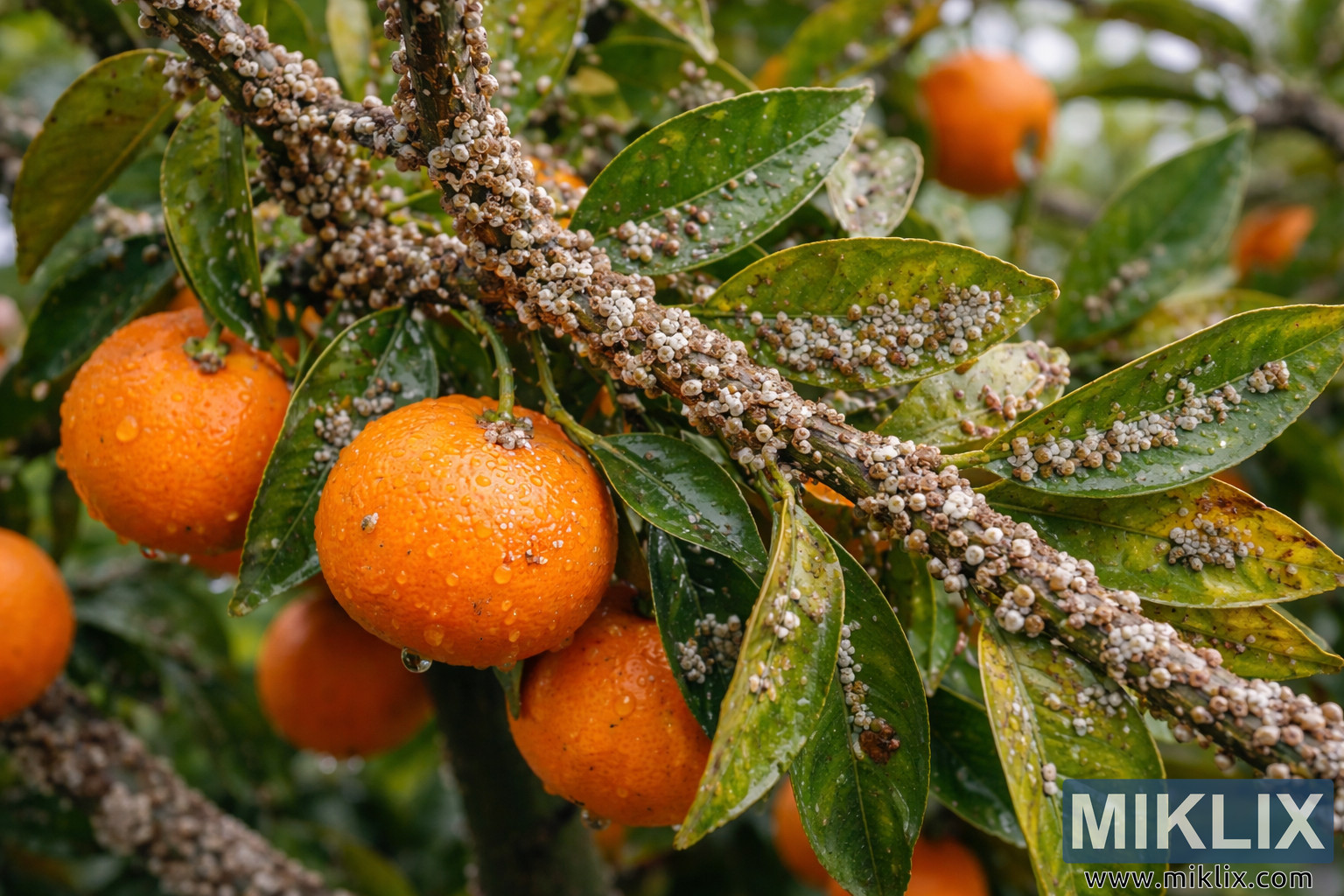
This high-resolution, landscape-oriented photograph presents a close-up view of a tangerine tree branch heavily infested with scale insects. The composition centers on a thick woody branch extending diagonally across the frame, its surface densely covered with clusters of small, dome-shaped insects. These scale insects appear as tiny bumps in varying shades of off-white, beige, and brown, forming dense colonies that cling tightly to the bark. Their waxy protective shells give them a slightly chalky or crusted appearance, emphasizing the severity of the infestation.
Surrounding the branch are glossy green leaves typical of citrus trees. Many of the leaves also host scattered groups of scale insects along their veins and undersides, indicating how the infestation has spread from the branch to the foliage. Some leaves show subtle discoloration, including faint yellowing and irregular speckling, suggesting the stress caused by the insects feeding on the plant's sap. A few areas of the leaves and branch display a slightly sticky sheen, consistent with honeydew residue commonly produced by scale insects.
Contrasting sharply with the infestation are several vibrant tangerine fruits hanging from the branch. The fruits are round and richly colored in bright shades of orange, their textured rinds dotted with tiny pores. Fresh water droplets cling to the fruit surfaces, reflecting light and adding a sense of freshness and natural outdoor conditions. Despite the presence of healthy-looking fruit, the infestation on the surrounding plant structures highlights the underlying threat to the tree’s overall vitality.
The depth of field in the image is relatively shallow, keeping the main branch, insects, leaves, and nearby fruit sharply in focus while softly blurring the background foliage. This creates a natural bokeh effect that draws attention to the detailed textures of the scale insects and the citrus peel. The lighting appears natural and diffused, typical of daylight conditions, illuminating the glossy leaves and emphasizing the contrast between the smooth fruit surfaces and the rough, insect-covered bark.
Overall, the photograph visually documents a significant scale insect infestation on a citrus tree, juxtaposing the beauty of ripe tangerines with the damaging presence of plant pests. The image highlights both the biological detail of the insects and the horticultural impact on the host plant.
Billedet er relateret til: Growing Tangerines: The Complete Guide to Sweet Success in Your Home Garden