
Billede: Overcrowded vs Properly Spaced Radish Plants Comparison
Udgivet:
Sidst opdateret: 31. marts 2026 kl. 20.43.43 UTC
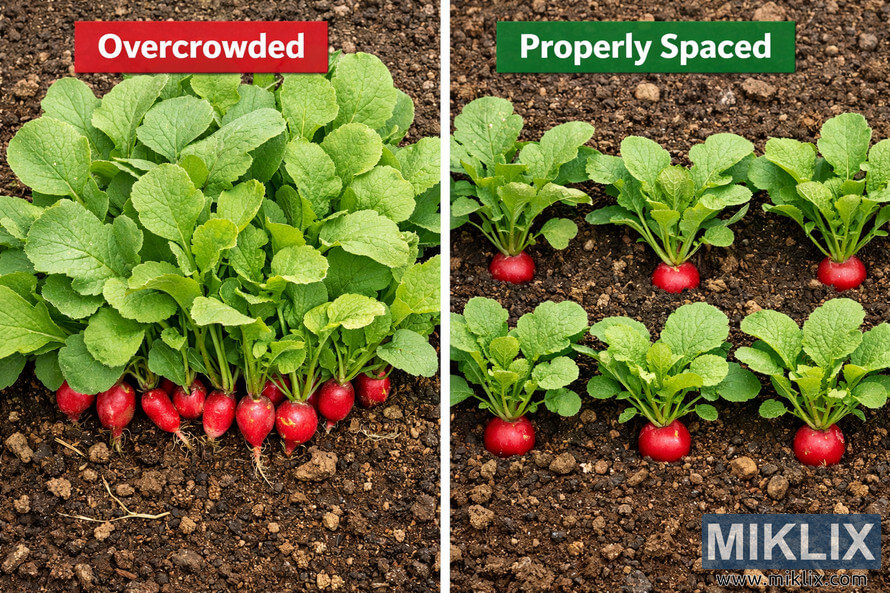
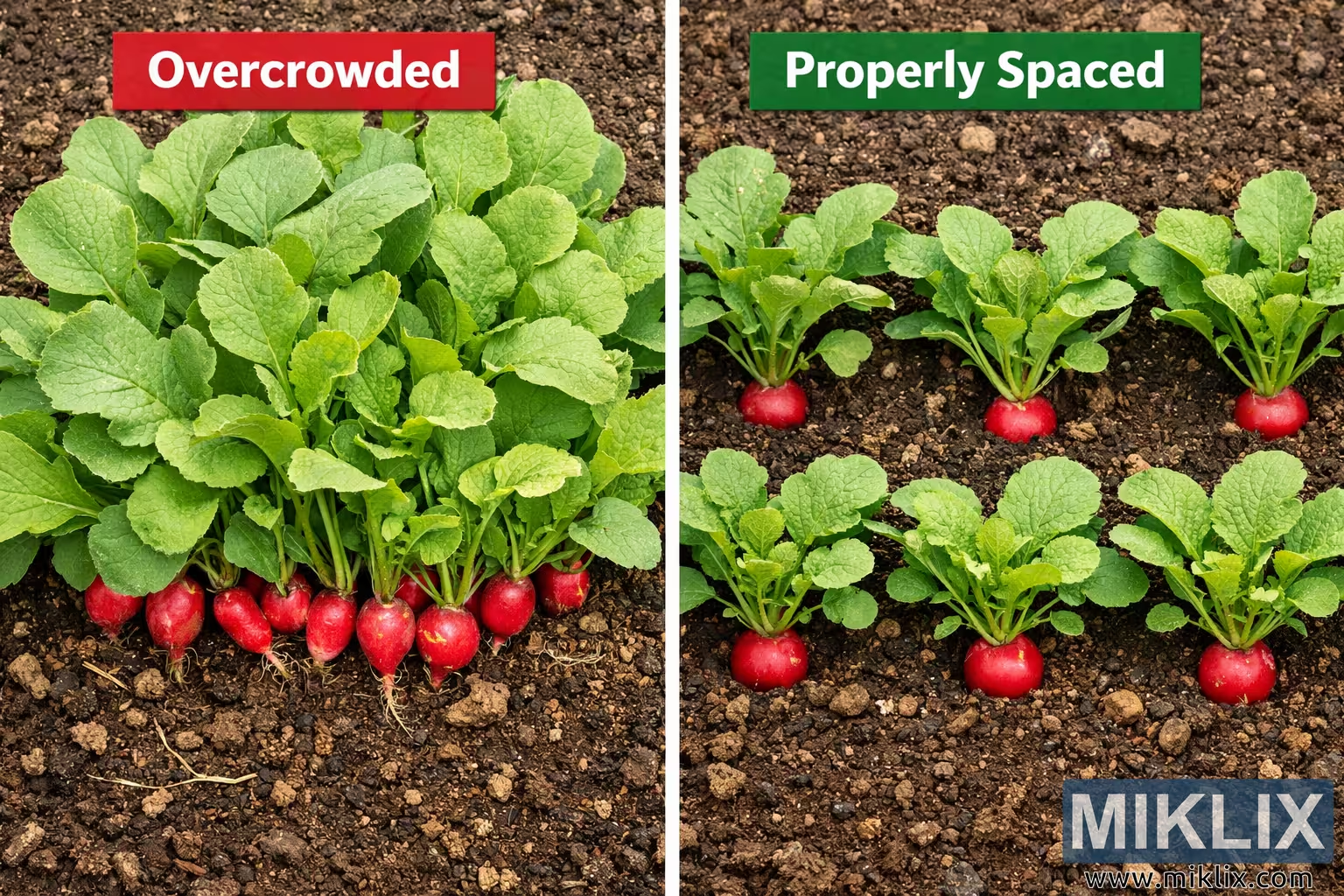
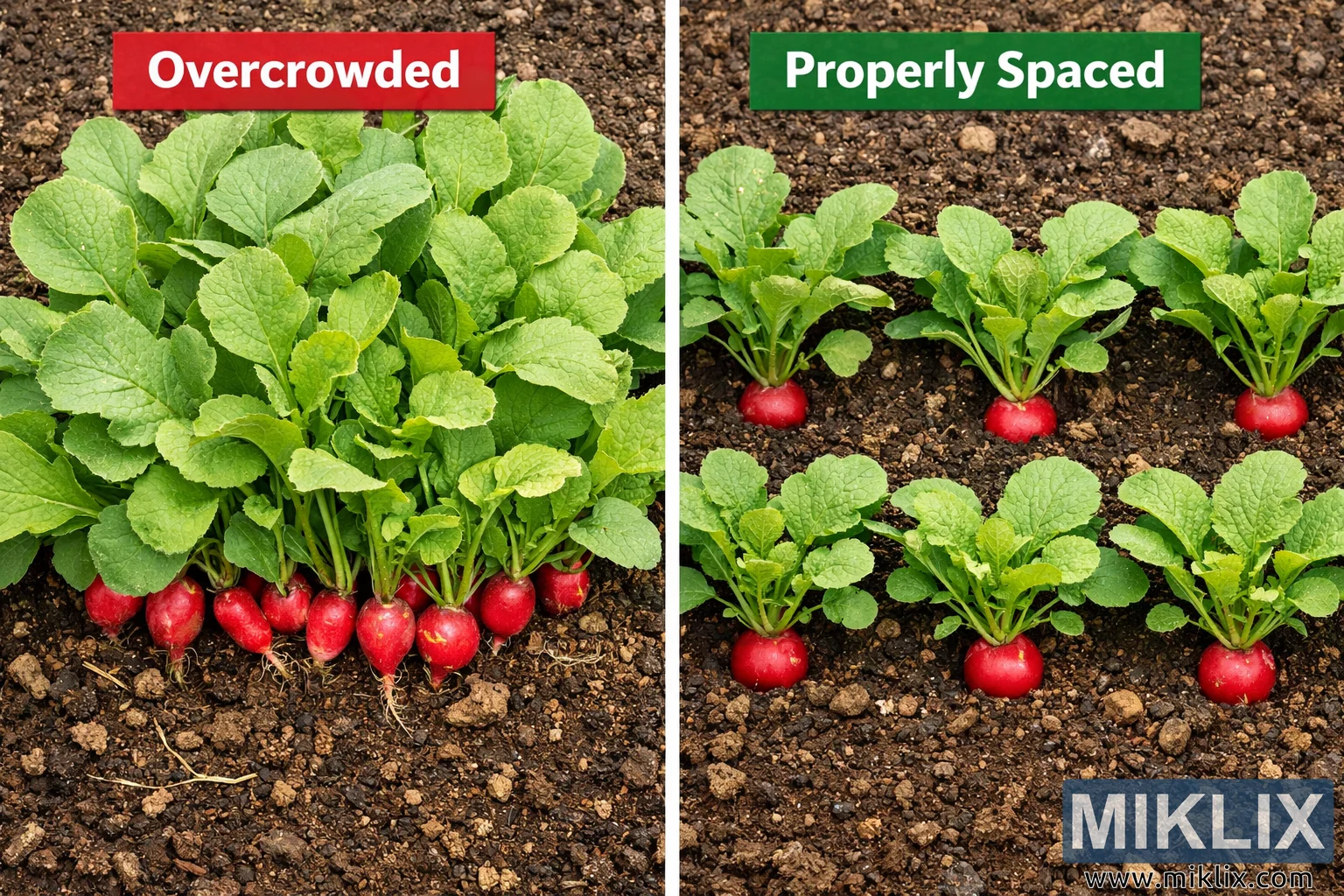
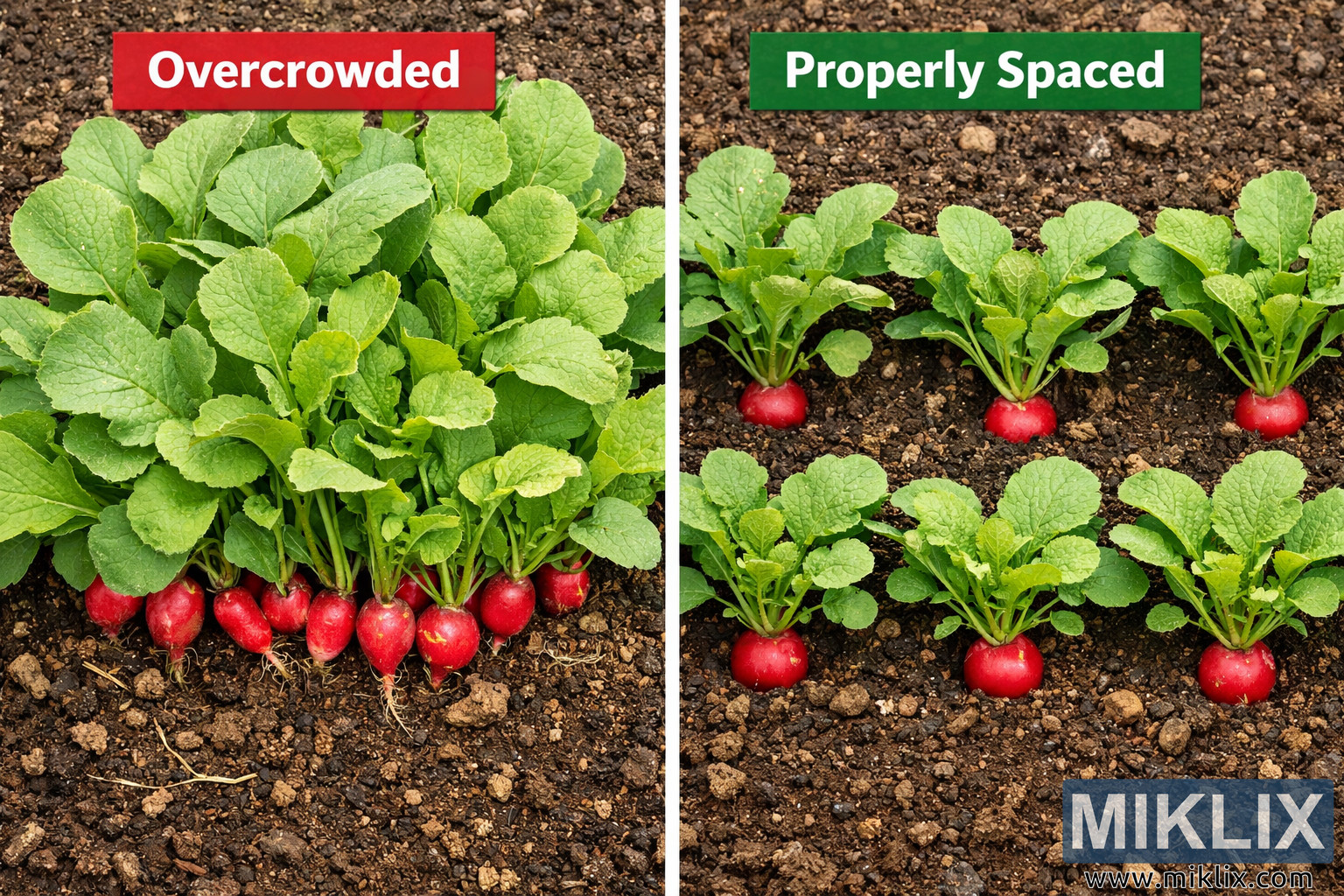
A visual comparison showing the difference between overcrowded radish plants and properly spaced radishes, highlighting improved growth, leaf structure, and root development when plants are spaced correctly.
Overcrowded vs Properly Spaced Radish Plants Comparison
Tilgængelige versioner af dette billede
De billedfiler, der kan downloades nedenfor, er mindre komprimerede og har højere opløsning - og dermed højere kvalitet - end de billeder, der er indlejret i artikler og sider på dette websted, som er mere optimerede med hensyn til filstørrelse for at reducere båndbreddeforbruget.
Almindelig størrelse (1,536 x 1,024)
Stor størrelse (3,072 x 2,048)
Meget stor størrelse (4,608 x 3,072)
Ekstra stor størrelse (6,144 x 4,096)
Komisk stor størrelse (1,048,576 x 699,051)
- Uploader stadig... ;-)
Billedbeskrivelse
The image presents a side-by-side visual comparison illustrating the effects of plant spacing on radish growth. The photograph is divided vertically into two equal sections, each showing radish plants growing in dark, loose garden soil. The purpose of the image is to clearly demonstrate the difference between overcrowded radish plants and properly spaced radishes, making it useful as an educational gardening reference.
On the left side of the image, a large cluster of radish plants is labeled "Overcrowded" with bold white text on a red banner near the top. The radish plants are tightly packed together, with very little space between them. Their green leaves overlap heavily, forming a dense canopy that makes it difficult to distinguish individual plants. The foliage appears tangled and compressed due to the lack of space. Beneath the leaves, numerous small red radish bulbs are visible near the soil surface, but many of them are undersized and irregular. Because the plants compete for nutrients, water, and sunlight, their growth appears uneven and crowded. The soil around them looks disturbed by the cluster of roots competing in the same area.
On the right side of the image, a second group of radish plants is labeled "Properly Spaced" with bold white text on a green banner at the top. In contrast to the left side, these radish plants are arranged in neat rows with clear spacing between each plant. The green leaves spread outward naturally without overlapping excessively, allowing each plant to receive sufficient sunlight and airflow. The foliage appears healthier and more organized compared to the crowded side. At the base of each plant, bright red radish bulbs are clearly visible, larger and more uniformly shaped than those on the overcrowded side. The soil between the plants remains visible and undisturbed, emphasizing the intentional spacing and orderly planting pattern.
The overall composition highlights the dramatic visual difference between the two planting methods. The left side emphasizes congestion and competition among plants, while the right side demonstrates the benefits of proper spacing for healthy plant development. The contrasting labels and arrangement help viewers quickly understand the gardening principle being illustrated: that radishes grow larger and healthier when given adequate space to develop.
Billedet er relateret til: How to Grow Radishes: Your Complete Beginner's Guide to a Perfect Harvest