
Billede: Healthy vs Stressed Rosemary Plant Comparison
Udgivet:
Sidst opdateret: 8. april 2026 kl. 20.30.16 UTC
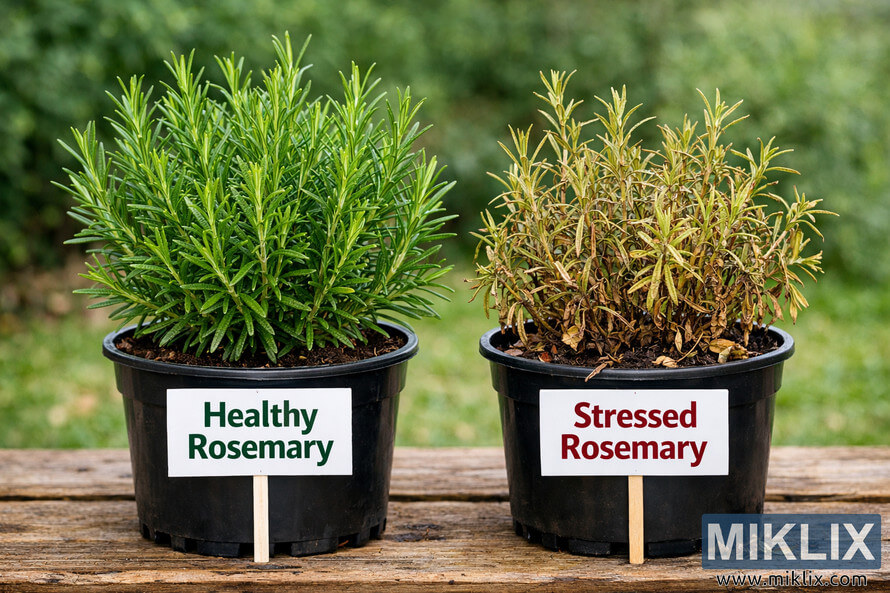
Visual comparison showing a healthy rosemary plant with lush green foliage beside a stressed rosemary plant with dry yellow leaves in labeled pots.
Healthy vs Stressed Rosemary Plant Comparison
Tilgængelige versioner af dette billede
De billedfiler, der kan downloades nedenfor, er mindre komprimerede og har højere opløsning - og dermed højere kvalitet - end de billeder, der er indlejret i artikler og sider på dette websted, som er mere optimerede med hensyn til filstørrelse for at reducere båndbreddeforbruget.
Almindelig størrelse (1,536 x 1,024)
Stor størrelse (3,072 x 2,048)
Meget stor størrelse (4,608 x 3,072)
Ekstra stor størrelse (6,144 x 4,096)
Komisk stor størrelse (1,048,576 x 699,051)
- Uploader stadig... ;-)
Billedbeskrivelse
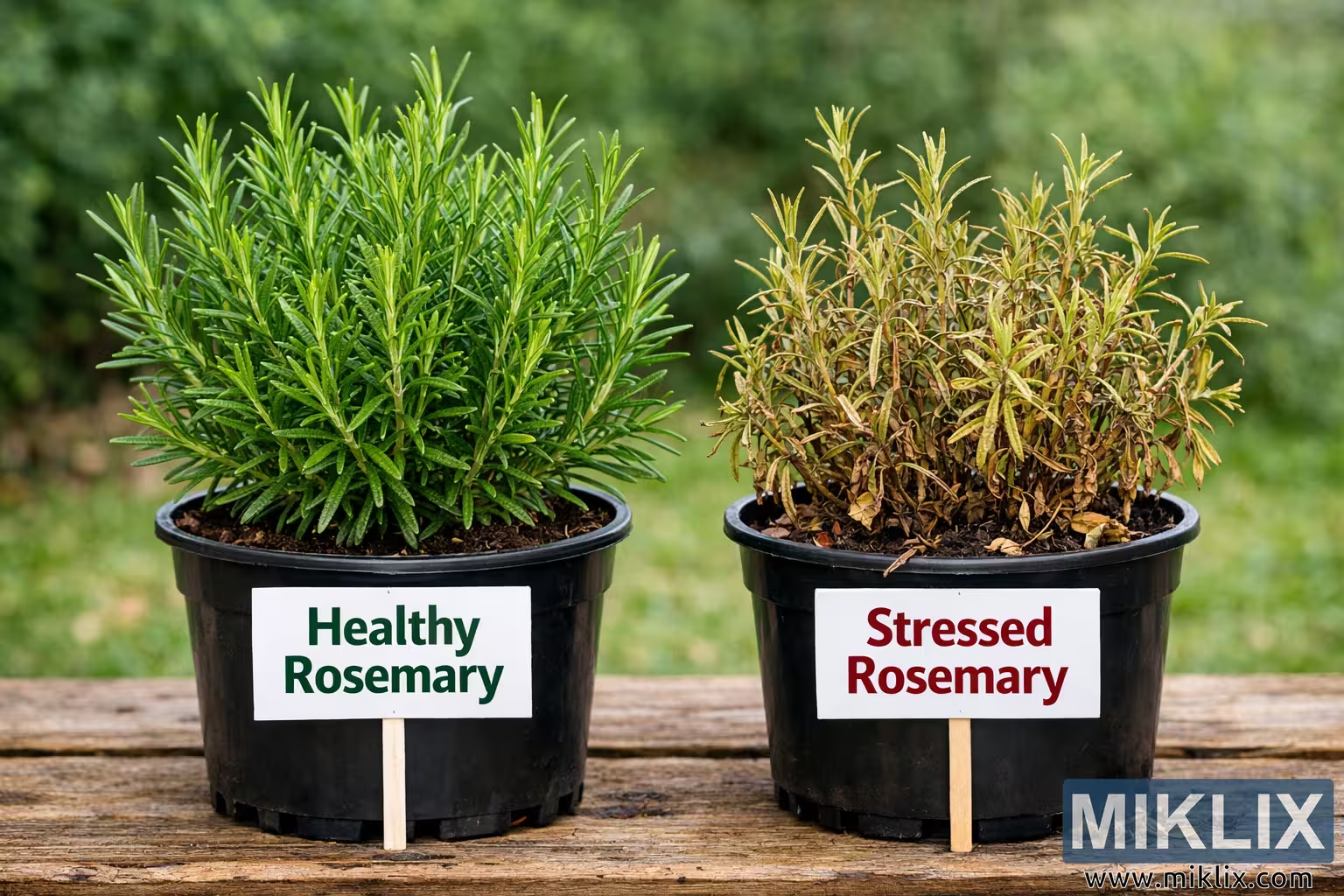
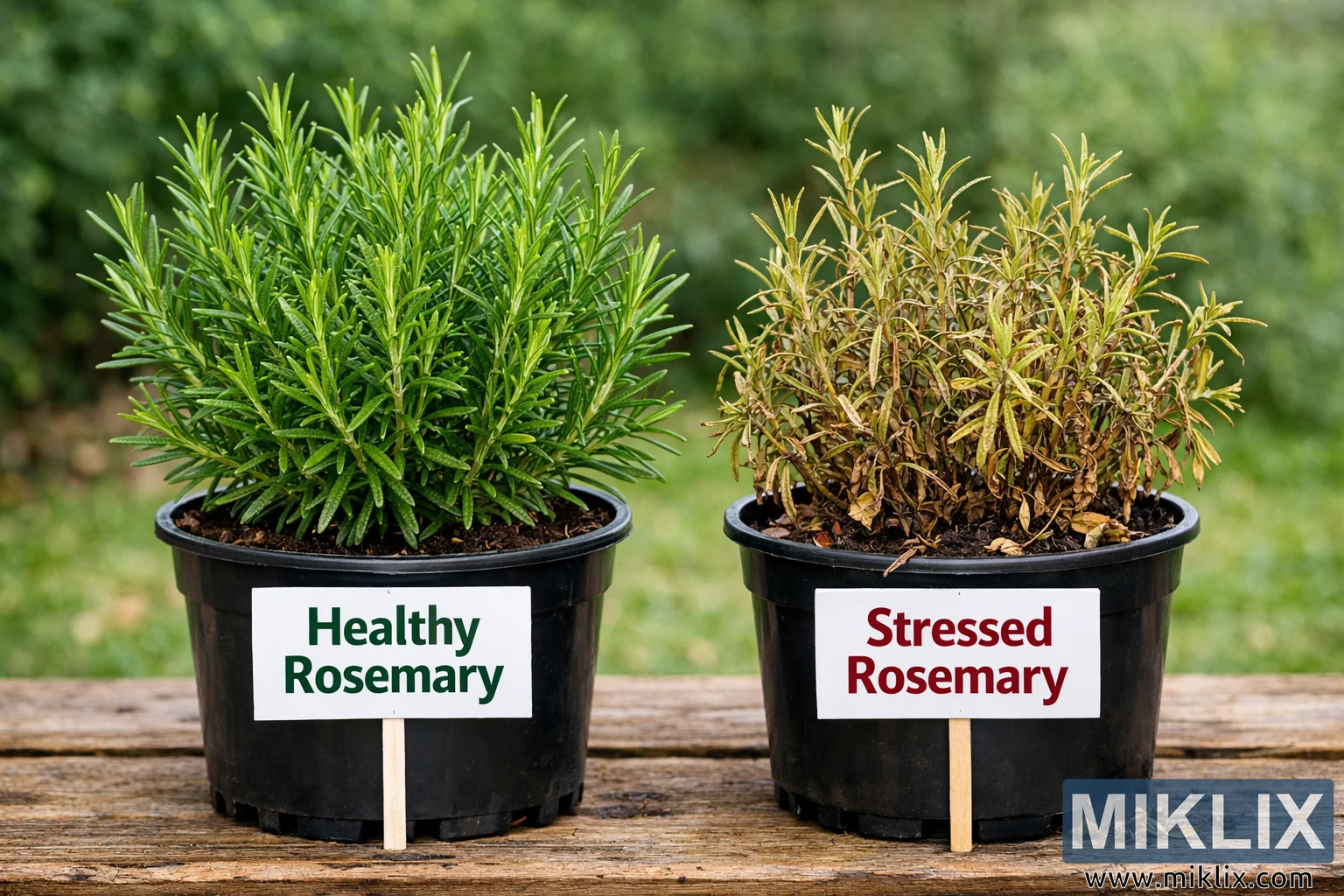
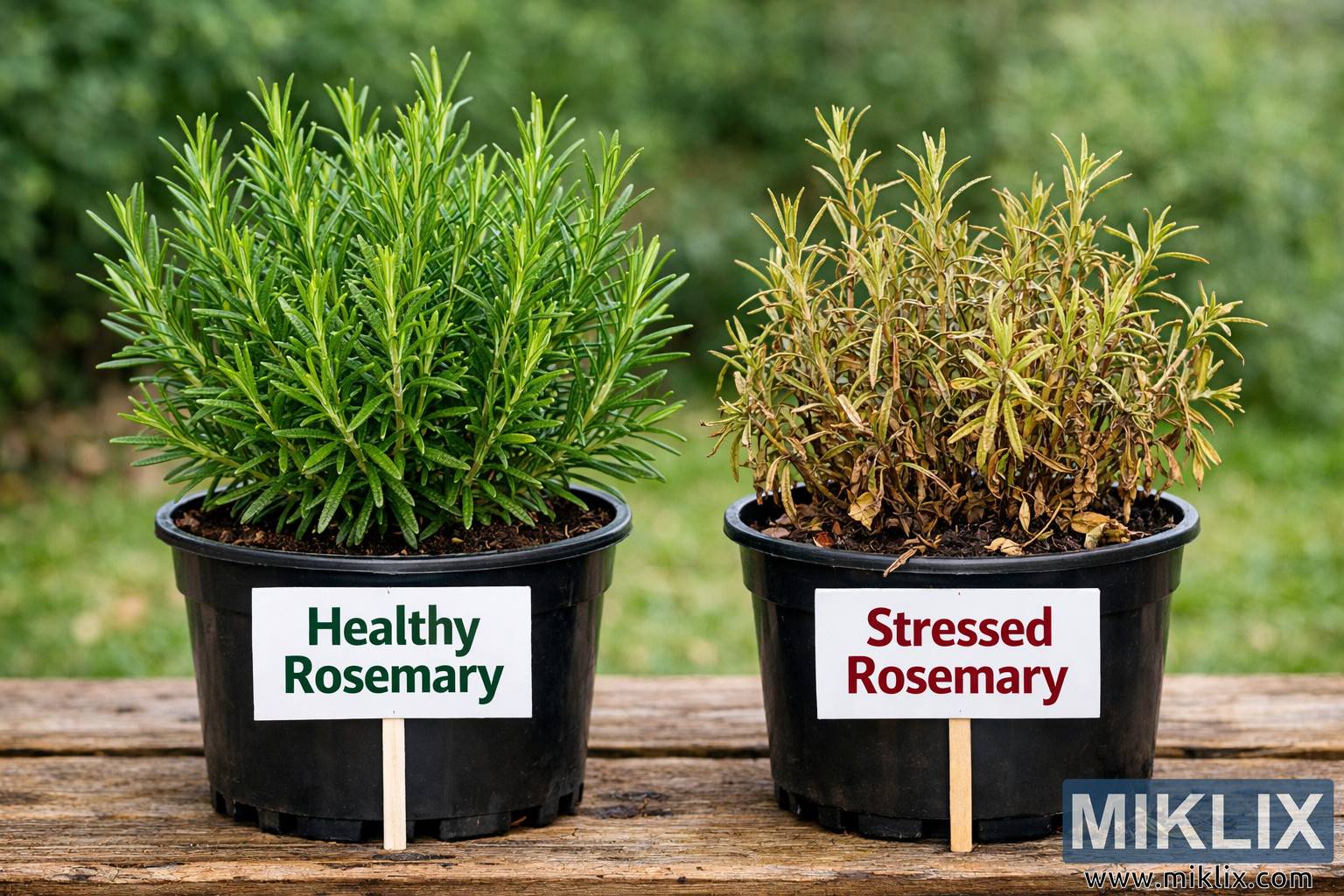
The image shows a side-by-side comparison of two rosemary plants placed outdoors on a rustic, weathered wooden surface. The photograph is composed in landscape orientation and focuses on illustrating the visual differences between a healthy rosemary plant and one experiencing stress. Both plants are positioned in identical black plastic nursery pots and sit next to each other with a small gap between them, allowing the viewer to clearly compare their condition.
On the left side of the image is the healthy rosemary plant. It appears dense, full, and vibrant, with numerous upright stems covered in narrow, needle-like leaves typical of rosemary. The foliage is a rich, deep green color, suggesting strong plant health and adequate growing conditions. The stems are firm and evenly distributed, giving the plant a rounded, bushy appearance. The leaves are glossy and well-hydrated, pointing outward and upward. The soil surface in the pot looks dark and slightly moist, further reinforcing the impression that the plant is receiving proper care. Attached to the front of the pot is a small white label mounted on a wooden stick. The label reads “Healthy Rosemary” in green lettering, clearly identifying the plant’s condition.
On the right side of the image is a rosemary plant that is visibly stressed. Although planted in the same type of black pot and positioned at the same height as the healthy plant, its appearance contrasts sharply. The foliage is sparse and uneven, with many leaves turning yellow, pale brown, or dry. Some stems appear brittle or thin, and several leaves curl inward or droop downward, suggesting dehydration or environmental stress. The overall structure of the plant looks less compact and more irregular compared to the healthy plant. The soil in the pot appears lighter and drier, with small bits of fallen plant material visible near the base. A similar white label on a wooden stick is attached to this pot, reading “Stressed Rosemary” in red lettering, highlighting the plant’s weakened condition.
The background of the image is softly blurred, showing green vegetation that suggests a garden or natural outdoor setting. This shallow depth of field keeps attention on the two rosemary plants while providing a natural context. The lighting is even and natural, likely daylight, illuminating both plants clearly and enhancing the contrast between the vibrant green foliage of the healthy plant and the dull, yellowed leaves of the stressed plant. The overall composition emphasizes educational comparison, making it easy for viewers to recognize the visual indicators of plant health versus stress.
Billedet er relateret til: How to Grow Rosemary: Your Complete Growing Guide