
Billede: Soothing Herbal Licorice Lozenges Still Life
Udgivet:
Sidst opdateret: 28. august 2026 kl. 20.35.21 UTC
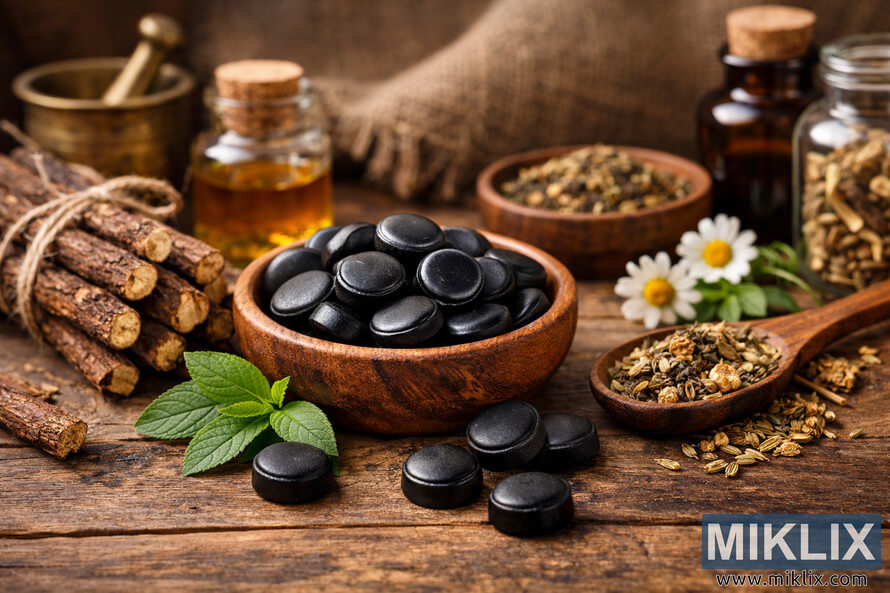
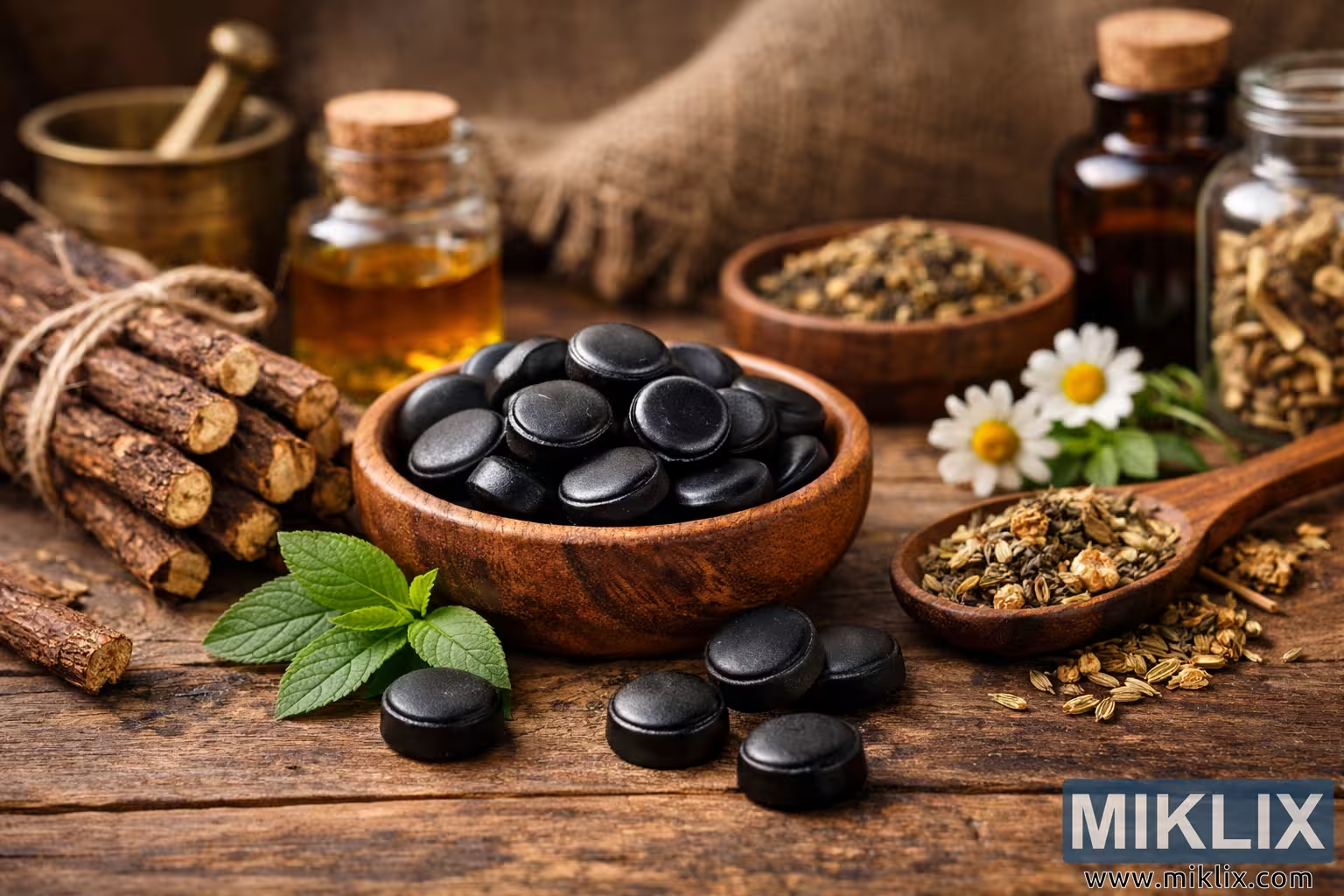
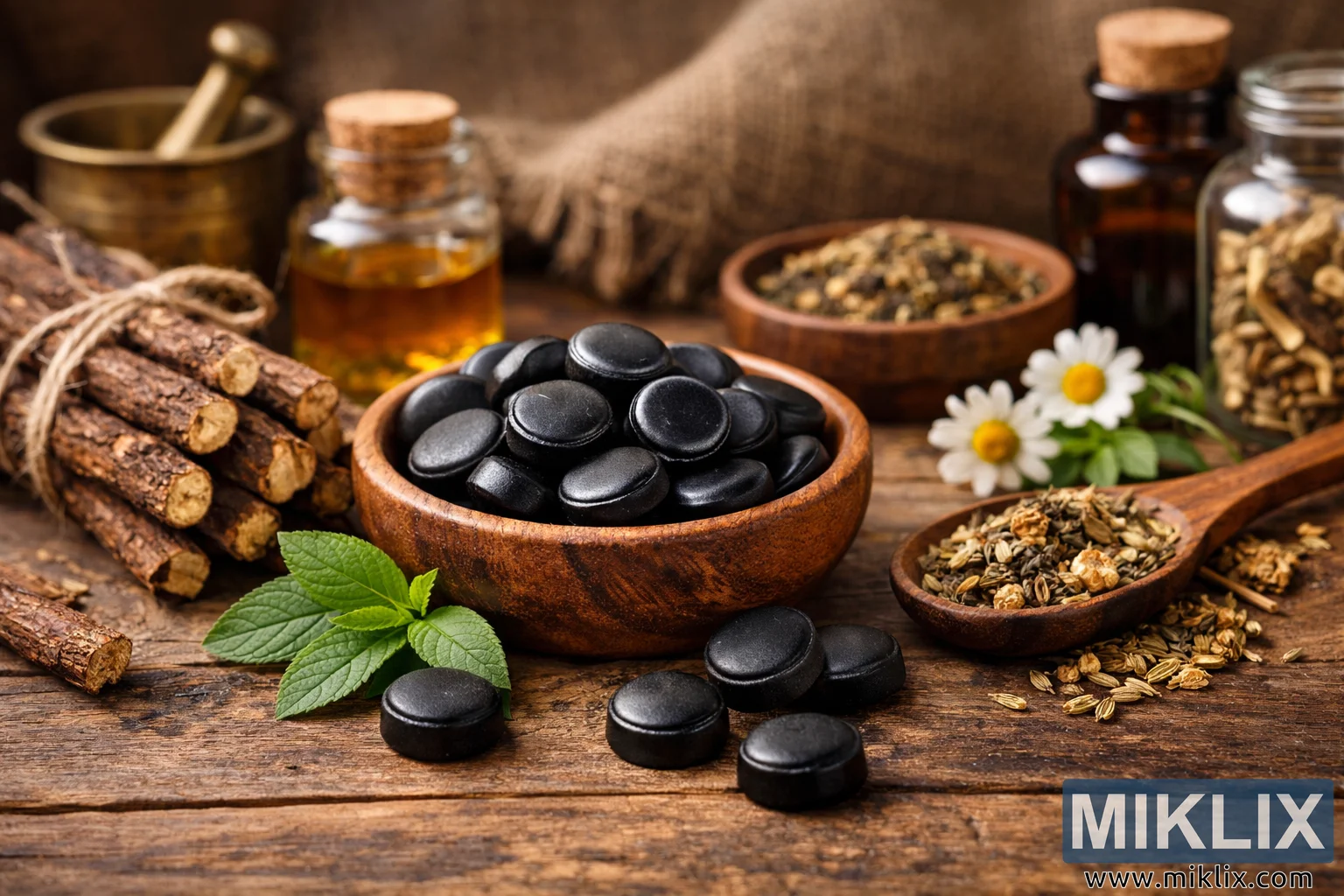
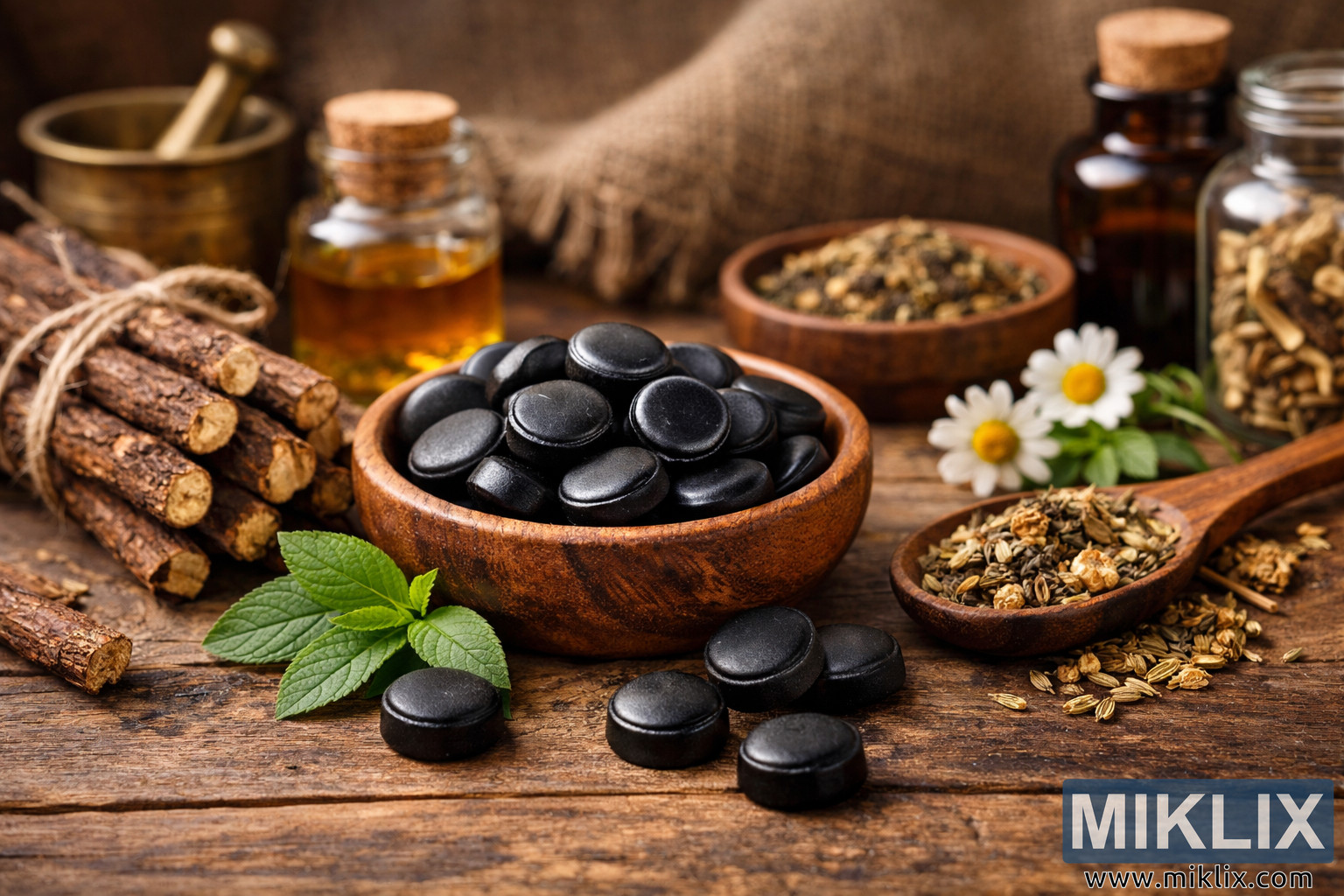
A warm, rustic still life of herbal licorice throat lozenges and botanical preparations. The image features a wooden bowl filled with glossy black lozenges, dried licorice roots, fresh green leaves, chamomile flowers, fennel seeds, honey, glass bottles of herbal extracts, and traditional tools like a brass mortar and pestle, all arranged on a weathered wooden surface with soft, inviting lighting.
Soothing Herbal Licorice Lozenges Still Life
Tilgængelige versioner af dette billede
De billedfiler, der kan downloades nedenfor, er mindre komprimerede og har højere opløsning - og dermed højere kvalitet - end de billeder, der er indlejret i artikler og sider på dette websted, som er mere optimerede med hensyn til filstørrelse for at reducere båndbreddeforbruget.
Almindelig størrelse (1,536 x 1,024)
Stor størrelse (3,072 x 2,048)
Meget stor størrelse (4,608 x 3,072)
Ekstra stor størrelse (6,144 x 4,096)
Komisk stor størrelse (1,048,576 x 699,051)
- Uploader stadig... ;-)
Billedbeskrivelse
A carefully composed still life photograph presents a rich, inviting scene centered around herbal licorice throat lozenges and traditional botanical preparations. The image is set on a rustic wooden surface with a visibly weathered grain, giving the composition a warm, natural foundation that evokes the feeling of an old apothecary table or a countryside herbalist’s workbench.
At the heart of the scene, a small round wooden bowl sits slightly off-center, filled to the brim with glossy black licorice lozenges. Each lozenge is round with a gently domed surface and a matte sheen that catches the soft, warm light. The lozenges appear smooth yet substantial, suggesting a soothing texture meant for calming the throat. A few lozenges have been deliberately scattered outside the bowl, resting on the wooden surface in the foreground. This subtle arrangement adds a sense of casual realism, as if someone has just reached into the bowl and left a few pieces behind.
Beside the bowl, fresh green leaves—suggestive of licorice or complementary herbs—are placed with care. Their vibrant color contrasts beautifully with the dark lozenges and the muted tones of the wood. The leaves have a delicate, slightly veined texture, and their presence reinforces the natural, plant-based origin of the preparation. They hint at the idea that these lozenges are part of a broader herbal remedy tradition, rooted in the use of whole plants and carefully selected botanicals.
To the left of the central bowl, several dried licorice root sticks are bundled together with a simple piece of twine. The sticks have rough, textured bark, and their cut ends reveal a pale yellowish core, emphasizing their authenticity as raw plant material. The bundle looks like it has been gathered and prepared by hand, reinforcing the artisanal, small-batch feel of the scene. The twine binding them adds a rustic charm, suggesting that these roots might be used for decoctions, infusions, or tinctures that complement the soothing lozenges.
Behind the bowl, a small glass jar filled with golden herbal honey catches the light. The honey’s warm amber hue glows softly, hinting at its sweetness and its traditional role as a natural throat soother. Partially obscured behind the jar is a brown glass bottle containing an amber-colored liquid, sealed with a cork stopper. This bottle suggests a concentrated herbal extract or tincture, perhaps made from licorice root or a blend of throat-supporting herbs. Its presence adds depth to the narrative of the image, implying that the lozenges are part of a larger system of herbal care.
Further to the left, in the background, a brass mortar and pestle can be seen. Though slightly out of focus, the mortar and pestle are instantly recognizable as classic tools of herbal preparation. Their metallic surface reflects the warm lighting, and their placement reinforces the idea that the ingredients in the scene have been thoughtfully ground, mixed, and prepared by hand. This detail contributes to the overall atmosphere of craftsmanship and tradition.
On the right side of the bowl, a small wooden spoon is filled with a colorful mixture of dried herbs. Among them, chamomile flowers with their white petals and yellow centers are clearly visible, along with fennel seeds and other small botanicals. The spoon’s contents are arranged in a way that showcases the variety of textures and colors, from the soft petals to the tiny seeds. This herbal blend suggests a soothing infusion or supportive remedy that might be taken alongside the licorice lozenges to ease throat discomfort and promote relaxation.
Behind the spoon, a small wooden dish holds an additional mixture of dried herbs, echoing the spoon’s contents and adding visual repetition that strengthens the theme of herbal abundance. A few sprigs of fresh chamomile flowers rest to the right of the bowl, their delicate white petals and bright yellow centers providing a gentle, calming accent. These fresh flowers bridge the gap between the dried herbs and the living plants, emphasizing the continuity of the herbal lifecycle from garden to preparation.
On the far right side of the composition, two glass containers add further detail and depth. One is a clear glass jar filled with dried licorice root pieces, their irregular shapes and pale tones visible through the transparent glass. The other is a dark amber glass bottle with a cork stopper, similar in style to the bottle behind the honey jar. These containers suggest storage and preservation, hinting that the herbal ingredients are carefully kept for ongoing use in remedies and preparations.
Scattered nearby are small clusters of fennel seeds, adding another layer of texture to the wooden surface. Their tiny, elongated shapes and muted color blend harmoniously with the overall palette while still contributing to the sense of detail and authenticity. The seeds appear casually sprinkled, as though they were recently measured out or inspected before being added to a blend.
In the background, a burlap cloth is draped loosely behind the arrangement. The cloth is softly blurred, but its coarse weave and natural color are still discernible. It frames the scene with a gentle, neutral backdrop that enhances the rustic, handcrafted atmosphere. The shallow depth of field keeps the focus on the central elements—the bowl of lozenges, the herbs, and the roots—while allowing the background to fade into a warm, unobtrusive blur.
The lighting in the image is warm and inviting, casting soft highlights on the glossy lozenges, the honey jar, and the glass containers, while creating gentle shadows that add depth and dimension. The overall color palette is earthy and harmonious, dominated by browns, ambers, greens, and soft yellows. The dark licorice lozenges stand out against this backdrop, drawing the viewer’s eye immediately to the central remedy. The composition feels balanced and intentional, with each element contributing to a cohesive story of natural throat care, herbal tradition, and comforting, plant-based preparation.
Taken together, the photograph conveys a sense of calm, care, and time-honored wisdom. It suggests that the licorice lozenges are more than just sweets—they are part of a holistic approach to soothing the throat, supported by roots, flowers, seeds, and carefully crafted herbal extracts. The scene invites the viewer to imagine the taste of the lozenges, the aroma of the herbs, and the gentle relief they might bring, all within a setting that honors nature and the art of herbal preparation.
Billedet er relateret til: Licorice Root: The Ancient Herb with Modern Health Benefits