
Billede: Red Chard Flourishing in a Rustic Garden
Udgivet:
Sidst opdateret: 12. september 2026 kl. 14.49.55 UTC
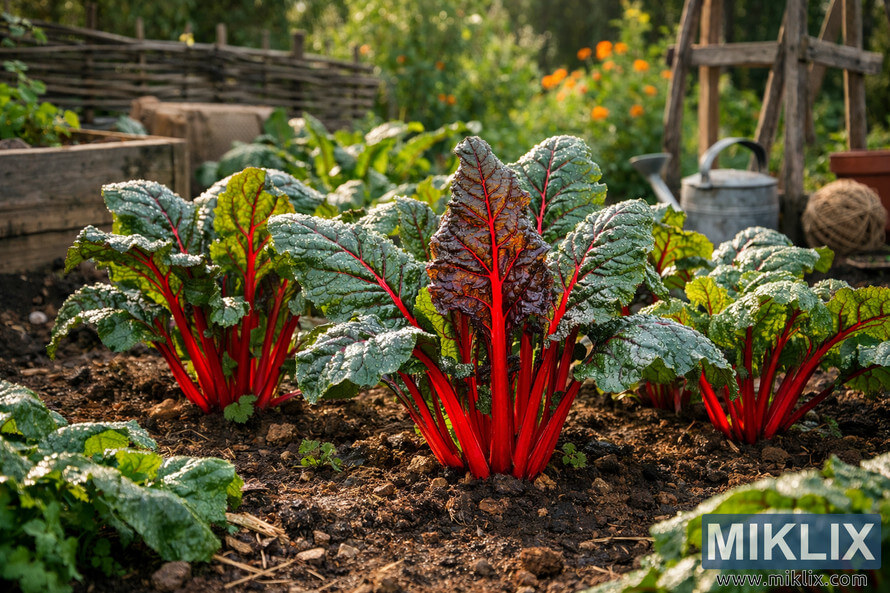
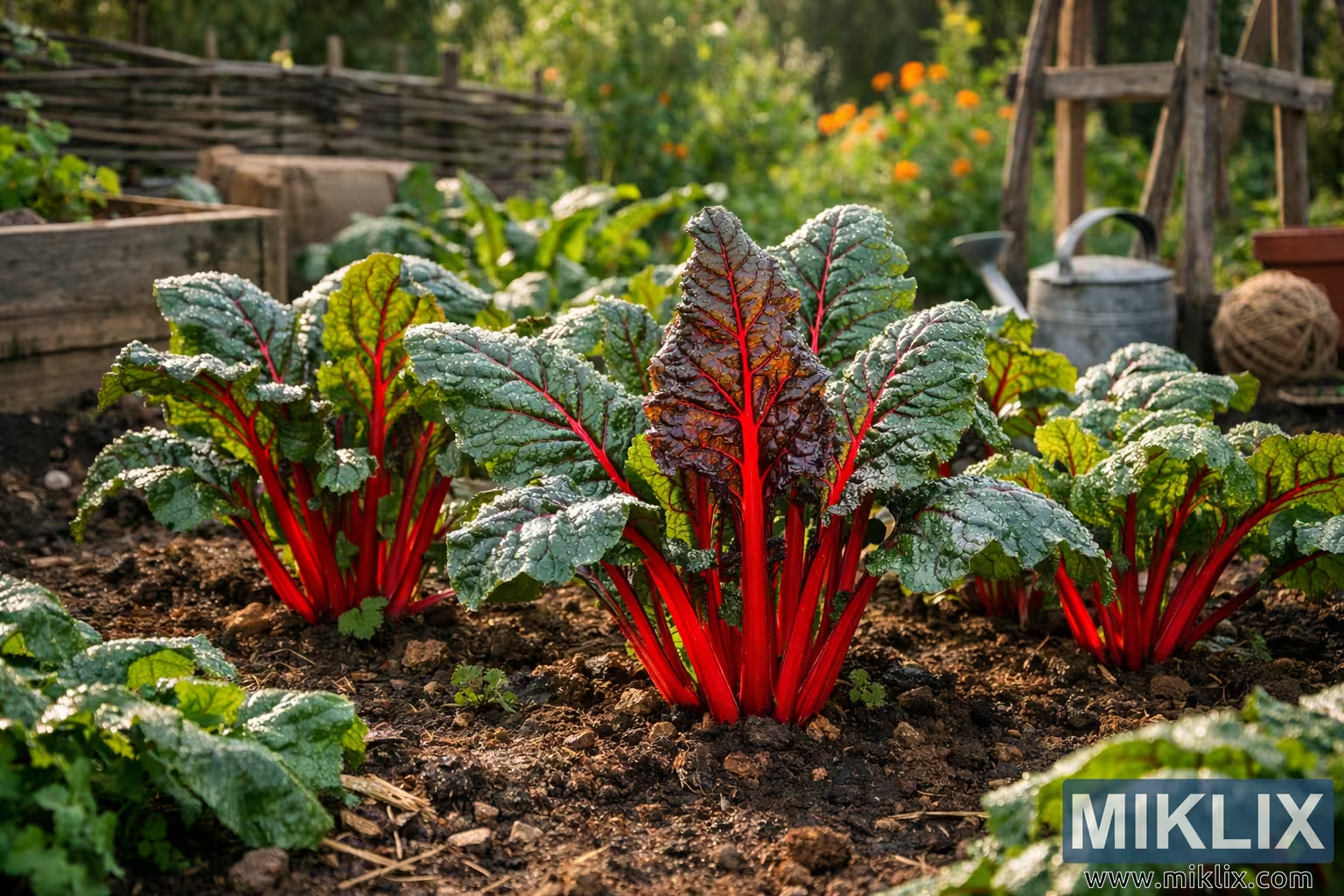
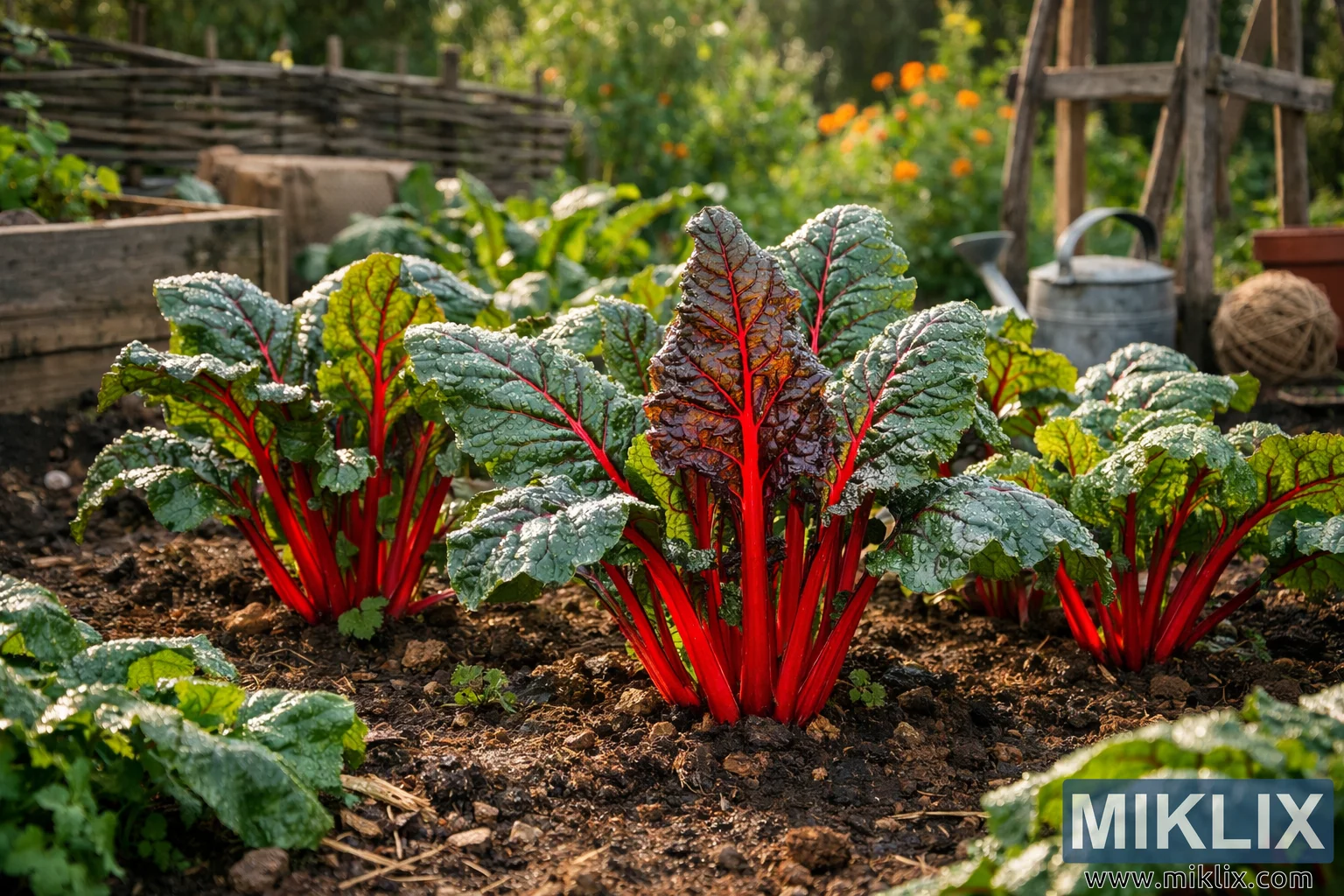
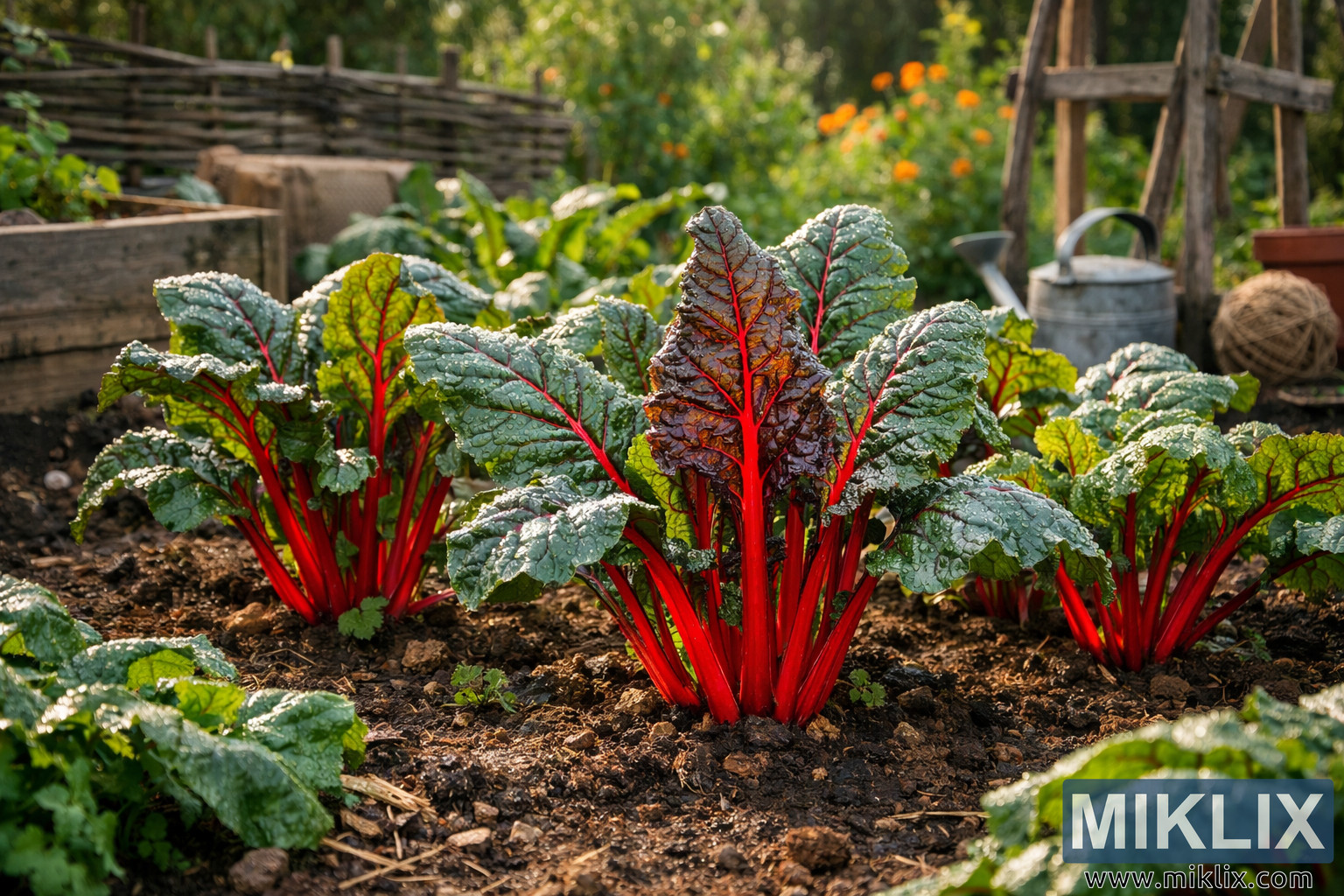
A detailed depiction of red chard (rhubarb chard) thriving in a rustic vegetable garden, showcasing vibrant red stalks, lush green leaves, and natural textures of soil, wood, and sunlight.
Red Chard Flourishing in a Rustic Garden
Tilgængelige versioner af dette billede
De billedfiler, der kan downloades nedenfor, er mindre komprimerede og har højere opløsning - og dermed højere kvalitet - end de billeder, der er indlejret i artikler og sider på dette websted, som er mere optimerede med hensyn til filstørrelse for at reducere båndbreddeforbruget.
Almindelig størrelse (1,536 x 1,024)
Stor størrelse (3,072 x 2,048)
Meget stor størrelse (4,608 x 3,072)
Ekstra stor størrelse (6,144 x 4,096)
Komisk stor størrelse (1,048,576 x 699,051)
- Uploader stadig... ;-)
Billedbeskrivelse
The image captures a serene and earthy scene of red chard, also known as rhubarb chard, growing vigorously in a rustic vegetable garden. The composition is horizontally oriented, emphasizing the breadth of the garden bed and the natural harmony between cultivated plants and handcrafted surroundings. In the foreground, several mature chard plants stand proudly, their thick, crimson stalks emerging from rich, dark soil that glistens faintly with morning dew. The leaves are large, crinkled, and deeply veined, displaying a lush green hue with subtle undertones of bronze and emerald. Each leaf catches the soft sunlight filtering through the garden, creating a delicate interplay of light and shadow across their textured surfaces.
The soil beneath the plants is a mixture of loam and organic matter, scattered with small pebbles, bits of straw, and traces of decaying leaves—evidence of a living, breathing ecosystem. The moist earth clings gently to the base of the stalks, highlighting the vitality of the plants. Dewdrops rest on the leaves, refracting light into tiny sparkles that add a sense of freshness and early morning tranquility.
To the left, a weathered wooden raised bed frames part of the garden. The wood is aged and textured, its grain visible and slightly warped from years of exposure to the elements. Behind it, a rustic woven willow fence stretches horizontally, its intertwined branches forming an organic barrier that blends seamlessly with the natural environment. The fence’s muted brown tones complement the vivid reds and greens of the chard, creating a balanced palette of earthy colors.
In the midground, the garden extends toward a soft blur of additional vegetation—more leafy greens, herbs, and a few orange blossoms that punctuate the scene with warm color. The orange flowers, possibly marigolds or calendulas, add a cheerful contrast and suggest companion planting, a traditional gardening practice that enhances biodiversity and soil health.
To the right, a weathered wooden trellis rises vertically, its peeling paint and rough texture adding character to the setting. Leaning against it is an old metal watering can, its curved handle and spout catching a glint of sunlight. Nearby, a coiled ball of twine and a terracotta pot rest casually on the ground, partially obscured by the chard leaves. These small details evoke the presence of a gardener—someone who tends the soil with care and patience, cultivating life through simple, time-honored tools.
The background fades gently into a soft bokeh of greenery, suggesting a larger garden beyond the frame. The blurred foliage and distant flowers create depth and atmosphere, drawing the viewer’s eye toward the horizon while keeping the focus on the chard plants in the foreground. The lighting is natural and warm, likely from the early morning sun, casting a golden glow that enhances the textures of the leaves, soil, and wood.
Overall, the image conveys a sense of peaceful productivity—a garden alive with color, texture, and quiet beauty. The red chard stands as a symbol of nourishment and resilience, thriving in its rustic environment. The interplay of organic materials—wood, soil, metal, and plant life—creates a harmonious composition that celebrates the timeless rhythm of growth and care. Every element, from the dew-speckled leaves to the aged garden tools, contributes to a narrative of sustainable living and the simple joy of cultivating one’s own food. The photograph’s high resolution allows each detail to shine, from the fine veins in the leaves to the subtle imperfections in the wood grain, making it not just a visual record but a sensory experience of the garden’s essence.
Billedet er relateret til: Swiss Chard: Why It Is One of the Healthiest Leafy Greens