
Billede: Digestive System Considerations When Consuming Watermelon
Udgivet:
Sidst opdateret: 16. august 2026 kl. 19.07.56 UTC
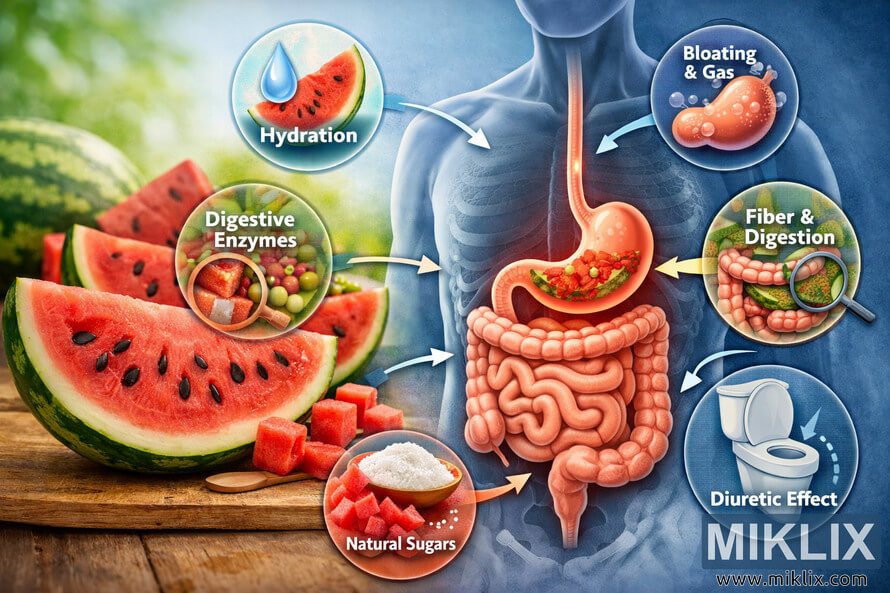
A detailed educational illustration explaining how watermelon interacts with the human digestive system, highlighting hydration, fiber, enzymes, and potential bloating effects.
Digestive System Considerations When Consuming Watermelon
Tilgængelige versioner af dette billede
De billedfiler, der kan downloades nedenfor, er mindre komprimerede og har højere opløsning - og dermed højere kvalitet - end de billeder, der er indlejret i artikler og sider på dette websted, som er mere optimerede med hensyn til filstørrelse for at reducere båndbreddeforbruget.
Almindelig størrelse (1,536 x 1,024)
Stor størrelse (3,072 x 2,048)
Meget stor størrelse (4,608 x 3,072)
Ekstra stor størrelse (6,144 x 4,096)
Komisk stor størrelse (1,048,576 x 699,051)
- Uploader stadig... ;-)
Billedbeskrivelse
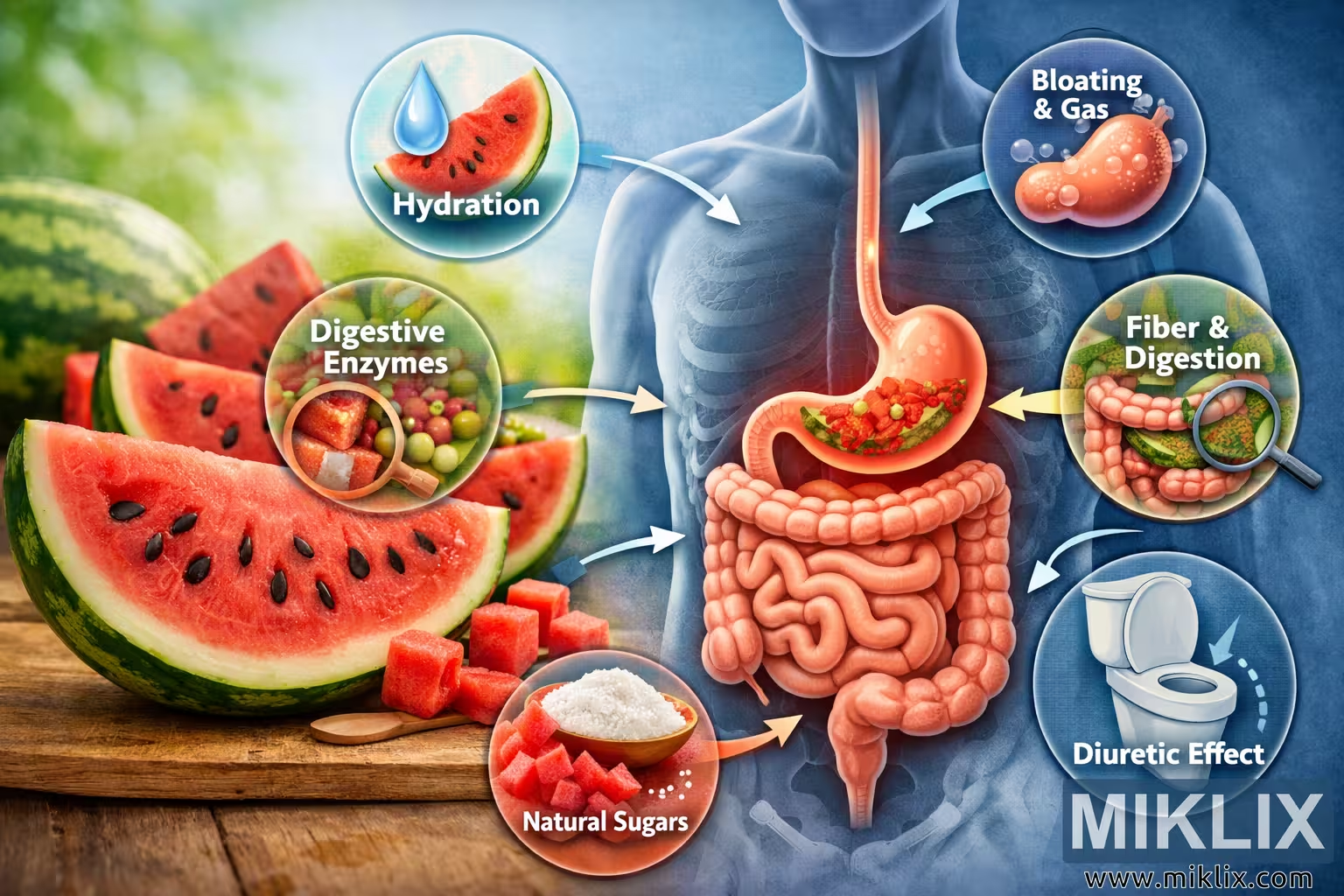
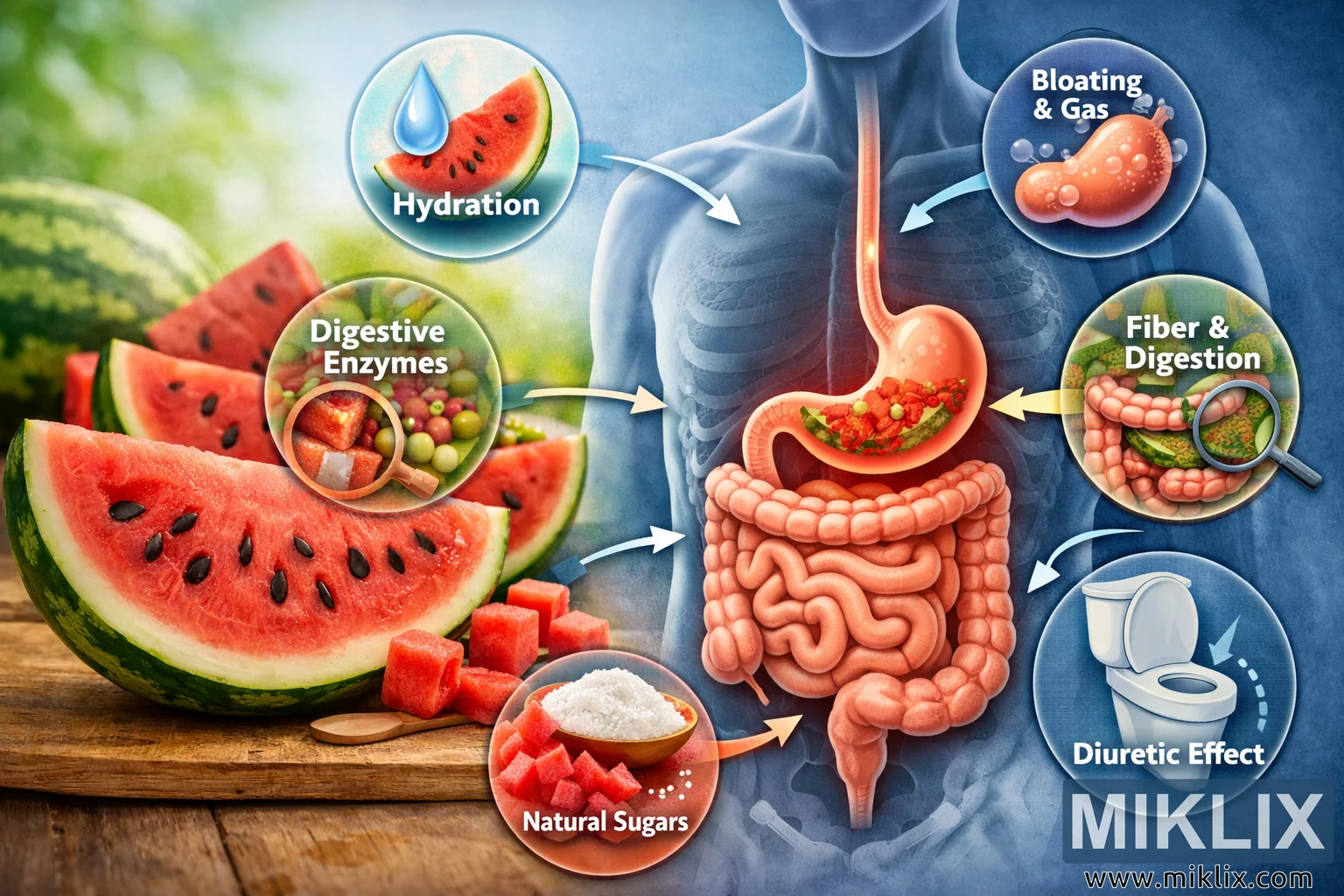
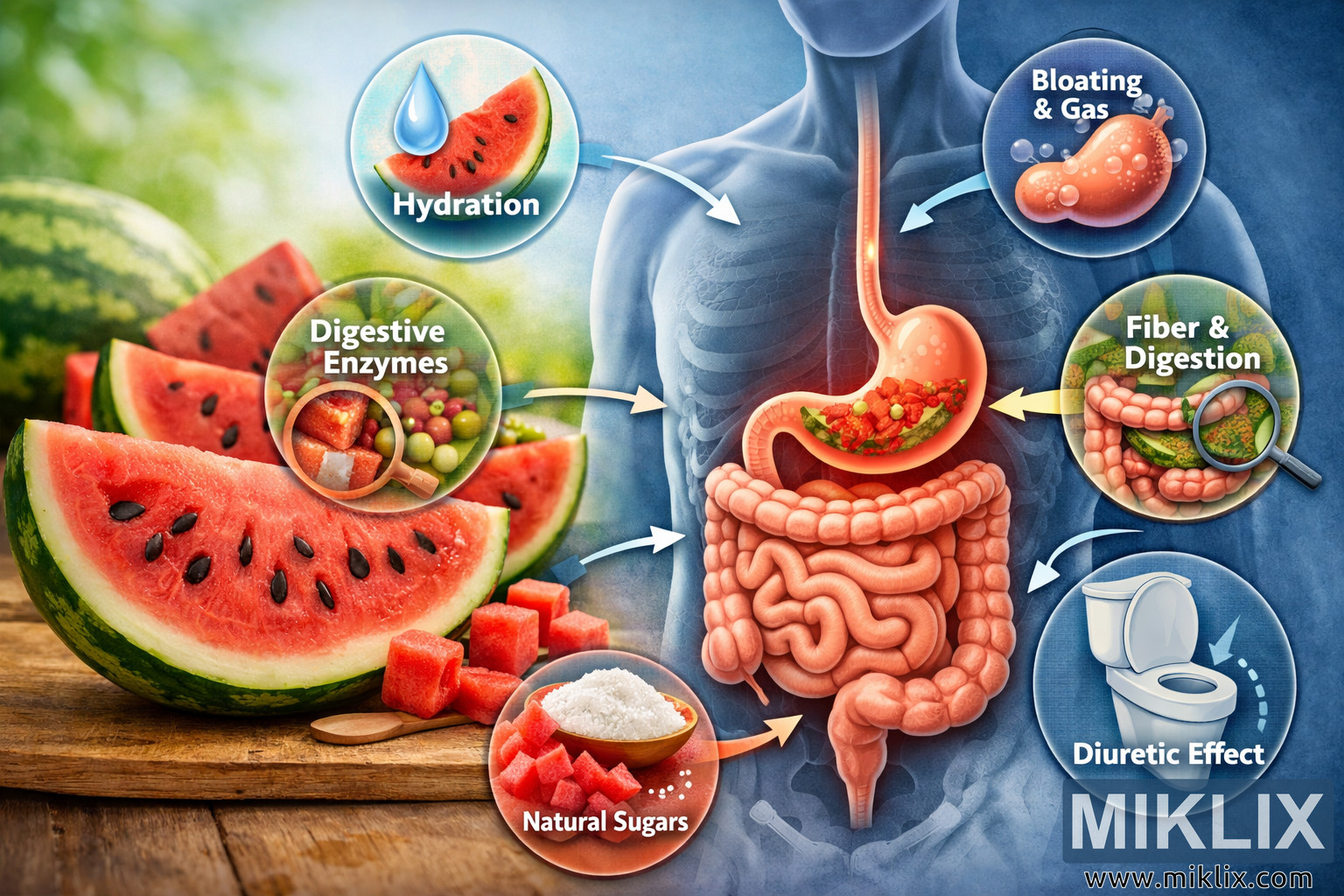
This image presents a comprehensive visual exploration of how watermelon interacts with the human digestive system, combining scientific clarity with artistic vibrancy. The composition is divided into two main sections: the left side depicts the natural and appetizing qualities of watermelon, while the right side visualizes the internal digestive processes that occur after consumption.
On the left, a large, juicy slice of watermelon dominates the foreground, its red flesh glistening with moisture and dotted with black seeds. The rind transitions from deep green to pale white, emphasizing the fruit’s freshness. Around the main slice, smaller cubes of watermelon are arranged neatly on a wooden surface, suggesting preparation for eating. Behind them, a whole watermelon and additional slices rest against a softly blurred backdrop of greenery, evoking a natural, summery setting. The lighting is warm and natural, highlighting the fruit’s hydration and vitality.
The right side of the image shifts to a more clinical, educational tone. A semi-transparent human torso is shown, revealing the digestive system in glowing detail. The esophagus leads down to the stomach, which contains partially digested watermelon pulp rendered in shades of red and pink. The small intestine extends below, winding through the abdomen, followed by the large intestine. Each organ is subtly highlighted to indicate its role in processing the fruit’s nutrients and water content.
Surrounding the torso are several circular insets connected by arrows, each representing a key physiological consideration. The top left inset, labeled “Hydration,” features a droplet of water beside a watermelon slice, symbolizing the fruit’s high water content and its role in maintaining fluid balance. The top right inset, “Bloating & Gas,” shows a stylized stomach with gas bubbles, illustrating how excessive consumption may lead to mild digestive discomfort for some individuals.
The bottom left inset, “Digestive Enzymes,” depicts a magnified view of the stomach with enzyme molecules interacting with watermelon particles, emphasizing how natural enzymes assist in breaking down sugars and fibers. The bottom right inset, “Fiber & Digestion,” focuses on the intestines, with a magnifying glass highlighting fibrous material moving through the digestive tract, representing improved bowel regularity and gut health.
Two additional insets appear near the bottom of the composition. On the left, “Natural Sugars” shows a wooden spoon filled with granulated sugar next to watermelon pieces, illustrating the fruit’s natural sweetness and its potential impact on blood sugar levels. On the right, “Diuretic Effect” features a toilet icon with a downward arrow and a stream of liquid, symbolizing watermelon’s mild diuretic properties due to its high water and potassium content.
The background transitions smoothly from the bright, natural tones of the left side to the cool, bluish hues of the right side, creating a visual metaphor for the journey from external consumption to internal digestion. The arrows connecting the insets to the digestive organs form a network of relationships, guiding the viewer’s eye through the physiological narrative.
Overall, the image balances aesthetic appeal with educational depth. It communicates how watermelon contributes to hydration, supports digestion through fiber and enzymes, and may occasionally cause bloating or increased urination. The composition encourages mindful consumption by illustrating both the benefits and minor considerations of eating watermelon. The result is a visually engaging and scientifically informative depiction that bridges nutrition, anatomy, and everyday dietary awareness.
Billedet er relateret til: Watermelon: The Hydrating Superfruit You Should Eat More Often