
Bild: Pale Ale Fermentation in a Rustic Homebrew Setting
Veröffentlicht:
Zuletzt aktualisiert: 10. Juli 2026 um 16:19:17 UTC
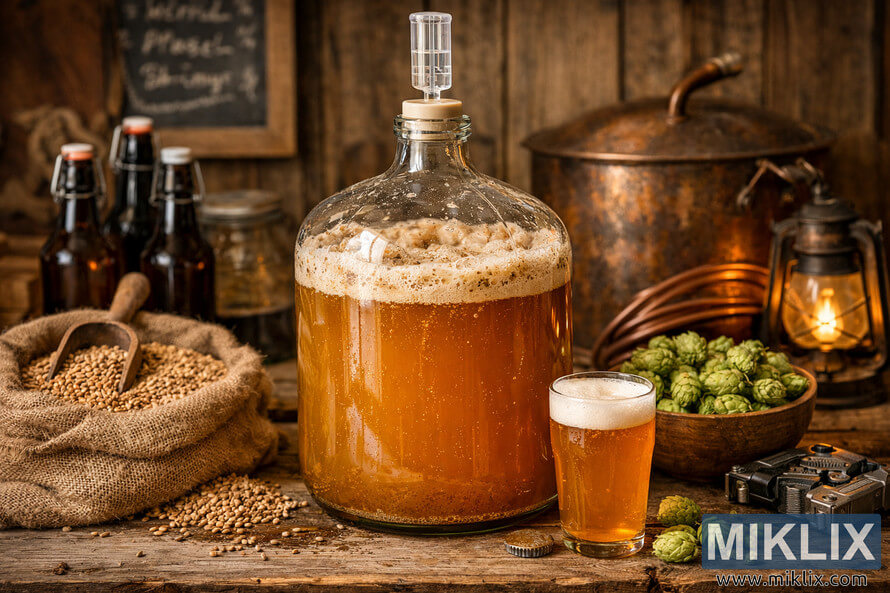
A detailed depiction of a pale ale fermenting in a glass carboy within a warm, rustic American homebrewing setting, featuring malt, hops, and brewing equipment bathed in natural light.
Pale Ale Fermentation in a Rustic Homebrew Setting
Verfügbare Versionen dieses Bildes
Die Bilddateien, die unten zum Download zur Verfügung stehen, sind weniger komprimiert und haben eine höhere Auflösung - und damit eine höhere Qualität - als die Bilder, die in Artikeln und Seiten auf dieser Website eingebettet sind, die mehr auf Dateigröße optimiert sind, um den Bandbreitenverbrauch zu reduzieren.
Normale Größe (1,536 x 1,024)
Großes Format (3,072 x 2,048)
Sehr großes Format (4,608 x 3,072)
Extra großes Format (6,144 x 4,096)
Komisch große Größe (1,048,576 x 699,051)
- Ich lade immer noch hoch... ;-)
Bildbeschreibung
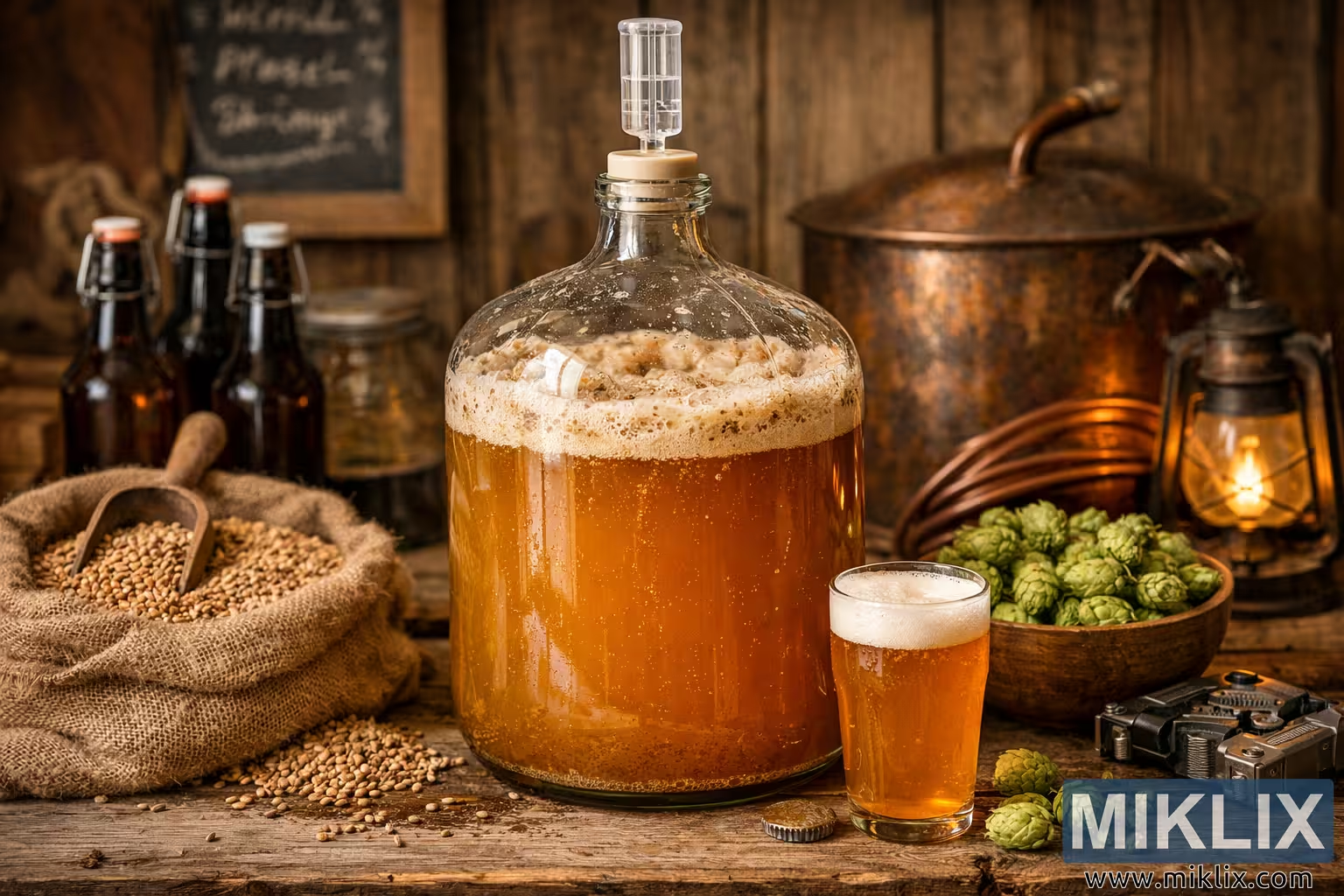
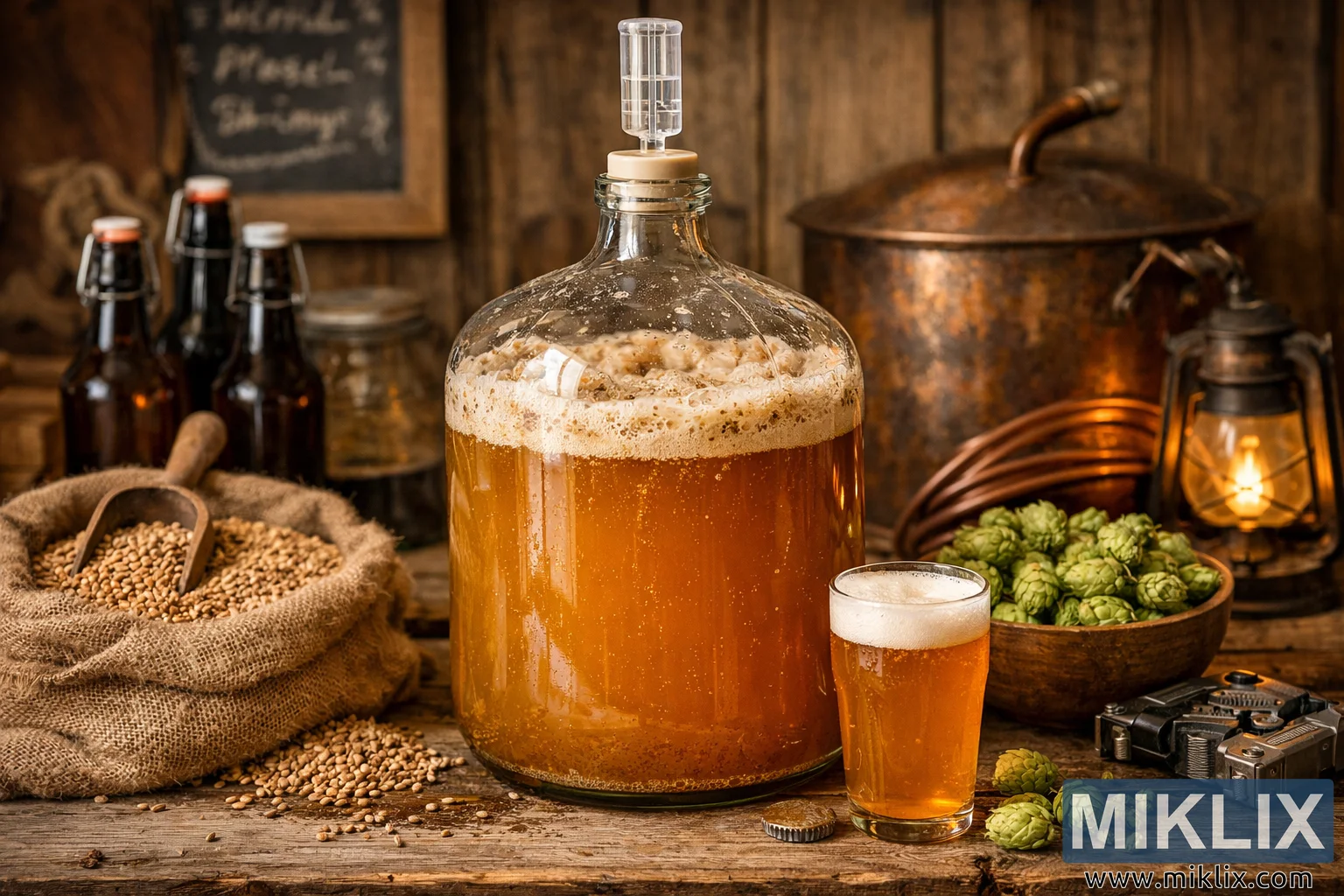
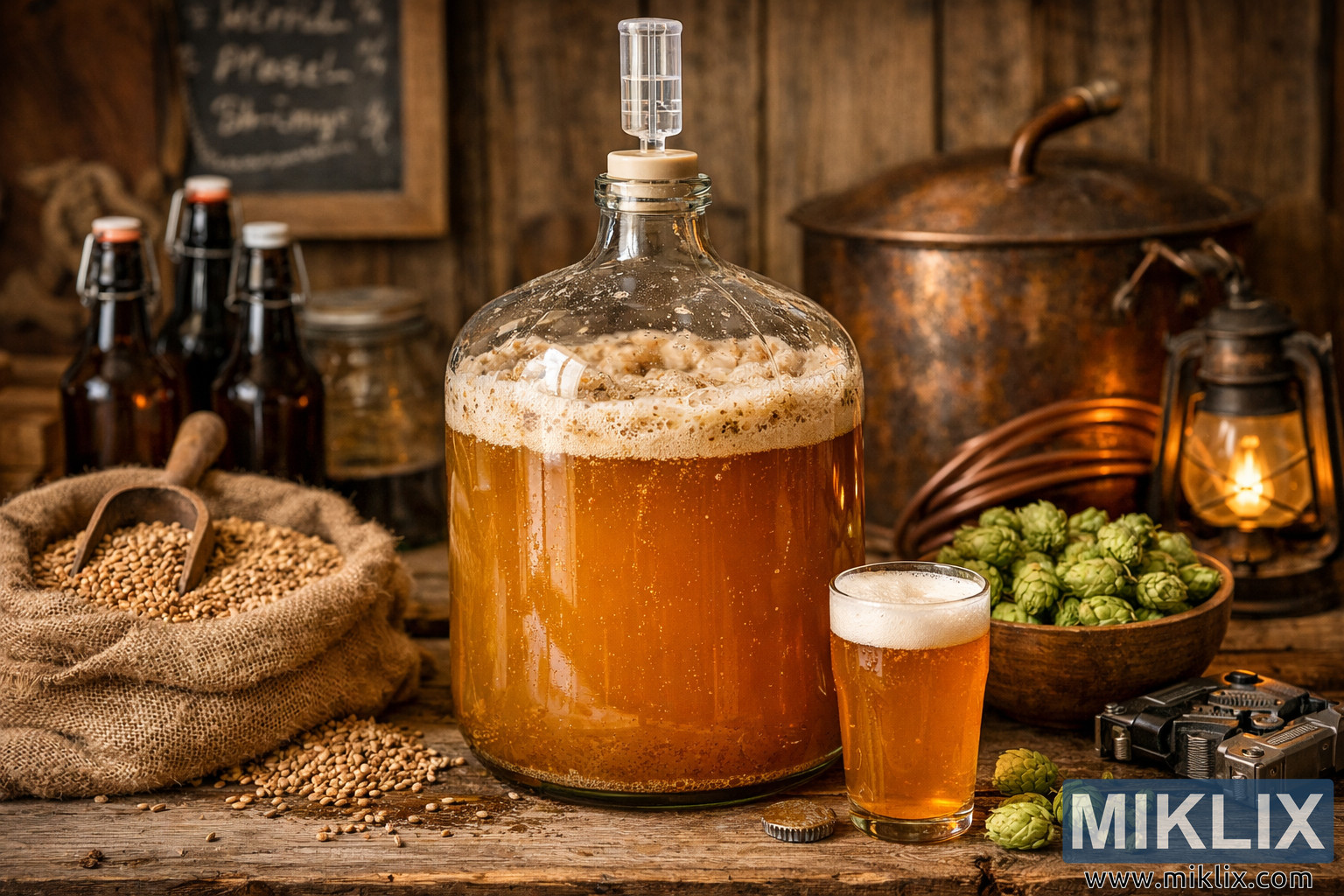
The image captures a quintessential moment in the art of homebrewing—a pale ale fermenting in a large glass carboy placed prominently on a weathered wooden table. The carboy, filled with a golden, hazy liquid, glows softly under the warm ambient light that filters through the rustic interior. At the top of the carboy, a frothy layer of krausen forms, thick and creamy, with bubbles rising lazily through the beer as fermentation continues. The glass walls of the vessel reveal subtle streaks of foam and hop residue clinging just above the liquid line, evidence of the vigorous activity within. A clear plastic airlock, half-filled with water, is attached to the rubber stopper sealing the carboy, and tiny bubbles can be seen escaping through it—a sign of the yeast’s steady work transforming sugars into alcohol and carbon dioxide.
Surrounding the carboy is a tableau of homebrewing essentials that evoke the tactile charm of traditional craft brewing. To the left, a burlap sack brimming with pale malted barley spills onto the table, its grains catching the light in shades of tan and gold. A wooden scoop rests casually atop the pile, suggesting recent use. Behind the sack, two brown glass bottles with swing-top caps stand ready for bottling, their surfaces reflecting the soft glow of the room. A copper brewing kettle, aged and tarnished with a rich patina, sits further back, its curved spigot and dented body telling stories of many batches brewed before. The kettle’s metallic sheen contrasts beautifully with the organic textures of wood and burlap.
To the right of the carboy, a wooden bowl filled with fresh green hop cones adds a burst of color and texture. The hops are vibrant, their papery leaves and lupulin glands visible in fine detail. In front of the bowl, a pint glass of freshly poured pale ale stands as a preview of the brew’s future—a golden drink with a frothy white head that clings to the rim. The beer’s clarity and effervescence hint at the crisp, floral notes typical of a well-crafted pale ale. Scattered nearby are a few dried hop pellets and a small pile of loose hops, alongside a stainless steel bottle capper and a handful of shiny metal caps, ready for sealing the finished bottles.
The background deepens the rustic atmosphere: a chalkboard with faint, partially erased brewing notes hangs on a wooden wall, its surface smudged with chalk dust. A coil of copper tubing lies coiled neatly beside the carboy, used for transferring or cooling wort. An old oil lantern casts a gentle amber glow across the scene, its flame flickering softly and reflecting off the glass and metal surfaces. The interplay of light and shadow creates a sense of warmth and intimacy, emphasizing the handcrafted nature of the brewing process.
Every element in the composition contributes to the narrative of patience and craftsmanship. The textures—rough wood, smooth glass, coarse burlap, and polished metal—combine to evoke the sensory richness of brewing. The color palette is dominated by earthy browns, golden ambers, and muted greens, harmonizing to create a cozy, inviting atmosphere. The focus remains on the carboy, which stands as a symbol of transformation and anticipation. The shallow depth of field ensures that the fermenting beer is sharply detailed, while the background fades gently into softness, reinforcing the sense of calm and focus.
This image encapsulates the spirit of American homebrewing: a blend of tradition, experimentation, and personal satisfaction. It celebrates the quiet beauty of the process—the waiting, the watching, the subtle chemistry unfolding in real time. The rustic setting, with its aged tools and natural materials, underscores the authenticity of the craft. It’s not a sterile laboratory but a lived-in space where brewing is both science and art. The photograph invites the viewer to linger, to imagine the aroma of malt and hops, the faint hiss of escaping gas, and the promise of a refreshing pint soon to come. It is a portrait of dedication and joy, rendered in light, texture, and color, capturing the timeless allure of brewing one’s own beer at home.
Das Bild ist verwandt mit: Fermenting Beer with White Labs WLP090 San Diego Super Ale Yeast