
Bild: Quince Tree Branch Heavily Infested with Scale Insects
Veröffentlicht:
Zuletzt aktualisiert: 5. März 2026 um 21:48:02 UTC
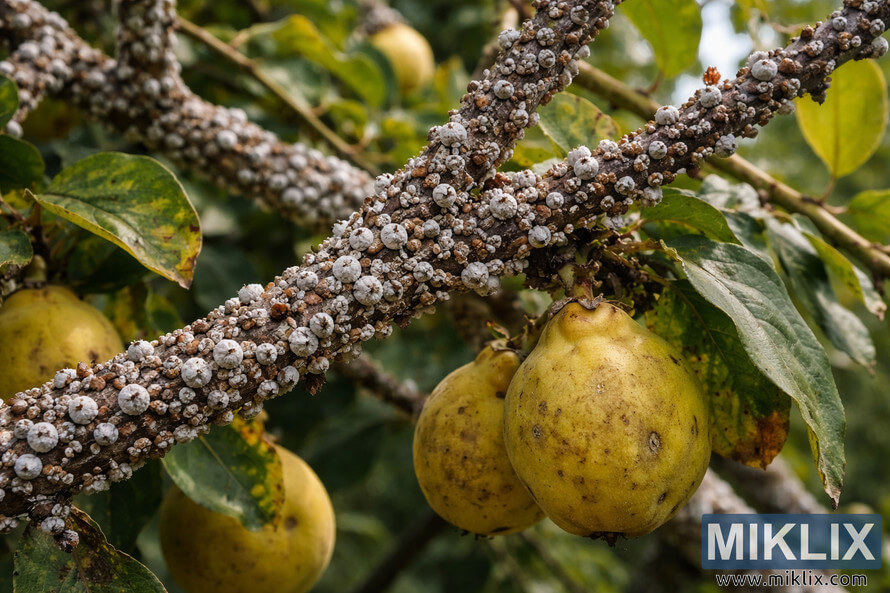
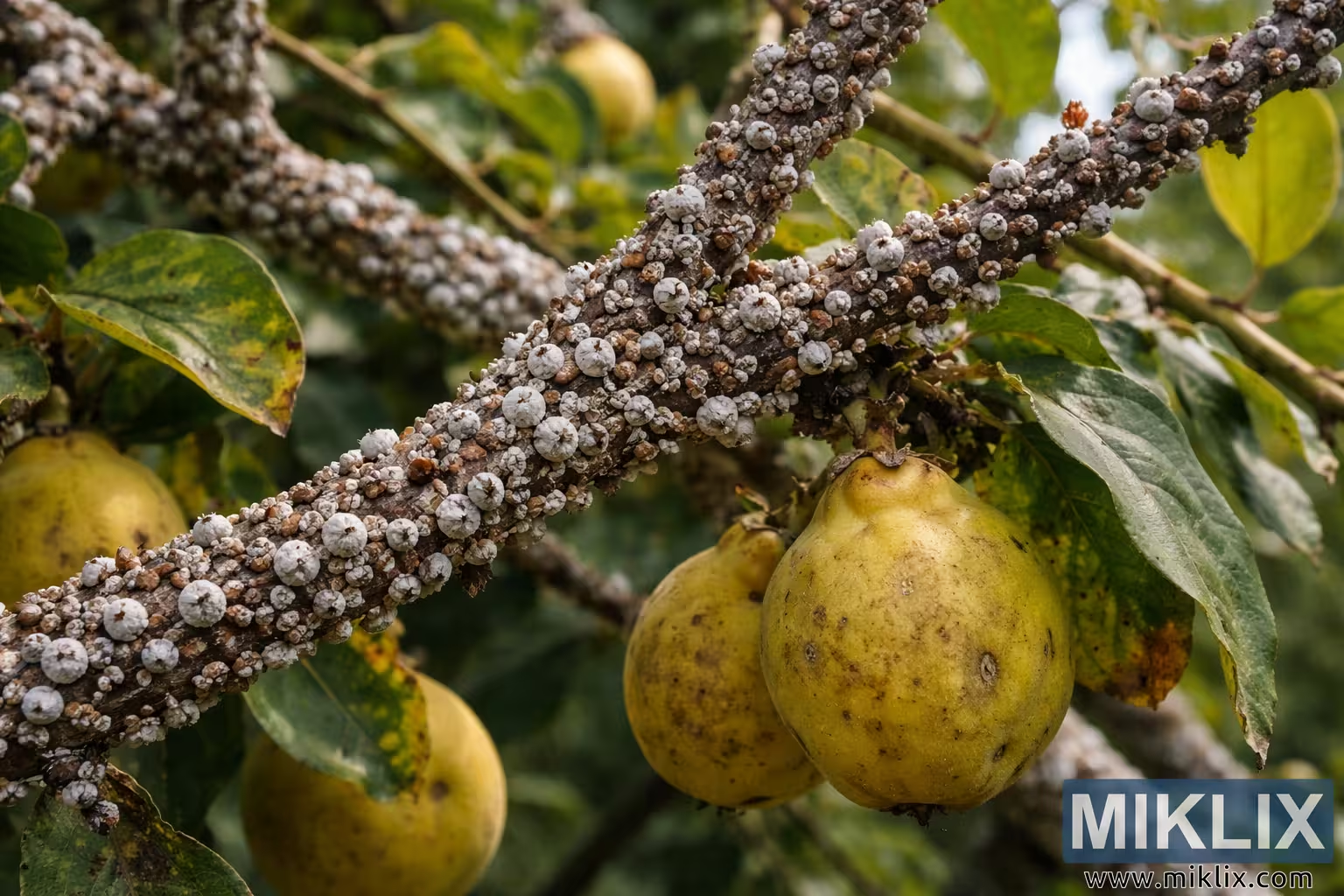
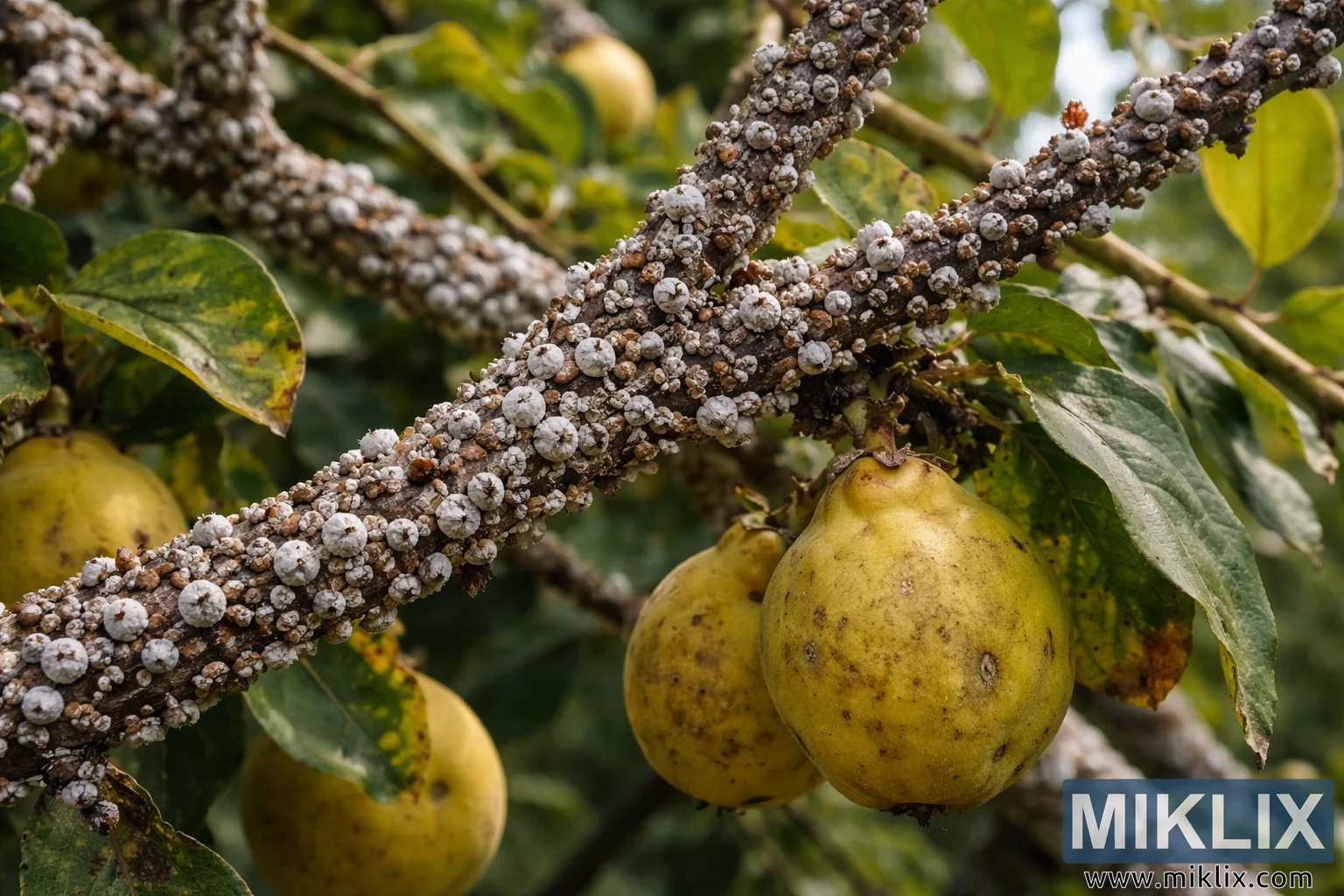
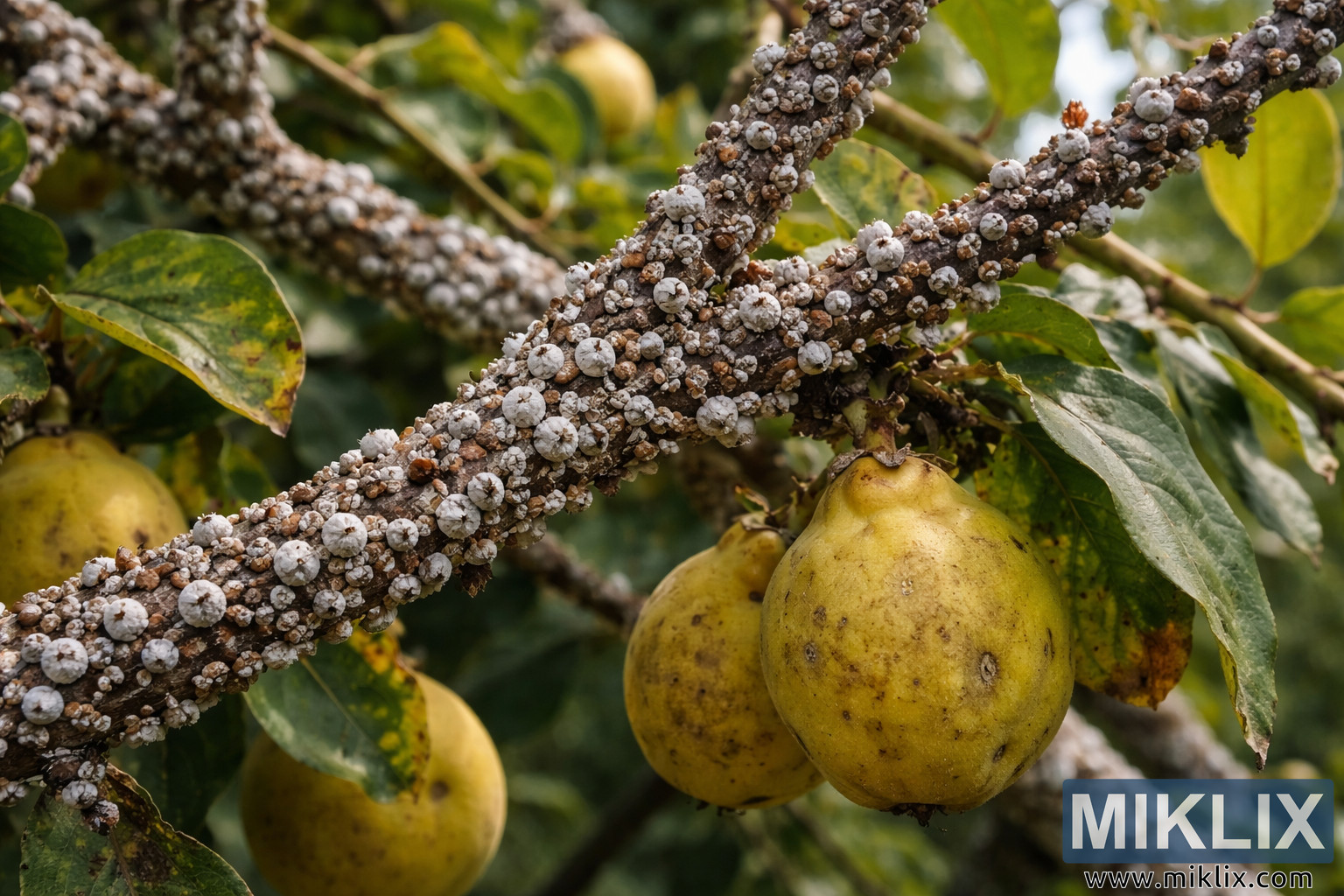
Detailed landscape photograph of a quince tree branch severely infested with scale insects, showing waxy white clusters on bark, yellowing leaves, and ripening quinces.
Quince Tree Branch Heavily Infested with Scale Insects
Verfügbare Versionen dieses Bildes
Die Bilddateien, die unten zum Download zur Verfügung stehen, sind weniger komprimiert und haben eine höhere Auflösung - und damit eine höhere Qualität - als die Bilder, die in Artikeln und Seiten auf dieser Website eingebettet sind, die mehr auf Dateigröße optimiert sind, um den Bandbreitenverbrauch zu reduzieren.
Normale Größe (1,536 x 1,024)
Großes Format (3,072 x 2,048)
Sehr großes Format (4,608 x 3,072)
Extra großes Format (6,144 x 4,096)
Komisch große Größe (1,048,576 x 699,051)
- Ich lade immer noch hoch... ;-)
Bildbeschreibung
This high-resolution landscape photograph captures a quince tree branch severely infested with scale insects, presented in sharp, vivid detail. The main branch runs diagonally across the frame from the upper left toward the lower right, dominating the composition. Its bark is almost entirely encrusted with dense clusters of scale insects, which appear as small, rounded, waxy nodules tightly packed together. These insects vary slightly in size and coloration, ranging from pale gray to off-white, with some showing subtle brownish tones. Their textured, shell-like coverings create a rough, uneven surface that nearly obscures the natural bark beneath.
The infestation is extensive and clearly advanced. The scale insects cling in thick colonies along the branch and smaller offshoots, forming continuous patches rather than isolated spots. Some areas appear dusted with a faint white residue, suggesting the waxy secretions typically associated with these pests. The bark’s original brown coloration is visible only in small gaps between the insects, emphasizing how thoroughly the branch has been overtaken.
Beneath and around the infested branch, several ripe quinces hang prominently in the foreground. The fruits are large and rounded with slightly irregular contours, their skins a rich yellow with natural blemishes and small dark speckles. Their weight gently pulls them downward, and they are attached by short, sturdy stems. The surface of the quinces appears matte and slightly textured, contrasting with the crusted, granular look of the insect-covered wood above.
The surrounding leaves are dark green but show visible signs of stress. Some leaves display yellowing along the edges and faint mottling across their surfaces. A few are slightly curled or spotted, indicating damage consistent with sap-sucking pests. The veins of the leaves are clearly defined, and subtle variations in green tones add depth to the foliage.
In the softly blurred background, more branches and foliage are visible, creating a natural orchard setting. The shallow depth of field keeps the viewer’s focus on the heavily infested branch and the hanging fruit, while the background remains gently out of focus. Natural daylight illuminates the scene evenly, highlighting the textures of the insects, the rough bark, and the smooth fruit. Overall, the image conveys both the vitality of the fruiting quince tree and the serious impact of a scale insect infestation, emphasizing the contrast between productive growth and destructive pest activity.
Das Bild ist verwandt mit: Complete Guide to Growing Your Own Quince Trees