
Bild: Sliced Shallots on Wooden Cutting Board in Cozy Kitchen
Veröffentlicht:
Zuletzt aktualisiert: 22. März 2026 um 21:44:03 UTC
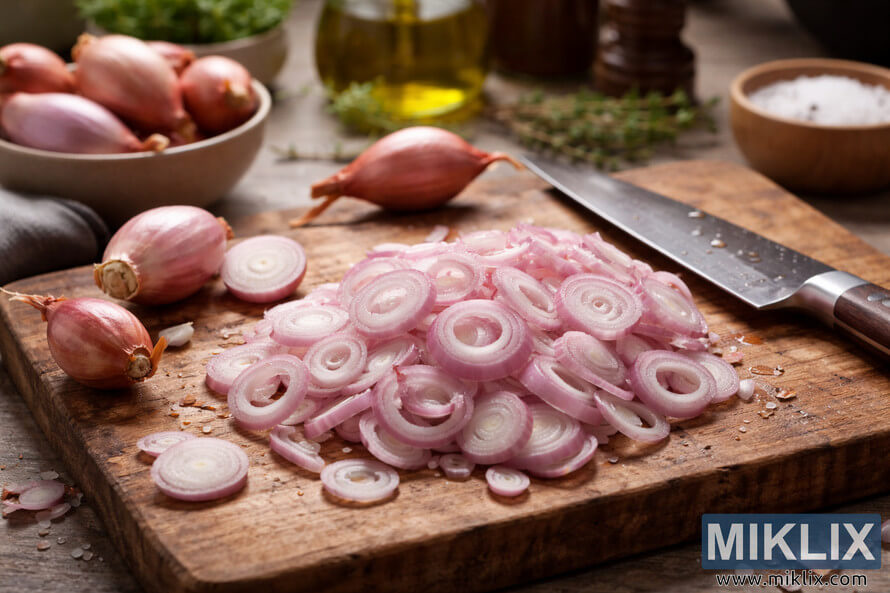
Close-up kitchen scene featuring freshly sliced shallots on a rustic wooden cutting board with a chef’s knife, herbs, olive oil, and coarse salt in the background.
Sliced Shallots on Wooden Cutting Board in Cozy Kitchen
Verfügbare Versionen dieses Bildes
Die Bilddateien, die unten zum Download zur Verfügung stehen, sind weniger komprimiert und haben eine höhere Auflösung - und damit eine höhere Qualität - als die Bilder, die in Artikeln und Seiten auf dieser Website eingebettet sind, die mehr auf Dateigröße optimiert sind, um den Bandbreitenverbrauch zu reduzieren.
Normale Größe (1,536 x 1,024)
Großes Format (3,072 x 2,048)
Sehr großes Format (4,608 x 3,072)
Extra großes Format (6,144 x 4,096)
Komisch große Größe (1,048,576 x 699,051)
- Ich lade immer noch hoch... ;-)
Bildbeschreibung
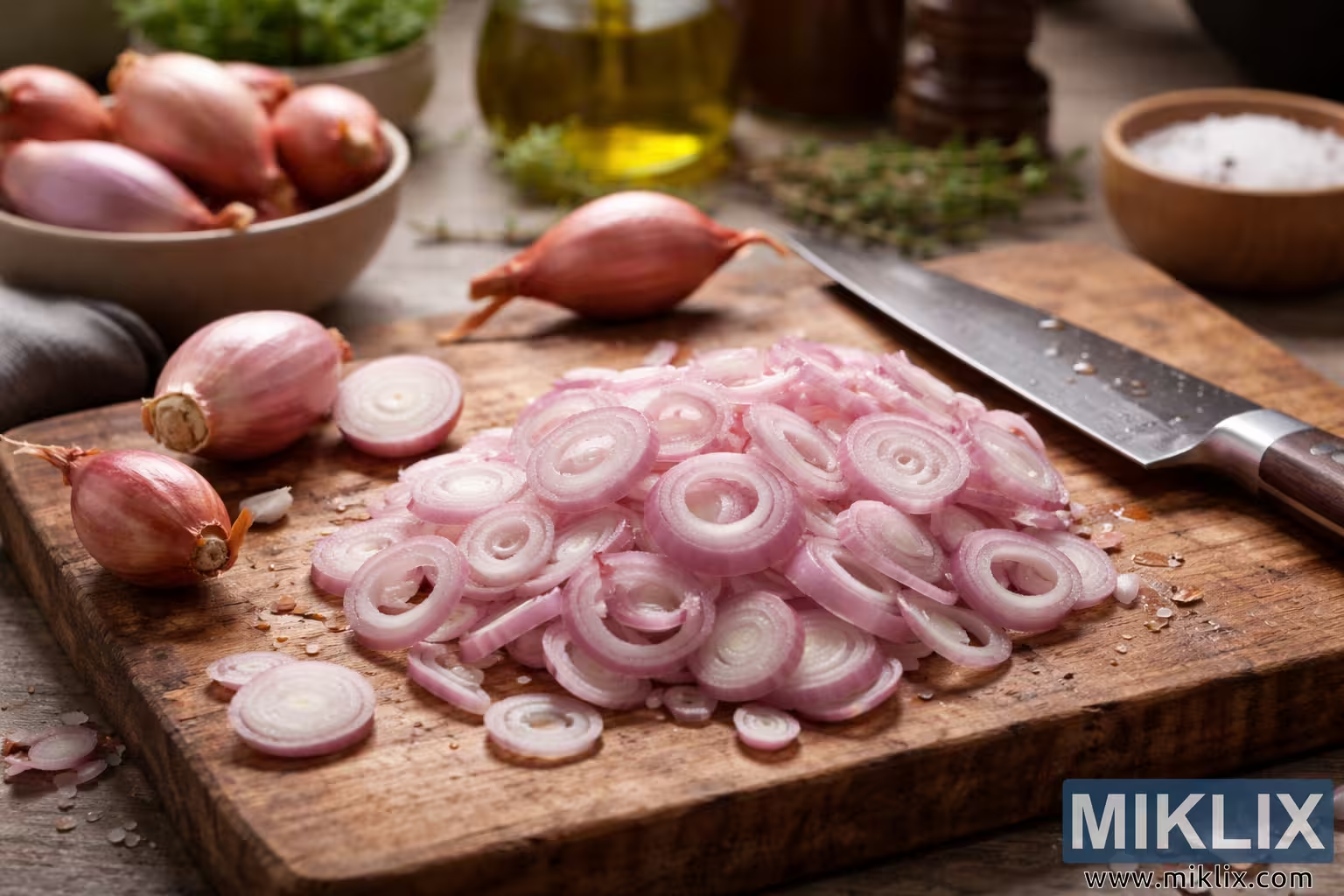
A warm, close-up kitchen scene displays a small mound of freshly sliced shallots resting on a rustic wooden cutting board. The shallots are cut into thin, delicate rings, revealing pale pink, lavender, and white concentric layers that catch the soft, natural light. The slices are piled loosely in the center of the board, with a few rings scattered casually around them, emphasizing a freshly prepared ingredient ready to be used in cooking. Their slightly glossy surface suggests freshness and moisture from the recent cut.
To the right side of the cutting board lies a large chef’s knife with a polished steel blade and a dark handle. The blade reflects subtle highlights from the ambient lighting and shows small droplets and faint traces of onion juice, reinforcing the sense that the slicing was done moments before the photograph was taken. The knife is angled diagonally across the board, adding visual balance and directing the viewer’s eye toward the sliced shallots.
Around the cutting board are several whole shallots with papery, reddish-brown skins and tapered ends. One sits in the foreground while others rest nearby in a small bowl, suggesting the preparation of multiple ingredients. Their natural shapes and muted tones contrast gently with the brighter, translucent slices on the board.
In the softly blurred background, additional kitchen elements create a cozy culinary atmosphere. A glass bottle of golden olive oil catches the warm light, producing a subtle glow. Nearby, a small bowl filled with coarse salt sits beside a few sprigs of fresh thyme, their green leaves adding a touch of color and hinting at upcoming seasoning or cooking steps. The background remains intentionally out of focus, drawing attention to the main subject while still conveying the setting of an inviting home kitchen.
The lighting is warm and natural, likely coming from a nearby window or soft overhead light, which enhances the gentle pink tones of the shallots and the rich grain of the wooden cutting board. The wood’s texture, with visible knife marks and natural imperfections, contributes to the rustic feel of the scene. Overall, the composition evokes the quiet moment of preparation before cooking begins, capturing both the beauty of simple ingredients and the calm, tactile rhythm of working in a kitchen.
Das Bild ist verwandt mit: Growing Shallots: Your Complete Guide to a Bountiful Harvest