
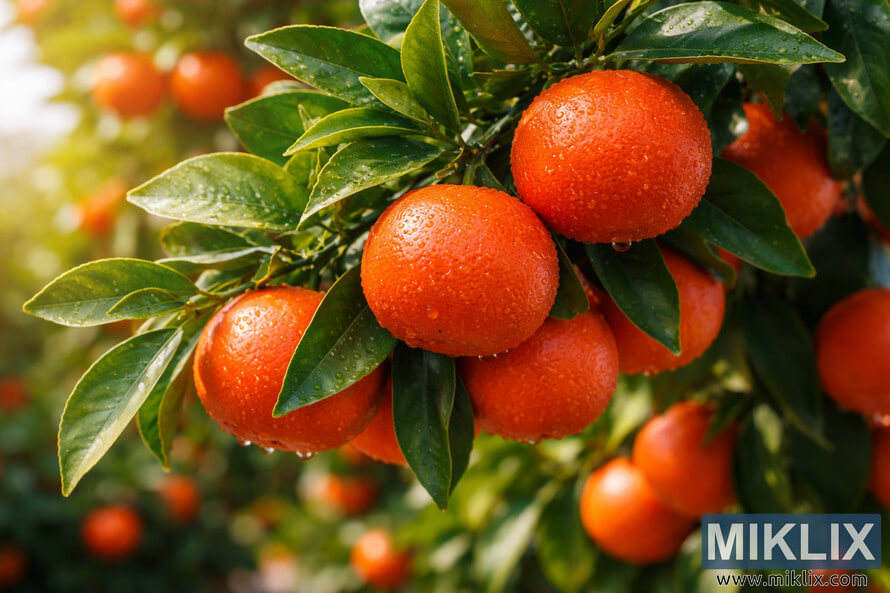
Bild: Ripe Dancy Tangerines on Tree with Deep Red-Orange Color
Veröffentlicht:
Zuletzt aktualisiert: 25. März 2026 um 19:05:18 UTC
High-resolution image of ripe Dancy tangerines growing on a tree, displaying their characteristic deep red-orange color among glossy green leaves.
Ripe Dancy Tangerines on Tree with Deep Red-Orange Color
Verfügbare Versionen dieses Bildes
Die Bilddateien, die unten zum Download zur Verfügung stehen, sind weniger komprimiert und haben eine höhere Auflösung - und damit eine höhere Qualität - als die Bilder, die in Artikeln und Seiten auf dieser Website eingebettet sind, die mehr auf Dateigröße optimiert sind, um den Bandbreitenverbrauch zu reduzieren.
Normale Größe (1,536 x 1,024)
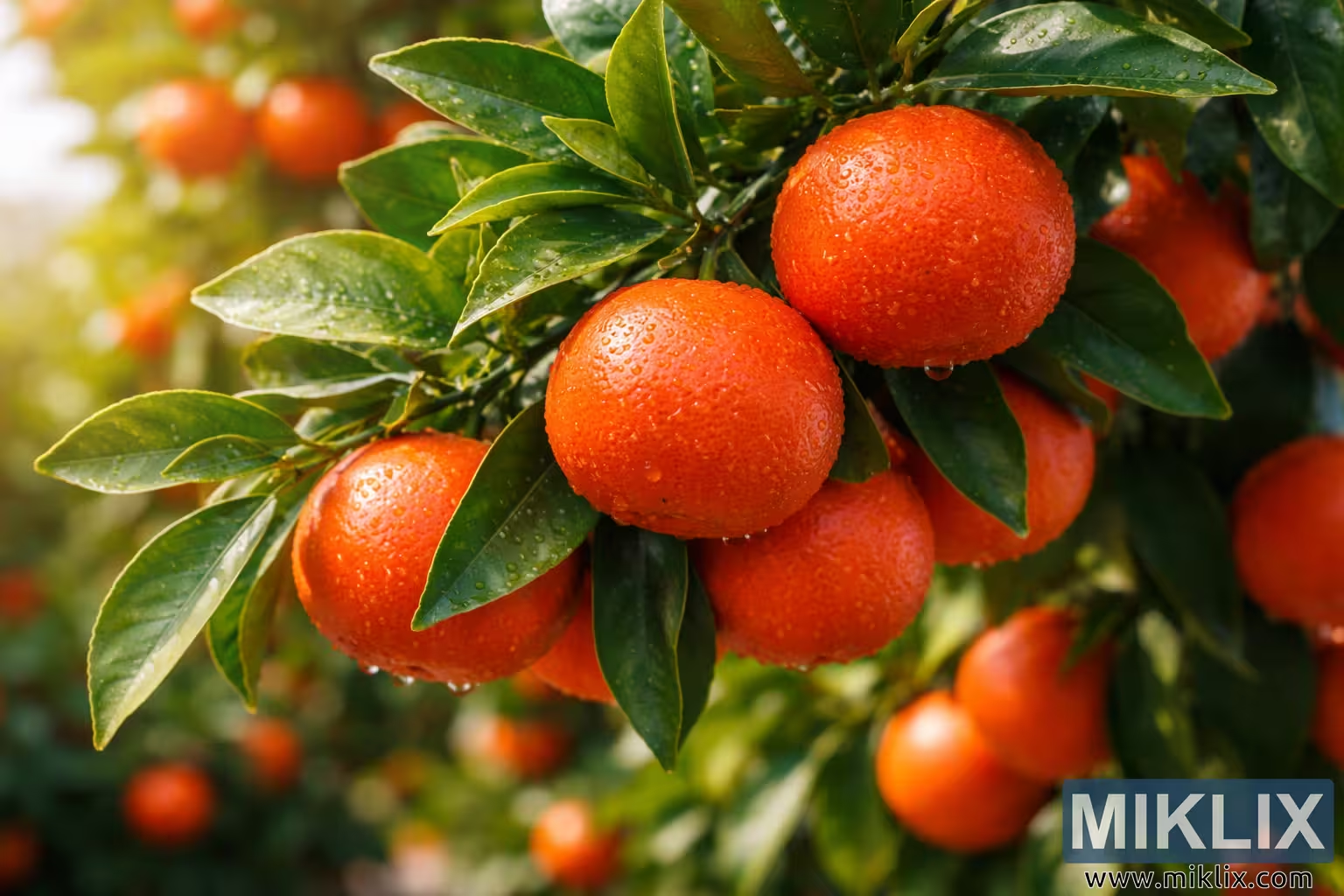
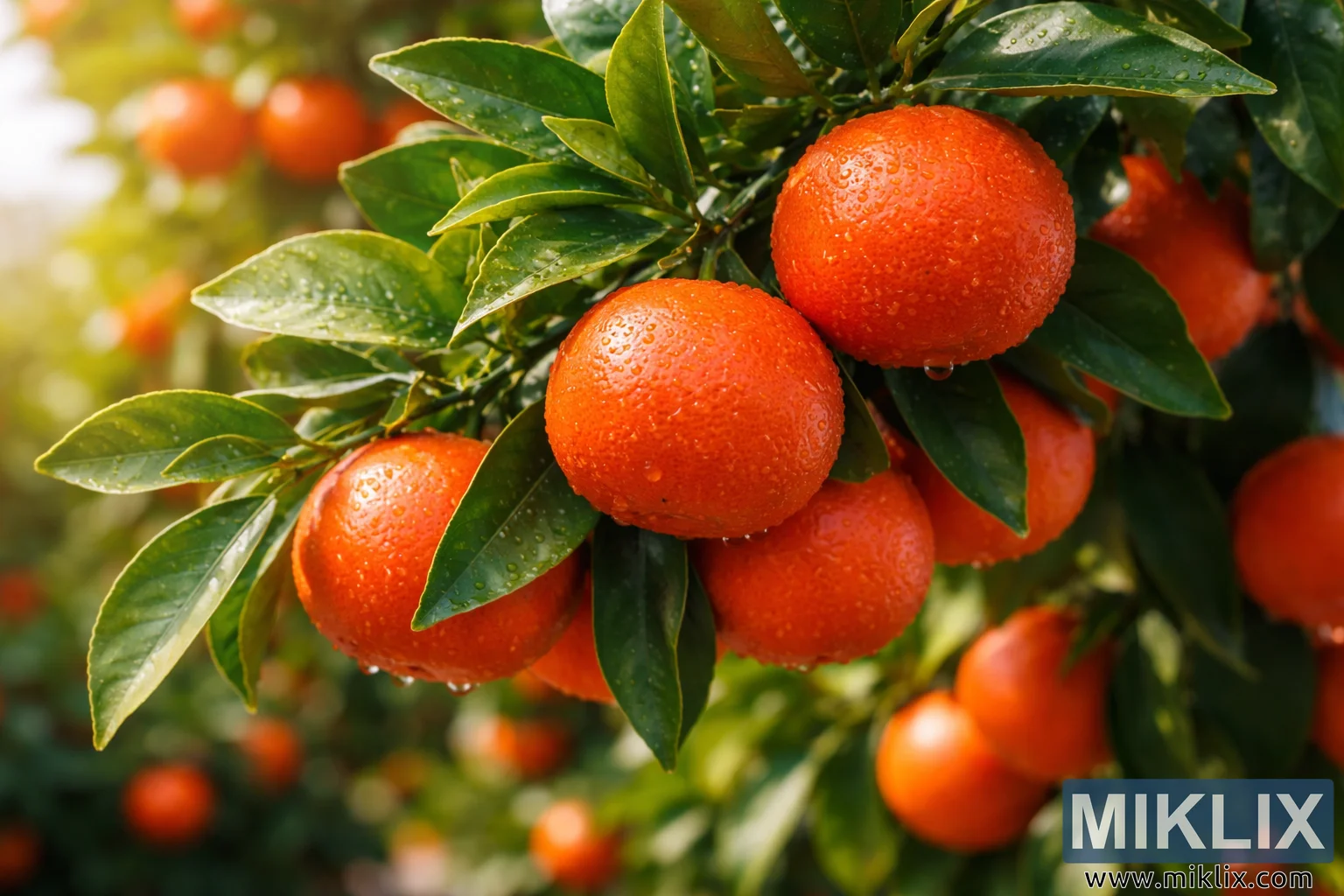
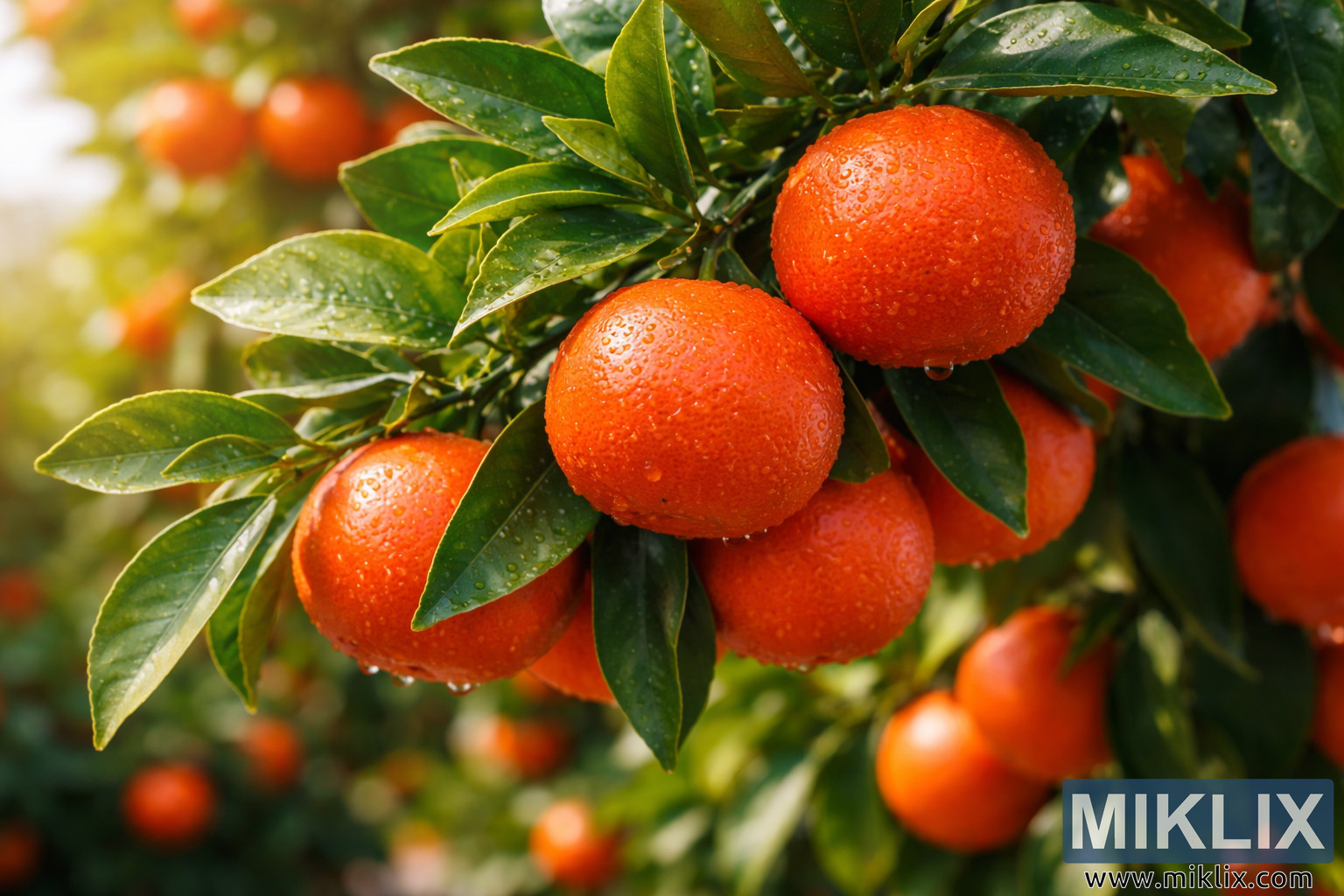
Großes Format (3,072 x 2,048)
Sehr großes Format (4,608 x 3,072)
Extra großes Format (6,144 x 4,096)
Komisch große Größe (1,048,576 x 699,051)
- Ich lade immer noch hoch... ;-)
Bildbeschreibung
A high-resolution landscape photograph captures a vibrant cluster of ripe Dancy tangerines hanging naturally from a healthy citrus tree branch. The fruit displays the distinctive deep red-orange coloration characteristic of the Dancy variety, standing out vividly against the surrounding foliage. Several round tangerines are grouped closely together along a sturdy branch, their textured, slightly dimpled peels glowing warmly in soft natural sunlight. Tiny droplets of moisture cling to the fruit and leaves, creating a fresh, just-after-rain atmosphere that enhances the sense of ripeness and vitality.
The glossy green leaves surrounding the fruit are thick, smooth, and slightly curved, forming a rich natural frame around the tangerines. Their deep green color contrasts beautifully with the saturated orange tones of the fruit, emphasizing the citrus’s maturity and visual appeal. Some leaves overlap and layer over one another, catching small highlights where sunlight filters through the canopy. The branch supporting the fruit is partially visible beneath the leaves, suggesting the natural structure of the tree without distracting from the primary subject.
In the foreground, the closest tangerines appear sharply detailed, allowing the viewer to see the fine pores of the rind and the subtle variations in color ranging from bright orange to deeper reddish hues. The fruit surfaces appear firm and full, indicating peak ripeness. A few droplets gather along the lower edges of the fruit and leaves, reflecting light and adding a realistic, tactile dimension to the scene.
The background fades into a softly blurred orchard environment, where additional tangerines and leaves can be seen out of focus. This shallow depth of field draws attention to the main cluster of fruit while still suggesting the abundance of citrus growing on the tree. Warm sunlight filters through the foliage in the distance, producing gentle highlights and soft green and orange bokeh shapes that create a calm, natural atmosphere.
Overall, the image conveys freshness, ripeness, and the natural beauty of citrus growing on the tree. The combination of vivid red-orange fruit, lush green leaves, sparkling water droplets, and warm sunlight creates a visually rich and inviting scene that celebrates the distinctive appearance of Dancy tangerines at their peak.
Das Bild ist verwandt mit: Growing Tangerines: The Complete Guide to Sweet Success in Your Home Garden