
Bild: Tangerine Tree Infested with Scale Insects
Veröffentlicht:
Zuletzt aktualisiert: 25. März 2026 um 19:05:19 UTC
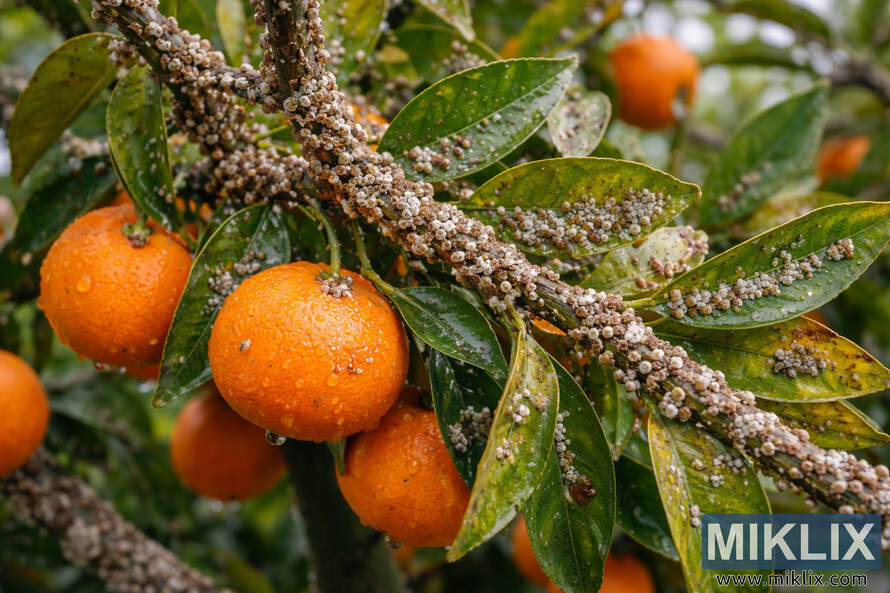
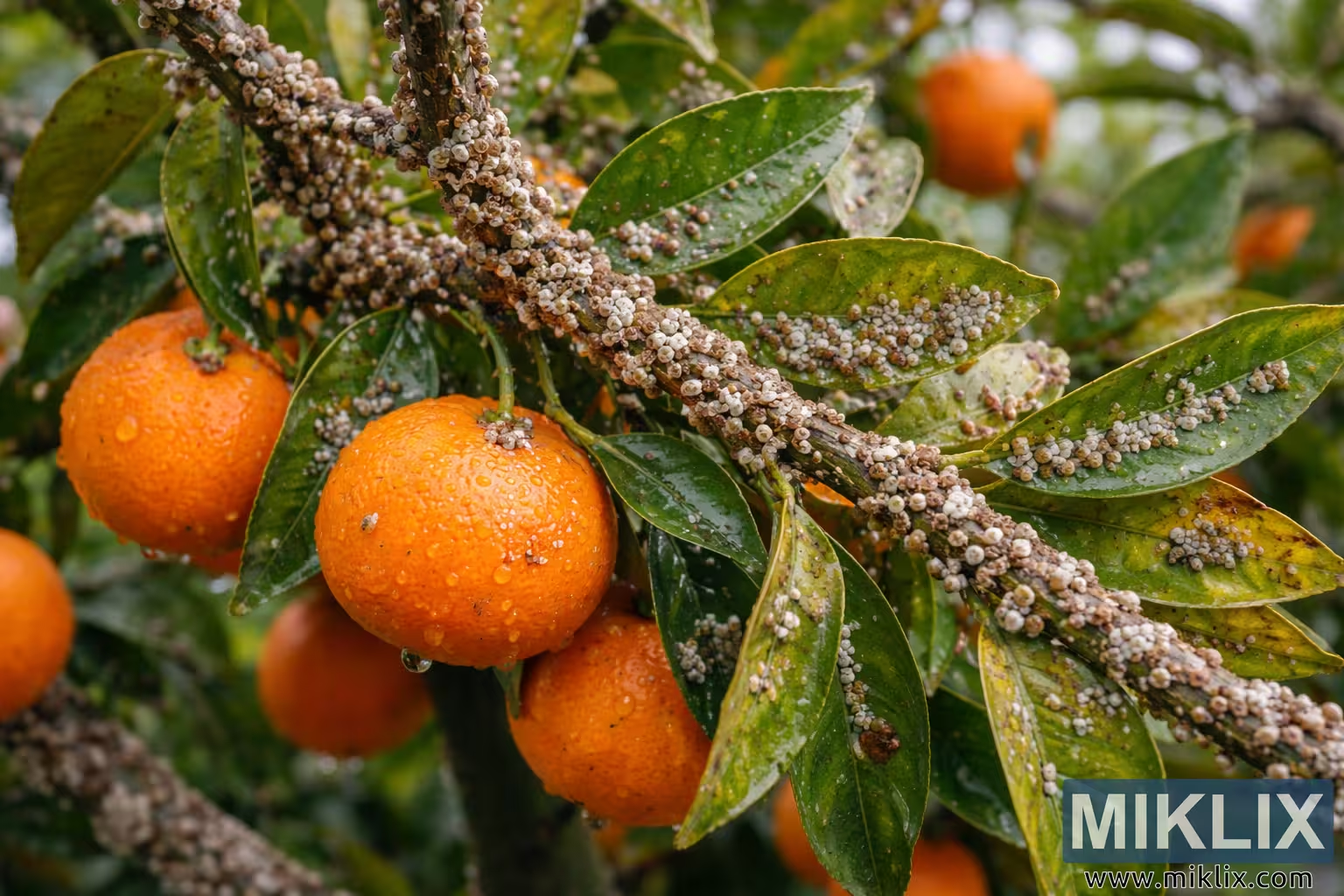
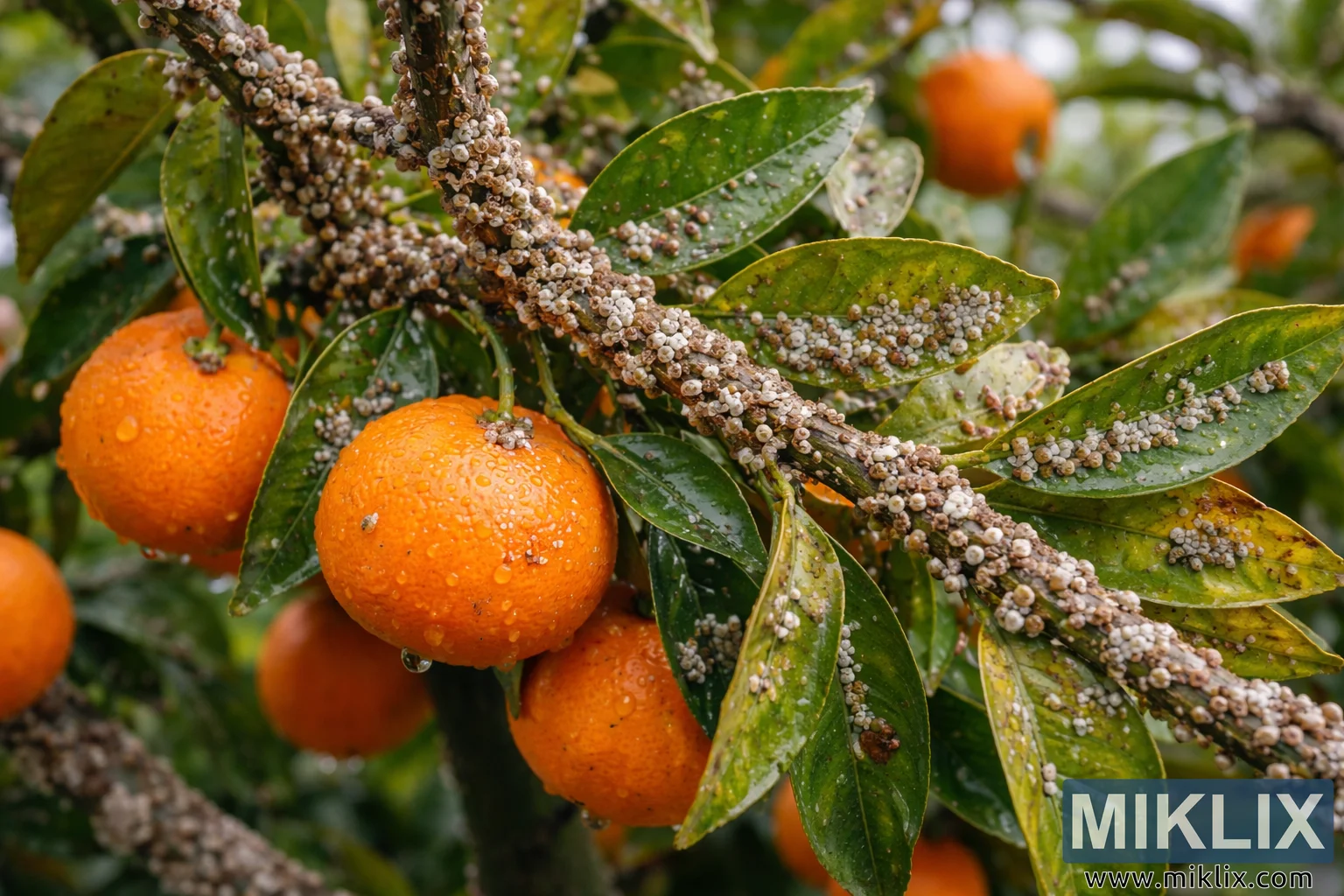
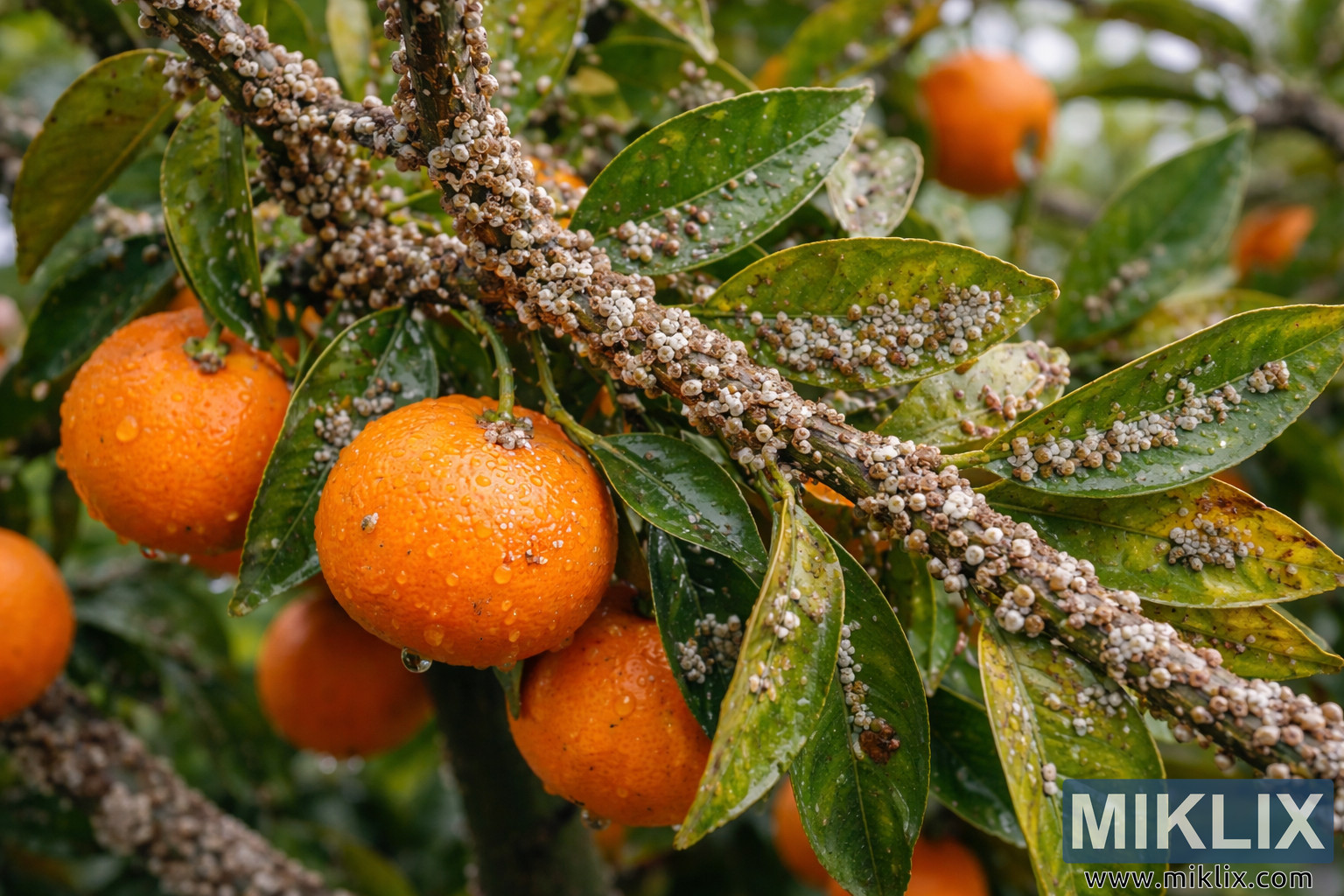
High-resolution close-up photograph of a tangerine tree branch heavily infested with scale insects, showing clusters of pests on bark and leaves beside ripe citrus fruits.
Tangerine Tree Infested with Scale Insects
Verfügbare Versionen dieses Bildes
Die Bilddateien, die unten zum Download zur Verfügung stehen, sind weniger komprimiert und haben eine höhere Auflösung - und damit eine höhere Qualität - als die Bilder, die in Artikeln und Seiten auf dieser Website eingebettet sind, die mehr auf Dateigröße optimiert sind, um den Bandbreitenverbrauch zu reduzieren.
Normale Größe (1,536 x 1,024)
Großes Format (3,072 x 2,048)
Sehr großes Format (4,608 x 3,072)
Extra großes Format (6,144 x 4,096)
Komisch große Größe (1,048,576 x 699,051)
- Ich lade immer noch hoch... ;-)
Bildbeschreibung
This high-resolution, landscape-oriented photograph presents a close-up view of a tangerine tree branch heavily infested with scale insects. The composition centers on a thick woody branch extending diagonally across the frame, its surface densely covered with clusters of small, dome-shaped insects. These scale insects appear as tiny bumps in varying shades of off-white, beige, and brown, forming dense colonies that cling tightly to the bark. Their waxy protective shells give them a slightly chalky or crusted appearance, emphasizing the severity of the infestation.
Surrounding the branch are glossy green leaves typical of citrus trees. Many of the leaves also host scattered groups of scale insects along their veins and undersides, indicating how the infestation has spread from the branch to the foliage. Some leaves show subtle discoloration, including faint yellowing and irregular speckling, suggesting the stress caused by the insects feeding on the plant's sap. A few areas of the leaves and branch display a slightly sticky sheen, consistent with honeydew residue commonly produced by scale insects.
Contrasting sharply with the infestation are several vibrant tangerine fruits hanging from the branch. The fruits are round and richly colored in bright shades of orange, their textured rinds dotted with tiny pores. Fresh water droplets cling to the fruit surfaces, reflecting light and adding a sense of freshness and natural outdoor conditions. Despite the presence of healthy-looking fruit, the infestation on the surrounding plant structures highlights the underlying threat to the tree’s overall vitality.
The depth of field in the image is relatively shallow, keeping the main branch, insects, leaves, and nearby fruit sharply in focus while softly blurring the background foliage. This creates a natural bokeh effect that draws attention to the detailed textures of the scale insects and the citrus peel. The lighting appears natural and diffused, typical of daylight conditions, illuminating the glossy leaves and emphasizing the contrast between the smooth fruit surfaces and the rough, insect-covered bark.
Overall, the photograph visually documents a significant scale insect infestation on a citrus tree, juxtaposing the beauty of ripe tangerines with the damaging presence of plant pests. The image highlights both the biological detail of the insects and the horticultural impact on the host plant.
Das Bild ist verwandt mit: Growing Tangerines: The Complete Guide to Sweet Success in Your Home Garden