
Bild: Proper Hand Technique for Harvesting Citrus Fruit
Veröffentlicht:
Zuletzt aktualisiert: 25. März 2026 um 19:05:19 UTC
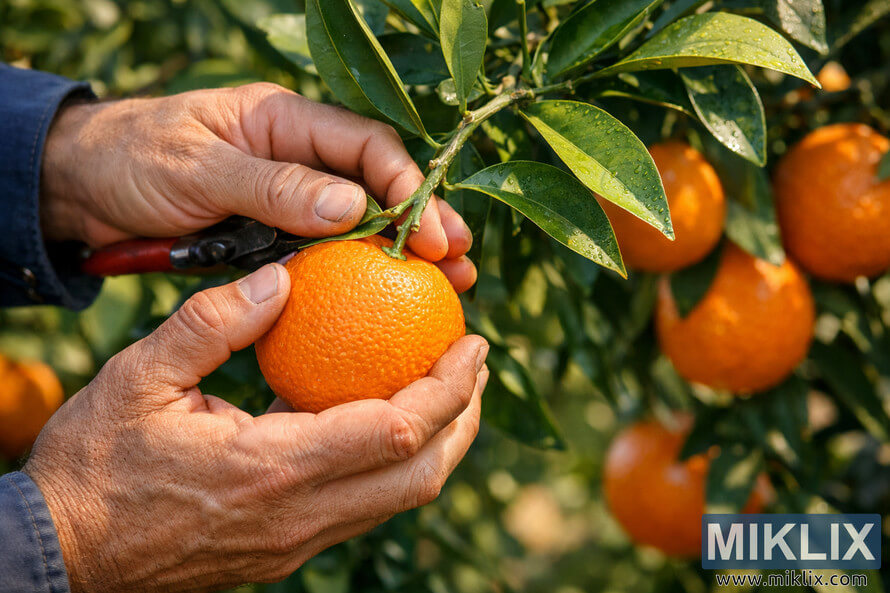
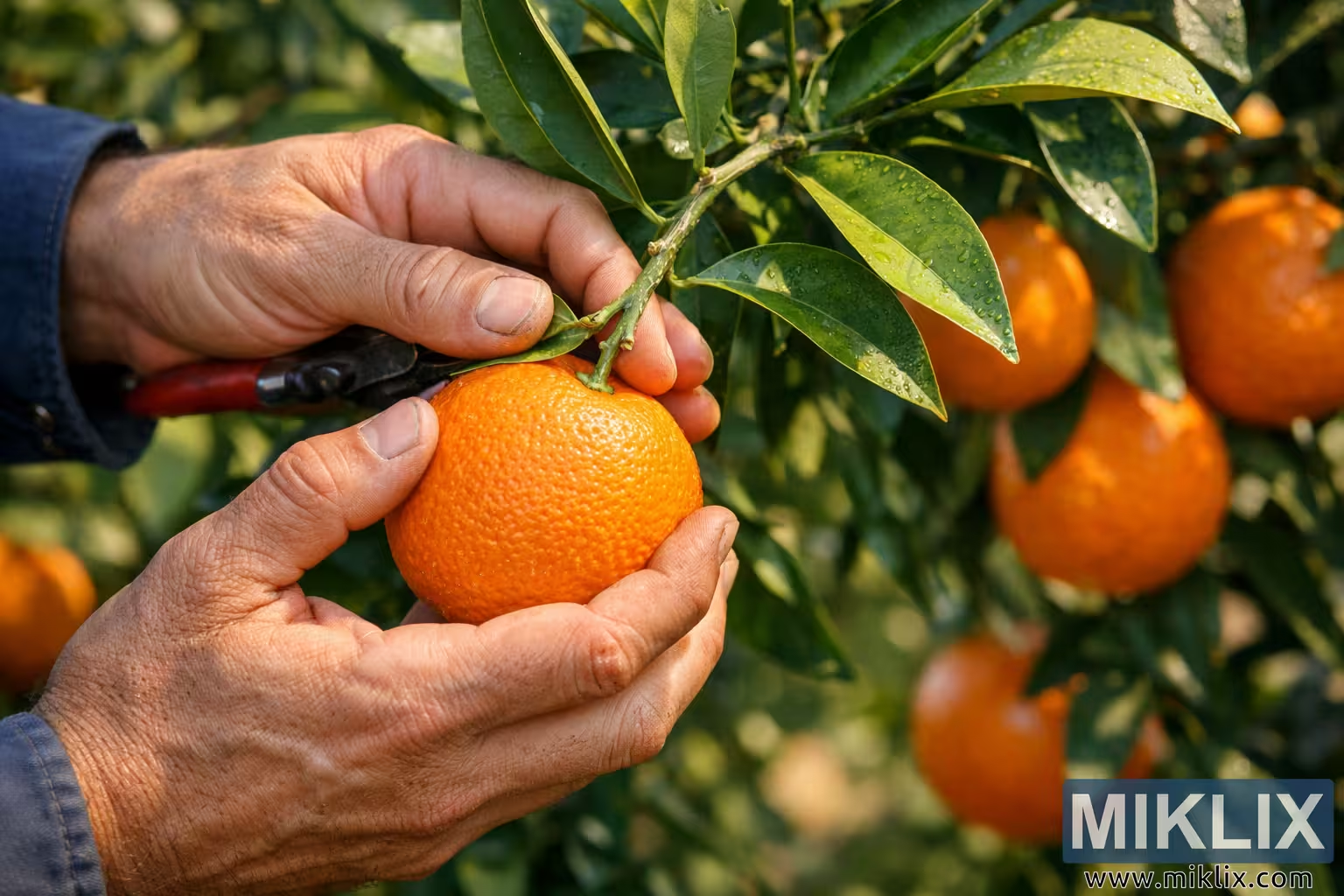
Detailed view of proper citrus harvesting technique showing hands holding and twisting a ripe orange from a tree among green leaves in natural sunlight.
Proper Hand Technique for Harvesting Citrus Fruit
Verfügbare Versionen dieses Bildes
Die Bilddateien, die unten zum Download zur Verfügung stehen, sind weniger komprimiert und haben eine höhere Auflösung - und damit eine höhere Qualität - als die Bilder, die in Artikeln und Seiten auf dieser Website eingebettet sind, die mehr auf Dateigröße optimiert sind, um den Bandbreitenverbrauch zu reduzieren.
Normale Größe (1,536 x 1,024)

Großes Format (3,072 x 2,048)
Sehr großes Format (4,608 x 3,072)
Extra großes Format (6,144 x 4,096)
Komisch große Größe (1,048,576 x 699,051)
- Ich lade immer noch hoch... ;-)
Bildbeschreibung
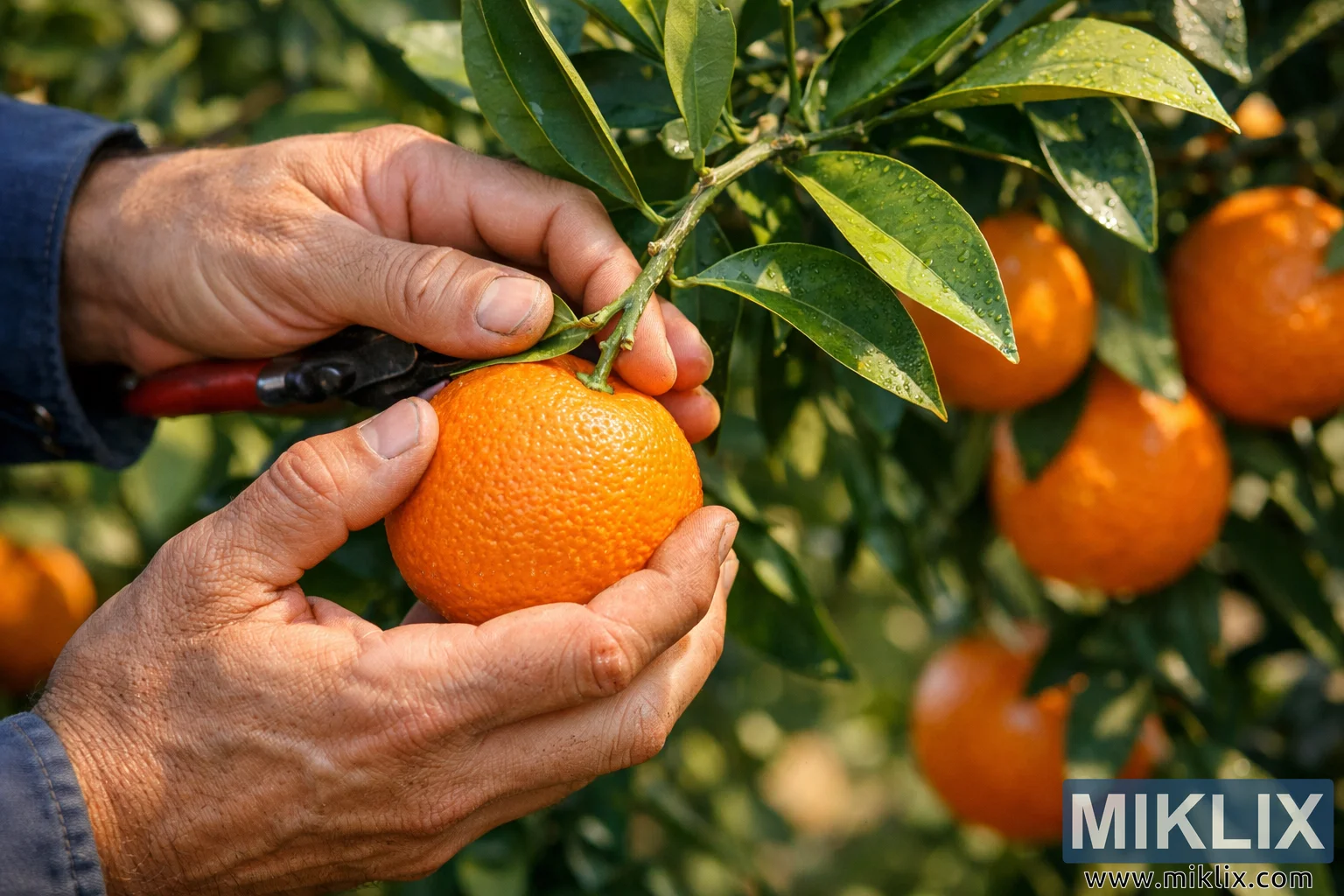
A close-up, landscape-oriented photograph captures the careful harvesting of citrus fruit directly from a tree, emphasizing the proper hand positioning and twisting technique used to remove the fruit without damaging the plant. In the foreground, a pair of experienced, weathered hands holds a vibrant orange that has ripened on the branch. The left hand gently cradles the fruit from below, supporting its weight and preventing strain on the stem, while the right hand grips the stem just above the fruit. The fingers of the right hand demonstrate a subtle twisting motion designed to detach the orange cleanly from the branch while preserving the integrity of both the fruit and the tree. The skin of the orange appears richly textured and brightly colored, with a vivid, saturated orange hue that contrasts against the surrounding foliage. The fruit’s slightly dimpled surface catches the natural sunlight, highlighting the freshness and maturity of the citrus. The branch from which the orange is being harvested is covered with glossy, deep-green leaves that show fine details such as veins and tiny droplets of moisture. These droplets glisten softly in the sunlight, suggesting early morning conditions or recent irrigation in the orchard. In the softly blurred background, additional oranges hang from nearby branches, indicating a productive citrus grove during harvest season. The background bokeh effect keeps the viewer’s focus on the hands and the single fruit being picked while still conveying the lush environment of the orchard. The lighting in the scene is warm and natural, with sunlight filtering through the leaves and creating gentle highlights and shadows across the hands, fruit, and foliage. The hands themselves show signs of practical fieldwork—slightly rough skin, small wrinkles, and traces of soil—conveying the authenticity of agricultural labor and the experience of the person harvesting the fruit. Overall, the image visually communicates a careful, manual harvesting method that prioritizes fruit quality and plant health. By illustrating the correct hand placement and the twisting motion used to separate the fruit from the stem, the photograph serves as both a realistic agricultural moment and a practical demonstration of proper citrus harvesting technique within a sunlit orchard environment.
Das Bild ist verwandt mit: Growing Tangerines: The Complete Guide to Sweet Success in Your Home Garden