
Bild: Fresh Watercress Growing in a Flowing Water Container
Veröffentlicht:
Zuletzt aktualisiert: 11. Mai 2026 um 20:04:38 UTC
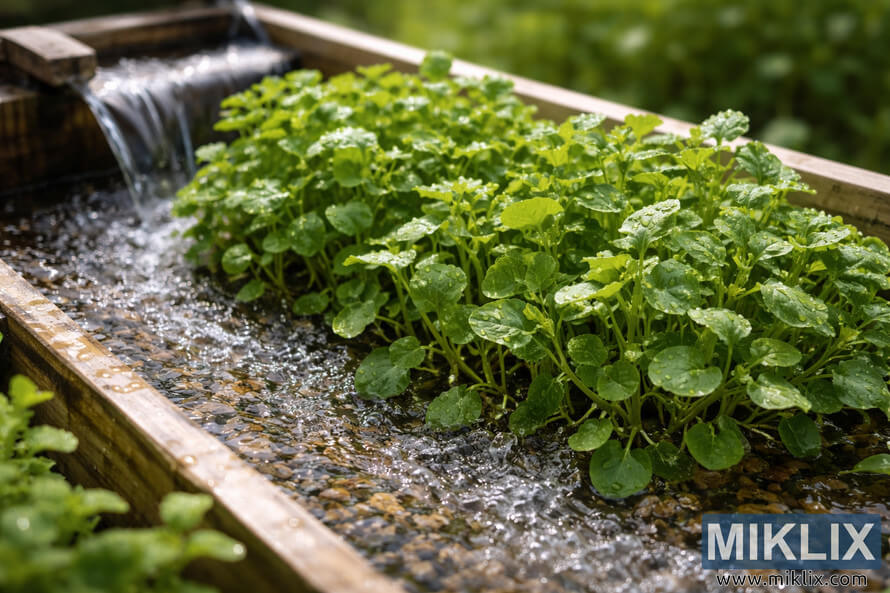
High-resolution photo of vibrant watercress thriving in a shallow wooden container with pebbles and flowing water, illuminated by natural sunlight.
Fresh Watercress Growing in a Flowing Water Container
Verfügbare Versionen dieses Bildes
Die Bilddateien, die unten zum Download zur Verfügung stehen, sind weniger komprimiert und haben eine höhere Auflösung - und damit eine höhere Qualität - als die Bilder, die in Artikeln und Seiten auf dieser Website eingebettet sind, die mehr auf Dateigröße optimiert sind, um den Bandbreitenverbrauch zu reduzieren.
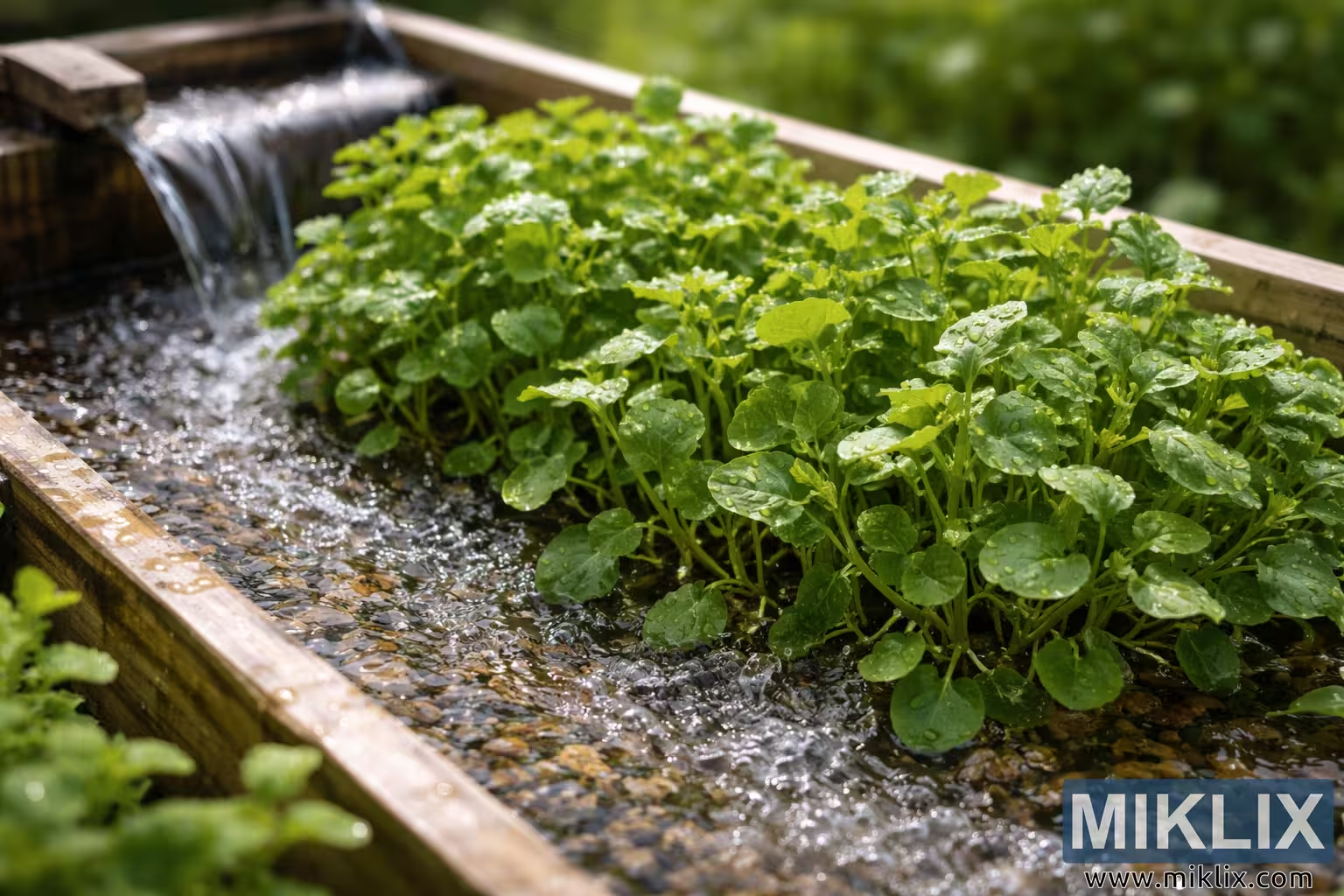
Normale Größe (1,536 x 1,024)
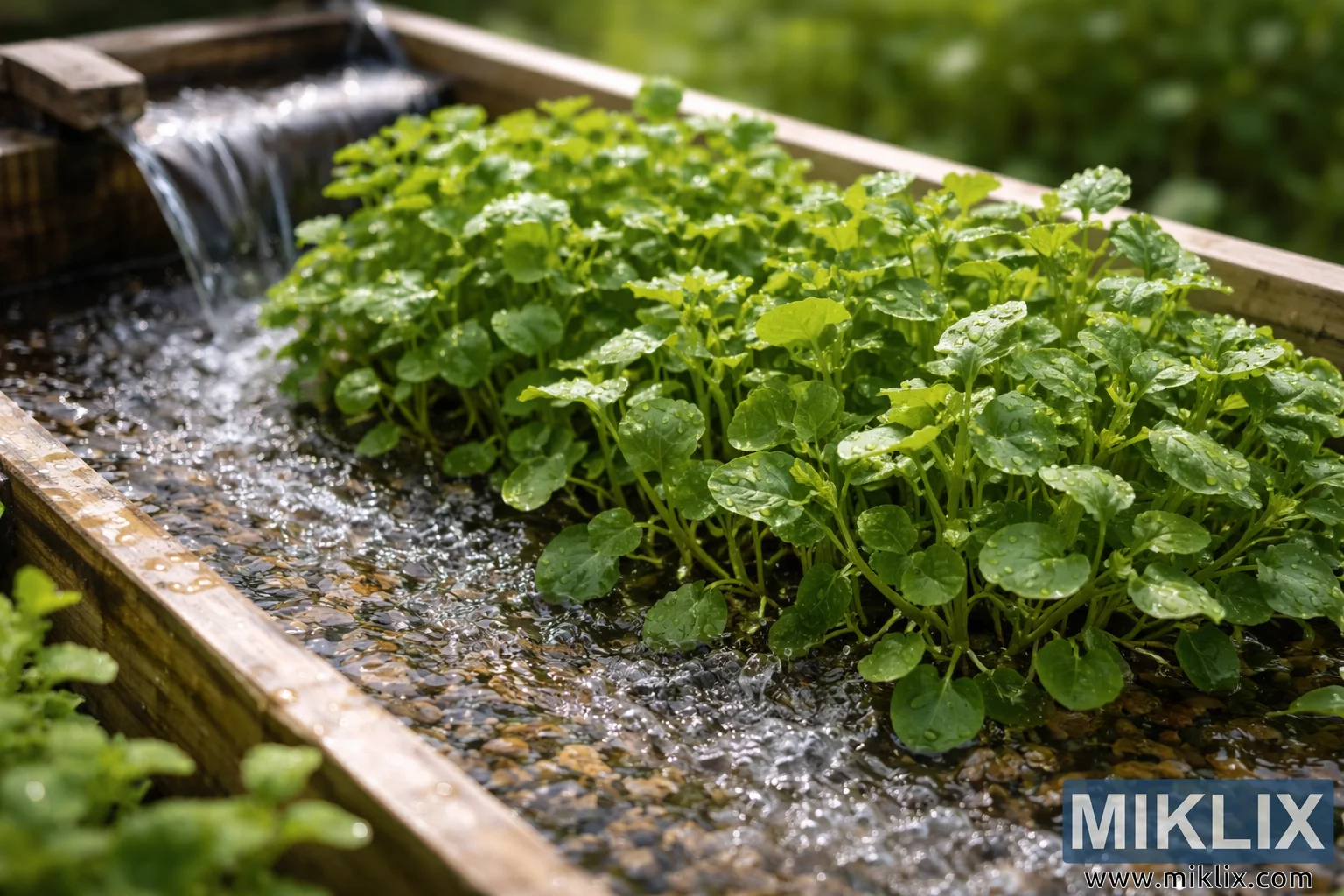
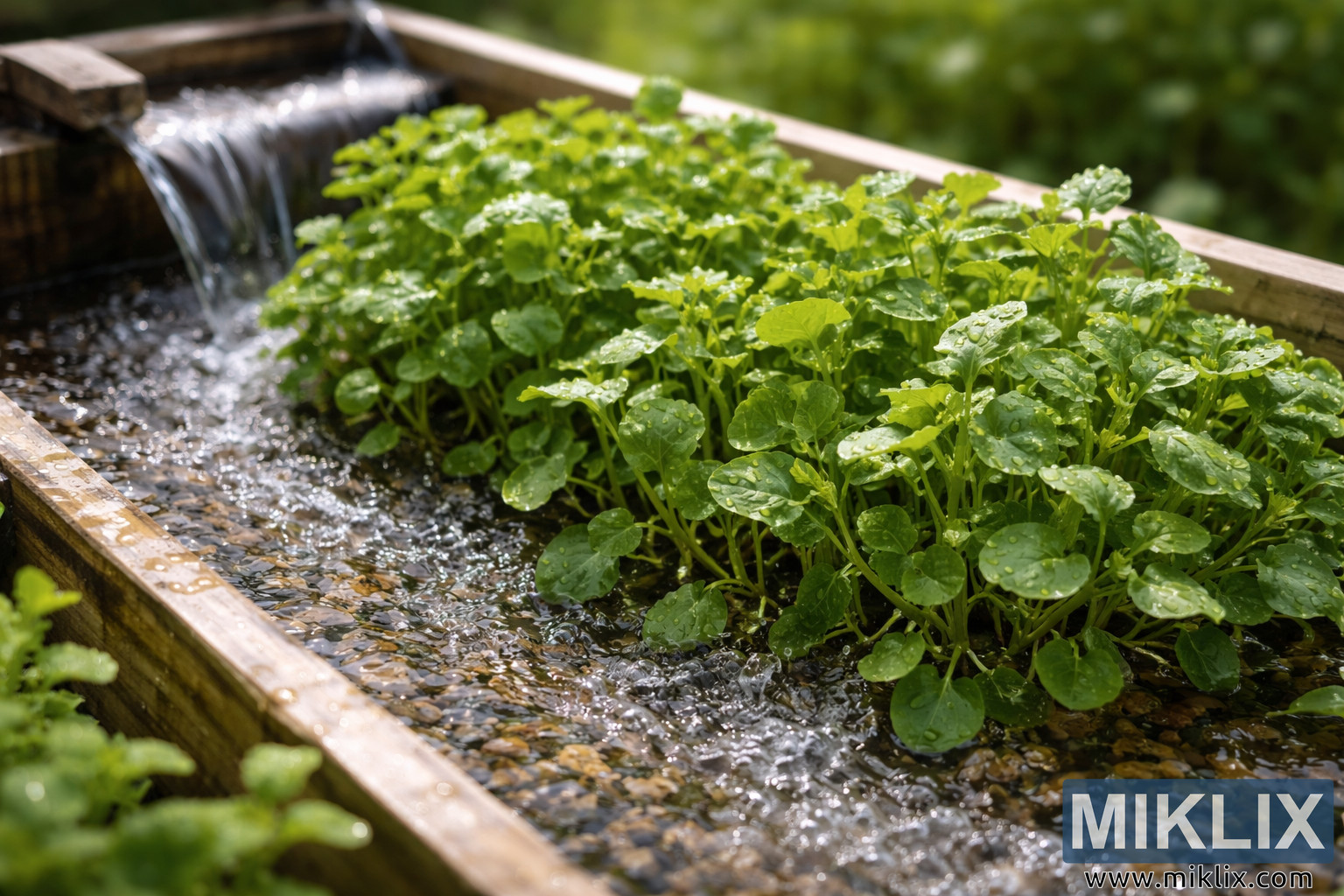
Großes Format (3,072 x 2,048)
Sehr großes Format (4,608 x 3,072)
Extra großes Format (6,144 x 4,096)
Komisch große Größe (1,048,576 x 699,051)
- Ich lade immer noch hoch... ;-)
Bildbeschreibung
A high-resolution landscape photograph captures a thriving bed of fresh watercress growing inside a rustic wooden container designed to channel gently flowing water. The container stretches diagonally across the frame, creating depth and guiding the viewer’s eye from the foreground to the background. Along the left side, a small cascade pours clear water into the trough, producing a soft stream that flows steadily through the shallow bed of smooth, rounded pebbles. The movement of the water creates ripples and glimmering highlights as sunlight reflects off the wet stones and the surface of the stream.
In the center and right side of the container, dense clusters of vibrant green watercress plants rise above the flowing water. Their small, rounded leaves form thick mats of fresh foliage, each leaf catching droplets that sparkle under the bright natural light. The leaves appear healthy and crisp, with subtle variations in green tones ranging from light lime to deeper emerald hues. Thin stems extend down toward the pebbled base, partially submerged where the cool water circulates around their roots.
The photograph uses a shallow depth of field, keeping the watercress in sharp focus while softly blurring the surrounding background. Beyond the container, hints of lush greenery suggest a garden or natural growing environment. The blurred backdrop reinforces the sense of freshness and outdoor vitality while ensuring that the vivid watercress leaves remain the visual focal point.
The wooden frame of the container adds a rustic, natural character to the scene. Its weathered texture contrasts gently with the smooth stones and delicate leaves. Small beads of water cling to the edges of the wood and the plants themselves, emphasizing the moist environment that watercress prefers. The flowing stream not only nourishes the plants but also introduces movement and a soothing, organic rhythm to the composition.
Overall, the image conveys the essence of fresh, healthy cultivation. The combination of running water, bright sunlight, vibrant green leaves, and natural materials creates a scene that feels clean, abundant, and alive. It illustrates an ideal environment for watercress growth, where clear water circulates continuously through a carefully arranged container, supporting dense and flourishing plant life.
Das Bild ist verwandt mit: How to Grow Watercress at Home: A Complete Beginner's Guide