
Bild: Adding Fertilizer to a Thriving Okra Garden Bed
Veröffentlicht:
Zuletzt aktualisiert: 17. März 2026 um 21:37:37 UTC
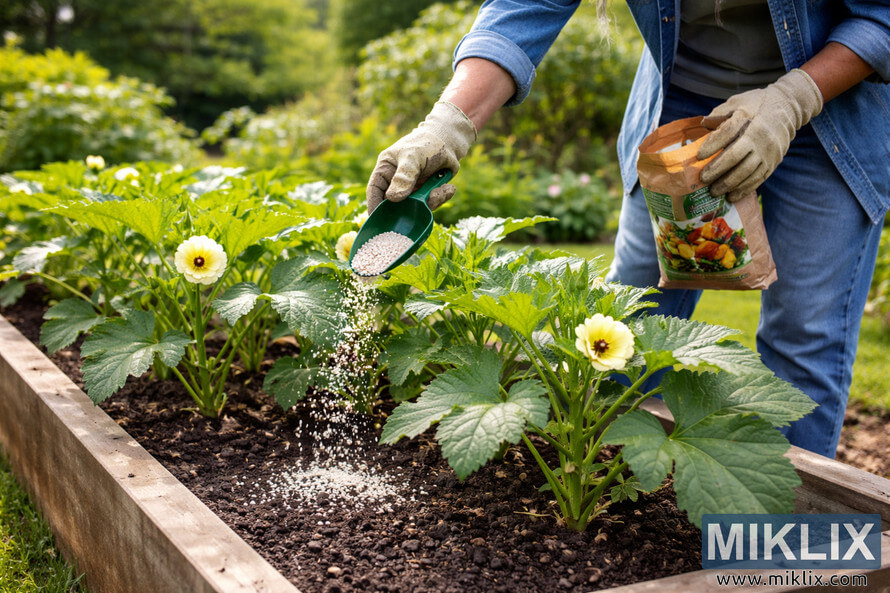
A gardener carefully adds granular fertilizer to a raised bed of vibrant okra plants in a lush outdoor garden, supporting healthy vegetable growth.
Adding Fertilizer to a Thriving Okra Garden Bed
Verfügbare Versionen dieses Bildes
Die Bilddateien, die unten zum Download zur Verfügung stehen, sind weniger komprimiert und haben eine höhere Auflösung - und damit eine höhere Qualität - als die Bilder, die in Artikeln und Seiten auf dieser Website eingebettet sind, die mehr auf Dateigröße optimiert sind, um den Bandbreitenverbrauch zu reduzieren.
Normale Größe (1,536 x 1,024)
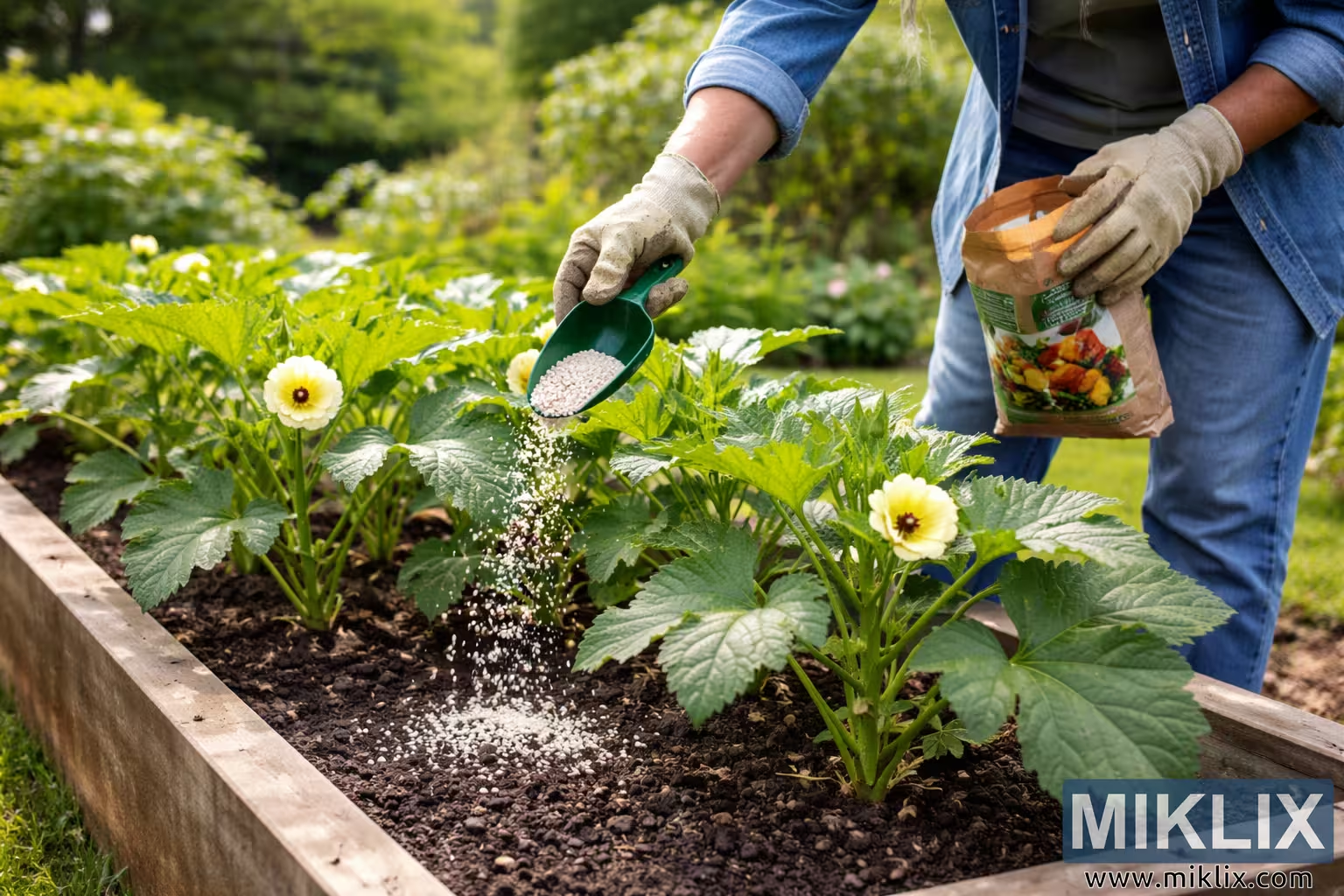
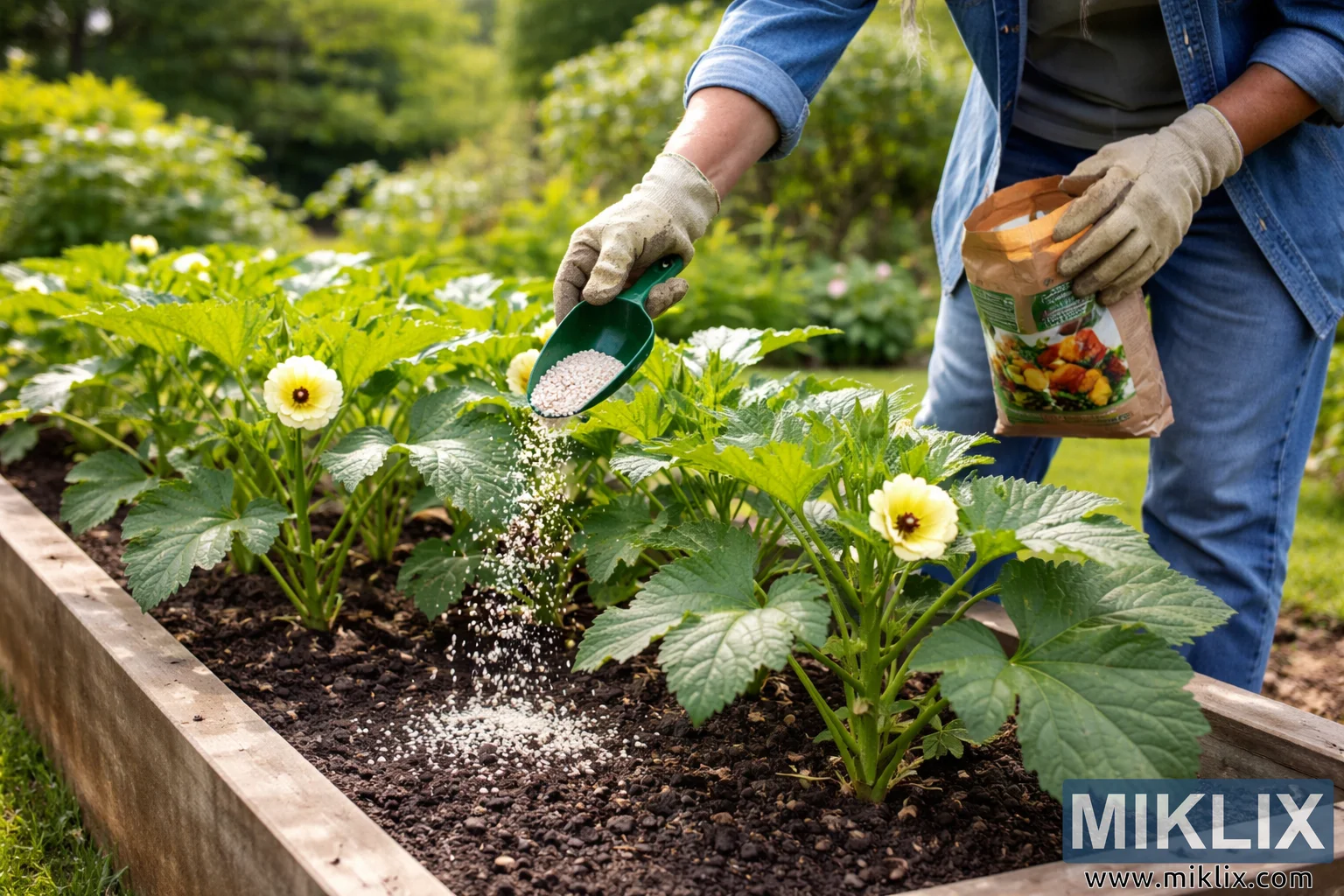
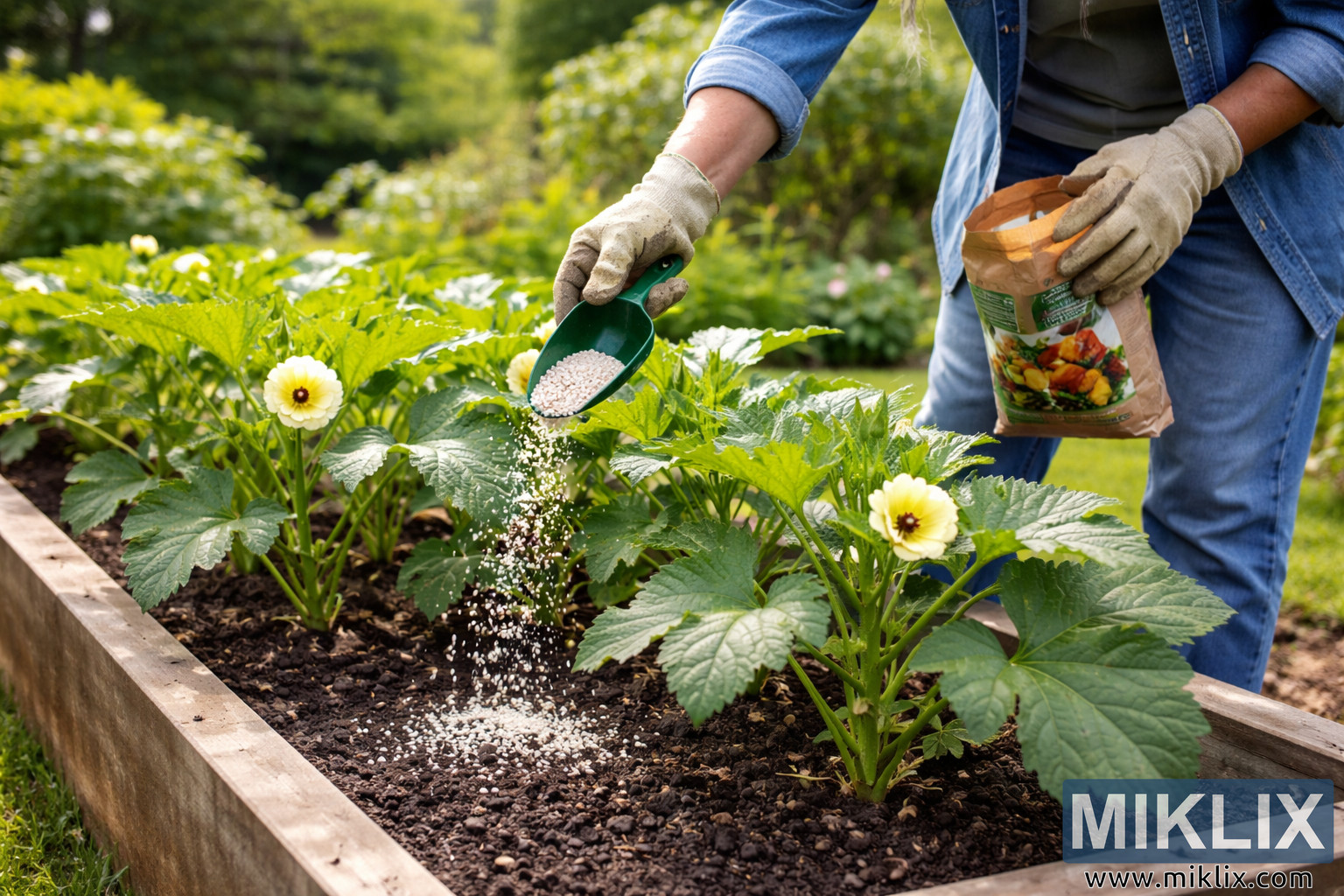
Großes Format (3,072 x 2,048)
Sehr großes Format (4,608 x 3,072)
Extra großes Format (6,144 x 4,096)
Komisch große Größe (1,048,576 x 699,051)
- Ich lade immer noch hoch... ;-)
Bildbeschreibung
A close-up garden scene shows a gardener carefully fertilizing a raised bed filled with healthy okra plants. The wooden garden bed runs horizontally across the image and is filled with rich, dark soil. Several sturdy okra plants grow in neat spacing along the bed, their broad green leaves spreading outward and upward. A few pale yellow okra flowers with dark centers are visible among the foliage, signaling active growth and the promise of developing pods. The vibrant leaves create a dense, lively canopy that contrasts with the dark soil beneath them.
The gardener stands beside the raised bed, partially visible from the torso down. They wear a long-sleeved denim shirt and light-colored gardening gloves that protect their hands while working. In one hand, the gardener holds a green plastic scoop filled with small white granular fertilizer. The scoop is tilted forward, and the fertilizer falls in a steady stream toward the soil around the base of the plants. Individual granules can be seen scattering and landing on the surface of the soil, illustrating the act of feeding the plants with nutrients.
In the gardener’s other hand is a brown paper bag of fertilizer, slightly crumpled from use. The bag features a colorful label with images of vegetables, indicating that the product is designed for garden crops. The gardener appears focused and methodical, applying the fertilizer evenly along the row so each plant receives nourishment. The careful placement suggests good gardening practice, ensuring nutrients reach the root zone without overwhelming the plants.
The background of the image is softly blurred, revealing a lush garden environment with green foliage and hints of other plants beyond the raised bed. Sunlight filters through the garden, casting a warm and natural light across the scene. The lighting highlights the glossy texture of the okra leaves and the light color of the flowers, while also illuminating the falling fertilizer granules.
Overall, the photograph captures a moment of attentive garden care. It illustrates the process of maintaining vegetable plants by enriching the soil with nutrients, an essential step for promoting healthy growth and productive harvests. The combination of vibrant plant life, gardening tools, and human hands at work conveys the rhythm of hands-on gardening and the dedication required to cultivate a thriving vegetable garden.
Das Bild ist verwandt mit: The Complete Guide to Growing Okra in Your Home Garden