
Bild: Nectarine Nutritional Content Infographic with Vitamins and Minerals
Veröffentlicht:
Zuletzt aktualisiert: 31. Mai 2026 um 16:50:52 UTC
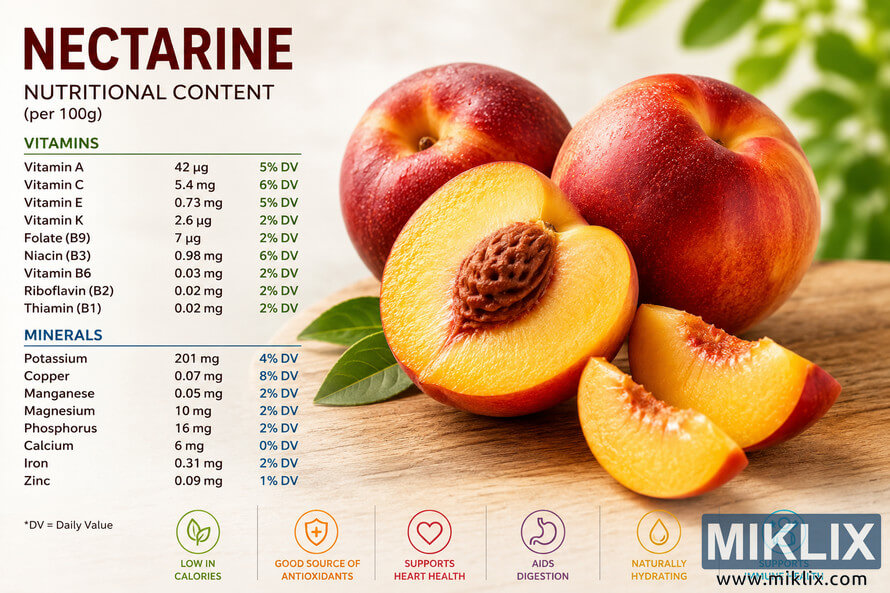
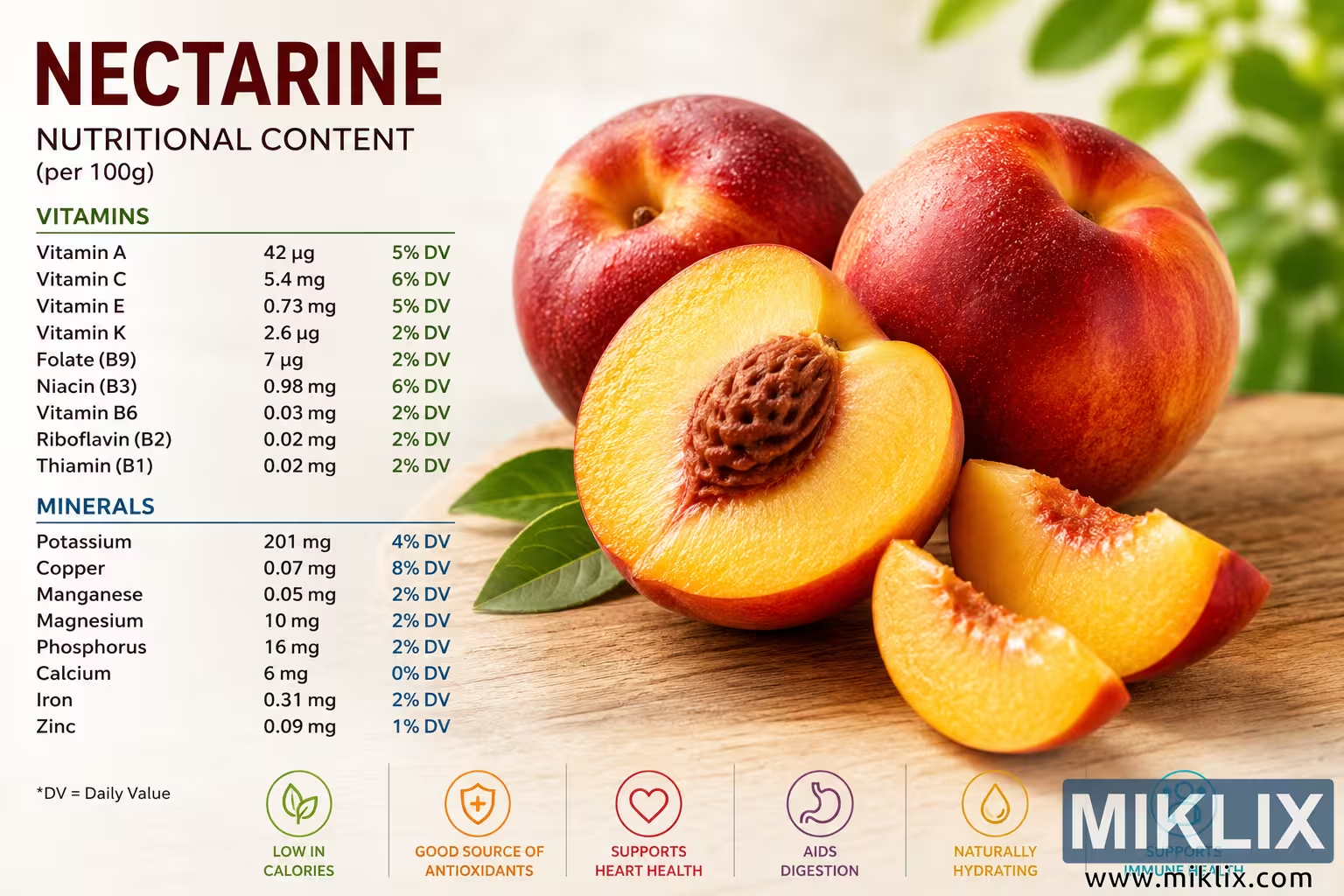
Explore a high-resolution nectarine nutrition infographic displaying vitamins, minerals, daily values, and health benefits. The image features realistic whole and sliced nectarines in a clean landscape layout ideal for educational, wellness, and healthy eating content.
Nectarine Nutritional Content Infographic with Vitamins and Minerals
Verfügbare Versionen dieses Bildes
Die Bilddateien, die unten zum Download zur Verfügung stehen, sind weniger komprimiert und haben eine höhere Auflösung - und damit eine höhere Qualität - als die Bilder, die in Artikeln und Seiten auf dieser Website eingebettet sind, die mehr auf Dateigröße optimiert sind, um den Bandbreitenverbrauch zu reduzieren.
Normale Größe (1,536 x 1,024)
Großes Format (3,072 x 2,048)
Sehr großes Format (4,608 x 3,072)
Extra großes Format (6,144 x 4,096)
Komisch große Größe (1,048,576 x 699,051)
- Ich lade immer noch hoch... ;-)
Bildbeschreibung
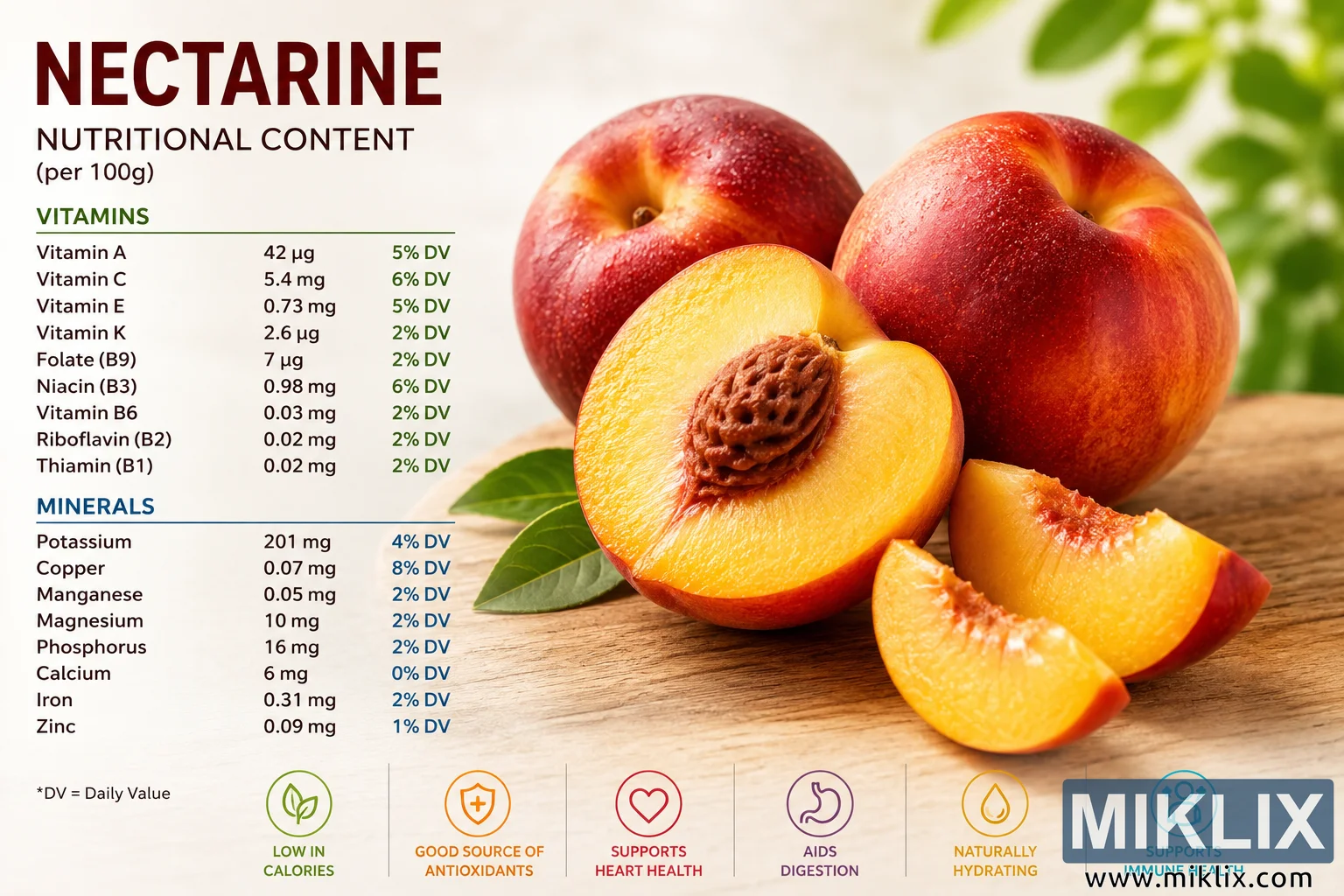
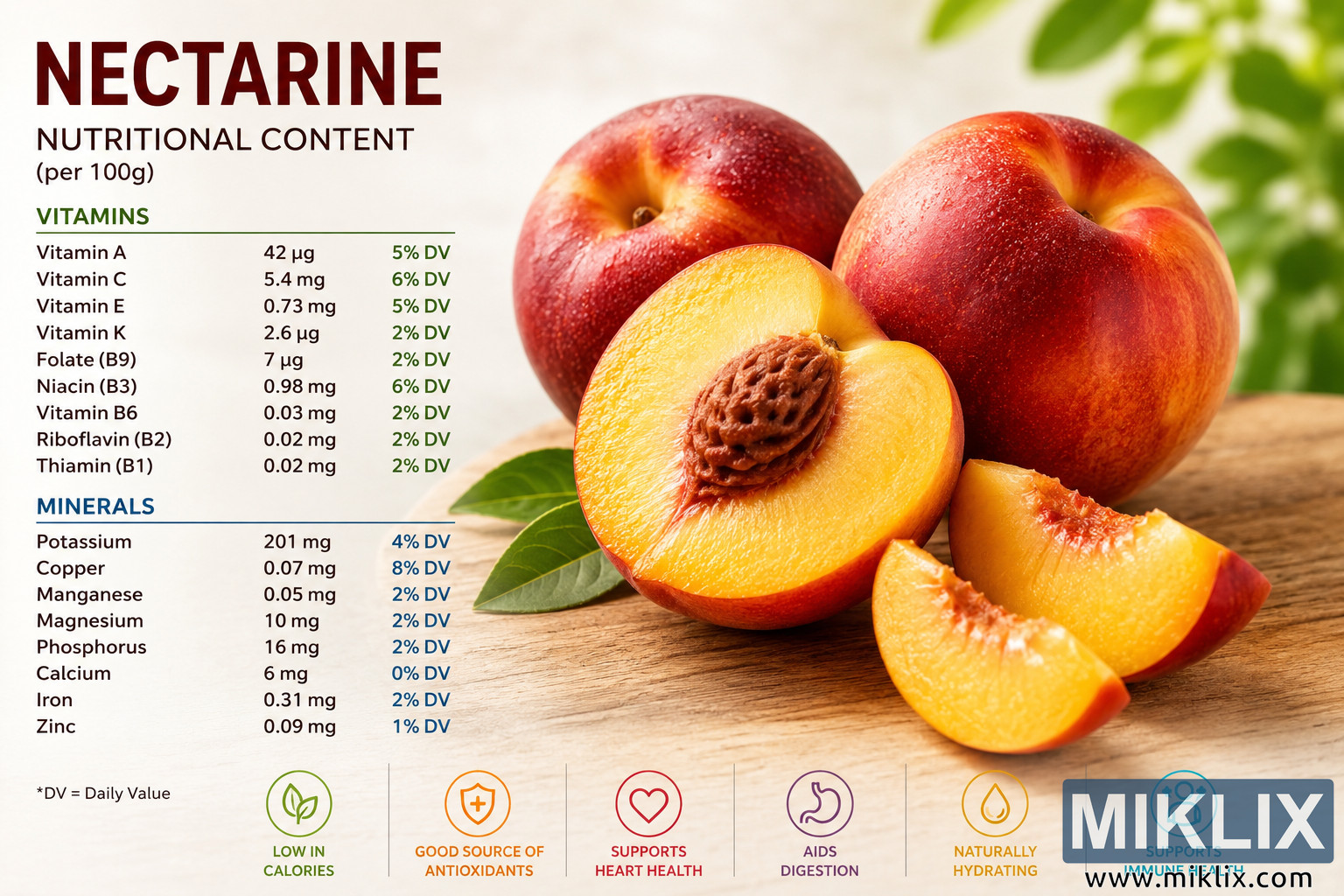
This high-resolution landscape infographic presents a visually appealing and educational overview of nectarine nutritional content, combining realistic fruit photography with organized nutrition data in a clean modern design. The composition is divided into two primary sections. On the left side, a detailed nutritional information panel displays vitamins and minerals commonly found in nectarines, while the right side showcases several fresh nectarines arranged on a natural wooden surface.
The headline at the upper left corner reads “NECTARINE NUTRITIONAL CONTENT” in large bold typography, immediately drawing attention to the subject of the infographic. Beneath the title, a subtitle indicates that the nutritional values are measured per 100 grams of fruit. The layout uses a clean light background with subtle gradients that help emphasize readability while maintaining a fresh and natural appearance.
The vitamin section is organized into a structured list with nutrient names aligned on the left and corresponding values and daily value percentages aligned on the right. Vitamins displayed include Vitamin A, Vitamin C, Vitamin E, Vitamin K, Folate (B9), Niacin (B3), Vitamin B6, Riboflavin (B2), and Thiamin (B1). Each nutrient entry is separated with careful spacing to improve legibility. Green accent lines and typography are used to visually distinguish the vitamins category.
Below the vitamin list, a minerals section is presented using a similar layout style. Minerals shown include Potassium, Copper, Manganese, Magnesium, Phosphorus, Calcium, Iron, and Zinc. Blue accent colors differentiate this section from the vitamins category while maintaining consistency in typography and spacing. Daily value percentages are shown beside many of the minerals to provide context for nutritional importance.
The right half of the image prominently features realistic nectarines rendered with high detail and vibrant color. Two whole nectarines with smooth reddish-orange skin are positioned in the background, displaying natural texture, subtle color variation, and soft reflective highlights that suggest freshness. In the foreground, one nectarine is sliced open to reveal bright golden-yellow flesh and a textured brown pit in the center. Additional sliced wedges are arranged nearby to create depth and visual balance.
The fruit rests on a warm wooden tabletop that adds an organic and natural atmosphere to the composition. Small green leaves are placed around the nectarines, enhancing the fresh produce aesthetic. The background contains softly blurred green foliage and bright natural light effects, producing a healthy lifestyle and farm-fresh feeling.
Along the bottom portion of the infographic, a row of colorful circular health icons visually communicates the nutritional benefits of nectarines. These icons include symbols representing low calories, antioxidant support, heart health, digestion, hydration, and immune system support. Each icon is paired with concise descriptive text in a clean sans-serif font. The icons use varied accent colors including green, orange, red, purple, yellow, and blue to create visual diversity while maintaining harmony with the overall design.
Lighting throughout the image is soft and natural, with realistic shadows and highlights that enhance the dimensionality of the fruit. The infographic style balances educational clarity with commercial-quality food photography, making the image suitable for nutrition blogs, health websites, recipe platforms, wellness articles, educational materials, grocery marketing, and healthy lifestyle presentations.
The overall design communicates freshness, nutrition, and wellness through a combination of clean typography, organized nutritional data, warm natural textures, and vivid fruit imagery. The landscape orientation provides ample space for both the detailed nutrient information and the visually rich fruit arrangement, resulting in an infographic that is informative, inviting, and highly professional in appearance.
Das Bild ist verwandt mit: Health Benefits of Nectarines: A Complete Guide to This Nutrient-Rich Stone Fruit