
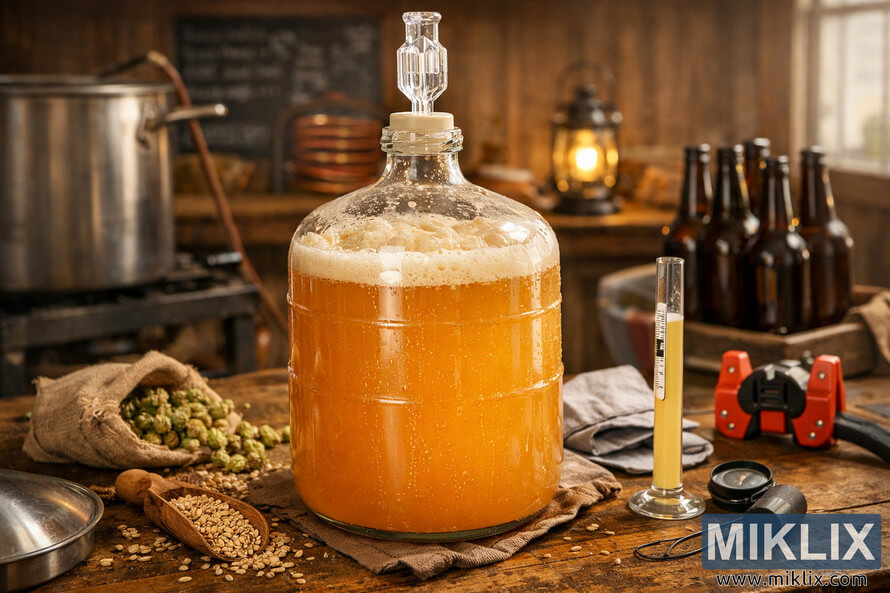
Εικών: Hazy Ale Fermentation in a Rustic Homebrew Setting
Δημοσιεύθηκε:
Τελευταία ενημέρωση: 17 Μαΐου 2026 στις 7:29:04 μ.μ. UTC
A detailed depiction of a traditional American homebrewing scene featuring a glass carboy of hazy ale fermenting on a rustic wooden table, surrounded by brewing tools, ingredients, and warm ambient lighting.
Hazy Ale Fermentation in a Rustic Homebrew Setting
Διαθέσιμες εκδόσεις αυτής της εικόνας
Τα αρχεία εικόνων που διατίθενται για λήψη παρακάτω είναι λιγότερο συμπιεσμένα και υψηλότερης ανάλυσης - και ως αποτέλεσμα αυτού, υψηλότερης ποιότητας - από τις εικόνες που είναι ενσωματωμένες σε άρθρα και σελίδες αυτού του ιστότοπου, οι οποίες είναι περισσότερο βελτιστοποιημένες ως προς το μέγεθος των αρχείων για να μειωθεί η κατανάλωση εύρους ζώνης.
Κανονικό μέγεθος (1,536 x 1,024)
Μεγάλο μέγεθος (3,072 x 2,048)
Πολύ μεγάλο μέγεθος (4,608 x 3,072)
Εξαιρετικά μεγάλο μέγεθος (6,144 x 4,096)
Κωμικά μεγάλο μέγεθος (1,048,576 x 699,051)
- Ακόμα ανεβάζω... ;-)
Περιγραφή εικόνας
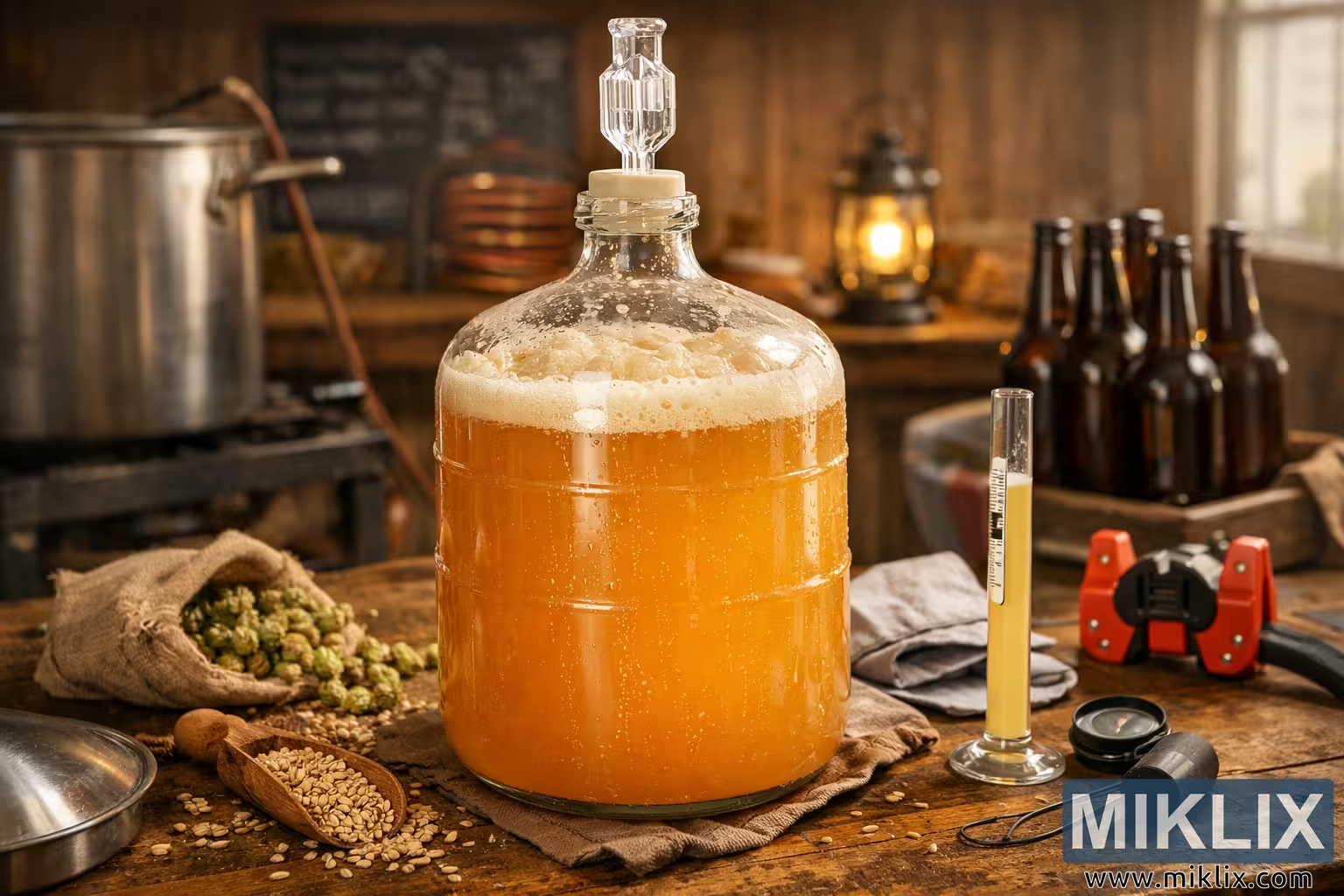
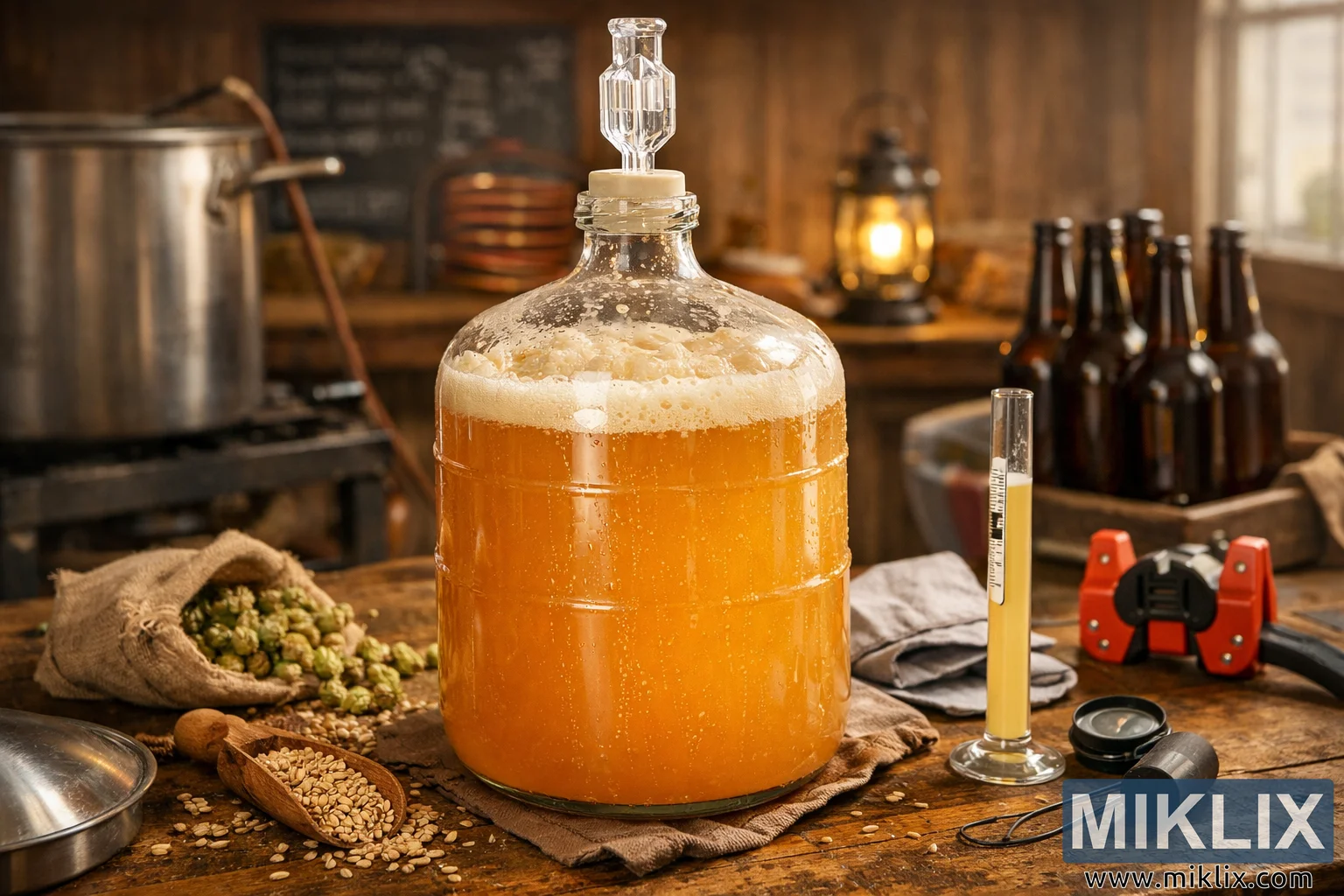
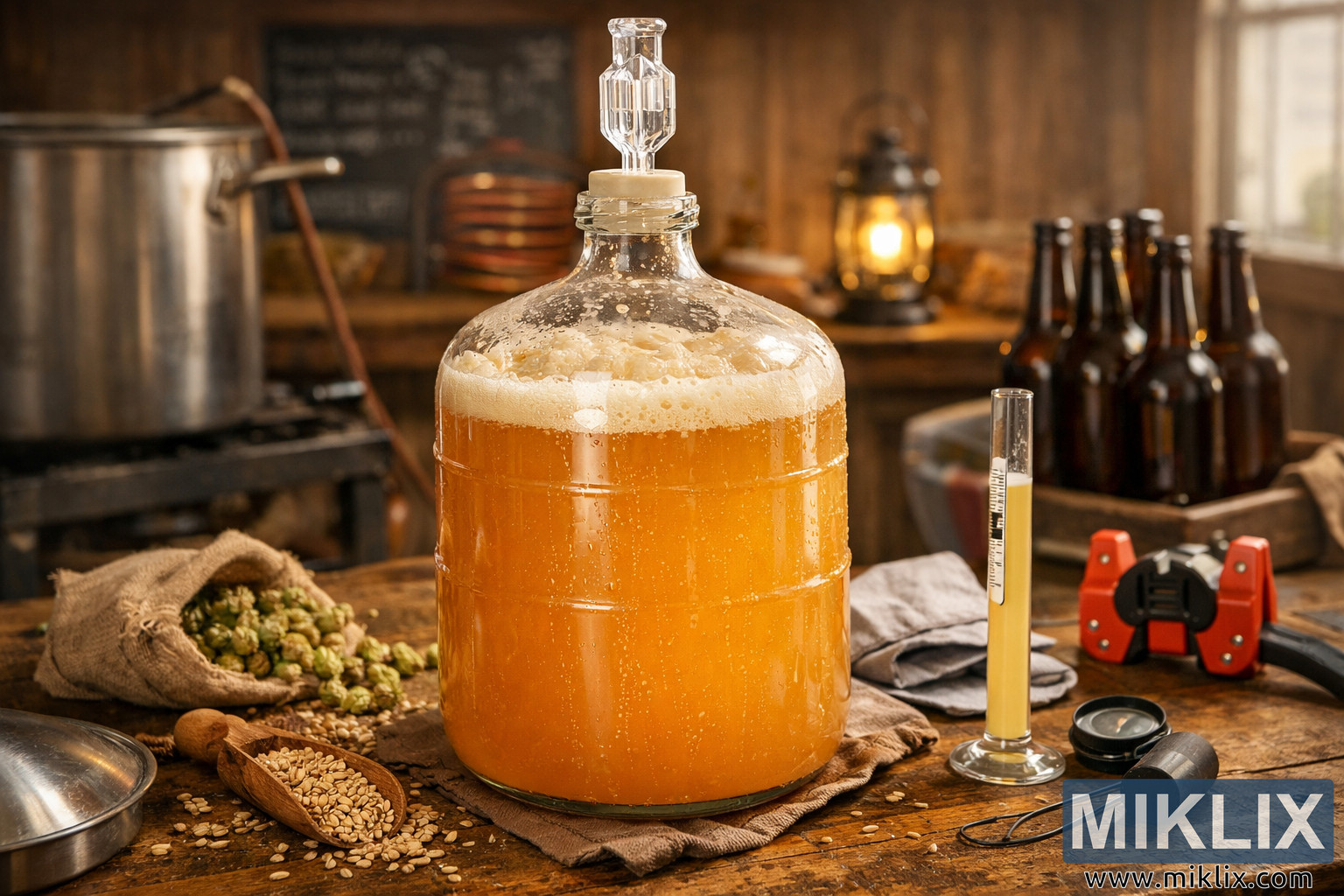
The image portrays a richly detailed homebrewing environment centered around a large glass carboy filled with hazy, golden-orange ale in the midst of fermentation. The carboy dominates the composition, positioned on a rustic wooden table that bears the marks of years of use—scratches, stains, and a slightly uneven surface that speaks to the authenticity of the setting. The ale inside the carboy is opaque and glowing softly under warm light, its color reminiscent of ripe apricots and honey. A thick layer of frothy foam crowns the liquid, forming a krausen ring near the neck of the vessel, evidence of active fermentation. Tiny bubbles rise through the beer, and the airlock attached to the rubber stopper at the top shows faint movement, suggesting the slow release of carbon dioxide as yeast transforms sugars into alcohol.
Around the carboy, the table is scattered with the tools and ingredients of the brewer’s craft. To the left, a burlap sack spills dried hop cones onto the table, their greenish hue contrasting with the warm tones of the wood. A wooden scoop rests nearby, filled with pale malted barley—some grains scattered loosely across the surface. Behind these, a stainless steel pot with a lid hints at the earlier stages of brewing, when wort was boiled and hops were added for flavor and aroma.
To the right of the carboy, a hydrometer stands upright in a tall, clear test jar filled with pale liquid, ready to measure the beer’s specific gravity. A red bottle capper with black handles lies beside it, along with a digital thermometer whose coiled probe rests casually on the table. Several empty brown glass bottles stand in the background, waiting to be filled once fermentation is complete. A small folded cloth sits beneath the carboy, protecting the table from condensation or spills.
The background of the scene deepens the sense of place. A chalkboard hangs on the wall, faintly covered with brewing notes and calculations—perhaps the recipe for this very batch. A copper coil, part of a wort chiller, is partially visible, its metallic sheen catching the light. A lantern glows warmly in the corner, casting a soft amber illumination that enhances the cozy, handcrafted atmosphere. The interplay of light and shadow throughout the image evokes the quiet satisfaction of homebrewing: the patience, the craft, and the anticipation of tasting the finished ale.
Every element contributes to the narrative of tradition and care. The rustic wooden table anchors the composition, its texture complementing the organic shapes of the hops and barley. The glass carboy, with its smooth curves and transparent surface, becomes a vessel of transformation—both literal and symbolic. The scene captures a moment suspended in time, where science meets artistry, and the brewer’s environment reflects both precision and passion.
The lighting is intentionally warm and directional, emphasizing the golden tones of the ale and the earthy palette of the surrounding materials. The depth of field is moderate: the carboy and immediate tools are sharply defined, while the background softens into a gentle blur, guiding the viewer’s focus toward the central act of fermentation. The composition balances technical detail with emotional resonance, inviting the viewer to imagine the faint scent of malt and hops, the quiet bubbling of the airlock, and the satisfaction of a craft well-practiced.
This image is not merely a depiction of brewing equipment—it is a portrait of dedication and tradition. It celebrates the tactile beauty of homebrewing, the harmony between natural ingredients and human ingenuity, and the timeless appeal of creating something by hand. The hazy ale within the carboy glows like a beacon of craftsmanship, embodying the spirit of experimentation and the joy of savoring one’s own creation.
Η εικόνα σχετίζεται με: Fermenting Beer with White Labs WLP067 Coastal Haze Ale Yeast Blend