
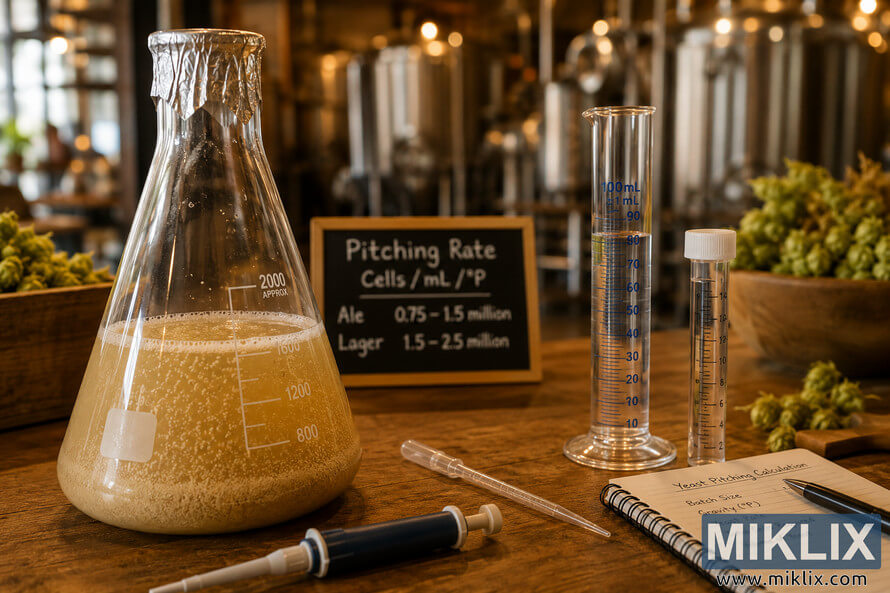
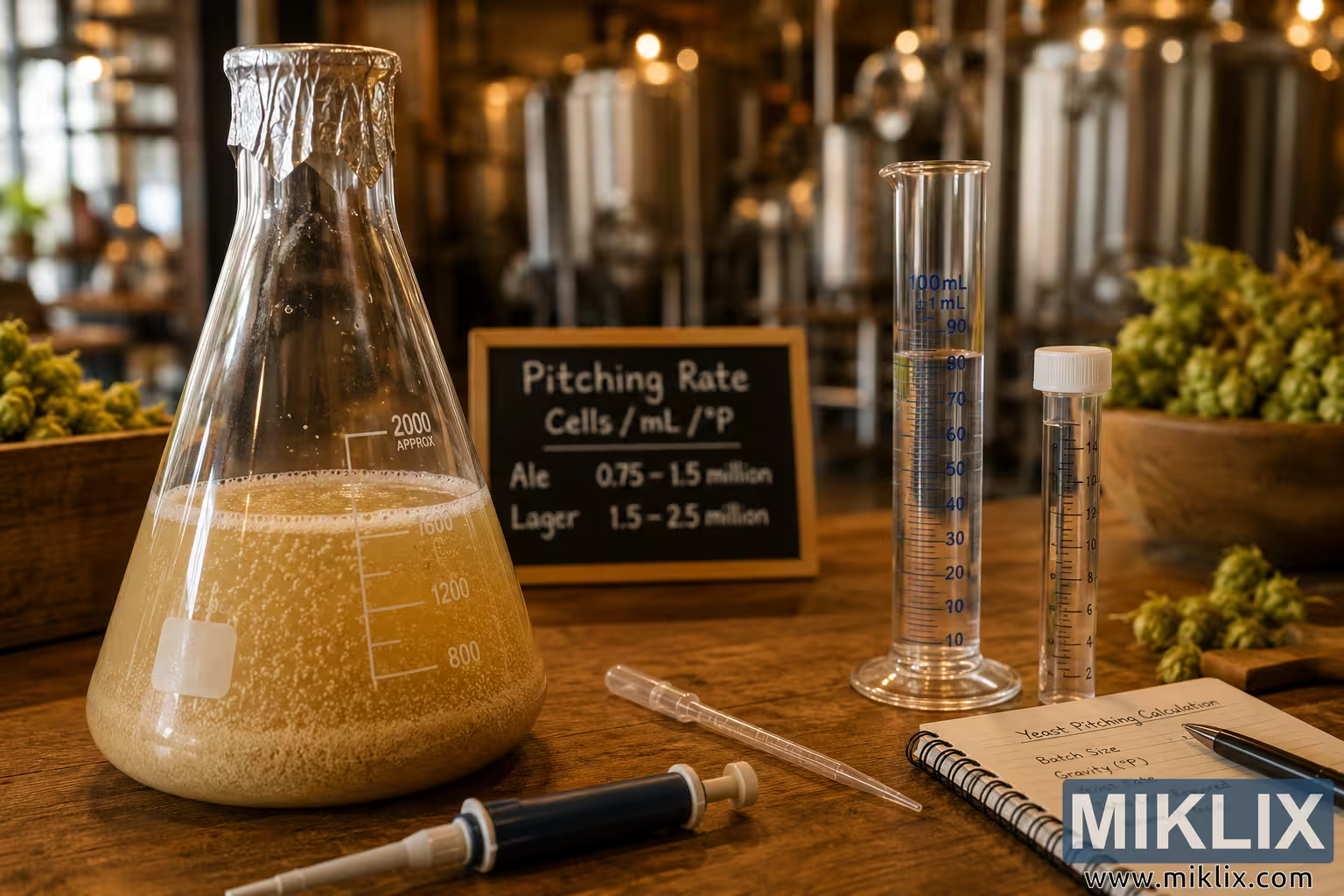
Εικών: Illustration of Yeast Pitching Rate Measurement in a Warm Craft Brewery Laboratory
Δημοσιεύθηκε:
Τελευταία ενημέρωση: 13 Ιουλίου 2026 στις 7:42:15 μ.μ. UTC
Detailed illustration of yeast pitching rate measurement in brewing, featuring a sterile flask with active yeast slurry, laboratory measuring tools, hops, and a warm craft brewery background that highlights precision, fermentation science, and quality brewing practices.
Illustration of Yeast Pitching Rate Measurement in a Warm Craft Brewery Laboratory
Διαθέσιμες εκδόσεις αυτής της εικόνας
Τα αρχεία εικόνων που διατίθενται για λήψη παρακάτω είναι λιγότερο συμπιεσμένα και υψηλότερης ανάλυσης - και ως αποτέλεσμα αυτού, υψηλότερης ποιότητας - από τις εικόνες που είναι ενσωματωμένες σε άρθρα και σελίδες αυτού του ιστότοπου, οι οποίες είναι περισσότερο βελτιστοποιημένες ως προς το μέγεθος των αρχείων για να μειωθεί η κατανάλωση εύρους ζώνης.
Κανονικό μέγεθος (1,536 x 1,024)
Μεγάλο μέγεθος (3,072 x 2,048)
Πολύ μεγάλο μέγεθος (4,608 x 3,072)
Εξαιρετικά μεγάλο μέγεθος (6,144 x 4,096)
Κωμικά μεγάλο μέγεθος (1,048,576 x 699,051)
- Ακόμα ανεβάζω... ;-)
Περιγραφή εικόνας
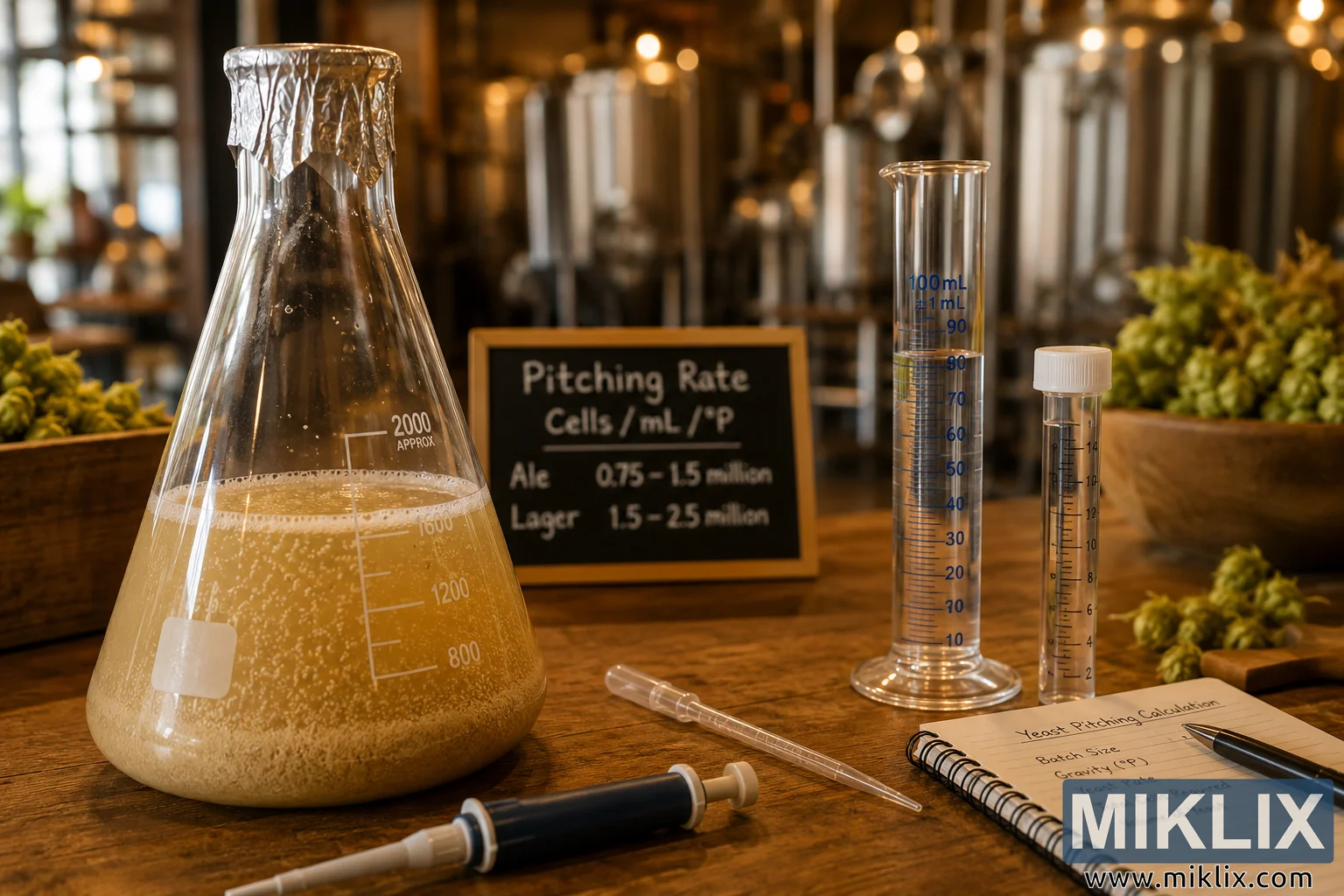
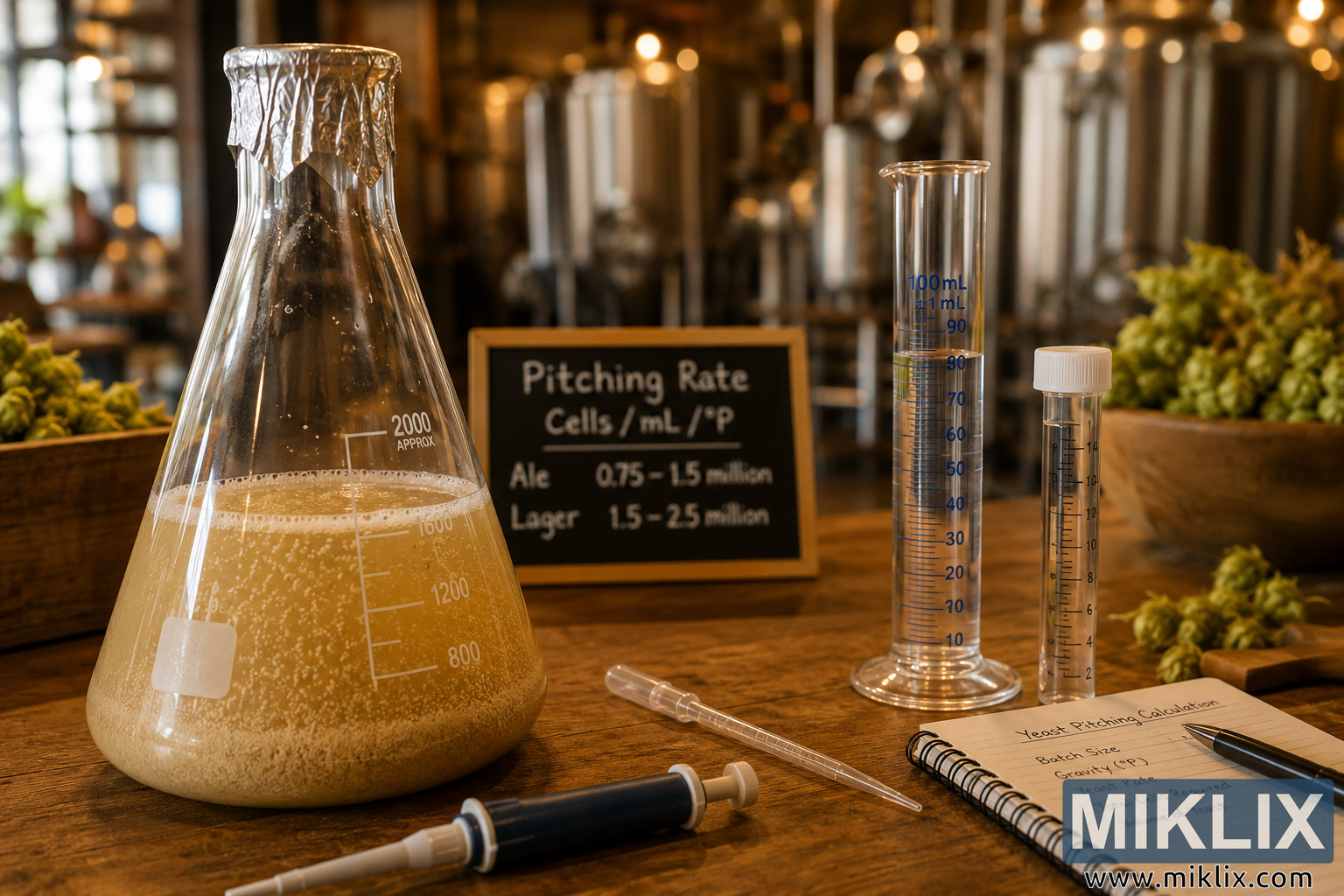
This detailed landscape-oriented illustration presents the concept of yeast pitching rates within the context of brewing science, emphasizing precision, cleanliness, and the careful preparation required for successful fermentation. The composition is arranged to naturally guide the viewer's attention from the highly detailed foreground into the softly blurred brewery environment in the distance, creating a sense of depth while reinforcing the educational focus of the scene.
Dominating the foreground is a large, sterile laboratory flask resting on a sturdy wooden workbench. The transparent glass vessel contains a pale golden yeast slurry with a slightly cloudy appearance, suggesting a healthy suspension of brewing yeast. Countless tiny bubbles rise gently throughout the liquid, subtly indicating active fermentation and living yeast metabolism without becoming visually distracting. The flask is sealed with a protective covering, reinforcing sanitary laboratory practices that are essential during yeast propagation and handling. Soft reflections along the curved glass emphasize its cleanliness and transparency while adding realism to the illustration.
Surrounding the flask are several laboratory measuring instruments that symbolize the precision required when determining pitching rates. A tall graduated cylinder stands upright with clearly visible volume markings, while a pipette lies neatly on the work surface, ready for transferring carefully measured samples. Nearby rests an additional measuring tube and a laboratory syringe-like transfer tool, all positioned in an orderly arrangement that communicates professionalism, accuracy, and repeatability. Their placement visually reinforces the importance of measuring yeast cell concentration and transfer volumes during brewing operations.
Behind these instruments sits a small educational chalkboard displaying simplified pitching-rate information. While not intended as a scientifically exact reference, it visually reinforces the educational purpose of the illustration by introducing the concept of recommended yeast cell counts for different beer styles. Beside the board lies an open notebook containing handwritten brewing calculations related to batch size, gravity, yeast rate, and total cell estimates. A pen rests naturally across the page, suggesting an active brewing session where measurements are being recorded and evaluated.
The workbench itself is crafted from warm-toned wood whose subtle grain complements the laboratory glassware and contributes to the welcoming atmosphere commonly associated with small craft breweries. Scattered around the workspace are fresh green hop cones gathered in rustic wooden containers. Their vibrant color contrasts beautifully with the golden yeast slurry and amber lighting while reminding viewers of another essential brewing ingredient. The hops remain secondary to the laboratory equipment, supporting rather than distracting from the central educational message about yeast management.
Moving into the middle and background, the environment gradually transitions into a softly blurred brewery interior. Large stainless-steel brewing vessels, fermentation tanks, polished piping, and industrial equipment become recognizable despite the shallow depth of field. This intentional blur keeps the viewer's focus on the foreground laboratory tools while providing important context that the measurements are taking place within an active brewing facility rather than a generic laboratory. The background conveys professionalism, cleanliness, and a functioning production environment without overwhelming the primary subject.
Warm ambient lighting fills the entire scene with soft golden highlights and gentle shadows that create a comfortable, inviting mood reminiscent of a modern craft brewery tasting room combined with a quality-control laboratory. The lighting accentuates the contours of the glassware, reflects subtly from the stainless-steel equipment in the distance, and enriches the natural wood textures. The overall color palette blends warm amber, pale gold, natural wood browns, silver metallic tones, and vibrant hop greens to produce a visually balanced and approachable educational illustration.
The camera perspective is slightly elevated, allowing viewers to simultaneously appreciate the detailed laboratory setup in the foreground and the broader brewing environment behind it. This viewpoint effectively communicates that yeast pitching rates represent an important bridge between scientific measurement and practical brewing. Overall, the illustration conveys themes of microbiology, fermentation science, quality control, brewing precision, sanitation, consistency, and craftsmanship. It serves as an engaging visual representation of proper yeast management practices, making complex brewing concepts accessible through a clean, organized, and inviting composition that celebrates both the scientific and artisanal aspects of beer production.
Η εικόνα σχετίζεται με: Fermenting Beer with White Labs WLP410 Belgian Wit II Ale Yeast