
Fermenting Beer with White Labs WLP840 American Lager Yeast
Δημοσιεύθηκε:
Τελευταία ενημέρωση: 23 Μαΐου 2026 στις 4:26:11 μ.μ. UTC
WLP840 is ideal for brewers aiming for a clean finish. It has a neutral flavor profile, with low fruity esters and minimal sulfur at optimal temperatures. Expect steady attenuation and clear results after conditioning.
Fermenting Beer with White Labs WLP840 American Lager Yeast
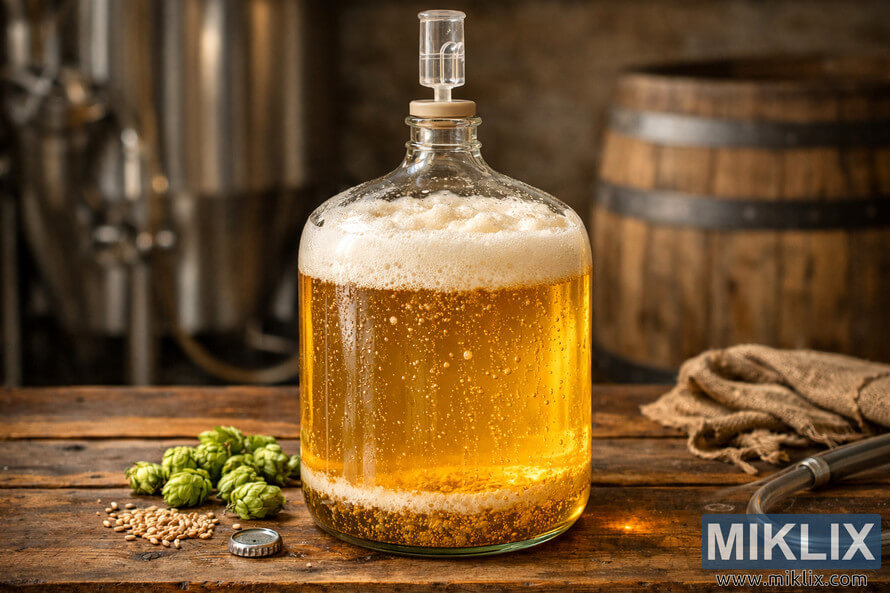
Κάντε κλικ ή πατήστε την εικόνα για περισσότερες πληροφορίες και υψηλότερες αναλύσεις.
White Labs WLP840 American Lager Yeast is a modern strain designed for clean fermentation and steady attenuation. This liquid culture is favored by homebrewers and craft brewers for its predictable results and crisp finish.
Key Takeaways
- White Labs WLP840 American Lager Yeast offers a neutral, clean ferment suited to crisp lagers.
- This White Labs WLP840 review focuses on practical steps for homebrewers and small pro brewers.
- Expect predictable attenuation and straightforward temperature control requirements.
- The guide includes pitching rates, starter recipes, and troubleshooting for fermenting beer.
- Target readers are extract and all-grain homebrewers in the United States seeking pro-level lagers.
Why Choose White Labs WLP840 American Lager Yeast for Homebrewing
WLP840 typically reaches moderate to high attenuation, often between 75–80%. This lager attenuation ensures a crisp, dry finish without losing malt character. Its medium to high flocculation aids in clarity after a few weeks of cold conditioning.
Below are practical points for quick reference:
- Neutral ester production promotes malt and hop clarity.
- Moderate to high attenuation yields a drier mouthfeel.
- Medium-high flocculation speeds clearing during lagering.
Comparing WLP840 with classic European strains reveals distinct differences. Traditional S. pastorianus isolates like Wyeast 2124 Bohemian Lager and White Labs WLP830 German Lager often have more regional character. They require longer cold aging. WLP840 ferments slightly faster and performs well a touch warmer, making it suitable for many homebrewers with limited temperature control.
WLP840’s reduced ester profile and brisk finish are perfect for American lager styles. It excels in recipes that demand neutrality, crispness, and drinkability.
Recommended beer styles include:
- Pilsners and light lagers where malt crispness is key.
- American adjunct lagers and international pale lagers.
- Hybrid beers such as cream ales and cold-fermented blond ales seeking a cleaner yeast signature.
When choosing between strains, consider your fermentation goals. If you aim for a neutral platform to highlight malt and hops, WLP840 is a top choice. For traditional European nuance, a classic lager strain might be better.
Κάντε κλικ ή πατήστε την εικόνα για περισσότερες πληροφορίες και υψηλότερες αναλύσεις.
Understanding Lager Fermentation Basics
Mastering fermentation begins with understanding the basics. This concise guide outlines essential steps for crafting clean lagers and avoiding unexpected issues during conditioning.
The distinction between primary and secondary fermentation is crucial for flavor and clarity. Primary fermentation is where yeast transforms sugars into alcohol and CO2. This phase is key for alcohol production and establishing the beer's attenuation. Secondary, or conditioning, is a step where flavors mature and solids settle. For lagers, primary fermentation typically lasts longer at cooler temperatures than ales. Following primary, a prolonged near-freezing secondary—lagering—enhances the beer's crispness and clarity.
Temperature plays a significant role in shaping the beer's character. Maintaining a consistent temperature during lager fermentation is critical. Cooler, steady temperatures help suppress ester and sulfur production. Lager strains, such as White Labs WLP840, thrive in cooler ranges compared to ale yeasts. Consistent fermentation temperatures lead to cleaner flavors and a smoother finish. Avoiding large temperature fluctuations can prevent yeast stress and unwanted compounds.
Common pitfalls during fermentation can spoil a good brew. Issues like underpitching, poor oxygenation, temperature fluctuations, and inadequate sanitation are frequent culprits. Each problem has a straightforward solution.
- Underpitching: accurately calculate pitching rates. Create a starter when cell counts are low or when scaling up to larger batches.
- Poor oxygenation: aerate or oxygenate wort before pitching to ensure yeast has a healthy start.
- Temperature spikes: employ a fermentation fridge, controller, or water bath to maintain steady temperatures during active fermentation.
- Sanitation lapses: sanitize all equipment that comes into contact with wort after boiling to prevent contamination.
Monitoring activity and gravity readings helps catch issues early. Timely intervention can mitigate damage and shorten recovery times. By focusing on proper pitching, oxygenation, and temperature control, you can sidestep common pitfalls and produce clean, balanced lagers.
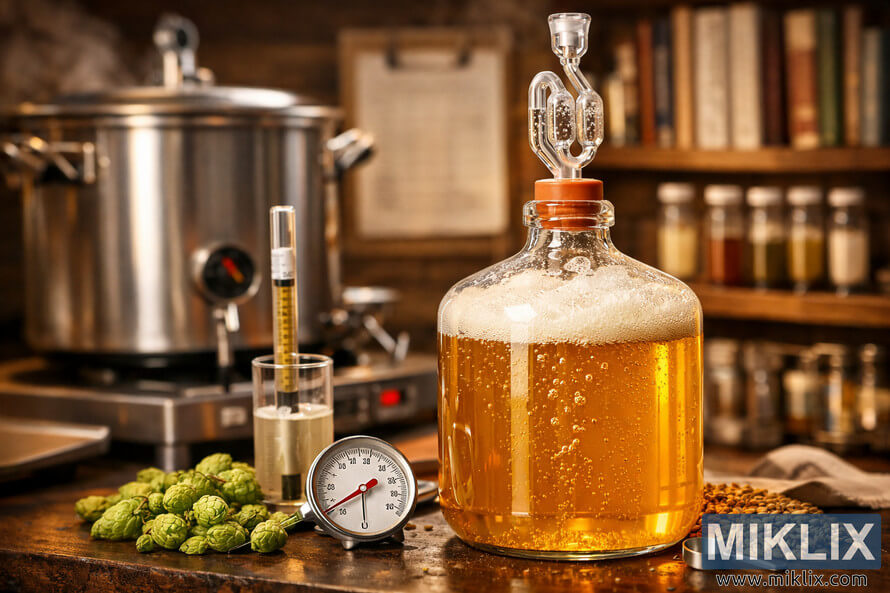
Κάντε κλικ ή πατήστε την εικόνα για περισσότερες πληροφορίες και υψηλότερες αναλύσεις.
Preparing a Healthy Starter for WLP840
A robust WLP840 starter is crucial for a clean, vigorous lager fermentation. Lagers require higher cell counts than ales, making the decision to build a yeast starter or direct pitch critical for consistent results. Below, we explore when to increase cell numbers, a reliable liquid yeast starter recipe, and oxygenation practices that safeguard yeast health.
When to build a starter vs. direct pitching
For five-gallon lagers with original gravity above 1.050, creating a yeast starter is necessary to achieve target pitching rates. WLP840 benefits from additional cells for clean attenuation and low ester production. However, for low-gravity beers or when you have multiple fresh White Labs vials or a pack, direct pitching might suffice.
Partial-mash batches and small kegs with OG under 1.045 can often get away with direct pitching if the yeast is fresh and within its viability window. Lagers are less forgiving than ales, so it's safer to opt for a starter when unsure.
Step-by-step starter recipe and volumes
Use a 1.030–1.040 gravity starter made from DME for reliable growth. DME rates range from 100 to 200 g per liter, depending on the desired starter aggressiveness.
- Small increase: 1 L starter (100–200 g DME per liter) to refresh a vial or pack.
- Single-vial grow: 2–3 L starter for most homebrew five-gallon lagers.
- Big lagers: 4–6 L starter or a step-up starter (start small, then build to a larger volume).
Procedure:
- Sanitize vessels and equipment thoroughly.
- Boil calculated DME with water to hit 1.030–1.040 gravity for 10–15 minutes to sterilize.
- Cool wort to pitching temperature, transfer to sanitized flask or jar, and aerate as below.
- Pitch the vial or pack of WLP840 starter yeast into the wort.
- Use a stir plate or swirl the jar daily to keep cells suspended and active.
- When krausen falls or activity slows, cold crash and decant most of the spent starter wort before pitching into the main batch.
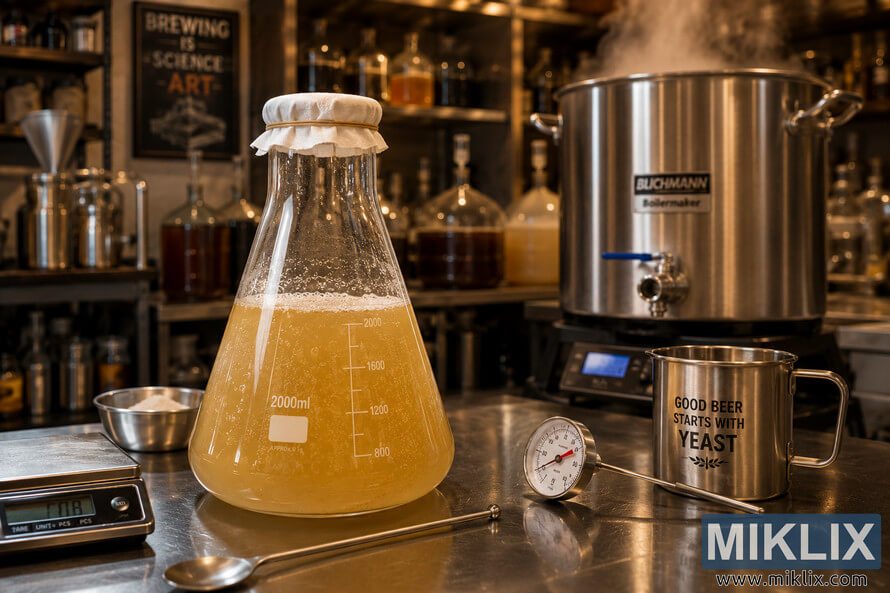
Κάντε κλικ ή πατήστε την εικόνα για περισσότερες πληροφορίες και υψηλότερες αναλύσεις.
Tools and best practices for oxygenation and aeration
A stir plate is the best tool for achieving high cell density and viability in a WLP840 starter. If a stir plate is not available, use a sanitized air pump with a 0.2 µm sterile filter to bubble sterile air into the starter for several minutes before pitching.
Vigorous shaking for 60–120 seconds can serve as a low-cost method to oxygenate if pitching soon after. Time oxygenation to occur before active fermentation begins. Avoid aerating after fermentation starts to prevent oxidation and off-flavors.
Keep the starter at stable, moderate temperatures and maintain sanitation at every step. Properly prepared starters improve lag phase, enhance attenuation, and make the most of your WLP840 starter when brewing American lagers.
Pitching Rates and Cell Counts for Consistent Results
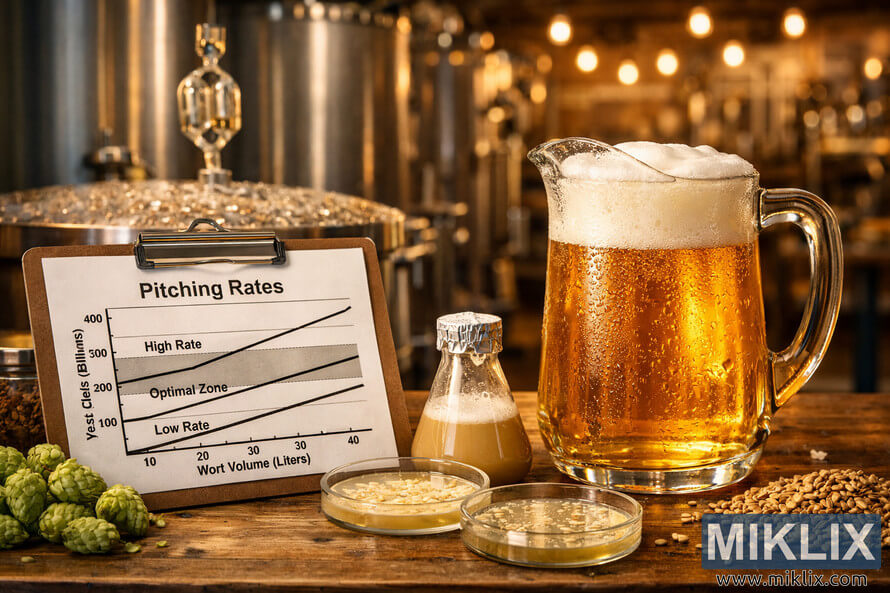
Accurate pitching rates are crucial for smooth fermentation and maintaining flavor consistency. For lagers, the target rates are notably higher than those for ales. By calculating the volume and gravity of your batch, you can determine the necessary yeast cell count. This allows for precise planning of WLP840 pitching or the creation of a starter to achieve that goal.
Calculating yeast cells for lagers is straightforward once you know the desired rate. Aim for about 0.75–1.5 million cells per mL per °P. To find the total cells needed, multiply batch volume (mL) by original gravity points (°P) and then by the desired cells per mL per °P. White Labs provides typical fresh vial counts, with a single fresh WLP840 vial containing 100–200 billion cells. A healthy starter can multiply this count to meet higher requirements.
Practical tools can help avoid the pitfalls of guesswork. A reliable lager pitching calculator streamlines the process, eliminating math errors and speeding up planning. Choose a calculator that allows you to input volume, gravity, and target cells per mL per °P to determine the required yeast cell count for your batch.
For those who prefer hands-on methods, bench-top techniques are available. A Neubauer hemocytometer offers direct cell counts for advanced users. However, for most homebrewers, estimating cell numbers from starter volume and known cell density figures is a practical approach. Recording starter size, age, and visible trub can help refine future estimates.
- Signs of underpitching: long lag time, sluggish start, elevated esters, and a higher infection risk.
- Signs of overpitching: very rapid fermentation, muted ester profile, and minor shifts in attenuation.
When planning WLP840 pitching, aim for the recommended range to ensure flavor balance and consistent fermentation timing. If a lager pitching calculator indicates a shortfall, increase starter size or use more fresh yeast vials to reach the desired yeast cell count.
Κάντε κλικ ή πατήστε την εικόνα για περισσότερες πληροφορίες και υψηλότερες αναλύσεις.
Optimal Fermentation Temperatures for WLP840
Temperature control is crucial for achieving clean, crisp lagers with White Labs WLP840. This guide provides practical temperature ranges, a standard lagering schedule, and cost-effective methods for maintaining stable conditions in homebrew setups.
Recommended temperature ranges for fermentation
White Labs suggests a primary fermentation range of low 40s to mid 50s °F. Aim for 48–56°F (9–13°C). Lower temperatures minimize ester and phenol production, preserving a neutral flavor.
For delicate lagers, target 48–52°F during active fermentation. This range supports steady attenuation and clean flavors. Use a probe attached to the fermenter for optimal results.
Temperature ramping and lagering schedules
Start with primary fermentation at 48–52°F until gravity drop is significant, usually 7–14 days. Then, raise the beer to 55–60°F for a diacetyl rest of 24–72 hours. This brief warm period allows yeast to reabsorb diacetyl and finish cleanup.
Follow with a lagering ramp down to near-freezing. Aim for 34–38°F and hold for several weeks, typically 2 to 8 weeks. This cold phase clarifies the beer and smooths flavors, completing the lagering process.
Controlling temperature in home setups
Reliable temperature control in homebrew setups is essential. Use a PID controller with a mini fridge or chest freezer and an Inkbird-style thermostat for precise results. Fermentation jackets with a temperature controller are effective for fermenter buckets and conicals.
Simple options include insulated boxes or a water bath with an aquarium heater for small temperature increases. A small thermostat chiller is useful for cooling. Attach a sensor to the fermenter or use a wireless probe to track true beer temperature.
Insulate carboys and kegs to reduce ambient temperature swings. Ensure fridge seals are tight and place the controller away from direct sunlight. Consistent temperature control reduces off-flavors and minimizes guesswork during the lagering ramp.
Fermentation Timeline and Activity Monitoring
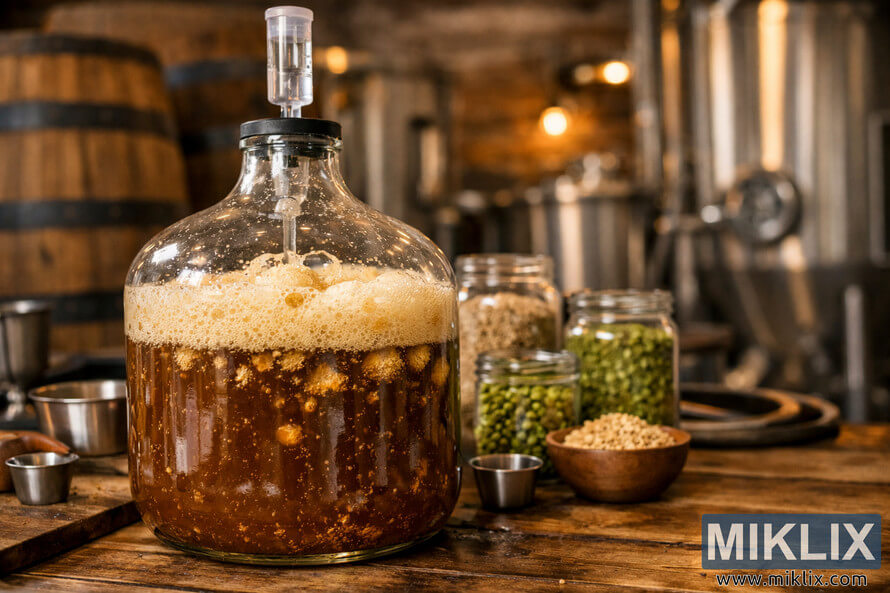
Understanding a clear fermentation timeline is crucial for brewers to track progress and avoid surprises. Below is a concise guide to the typical stages you will see when using White Labs WLP840. It explains how to monitor activity for consistent results.
The journey begins with a short lag phase. This phase can last 12–48 hours, depending on the pitch rate and temperature.
Active fermentation follows, lasting 3–10 days. Look for a rapid drop in gravity during this period. A fast decline indicates healthy yeast activity.
After the main drop, some lagers benefit from a diacetyl rest of 1–3 days. Raising the temperature a few degrees allows yeast to reabsorb unwanted flavor compounds.
Cold crash and lagering come next, lasting 2–8+ weeks based on clarity and flavor goals. Lagering should only begin after fermentation is complete and any diacetyl rest is done.
How to read gravity readings and fermentation curves
- Take hydrometer or refractometer readings at the same time each day.
- A rapid fall in gravity means active fermentation. A plateau lasting 48 hours suggests you may be at true final gravity.
- Confirm stability by taking two readings 48 hours apart before packaging.
Visualize the fermentation curve by plotting gravity versus days. This makes it easier to spot slowdowns and to decide when to monitor fermentation gravity more closely.
When to move to cold crash or lagering
- Begin cold crash after gravity holds steady for 48 hours and any diacetyl rest is complete.
- Cold crash improves clarity; do not cold crash too early or you risk trapping sugars and causing refermentation in bottle or keg.
- After cold crash, transfer to a longer lagering period to allow flavors to mellow and clarity to finish.
Record each measurement and note temperatures. Good notes improve future batches and make the fermentation timeline WLP840 easier to predict. Regular checks help you monitor fermentation gravity and hit fermentation milestones lager brewers count on.
Κάντε κλικ ή πατήστε την εικόνα για περισσότερες πληροφορίες και υψηλότερες αναλύσεις.
Fermentation Troubleshooting with WLP840
When a batch with White Labs WLP840 shows signs of trouble, quick checks and calm steps get you back on track. The notes below cover common lager off-flavors, practical ways to fix stuck fermentation, and how to spot contamination signs beer brewers should never ignore.
Off-flavors and their likely causes
Diacetyl presents as a buttery slick and often comes from an incomplete diacetyl rest or bacterial contamination. Prevent it by holding the beer at the upper end of the yeast’s range near the end of fermentation, then lagering.
Sulfur smells like rotten egg early in lager fermentations. This is common with many lager yeasts and usually fades with time and proper cold conditioning.
Esters give fruity notes when fermentation runs warm. Keep fermentation within WLP840’s recommended temperature window to limit those flavors.
DMS reads as cooked corn and traces back to a weak wort boil or poor hot break removal. Extend the boil and chill wort quickly to reduce DMS precursors.
Fixes for stuck or sluggish fermentations
First confirm gravity and temperature. A digital hydrometer and a reliable thermometer give the facts you need before intervening.
- Gently raise temperature into the yeast’s optimal range to encourage activity.
- Rouse the yeast by gently swirling or rocking the fermenter to resuspend trub-bound cells.
- Introduce oxygen only if fermentation is very early. Late oxygenation risks oxidation.
- Pitch fresh, active yeast when other measures fail. Use a healthy lager strain or a well-attached ale/lager blend for a restart.
Sanitation checks and contamination signs
Look for visual cues like pellicles, fuzzy growth, or unexpected films on the beer. These often point to wild yeasts or bacteria, not normal lager activity.
Off aromas such as sharp vinegar, persistent phenolics, or an odd sourness are strong contamination signs beer handlers must treat seriously.
Clean and sanitize with proven products like Star San or Iodophor. Inspect hoses, bottling gear, and fermenter seals. Replace questionable equipment before repackaging.
Water Chemistry and Its Impact on Lager Fermentation
Lager yeast's response to water is akin to its reaction to temperature and oxygen. Even slight variations in mineral content can significantly alter the beer's mouthfeel, clarity, and hop flavor. Crafting a specific lager water profile is crucial for WLP840 to highlight clean malt flavors and a crisp finish.
For American-style lagers, the goal is to achieve softer, cleaner water. This water should have enough calcium to support yeast health and clarity. Aim for calcium levels between 50 and 150 ppm. Magnesium should be kept low. Sodium levels should be moderate, depending on the desired sweetness.
Carbonate hardness should align with the malt bill. For lighter pilsner malts, a low carbonate level is ideal.
Chloride and sulfate play a pivotal role in the beer's flavor profile. Chloride enhances the beer's roundness and mouthfeel. Sulfate, on the other hand, contributes to dryness and hop bite. A balanced chloride sulfate ratio is often preferred for clean lagers, aiming for a ratio of 0.5–1.5 based on the desired character.
Simple tests can help you get started without guesswork. Pull a municipal water report or use a basic third-party kit to measure Ca, Mg, Na, Cl, and SO4 levels. Then, enter these values into an online calculator like Bru'n Water or EZ Water to plan your water adjustments for lager brews.
- Use calcium chloride to raise chloride for fuller body when needed.
- Add gypsum (calcium sulfate) to increase sulfate for more dry finish or hop definition.
- Consider a small pinch of Epsom salt (magnesium sulfate) only if magnesium is very low and yeast health needs support.
For first-time lagers, keep brewing salts minimal. Make small, measured additions and test a single batch before making changes to your house profile. Detailed notes and repeated trials will help you understand how the chloride sulfate ratio and other water adjustments impact your final product.
Recipe Building: Hops, Malts, and Grain Bills for WLP840
Creating a recipe for WLP840 begins with a blank slate. Select malts and hops that allow the yeast's clean, crisp profile to shine. Use specialty ingredients sparingly to ensure the yeast's character remains dominant.
Malt choices that highlight yeast neutrality and crispness
Base malts establish the foundation. Opt for Pilsner malt and pale 2-row for a bright, fermentable base. Light Munich adds a hint of malt complexity without obscuring the yeast's clarity.
Specialty malts should be used with restraint. Incorporate CaraPils or dextrin malts at 1–3% to enhance body if necessary. Small amounts of crystal malt under 2% can adjust color without compromising crispness.
Hop varieties and timing for clean lager character
Opt for hops that enhance a clean lager profile. Saaz, Hallertauer, and Tettnang are ideal for continental styles. Cluster, Cascade, and Liberty are suitable for restrained American lagers.
Emphasize bittering early and subtle late additions. Keep late kettle additions light and dry hopping only when necessary to avoid obscuring the yeast's character. Proper timing is crucial to maintain the delicate balance of hops in lager beers.
Examples of grain bills for pilsners and American lagers
Below are simple outlines for adapting a WLP840 grain bill. Adjust OG and IBU targets to suit your desired style.
- Classic Bohemian/Continental Pils: 95–100% Pilsner malt; 1–3% CaraPils optional. OG target 1.046–1.052; IBUs 28–40.
- German-style Pilsner (crisp): 100% Pilsner malt or 97% Pilsner with 3% light Munich. OG target 1.048; IBUs 30–38.
- American Light Lager: 85–95% pale 2-row, 5–10% adjuncts such as flaked maize or rice; 1–2% light crystal for color. OG target 1.038–1.045; IBUs 10–25.
Keep detailed notes on mash temperature and diastatic power when using adjuncts. A lower mash temperature of 148–152°F helps achieve a drier finish. This complements the WLP840 grain bill choices. Balance hop selection and timing to ensure hops contribute aroma and bitterness without overpowering the yeast's neutral character.
Packaging and Conditioning After Fermentation
Once fermentation stabilizes, with final gravity readings steady over 48–72 hours, and a diacetyl rest is complete, the beer is ready for packaging. Clarity should match your target level before proceeding. It's crucial to minimize oxygen pickup during transfer to preserve fresh flavor.
When to bottle, keg, or force carbonate
The choice between bottle vs keg lager depends on volume, shelf life, and serving needs. For bottling, ensure FG stability and accurately calculate priming sugar for the batch size. When kegging, purge the keg with CO2 and transfer cold beer to limit dissolved oxygen. Force carbonate in a refrigerated kegging fridge for faster and safer carbonation.
Practical carbonation targets for lagers
Typical lager carbonation volumes range from 2.2 to 2.8 volumes of CO2. Light European pilsners often aim for 2.6–2.8, while many American lagers target 2.2–2.6. To carbonate lager with CO2, use the keg temperature and a pressure chart to set the correct psi. Alternatively, apply the quick-carb rocking method if needed.
- Common range: 2.2–2.8 volumes of CO2
- Pilsner guidance: 2.6–2.8 volumes
- American lager guidance: 2.2–2.6 volumes
Aging and cold conditioning durations for clarity and flavor
Cold conditioning, or lagering, typically lasts two to eight weeks at near-freezing temperatures. Short lagering of two weeks helps firm up yeast and reduce harsh esters. Extended lagering beyond eight weeks smooths out sulfur and diacetyl but offers diminishing returns.
When packaging lager, handle it with care to limit oxygen exposure. For bottled beer, use fresh priming sugar and bottle conditioning temperatures suitable for the yeast strain. For kegged beer, check seals and serve at proper temperature and pressure to maintain chosen lager carbonation volumes.
Yeast Harvesting, Repitching, and Storage Strategies
Harvesting yeast after fermentation can save you money and keep your house culture thriving. It's crucial to follow a clean, cold process to protect the yeast's viability and minimize trub transfer. Store the harvested slurry in a cold environment and test its viability before repitching lager yeast in a new batch.
How to harvest safely from a fermenter
- Cold crash the fermenter for 24–48 hours to settle trub and yeast to the bottom.
- Carefully decant the clear beer off the top, leaving the creamy layer behind.
- Scoop the yeast slurry from the lowest layer into sanitized containers, avoiding the darker trub layer when possible.
- Keep everything chilled and sanitary to preserve yeast viability during transfer.
Storing harvested yeast and viability considerations
- Use sanitized, airtight containers and place them in a refrigerator at 36–40°F.
- Use harvested yeast within a few weeks for best results; viability drops each week in cold storage.
- Estimate viability loss conservatively and plan a small starter if yeast has been stored beyond a week.
- Label containers with strain, harvest date, and original batch gravity for tracking.
How many generations to repitch and expected changes
- For lagers, safely repitch your harvest WLP840 about 3–5 generations before replacing with a fresh commercial pack.
- Watch for declining attenuation, altered flocculation, or off-flavor development as signs to stop repitching.
- Genetic drift and contamination risk grow with each generation; refresh your culture periodically to maintain performance.
- When repitch lager yeast, adjust pitching rates based on estimated viability and consider a viability test or starter to ensure a healthy cell count.
Keeping short, repeatable records is key to maintaining a reliable house culture. Track viability, storage time, and generation count. This way, each repitch will keep your beers consistent and true to style.
Comparing WLP840 to Other Lager Yeasts on the Market
Brewers evaluating WLP840 against other lager yeasts seek cleanliness, speed, and consistency. This section offers a detailed comparison with common S. pastorianus strains. It aims to help brewers choose the right yeast for their recipes and brewing processes.
Flavor and attenuation comparisons with S. pastorianus strains
WLP840 is known for its minimal ester profile. Compared to strains like Wyeast 2124 Bohemian Lager or White Labs WLP833, it often results in a drier, cleaner finish. Its attenuation is reliable, typically falling in the mid-to-high range for lagers. The yeast's moderate flocculation aids in achieving clarity without excessive yeast drop, which can trap flavor.
When to choose WLP840 over traditional European lager strains
Opt for WLP840 in brewing modern American lagers, adjunct lagers, or when a neutral yeast base is needed. It tolerates slightly warmer lager temperatures, making fermentation control easier for homebrewers. For those aiming at Bohemian pilsner or German Helles, traditional European strains are better. They offer subtle regional esters and mouthfeel that are crucial for these styles.
Pros and cons summary for different brewing goals
- Pros: Offers clean neutrality, predictable performance, good attenuation, and a forgiving temperature range suitable for contemporary lager styles.
- Cons: Lacks the regional character of Old World strains and requires careful handling of liquid packs, which need cold storage and precise pitching compared to dry alternatives.
- Practical note: Brewers comparing lager strains should align yeast choice with their style goals. WLP840 stands out when clarity and neutrality are key.
Real-World Brewing Tests and Tasting Notes
Below are concise, practical reports from a hands-on trial of White Labs WLP840 in a homebrew and small-brewery setting. The notes cover a sample recipe, sensory observations, and community tips gathered from brewers who have used this strain.
Case study: sample American lager recipe
- Batch size: 5 gallons. Target OG: 1.048, FG: ~1.010.
- Grain bill: 9 lb Briess 2-row Pale, 1 lb flaked rice, 0.5 lb Vienna or dextrin malt for body.
- Hops: 1 oz Magnum @ 60 min for clean bittering, 0.5 oz Cascade @ 10 min for light floral lift.
- Mash: single infusion at 152°F for 60 minutes to balance fermentability and body.
- Pitching: target healthy pitching rate for lagers (approximately 1.0–1.5 million cells/ml/°P); make a starter if needed.
- Fermentation schedule: transfer to fermenter at 50°F, hold until active (7–10 days), raise to 66°F for a 48-hour diacetyl rest, then crash to 34–36°F and lager for four weeks.
Observed flavors, clarity, and mouthfeel
Fermentations with WLP840 produced very clean results with low ester presence. The finish stayed crisp and dry while maintaining a moderate malt body from the dextrin addition.
Clarity improved markedly after the four-week lagering phase. Head retention varied with malt and adjunct levels, but many brewers reported a persistent white foam and bright appearance.
Tasters noted subtle grain sweetness, a restrained floral hop note, and minimal yeast character. These sensory notes lager show a neutral yeast canvas that favors malt and hop nuance.
Tips from homebrewers and small pro-brewer feedback
- Ensure adequate pitching; underpitching delays attenuation and can create off-flavors.
- Do not rush the lagering phase; extended cold conditioning improves clarity and mellowing.
- Perform a diacetyl rest if buttery notes appear; a short rise to the mid-60s for 48 hours clears diacetyl quickly.
- Watch temperature closely during the first week; consistent 50°F primary control gives the cleanest profile.
- Many homebrewers and small breweries praise the strain for reliability and a neutral profile when compared to some European lager isolates.
Combined, these WLP840 tasting notes and the American lager case study show how the strain behaves in a real brew. Collecting homebrew feedback WLP840 helps refine process steps that yield the best sensory notes lager for both hobby and small-scale production.
Conclusion
White Labs WLP840 American Lager Yeast is a top choice for homebrewers aiming for a neutral, reliable lager strain. It excels when used with proper pitching rates, tight temperature control, and adequate lagering. This yeast's predictable attenuation and clean ester profile make it ideal for pilsners and American lagers.
For those looking to use WLP840, the next steps are clear. Purchase fresh yeast from reputable U.S. suppliers. Build a starter that matches the beer's gravity. Monitor fermentation closely. Keep temperatures in check and follow a patient cold-conditioning schedule. These steps enhance clarity and flavor, reducing the risk of stalled fermentations.
Consider the advantages of WLP840, such as its clean character, consistent performance, and ability to achieve bright, crisp finishes. However, it requires careful handling and has a limited shelf life. For many, it's the best lager yeast for homebrew, offering a neutral base that highlights malt and hop flavors. Start with a tried recipe, track your variables, and adjust as needed to achieve your brewing goals.
FAQ
What is White Labs WLP840 American Lager Yeast and why is it popular?
White Labs WLP840 American Lager Yeast is a modern liquid lager strain from White Labs, a well-known U.S. yeast producer. It was bred for a clean, neutral fermentation profile and predictable attenuation. This makes it popular with homebrewers and small craft brewers who want crisp, professional-quality lagers at home. Brewers choose it for its low fruity esters, reliable attenuation, and good flocculation when fermented within recommended temperature ranges.
Which brewers should consider using WLP840?
WLP840 is suited for extract and all-grain homebrewers, as well as small-scale professional brewers, who aim to produce crisp American-style lagers, pilsners, and hybrid cold-fermented ales. It’s especially valuable if you want a neutral yeast character—ideal for adjunct lagers and international pale lagers—while still offering manageable fermentation kinetics for home setups.
How does WLP840 compare to traditional European lager strains?
Compared with classic European strains like Wyeast 2124 Bohemian Lager or White Labs WLP830 German Lager, WLP840 tends to be cleaner and slightly faster. It often ferments well at marginally warmer lager temperatures. It produces fewer esters and can reach good attenuation more quickly, but it may lack the subtle regional character those Old World strains contribute to traditional styles.
What flavor and attenuation characteristics should I expect?
Expect a neutral, clean flavor with low fruity esters and minimal sulfur once properly lagered. Typical attenuation commonly falls in a moderate-to-high range—often around 75–80% depending on wort composition and fermentation temperature. Flocculation is medium to high, which helps clarity after a proper cold conditioning period.
What beer styles suit WLP840 best?
WLP840 works well for pilsners, American adjunct lagers, international pale lagers, light lagers, and creamy blond ales or cream ales fermented cold. Use it where you want a crisp, neutral yeast presence, or in hybrid styles that benefit from a restrained ester profile.
Where can I buy authentic White Labs WLP840 in the United States?
Purchase WLP840 directly from White Labs’ website or reputable homebrew retailers such as MoreBeer, Northern Brewer, and Adventures in Homebrewing. Local brick-and-mortar homebrew shops are good sources, too. Avoid unverified third-party sellers on some marketplaces to reduce the risk of expired or mishandled packs.
How should I store WLP840 to maintain viability?
Store WLP840 refrigerated at about 36–46°F (2–8°C). Use fresh packs when possible; viability declines over time. Keep vials upright, cold, and away from light, and check the use-by date. For best results, pitch within the manufacturer’s recommended window and build a starter if packs are older or you need higher cell counts.
What are best practices for receiving shipped live yeast?
During warm months, opt for expedited or refrigerated shipping and ship to an address where someone can receive the package promptly. Inspect the package on arrival for warmth or damage and refrigerate immediately. Many retailers offer cold-chain shipping options—use them when available to preserve viability.
When should I build a starter versus direct-pitching WLP840?
Build a starter for 5-gallon lagers with original gravity above ~1.050 or when using a single vial to reach recommended pitching rates. For low-gravity beers or when pitching multiple fresh packs, direct pitching can be acceptable. Lagers generally need higher cell counts, so starters are commonly recommended for consistent results.
What starter size and recipe should I use for WLP840?
A good starter uses a 1.030–1.040 gravity wort made from dry malt extract. Typical volumes: 1 L for small boosts, 2–3 L for single-vial growth, and 4–6 L for major increases or step-ups. Sanitize, boil the starter wort, cool, pitch the yeast, and use a stir plate or regular swirling. Ferment to krausen, cold crash, decant, and pitch the yeast slurry into your batch.
How should I oxygenate or aerate wort for WLP840?
Oxygenate wort prior to pitching using a sanitized oxygen stone and pure oxygen regulator when possible. Alternatives include vigorous shaking or using a sanitized air pump with a sterile filter. Proper oxygenation before fermentation supports healthy cell growth; avoid aerating after active fermentation begins to prevent oxidation.
What pitching rates do lagers require and how do I calculate cells?
Target pitching rates for lagers are commonly 0.75–1.5 million cells/mL/°P—higher than typical ales. Use online calculators from Brewer’s Friend or White Labs to compute required cells based on batch volume and gravity. If using vials, consider their fresh-cell counts and adjust with a starter to reach the recommended range.
How do I recognize signs of underpitching or overpitching?
Underpitching often shows as a long lag time, sluggish fermentation, higher ester production, and increased infection risk. Overpitching can produce overly rapid fermentation with a muted ester profile and altered attenuation. Aim for the guideline pitching rates to maintain predictable fermentation kinetics and flavor.
What is the recommended fermentation temperature range for WLP840?
Ferment WLP840 in the low 40s to mid-50s °F (roughly 48–56°F or 9–13°C) depending on the specific White Labs guidance and recipe goals. Staying on the lower end produces the cleanest profile. Avoid large temperature swings to minimize off-flavors.
What temperature ramping and lagering schedule should I follow?
A common schedule: primary at about 48–52°F until most attenuation completes (7–14 days), then raise to ~55–60°F for a 24–72 hour diacetyl rest if needed. After that, crash down to near-freezing (34–38°F) and lager for 2–8+ weeks to clarify and mellow flavors. Adjust lengths based on OG and sensory checks.
How can I control fermentation temperature at home?
Use a chest or mini fridge with a temperature controller, a fermentation chamber, insulated jackets, or a water bath with an aquarium heater/chiller. Attach a digital temperature probe to the fermenter and avoid ambient swings. Simple controllers like Inkbird are affordable and effective for precise control.
What is a typical fermentation timeline for lagers with WLP840?
Expect a lag phase of 12–48 hours, active fermentation for 3–10 days depending on pitch and gravity, a diacetyl rest of 1–3 days if required, and cold conditioning (lagering) for 2–8+ weeks. Timelines vary with OG, pitching rate, and temperature control.
How do I read gravity readings and know when fermentation is complete?
Take consistent hydrometer or refractometer readings and look for a clear downward curve during active fermentation. When gravity readings are stable over 48 hours, you can consider fermentation complete. Correct for refractometer wort-sugar distortion if you use one during active fermentation.
When should I cold crash or move to lagering?
Cold crash and lager once fermentation is complete and any diacetyl rest is finished. Cold crashing improves clarity by settling yeast and particulates; follow with extended lagering at near-freezing temperatures to smooth flavor and reduce sulfur or diacetyl notes.
What off-flavors should I watch for and how do I fix them?
Common off-flavors: diacetyl (buttery) often from insufficient diacetyl rest or contamination; sulfur (rotten egg) can appear during fermentation but usually dissipates with lagering; esters from warm fermentation; DMS (cooked-corn) from inadequate wort boil or poor hot-side practices. Fixes include proper temperature control, diacetyl rest, improved sanitation, and ensuring a vigorous, well-pitched fermentation.
How do I resolve a stuck or sluggish fermentation with WLP840?
First check gravity and temperature. Warm the fermenter gently into the yeast’s optimal range, swirl to rouse yeast, and only add oxygen if very early in fermentation. If necessary, pitch a healthy active yeast starter or use a quality ale/lager re-pitch blend to restart. Avoid blind additions and diagnose oxygen, pitching rate, and temperature first.
What sanitation and contamination signs should I monitor?
Watch for pellicles, unexpected sour or phenolic aromas, or fuzzy surface growth. These suggest bacterial or wild yeast contamination. Maintain rigorous sanitation with products such as Star San or Iodophor, and inspect hoses, transfer fittings, and packaging gear when issues arise.
How does water chemistry affect lager fermentation and what targets should I use?
Water ions influence malt perception and hop character. For American-style lagers, aim for clean, softer water with moderate calcium (50–150 ppm), low magnesium, and low-to-moderate sodium. Adjust chloride and sulfate to balance mouthfeel and dryness; modest chloride-to-sulfate ratios favor a crisp, balanced lager.
What simple mineral adjustments can a beginner make?
Start with a municipal water report or a basic test kit. Use small additions of calcium chloride or gypsum to nudge chloride and sulfate levels. Online calculators like Bru'n Water or EZ Water help plan additions. Avoid overcomplicating water chemistry on early attempts—target modest, consistent changes.
What malts and hops highlight WLP840’s neutral character?
Use clean base malts such as Pilsner malt or pale 2-row and minimize specialty malts to keep a crisp profile. For hops, choose noble or clean American varieties—Saaz, Hallertauer, Tettnang, Cluster, or Liberty—and favor early bittering with restrained late additions to preserve a delicate hop presence.
Can you give example grain bills for pilsners and American lagers?
Example outlines: Continental pilsner — 95–100% Pilsner malt with a 1–3% dextrin or CaraPils addition; OG target around 1.046–1.056 with IBUs of 28–40. American lager — 85–95% 2-row, 5–10% adjuncts like flaked maize or rice for lightness, a small specialty malt for color; OG targets commonly 1.040–1.050 with IBUs 10–25.
When is it safe to bottle, keg, or force carbonate?
Package only after fermentation is complete (stable gravity readings), diacetyl rest is performed, and clarity is at your desired level. For bottling, calculate priming sugar carefully. For kegging, purge oxygen, and use force carbonation. Avoid packaging too early to prevent refermentation or off-flavors.
What carbonation levels work best for lagers?
Typical lagers carbonate between about 2.2 and 2.8 volumes of CO2 depending on style. European pilsners trend toward the higher end for a spritzy finish; many American lagers are slightly lower. Adjust keg pressure based on serving temperature and desired CO2 volume.
How long should I cold condition or lager for clarity and flavor?
Cold conditioning commonly lasts 2–8 weeks or more. Shorter lager periods (2–4 weeks) improve clarity and round flavors; longer lagering (6–12 weeks) can further mellow sulfur and diacetyl and enhance polish. Monitor flavor development and avoid excessive oxidation during storage.
How do I harvest and store WLP840 yeast for repitching?
Cold crash the fermenter, decant most clear beer, and scoop the yeast slurry from the bottom into sanitized vessels while minimizing trub transfer. Store harvested yeast refrigerated (36–40°F) and reuse within a few weeks. Make a small starter before repitching to refresh cell health and viability.
How many generations can I safely repitch WLP840?
A common guideline is to repitch harvested lager yeast 3–5 times before performance or flavor may drift. Monitor viability, flocculation behavior, and attenuation across generations. Periodically refresh yeast with a commercial pack or build a large starter to maintain consistent results and reduce genetic drift risks.
How does WLP840 stack up against other market lager yeasts for different brewing goals?
WLP840 excels when you want a clean, neutral yeast for modern American lagers and adjunct beers. Its advantages include predictable performance and slightly faster kinetics at a bit warmer lager temps. For beers that need Old World character, classic European strains may be preferable because they lend regional esters or nuances that WLP840 intentionally suppresses.
What sensory results can I expect from a sample American lager fermented with WLP840?
Expect a crisp, neutral fermentation with low ester presence, restrained grain and hop notes, moderate body, and good clarity after proper lagering. Mouthfeel tends to be clean and focused, with subtle malt sweetness and a light floral or spicy hop hint depending on variety and hopping schedule.
What practical tips do experienced homebrewers give for using WLP840?
Common advice: pitch adequate cell counts (build starters when needed), maintain tight temperature control, perform a diacetyl rest if necessary, and don’t rush lagering. Use reputable suppliers for fresh packs, and oxygenate wort properly. Many brewers praise WLP840’s reliability and clean profile when these basics are followed.
Περαιτέρω ανάγνωση
Αν σας άρεσε αυτή η ανάρτηση, ίσως σας αρέσουν και αυτές οι προτάσεις:
- Ζύμωση μπύρας με μαγιά Lallemand LalBrew Voss Kveik
- Ζύμωση μπύρας με μαγιά Lallemand Sourvisiae
- Ζύμωση μπύρας με μαγιά Fermentis SafAle BE-256