
Imagen: Okra Flower and Developing Pod Close-Up
Publicado:
Última actualización: 17 de marzo de 2026, 21:37:39 UTC
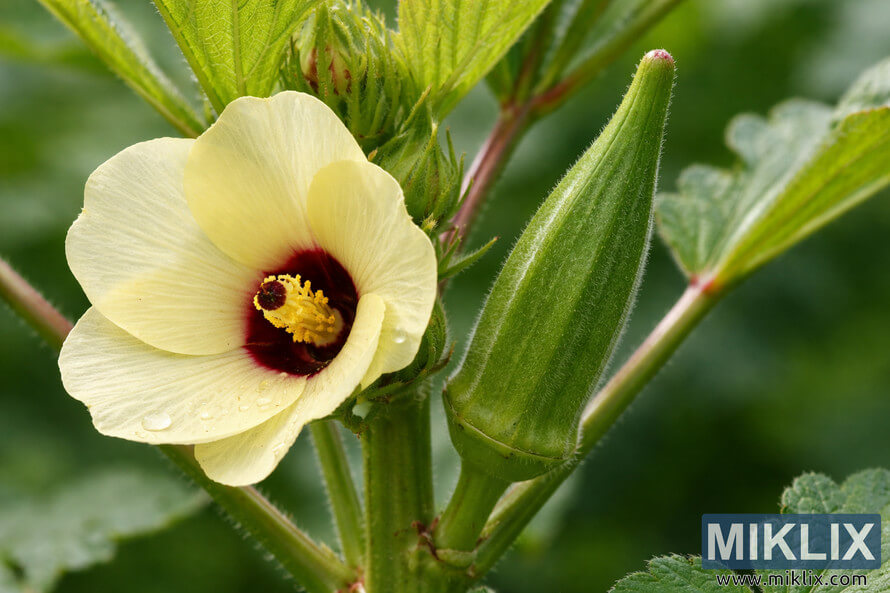
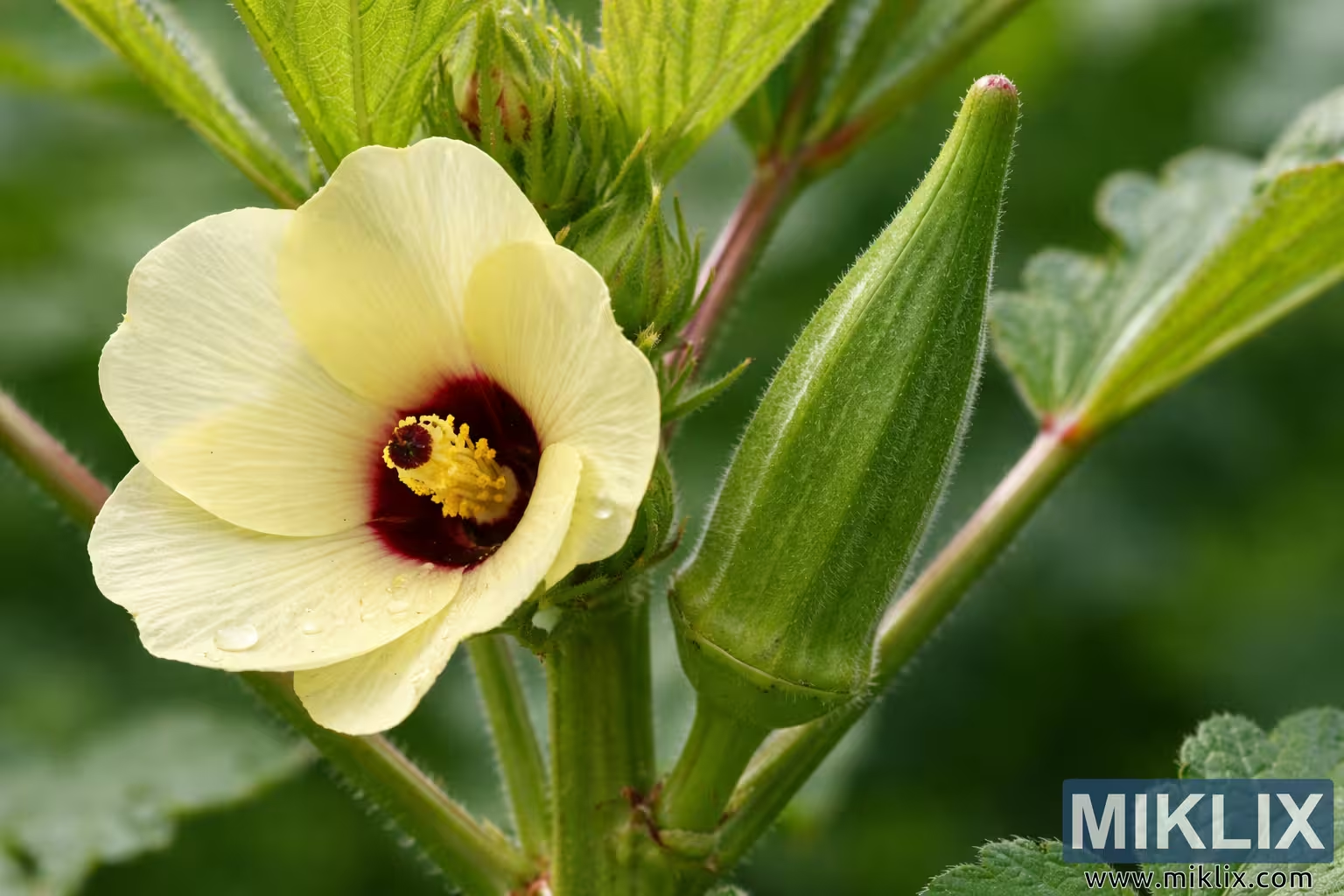
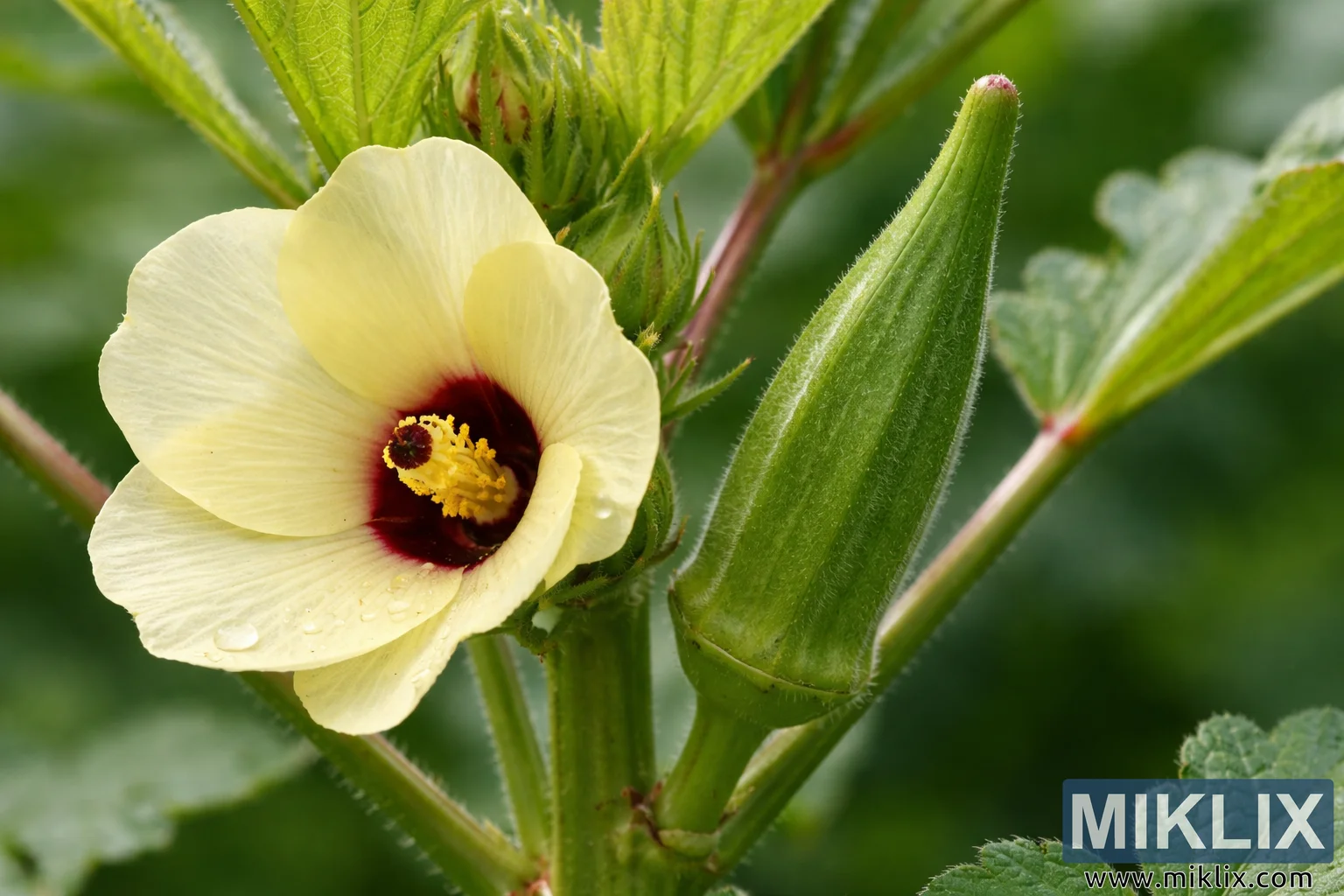
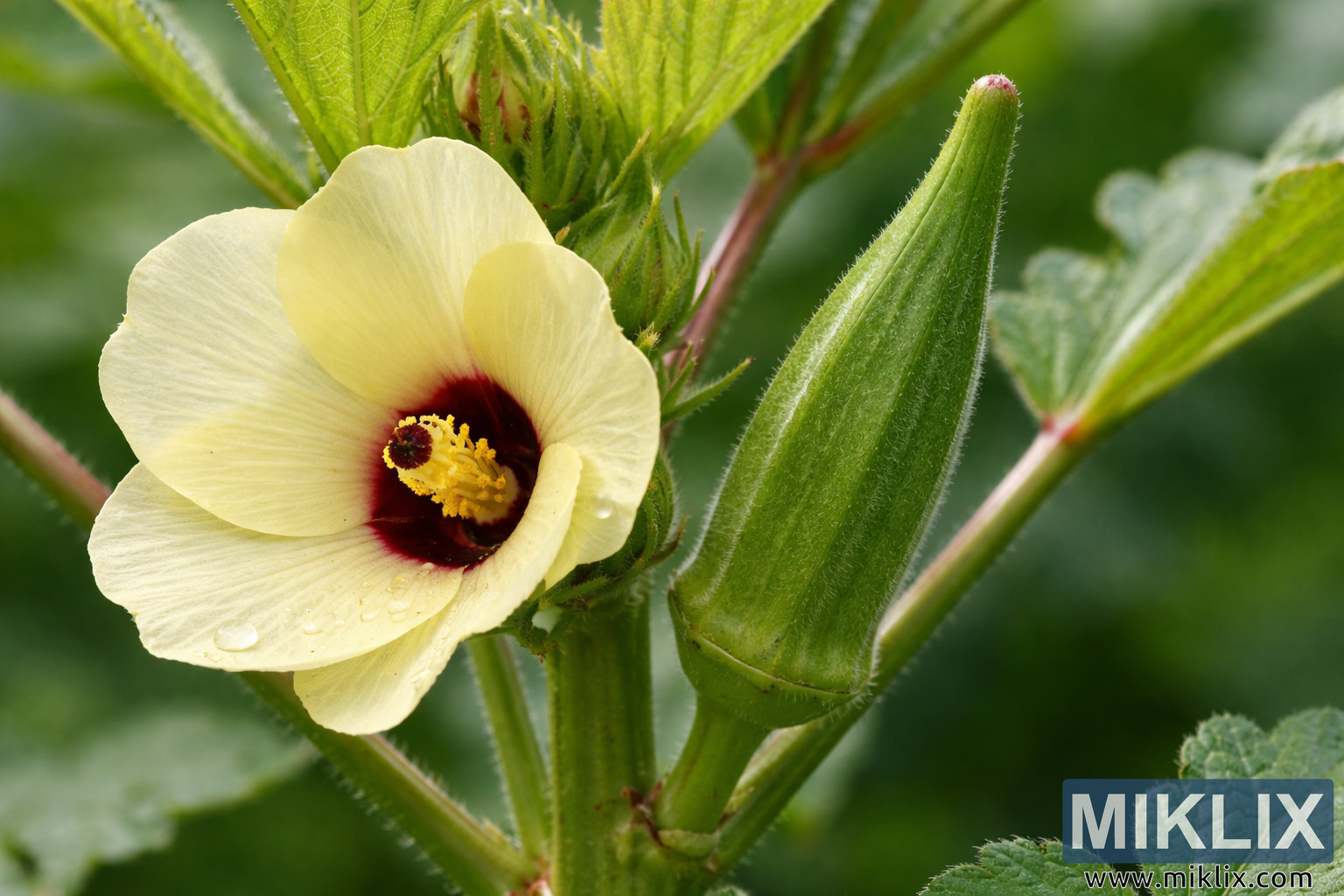
Detailed close-up image of an okra plant showing a pale yellow flower with a burgundy center and a young green okra pod developing among fresh leaves.
Okra Flower and Developing Pod Close-Up
Versiones disponibles de esta imagen
Los archivos de imagen que se pueden descargar a continuación están menos comprimidos y tienen mayor resolución -y, por tanto, mayor calidad- que las imágenes incrustadas en artículos y páginas de este sitio web, cuyo tamaño está más optimizado para reducir el consumo de ancho de banda.
Talla normal (1,536 x 1,024)
Tamaño grande (3,072 x 2,048)
Tamaño muy grande (4,608 x 3,072)
Tamaño extragrande (6,144 x 4,096)
Tamaño cómicamente grande (1,048,576 x 699,051)
- Sigo subiendo... ;-)
Descripción de la imagen
This detailed close-up image captures a vibrant okra plant at an early stage of fruit development, highlighting both the plant’s delicate flower and the emerging green pod. Positioned prominently in the foreground, the okra flower displays broad, soft petals in a pale buttery yellow tone. At the center of the blossom, a deep burgundy-red ring surrounds the reproductive structures, creating a striking contrast with the light petals. Rising from the center is a bright yellow pistil covered with fine pollen, surrounded by tiny stamens that add texture and depth to the flower’s core.
To the right of the flower, a young okra pod is visible, standing upright and slightly angled toward the viewer. The pod has a tapered shape and distinct ridges running lengthwise from base to tip. Its surface is covered with fine, soft hairs that give it a slightly fuzzy appearance, catching the light subtly. The pod’s rich green color contrasts nicely with the pale flower, emphasizing the different stages of the plant’s reproductive cycle—flowering and fruit formation.
Supporting the flower and pod is a sturdy green stem with small hairs along its surface. At the base of the flower, small green sepals and budding structures cluster together, indicating additional blossoms that may open in the near future. Several large okra leaves extend outward from the stem, their textured surfaces and visible veins adding to the overall sense of botanical detail. The leaves are a healthy mid-green shade and appear slightly rough, consistent with the typical foliage of okra plants.
The background of the image is softly blurred, consisting of out-of-focus green foliage that creates a natural, garden-like atmosphere. This shallow depth of field isolates the flower and pod as the primary subjects while still suggesting a lush environment around them. Gentle natural lighting illuminates the scene evenly, enhancing the subtle color variations in the petals, the glossy green of the pod, and the fine textures of the plant’s stems and leaves.
Overall, the image provides a clear and visually appealing look at the reproductive stage of an okra plant, showing both the blossom and the forming vegetable. It highlights the intricate beauty of garden plants that are often overlooked, revealing the delicate floral structures and early fruit growth that eventually lead to the familiar edible okra pods used in cooking.
La imagen está relacionada con: The Complete Guide to Growing Okra in Your Home Garden