
How to Grow Watercress at Home: A Complete Beginner's Guide
Avaldatud:
Viimati uuendatud: 11. mai 2026, kell 20:04:39 UTC
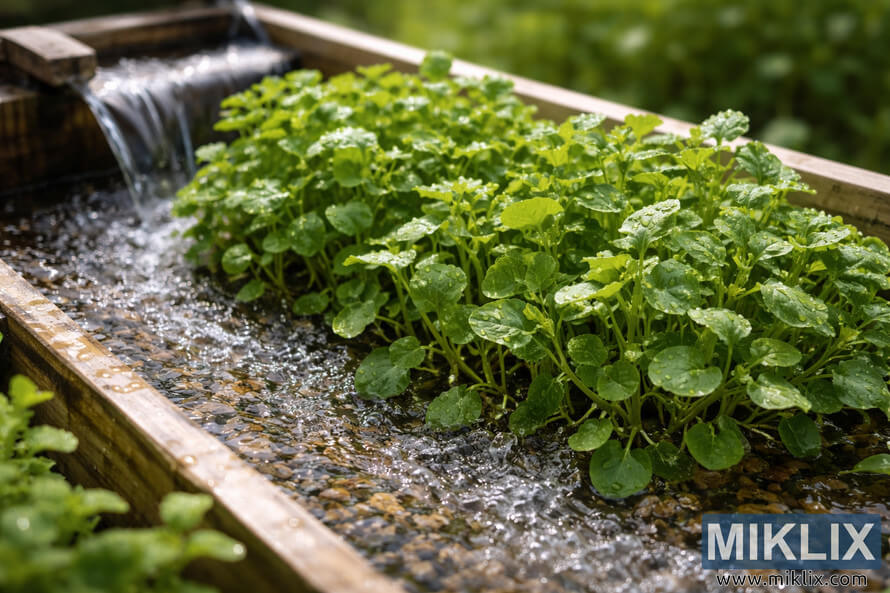
Growing your own watercress transforms your kitchen garden into a powerhouse of nutrition. This peppery leafy green delivers more vitamins and minerals per calorie than almost any other vegetable. You don't need a natural stream or elaborate setup to cultivate fresh watercress at home.
How to Grow Watercress at Home: A Complete Beginner's Guide
Klõpsake või koputage pildile, et saada lisateavet ja suuremat resolutsiooni.
Many people assume watercress requires complex water systems. The truth is simpler. With basic supplies and proper care, you can harvest fresh greens within weeks. This guide walks you through every step of growing watercress successfully.
Whether you have a sunny windowsill or outdoor garden space, watercress adapts to various growing conditions. The vegetable thrives in containers, raised beds, and traditional garden plots. Your homegrown watercress will taste superior to grocery store options while costing pennies per harvest.
What Is Watercress and Why Grow It
Watercress stands as one of the oldest known leafy greens consumed by humans. This aquatic plant belongs to the Brassicaceae family, sharing relatives with mustard, kale, and other cruciferous vegetables. The vegetable grows naturally near springs and streams throughout temperate regions worldwide.
The distinctive peppery flavor makes watercress a favorite addition to salads, sandwiches, and cooked dishes. Each bite delivers a slight mustard-like tang that elevates simple recipes into memorable meals. Chefs value this green for both its taste and visual appeal.
Nutritional Powerhouse Status
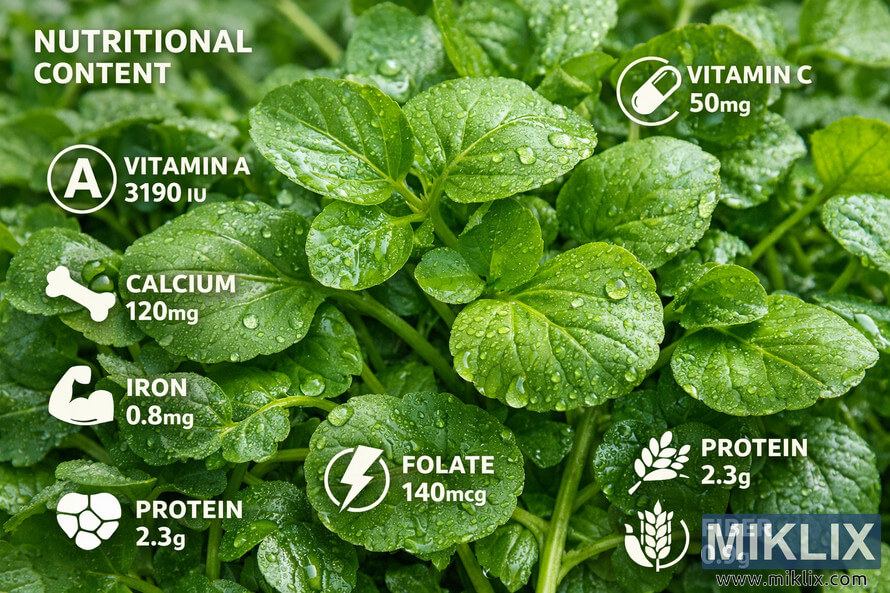
Watercress earned the top ranking in a study identifying powerhouse fruits and vegetables. The Centers for Disease Control and Prevention scored watercress at 100 points for nutrient density. This means watercress provides maximum health benefits relative to its low calories.
A single cup of fresh watercress contains only four calories yet delivers significant amounts of vitamins K, C, and A. The vegetable also provides calcium, potassium, and vital antioxidants. These nutrients support bone health, blood pressure regulation, and protection against disease.
Klõpsake või koputage pildile, et saada lisateavet ja suuremat resolutsiooni.
Health Benefits Worth Growing For
Research suggests watercress consumption may reduce cancer risk through glucosinolate compounds. These natural plant chemicals help protect cells from damage. Studies indicate potential benefits for heart disease prevention and improved blood vessel function.
The high vitamin K content in watercress supports proper blood clotting and bone health. This nutrient works alongside calcium to maintain strong bones as you age. Regular consumption of vitamin K-rich greens like watercress may reduce fracture risk.
Quick Fact: Watercress contains more vitamin C than oranges and more calcium than milk, ounce for ounce. Growing your own ensures maximum freshness and nutrient retention compared to store-bought greens that lose vitamin content during storage.
The antioxidants in watercress combat oxidative stress throughout your body. These compounds support liver function and may aid weight loss efforts. The fiber content promotes digestive health while the low calorie count makes watercress perfect for any eating plan.
Best Growing Conditions for Watercress
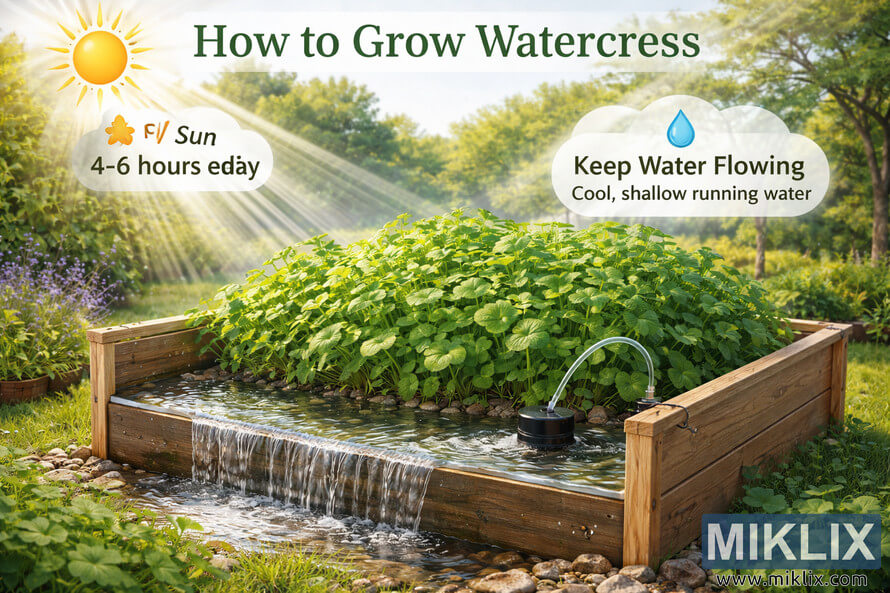
Watercress thrives in specific environmental conditions that mimic its natural habitat. Understanding these requirements helps you create the ideal growing environment. The good news is that most gardeners can easily provide what watercress needs.
Klõpsake või koputage pildile, et saada lisateavet ja suuremat resolutsiooni.
Sunlight Requirements
Watercress grows best in partial shade with four to six hours of sunlight daily. Too much direct sun causes the leaves to become bitter and tough. Morning sun with afternoon shade creates perfect conditions for tender, flavorful greens.
Indoor growers should place containers near east-facing windows. This positioning provides gentle morning light without intense afternoon heat. South-facing windows work during cooler months but may require shading in summer.
Outdoor watercress benefits from dappled shade under trees or beside taller plants. The vegetable tolerates full sun in cooler climates but requires consistent moisture. Watch for leaf discoloration as a sign of excessive sun exposure.
Water Quality and Temperature
Water quality matters significantly for watercress cultivation. The plant prefers clean, cool water with temperatures between 50 and 65 degrees Fahrenheit. Warm water encourages disease and reduces growth rates.
Ideal Water Conditions
- Temperature: 50-65°F for optimal growth
- pH level: 6.5-7.5 for nutrient availability
- Circulation: Gentle movement prevents stagnation
- Cleanliness: Change water every 2-3 days
- Depth: 2-3 inches covering roots completely
Signs of Poor Water Quality
- Yellowing leaves indicate nutrient deficiency
- Slimy stems suggest bacterial growth
- Slow growth points to temperature issues
- Brown spots signal water quality problems
- Wilting despite moisture means root stress
Tap water works well for most home growers after sitting overnight to release chlorine. Well water often contains beneficial minerals that support plant growth. Avoid water softener systems that add sodium harmful to watercress.
Soil and Growing Medium Options
While watercress naturally grows in water, it also thrives in consistently moist soil. The plant adapts to various growing mediums as long as moisture levels remain high. Soil-grown watercress often produces more robust flavor than water-only cultivation.
Rich, organic soil with high compost content provides nutrients for vigorous growth. The growing medium should retain moisture while allowing excess water to drain. Heavy clay soils require amendment with compost and sand for proper drainage.
Container Mix
Combine equal parts potting soil, compost, and coconut coir. This blend retains moisture while providing nutrients. Add perlite if drainage seems slow.
Garden Bed Mix
Amend existing soil with three inches of compost worked into the top six inches. Add peat moss in sandy soils to improve water retention.
Hydroponic Medium
Use expanded clay pellets or rockwool cubes for water-based growing. These materials support roots while allowing constant water contact.
Temperature and Climate Considerations
Watercress performs best in cool weather conditions typical of spring and fall seasons. The plant tolerates light frost and continues growing through winter in mild climates. Summer heat causes watercress to bolt and develop bitter flavors.
Ideal air temperatures range from 55 to 75 degrees Fahrenheit for sustained harvest. Higher temperatures trigger flowering and reduce leaf production. Gardeners in warm regions should grow watercress during cooler months or provide extra shade.
Indoor growers maintain consistent temperatures more easily than outdoor gardeners. A cool basement or air-conditioned room extends the growing season year-round. Avoid placing containers near heat sources like radiators or heating vents.
Step-by-Step Planting Instructions
Starting watercress requires minimal equipment and effort. You can begin from seeds or cuttings purchased from grocery stores. Both methods produce results within weeks under proper conditions.
Starting from Seeds
Watercress seeds germinate quickly when given proper moisture and temperature. Purchase fresh seeds from reputable suppliers for best results. Old seeds may have reduced germination rates and slower growth.
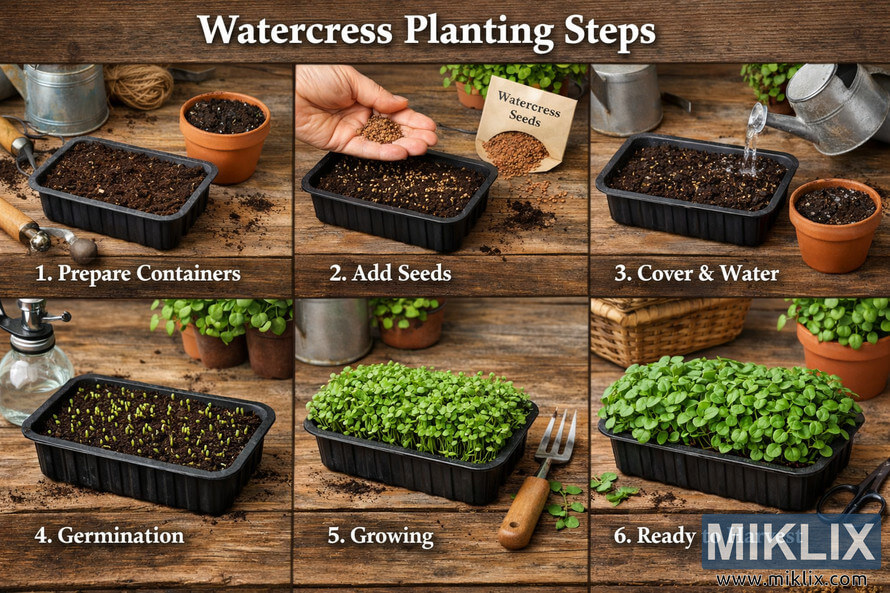
- Fill a shallow container with moist seed-starting mix to within one inch of the rim.
- Scatter seeds evenly across the surface without covering them with additional soil.
- Mist the seeds gently with water using a spray bottle to avoid displacement.
- Cover the container with clear plastic wrap to maintain humidity during germination.
- Place in a location with indirect light and temperatures between 60-70°F.
- Keep the growing medium consistently moist by misting twice daily.
- Remove plastic wrap once seedlings emerge in 7-10 days.
- Thin seedlings to two inches apart when they reach one inch tall.
Seeds sown directly in final growing locations eliminate transplanting stress. Broadcast seeds over prepared soil or growing medium in the permanent container. Water gently and maintain moisture throughout germination.
Klõpsake või koputage pildile, et saada lisateavet ja suuremat resolutsiooni.
Starting from Cuttings
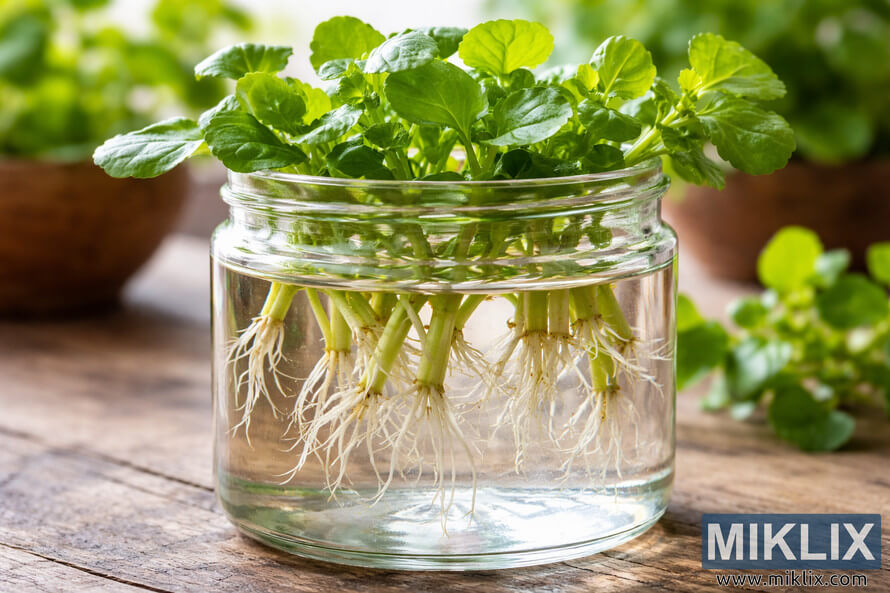
Store-bought watercress often develops roots when placed in water. This method provides faster results than seeds and ensures you grow the exact variety you enjoyed eating. Select the freshest bunches with crisp stems and vibrant green color.
- Trim the bottom inch of stems at a 45-degree angle to increase rooting surface area. Remove lower leaves that would sit below the water line to prevent rot. Place cuttings in a jar with two inches of clean water.
- Change the water daily to prevent bacterial growth and maintain oxygen levels. Roots typically appear within five to seven days. White, healthy roots indicate successful propagation.
- Once roots reach one inch long, transplant cuttings to containers or garden beds. Handle roots gently to avoid damage during the transition. Water thoroughly after planting to eliminate air pockets around roots.
Klõpsake või koputage pildile, et saada lisateavet ja suuremat resolutsiooni.
Container Setup for Water Growing
Growing watercress in water-filled containers requires specific setup for success. Choose containers at least four inches deep with drainage holes if using a tray system. Waterproof containers without drainage work for standing water methods.
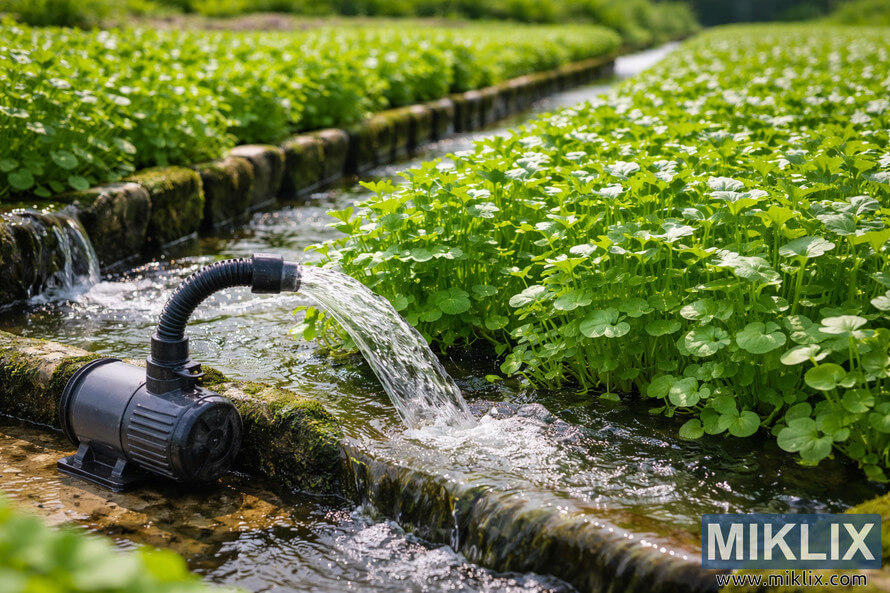
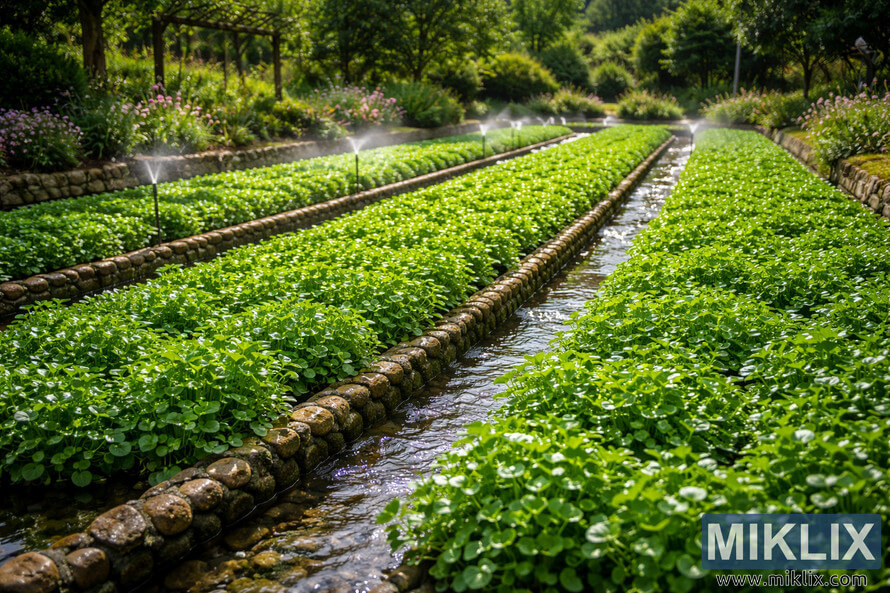
Create a simple recirculating system using a small aquarium pump for continuous water movement. This prevents stagnation and increases oxygen availability to roots. Position the pump outlet to create gentle water flow across the growing area.
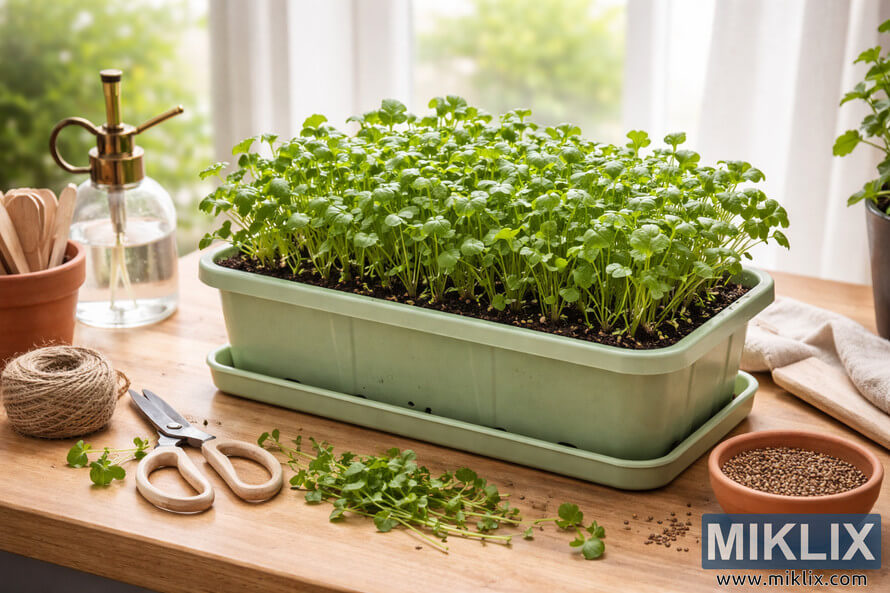
Basic Container Method
Use any shallow container at least four inches deep. Fill with water to two inches and place rooted plants or scattered seeds on the surface. Maintain water level and change completely every three days.
Best for: Beginners and small-space growers
Klõpsake või koputage pildile, et saada lisateavet ja suuremat resolutsiooni.
Flowing Water System
Set up a reservoir container below a growing tray. Use a small pump to move water from reservoir to tray where it flows back through drainage holes. This mimics natural stream conditions.
Best for: Maximum growth and continuous harvest
Klõpsake või koputage pildile, et saada lisateavet ja suuremat resolutsiooni.
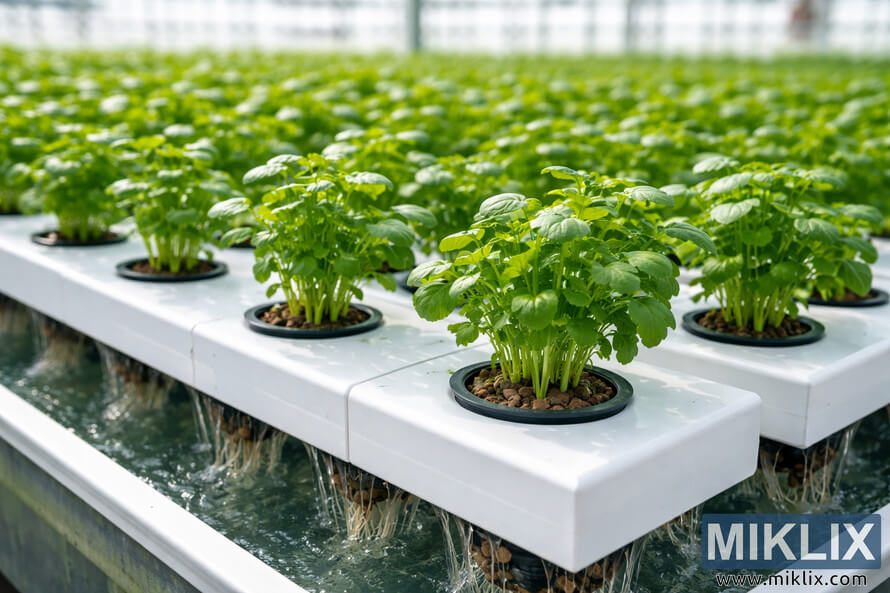
Hydroponic Approach
Use net pots filled with clay pellets suspended over nutrient solution. Roots grow through pots into water below. Add liquid fertilizer at quarter strength for optimal growth.
Best for: Year-round indoor production
Klõpsake või koputage pildile, et saada lisateavet ja suuremat resolutsiooni.
Soil-Based Planting Method
Growing watercress in soil provides stability and often produces fuller plants than water-only methods. This approach works well for gardeners who prefer traditional cultivation techniques. The key is maintaining consistently moist but not waterlogged conditions.
Prepare beds or containers by mixing compost into the growing medium. Create shallow furrows one-quarter inch deep for seeds or dig planting holes for transplants. Space plants six inches apart in all directions for adequate air circulation.
Water immediately after planting and maintain soil moisture at all times. The soil surface should feel damp to the touch but not soggy. Installing drip irrigation or using self-watering containers simplifies moisture management.
Care and Maintenance Tips
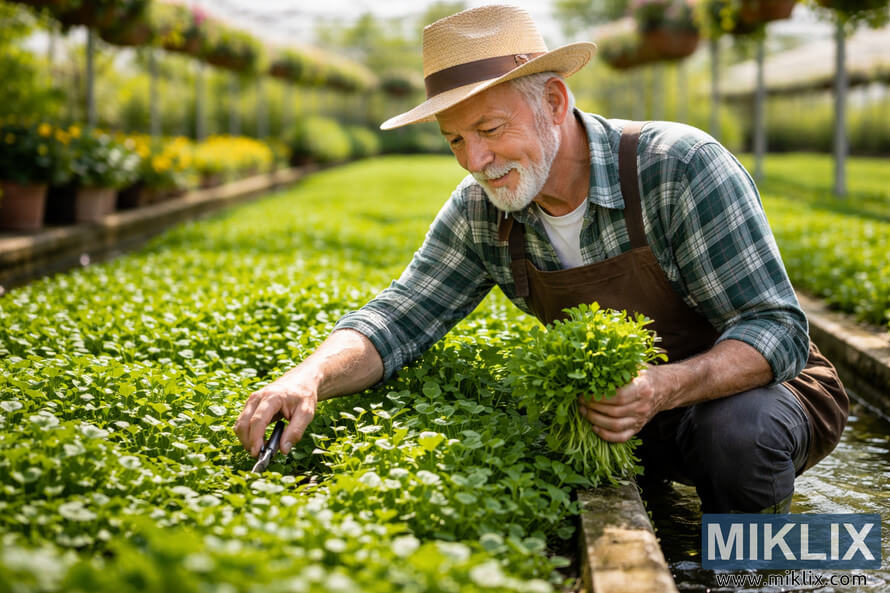
Watercress requires consistent attention to water and nutrients for productive growth. Daily monitoring prevents problems before they affect your harvest. Most care tasks take only minutes but make significant differences in plant health.
Klõpsake või koputage pildile, et saada lisateavet ja suuremat resolutsiooni.
Watering and Moisture Management
Watercress demands constant moisture unlike most garden vegetables. The growing medium or water reservoir should never dry out completely. Even brief periods of dryness stress plants and reduce quality.
Container-grown watercress in soil requires daily watering during warm weather. Check moisture levels each morning by feeling the soil surface. Water until excess drains from bottom holes, ensuring complete saturation of the root zone.
Pro Tip: Set up a simple drip system using a bottle with small holes placed near your watercress. This provides steady moisture while you're away and prevents overwatering common with manual methods.
Water-based growing systems need partial water changes every two to three days. This refreshes oxygen levels and prevents bacterial buildup. Complete water changes weekly maintain optimal growing conditions.
Fertilizing Requirements
Watercress grown in soil benefits from regular feeding with balanced liquid fertilizer. Apply at half the recommended strength every two weeks during active growth. Too much fertilizer produces excessive vegetative growth with reduced flavor.
Water-grown watercress requires more frequent fertilization since nutrients wash away constantly. Add liquid hydroponic fertilizer at quarter strength to the water supply. Organic options like fish emulsion work well for soil and water systems.
Organic Fertilizer Options
- Compost tea applied weekly at half strength
- Fish emulsion diluted to quarter strength
- Seaweed extract for trace minerals
- Worm casting tea for soil applications
Signs of Nutrient Deficiency
- Pale yellow leaves indicate nitrogen shortage
- Purple stems suggest phosphorus deficiency
- Brown leaf edges signal potassium need
- Slow growth points to overall nutrient lack
Temperature Control Strategies
Maintaining cool temperatures extends your growing season and improves flavor. Summer heat challenges watercress cultivation but several strategies help combat high temperatures. Shade cloth reduces direct sun exposure while allowing adequate light for growth.
Position containers where they receive morning sun and afternoon shade during hot months. Buildings, fences, or taller plants provide natural shade as temperatures rise. Moving portable containers to cooler locations works well for flexible growing setups.
Water temperature control prevents root stress in heat. Add ice cubes to water reservoirs during extreme heat waves. Change water during cooler morning hours to maintain lower baseline temperatures throughout the day.
Pruning and Trimming
Regular harvesting serves as pruning for watercress and encourages bushier growth. Cut stems just above leaf nodes to promote branching from those points. This technique increases yield over time while maintaining compact plant size.
Remove any yellowing or damaged leaves promptly to prevent disease spread. These older leaves drain resources better used for new growth. Pinch off flower buds as they appear to extend the leafy green production phase.
Trim watercress back by one-third if plants become leggy or overgrown. This rejuvenation pruning stimulates fresh growth from the base. Use the trimmings in recipes or root them to start new plants.
Common Problems and How to Solve Them
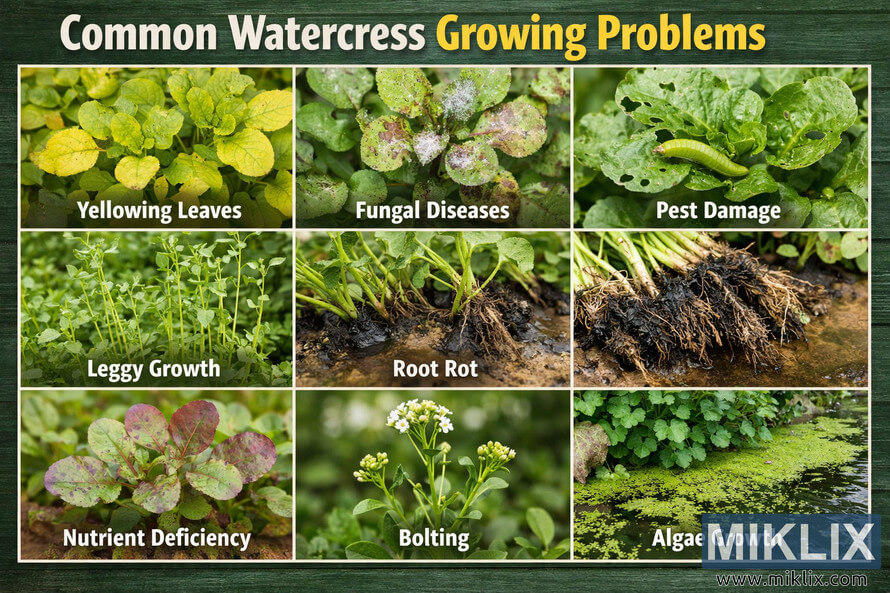
Watercress encounters fewer pest and disease issues than many vegetables. However, specific problems can affect your crop. Quick identification and response prevent minor issues from becoming major setbacks.
Klõpsake või koputage pildile, et saada lisateavet ja suuremat resolutsiooni.
Pest Management
Aphids represent the most common pest problem for watercress growers. These small insects cluster on new growth and stem tips. They suck plant juices and can transmit diseases between plants.
Control aphids by spraying plants with a strong water stream to dislodge insects. Repeat every few days until populations decline. Insecticidal soap provides organic control for persistent infestations.
Aphids
- Identification: Tiny green or black insects on young leaves and stems
- Solution: Spray with water or neem oil solution weekly until gone
Slugs
- Identification: Irregular holes in leaves with slime trails visible
- Solution: Use beer traps or copper barriers around containers
Whiteflies
- Identification: Tiny white flying insects under leaves
- Solution: Yellow sticky traps and neem oil spray applications
Slugs damage outdoor watercress by eating irregular holes in leaves. These pests hide during the day and feed at night. Hand-picking after dark removes many slugs from small growing areas.
Disease Prevention and Treatment
Root rot develops in watercress when water stagnates or temperatures rise too high. Affected plants wilt despite adequate moisture and develop black, mushy roots. Prevention through water circulation and temperature control beats treatment.
Downy mildew appears as yellow spots on leaf surfaces with fuzzy growth underneath. This fungal disease thrives in humid conditions with poor air circulation. Remove affected leaves immediately and improve airflow around plants.
Important: Never use watercress from contaminated water sources or questionable locations. Wild watercress can harbor liver flukes and other parasites dangerous to human health. Home-grown watercress from clean water sources is safe to consume.
Bacterial leaf spot creates dark, water-soaked areas on leaves that eventually turn brown. This disease spreads through water splashing and overcrowding. Space plants properly and avoid overhead watering during humid weather.
Environmental Stress Issues
Bolting occurs when watercress experiences temperature stress or reaches maturity. The plant sends up flower stalks and leaf production slows dramatically. Remove flower stalks immediately or accept reduced harvest as plants complete their lifecycle.
Bitter flavor develops in watercress exposed to excessive heat or sunlight. Move containers to shadier locations and increase watering frequency. Plants often recover sweet flavor once temperatures moderate.
Yellowing Leaves
Pale or yellow leaves usually indicate nutrient deficiency or insufficient light. Increase fertilizer frequency and verify plants receive adequate bright indirect light. Older leaves naturally yellow and should be removed.
Slow Growth
Stunted growth results from cold temperatures, low light, or nutrient shortage. Ensure water temperature stays above 50°F and provide supplemental lighting if needed. Boost fertilizer application frequency.
Water Quality Problems
Cloudy or smelly water signals bacterial growth harmful to watercress. Change water completely and clean containers thoroughly. Increase water change frequency to prevent recurrence.
Brown deposits on roots or container sides indicate mineral buildup from hard water. Switch to filtered or rainwater if available. Flush systems thoroughly with clean water to remove accumulated minerals.
Algae growth in water-based systems competes with watercress for nutrients. Reduce light exposure to water surfaces while maintaining adequate plant light. Cover water reservoirs with opaque materials to prevent algae development.
Harvesting Techniques
Proper harvesting techniques maximize yield while maintaining plant health. Watercress can be harvested as microgreens, baby greens, or mature plants. Each stage offers different flavors and uses in recipes.
Klõpsake või koputage pildile, et saada lisateavet ja suuremat resolutsiooni.
When to Harvest
Begin harvesting watercress when plants reach four to six inches tall. This typically occurs three to four weeks after seeding or two weeks after transplanting rooted cuttings. Young leaves offer the mildest flavor preferred for fresh salads.
Microgreens can be cut when seedlings develop their first true leaves, usually 10 to 14 days after germination. These tiny greens pack concentrated flavor and nutrients. Harvest entire microgreen trays at once by cutting just above the soil line.
Peak flavor occurs before flowering when leaves remain tender and stems stay succulent. Once watercress begins forming flower buds, leaf quality declines and peppery flavor intensifies. Harvest frequently to delay flowering and extend production.
Cutting Methods
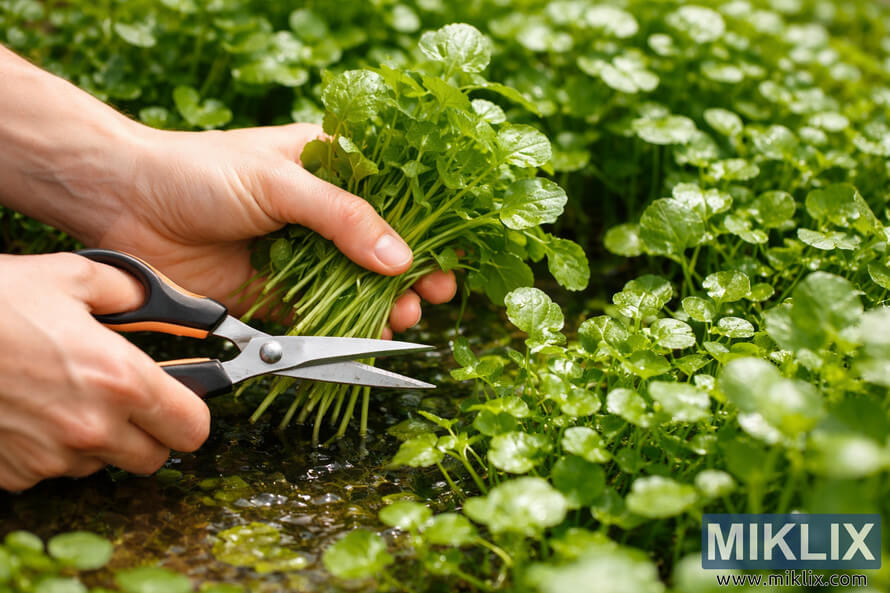
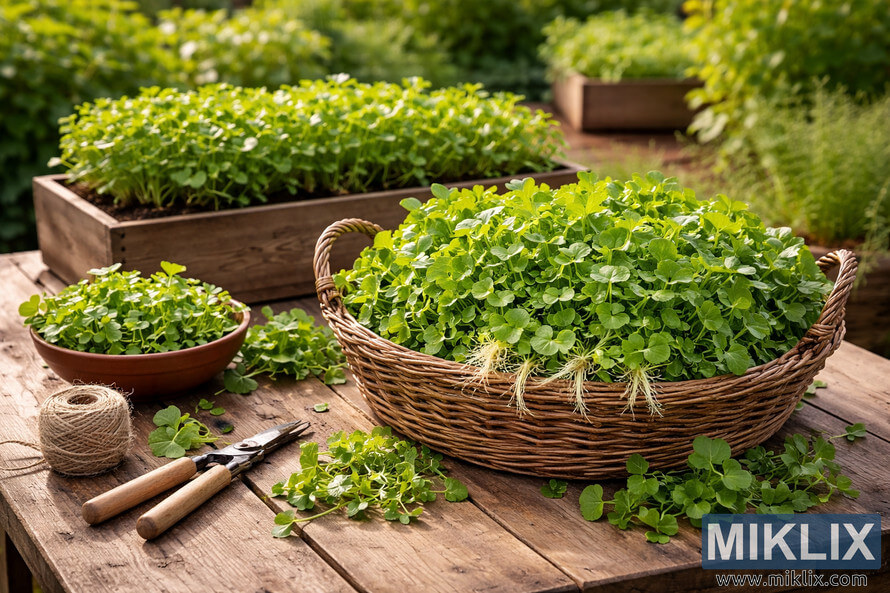
Use clean, sharp scissors or garden shears for harvesting watercress. Dull tools crush stems and invite disease. Cut stems one to two inches above the crown or previous cut point to encourage regrowth.
- Take only the top third of the plant during each harvest to maintain vigor. This leaves sufficient foliage for continued photosynthesis and rapid regrowth.
- Plants recover faster from light, frequent harvests than heavy, infrequent cutting.
- Select stems with three to five leaf sets showing vibrant green color.
- Position scissors one inch above the previous cut point or crown.
- Cut stems at a 45-degree angle to maximize surface area for regrowth.
- Place harvested watercress immediately in cold water to maintain crispness.
- Continue cutting around the plant until you've gathered desired amount.
- Leave at least two inches of stem and foliage on each plant.
- Water plants thoroughly after harvesting to reduce stress.
Post-Harvest Handling
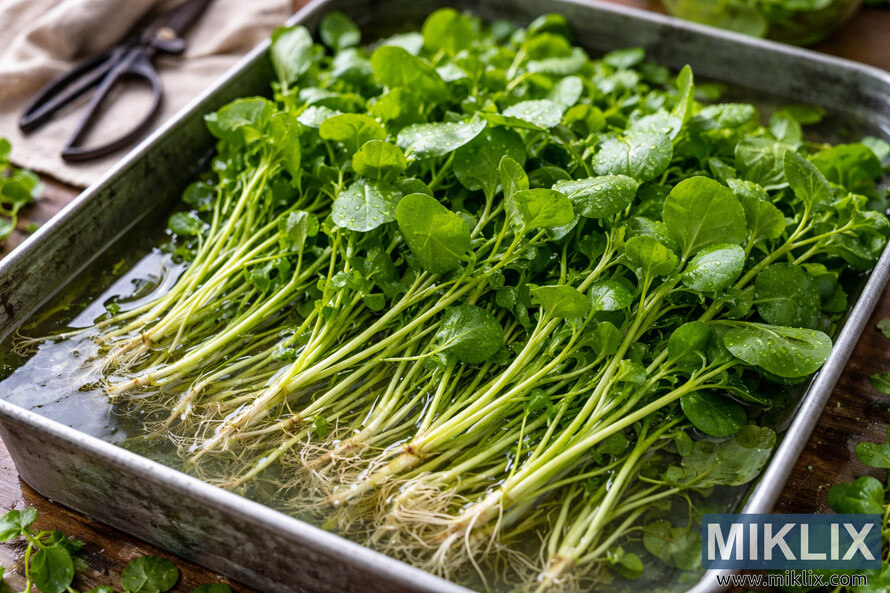
Rinse harvested watercress in cool water immediately after cutting. This removes any dirt, insects, or debris while lowering leaf temperature. Shake excess water and store in sealed containers in the refrigerator.
Fresh watercress stays crisp for three to five days when stored properly. Place stems in a jar with one inch of water and cover loosely with a plastic bag. Change water daily to maintain freshness.
Watercress can be frozen for use in cooked recipes though texture suffers for fresh applications. Blanch leaves for 30 seconds in boiling water, shock in ice water, and freeze in sealed bags. Frozen watercress works well in soups, smoothies, and sauces.
Dehydrating watercress creates a nutrient-dense powder for adding to various foods. Dry leaves at 95°F until crispy, then grind into powder. Store in airtight containers away from light and heat.
Klõpsake või koputage pildile, et saada lisateavet ja suuremat resolutsiooni.
Continuous Harvest Schedule
Establish a cutting rotation to ensure consistent supply of fresh watercress. Divide your growing area into sections and harvest different sections on staggered schedules. This provides continuous production without depleting any single plant.
Allow seven to ten days between harvests from the same plants. This recovery period lets stems regrow and plants rebuild energy reserves. More frequent cutting weakens plants and reduces overall productivity.
Tips for Successful Watercress Cultivation
Experienced growers develop strategies that boost production and simplify care. These proven techniques address common challenges while maximizing harvest potential. Apply these tips to your growing setup for better results.
Klõpsake või koputage pildile, et saada lisateavet ja suuremat resolutsiooni.
Succession Planting Strategy
Start new watercress seeds or cuttings every two weeks for continuous supply. This succession planting ensures you always have plants at peak harvest stage. Stagger plantings in separate containers or sections of your growing area.
Each planting reaches maturity as previous plantings begin to decline. This rotation system provides fresh greens year-round without gaps in production. Mark planting dates on containers to track each succession.
Smart Strategy: Maintain three separate plantings at different growth stages - seedlings, growing plants, and harvest-ready plants. This three-stage system delivers continuous harvests with minimal gaps between productive periods.
Companion Planting Benefits
Grow watercress alongside other cool-season vegetables for efficient space use. Lettuce, spinach, and radishes share similar growing requirements and harvest timing. These companions don't compete aggressively with watercress roots.
Avoid planting watercress near plants requiring dry conditions like tomatoes or peppers. The constant moisture watercress needs creates unfavorable conditions for these vegetables. Keep watercress separate in dedicated containers or beds.
Good Companions
These plants thrive alongside watercress with similar needs.
- Lettuce varieties for mixed salad greens
- Spinach for early spring production
- Radishes as quick-growing space fillers
- Celery sharing moisture requirements
Poor Companions
Avoid pairing watercress with these plants.
- Tomatoes requiring drier soil conditions
- Peppers sensitive to excess moisture
- Beans preferring moderate watering
- Squash with sprawling growth habits
Extending the Growing Season
Watercress tolerates light frost and continues growing through winter in mild climates. Protect plants with row covers when temperatures drop below 25°F. Cold frames provide additional insulation for winter production in colder regions.
Move containers indoors before hard freezes to maintain year-round harvests. Place near bright windows or under grow lights. Indoor cultivation eliminates weather concerns while providing fresh greens during winter months.
Start summer plantings in shadier locations with cooler microclimates. North-facing sites or areas under tree canopies stay cooler during hot weather. Increase watering frequency and monitor plants closely for heat stress.
Saving Seeds for Future Crops
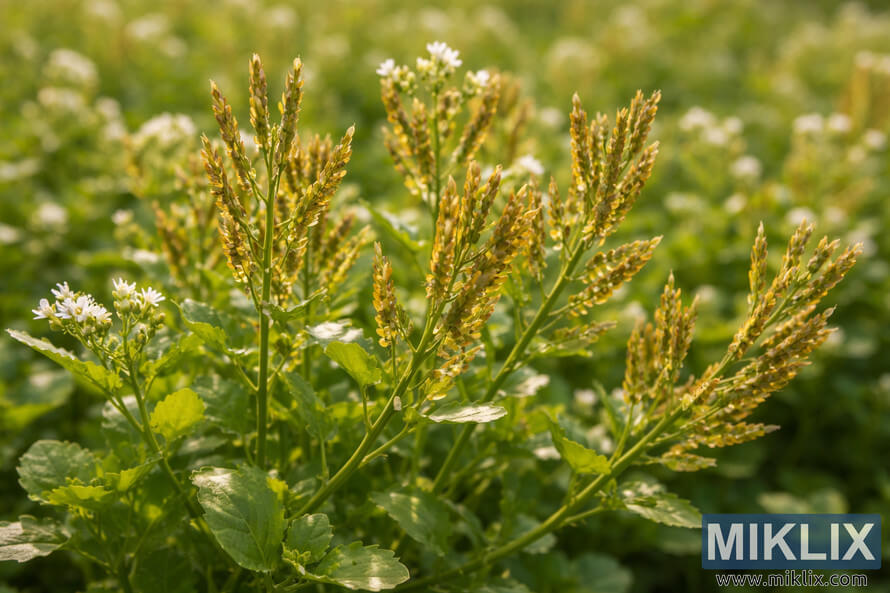
Allow some watercress plants to flower and form seed pods late in the season. These seeds save money on future plantings and adapt to your specific growing conditions. Select the healthiest, most productive plants for seed saving.
Seed pods ripen 6 to 8 weeks after flowering begins. Harvest when pods turn brown and dry on the plant. Collect seeds by cutting entire stems into paper bags.
Separate seeds from chaff by rubbing dried pods between your hands. Store cleaned seeds in paper envelopes in a cool, dry location. Properly stored watercress seeds remain viable for three to four years.
Label seed packets with variety name and collection date. Test old seeds before planting by germinating a small sample. Germination rates decline over time but seeds often remain usable longer than expected.
Klõpsake või koputage pildile, et saada lisateavet ja suuremat resolutsiooni.
Maximizing Small Space Production
Vertical growing systems multiply production in limited areas. Stack shallow containers on shelving units near windows. Each level supports a separate planting, dramatically increasing total yield.
Hanging basket systems work well for watercress cultivation. Suspend containers at different heights to capture available light. The trailing growth habit looks attractive while producing edible greens.
Window box containers bring watercress growing to apartments and small patios. Line boxes with plastic to retain moisture and fill with growing medium. Position boxes where they receive morning sun and afternoon shade.
Using Watercress in Recipes
The peppery flavor of fresh watercress enhances numerous dishes beyond basic salads. Add leaves to sandwiches for a mustard-like kick without condiments. Watercress pairs exceptionally well with eggs, cheese, and smoked fish.
Wilted watercress makes an excellent side vegetable similar to spinach. Sauté briefly with garlic and olive oil until just tender. The vegetable reduces significantly when cooked, so start with generous quantities.
Fresh Applications
- Salad base with citrus dressing
- Sandwich and wrap filling
- Garnish for soups and entrees
- Pesto sauce alternative
Cooked Dishes
- Stirred into scrambled eggs
- Wilted as side vegetable
- Added to pasta last minute
- Blended into soups
Creative Uses
- Smoothie booster for nutrients
- Compound butter ingredient
- Pizza topping after baking
- Tea made from fresh leaves
Watercress soup stands as a classic recipe showcasing the vegetable's unique flavor. Simmer watercress with potatoes, onions, and stock, then puree until smooth. Serve hot or chilled depending on the season.
Blend fresh watercress into smoothies for a nutrient boost without strong flavor. The greens disappear in fruit-based smoothies while adding vitamins and minerals. Start with small amounts and gradually increase as you adjust to the taste.
Start Growing Your Own Watercress Today
Growing watercress at home provides fresh, nutrient-dense greens with minimal space and effort. This vegetable adapts to various growing methods from simple containers to elaborate systems. Your homegrown watercress will taste superior to store-bought options while costing pennies per harvest.
The health benefits of watercress make it worth the small investment in seeds or cuttings. This powerhouse vegetable delivers maximum nutrition with minimal calories. Regular consumption supports bone health, blood pressure regulation, and overall wellness.
Start small with a single container and expand as you gain experience. Watercress grows quickly and forgives minor mistakes. Within weeks you'll harvest your first crop and understand why gardeners prize this vegetable.
Remember that consistent moisture and cool temperatures matter most for success. Monitor your plants daily and address issues promptly. These simple care practices ensure continuous harvests of fresh, flavorful greens.
Whether you grow in soil, water, or hydroponic systems, watercress rewards your efforts abundantly. The satisfaction of harvesting your own food combines with the superior taste of homegrown produce. Transform your kitchen garden into a nutrition powerhouse by adding watercress to your growing plan today.
Klõpsake või koputage pildile, et saada lisateavet ja suuremat resolutsiooni.
Lisalugemist
Kui see postitus teile meeldis, võivad teile meeldida ka need soovitused:
- Täielik juhend kõrvitsate kasvatamiseks oma koduaias
- Bok Choy kasvatamise juhend oma aias
- Parimad ploomisordid ja -puud teie aias kasvatamiseks