
Pilt: Molecular Structure Diagram of Allicin and Organosulfur Compounds
Avaldatud:
Viimati uuendatud: 16. juuli 2026, kell 20:43:50 UTC
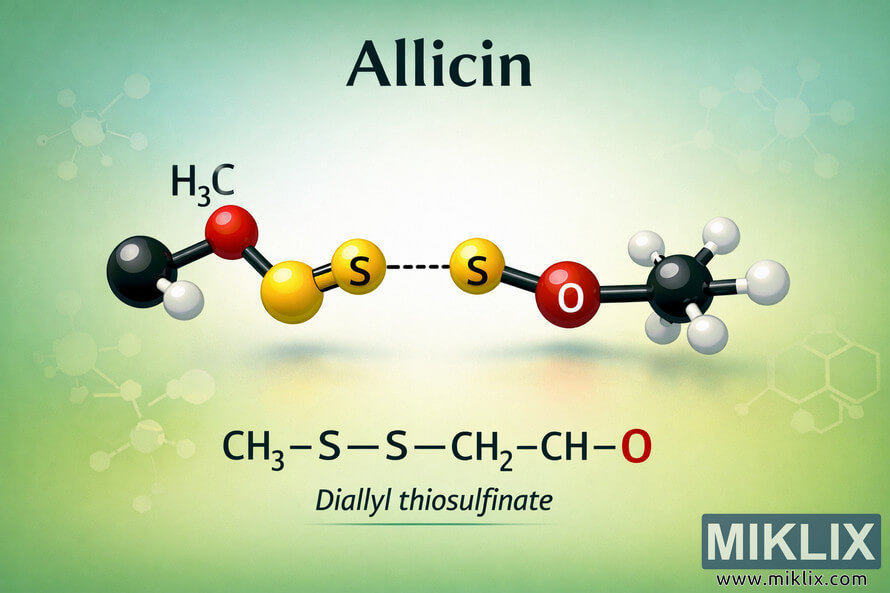
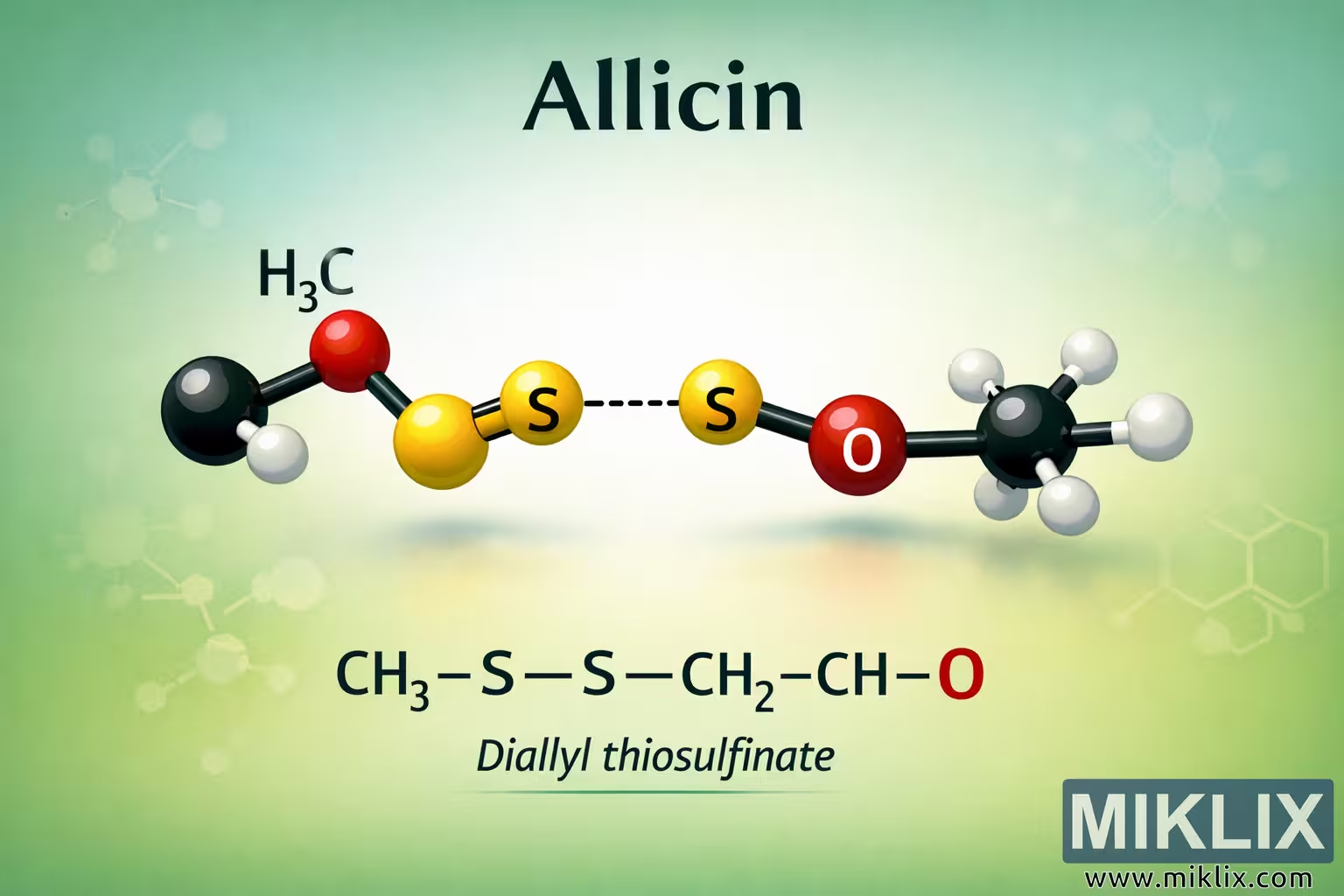
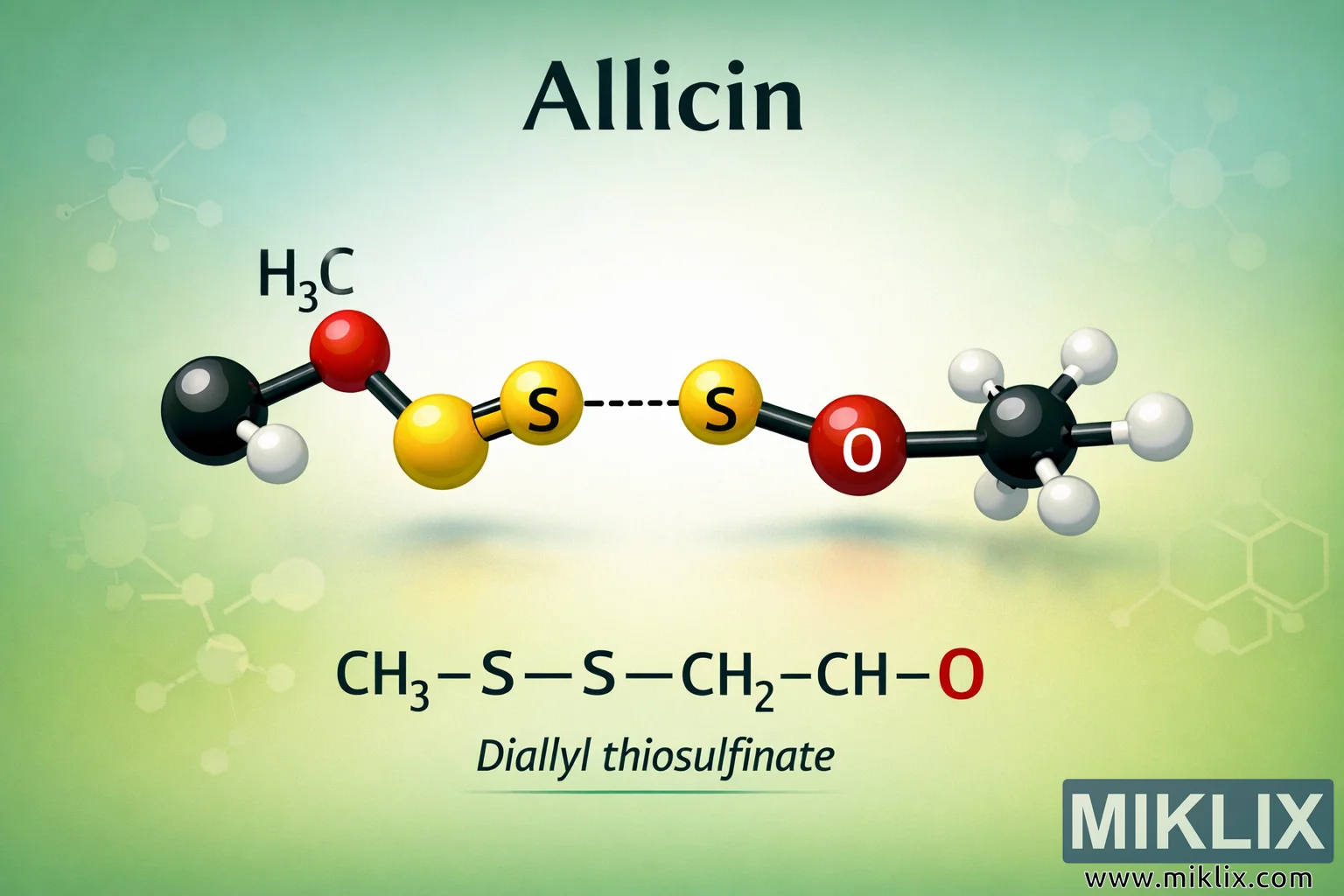
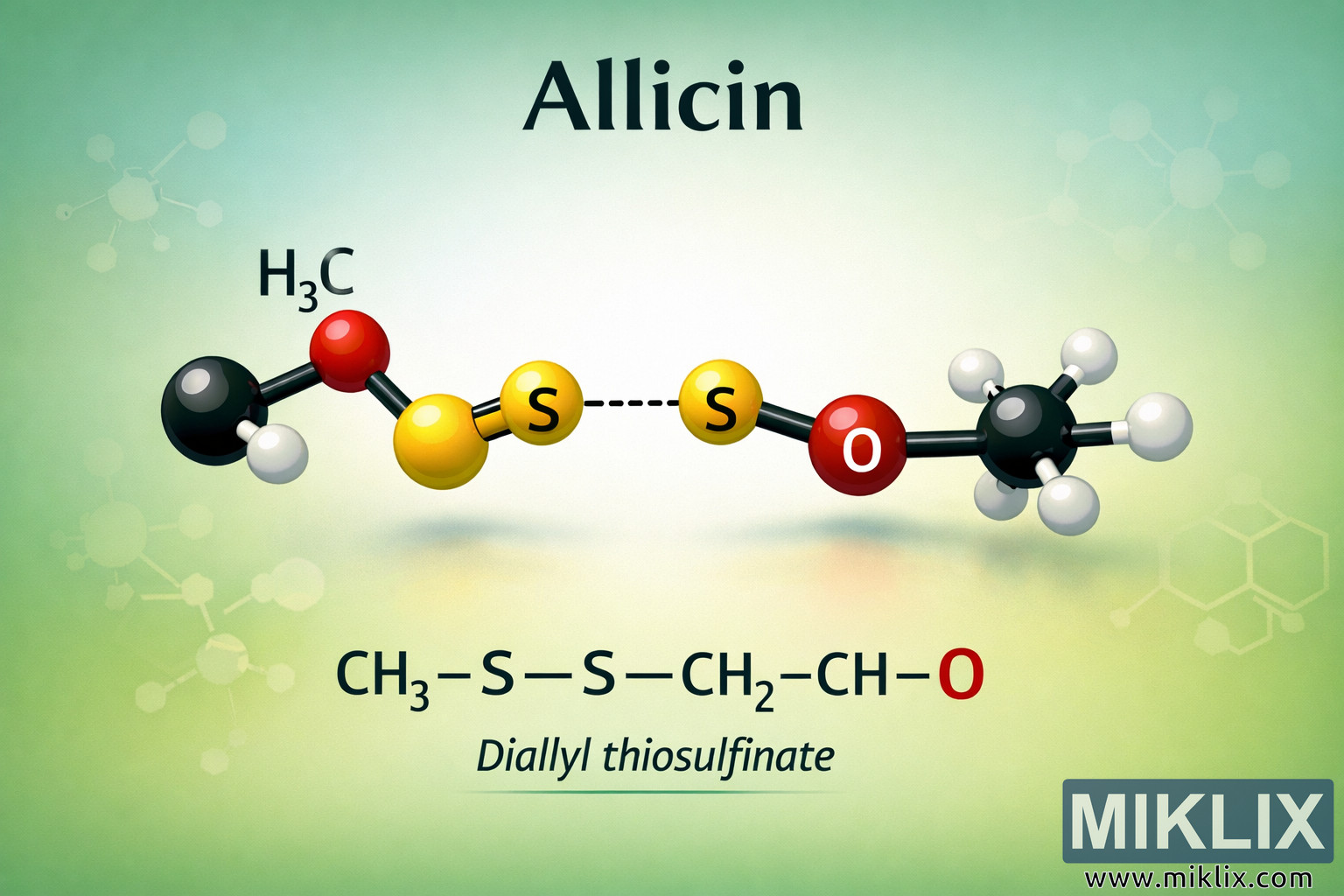
High-resolution landscape molecular diagram of allicin, an organosulfur compound, featuring a ball-and-stick structure with color-coded atoms, a disulfide linkage, and clear labels for the formula CH₃–S–S–CH₂–CH=CH–O and the name Diallyl thiosulfinate, set against a gradient scientific background.
Molecular Structure Diagram of Allicin and Organosulfur Compounds
Selle pildi olemasolevad versioonid
Allpool allalaadimiseks saadaval olevad pildifailid on vähem kokkusurutud ja kõrgema resolutsiooniga - ja selle tulemusena kvaliteetsemad - kui selle veebisaidi artiklitesse ja lehekülgedele manustatud pildid, mis on ribalaiuse tarbimise vähendamiseks faili suuruse poolest rohkem optimeeritud.
Tavaline suurus (1,536 x 1,024)
Suur suurus (3,072 x 2,048)
Väga suur suurus (4,608 x 3,072)
Eriti suur suurus (6,144 x 4,096)
Koomiliselt suur suurus (1,048,576 x 699,051)
- Ikka veel üleslaadimine... ;-)
Pildi kirjeldus
This image presents a detailed, high-resolution 2D digital illustration of the molecular structure of allicin, a prominent organosulfur compound, set against a soft, scientific-themed background. The composition is in landscape orientation, with the central focus on a ball-and-stick representation of the allicin molecule. At the very top of the image, the word "Allicin" appears in large, bold, black, sentence-case letters, clearly identifying the compound and giving the diagram an immediate sense of clarity and purpose.
The background features a smooth gradient that transitions from a light, fresh green at the upper edge to a gentle greenish-yellow toward the bottom. This gradient evokes associations with plants and natural chemistry, subtly hinting at allicin’s origin in garlic without depicting any actual plant imagery. The gradient is clean and unobtrusive, ensuring that the molecular diagram remains the primary visual focus. Faint, semi-transparent hexagonal shapes and abstract molecular motifs are scattered throughout the background, adding depth and a modern scientific aesthetic. These shapes are blurred and softly rendered, so they do not compete with the main structure but instead create a sense of context, as if the molecule is situated within a broader chemical environment.
At the center of the image, the allicin molecule is depicted using a ball-and-stick model. Each atom is represented by a colored sphere, and the bonds between atoms are shown as solid or dashed lines. On the left side of the molecule, a methyl group is illustrated. This group consists of a black sphere labeled "H₃C," representing a carbon atom bonded to three hydrogen atoms. The label is clear and legible, using a simple, sans-serif font that matches the overall scientific tone of the diagram. This methyl group is connected via a single bond to an oxygen atom, depicted as a red sphere. The red color immediately distinguishes oxygen from the other atoms, making it easy to visually parse the structure.
The oxygen atom on the left is double-bonded to a sulfur atom, which is represented by a yellow sphere. The double bond is shown as two parallel lines, emphasizing the nature of the bond and helping viewers understand the connectivity within the molecule. This first sulfur atom is then single-bonded to a second sulfur atom, also illustrated as a yellow sphere. Between these two sulfur atoms, a dashed line is drawn, symbolizing a disulfide linkage or a special type of connection that is central to the chemistry of organosulfur compounds. The use of a dashed line differentiates this bond from the standard single and double bonds, visually encoding additional chemical information into the diagram.
Moving toward the right side of the molecule, the second sulfur atom is bonded to another oxygen atom, again shown as a red sphere labeled with an "O." This oxygen atom is connected through a single bond, and its placement on the far right side of the central sulfur region helps balance the composition. In addition to this oxygen, the second sulfur atom is also bonded to an ethyl group. This ethyl group is depicted as a chain of two black spheres representing carbon atoms, each connected to white spheres that represent hydrogen atoms. The first carbon in the chain is bonded to two white spheres, while the second carbon is bonded to one white sphere, visually conveying the hydrogen distribution along the carbon backbone. The white spheres are smaller than the colored spheres for heteroatoms, making the diagram visually coherent and easy to interpret.
Below the central molecular illustration, there is a textual representation of the chemical formula and name of allicin. The formula is written as "CH₃–S–S–CH₂–CH=CH–O" in bold text, using a clear font that mirrors the style of the title at the top. This formula provides a linear representation of the molecule’s connectivity, complementing the ball-and-stick diagram above. Underneath the formula, in smaller, italicized text, appears the name "Diallyl thiosulfinate." This secondary label reinforces the identity of the compound and introduces its more formal chemical nomenclature. The italic style subtly distinguishes the name from the formula, while the smaller size ensures that it does not overpower the main structural information.
The entire diagram is rendered with crisp lines and smooth shading, giving the spheres a slight three-dimensional appearance without making them overly realistic. A soft glow surrounds the central molecular structure, gently highlighting it against the background and drawing the viewer’s eye toward the core of the image. This glow is subtle and does not obscure any labels or bonds; instead, it enhances the perception of the molecule as the focal point of the composition.
Overall, the image combines clarity, scientific accuracy, and aesthetic appeal. The careful use of color coding—black for carbon, white for hydrogen, red for oxygen, and yellow for sulfur—allows viewers to quickly distinguish different atom types. The bonds are consistently represented, with single, double, and dashed lines conveying the nature of each connection. The background elements, including the gradient and faint molecular motifs, provide a sense of depth and context without distracting from the main diagram. The textual labels at the top and bottom frame the illustration, making it suitable for educational materials, scientific presentations, or explanatory content about allicin and related organosulfur compounds.
In summary, this molecular structure diagram offers a visually engaging and informative representation of allicin. It highlights the key functional groups, the disulfide linkage, and the overall connectivity of the molecule, while the surrounding design elements reinforce its scientific character. The image is both precise and approachable, making complex chemical information accessible to students, researchers, and curious viewers alike.
Pilt on seotud: Health Benefits of Chives: Nature's Nutritional Powerhouse