
Pilt: Blood Glucose Meter with Shallots: Symbolic Representation of Blood Sugar Management
Avaldatud:
Viimati uuendatud: 5. august 2026, kell 22:49:11 UTC
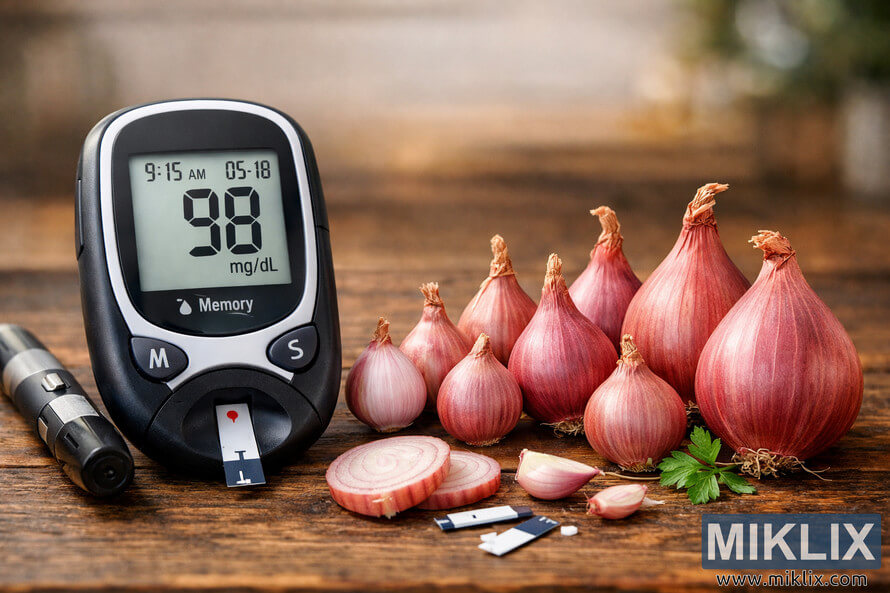
A high-resolution landscape photograph depicting a blood glucose meter and shallots arranged to represent blood sugar management, blending medical precision with natural symbolism.
Blood Glucose Meter with Shallots: Symbolic Representation of Blood Sugar Management
Selle pildi olemasolevad versioonid
Allpool allalaadimiseks saadaval olevad pildifailid on vähem kokkusurutud ja kõrgema resolutsiooniga - ja selle tulemusena kvaliteetsemad - kui selle veebisaidi artiklitesse ja lehekülgedele manustatud pildid, mis on ribalaiuse tarbimise vähendamiseks faili suuruse poolest rohkem optimeeritud.
Tavaline suurus (1,536 x 1,024)
Suur suurus (3,072 x 2,048)
Väga suur suurus (4,608 x 3,072)
Eriti suur suurus (6,144 x 4,096)
Koomiliselt suur suurus (1,048,576 x 699,051)
- Ikka veel üleslaadimine... ;-)
Pildi kirjeldus
The image presents a meticulously composed, high-resolution landscape photograph that merges medical technology with organic symbolism to illustrate the concept of blood sugar level management. At the center-left of the composition lies a sleek digital blood glucose meter, its design modern yet understated, with a crisp monochrome display reading '98 mg/dL'. The digits are bold and clear, evoking a sense of precision and control. Above the reading, the time and date—'9:15 AM' and '05-18'—are displayed in smaller text, grounding the scene in everyday routine. Below the main number, the word 'Memory' appears alongside a droplet icon, subtly reminding the viewer of the device’s purpose: monitoring and recording vital health data. The meter’s buttons, labeled 'M' and 'S', flank the lower edge of the screen, their tactile surfaces catching the light in a way that suggests usability and familiarity.
To the left of the meter rests a lancing device, its cylindrical form rendered in black and silver tones. The adjustable cap gleams faintly, hinting at its functional precision. A test strip protrudes from the glucose meter, its white body and metallic tip contrasting against the darker casing. The strip bears a small blood drop symbol, a visual shorthand for the act of measurement—the moment when technology meets biology.
On the right side of the composition, a collection of shallots introduces a natural counterpoint to the clinical device. They are arranged in a gentle progression from smallest to largest, forming a visual metaphor for the gradual rise and fall of blood sugar levels. The shallots’ reddish-purple skins shimmer under soft, diffused light, their papery textures captured in exquisite detail. Some are sliced open, revealing concentric layers of pale pink and white that echo the layered complexity of human physiology. The sliced shallots lie in the foreground, their exposed interiors glistening slightly, as if freshly cut. This juxtaposition of organic and synthetic elements—the shallots and the glucose meter—creates a dialogue between nature and science, between nourishment and measurement.
Scattered around the shallots are delicate sprigs of green parsley, adding a touch of freshness and vitality to the scene. A few spare test strips lie nearby, their presence reinforcing the theme of monitoring and balance. The wooden surface beneath these objects is rustic and textured, its grain running horizontally across the frame, guiding the viewer’s eye from left to right—from technology to nature, from data to diet. The background fades into a soft blur, suggesting a kitchen environment bathed in warm, earthy tones. This shallow depth of field ensures that the focus remains on the foreground elements, emphasizing their symbolic relationship.
The lighting is natural and even, with gentle highlights that accentuate the contours of the shallots and the smooth surfaces of the medical instruments. Shadows are soft and unobtrusive, contributing to an atmosphere of calm and contemplation. The overall color palette is harmonious: warm browns and muted purples balanced by the cool whites and silvers of the glucose meter. The composition feels both scientific and artistic, inviting reflection on the interconnectedness of health, food, and daily life.
The photograph’s narrative unfolds quietly yet powerfully. It speaks to the discipline of managing blood sugar levels, the awareness required to maintain balance, and the role of natural foods in supporting wellness. The shallots, known for their subtle sweetness and nutritional properties, serve as a metaphor for moderation and care. The glucose meter, precise and unyielding, represents the quantitative side of health—the numbers that guide decisions and track progress. Together, they form a tableau that transcends mere objects, becoming a visual meditation on the harmony between technology and nature.
Every detail in the image contributes to this theme: the alignment of the shallots, the clarity of the digital display, the tactile realism of the wooden surface. The viewer is invited to consider how modern health practices coexist with traditional wisdom, how the act of measuring can coexist with the act of nourishing. In this way, the photograph becomes more than a still life—it becomes a statement about balance, awareness, and the art of living well.
Pilt on seotud: Shallots: The Small Vegetable with Big Nutritional Benefits