
Pilt: Japanese Persimmon Varieties Growing on a Fruit-Laden Persimmon Tree
Avaldatud:
Viimati uuendatud: 4. juuni 2026, kell 18:32:36 UTC
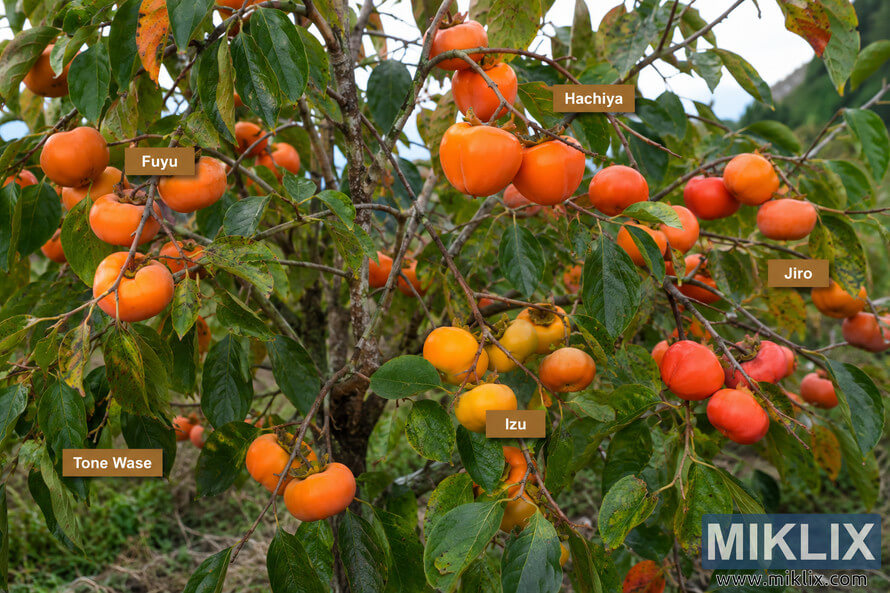
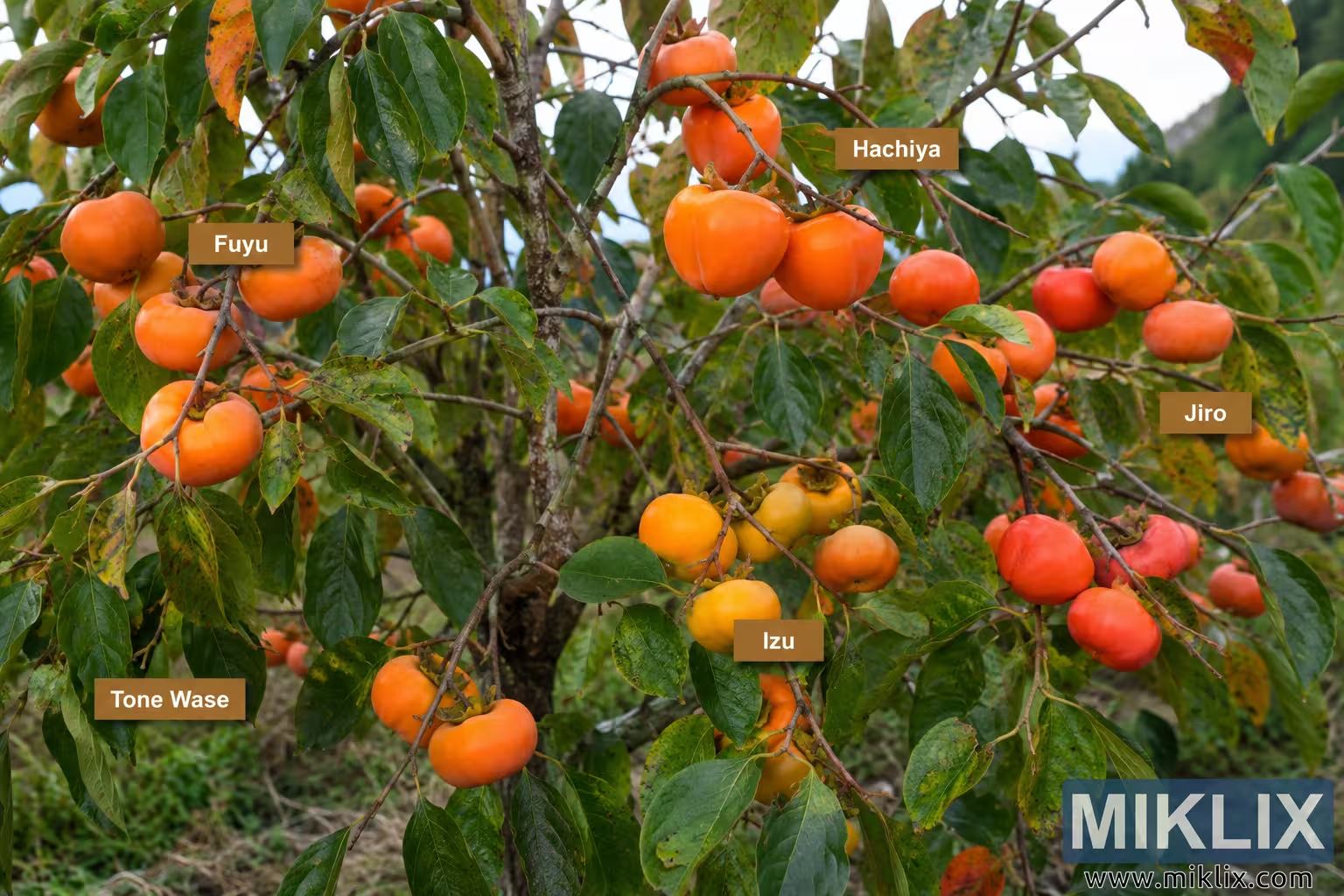
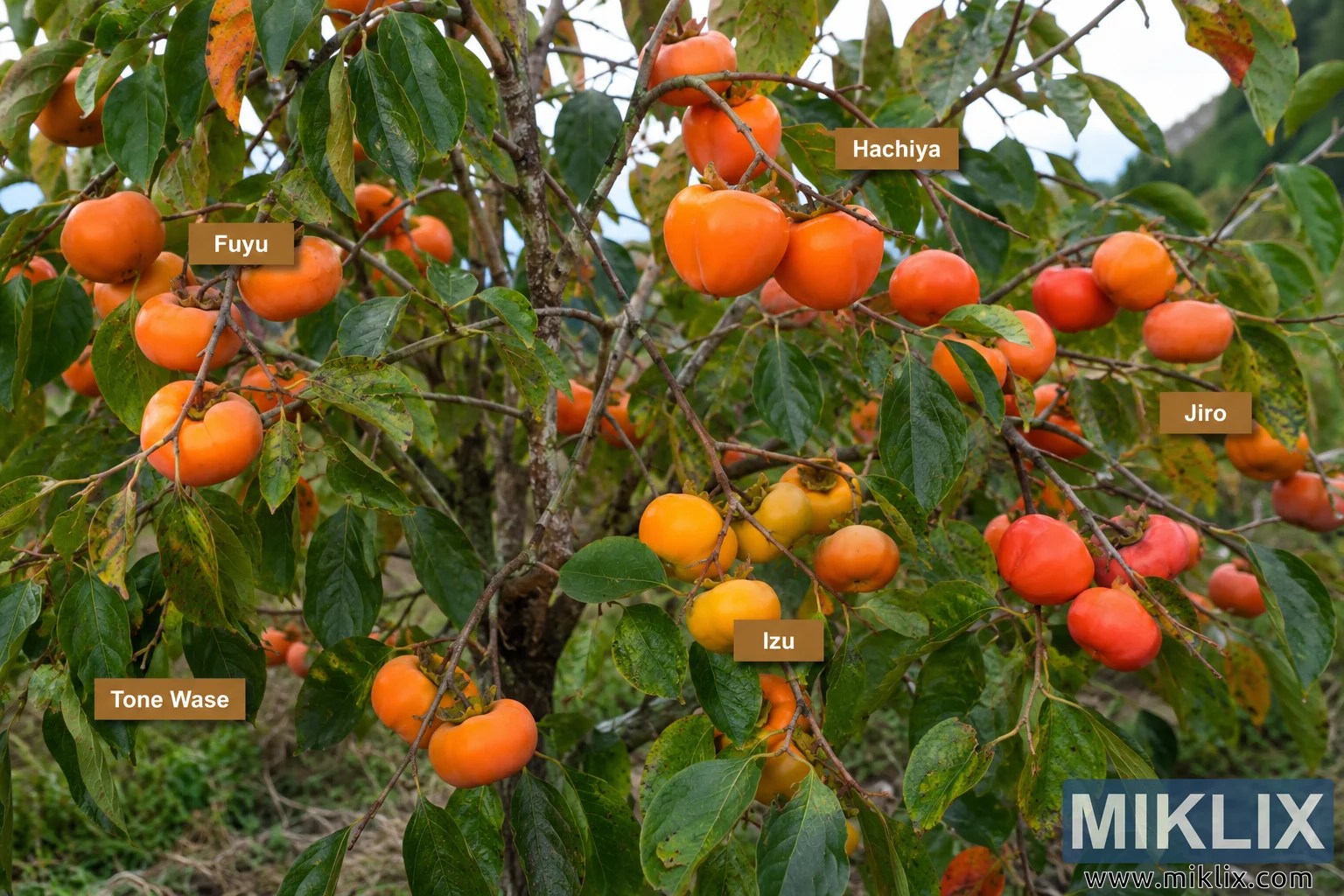
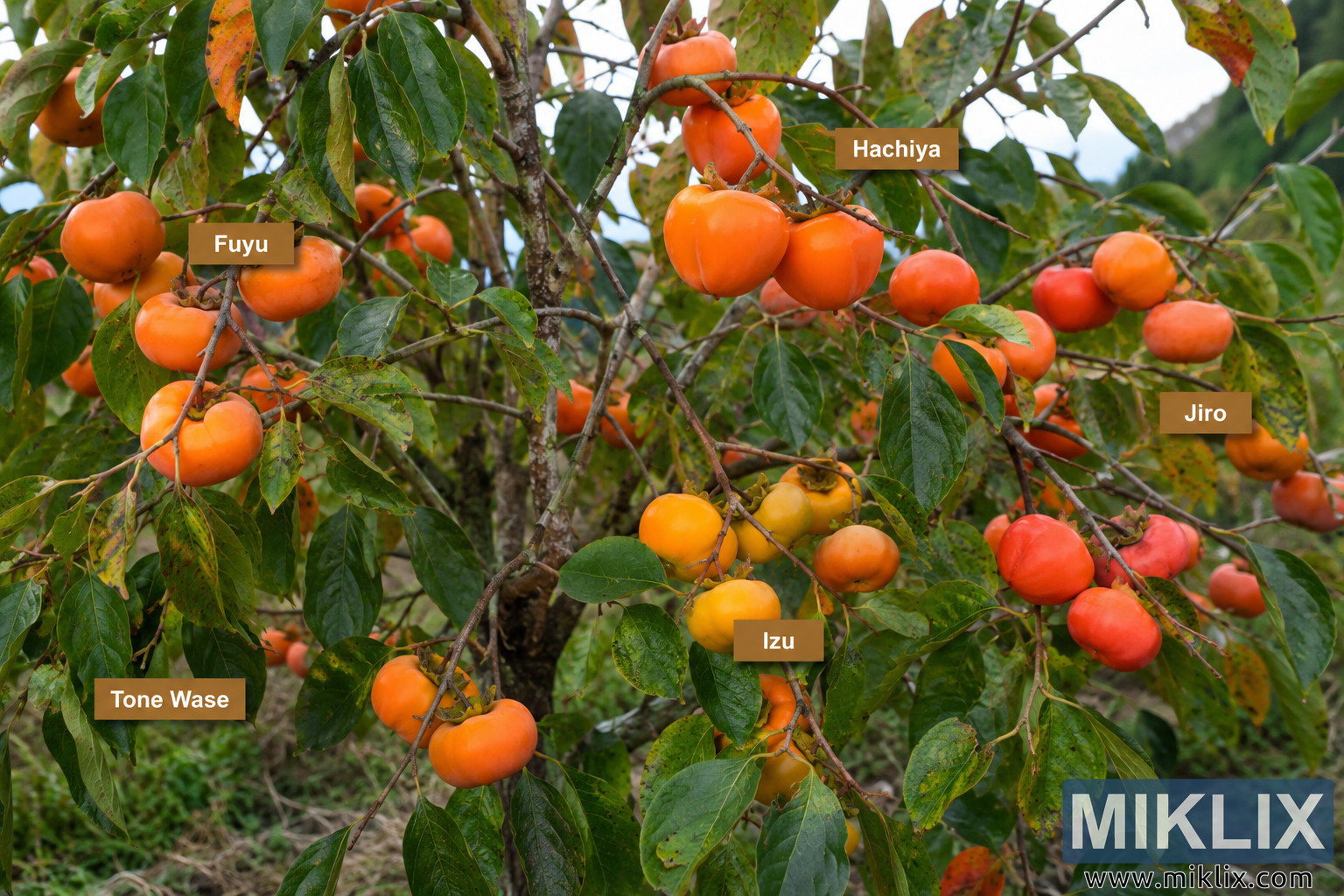
High-resolution landscape image of a persimmon tree displaying multiple Japanese persimmon varieties with ripe orange fruits. The orchard scene highlights labeled cultivars such as Fuyu, Hachiya, Jiro, Izu, and Tone Wase growing among lush green foliage and textured branches.
Japanese Persimmon Varieties Growing on a Fruit-Laden Persimmon Tree
Selle pildi olemasolevad versioonid
Allpool allalaadimiseks saadaval olevad pildifailid on vähem kokkusurutud ja kõrgema resolutsiooniga - ja selle tulemusena kvaliteetsemad - kui selle veebisaidi artiklitesse ja lehekülgedele manustatud pildid, mis on ribalaiuse tarbimise vähendamiseks faili suuruse poolest rohkem optimeeritud.
Tavaline suurus (1,536 x 1,024)
Suur suurus (3,072 x 2,048)
Väga suur suurus (4,608 x 3,072)
Eriti suur suurus (6,144 x 4,096)
Koomiliselt suur suurus (1,048,576 x 699,051)
- Ikka veel üleslaadimine... ;-)
Pildi kirjeldus
This high-resolution landscape photograph captures a mature Japanese persimmon tree growing in an outdoor orchard environment during the fruiting season. The tree dominates the frame with a dense network of twisting brown and gray branches extending outward in multiple directions, each heavily laden with ripe persimmon fruits in vivid shades of orange, deep amber, golden yellow, and soft red-orange. The image emphasizes the abundance and diversity of Japanese persimmon cultivars by visually presenting several labeled fruit varieties distributed naturally across the tree canopy.
The foliage consists of elongated green leaves with slightly curved edges and visible veins, some showing seasonal discoloration with touches of yellow, rust, and brown. These subtle imperfections and color variations add realism and indicate the transition into late autumn, the traditional harvest period for persimmons. The leaves overlap organically, partially obscuring some fruits while allowing clusters of ripe persimmons to remain highly visible against the greenery.
Among the featured cultivars is the Fuyu persimmon, shown on the left side of the image with squat, tomato-shaped fruits displaying a rich orange tone and smooth glossy skin. Near the upper center, the Hachiya variety appears with larger elongated fruits hanging prominently from thinner branches. The Hachiya fruits exhibit a slightly tapered form and saturated orange coloration associated with fully ripened astringent persimmons.
On the right side of the composition, the Jiro persimmon variety is represented with rounded orange-red fruits positioned among darker leaves and slender intersecting branches. Near the lower center, the Izu persimmon cluster introduces lighter golden-orange fruits with softer yellow highlights, adding chromatic variation and emphasizing the diversity of Japanese persimmon cultivars. In the lower left portion of the tree, the Tone Wase variety appears with medium-sized orange fruits grouped beneath hanging foliage and gently curved stems.
The bark texture is sharply detailed, revealing rough surfaces, patches of lichen, and natural weathering. Fine branch structures weave throughout the image, creating depth and complexity while directing attention toward the fruit clusters. The orchard background is softly blurred using shallow depth of field, allowing the persimmon tree to remain the clear focal point. Hints of distant greenery, soft earth tones, and faint mountain or hillside contours appear behind the tree, reinforcing the rural agricultural setting.
Natural daylight illuminates the scene evenly, producing soft shadows beneath leaves and fruit while preserving realistic color saturation. The lighting creates gentle highlights on the smooth persimmon skins, making the fruits appear fresh, ripe, and ready for harvest. The atmosphere conveys late-season abundance and the visual richness of a traditional Japanese fruit orchard.
The composition is balanced horizontally for landscape presentation, with fruit clusters distributed across the frame to maintain visual harmony. Labels identifying each cultivar are positioned cleanly near their corresponding fruit groups without obscuring major visual details. The typography is simple and legible, using warm-toned label boxes that complement the orange fruits and earthy orchard palette.
Overall, the image presents a detailed botanical and agricultural representation of Japanese persimmon varieties growing naturally on a mature tree. The scene combines documentary realism with aesthetic orchard photography, highlighting the distinctive shapes, colors, and seasonal beauty of persimmons while providing educational visual identification of several well-known cultivars.
Pilt on seotud: The Complete Guide to the Health Benefits of Persimmons