
Pilt: Quince Nutritional Facts and Vitamin Content Infographic
Avaldatud:
Viimati uuendatud: 6. juuni 2026, kell 14:30:23 UTC
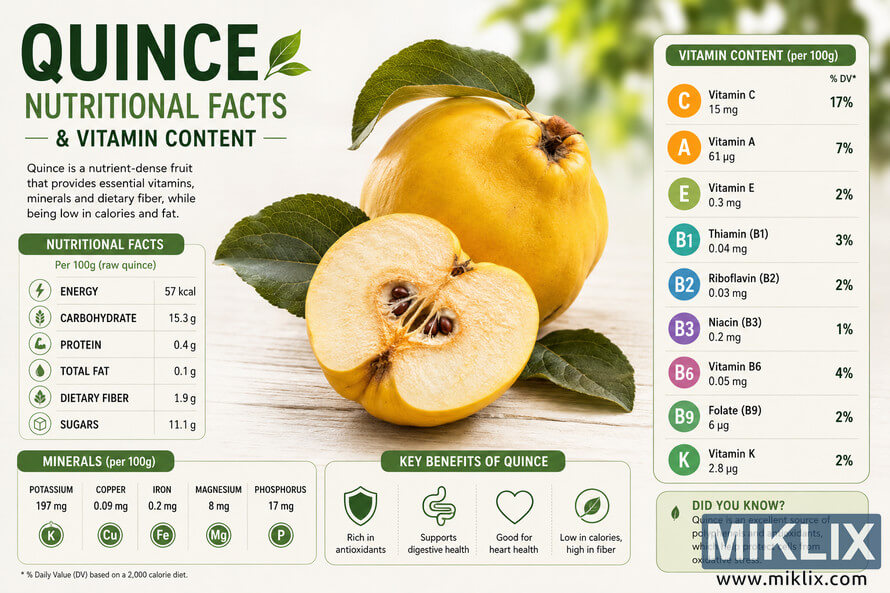
Detailed infographic about quince nutrition facts and vitamin content, featuring calorie breakdown, vitamins, minerals, antioxidants, fiber, and health benefits in a visually appealing landscape design with fresh quince fruit imagery.
Quince Nutritional Facts and Vitamin Content Infographic
Selle pildi olemasolevad versioonid
Allpool allalaadimiseks saadaval olevad pildifailid on vähem kokkusurutud ja kõrgema resolutsiooniga - ja selle tulemusena kvaliteetsemad - kui selle veebisaidi artiklitesse ja lehekülgedele manustatud pildid, mis on ribalaiuse tarbimise vähendamiseks faili suuruse poolest rohkem optimeeritud.
Tavaline suurus (1,536 x 1,024)
Suur suurus (3,072 x 2,048)
Väga suur suurus (4,608 x 3,072)
Eriti suur suurus (6,144 x 4,096)
Koomiliselt suur suurus (1,048,576 x 699,051)
- Ikka veel üleslaadimine... ;-)
Pildi kirjeldus
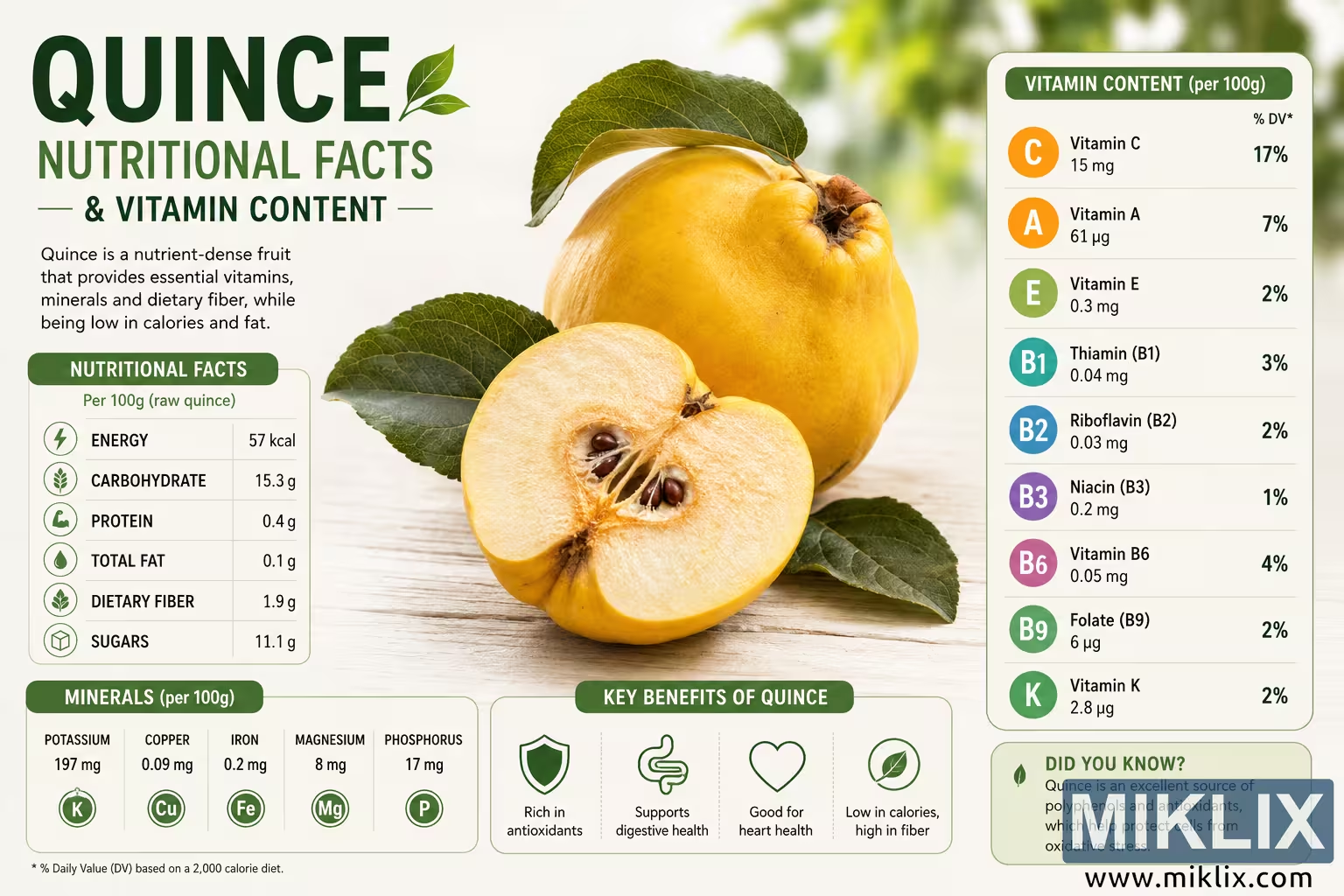
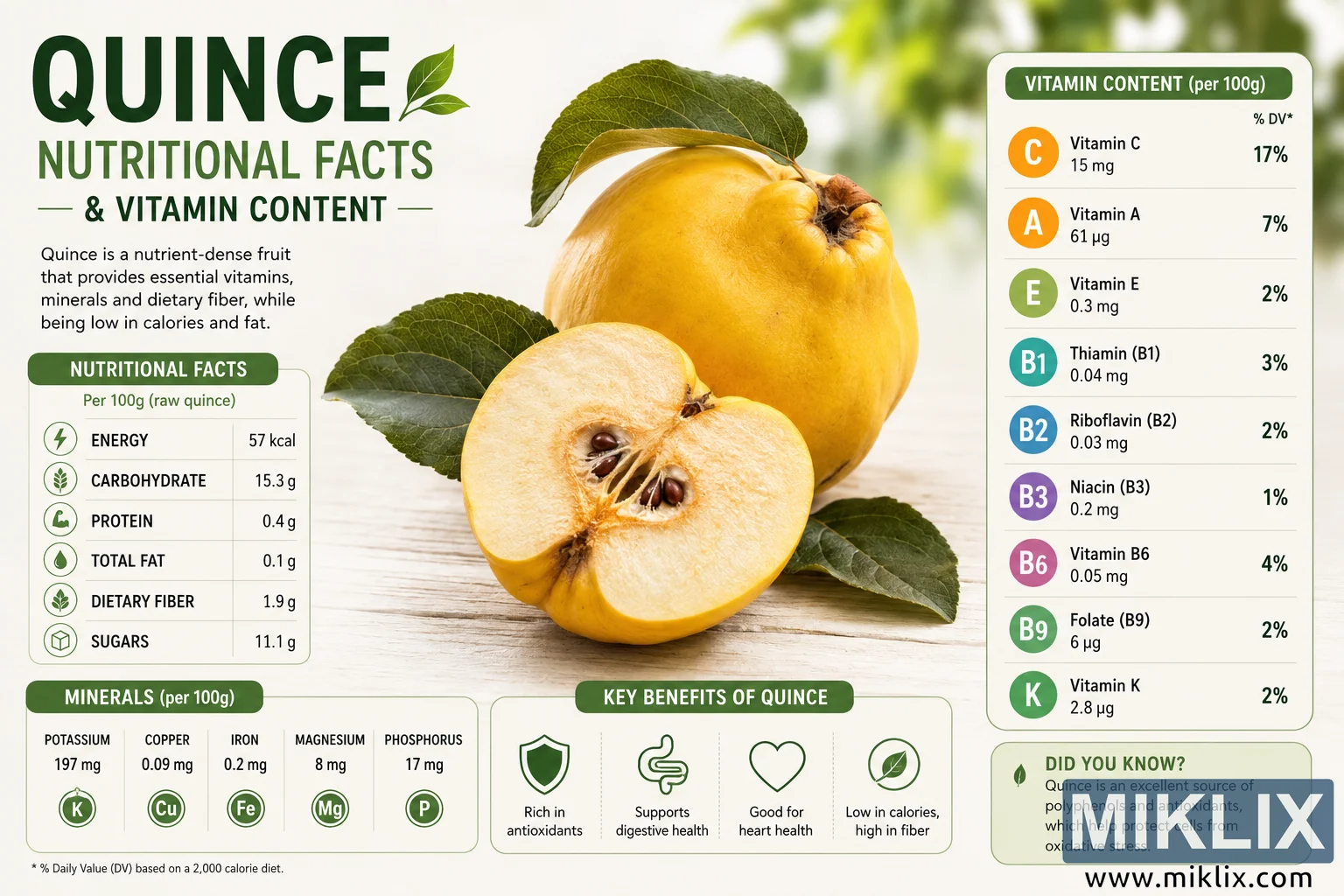
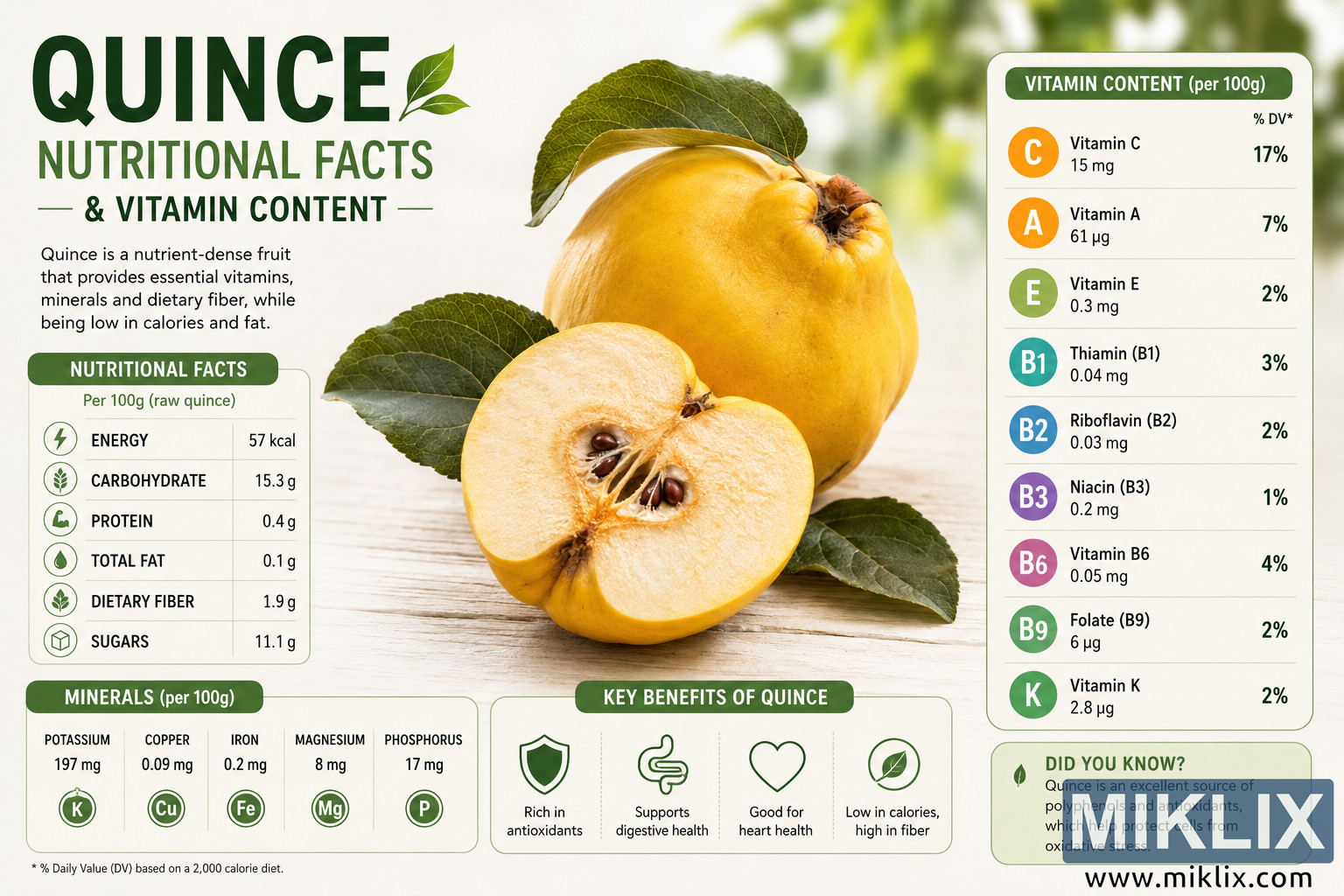
This high-resolution landscape infographic presents a detailed visual overview of quince nutritional facts and vitamin content in a clean, modern, and highly organized design. The composition uses a balanced green, cream, white, and yellow color palette that emphasizes freshness, health, and natural nutrition. The central focus of the infographic is a large, realistic image of fresh quince fruits placed prominently in the middle of the layout. One quince fruit appears whole with a rich golden-yellow skin and attached green leaves, while a second quince is sliced in half to reveal its pale interior flesh and visible seeds. The fruits rest on a light wooden surface that adds warmth and natural texture to the composition.
At the top left of the infographic, a large bold headline reads “QUINCE NUTRITIONAL FACTS & VITAMIN CONTENT” using uppercase typography in dark green tones. Decorative leaf graphics are incorporated around the heading to reinforce the botanical and healthy-food theme. Beneath the title is a concise introductory paragraph describing quince as a nutrient-dense fruit that provides essential vitamins, minerals, and dietary fiber while remaining low in calories and fat.
The left section of the infographic contains a boxed nutritional facts panel labeled “Nutritional Facts Per 100g (raw quince).” This section presents key macronutrient information in a structured list accompanied by simple health-themed icons. The data includes energy content at 57 kcal, carbohydrates at 15.3 grams, protein at 0.4 grams, total fat at 0.1 grams, dietary fiber at 1.9 grams, and sugars at 11.1 grams. The panel uses rounded corners, soft shadows, green header bars, and subtle divider lines for readability.
Below the nutritional facts section is a minerals panel that highlights important mineral values found in quince. The infographic lists potassium, copper, iron, magnesium, and phosphorus with their corresponding amounts per 100 grams. Circular icon badges accompany each mineral abbreviation, such as K for potassium, Cu for copper, Fe for iron, Mg for magnesium, and P for phosphorus. The design maintains visual consistency through green outlines, matching typography, and evenly spaced layout elements.
On the right side of the infographic is a tall vertical vitamin content panel titled “Vitamin Content (per 100g).” This section is organized as a clean table with circular colored vitamin markers aligned along the left edge. Vitamins listed include Vitamin C, Vitamin A, Vitamin E, Thiamin (B1), Riboflavin (B2), Niacin (B3), Vitamin B6, Folate (B9), and Vitamin K. Each vitamin entry includes the measured quantity and percentage daily value displayed in bold dark green numbers aligned on the right side of the panel. Different colored circular icons visually separate each vitamin category, adding variety while maintaining the infographic’s cohesive style.
At the bottom center of the layout is a section labeled “Key Benefits of Quince.” This area uses simple line-style icons paired with short health benefit statements. The benefits presented include being rich in antioxidants, supporting digestive health, contributing to heart health, and being low in calories while high in fiber. Each benefit is displayed in evenly spaced columns with minimalist illustrations such as a shield icon, digestive tract symbol, heart outline, and leaf emblem.
In the lower right corner, a highlighted informational box titled “Did You Know?” provides an educational note explaining that quince is an excellent source of polyphenols and antioxidants that may help protect cells from oxidative stress. The box uses a soft cream background with green borders and leaf accents to visually separate it from the surrounding content.
The overall infographic design combines realistic fruit photography with modern flat-design interface elements. Rounded cards, subtle shadows, organized spacing, and bold typography contribute to a polished editorial appearance suitable for health blogs, nutrition websites, educational resources, recipe platforms, wellness presentations, or social media sharing. The infographic contains no commercial branding or logos and focuses entirely on educational nutritional content. The composition remains visually balanced despite the amount of information presented, with the vibrant yellow quince fruits serving as the visual centerpiece that naturally guides the viewer’s attention across the educational sections.
Pilt on seotud: The Remarkable Health Benefits of Quince: Nature's Forgotten Superfruit