
Pilt: Sliced Quince Revealing Internal Flesh Structure and Nutrient-Rich Core
Avaldatud:
Viimati uuendatud: 6. juuni 2026, kell 14:30:23 UTC
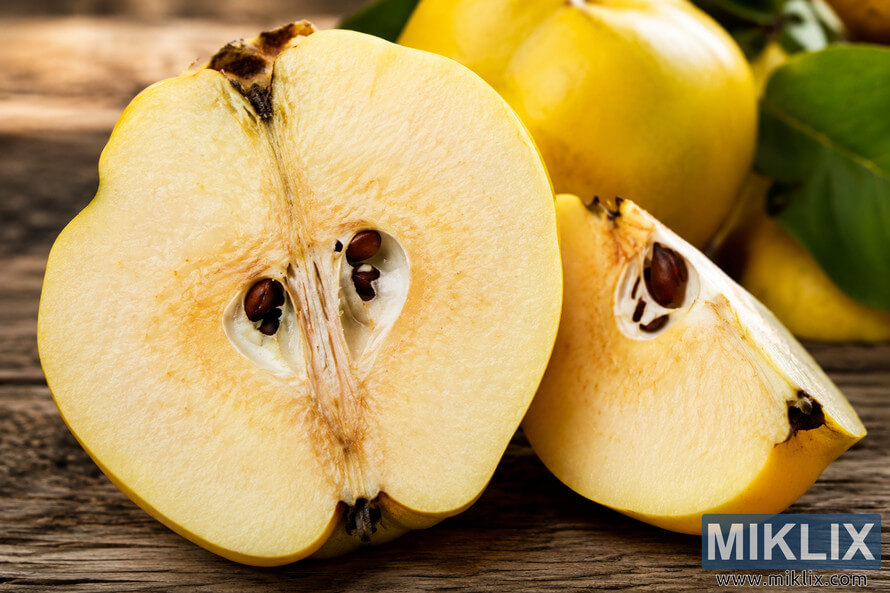
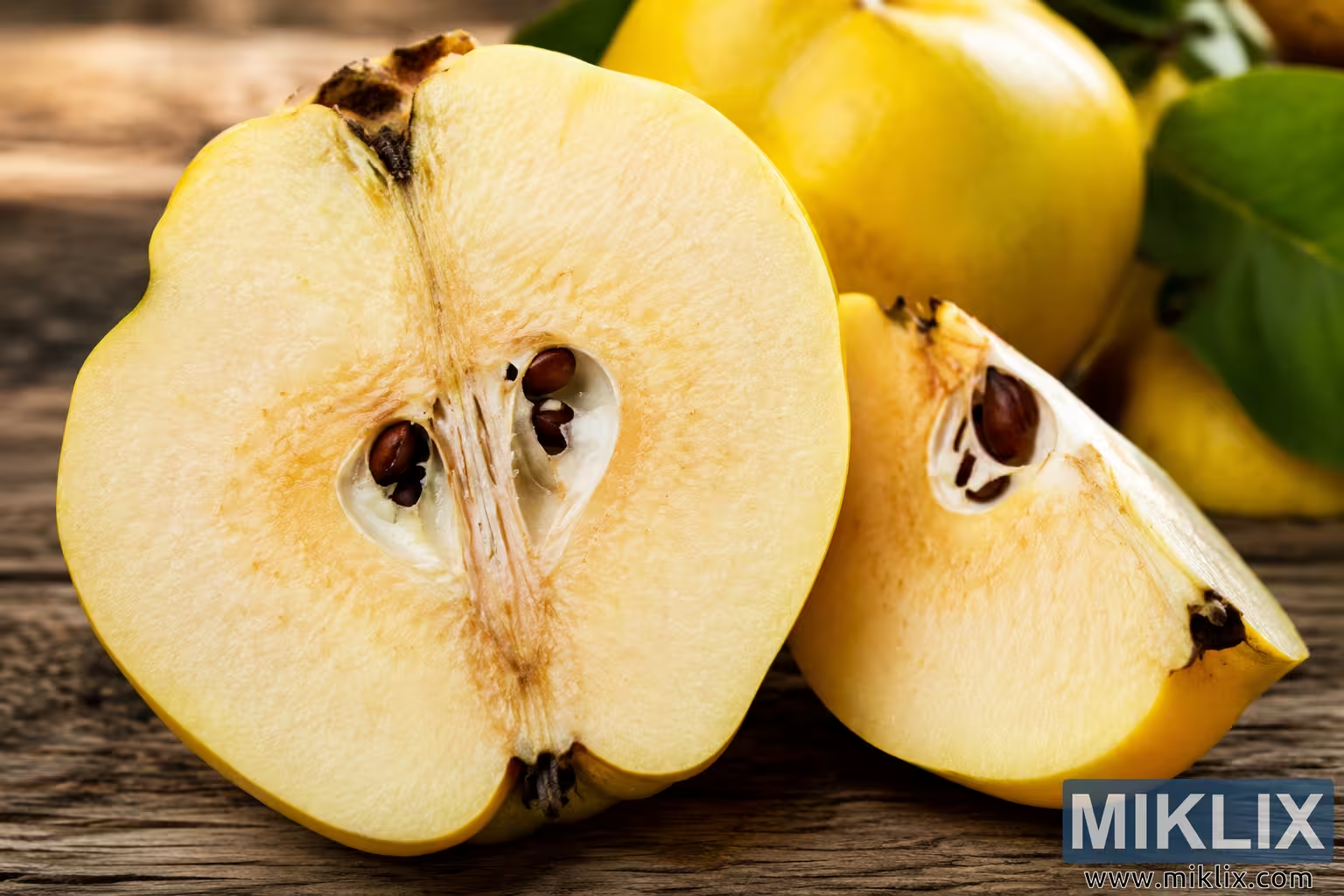
Ultra high-resolution landscape image of a sliced quince displaying its internal flesh structure, seed cavities, and natural textures on a rustic wooden table with soft natural lighting and fresh organic styling.
Sliced Quince Revealing Internal Flesh Structure and Nutrient-Rich Core
Selle pildi olemasolevad versioonid
Allpool allalaadimiseks saadaval olevad pildifailid on vähem kokkusurutud ja kõrgema resolutsiooniga - ja selle tulemusena kvaliteetsemad - kui selle veebisaidi artiklitesse ja lehekülgedele manustatud pildid, mis on ribalaiuse tarbimise vähendamiseks faili suuruse poolest rohkem optimeeritud.
Tavaline suurus (1,536 x 1,024)
Suur suurus (3,072 x 2,048)
Väga suur suurus (4,608 x 3,072)
Eriti suur suurus (6,144 x 4,096)
Koomiliselt suur suurus (1,048,576 x 699,051)
- Ikka veel üleslaadimine... ;-)
Pildi kirjeldus
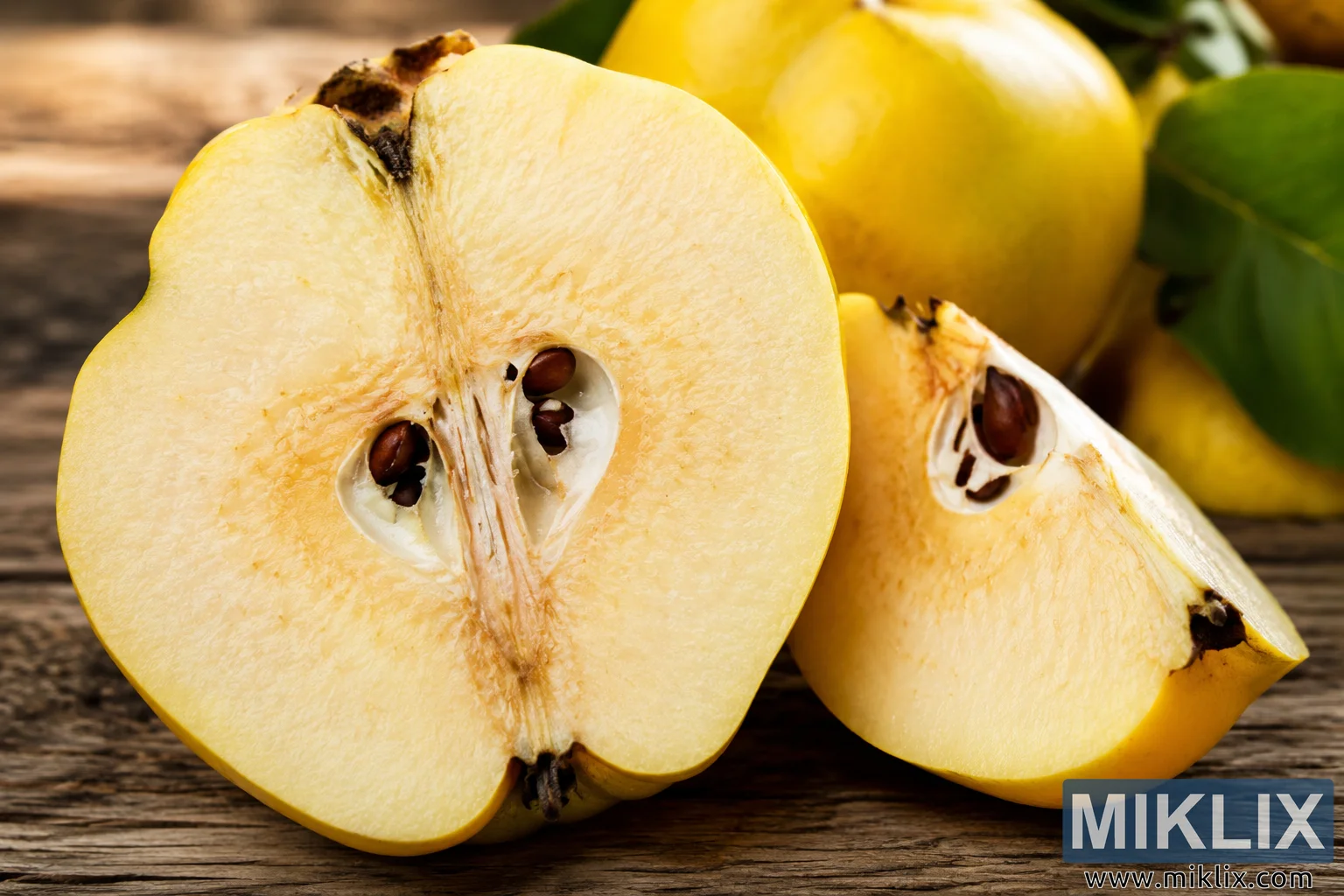
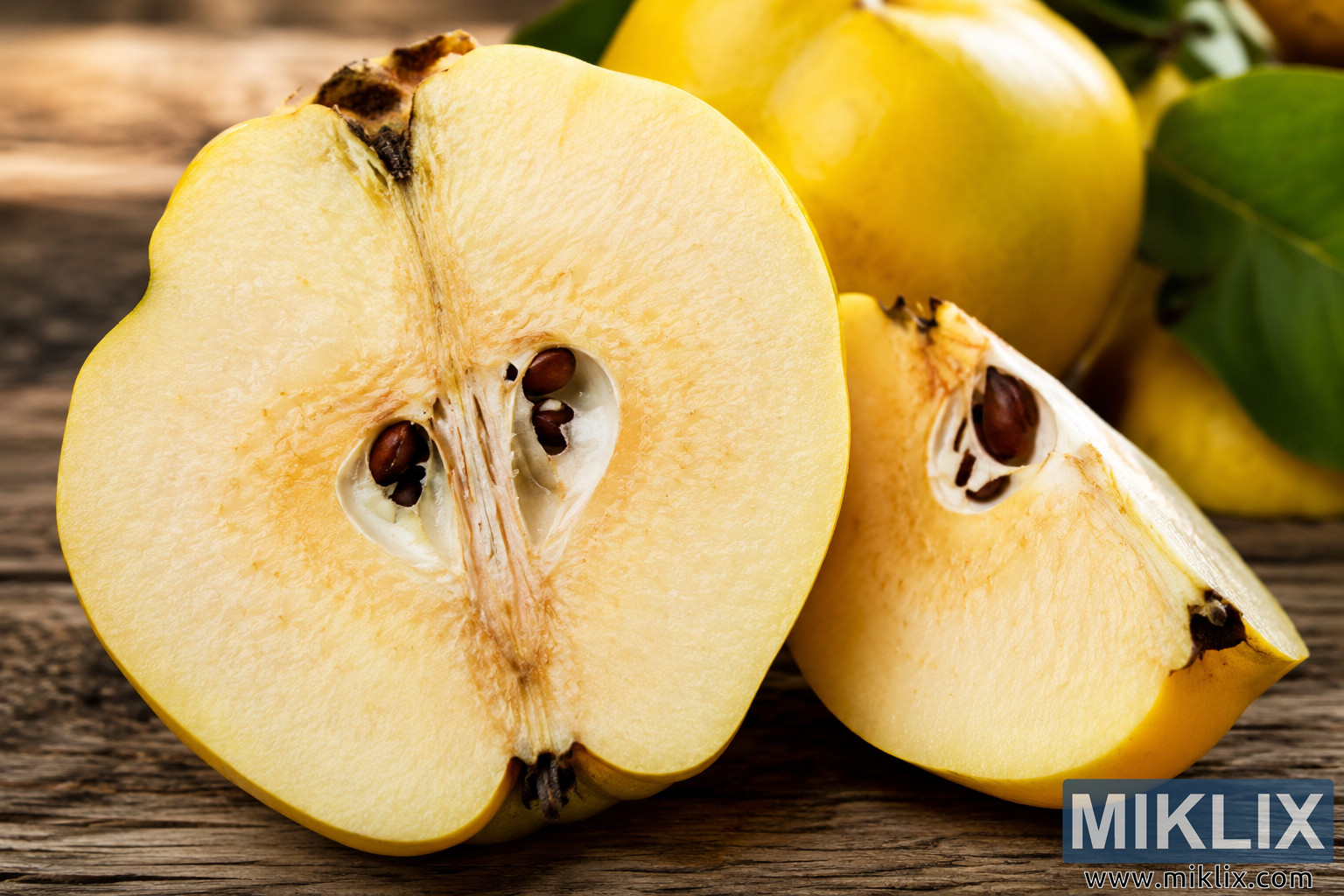
This ultra high-resolution landscape photograph presents an intimate macro-style view of a freshly sliced quince fruit arranged on a rustic wooden surface. The composition focuses on the intricate internal structure of the quince, emphasizing the delicate textures, pale golden flesh, central seed cavities, and fibrous core that characterize this ancient orchard fruit. Positioned prominently in the foreground, the main half of the quince is vertically sliced to expose its interior anatomy in exceptional detail. The fruit’s creamy yellow flesh transitions subtly into warmer golden tones toward the center, where the seed chambers form naturally symmetrical oval pockets. Several glossy brown seeds remain visible inside the cavities, adding contrast against the soft, matte texture of the surrounding flesh.
The image highlights the quince’s dense and slightly grainy interior texture, capturing tiny fibrous strands radiating outward from the core toward the skin. These natural structural patterns create a visually rich botanical study while also suggesting the fruit’s nutritional density and freshness. The outer skin of the quince displays a smooth golden-yellow surface with slight imperfections and organic variations in color, reinforcing the authenticity of the produce. Small traces of oxidation and natural blemishing near the stem and blossom ends contribute realism and depth, avoiding an overly artificial or commercial appearance.
To the right side of the composition, a smaller wedge of sliced quince rests at a gentle angle, exposing an additional cross-section of the fruit. This secondary slice introduces dimensional layering and further illustrates the relationship between the flesh, seeds, and surrounding membranes. The positioning of the wedge guides the viewer’s eye through the frame while enhancing the educational and botanical quality of the image. The carefully arranged slices create a balanced visual rhythm that combines food photography aesthetics with scientific detail.
In the softly blurred background, whole quinces and deep green leaves provide environmental context without distracting from the sharply focused foreground subject. The warm yellow tones of the intact fruit complement the creamy flesh of the sliced sections, while the green foliage introduces a natural color contrast that enhances the overall freshness of the scene. The shallow depth of field creates a smooth bokeh effect that separates the subject from the background and gives the photograph a refined, premium visual quality.
The rustic wooden tabletop beneath the fruit introduces texture and warmth to the composition. Visible wood grain, cracks, and weathered imperfections evoke a farmhouse or orchard setting, reinforcing themes of natural harvest, organic produce, and traditional food culture. The warm ambient lighting appears soft and directional, likely simulating natural daylight entering from one side. This lighting gently illuminates the quince flesh, accentuating moisture, density, and subtle translucency near the seed chambers while casting soft shadows that provide dimensional realism.
From a nutritional and botanical perspective, the image visually communicates the wholesome qualities associated with quince fruit. The dense flesh and seed structure imply richness in dietary fiber, antioxidants, vitamin C, and naturally occurring plant compounds. The photograph’s highly detailed presentation allows viewers to appreciate the fruit not only as a culinary ingredient but also as a biological structure with distinctive textures and internal organization. The macro-style clarity makes the image suitable for use in educational materials, nutritional publications, recipe websites, food blogs, agricultural presentations, botanical references, and organic produce marketing.
The overall mood of the image is warm, earthy, natural, and authentic. The balanced combination of sharp macro detail, soft background blur, organic textures, and warm lighting creates a visually inviting atmosphere that celebrates the beauty of fresh fruit in its raw form. The landscape orientation provides ample visual breathing space while maintaining strong focal emphasis on the sliced quince. Every element within the composition contributes to a cohesive visual narrative centered on freshness, nutrition, natural structure, and artisanal food presentation.
Pilt on seotud: The Remarkable Health Benefits of Quince: Nature's Forgotten Superfruit