
Pilt: Lycopene Molecular Structure with Watermelon Illustrating Antioxidant Benefits
Avaldatud:
Viimati uuendatud: 16. august 2026, kell 19:08:13 UTC
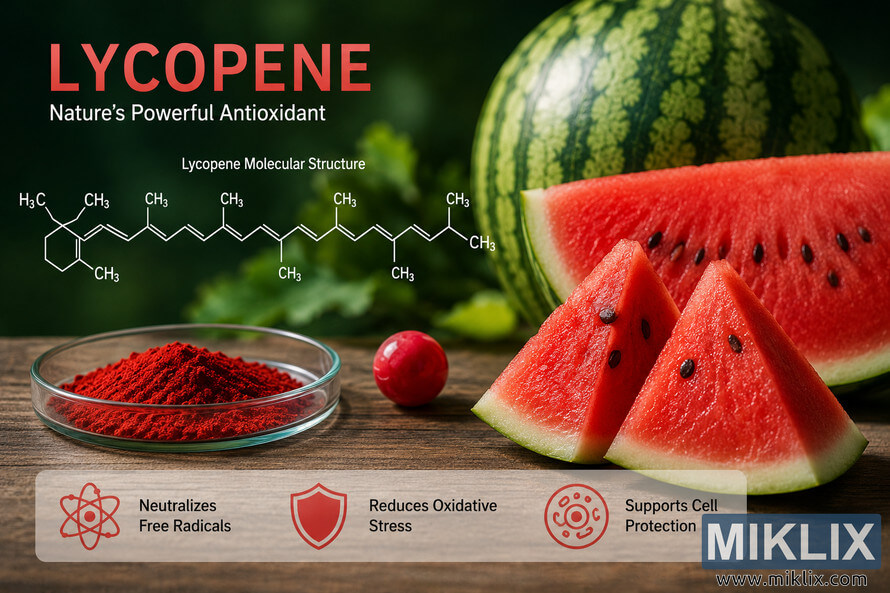
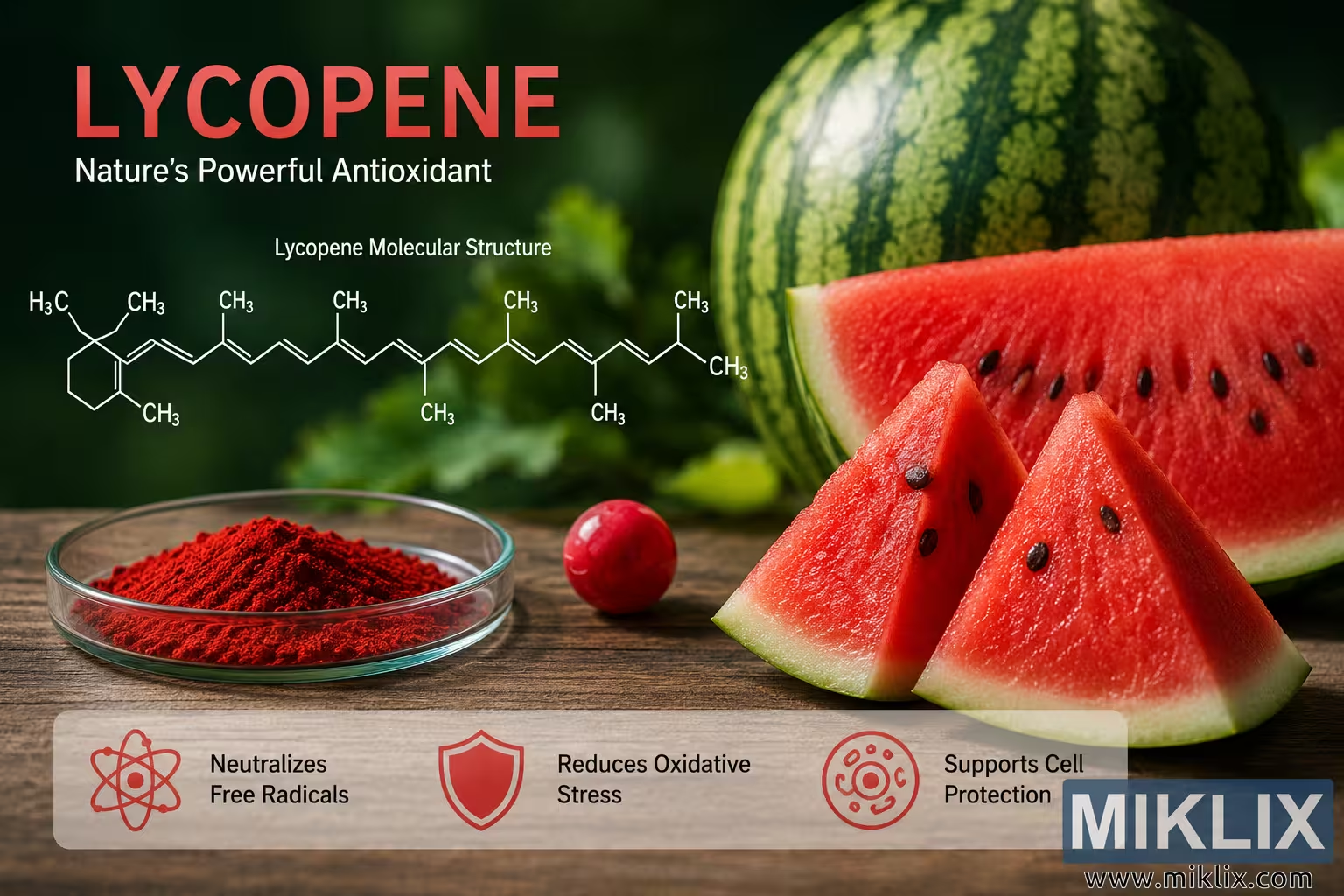
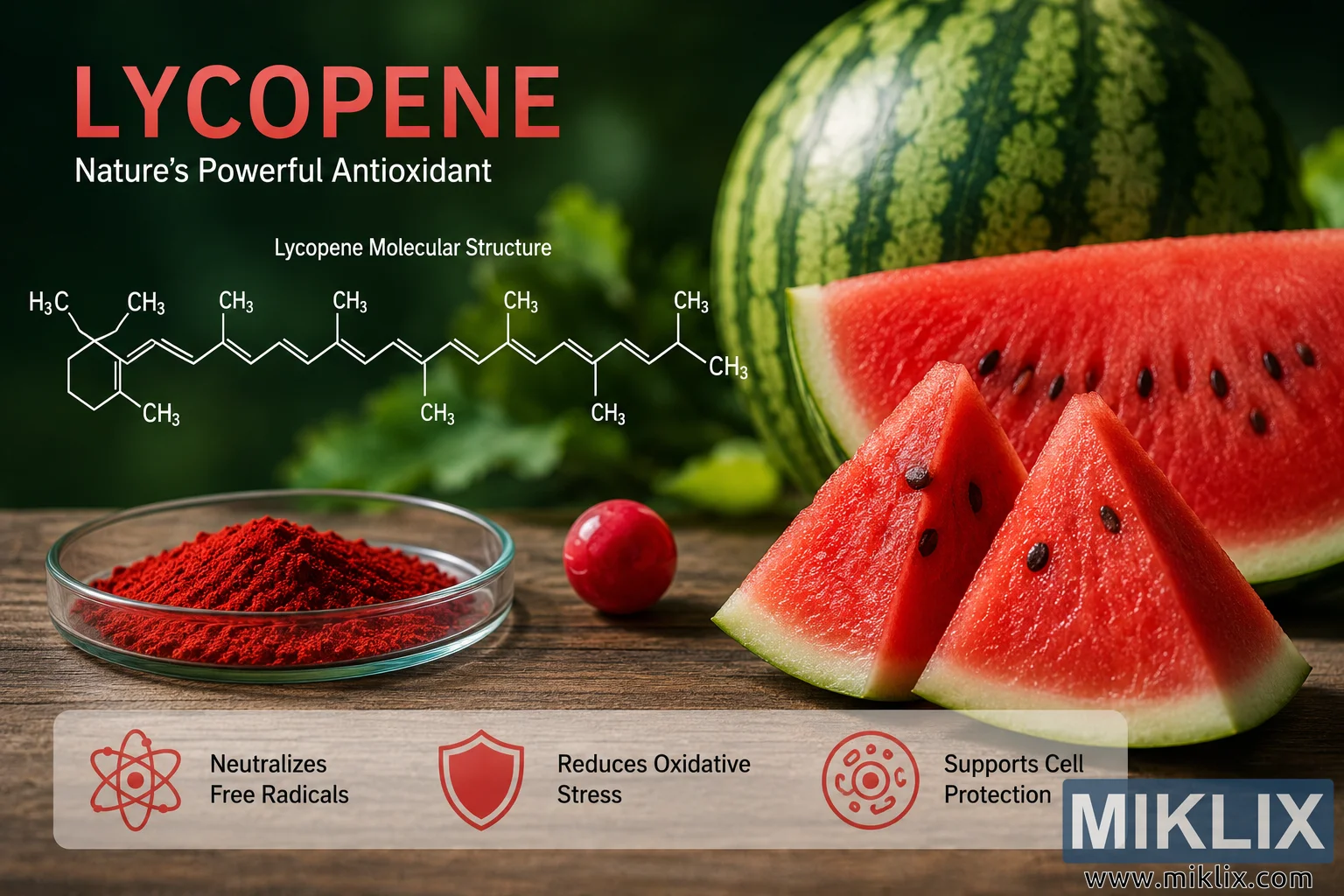
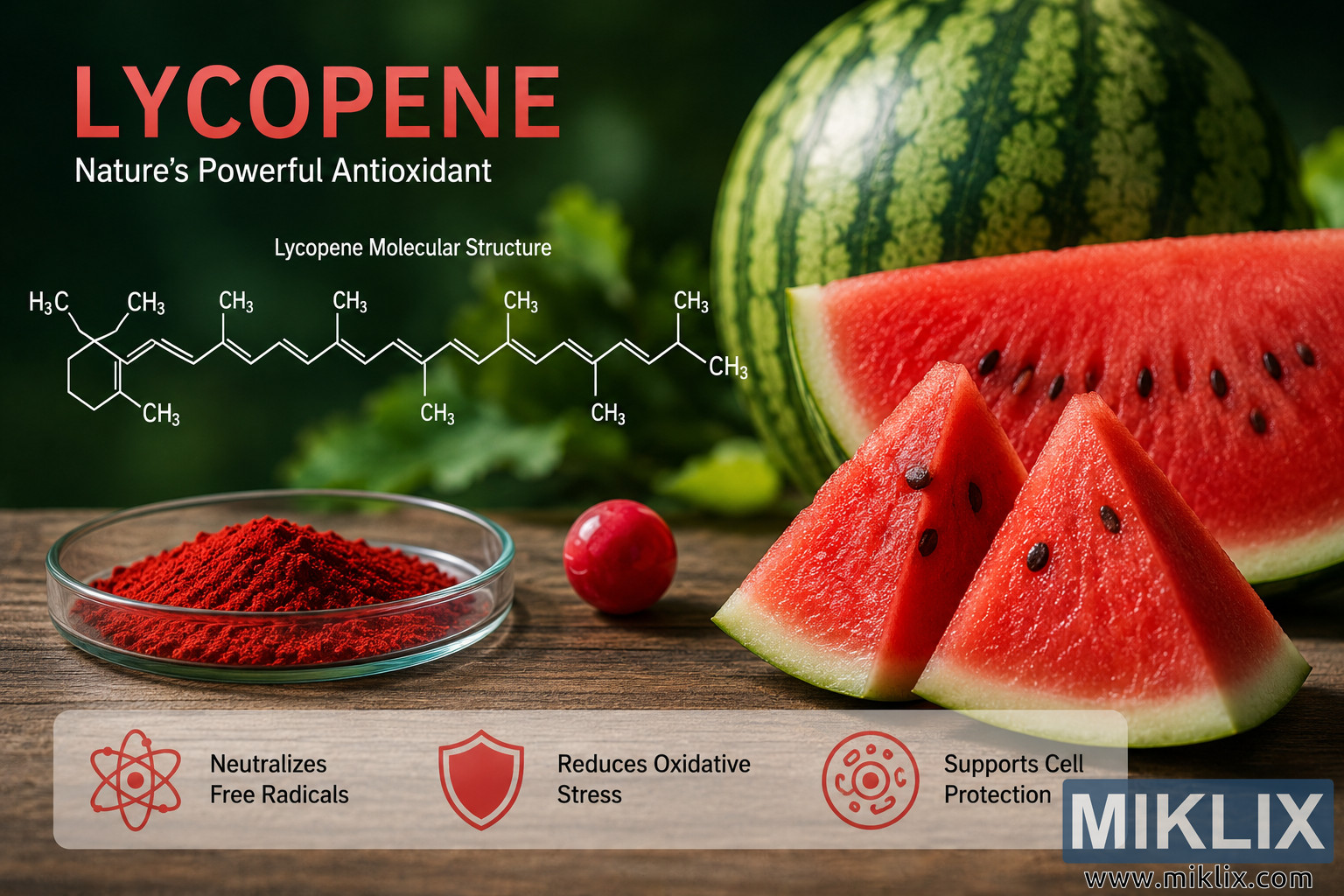
Landscape infographic combining a watermelon, the lycopene molecular structure, and antioxidant-themed visual elements to illustrate the relationship between lycopene and cellular protection from oxidative stress in a clean, educational design.
Lycopene Molecular Structure with Watermelon Illustrating Antioxidant Benefits
Selle pildi olemasolevad versioonid
Allpool allalaadimiseks saadaval olevad pildifailid on vähem kokkusurutud ja kõrgema resolutsiooniga - ja selle tulemusena kvaliteetsemad - kui selle veebisaidi artiklitesse ja lehekülgedele manustatud pildid, mis on ribalaiuse tarbimise vähendamiseks faili suuruse poolest rohkem optimeeritud.
Tavaline suurus (1,536 x 1,024)
Suur suurus (3,072 x 2,048)
Väga suur suurus (4,608 x 3,072)
Eriti suur suurus (6,144 x 4,096)
Koomiliselt suur suurus (1,048,576 x 699,051)
- Ikka veel üleslaadimine... ;-)
Pildi kirjeldus
This landscape-oriented, high-resolution educational illustration combines realistic food photography with infographic-style scientific visualization to communicate the antioxidant properties of lycopene, a naturally occurring carotenoid commonly associated with watermelon. The overall composition is balanced from left to right, creating a visually engaging presentation that blends fresh produce, molecular science, and health-related iconography into a cohesive educational image.
On the right-hand side of the composition, a large whole watermelon occupies much of the background. Its rind displays alternating dark and light green stripes with subtle natural texture, while soft lighting creates gentle reflections that emphasize its rounded shape. Positioned in front of the whole fruit is a large cross-section of watermelon showing vivid, juicy red flesh with a pale white rind transition and green outer skin. Numerous dark seeds are distributed naturally throughout the fruit, reinforcing the realistic appearance. Two triangular watermelon slices rest prominently in the foreground. Their bright red interiors exhibit fine moisture texture and crisp edges, conveying freshness and making the fruit the central visual element of the composition.
The left side of the image introduces the scientific focus. Against a deep green, softly blurred background, a stylized representation of the lycopene molecular structure is displayed in white line art. Carbon chain segments, branching methyl groups, and labeled chemical groups create a recognizable molecular diagram intended to visually represent the structure of lycopene. Above or near the molecular illustration appears a concise scientific heading identifying it as the lycopene molecular structure, helping viewers immediately connect the chemistry with the featured fruit.
Near the upper left region, a large, bold heading prominently identifies the subject as lycopene. Beneath this main heading, a smaller subtitle communicates that lycopene is a powerful natural antioxidant, establishing the educational theme of the infographic. The typography is clean, modern, and highly legible, contrasting strongly against the darker background to maximize readability.
In the lower left foreground, a shallow transparent laboratory-style dish contains a mound of vivid red powder representing purified lycopene pigment or a conceptual illustration of concentrated lycopene. Nearby sits a small glossy red spherical object that visually complements the dominant red color palette while adding compositional balance between the scientific illustration and the fresh fruit imagery.
Across the lower portion of the composition extends a semi-transparent information panel spanning much of the image width. Within this panel are three simplified icon-and-text combinations representing major antioxidant-related concepts. The first icon symbolizes neutralization of free radicals through an atom-inspired graphic. The accompanying text explains that lycopene helps neutralize free radicals. The second icon resembles a protective shield, paired with wording that communicates reduction of oxidative stress. The third icon uses a circular cellular motif to symbolize support for cellular protection and maintenance. Together, these visual elements provide an accessible summary of the biological concepts associated with antioxidant activity without overwhelming the viewer with excessive technical detail.
The overall color palette is dominated by vibrant reds and rich greens, naturally reflecting the appearance of watermelon while simultaneously reinforcing the association with lycopene. Warm highlights emphasize the fruit's freshness, whereas darker green background tones create depth and ensure that the white molecular diagram and text remain highly visible. Soft depth-of-field blur separates the foreground subjects from the background, contributing to a polished photographic appearance while maintaining focus on the principal educational elements.
Lighting appears warm and directional, producing subtle reflections on the watermelon rind, realistic shadows beneath the fruit slices, and gentle highlights on the transparent dish. These lighting characteristics enhance realism while preserving the clean aesthetic expected from a modern educational infographic.
The composition intentionally integrates concepts from nutrition, chemistry, and health education. Rather than functioning as a strict scientific diagram, the image serves as an accessible visual explanation connecting the natural food source with the molecular compound responsible for many of its recognized antioxidant properties. The realistic watermelon imagery provides immediate recognition, while the molecular structure introduces scientific context. The informational icons summarize potential biological roles such as free radical neutralization, oxidative stress reduction, and support of normal cellular protection, making the image suitable for educational articles, nutrition blogs, presentations, health awareness materials, or scientific communication aimed at a general audience. Overall, the design successfully balances visual appeal, scientific symbolism, and educational clarity within a single cohesive landscape composition.
Pilt on seotud: Watermelon: The Hydrating Superfruit You Should Eat More Often