
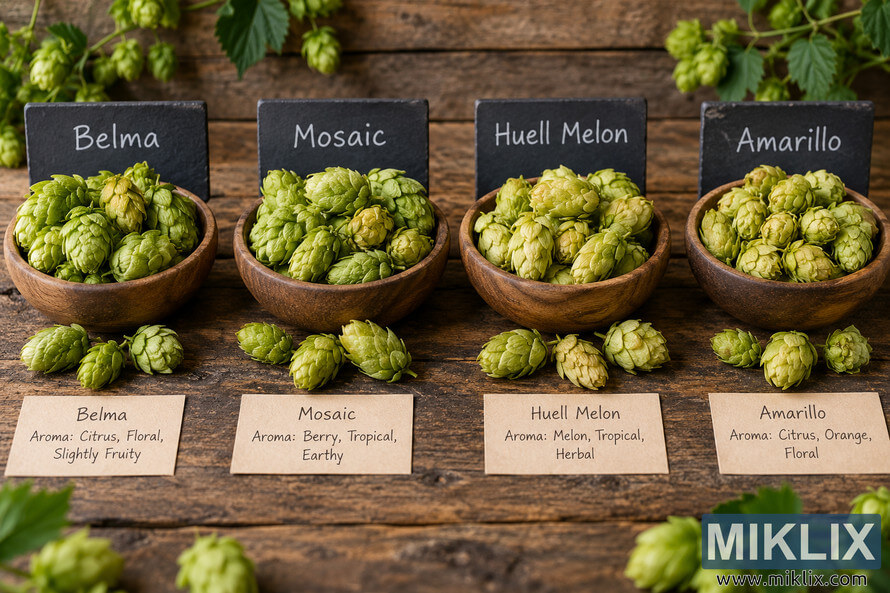
تصویر: Belma, Mosaic, Huell Melon and Amarillo Hop Varieties Compared
منتشر شده:
آخرین به روز رسانی: ۱۵ سپتامبر ۲۰۲۶ ساعت ۱۷:۱۷:۵۱ (UTC)
Compare Belma, Mosaic, Huell Melon and Amarillo hops in a rustic display featuring whole hop cones, clear labels and aroma notes for each variety.
Belma, Mosaic, Huell Melon and Amarillo Hop Varieties Compared
نسخههای موجود از این تصویر
فایلهای تصویری که در زیر برای دانلود موجود است، نسبت به تصاویر موجود در مقالات و صفحات این وبسایت که برای کاهش مصرف پهنای باند، از نظر حجم فایل بهینهتر شدهاند، فشردهسازی کمتری داشته و وضوح بالاتری دارند - و در نتیجه، کیفیت بالاتری دارند.
اندازه معمولی (1,536 x 1,024)
سایز بزرگ (3,072 x 2,048)
سایز بسیار بزرگ (4,608 x 3,072)
سایز فوق العاده بزرگ (6,144 x 4,096)
اندازهی کمیک بزرگ (1,048,576 x 699,051)
- هنوز در حال آپلود هستم... ;-)
شرح تصویر
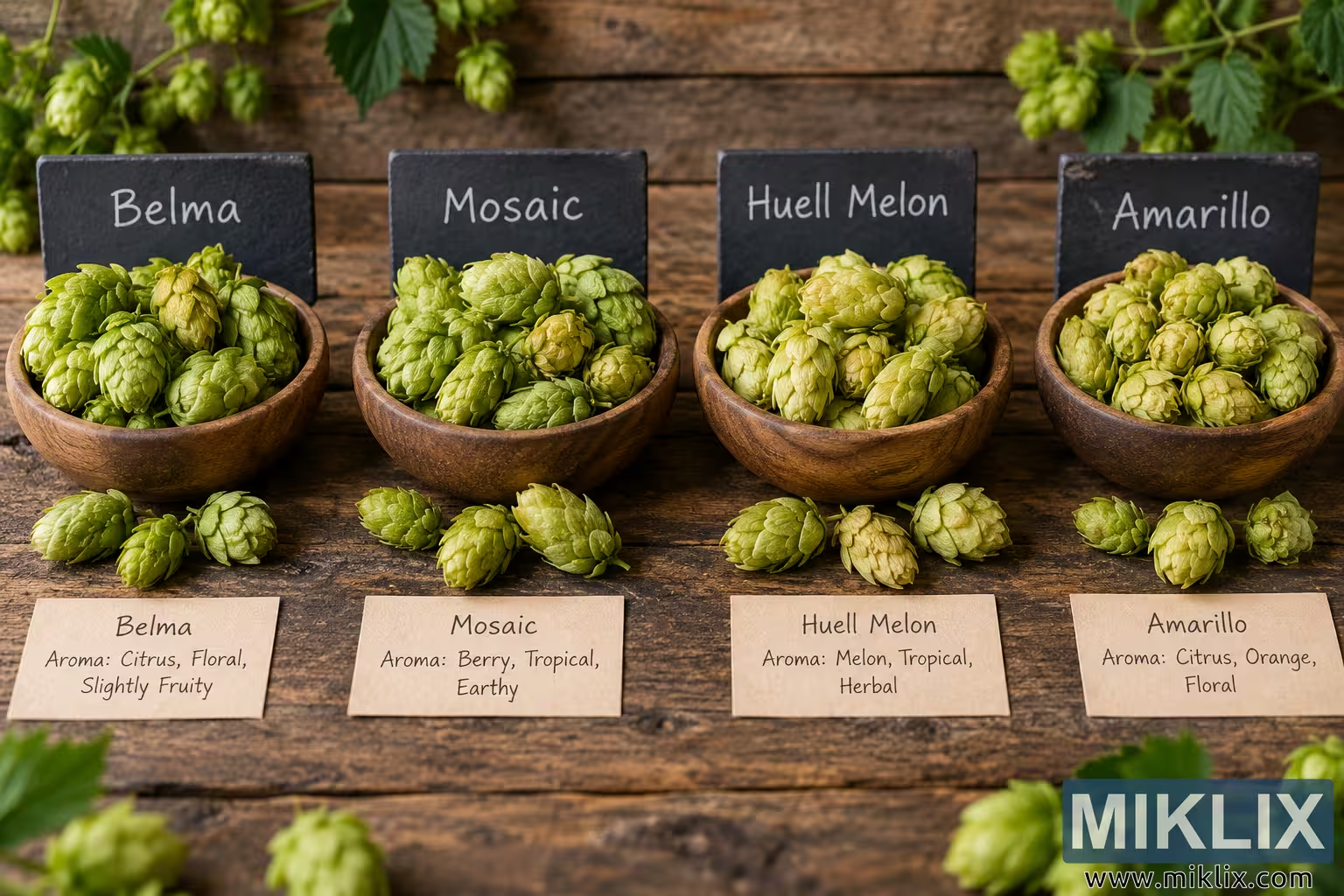
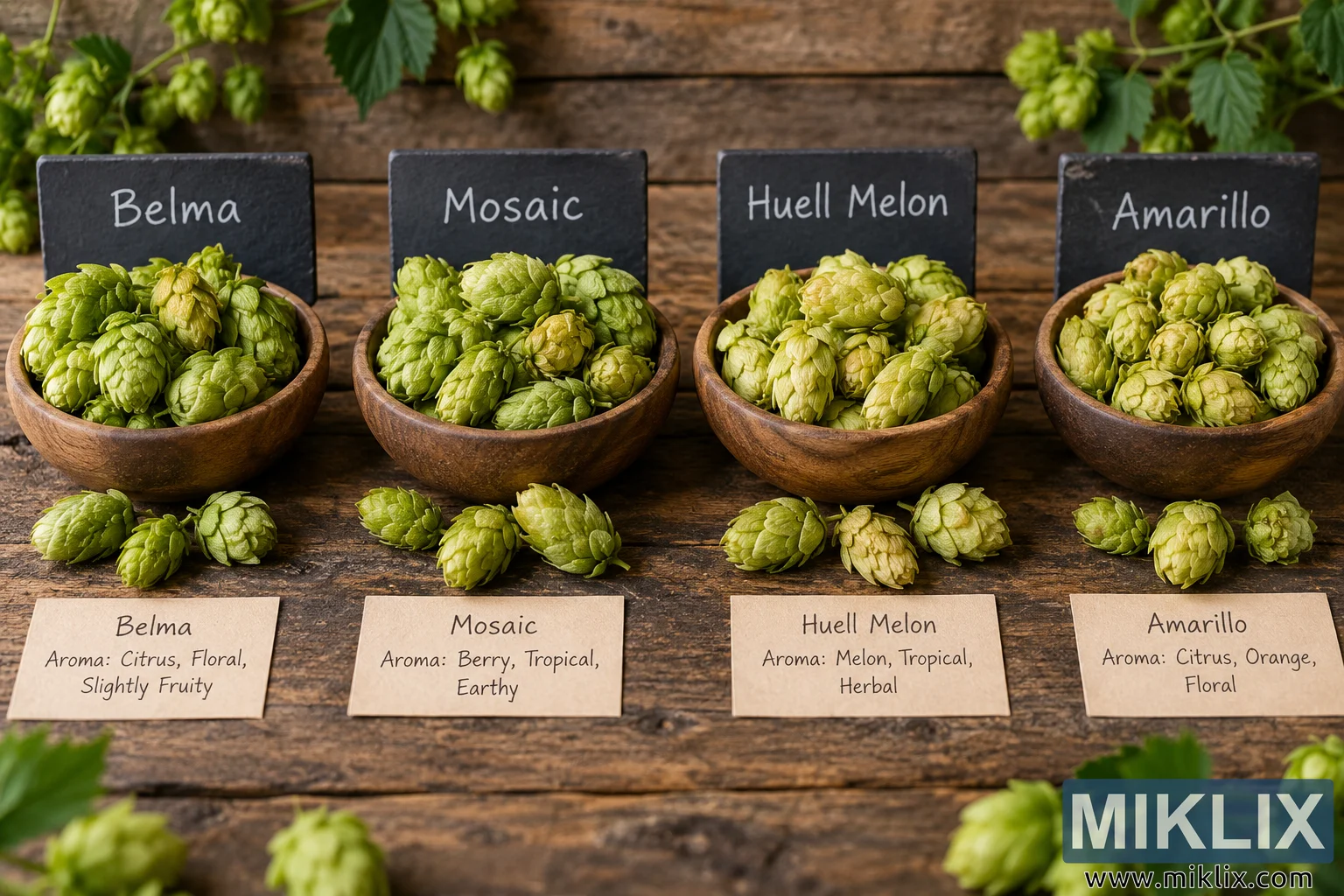
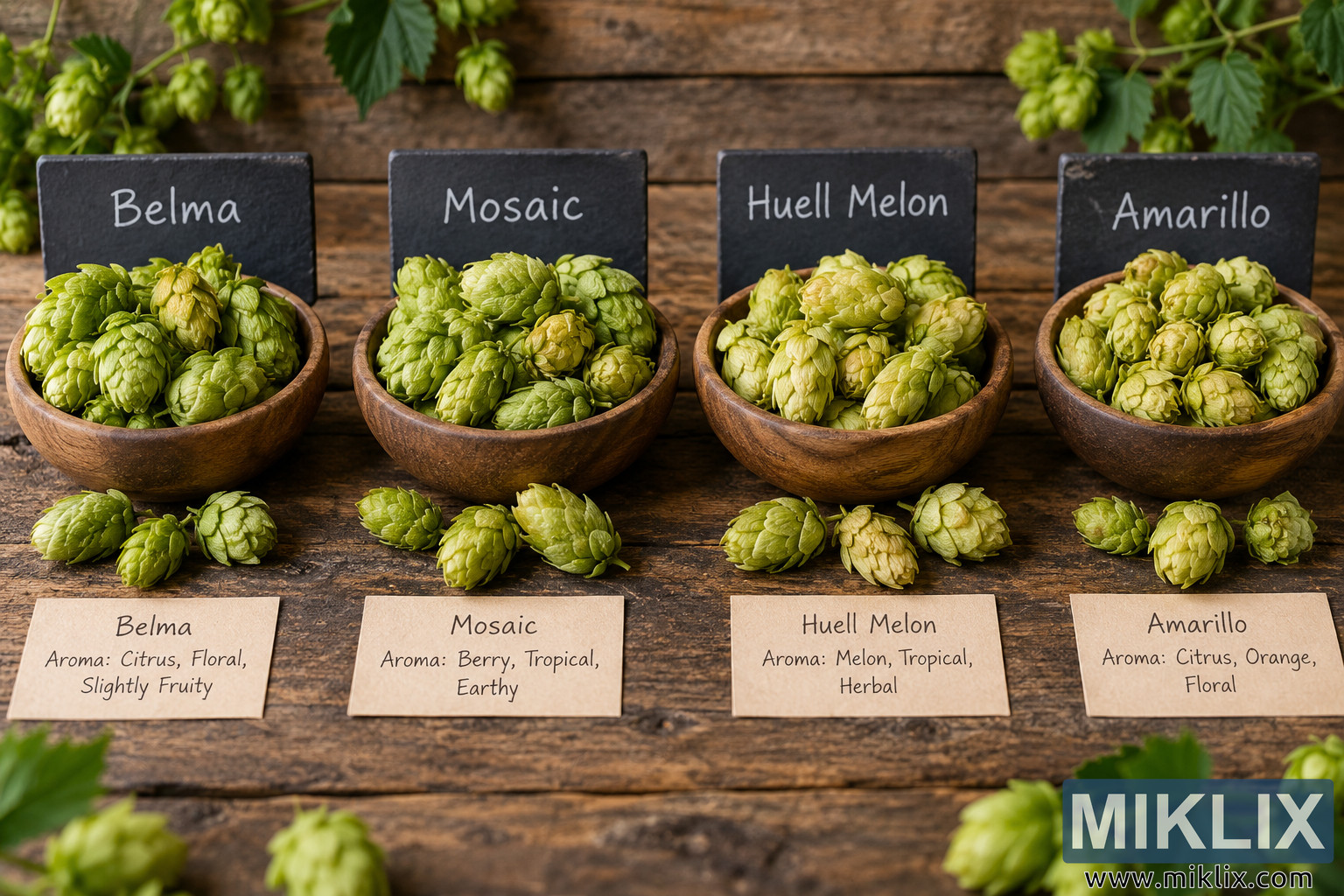
A wide, landscape-oriented rustic still-life photograph presents four different hop varieties arranged side by side for visual comparison. The scene is composed on a heavily textured, weathered wooden tabletop made from broad brown planks, with a matching wooden plank background that gives the image the warm, handcrafted atmosphere of a small brewery, hop farm, tasting room, or brewing workshop. Four round wooden bowls form the central row of the composition. Each bowl is generously filled with whole green hop cones, and each variety is clearly separated into its own display. From left to right, the varieties are labeled Belma, Mosaic, Huell Melon, and Amarillo. The arrangement is orderly and symmetrical enough to make comparison easy while retaining a natural, organic appearance.
The first bowl on the left contains Belma hops. The hop cones are predominantly fresh green, with subtle differences in tone ranging from brighter yellow-green areas to deeper leafy greens. Behind the bowl stands a small rectangular dark slate or chalkboard-style sign with the handwritten word “Belma” in pale lettering. Several loose hop cones are scattered on the wooden surface in front of the bowl. Beneath them sits a light beige paper card identifying the variety as Belma and describing its aroma with the words “Citrus, Floral, Slightly Fruity.” The combination of the dark sign, warm wooden bowl, pale card, and vivid green hops creates a clear visual hierarchy.
The second bowl contains Mosaic hops and follows the same display format. A dark rectangular sign behind the bowl reads “Mosaic” in a casual handwritten style. The bowl is filled with numerous compact hop cones, some of which appear slightly lighter or more yellow-green than others. A small cluster of loose cones lies in front of the bowl, helping to connect the individual display with the tabletop and giving the composition a less staged, more tactile quality. The beige information card beneath the Mosaic hops identifies aroma characteristics as “Berry, Tropical, Earthy.” The card is aligned with the bowl but retains the informal character of a handcrafted tasting or ingredient-comparison display.
The third bowl presents Huell Melon hops. Its chalkboard-style sign reads “Huell Melon” and is positioned directly behind the bowl. The cones in this section show a particularly noticeable mixture of soft green and warmer yellow-green shades, emphasizing the natural variation found in dried or harvested hop flowers. Several loose cones are placed in front of the bowl, including cones turned at different angles so that their layered, papery bracts are visible. The corresponding beige card reads “Huell Melon” and lists the aroma as “Melon, Tropical, Herbal.” This section occupies a prominent position near the center-right of the frame and contributes to the balanced four-part comparison.
The fourth bowl on the right contains Amarillo hops. A dark slate-style sign behind it displays the handwritten name “Amarillo.” The bowl contains a dense collection of green and yellow-green cones, with the layered structure of the hops clearly visible under the warm directional lighting. A few individual cones are scattered across the table in front of the bowl. The pale card below identifies the variety and describes its aroma as “Citrus, Orange, Floral.” Together, the four cards provide an educational tasting-note component while the bowls and signs make the individual varieties immediately distinguishable.
Fresh hop vines frame the composition around the upper and lower edges. At the top left and top right, leafy green stems enter the frame with clusters of hop cones hanging naturally from them. Additional blurred foliage and hop cones appear along the bottom foreground, creating a sense of depth and making the central comparison display feel surrounded by freshly harvested plants. The foreground leaves are noticeably out of focus, while the bowls, labels, and central hop cones remain crisp. This shallow depth of field directs attention toward the four varieties while preserving an atmospheric, photographic quality.
Lighting is warm, soft, and directional, bringing out the layered textures of the hop cones and the grain of the wooden bowls and tabletop. Small highlights on the hops emphasize their overlapping scales, while gentle shadows beneath the bowls and cones provide dimensionality without becoming harsh. The brown wood and beige cards create an earthy neutral foundation against which the greens of the hops and foliage stand out strongly. The image has a natural agricultural and artisanal brewing aesthetic rather than a clinical laboratory appearance.
The overall composition communicates comparison, ingredient education, brewing, aroma exploration, and hop diversity. Although the four hop varieties share a broadly similar visual form, slight differences in color, size, shape, and arrangement help suggest their individuality. The written aroma notes reinforce that distinction by associating Belma with citrus, floral, and slightly fruity characteristics; Mosaic with berry, tropical, and earthy characteristics; Huell Melon with melon, tropical, and herbal characteristics; and Amarillo with citrus, orange, and floral characteristics. There are no people, bottles, beer cans, brewery logos, commercial packages, or recognizable corporate branding in the scene. The presentation focuses entirely on the natural hop ingredients and generic handcrafted display materials. The resulting photograph resembles an educational hop tasting, brewing ingredient guide, or comparative display prepared for someone interested in brewing ingredients, hop aromas, or the sensory differences among hop varieties.
تصویر مربوط به: Hops in Beer Brewing: Belma