
تصویر: Codling Moth Damage on Quince Fruit
منتشر شده:
آخرین به روز رسانی: ۵ مارس ۲۰۲۶ ساعت ۲۱:۴۸:۰۹ (UTC)
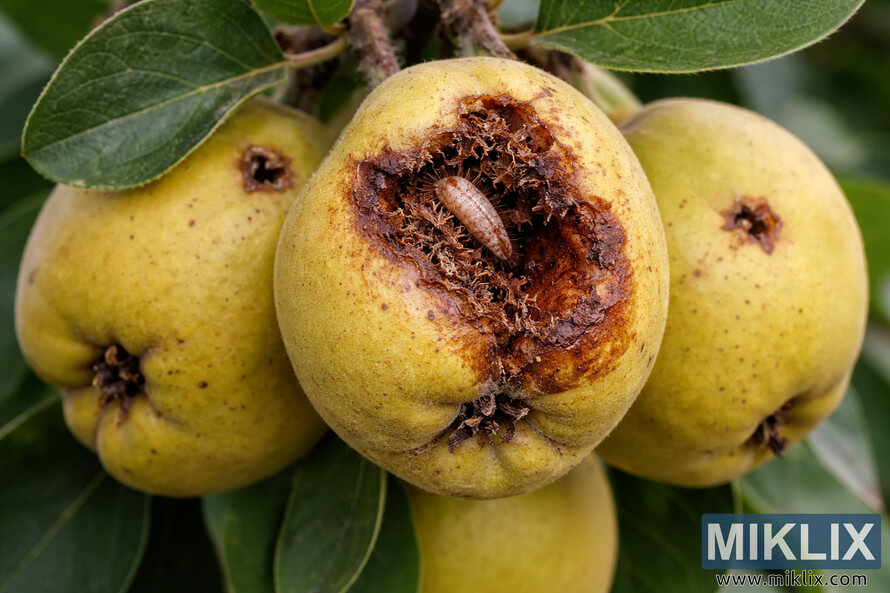
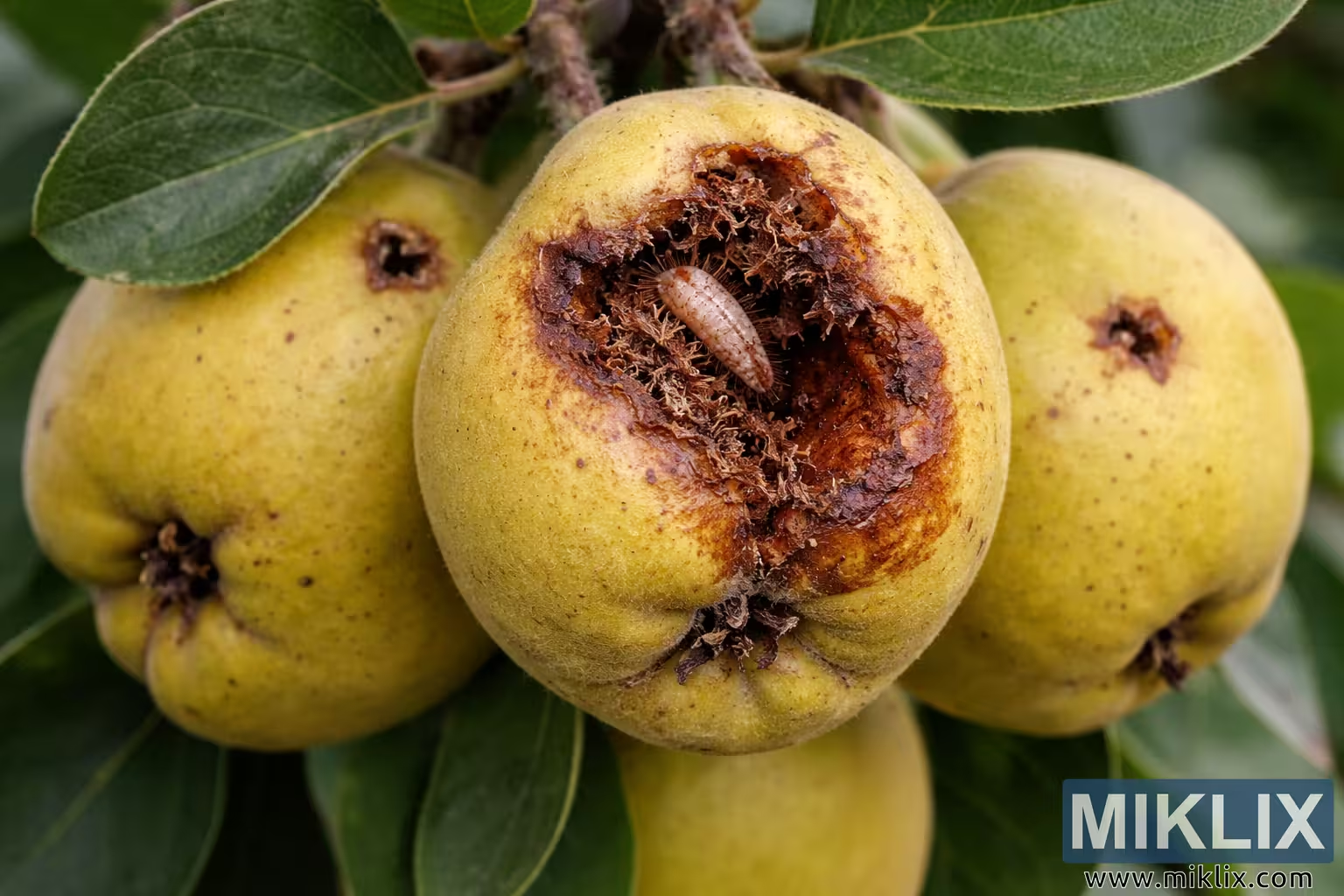
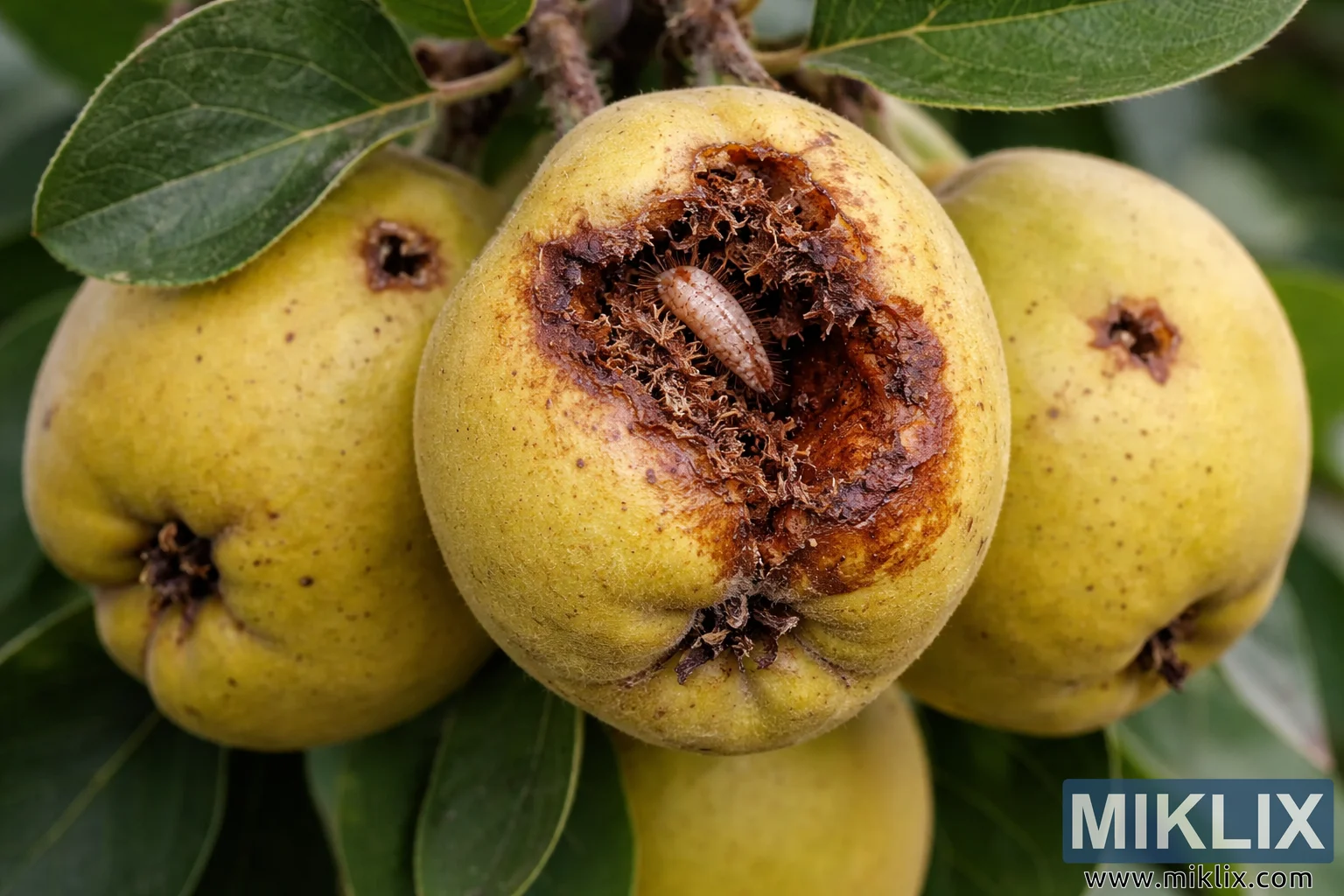
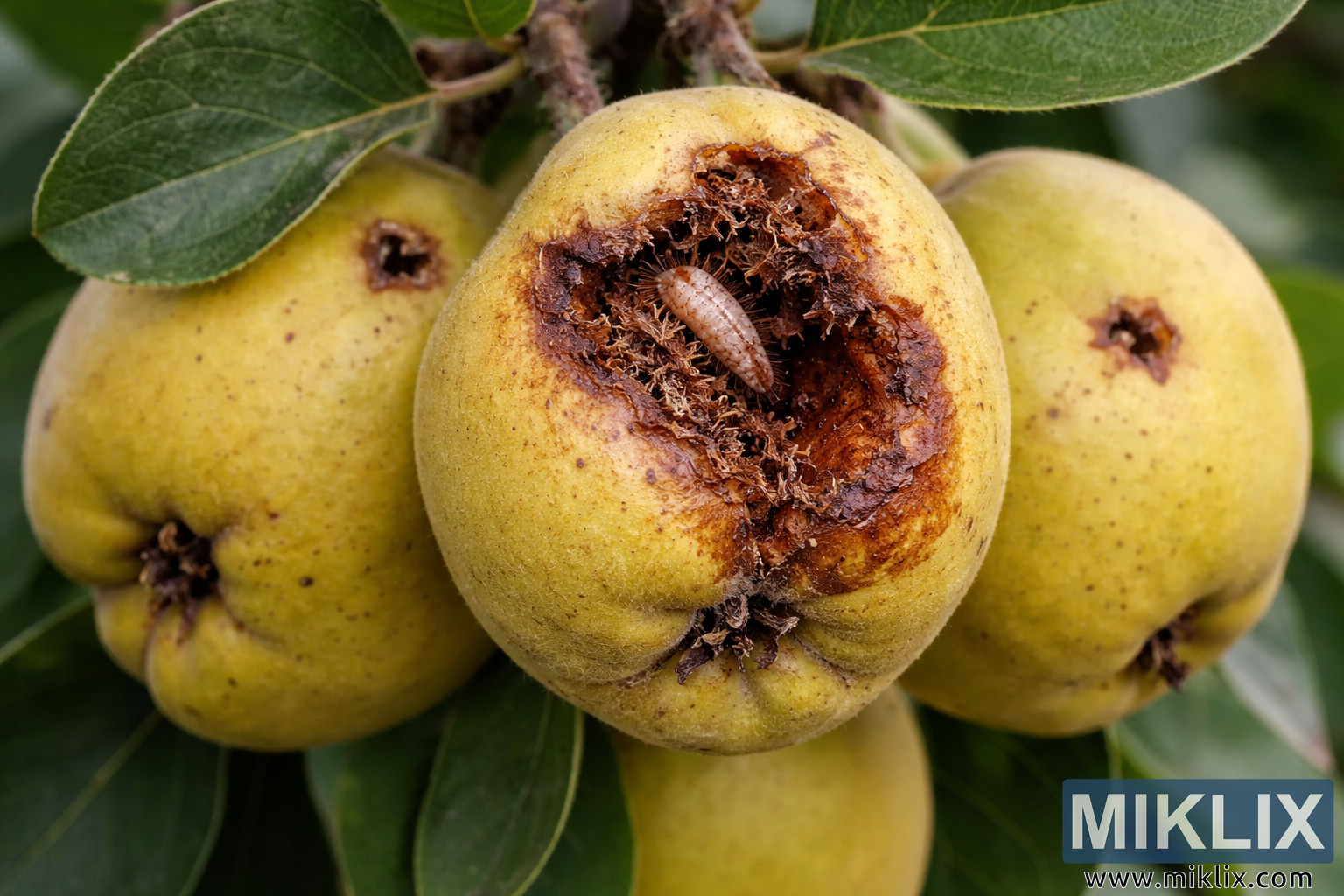
High-resolution landscape image of codling moth damage to quince fruit, featuring a visible larva inside a decayed cavity and surrounding healthy yellow quinces on the tree.
Codling Moth Damage on Quince Fruit
نسخههای موجود از این تصویر
فایلهای تصویری که در زیر برای دانلود موجود است، نسبت به تصاویر موجود در مقالات و صفحات این وبسایت که برای کاهش مصرف پهنای باند، از نظر حجم فایل بهینهتر شدهاند، فشردهسازی کمتری داشته و وضوح بالاتری دارند - و در نتیجه، کیفیت بالاتری دارند.
اندازه معمولی (1,536 x 1,024)
سایز بزرگ (3,072 x 2,048)
سایز بسیار بزرگ (4,608 x 3,072)
سایز فوق العاده بزرگ (6,144 x 4,096)
اندازهی کمیک بزرگ (1,048,576 x 699,051)
- هنوز در حال آپلود هستم... ;-)
شرح تصویر
A high-resolution landscape photograph shows a tight cluster of ripe quinces hanging from a tree branch, surrounded by broad, matte green leaves. The fruits are yellow to yellow-green with a faint natural fuzz and scattered brown speckles across their skin. At the center of the composition, one quince prominently displays severe codling moth damage. A large, irregular cavity has formed near the blossom end of the fruit, where the skin has collapsed inward and turned dark brown. The surrounding tissue appears necrotic and crumbly, with dry, frass-like debris packed into the hollowed area. Inside the cavity, a pale pinkish-white larva is clearly visible, segmented and slightly curved, positioned amid the decayed plant tissue. The edges of the wound are rough and sunken, showing a gradient from healthy yellow skin to darkened, oxidized flesh.
Adjacent quinces in the cluster show smaller signs of infestation, including tiny circular entry holes and localized brown patches that contrast with the otherwise firm and smooth surface. These blemishes indicate early or less advanced stages of larval penetration. The intact fruits retain their natural rounded, slightly irregular shape typical of quince, with subtle ridges and a pronounced calyx at the base.
The leaves framing the fruit are elliptical with visible veins and smooth margins, rendered in sharp detail in the foreground while the background foliage softens into a gentle blur. This shallow depth of field isolates the damaged fruit as the focal point, emphasizing the biological impact of the pest. Natural daylight illuminates the scene evenly, highlighting texture differences between healthy skin, dried frass, and decomposing flesh. The color contrast between the vibrant yellow fruit, the earthy brown decay, and the soft green leaves enhances the visual clarity of the infestation.
Overall, the image documents codling moth damage to quince fruit in a realistic orchard setting, capturing both the external symptoms and the internal feeding activity of the larva. The composition balances scientific detail with natural context, making the photograph suitable for agricultural education, pest management references, or botanical documentation.
تصویر مربوط به: Complete Guide to Growing Your Own Quince Trees