
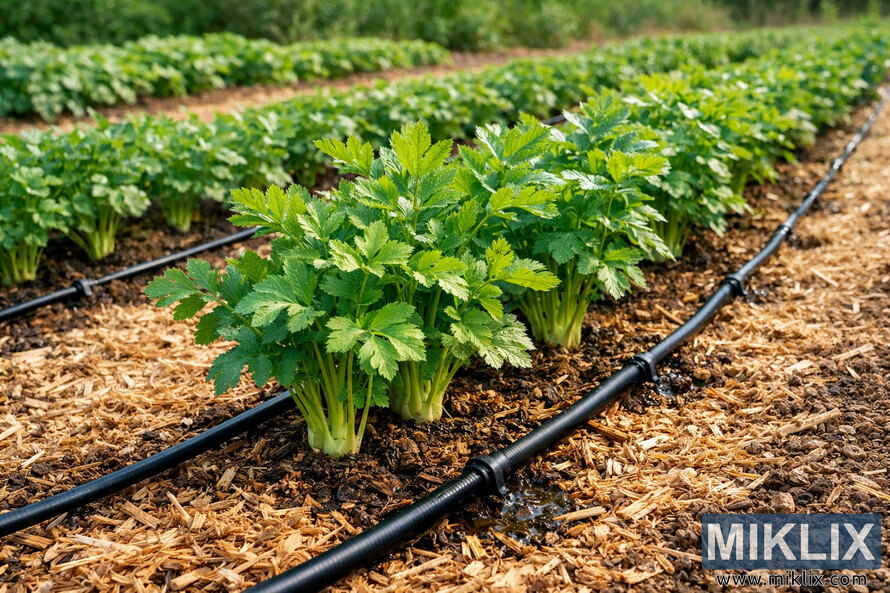
تصویر: Healthy Parsnip Plants Growing in Mulched Garden Rows with Drip Irrigation
منتشر شده:
آخرین به روز رسانی: ۱۸ مارس ۲۰۲۶ ساعت ۲۰:۴۳:۴۹ (UTC)
Lush parsnip plants growing in neatly mulched garden rows with drip irrigation tubing delivering water to the soil in a well-maintained vegetable garden.
Healthy Parsnip Plants Growing in Mulched Garden Rows with Drip Irrigation
نسخههای موجود از این تصویر
فایلهای تصویری که در زیر برای دانلود موجود است، نسبت به تصاویر موجود در مقالات و صفحات این وبسایت که برای کاهش مصرف پهنای باند، از نظر حجم فایل بهینهتر شدهاند، فشردهسازی کمتری داشته و وضوح بالاتری دارند - و در نتیجه، کیفیت بالاتری دارند.
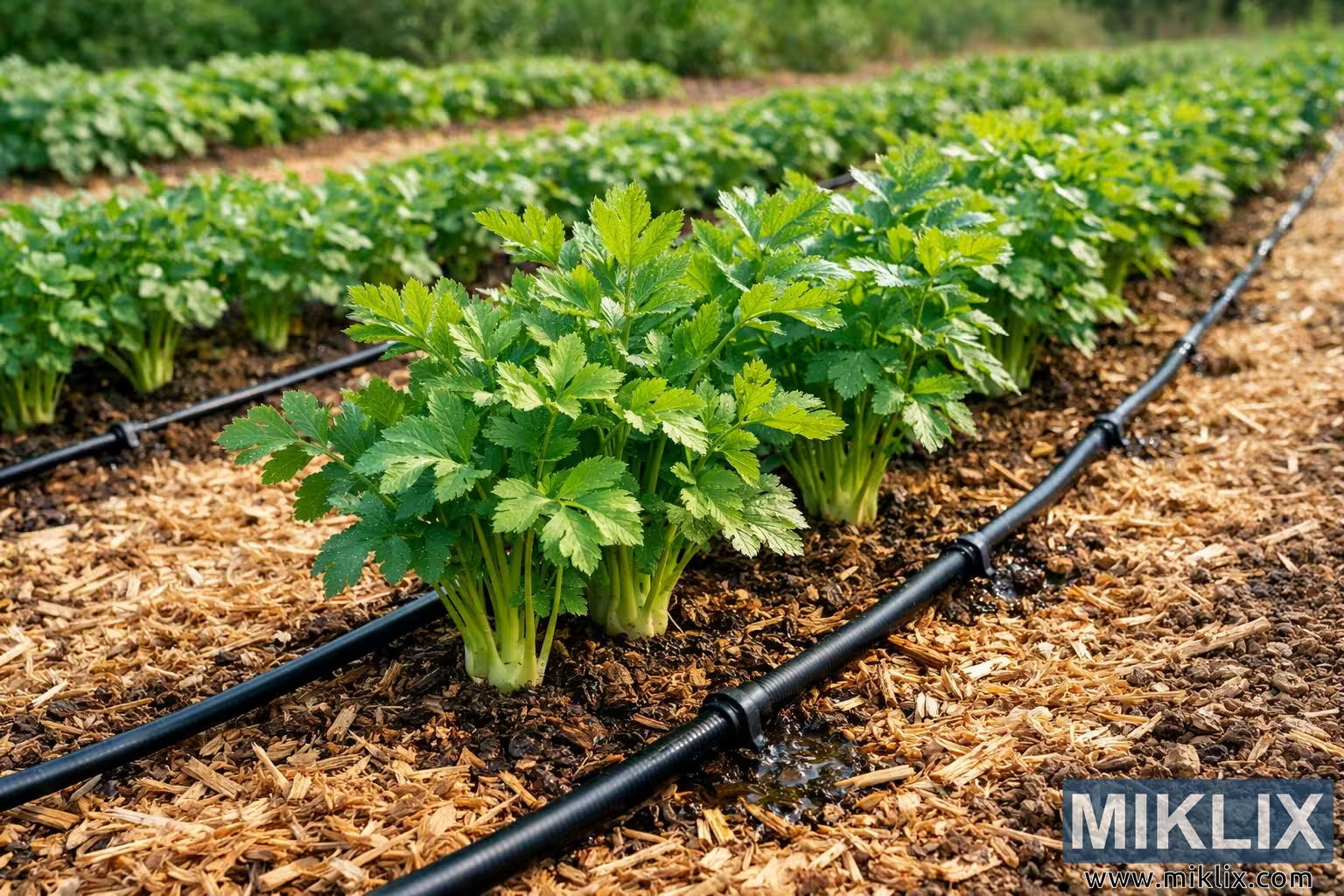
اندازه معمولی (1,536 x 1,024)
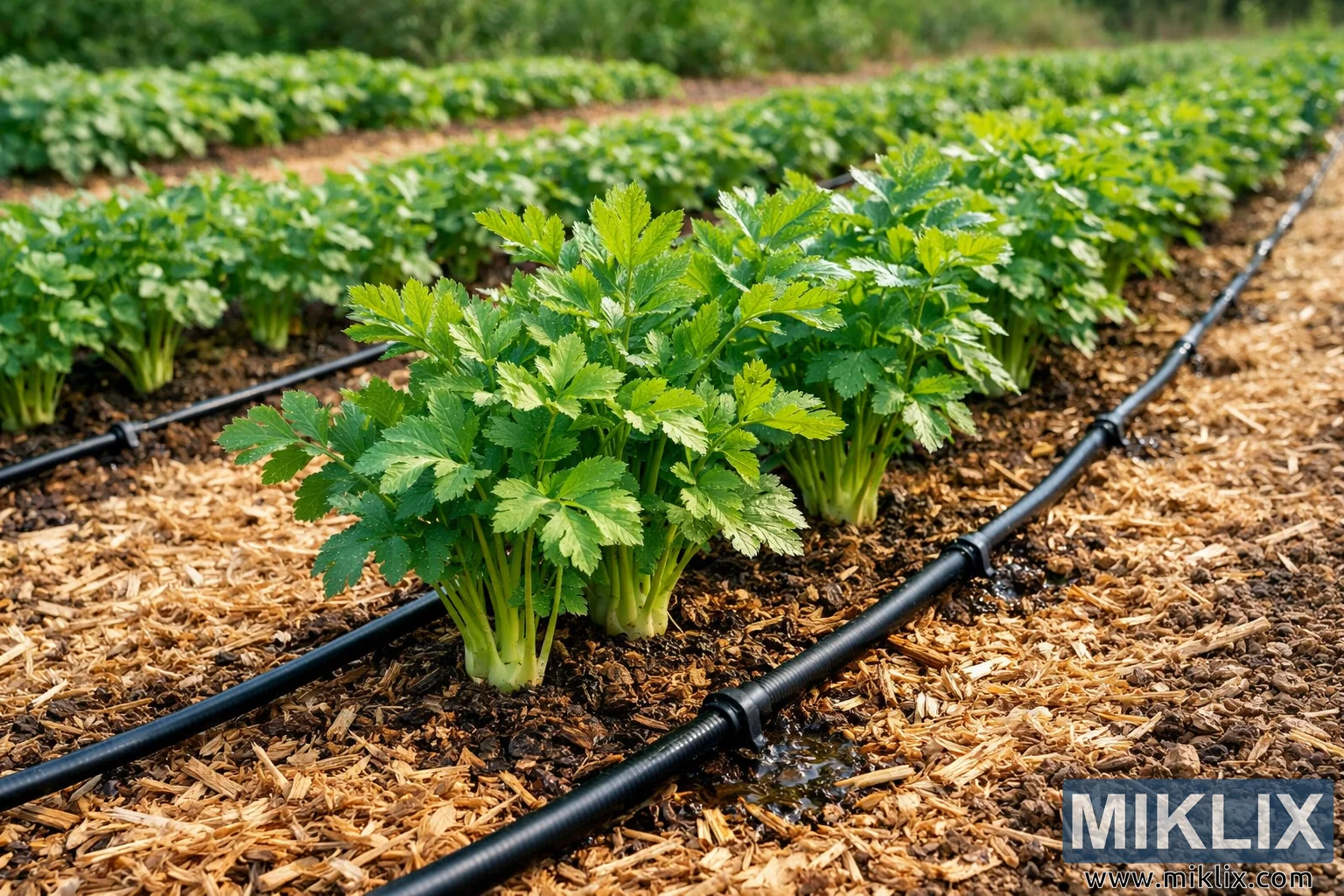
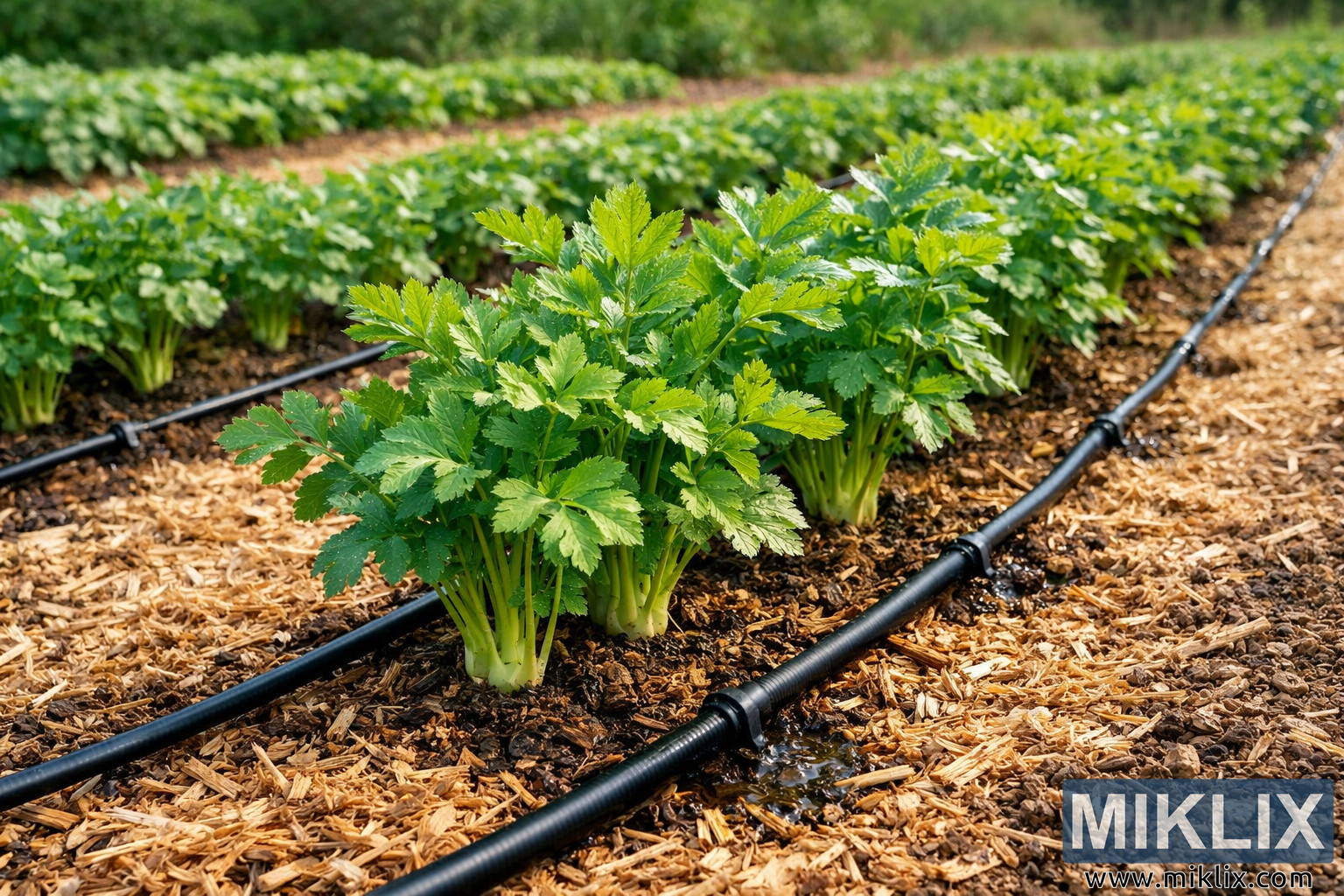
سایز بزرگ (3,072 x 2,048)
سایز بسیار بزرگ (4,608 x 3,072)
سایز فوق العاده بزرگ (6,144 x 4,096)
اندازهی کمیک بزرگ (1,048,576 x 699,051)
- هنوز در حال آپلود هستم... ;-)
شرح تصویر
A vibrant vegetable garden scene displays several orderly rows of healthy parsnip plants thriving in carefully prepared soil. The image is captured from a low, slightly angled perspective that places the viewer close to the ground, emphasizing the structure of the garden beds and the lush foliage of the plants. In the foreground, a dense cluster of parsnip plants rises from dark, nutrient-rich soil. Their fresh green leaves spread outward in layered, serrated patterns typical of parsnip foliage, creating a dense canopy above the soil surface. The stems appear sturdy and pale green, suggesting vigorous growth and good plant health.
Surrounding the plants, the garden beds are neatly covered with a layer of golden-brown straw mulch. The mulch forms a protective blanket over the soil, helping retain moisture, suppress weeds, and regulate soil temperature. Its coarse texture contrasts with the darker soil beneath and the smooth green leaves above, adding visual depth and natural variation to the scene. The mulch also clearly defines the rows, guiding the eye through the structured layout of the garden.
Running parallel to the rows are black drip irrigation tubes positioned close to the plant bases. The tubing snakes along the length of the beds, with small emitters delivering water directly to the root zones. In places, tiny droplets and slightly darkened patches of mulch indicate that water has recently been released, demonstrating an efficient irrigation system designed to minimize waste while keeping the soil consistently moist.
In the midground and background, additional rows of parsnip plants extend into the distance, each bed repeating the same pattern of leafy green growth, straw mulch, and irrigation lines. The rows gradually blur as they recede, creating a soft depth-of-field effect that focuses attention on the foreground plants while still conveying the scale of the garden. The repeating geometry of the rows emphasizes careful planning and attentive cultivation.
Soft natural sunlight illuminates the scene, casting gentle highlights on the leaves and subtle shadows between the plants and mulch. The lighting enhances the vivid greens of the foliage and the warm tones of the straw, giving the garden a fresh and productive atmosphere. Overall, the image communicates a sense of healthy growth, sustainable gardening practices, and organized vegetable cultivation, showcasing a thriving parsnip crop supported by mulch and drip irrigation in a well-maintained garden environment.
تصویر مربوط به: Growing Parsnips: Your Complete Guide to Sweet, Homegrown Roots