
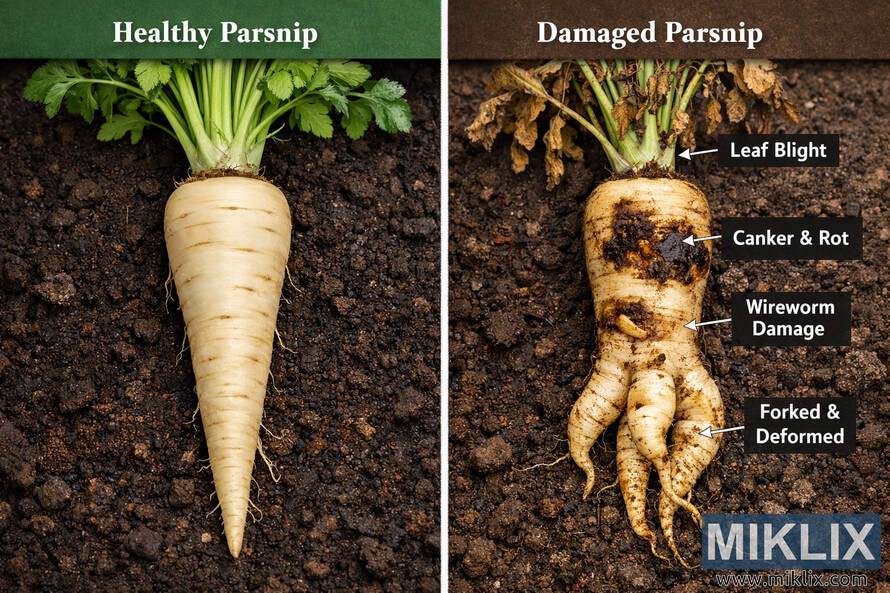
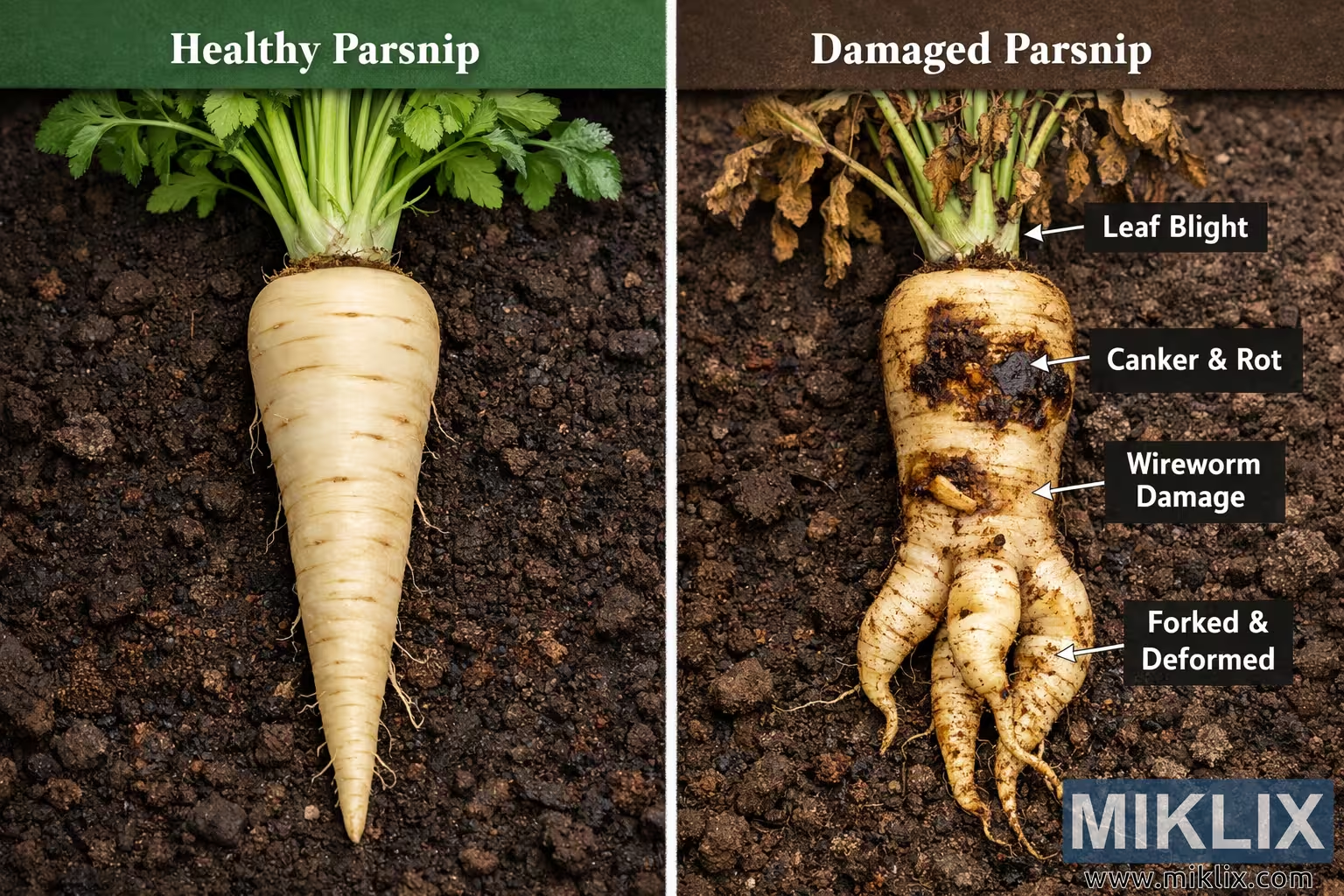
تصویر: Healthy vs Damaged Parsnip Root Comparison
منتشر شده:
آخرین به روز رسانی: ۱۸ مارس ۲۰۲۶ ساعت ۲۰:۴۳:۴۹ (UTC)
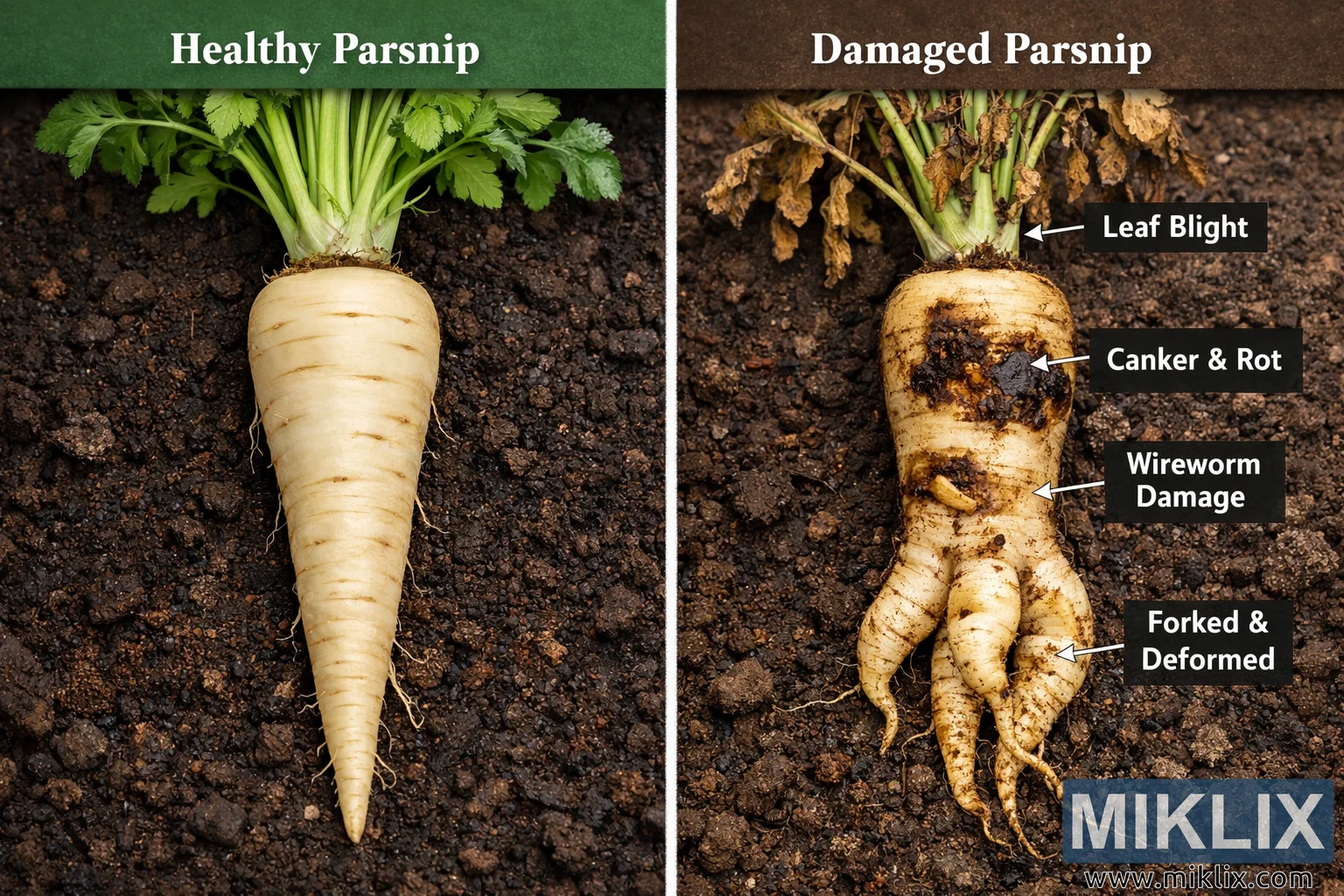
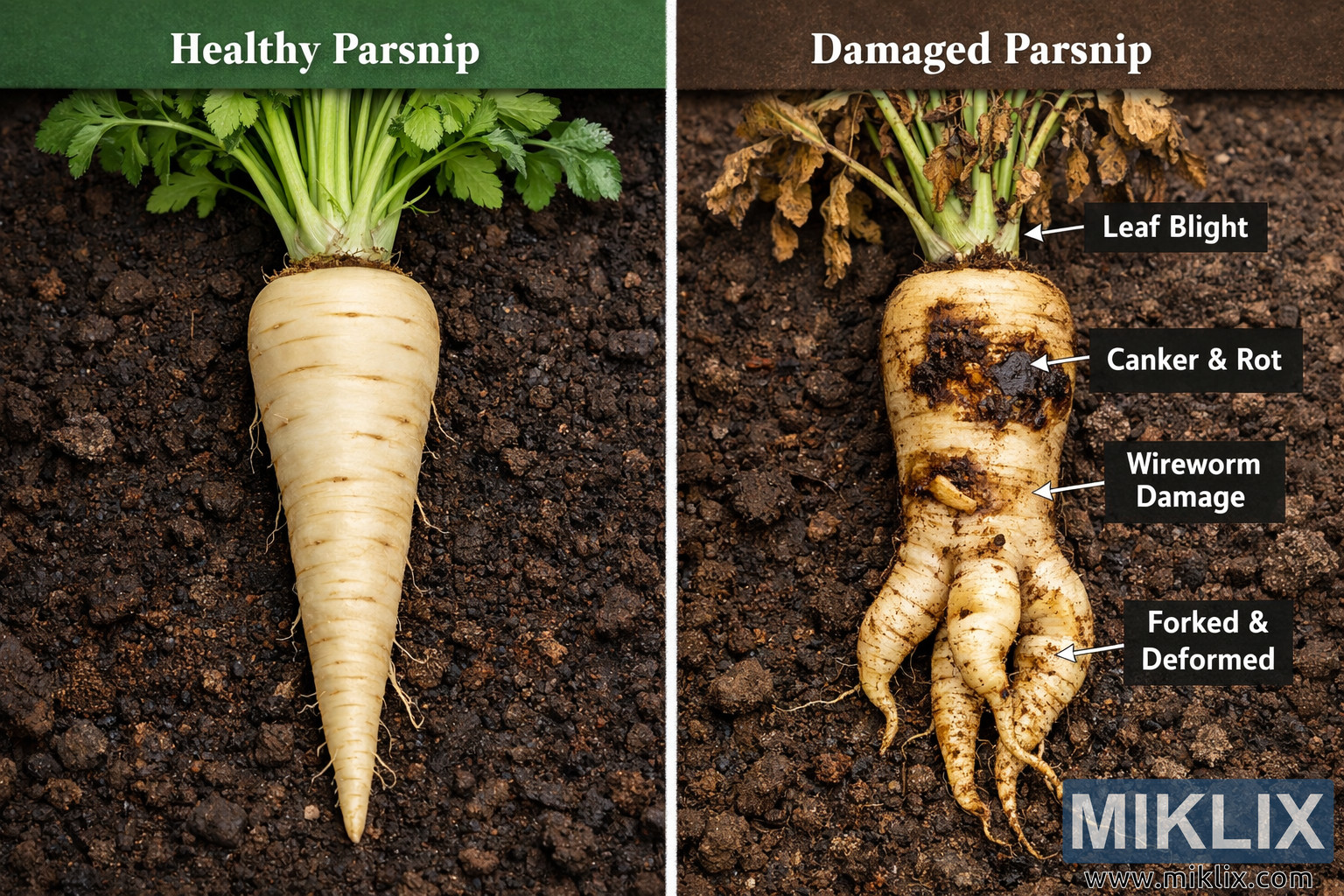
Educational split-screen image comparing a healthy parsnip root with a damaged root affected by leaf blight, rot, wireworm damage, and deformation, helping gardeners identify common parsnip problems.
Healthy vs Damaged Parsnip Root Comparison
نسخههای موجود از این تصویر
فایلهای تصویری که در زیر برای دانلود موجود است، نسبت به تصاویر موجود در مقالات و صفحات این وبسایت که برای کاهش مصرف پهنای باند، از نظر حجم فایل بهینهتر شدهاند، فشردهسازی کمتری داشته و وضوح بالاتری دارند - و در نتیجه، کیفیت بالاتری دارند.
اندازه معمولی (1,536 x 1,024)
سایز بزرگ (3,072 x 2,048)
سایز بسیار بزرگ (4,608 x 3,072)
سایز فوق العاده بزرگ (6,144 x 4,096)
اندازهی کمیک بزرگ (1,048,576 x 699,051)
- هنوز در حال آپلود هستم... ;-)
شرح تصویر
The image is a high-resolution split-screen comparison designed to illustrate the difference between a healthy parsnip root and a parsnip root affected by several common problems. The composition is divided vertically into two equal halves, each showing a parsnip partially embedded in dark, moist garden soil. The overall style resembles an educational gardening infographic or horticultural guide.
On the left side of the image, labeled "Healthy Parsnip" across a green header banner, a well-formed parsnip root is displayed. The root is creamy white with a smooth, tapered shape that narrows gradually to a fine point at the bottom. Its surface appears firm, clean, and evenly textured with subtle horizontal ridges typical of a mature parsnip. The crown of the root transitions into a cluster of fresh green leaves that look vigorous and upright. The foliage is bright green with healthy stems and broad leaflets, suggesting strong plant vitality. The surrounding soil is dark brown and crumbly, appearing rich and well-aerated, which visually reinforces the idea of a thriving plant growing under good conditions. There are no blemishes, cracks, or deformities on the root, emphasizing the ideal appearance of a healthy parsnip.
On the right side of the image, labeled "Damaged Parsnip" across a brown header banner, a contrasting example shows a parsnip suffering from multiple problems. The root is irregular and distorted, splitting into several forked sections near the bottom rather than forming a single smooth taper. The surface shows visible discoloration, dark patches, and rough areas. Several labeled callouts with arrows point to specific issues. Near the top foliage, the label "Leaf Blight" indicates browned, wilted, and unhealthy leaves that appear dry and damaged compared to the vibrant leaves on the healthy side. Another label, "Canker & Rot," points to dark, decaying patches on the root surface, suggesting fungal or bacterial disease causing tissue breakdown. A third label, "Wireworm Damage," highlights small holes and tunneling marks where pests have eaten into the root. Finally, the label "Forked & Deformed" points to the split root structure, illustrating how poor soil conditions, pests, or physical obstruction can cause abnormal root growth.
The soil on the damaged side looks slightly more compact and uneven, with clumps adhering to the root, reinforcing the impression of a plant struggling under poor conditions. The clear side-by-side layout and labeled annotations make the image easy to interpret, visually demonstrating the stark contrast between healthy root development and multiple common parsnip problems that gardeners may encounter.
تصویر مربوط به: Growing Parsnips: Your Complete Guide to Sweet, Homegrown Roots