
تصویر: Proper Food Safety Practices for Handling Alfalfa Sprouts
منتشر شده:
آخرین به روز رسانی: ۱۳ مهٔ ۲۰۲۶ ساعت ۱۶:۲۸:۵۲ (UTC)
Learn proper food safety practices for handling alfalfa sprouts with this informative infographic. Discover essential tips for refrigeration, rinsing, hygiene, avoiding cross-contamination, and safe consumption to reduce foodborne illness risks.
Proper Food Safety Practices for Handling Alfalfa Sprouts
نسخههای موجود از این تصویر
فایلهای تصویری که در زیر برای دانلود موجود است، نسبت به تصاویر موجود در مقالات و صفحات این وبسایت که برای کاهش مصرف پهنای باند، از نظر حجم فایل بهینهتر شدهاند، فشردهسازی کمتری داشته و وضوح بالاتری دارند - و در نتیجه، کیفیت بالاتری دارند.
اندازه معمولی (1,536 x 1,024)
سایز بزرگ (3,072 x 2,048)
سایز بسیار بزرگ (4,608 x 3,072)
سایز فوق العاده بزرگ (6,144 x 4,096)
اندازهی کمیک بزرگ (1,048,576 x 699,051)
- هنوز در حال آپلود هستم... ;-)
شرح تصویر
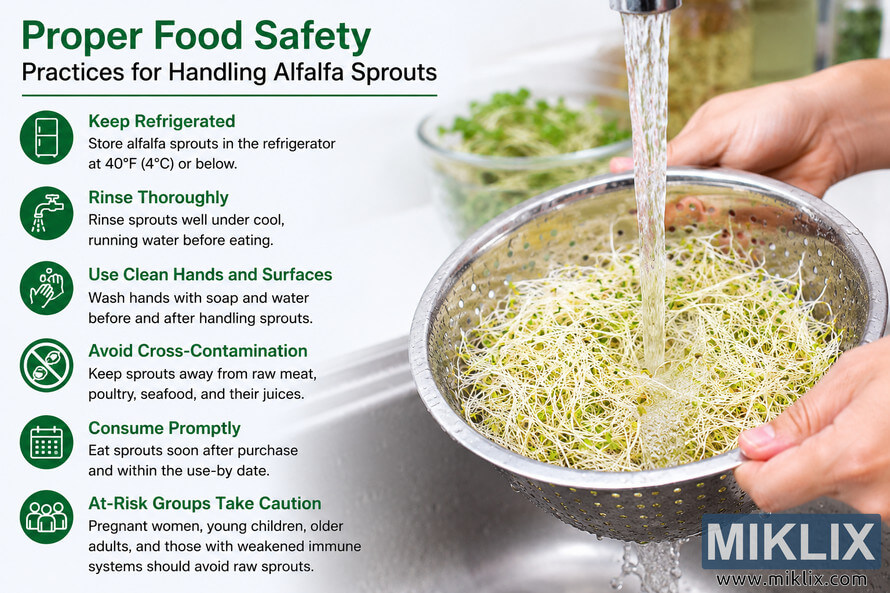
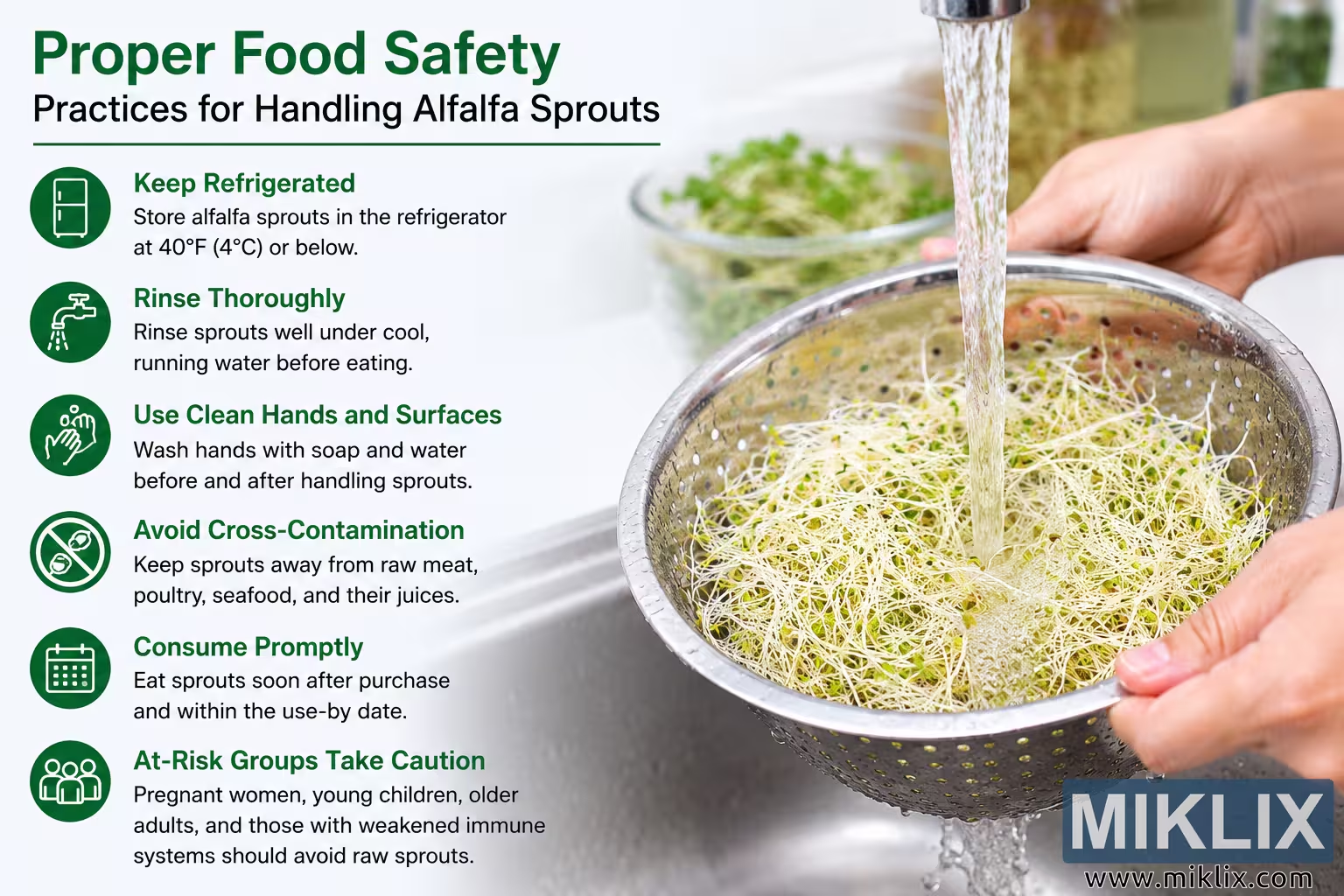
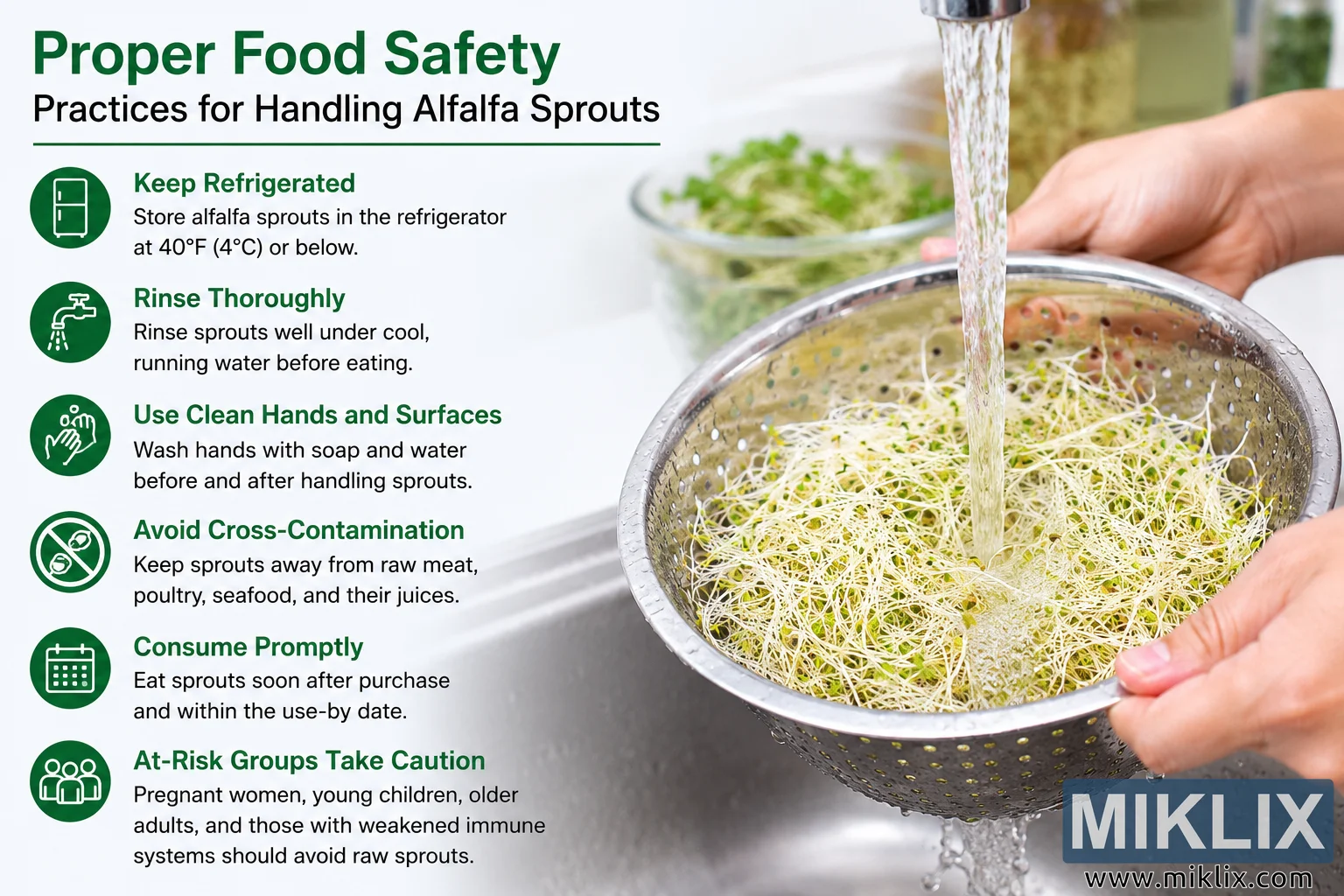
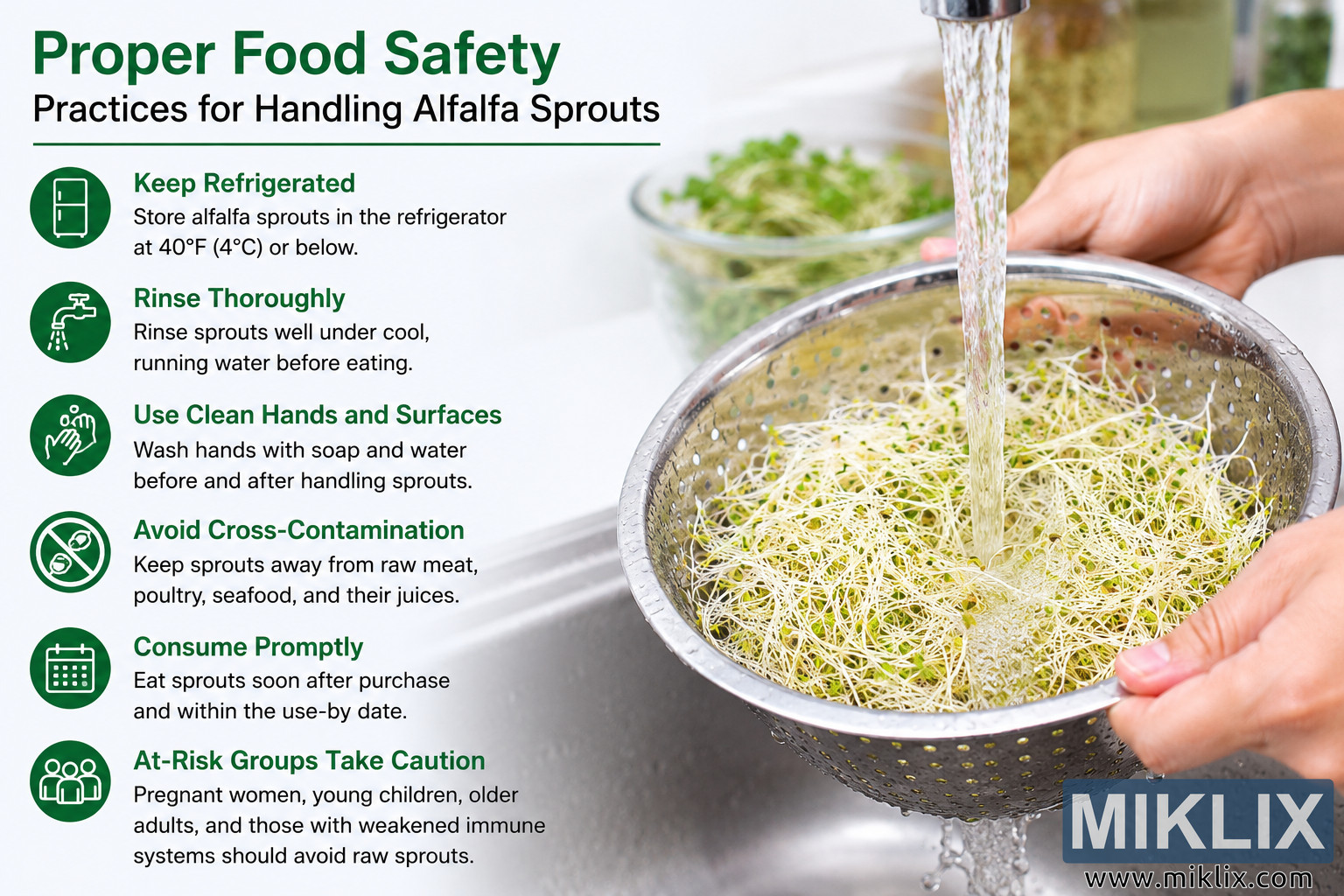
A clean and modern food safety infographic in landscape orientation focuses on the proper handling of alfalfa sprouts to reduce the risk of foodborne illness. The design uses a balanced split layout, with educational safety guidance displayed on the left side and a realistic kitchen food preparation scene on the right. The overall color palette combines shades of green, white, and stainless steel gray to reinforce themes of freshness, cleanliness, and healthy food preparation.
At the top left of the infographic, a large dark green heading reads “Proper Food Safety Practices for Handling Alfalfa Sprouts.” A thin green divider line separates the title from the educational content below. Under the heading, six food safety recommendations are presented in a vertical list. Each recommendation is paired with a circular green icon featuring simple white symbols that visually represent the safety tip.
The first section advises viewers to keep alfalfa sprouts refrigerated at 40 degrees Fahrenheit or 4 degrees Celsius or below. The second recommendation emphasizes rinsing sprouts thoroughly under cool running water before eating. The third safety tip instructs users to wash hands with soap and water and maintain clean food preparation surfaces before and after handling sprouts. Another section warns against cross-contamination by keeping sprouts away from raw meat, poultry, seafood, and their juices. Additional guidance encourages consumers to eat sprouts promptly after purchase and before the use-by date. The final recommendation highlights that pregnant women, young children, older adults, and people with weakened immune systems should avoid eating raw sprouts because of increased food safety risks.
On the right side of the image, a realistic close-up kitchen scene illustrates proper sprout handling. Two hands hold a stainless steel colander filled with fresh alfalfa sprouts beneath a stream of running water from a kitchen faucet. The sprouts appear pale green and white with delicate thin stems and small green leaves. Water splashes naturally over the sprouts and drains through the perforated colander into a stainless steel sink below. The lighting is bright and soft, creating a hygienic and inviting atmosphere.
In the softly blurred background, additional bowls of fresh sprouts are visible on a clean kitchen countertop, adding depth and reinforcing the healthy food preparation setting. The kitchen environment appears tidy, modern, and sanitary, supporting the educational message of proper food handling practices.
The infographic combines realistic photography with easy-to-read educational text and universally recognizable icons. Its layout is designed for quick understanding and accessibility, making it suitable for public health education, food safety awareness campaigns, nutrition websites, grocery store signage, or educational materials related to safe food preparation and handling practices.
تصویر مربوط به: Alfalfa Sprouts: Complete Guide to Health Benefits