
تصویر: Illustration of Cilantro’s Role in Blood Sugar Regulation
منتشر شده:
آخرین به روز رسانی: ۱۵ ژوئیهٔ ۲۰۲۶ ساعت ۱۴:۴۶:۲۶ (UTC)
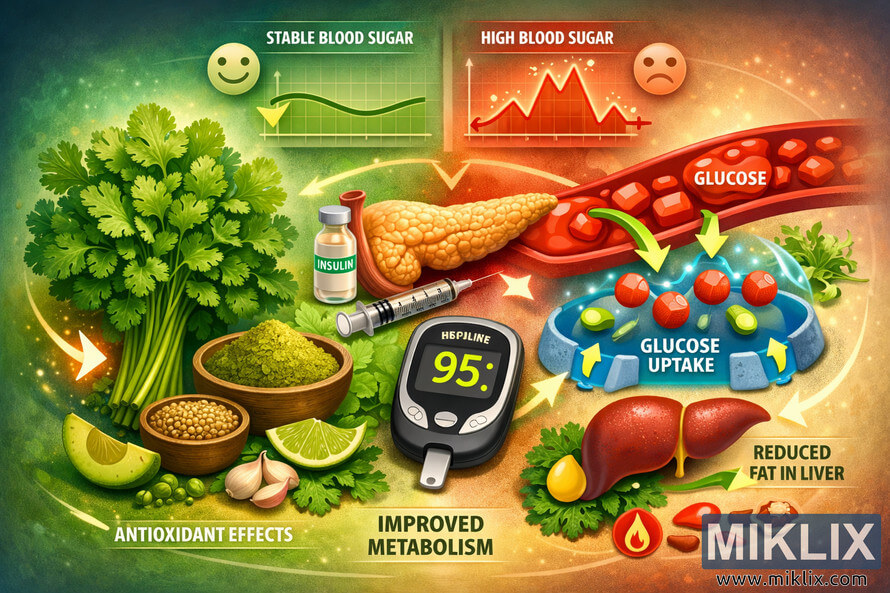
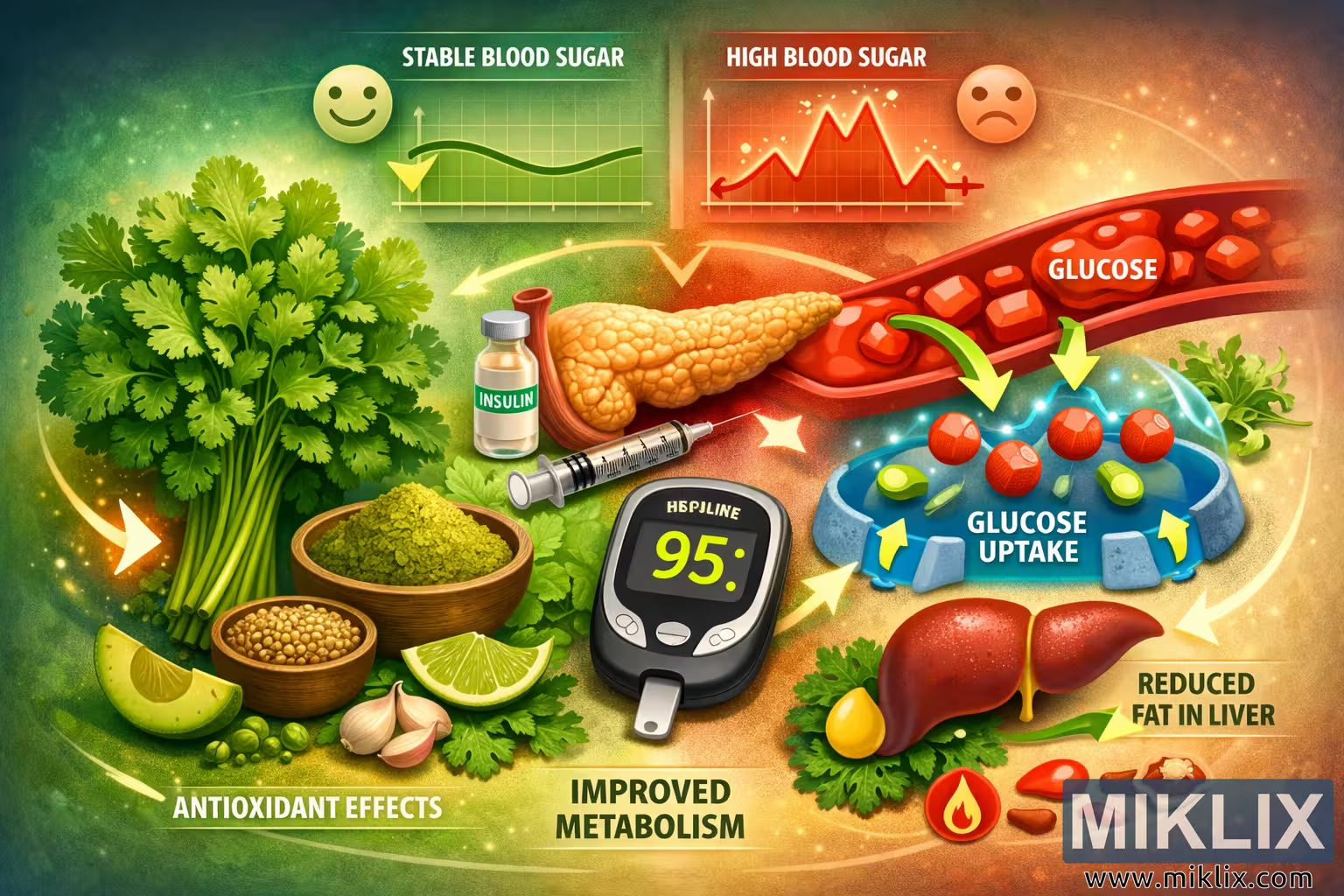
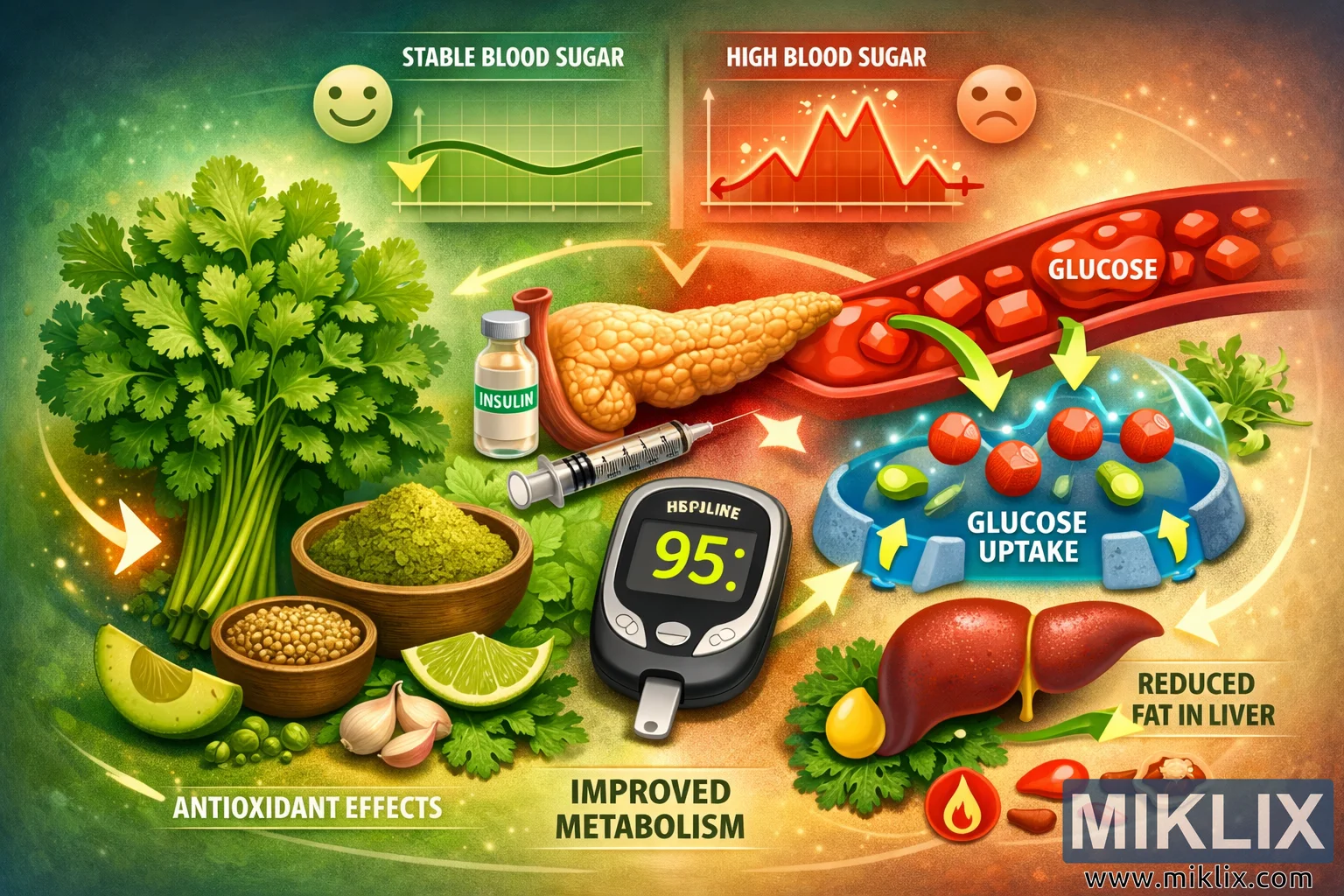
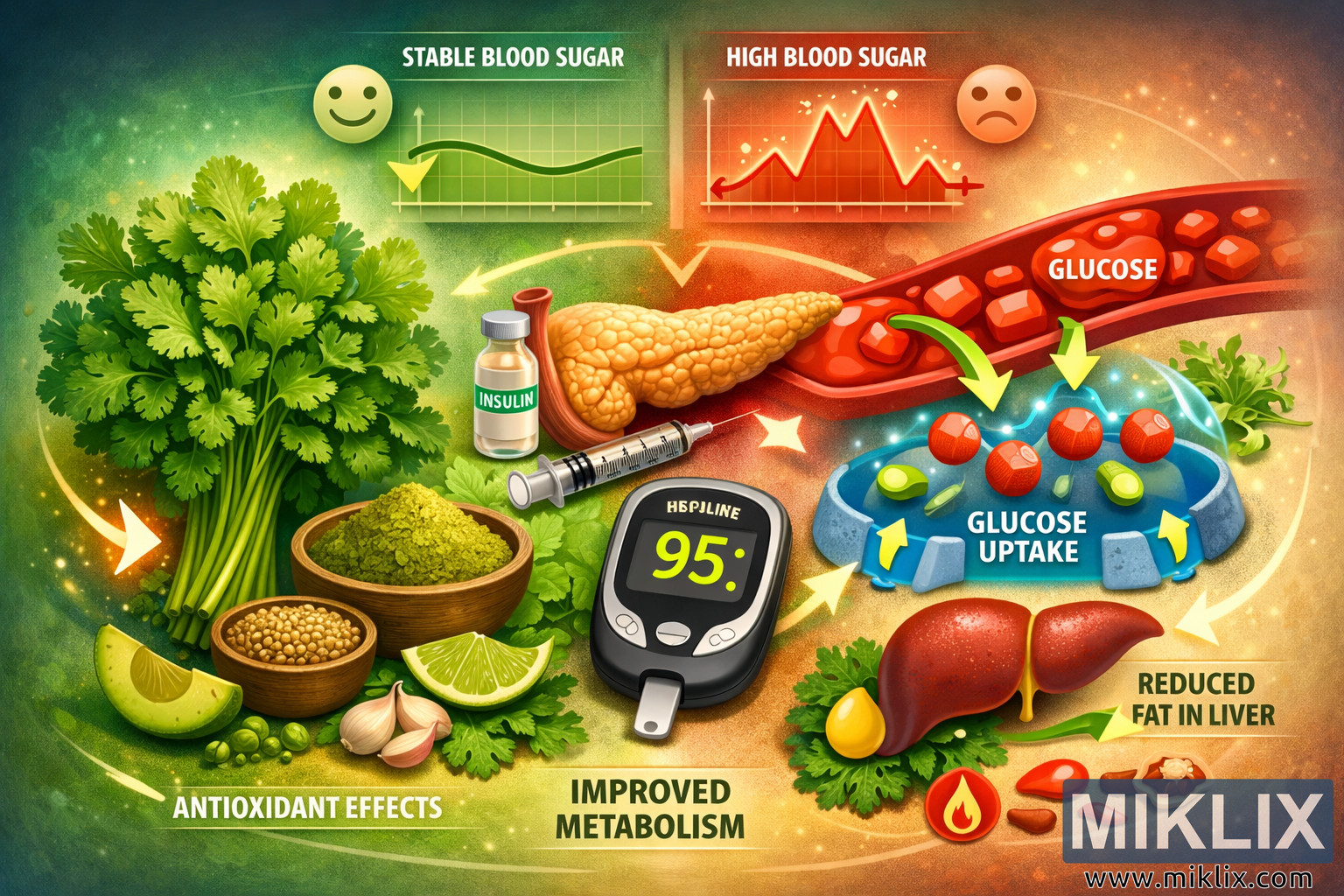
Informational illustration depicting cilantro’s potential role in blood sugar regulation, featuring cilantro, insulin, glucose uptake, stable vs high blood sugar graphs, liver health, antioxidant effects, and a healthy blood sugar meter in a vibrant green and blue landscape.
Illustration of Cilantro’s Role in Blood Sugar Regulation
نسخههای موجود از این تصویر
فایلهای تصویری که در زیر برای دانلود موجود است، نسبت به تصاویر موجود در مقالات و صفحات این وبسایت که برای کاهش مصرف پهنای باند، از نظر حجم فایل بهینهتر شدهاند، فشردهسازی کمتری داشته و وضوح بالاتری دارند - و در نتیجه، کیفیت بالاتری دارند.
اندازه معمولی (1,536 x 1,024)
سایز بزرگ (3,072 x 2,048)
سایز بسیار بزرگ (4,608 x 3,072)
سایز فوق العاده بزرگ (6,144 x 4,096)
اندازهی کمیک بزرگ (1,048,576 x 699,051)
- هنوز در حال آپلود هستم... ;-)
شرح تصویر
This detailed digital illustration presents a rich, educational visualization of how cilantro may support healthy blood sugar regulation, combining anatomical elements, food imagery, and explanatory labels into a single cohesive scene. The composition is laid out in a clear landscape orientation, with the left side focusing on cilantro and related ingredients, the center highlighting blood sugar mechanisms, and the right side depicting metabolic outcomes and organ health.
On the left side of the image, a large, lush bunch of fresh cilantro dominates the foreground. The cilantro leaves are vibrant green, with delicate serrated edges and visible veins, conveying freshness and vitality. Just beside the cilantro, there is a wooden bowl filled with finely ground cilantro powder, its texture soft and slightly grainy, and another smaller wooden bowl containing whole cilantro seeds, round and light brown. These bowls rest on a smooth surface that subtly reflects the colors above them. Below the cilantro and bowls, slices of creamy green avocado, bright lime wedges, and several peeled garlic cloves are arranged in a visually pleasing cluster, suggesting a wholesome, plant-based context. Near the cilantro, a glowing checkmark icon appears, symbolizing approval or health benefits. A bright arrow extends from this checkmark toward the central area of the illustration, visually linking cilantro to the subsequent blood sugar regulation elements.
In the center of the image, the focus shifts to the internal mechanisms of blood sugar control. A stylized, anatomized pancreas is prominently displayed, rendered in warm tones of pink and orange, with subtle shading to suggest its lobular structure. To the left of the pancreas, there is an insulin vial and a syringe. The vial is upright, with a clear label that reads "INSULIN" in glowing letters, and the syringe is filled with liquid, its barrel slightly transparent so the fluid inside is visible. The presence of the insulin vial and syringe emphasizes the hormone’s central role in blood sugar regulation. To the right of the pancreas, a cartoonish red blood vessel curves across the scene. Inside this vessel, glucose molecules are depicted as red hexagonal shapes, each labeled "GLUCOSE". These hexagons travel along the vessel, guided by green arrows that point downward toward a row of glowing blue cell receptors below.
Beneath the blood vessel, the blue cell receptors are arranged in a neat line, each receptor glowing with a soft, luminous blue hue. They are labeled "GLUCOSE UPTAKE" to indicate that glucose is being transported from the bloodstream into the cells. The green arrows from the blood vessel connect directly to these receptors, visually narrating the process of glucose moving out of the blood and into the cells where it can be used for energy. Below this central mechanism, a digital glucose meter is displayed. The meter has a clear screen showing the reading "95" and is labeled "HEALTHY BLOOD SUGAR". The meter’s design is modern and simple, with a small button and a rounded shape, reinforcing the idea of monitoring and maintaining stable blood sugar levels.
At the top of the illustration, two contrasting graphs provide a visual comparison between stable and high blood sugar patterns. On the left side, the graph titled "STABLE BLOOD SUGAR" features a green line that remains relatively steady, with gentle, minor fluctuations. A green arrow points downward from this graph, and above it, a small smiley face icon reinforces the positive, balanced state. On the right side, the graph titled "HIGH BLOOD SUGAR" shows a red line with sharp spikes and peaks, indicating erratic and elevated glucose levels. A red arrow points upward from this graph, and an unhappy face icon above it conveys the negative consequences of uncontrolled blood sugar. These two graphs together create a clear visual contrast, helping viewers understand the difference between healthy and unhealthy blood sugar patterns.
Toward the lower right of the image, the illustration shifts to metabolic outcomes and organ health. A stylized liver is depicted in warm reddish-brown tones, with smooth shading that suggests its rounded form. Next to the liver, a small droplet of fat is shown, and the area is labeled "REDUCED FAT IN LIVER" with a green arrow pointing toward the liver. This suggests that improved blood sugar regulation and metabolic balance may be associated with less fat accumulation in the liver. Below this, the text "IMPROVED METABOLISM" appears, accompanied by icons representing a burning fat cell and a metabolism symbol, such as a circular arrow or energy swirl. These icons visually reinforce the idea that cilantro and healthy blood sugar levels can be linked to better overall metabolic function.
In the lower left portion of the illustration, the text "ANTIOXIDANT EFFECTS" is displayed. Nearby, shield icons are shown protecting blood cells from stylized free radicals, which appear as small, spiky shapes or glowing particles. The shields are rendered in metallic or glowing tones, symbolizing defense and resilience. This section suggests that cilantro may have antioxidant properties that help protect the body’s cells from oxidative stress, further contributing to overall health.
Throughout the image, glowing arrows connect the cilantro on the left to the pancreas, insulin vial, blood vessel, and other central elements. These arrows are rendered in bright green and blue hues, creating a dynamic flow that guides the viewer’s eye across the illustration. The arrows visually narrate the idea that cilantro and related dietary choices can influence insulin activity, glucose uptake, and metabolic outcomes. The background of the entire scene is a smooth blend of green and blue tones, with a soft, glowing light effect that adds depth and a sense of energy. The gradient background subtly transitions from deeper greens near the cilantro to cooler blues around the blood vessel and cell receptors, symbolizing the movement from food to physiological processes.
The lighting in the illustration is even and vibrant, ensuring that all elements—from the cilantro leaves and food items to the anatomical structures and icons—are clearly visible and well-defined. The depth of field is moderate, with all key components rendered in sharp detail, allowing viewers to focus on each part of the story without distraction. The color palette emphasizes the contrast between health and imbalance: green tones highlight beneficial effects and stable blood sugar, while red tones draw attention to high blood sugar and potential problems. The focal points of the image include the cilantro bunch, the pancreas and insulin vial, the glucose uptake illustration, and the glucose meter displaying "95". Together, these elements create a comprehensive, visually engaging representation of cilantro’s potential role in supporting healthy blood sugar regulation and overall metabolic well-being.
تصویر مربوط به: Cilantro Health Benefits: Complete Evidence-Based Guide