
Kuva: Fuyu and Hachiya Persimmons Side by Side on a Wooden Surface
Julkaistu:
Viimeksi päivitetty: 4. kesäkuuta 2026 klo 18.32.37 UTC
High-resolution landscape image comparing Fuyu and Hachiya persimmons side by side on a wooden background. The photo highlights differences in shape, texture, and interior flesh between the two popular persimmon varieties.
Fuyu and Hachiya Persimmons Side by Side on a Wooden Surface
Saatavilla olevat versiot tästä kuvasta
Jäljempänä ladattavissa olevat kuvatiedostot ovat vähemmän pakattuja ja korkearesoluutioisempia - ja siten laadukkaampia - kuin tämän verkkosivuston artikkeleihin ja sivuihin upotetut kuvat, joiden tiedostokoko on optimoitu kaistanleveyden kulutuksen vähentämiseksi.
Normaali koko (1,536 x 1,024)
Suuri koko (3,072 x 2,048)
Erittäin suuri koko (4,608 x 3,072)
Erittäin suuri koko (6,144 x 4,096)
Koomisen suuri koko (1,048,576 x 699,051)
- Lataus jatkuu edelleen... ;-)
Kuvan kuvaus
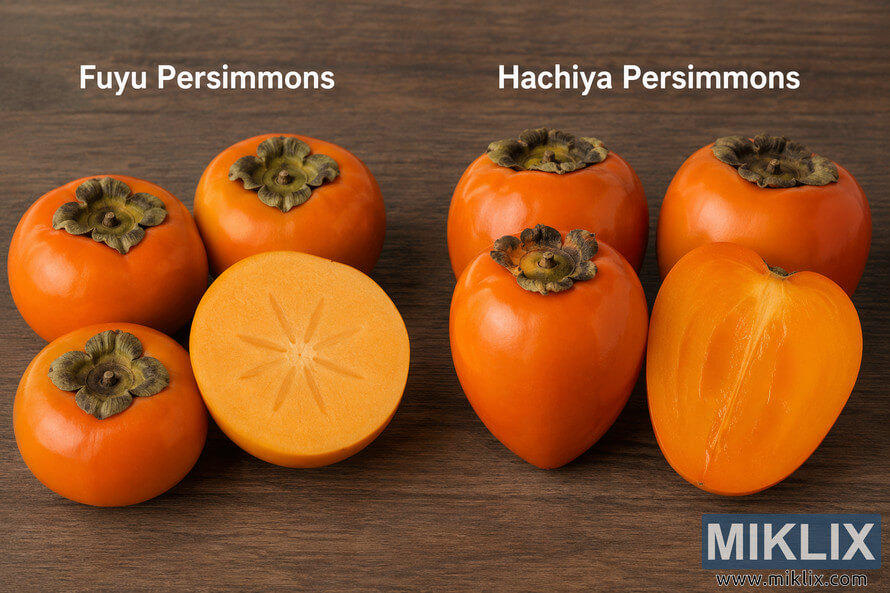
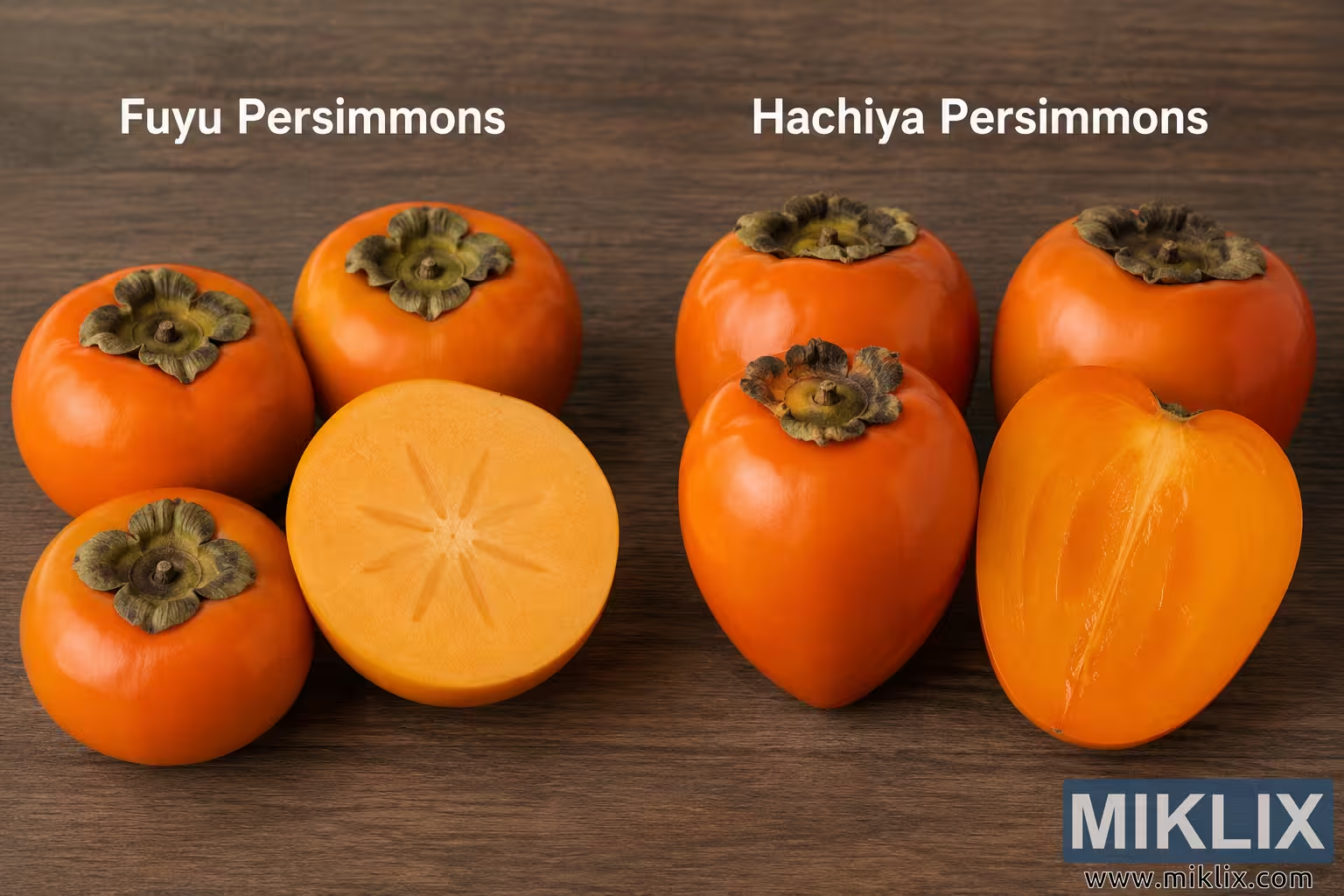
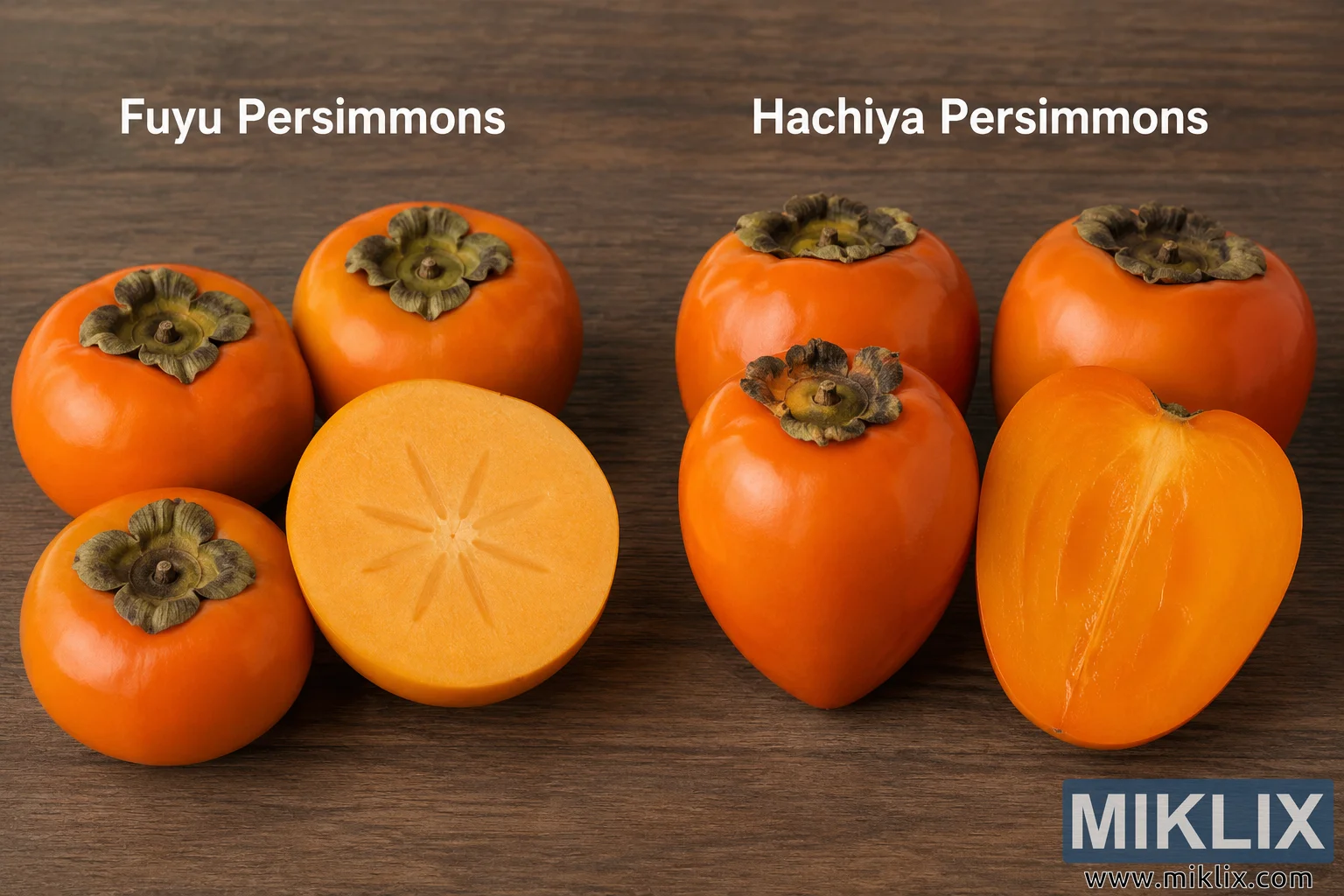
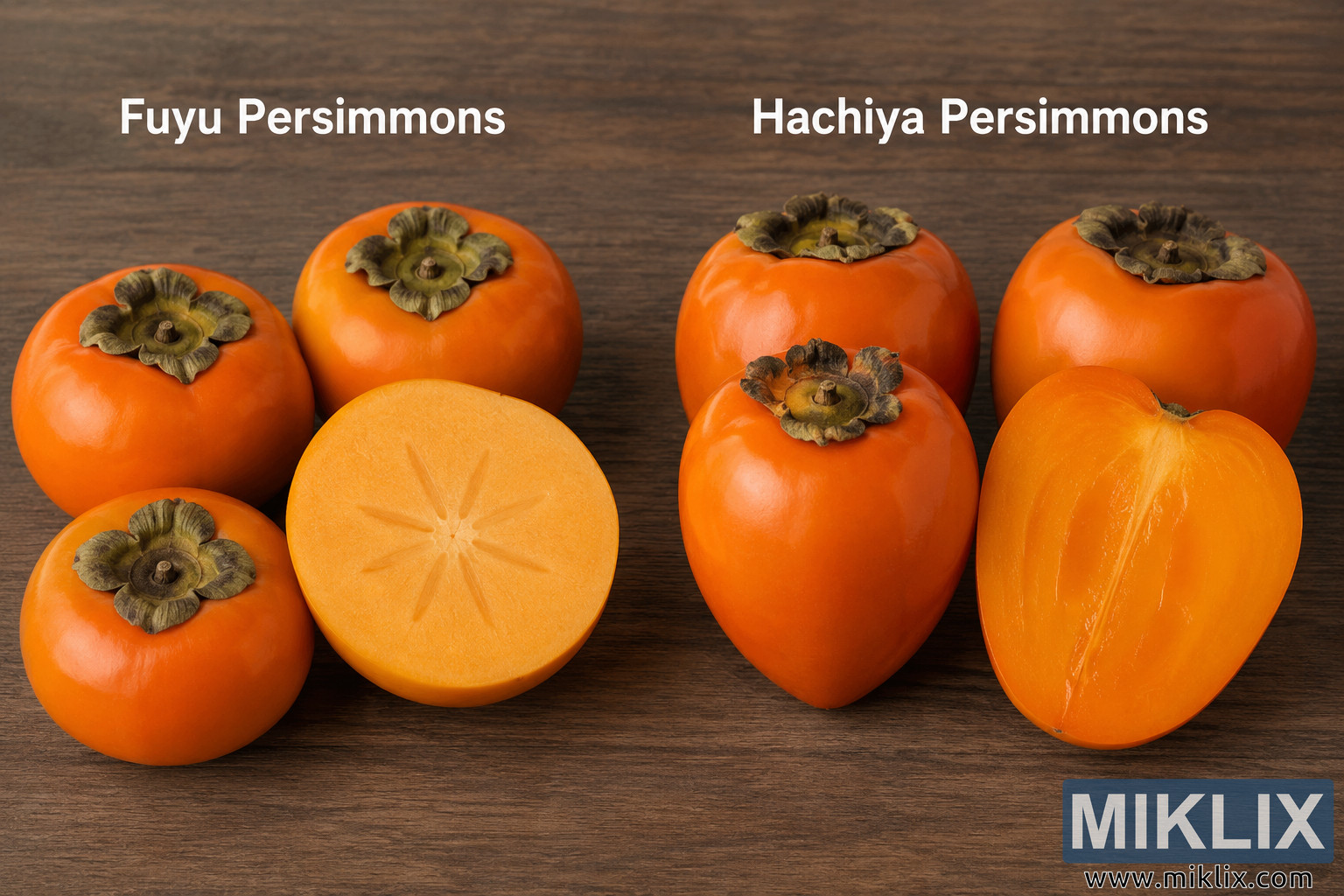
This high-resolution landscape-oriented image presents a carefully arranged side-by-side comparison of two popular persimmon varieties: Fuyu persimmons and Hachiya persimmons. The composition is styled like a clean educational food infographic while maintaining the realism and warmth of a professional food photograph. The fruits are displayed on a dark brown wooden tabletop with visible natural wood grain that adds texture and contrast to the vivid orange tones of the persimmons. Soft, even lighting illuminates the entire arrangement, creating gentle highlights on the fruit skins and subtle shadows beneath each piece, giving the image depth and realism.
The image is divided visually into two sections. On the left side are the Fuyu persimmons. Large white text at the top left reads “Fuyu Persimmons” in a bold, modern sans-serif font. Beneath the label are three whole Fuyu persimmons and one sliced half. The Fuyu fruits are bright orange with smooth, glossy skin and broad, squat, tomato-like shapes. Their tops are capped with dry green-brown calyx leaves that spread outward like flower petals. One halved Fuyu persimmon is positioned prominently in the foreground, displaying its pale orange interior flesh and a subtle star-shaped pattern radiating from the center. The flesh appears firm, matte, and dense, visually communicating the crisp texture commonly associated with ripe Fuyu persimmons. The cross-section is neatly cut and perfectly circular, emphasizing the geometric symmetry of the fruit.
On the right side are the Hachiya persimmons. Large white text at the top right reads “Hachiya Persimmons” in the same bold sans-serif font, balancing the composition and reinforcing the educational comparison theme. Three whole Hachiya persimmons are arranged together with one sliced half in the foreground. Unlike the flatter Fuyu fruits, the Hachiya persimmons have a taller, elongated, acorn-like shape that tapers gently toward the bottom. Their skin is glossy and richly saturated with deep orange coloration. The calyx leaves on top are slightly curled and textured, adding organic detail. The sliced Hachiya persimmon reveals a vibrant translucent orange interior with a noticeably moist and jelly-like appearance. The flesh glistens under the lighting, communicating the softer, custard-like texture associated with fully ripe Hachiya persimmons.
The arrangement clearly highlights the visual differences between the two persimmon varieties. The flatter shape and firmer-looking flesh of the Fuyu persimmons contrast strongly with the elongated form and glossy interior of the Hachiya persimmons. The educational nature of the image makes it suitable for cooking websites, gardening articles, produce guides, nutrition resources, or food blogs explaining the characteristics of persimmon varieties.
The overall color palette is warm and autumnal, dominated by rich orange fruit tones against the darker brown wood background. The typography is crisp and legible without distracting from the produce itself. The image has a clean and uncluttered layout with balanced spacing between each fruit, making it visually easy to understand at a glance. No commercial logos, packaging, or recognizable brands are present anywhere in the scene. The photograph combines realism, clarity, and instructional value in a polished food-photography style suitable for editorial and educational use.
The lighting setup appears diffused and studio-controlled, avoiding harsh shadows while preserving dimensionality. Surface reflections on the fruit skins enhance freshness and realism. The wood tabletop background remains slightly out of focus in areas, helping the fruit remain the central focal point. The image composition is symmetrical overall, with the two fruit groups mirroring one another from left to right. The labels provide immediate identification while the sliced examples allow viewers to compare internal texture and coloration directly.
This image effectively communicates the distinct characteristics of Fuyu and Hachiya persimmons in a single frame, making it useful both as a visually appealing photograph and as an informative comparison graphic.
Kuva liittyy: The Complete Guide to the Health Benefits of Persimmons